A traditional Greek salad needs no bottled dressing, only olive oil, red wine vinegar and dried oregano.
- America's Test Kitchen uses 2½ tablespoons of olive oil and 1 tablespoon of red wine vinegar for two servings.
- Lemon juice replaces the vinegar, and a creamy feta or tzatziki dressing suits romaine.
- Garlic or herbs in oil mean 4 days in the fridge at most.
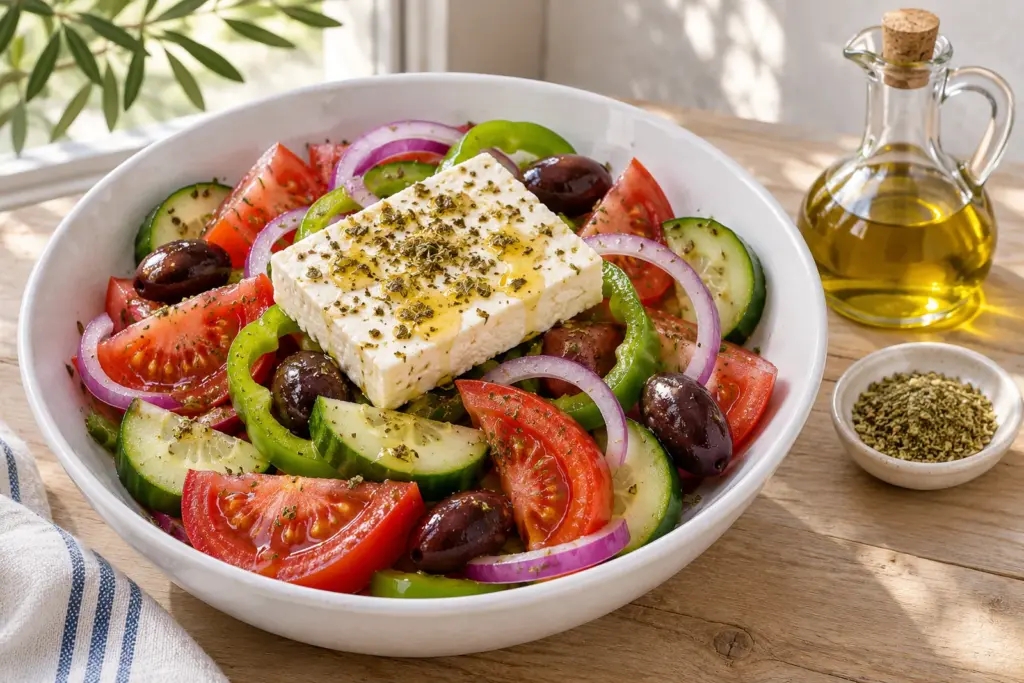
Greek salad works as a side dish for grilled meats and pasta, and the dressing decides whether it tastes bright or flat next to a rich main. Below are 10 dressings with exact amounts, starting with the traditional one, plus a table that matches each to the kind of salad you are making.
What Is the Traditional Dressing for Greek Salad?
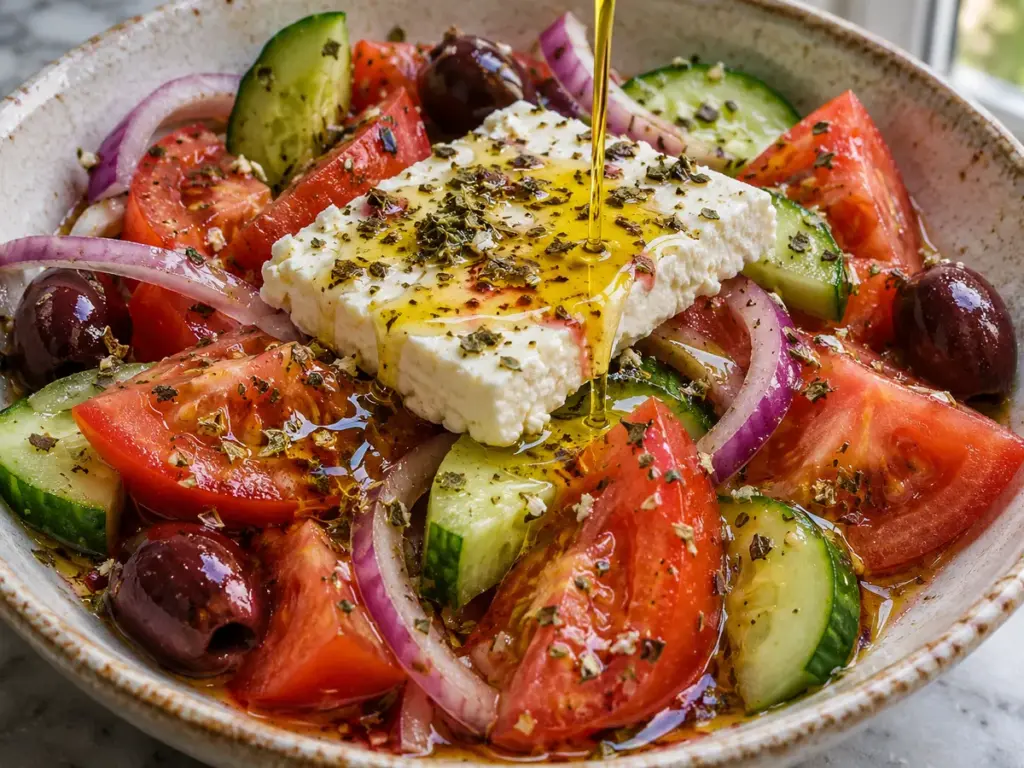
In Greece the everyday salad is called horiatiki, or village salad. You get tomatoes, cucumber, onion, olives and a slab of feta, with no lettuce and no bottled dressing. America's Test Kitchen states that vinaigrette is never used on horiatiki, and that the oil and vinegar are traditionally drizzled on separately. It also notes that dried oregano is preferred over fresh in the traditional version.
The test kitchen's own two-serving recipe uses 2½ tablespoons of extra-virgin olive oil, 1 tablespoon of red wine vinegar and ½ teaspoon of dried oregano, plus salt and pepper. That is about 2½ parts oil to 1 part vinegar, or roughly 1¾ tablespoons of dressing per person. You taste oil and tomato first, and the vinegar stays a small accent.
When a quiz asks which dressing is most often used on Greek salad (ranch, olive oil or ketchup), the traditional answer is olive oil. Neither ranch nor ketchup appears in the test kitchen's horiatiki recipe, and ranch only shows up in American versions built on romaine.
- Salt the tomatoes and drain them. America's Test Kitchen leaves the salted wedges in a colander for 30 minutes, so their juice does not flood the bowl.
- Add the vinegar. Sprinkle a small splash of red wine vinegar over the vegetables, or use lemon juice if you find vinegar sharp.
- Pour the oil generously. Drizzle it over the vegetables and over the feta, so the cheese is coated too.
- Rub the oregano over the top. Crush a pinch between your fingers as it falls, which releases its oils.
- Serve right away. Cucumber and tomato keep releasing water, so a salad that waits turns soupy.
Spend your money on the oil, since it carries most of the flavor here. Greek olive oil tastes bolder and more peppery than most Italian oils, which suits the feta and olives. Any extra-virgin oil you like straight from the spoon will work.
Does the Dressing Change When the Salad Has Lettuce?
Many American Greek salads add romaine, and leaves ask more of a dressing than tomato wedges do. A thin oil-and-vinegar mix slides off dry lettuce and pools at the bottom of the bowl, so you need a dressing that clings.
- Olive oil, red wine vinegar or lemon, dried oregano
- About 1¾ tablespoons of oil and vinegar per serving
- Drained salted tomatoes keep the bowl from going watery
- A shaken vinaigrette with 1 teaspoon of Dijon
- 2 to 3 parts oil to 1 part vinegar or lemon
- Creamy feta or tzatziki dressings coat the leaves
- Toss right before serving
In a village salad, honey, mustard and creamy bases cover the tomato flavor.
The same mixes also dress a bowl of plain lettuce salad when you leave out the feta and olives. Feta and Kalamata olives are already salty, so taste the salad before you add salt to any dressing below.
10 Best Dressings for Greek Salad
Dressings 1 to 6 are oil-based, from thin vinaigrettes to thicker mustard blends, and 7 to 10 are creamy. Each recipe makes enough for several bowls, and a batch with garlic or herbs in the oil keeps 4 days in the fridge, so halve it when you are dressing one salad.
1. Classic Greek Vinaigrette
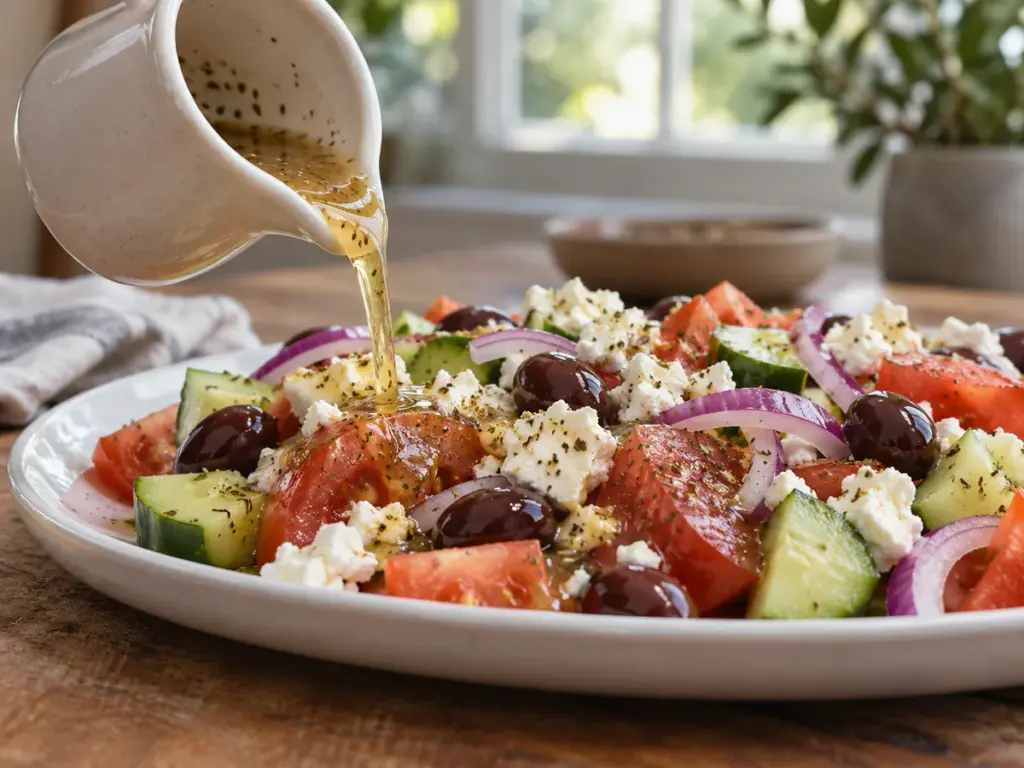
This is the "Greek dressing" most American recipes mean, and it is mixed ahead rather than drizzled at the table. Shake ½ cup extra-virgin olive oil, 3 tablespoons red wine vinegar, 1 teaspoon dried oregano and ¼ teaspoon salt in a jar until it looks cloudy. The ratio stays close to the traditional 2½ parts oil to 1 part vinegar, and the batch dresses several bowls.
Rub the oregano between your palms as you add it. Greek oregano is a stronger type of the same plant, so use slightly less of it than a recipe says if your jar is labeled Greek. Start with about 1 tablespoon of dressing per serving and add more at the table, because tomatoes and cucumbers release water as the salad sits.
2. Lemon Vinaigrette (Ladolemono)
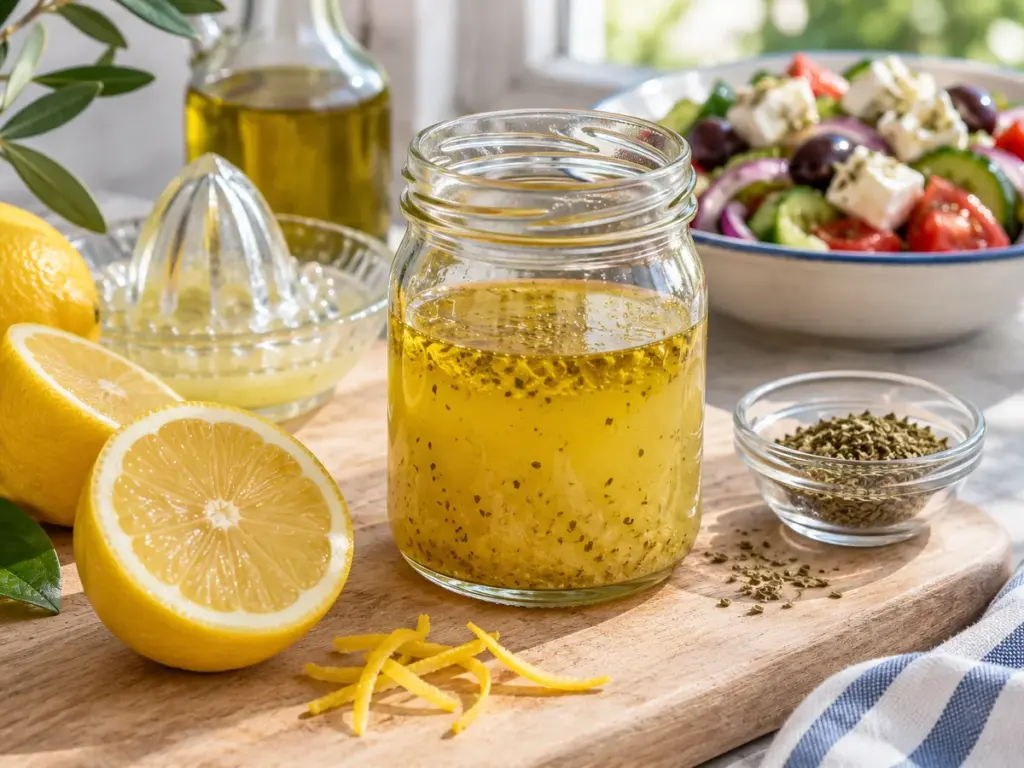
Ladolemono (literally "oil-lemon") is the Greek olive oil and lemon sauce used on salads, vegetables and grilled meat and fish, and Mediterranean salad dressings often start from it. Mix 6 tablespoons olive oil with 2 tablespoons fresh lemon juice, ½ teaspoon dried oregano and a pinch of salt.
Squeeze the lemon yourself, because bottled juice tastes flat. A teaspoon of grated lemon zest adds aroma without adding acid. Shake the jar before every pour, since the juice and oil separate within minutes, and dress the salad just before serving so the lemon tastes fresh.
3. Red Wine Vinaigrette With Dijon
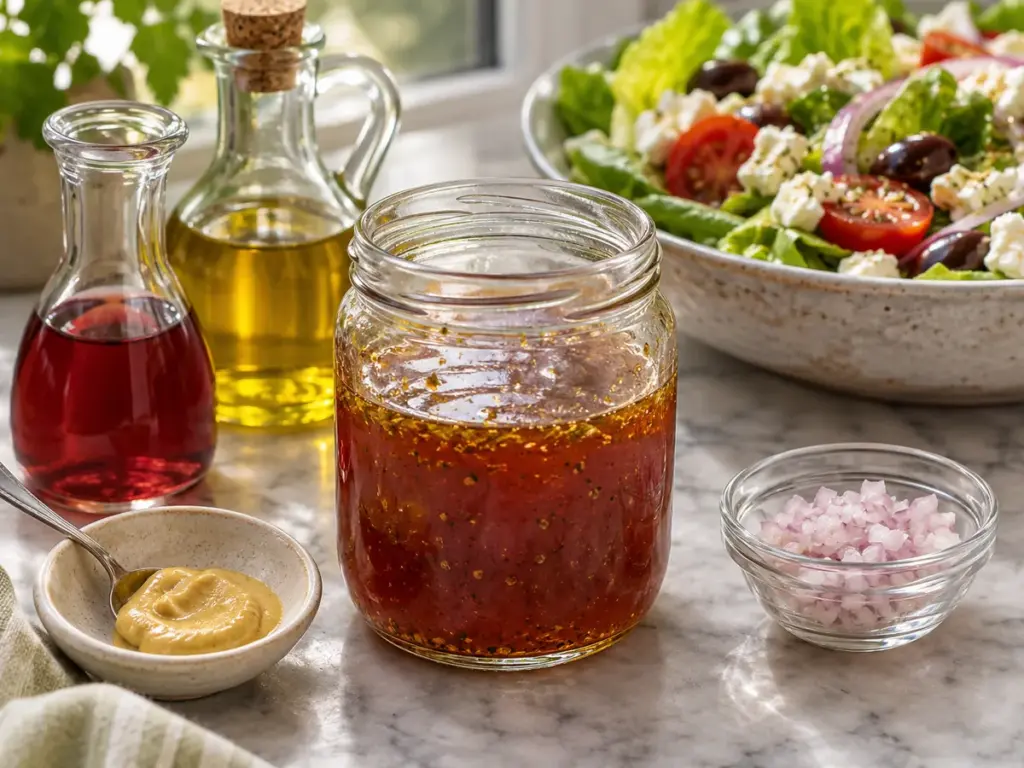
Reach for this version when your salad has romaine. Whisk 6 tablespoons olive oil, 2 tablespoons red wine vinegar, 1 teaspoon Dijon mustard and 1 teaspoon minced shallot, then season with salt and black pepper. The mustard acts as an emulsifier, so the dressing stays blended and coats the leaves instead of running to the bottom.
Mustard adds its own sharp note, so keep it to 1 teaspoon for this amount of oil. At two teaspoons you start tasting deli salad and lose the oregano.
4. Garlic and Herb Dressing
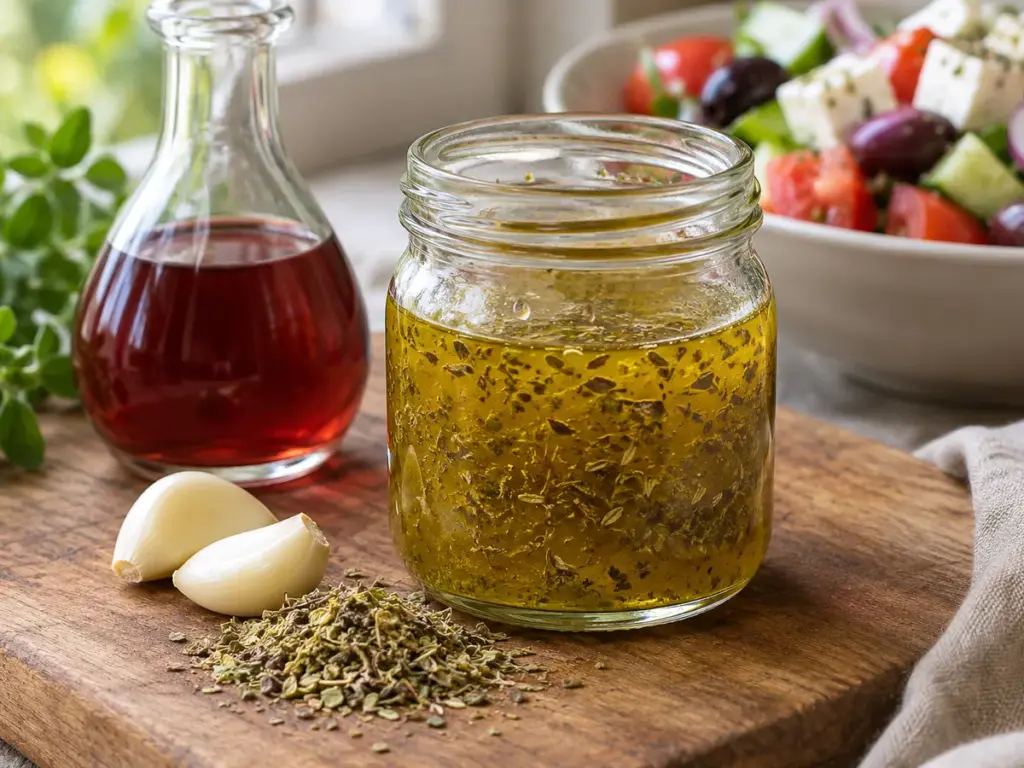
Shake ½ cup olive oil, 3 tablespoons red wine vinegar, 1 teaspoon dried oregano, ½ teaspoon dried thyme and 1 grated garlic clove with a pinch of salt and pepper. Grate the garlic so it spreads through the oil in tiny pieces and every pour carries some.
5. Balsamic Vinaigrette
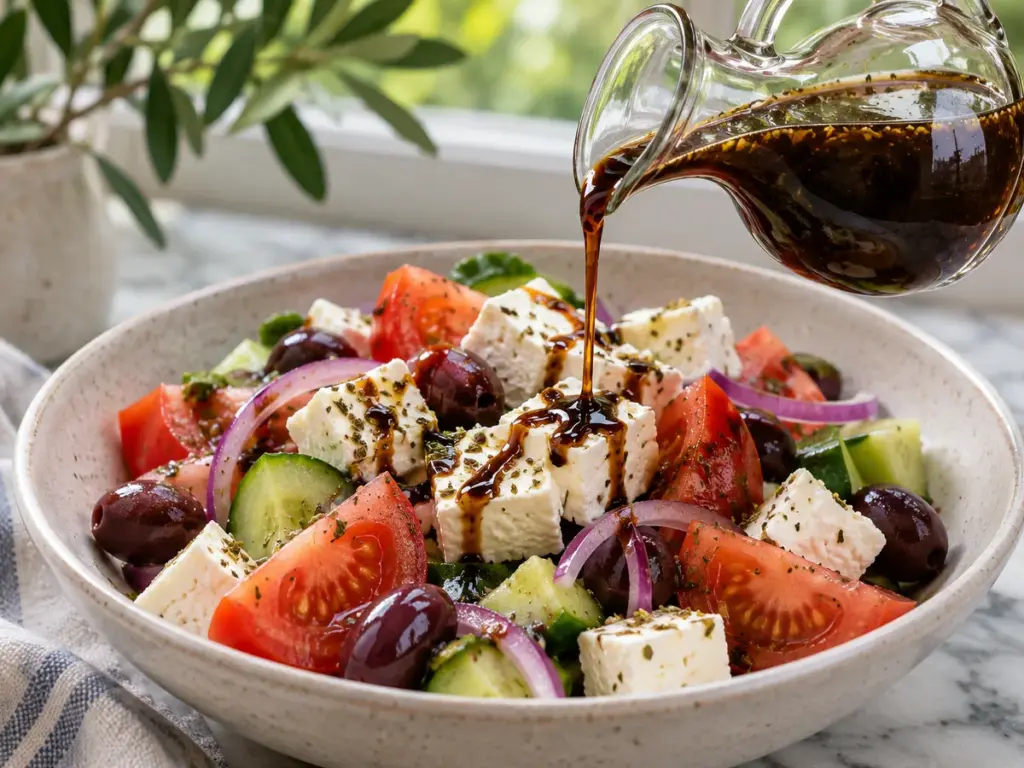
Whisk 6 tablespoons olive oil, 2 tablespoons balsamic vinegar, 1 teaspoon honey and 1 teaspoon Dijon. It tastes sweeter and rounder than a red wine vinaigrette, which works well when your tomatoes are pale and sour, or when you add strawberries or roasted peppers. Check the label first, because a bottled balsamic vinaigrette already has oil and sugar in it, and you would add them twice.
Balsamic is the one dressing here that stops tasting Greek. Use 1 tablespoon per serving or less, because a heavy pour turns the feta brown and drowns the olives on your plate.
6. Honey Mustard Dressing
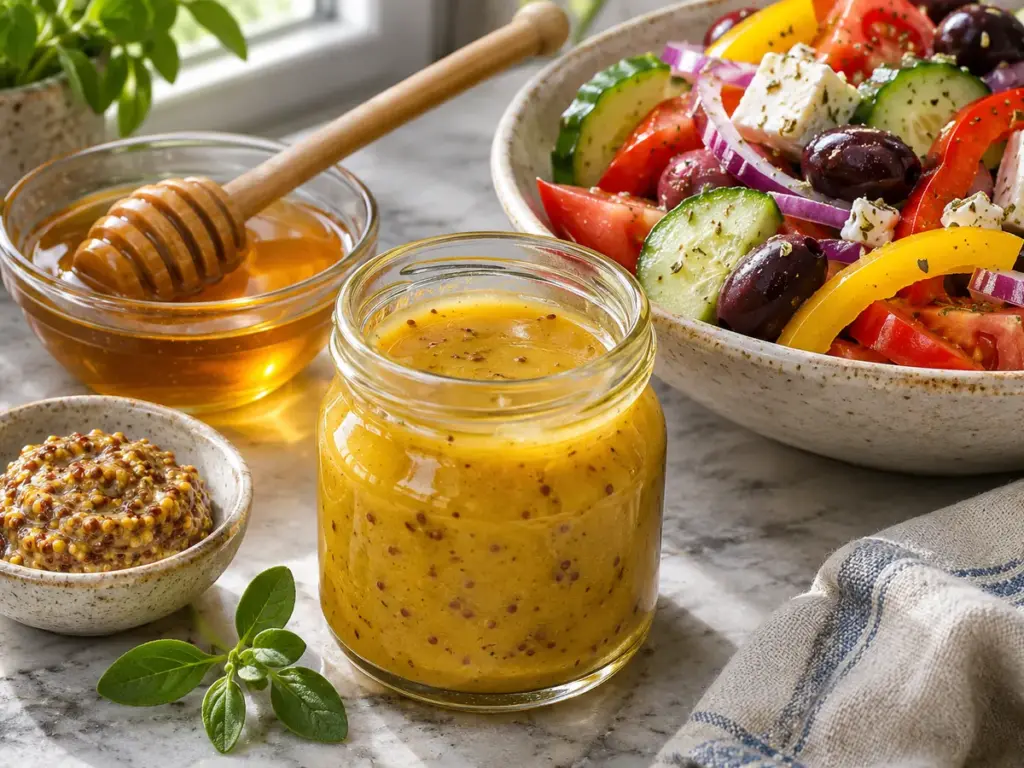
Whisk 3 tablespoons olive oil, 1 tablespoon Dijon or whole-grain mustard, 2 teaspoons honey and 1 tablespoon red wine vinegar until it thickens. The mustard binds the oil, so the dressing turns thick without any mayonnaise.
Use half the honey if your salad has plenty of olives and red onion, because sweetness competes with their salt on your fork. This dressing fits a Greek salad built with bell pepper strips, red onion and chickpeas better than a plain tomato and cucumber one.
7. Feta Dressing
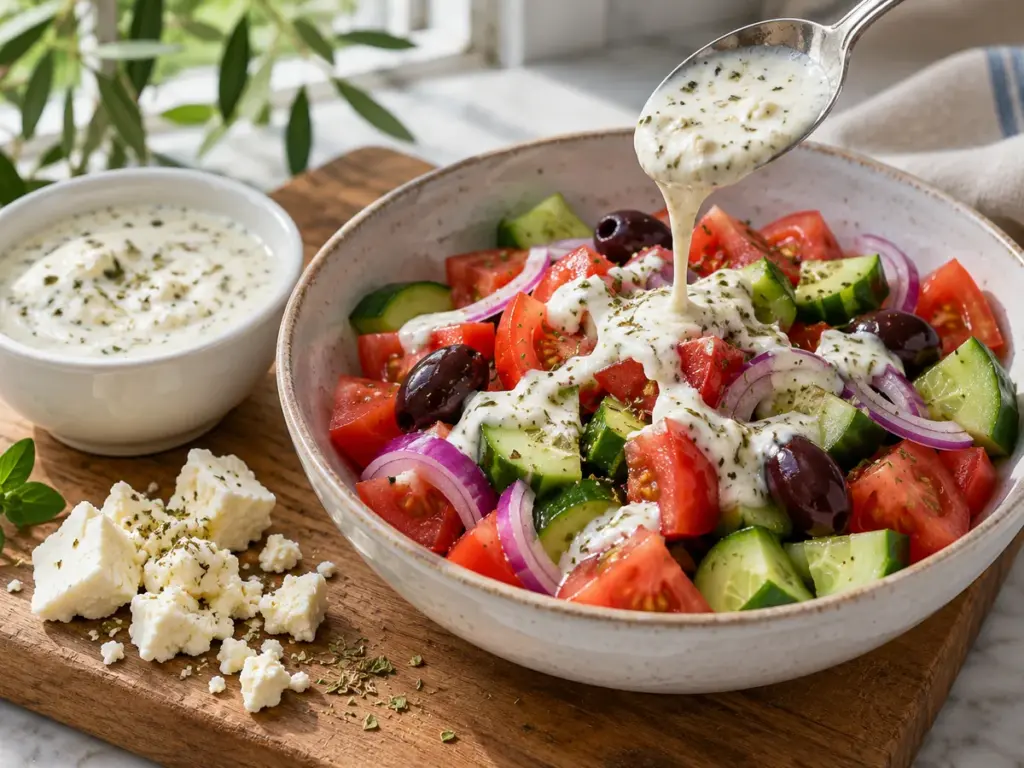
Blend ⅓ cup crumbled feta (under 2 ounces), ⅓ cup plain Greek yogurt, 2 tablespoons olive oil, 1 tablespoon lemon juice and ½ teaspoon dried oregano. Add 1 to 2 tablespoons of water until it falls from a spoon in a ribbon.
Taste before you add salt, since feta already carries plenty. It clings to romaine and chopped vegetables, and you can skip the crumbled feta on top because the dressing already supplies it. If the fridge has no feta, goat cheese or ricotta can take its place in the blender.
8. Tzatziki Dressing
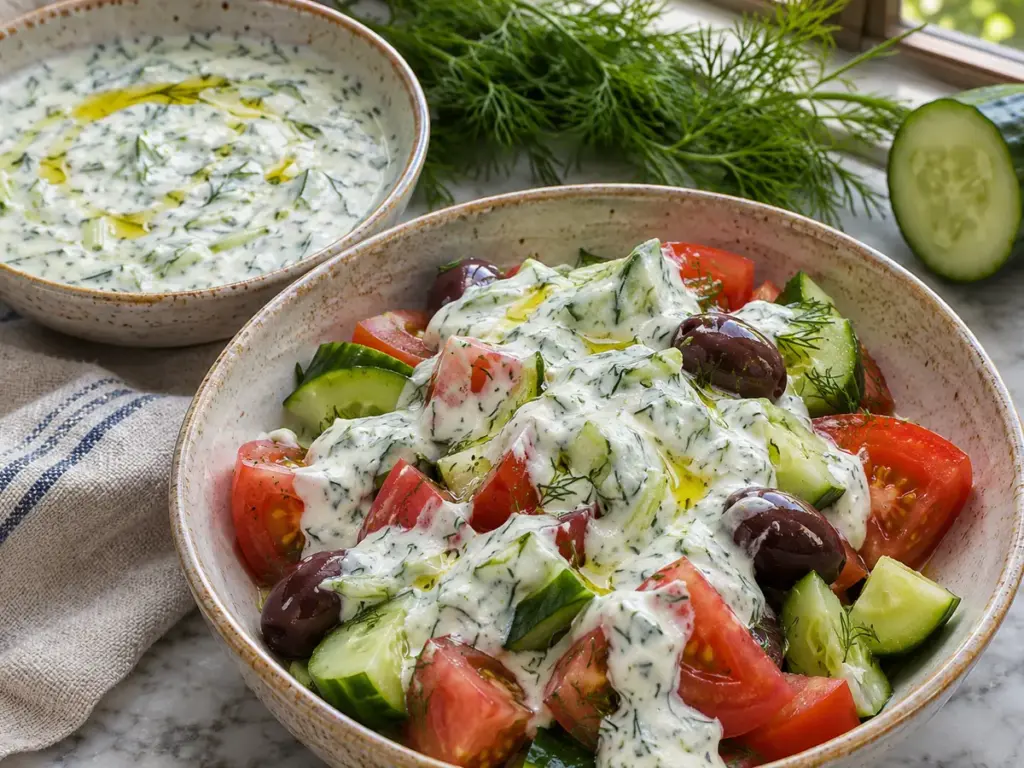
Tzatziki is a thick dip, so thin it before it goes on a salad. Stir 1 cup strained Greek yogurt, ½ cup grated cucumber squeezed dry, 1 grated garlic clove, 1 tablespoon olive oil, 1 tablespoon lemon juice and 1 tablespoon chopped dill, then loosen it with 2 to 3 tablespoons of water. Tzatziki tastes cool and zesty, which contrasts with the salt of the olives.
Squeeze the cucumber hard in a clean towel, because the water it holds makes the dressing thin and bland. Taste it once it is cold and add lemon juice or salt then, because chilling dulls both.
9. Hummus Dressing
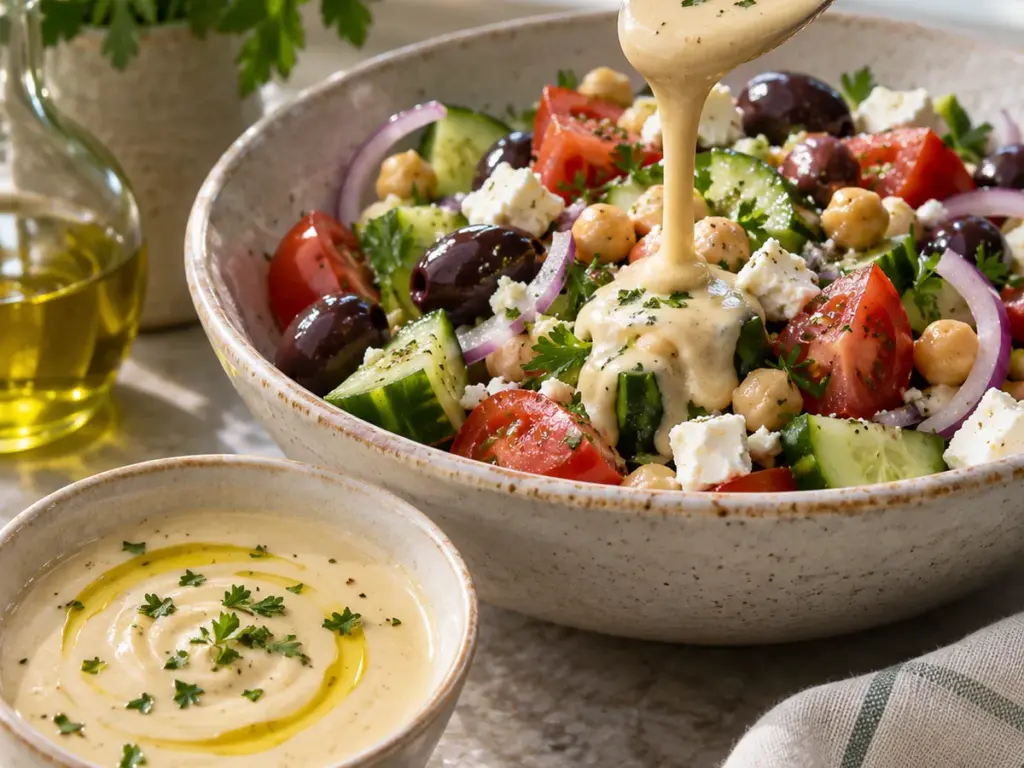
Whisk ¼ cup hummus, 2 tablespoons lemon juice, 2 tablespoons olive oil and 3 tablespoons water until smooth, adding water a spoonful at a time. Hummus already contains garlic and tahini, so you can leave both out. Tahini is sesame, so check with guests who have a sesame allergy. The dressing is dairy-free, so leave off the feta for a fully vegan bowl.
Pour it over a Greek salad with chickpeas or grilled pita, where the nutty tahini repeats an ingredient you already have (pita adds wheat). A thick hummus smears instead of coating, so add water until a spoon leaves a ribbon.
10. Ranch Dressing
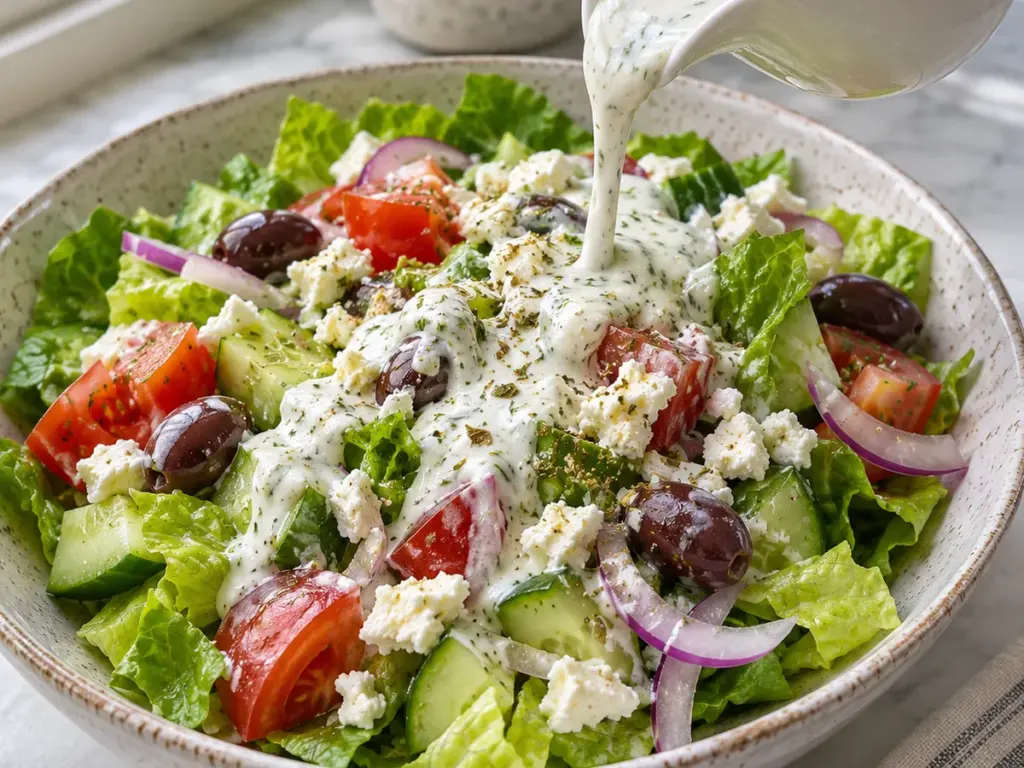
Ranch is American, and it still suits a romaine Greek salad when you are feeding kids or a crowd. Ranch dressing is thinner than ranch dip, so buy a pourable bottle or thin your own with a tablespoon of buttermilk.
To push it toward Greek, stir ½ teaspoon dried oregano and 1 tablespoon lemon juice into ½ cup of ranch. The lemon cuts the richness against the salty feta. You lose the clean oil-and-oregano taste, so keep this one for lettuce-based bowls.
Which Dressing Should You Pick?
Match the dressing to what you built the salad on. Tomato-and-cucumber bowls want oil and acid, while lettuce bowls can carry more body.
| Your Salad | Dressing That Fits |
|---|---|
| Village salad, no lettuce | Classic Greek or lemon vinaigrette |
| Romaine | Red wine and Dijon, feta or ranch |
| Pale tomatoes or roasted peppers | Balsamic vinaigrette |
| Bell pepper and chickpeas | Honey mustard or hummus |
| Served with grilled meat | Tzatziki |
If you serve the salad beside Greek chicken, a thin vinaigrette keeps the plate light, and a creamy dressing echoes a yogurt marinade. When you toss the same ingredients with noodles for a Greek pasta salad, the classic vinaigrette soaks in best.
How Long Does Homemade Greek Salad Dressing Keep?
USDA FoodKeeper lists homemade vinaigrette at 2 to 3 weeks in the fridge and homemade salad dressing at about 2 weeks, with no exception for garlic or herbs. Oregon State Extension is stricter: garlic or herbs in oil must be refrigerated and used within 4 days, or frozen. It applies the same 4 days to oil seasoned with dried garlic or dried herbs and sets no longer limit for oil mixed with vinegar.
- Oil, vinegar or lemon juice, salt, mustard and honey only: up to 2 weeks in a lidded jar in the fridge. Cold olive oil clouds and can set solid, so shake the sealed jar in your hand until it clears.
- Garlic, shallot, oregano or thyme in the oil: 4 days in the fridge, or freeze it.
That 4-day limit covers the classic Greek vinaigrette, because it contains oregano. To keep a batch longer, mix the plain base and stir the oregano or garlic into each portion as you use it.
For feta, tzatziki, hummus and ranch dressings, the sources used here give no figure for homemade versions. Keep them to 4 days at most, and throw them out if they smell sour or turn watery. Cucumber in tzatziki releases water as it sits.
Dress the salad right before you serve it, and keep the dressing in its jar until then, because salt and acid make your tomatoes and cucumbers leak water within minutes.
Can You Use Greek Salad Dressing as a Marinade?
The thin oil-based dressings (the classic vinaigrette, lemon and balsamic) work as marinades for chicken, lamb or vegetables. Leave the water out of the feta dressing and it becomes a thick spread for sandwiches or a dip for pita.
- Marinate in the refrigerator, never on the counter.
- Marinades run from 15 to 30 minutes up to 24 hours, and a long soak can make tender foods mushy.
- Marinade that touched raw meat becomes a sauce only after you bring it to a boil. Dress the salad from the jar.
Sources
- America's Test Kitchen, Horiatiki Salata (Hearty Greek Salad) for Two: traditional dressing, amounts and method.
- USDA FoodKeeper: refrigerator times for homemade salad dressing and vinaigrette.
- Oregon State Extension, Herbs and Vegetables in Oil: garlic and herbs in oil, 4 days.
- Illinois Extension, Marinating: marinating times, boiling used marinade.

Food writer at GustoMeadow. Writes ingredient substitutes, food comparisons, taste guides and storage guides for home cooks.
Storage and food-safety numbers follow USDA, FDA and university extension guidance.