
Charcoal gives hotter heat and real smoke flavor; an electric grill gives steady heat with no fire, often the only kind a building allows.
- Pick charcoal for steak crust or smoked ribs if you have a yard.
- Pick electric for apartments, with 8 to 14 minutes of preheating.
- Never burn charcoal indoors, and check your building's fire rules first.
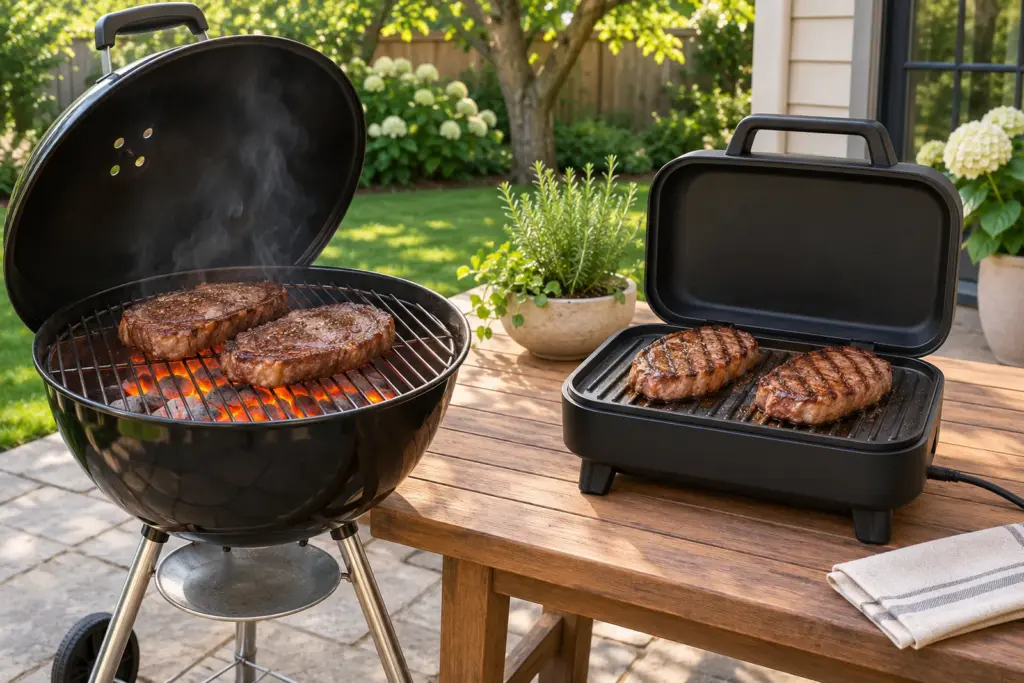
Electric versus charcoal is one of the everyday kitchen comparisons where your living situation decides more than the grill does. A plug-in grill heats evenly with no flame, a charcoal grill gives you a hotter surface and smoke, and a fire code often decides which of the two you may use outside your door.
1. What Is the Difference Between Electric and Charcoal Grills?
Nearly every difference traces back to the heat source. An electric element warms the grate evenly and quietly, while burning charcoal makes a hot, uneven fire that also makes smoke. Each row changes what you can cook or where you can cook it.
- Heat comes from an electric heating element under the grate.
- Indoor models reach about 410 to 450°F on top, and outdoor models 500 to 700°F.
- Heat comes from burning briquettes or lump charcoal.
- It reaches the 500 to 550°F and higher range Weber lists for steaks and quick searing.
| Trait | Electric grill | Charcoal grill |
|---|---|---|
| Smoke flavor | Little, unless the model burns wood pellets | Strong, from the coals, wood chunks and dripping fat |
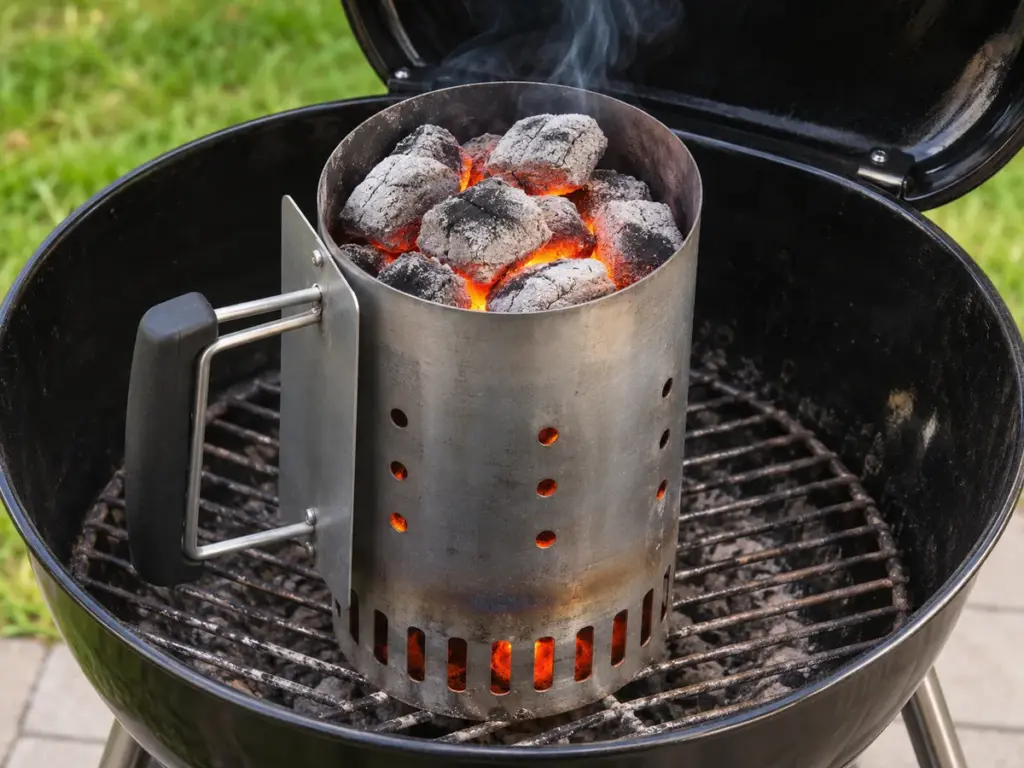
| Time to start | Two outdoor models needed 8 and 14 minutes to preheat | About 15 minutes for a chimney of coals to ash over |
- On a balcony, an electric grill is often allowed if it is UL Listed, while a charcoal grill is often banned within 10 feet of combustible construction.
- Indoors, use only electric models made for indoor use, and never use charcoal, because of carbon monoxide.
We'd say the balcony and heat rows settle most choices, because you can't fix a fire-code ban or a low top temperature with better technique.
2. Which Grill Sears Steak Better?
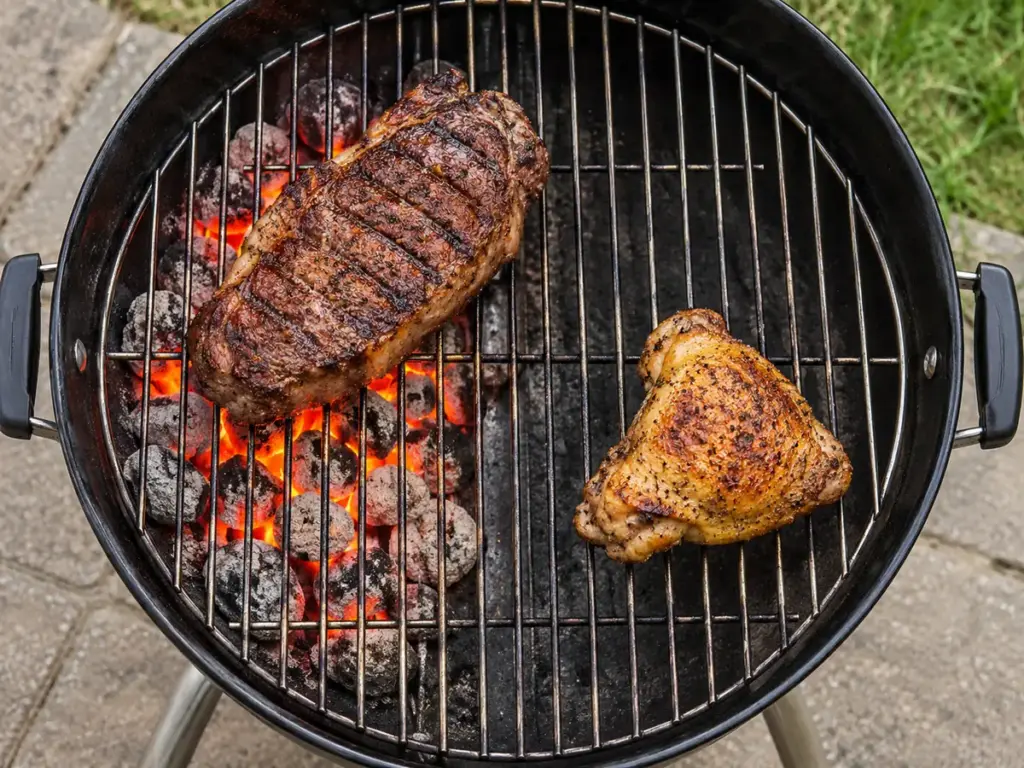
Charcoal has the edge on raw heat. Indoor electric grills top out around 410 to 450°F, and the outdoor electric grills in Food Network's tests reached 500 to 700°F. Weber's heat chart puts steaks and chops at 500 to 550°F and quick searing at 550°F and above, and Kingsford says that wide-open vents give you the hottest coals.
Even a hot electric grill can fall short. Food Network's testers found that one outdoor model gave some flavorful char but browning that wasn't as deep or even as a powerful propane grill, and they called a good sear hard to get on electric grills. If you want a crust from an electric grill, buy an outdoor model rated to 500°F or more and let it preheat fully before the steaks go on.
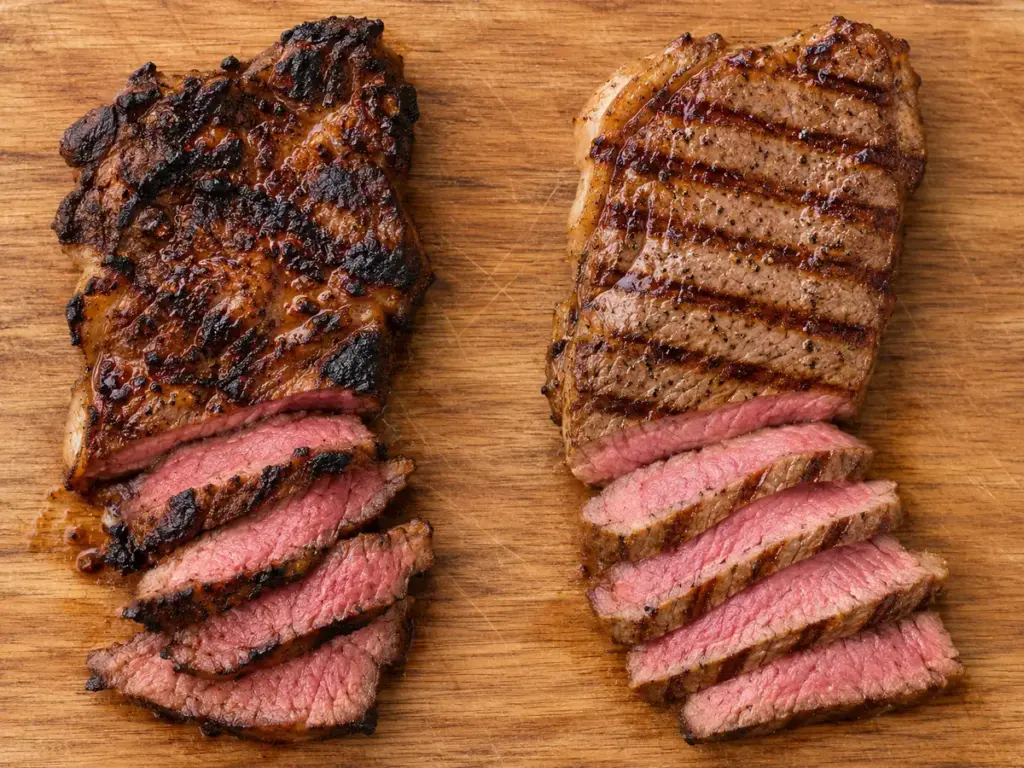
Charcoal also lets you build a hot side and a cool side. Weber's two-zone method has you sear over the coals and then slide the meat to the cooler side to finish, which is how you get a crust without burning a thick steak. A gas grill with an infrared burner is the other route to high searing heat, and a hot cast iron pan gives you a crust with no fire at all.
3. Does Charcoal Taste Smokier Than an Electric Grill?
Yes, and the smoke comes from two places. The coals and any wood chunks you add make some, and fat and juices that drip onto hot coals turn into smoke that settles on the meat. A flat electric element sits under the food with little fire to catch those drips, so Food Network's testers say electric grills usually lack the smoky, fire-kissed character of charcoal or gas.
One exception is an electric grill with a built-in wood pellet tray, which can add smoke and, in one tested model, smoke at temperatures as low as 145°F. If you want more flavor from charcoal, Fogo and Jealous Devil lump burn differently from briquettes, and a dedicated wood smoker goes further than a few wood chunks on a grill.
4. Can You Use a Grill on an Apartment Balcony?
Often only an electric one. Model fire codes such as NFPA 1 and the International Fire Code restrict open-flame grills on balconies and close to buildings, and each city adopts them with its own changes. The Madison, Wisconsin fire department is a clear example of how it plays out for multi-family buildings:
- May be used on any balcony
- Must be UL Listed
- Keep 3 feet from anything that burns
- Needs an appropriate power supply
- Not allowed within 10 feet of combustible construction, including multi-family buildings
- Allowed on a balcony only with sprinklers
- Storing it is allowed
- Propane tanks over 2.5 pounds face stricter rules
The risk is real. NFPA's 2020 to 2024 averages show that nearly one-quarter of grill structure fires started on an exterior balcony or open porch. Your city or lease may be stricter than Madison, so call your fire marshal or landlord before you buy. Gas grills face the same distance rules, so choosing between propane and natural gas will not get you onto a balcony that bans open flame.
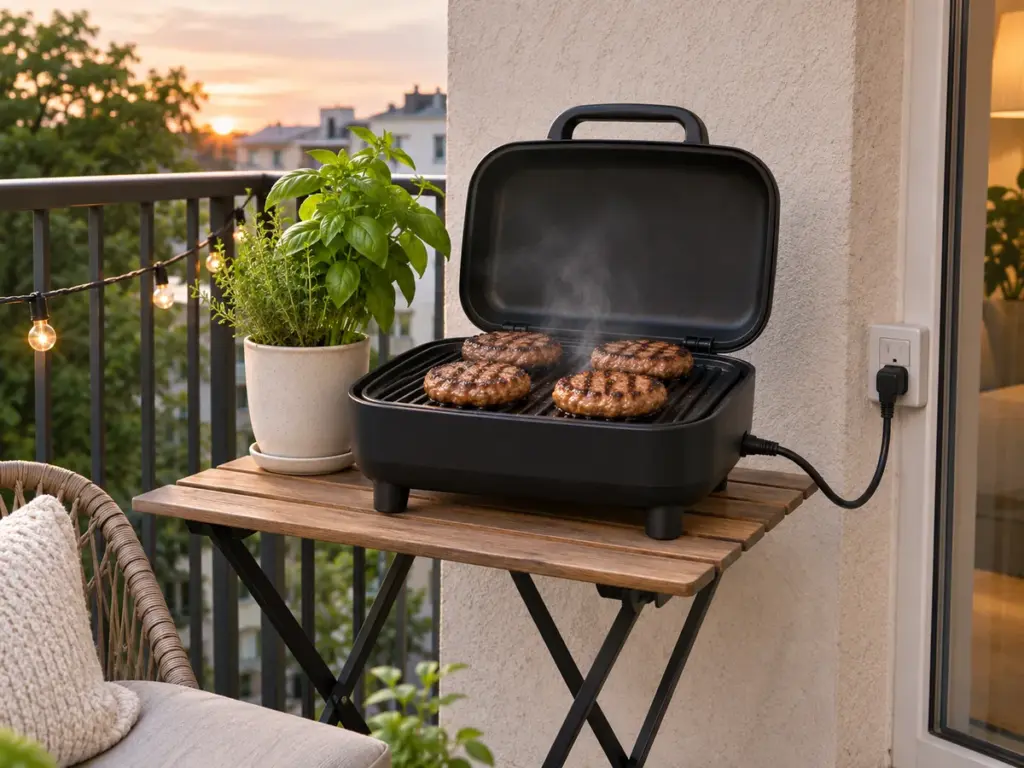
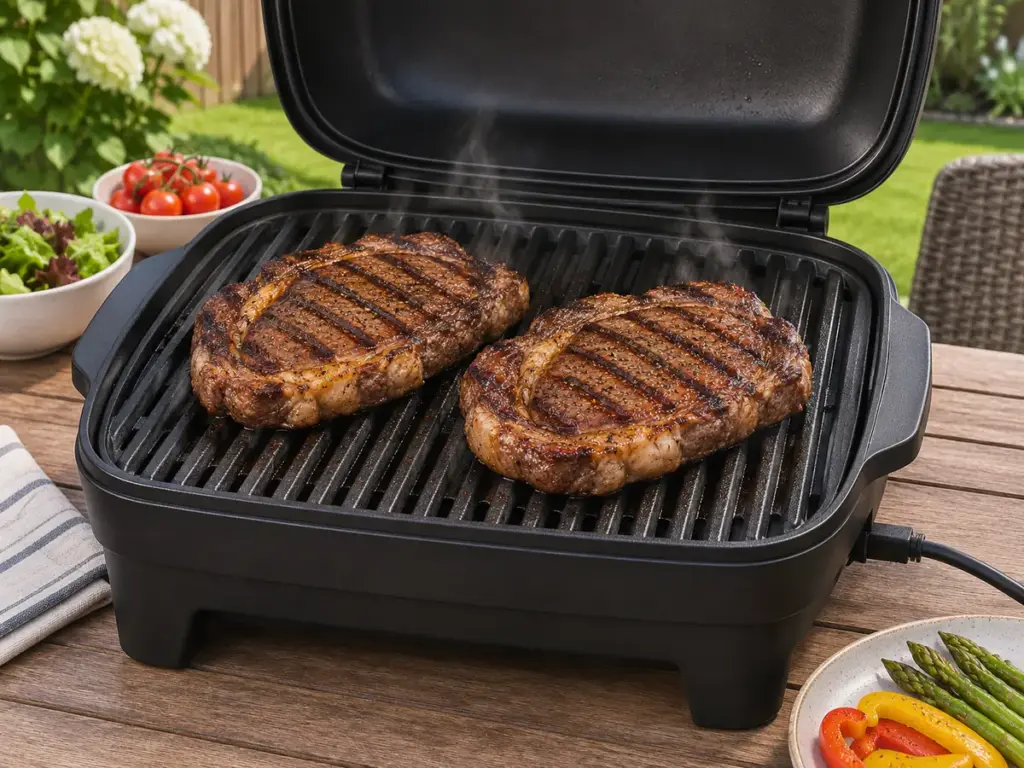
If your building bans every outdoor grill, an indoor contact grill or a stovetop grill pan still puts grill marks on food. Indoor electric grills are smaller, though, with about 90 to 200 square inches of cooking area, so you will cook in batches.
5. What Do Setup, Cleanup and Running Costs Look Like?
How Does a Charcoal Session Work?
Charcoal asks for more steps before you eat, and the last one matters most for safety. Here is the order that Weber, Kingsford and NFPA describe:
- Light the chimney. Coals are ready in about 15 minutes, once the top ones turn gray with ash.
- Pour and arrange. Pile the coals on one side for a hot zone and a cool zone, and keep the vents wide open for high heat.
- Cook and adjust. Close the vents partway to cool the fire, but never fully, because that can put the fire out.
- Cool and dispose. Let the coals cool completely, then put them in a metal container, never straight into a trash can.
What Does an Electric Grill Need?
An electric grill skips the fire, so you plug it in, set the dial and wait for the preheat. The power is what you plan around: CPSC says to avoid extension cords unless you absolutely need one, and ESFI says to plug outdoor appliances into a GFCI-protected outlet. Food Network found one full-size outdoor model needed a dedicated 20-amp GFCI circuit.
Weight and size matter too. Full-size outdoor electric grills offer 270 to 330 square inches of cooking area but weighed about 108 to 109 pounds in those tests. On cost, charcoal is a fuel you keep buying and storing, while an electric grill runs off an outlet, and prices for both overlap enough that you should compare the models you are actually considering.
6. Can You Cook the Same Recipe on Either Grill?
Yes, because food safety does not depend on the fuel. Use a thermometer and cook to the USDA minimums: 145°F for steaks, with a 3-minute rest, 160°F for ground beef and 165°F for poultry. Weber's chart suits both grills too: steaks and chops at 500 to 550°F, chicken breasts, fish and vegetables at 450 to 500°F, and ribs or pork shoulder at 225 to 275°F with indirect heat.
Only three things change when you swap grills. On electric, you preheat fully and accept less crust and less smoke. On charcoal, you move food to the cool side when fat drips cause flare-ups. Either way, a juicy steak pairs well with grilled ribeye sides that you can cook in the same session.
7. Charcoal vs Electric Grill: Which Should You Choose?
The best pick depends on where you live and what you cook most. Here are the situations where one grill clearly wins:
| Your situation | Better pick | Why |
|---|---|---|
| Apartment with a balcony | Electric | Listed electric grills are often allowed where charcoal is not |
| Steak with a deep crust | Charcoal | Hotter coals and a two-zone fire |
| Weeknight burgers or chicken | Electric | No fire to light, and 8 to 14 minutes of preheating |
- For smoked ribs or pork shoulder, pick charcoal, because wood chunks and a 225 to 275°F indirect fire do the job.
- With no outdoor outlet, pick charcoal, since it needs no power, only a safe spot to burn.
For fish, chicken breasts or vegetables, pick electric. Weber puts them at 450 to 500°F, and an outdoor electric model reaches that range.
If you choose charcoal, the next decision is the grill itself, and a PK grill or a Weber are two popular charcoal designs. If you choose electric, buy for the heat you need: a 450°F indoor model cooks a burger well, but only an outdoor model gets near the heat that steak lovers want.
Sources
- Food Network, Best Electric Grills, Tested and Reviewed: electric grill temperatures, preheat times, searing results, cooking areas, weight, indoor versus outdoor use.
- City of Madison Fire Department, Grill Guidelines: charcoal, propane and electric grill rules for multi-family buildings and balconies.
- NFPA, Grilling Safety Facts and Resources: 2020 to 2024 grill fire statistics, charcoal disposal.
- U.S. Consumer Product Safety Commission, CPSC Warns Never Use Charcoal Grills Indoors: carbon monoxide.
- U.S. Consumer Product Safety Commission, Limit Extension Cords and Electrical Safety Foundation International, Extension Cord Safety: cord and GFCI guidance.
- Weber, Mastering Direct, Indirect and 2-Zone Grilling: heat levels by food, two-zone setup.
- Weber, Chimney Starter 101: lighting time and the gray-ash cue.
- Kingsford, How to Control Charcoal Grill Temperature: vent settings.
- National Cancer Institute, Chemicals in Meat Cooked at High Temperatures: HCAs, PAHs and ways to reduce them.
- USDA and FoodSafety.gov, Safe Minimum Internal Temperatures: 145°F with a 3-minute rest, 160°F, 165°F.

Food writer at GustoMeadow. Writes ingredient substitutes, food comparisons, taste guides and storage guides for home cooks.
Storage and food-safety numbers follow USDA, FDA and university extension guidance.



