
Buy a George Foreman grill for burgers, chicken and steak, and a panini press for thick pressed sandwiches.
- A Foreman has sloped plates and a drip tray that carry melted fat away.
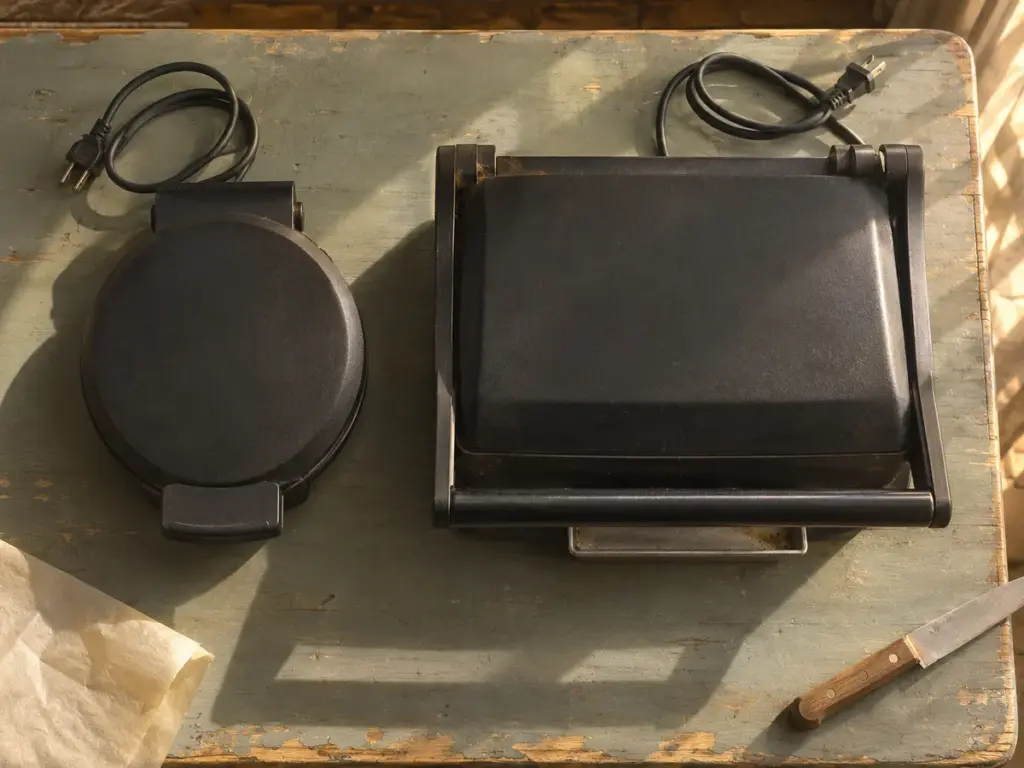
- A panini press has flat or ridged plates and a lid that rises over a tall sandwich.
- The family-size Foreman "Grill & Panini" tilts flat to press a plain sandwich.
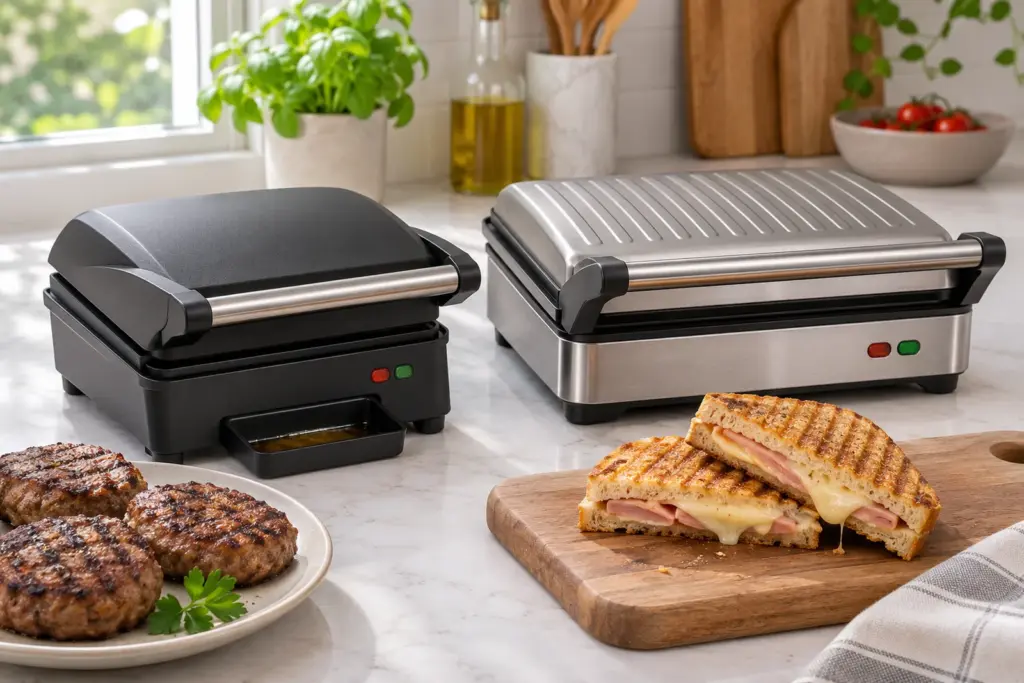
Both machines are electric contact grills: heat comes from the plate below and the plate above, so nothing needs flipping. America's Test Kitchen calls panini presses electric sandwich makers or contact grills, which puts the George Foreman grill in the same family. Like most kitchen and food comparisons, the answer depends on the job you do most.
1. What Is the Difference Between a George Foreman Grill and a Panini Press?
You will notice three differences: plate shape, fat handling and hinge. This table lines them up:
| Trait | George Foreman grill | Panini press |
|---|---|---|
| Plates | Sloped toward the front | Level, usually ridged |
| Grease | Drip tray catches it | Fat and cheese stay on the plates |
| Hinge | Original design is floating; one model lists 1 inch | Floating hinge lifts the lid for tall sandwiches |
The first row explains the rest. A sloped plate drains fat, and a level plate presses bread, so you get the best results from each machine on the food its plates were shaped for.
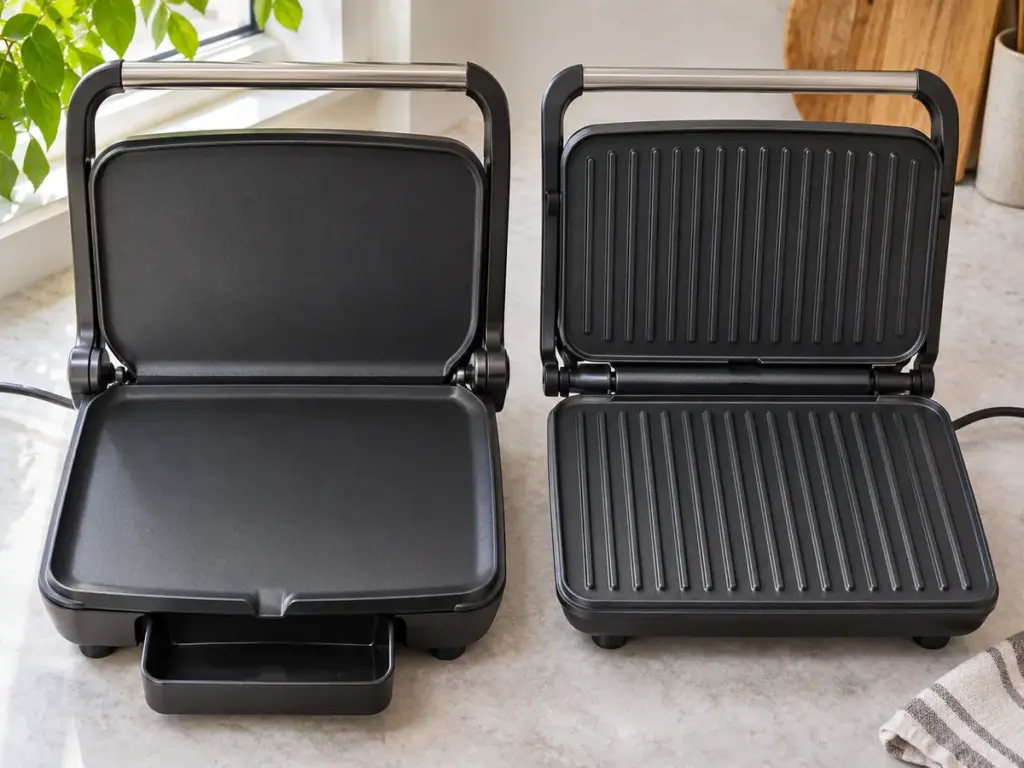
Ridges matter on a press. ATK found the best ones were ⅛ to ¼ inch tall, and its favorites had them spaced ½ inch apart, which also made cleanup easier.
2. How Does the Sloped Plate Change Burgers, Chicken and Steak?
The Foreman's whole idea is the slope. The grill went on sale in 1994 with a slanted lower plate and a removable drip tray, so melted fat runs toward the front instead of pooling under the food. The brand says the slope helps remove up to 42% of fat from a quarter-pound patty of 80/20 ground chuck.
That number comes from one test on one food. A lean turkey patty or a skinless chicken breast starts with little fat, so your drip tray catches less than it does under 80/20 beef.
The arithmetic helps. USDA lists raw 80/20 ground beef at 20 g of fat per 100 g, so a 4-ounce (113 g) patty starts with about 23 g. If the full 42% applies, the tray catches about 9.5 g and the patty keeps about 13 g.
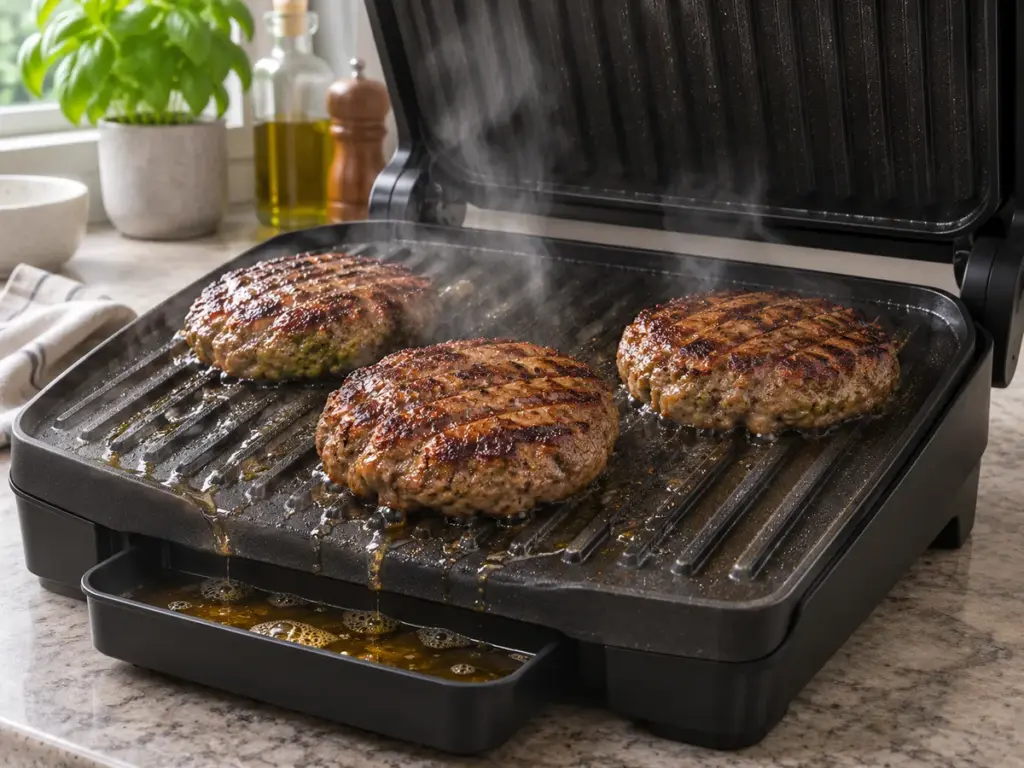
These foods suit the sloped plates best:
- Burgers made from 80/20 beef, where the tray has real fat to catch.
- Boneless chicken breasts, a quick option when you are choosing between baked or grilled chicken on a weeknight.
- Thin steaks that the two hot plates sear on both sides at once.
- Sliced zucchini, bell peppers and eggplant, which brown on both sides at once.
The brand's product page says a light turns off when the grill is preheated, so wait for it before you add food. Then close the lid on pieces of even thickness so the top plate touches the whole surface.
A thick patty next to a thin one finishes at different times, so cook one size at a time. If you slice a thick chicken breast in half horizontally, you get two thinner pieces, so the top plate rests on both.
Is a Foreman Grill Healthier Than a Panini Press?
The fat claim covers fat only. The National Cancer Institute says HCAs and PAHs, chemicals that form in muscle meat, are linked to meat cooked at high temperatures, especially above 300°F, as in grilling or pan frying. Both machines cook meat on hot plates, so those chemicals are a question for either one.
NCI lists ways to cut exposure that work on any grill: remove charred portions before you eat, and skip gravy made from meat drippings. The same page says studies in people have not confirmed a definite cancer link, so treat this as a reason to avoid burnt edges, not a reason to avoid either appliance.
3. How Do You Clean and Care for the Nonstick Plates?
Both machines have nonstick plates, and the care rules are close. The brand's use and care manual for the GR10BCAN model says to use silicone, heatproof plastic or wood utensils and never metal tongs, forks or knives, because they scratch the surface.
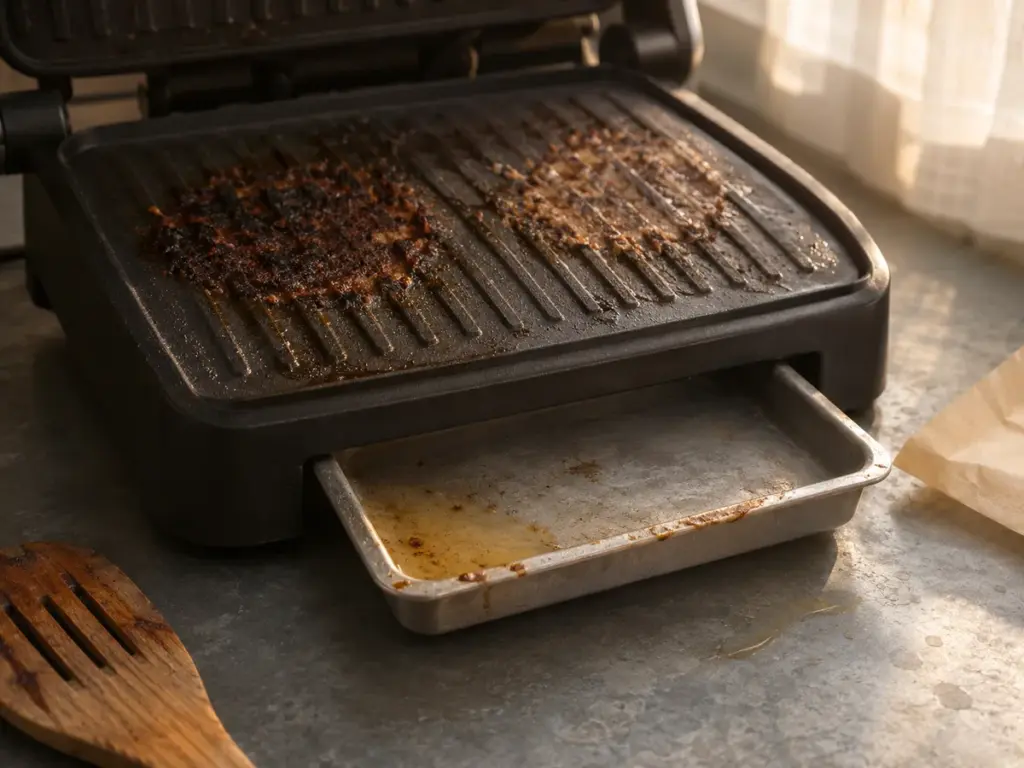
- Unplug it. The GR10BCAN manual says heat stays on until the grill is unplugged.
- Let it cool before you take out the drip tray.
- Wash and dry the tray after each use. The brand lists the tray as dishwasher-safe.
- Wipe the plates clean. The brand says its nonstick coating wipes clean after every use, and ATK says never to submerge the appliance.
ATK gives the same advice for presses: let the machine cool, then wipe it with hot soapy water. It also says to hand-wash removable plates, because the dishwasher degrades the nonstick surface. A dishwasher-safe tray and dishwasher-safe plates are two separate claims, so read which one the listing makes.
Foreman's product pages mention a PFAS-free ceramic coating, and ATK found ceramic and PTFE nonstick performed the same in its press tests. Most presses it tested stayed under 450°F, one reached 473°F, and ATK notes that PTFE fumes become a concern above 500°F.
4. What Does a Panini Press Do Better for Sandwiches?
A panini press is built around level ridged plates and a lid that rests on the bread. The ridges crisp the crust and leave the dark grill marks. Once the sandwich gets tall, the hinge matters more than the ridges: ATK reports that models with floating back hinges lifted the top plate higher to fit taller, bulkier sandwiches, so you want a floating hinge for a stacked sandwich on thick bread.
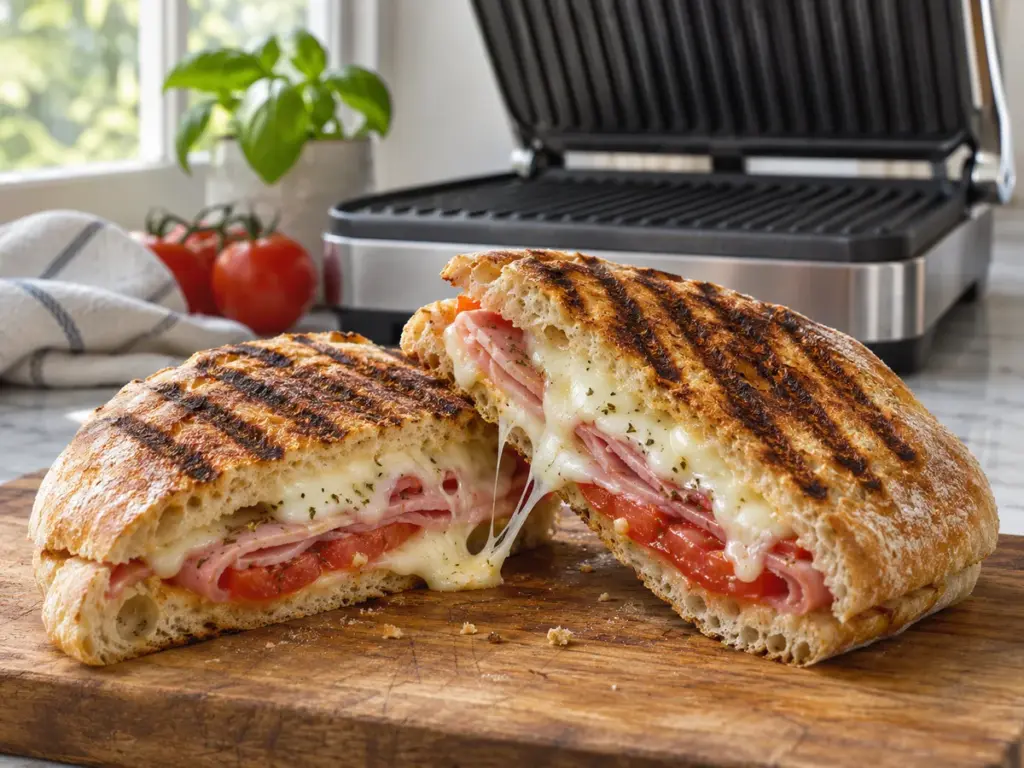
Shaped sandwich maker plates pinch the edges shut instead, which suits sliced bread better than the thick roll you might want. Your bread does as much work as the machine, because panini differs from a regular sandwich mostly in the bread it is built on and the pressing it gets.
Breville says thick, sturdy breads such as ciabatta, focaccia or sourdough hold up better under the press. It also suggests spreading a thin layer of butter, pesto or aioli inside the bread as a moisture barrier, so a juicy filling does not soak the crumb.
Heat matters as much as the plates. ATK found presses that stayed hot browned faster than ones that cycled on and off, and its testers checked browning evenness on plain white bread. Check the wattage on the label before you buy: the presses on ATK's list run from 1,000 watts (Proctor Silex) to 1,800 watts (Breville Sear & Press Grill), so compare it when two models cost about the same.
5. What Else Can You Cook on a Panini Press?
A press does more than sandwiches. ATK says it can cook vegetables, proteins and desserts, and stand in for a grill pan, waffle iron or griddle. Breville's own ideas show the range:
- Quesadillas with cheese, beans and vegetables, pressed until crisp.
- Naan or flatbread pizzas topped with sauce, mozzarella and roasted peppers.
- Hash browns from grated potato and a little butter.
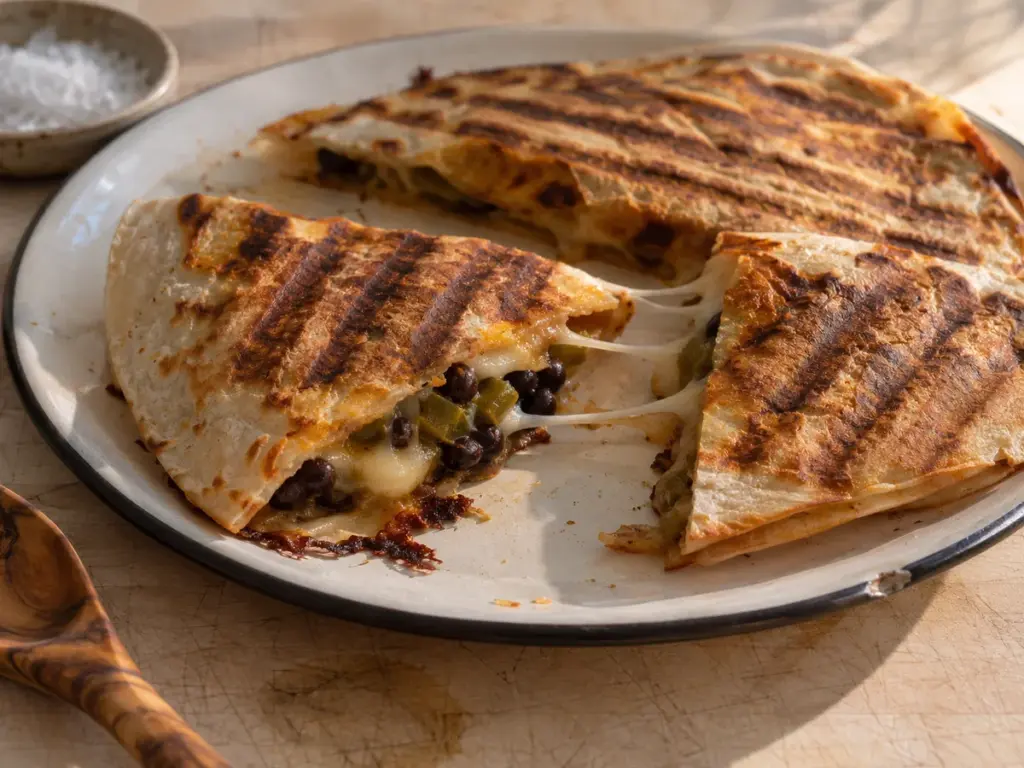
The cheese holds a quesadilla together, so it presses flat without sliding, and the ridges mark the tortilla on both sides.
Raw meat is where a level press falls behind. Without a slope, the patty or chicken breast sits in its own juices, so use a thermometer and hold to the same FSIS temperatures. Plates that swap or flip to a flat side turn the press into a griddle for eggs and pancakes, which ATK included in its tests.
6. Can a George Foreman Grill Make a Good Panini?
You can, on the right model. The brand sells "Grill & Panini" versions, and its family-size model lists an adjustable tilt that lets you grill flat for paninis, plus a 1-inch hinge for thick burgers and sandwiches. A grill locked at a slope tips the sandwich forward, so melted cheese tends to run toward the front.
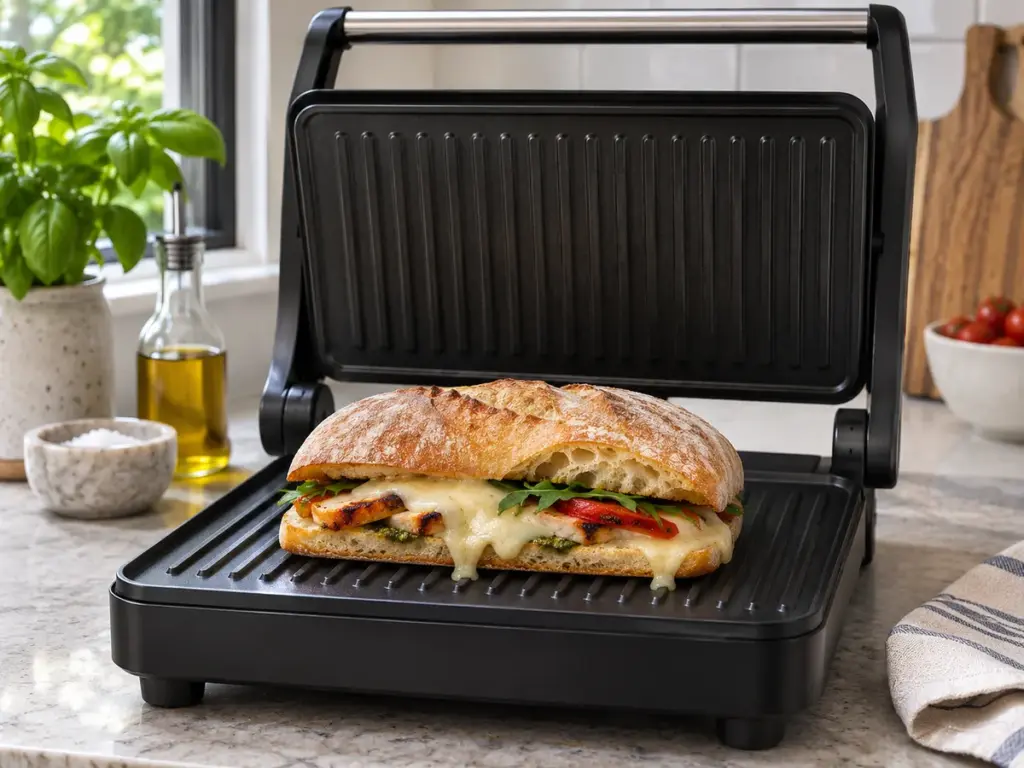
Use this order for a sandwich on a contact grill:
- Preheat until the ready light goes off.
- Set the plates level with the tilt or flat setting if your model has one.
- Build the sandwich low enough that the lid closes without lifting the hinge past its limit.
- Choose a firm bread such as ciabatta or focaccia, then cook until the crust is golden and the cheese has melted.
In the other direction, a panini press with level plates will cook your burger or chicken breast, but nothing carries the fat away. If you want flat plates anyway, models with swappable plates also work like a griddle.
7. Which George Foreman Styles Fit Which Kitchen?
Foreman sells several styles, and they differ in plates and cleanup more than in heat. Here is what the brand's own pages list:
| Style | Servings | Page lists |
|---|---|---|
| Basic plate grill | 2 or 4 | Slope, dishwasher-safe drip tray |
| Removable plate and panini | 4 | Dishwasher-safe plates, floating hinge |
| Submersible | 4 | Control panel comes off |
| Family-size grill and panini | 5 | Adjustable tilt, 1-inch hinge |
Look at the removable-plate model if scrubbing a fixed plate puts you off. Its page lists dishwasher-safe plates and a floating hinge, and the sloped design stays.
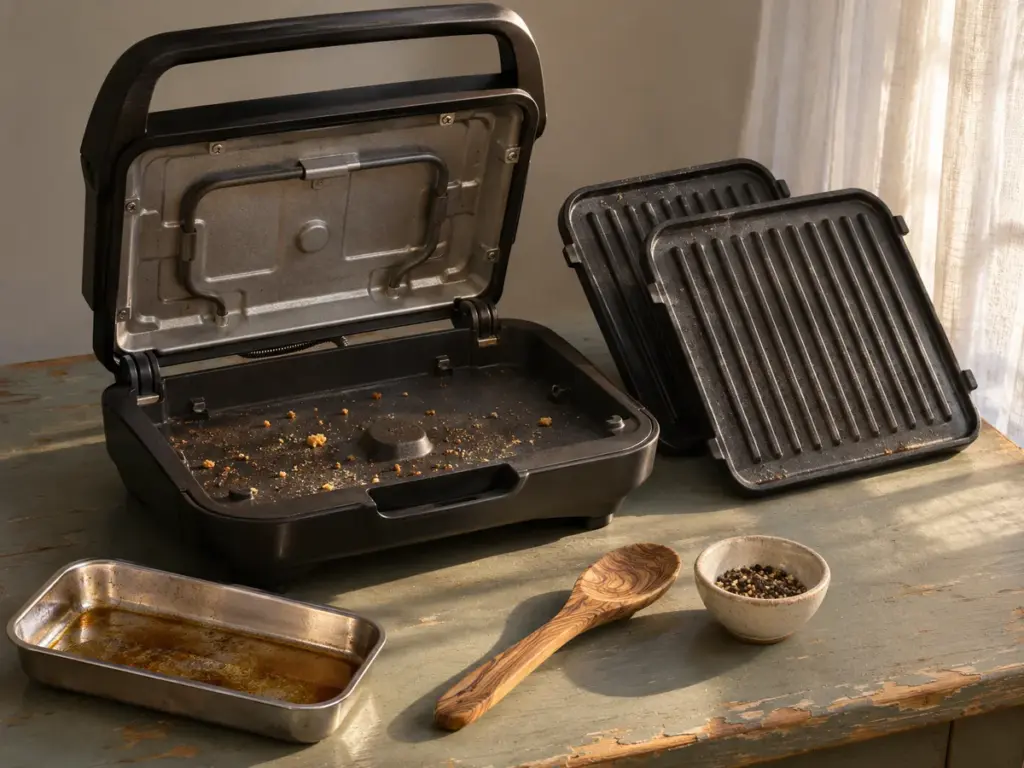
The submersible series goes a step further. Its page says to remove the control panel and put all the remaining parts in the dishwasher, or wash them in the sink instead.
ATK hand-washes removable press plates, so check your own manual before you load either style.
8. How Much Counter Space and How Many Servings?
Size changes by model more than by type. Foreman sells by servings, and the basic plate grill lists 2 servings while the family-size grill lists 5 servings plus vertical storage for small spaces. The family-size page also says you can use it indoors or outdoors.
ATK lists presses by plate area instead, and the spread is wide:
| Press | Plate area | Watts |
|---|---|---|
| Dash Express Griddle | 41.3 sq in | 760 |
| Proctor Silex | 65.8 sq in | 1,000 |
| Breville Sear & Press | 115 sq in | 1,800 |
ATK's advice for most kitchens is to consider a compact model unless you cook for crowds.
9. What Do the Two Machines Have in Common?
- Both come in compact sizes: Foreman lists a 2-serving grill, and ATK's smallest press has an 8-inch round plate.
- Both use a nonstick coating that wipes clean and scratches under metal tools.
- Both cook meat on hot plates, so the same FSIS temperatures apply to either one.
A Foreman "Grill & Panini" and a press with swappable plates already blur the line, so the decision comes down to the food you cook most.
10. Which One Should You Buy?
- You cook burgers, chicken or steak most weeks
- You want a drip tray under 80/20 ground beef
- You want vegetables browned on both sides
- You press melts and stacked sandwiches on thick bread
- You want ridges and a floating hinge
- You rarely cook raw meat on it
Three kitchens show how the choice plays out:
- Four people, burgers on Friday: a family-size Foreman with 5 servings.
- Grilled cheese for two on ciabatta: a press with a floating hinge.
- One cook, little counter space: a compact press or a 2-serving Foreman.
When a few models fit your budget, check these features, because they are where the extra money goes:
- A tilt or flat setting if you want burgers and sandwiches from one machine.
- A floating hinge for tall sandwiches.
- Removable plates and a dishwasher-safe tray for cleanup, which only some models offer.
- Ridges ⅛ to ¼ inch tall if you want grill marks that crisp without burning.
Both Foreman product pages list a 3-year limited warranty. Read the brand's other claims for what they compare against: the family-size page says its plate design gives "50% better searing" than other Foreman models, and the 42% fat figure comes from one quarter-pound patty. Neither number sets a Foreman against a panini press.
A machine you use a few times a year also needs a place to live. The family-size Foreman lists vertical storage for that, and ATK's 8-inch Dash has the smallest plate of the three presses above.
Presses do not have to cost much. ATK named the $38 Proctor Silex its Best Buy and the $30 Dash Express Griddle, an 8-inch round press with flat plates, its bargain pick.
Its cheapest tested press had smooth, round, fixed plates, while higher-priced models flipped between ridged and smooth. Prices change, so check the current listing.
If you want that flip-over plate on one machine, look at Cuisinart Griddler models, which ATK lists at 1,500 watts. With no counter space at all, a grill pan or skillet gives you the ridges on the stove.
Sources
- America's Test Kitchen, The Best Panini Presses (floating hinge, ridge height, wattage, plate area, prices, cleaning, nonstick)
- George Foreman, 2-Serving Basic Plate Grill and Panini (sloped design, drip tray, 42% fat claim, preheat light)
- George Foreman, Family-Size Grill & Panini (adjustable tilt, 1-inch hinge, 5 servings, indoor and outdoor use)
- George Foreman, 4-Serving Removable Plate & Panini Grill (dishwasher-safe plates, floating hinge, no variable temperature control)
- George Foreman, 4-Serving Submersible Grill (control panel removal, dishwasher or sink)
- George Foreman GR10BCAN use and care manual (utensils, drip tray, unplugging)
- Breville, Panini Press Recipes (bread, moisture barrier, quesadillas, flatbreads, hash browns)
- National Cancer Institute, Chemicals in Meat Cooked at High Temperatures
- USDA FoodData Central, FDC 174036 (80/20 ground beef, raw, 20 g fat per 100 g)
- Wikipedia, George Foreman Grill (1994 introduction, slanted surface, floating hinge, removable drip tray)
- USDA FSIS, Safe Minimum Internal Temperature Chart
Frequently Asked Questions
Does a George Foreman Grill Have Temperature Control?
Not on the three styles whose pages we read. The 2-serving page lists a power light that shuts off when the grill is preheated, and the 4-serving removable-plate and submersible pages list "Variable Temperature Control: No" and a temperature indicator light. The family-size page does not say, so check the spec of the model you are buying.
Because you cannot turn the heat down on those styles, a thermometer tells you when food is done.
Can You Cook Frozen Burger Patties on a George Foreman Grill?
Yes. The suggested grilling chart in the GR10BCAN manual lists hamburger as fresh or frozen, with a time for each, so read the time for your own model's chart instead of guessing.
Fresh or frozen, push a thermometer into the center of the patty and wait for 160°F, the USDA FSIS temperature for ground beef.
Can You Make a Panini Without a Panini Press?
Yes. ATK's test kitchen has used stovetop grill pans or cast-iron skillets with a grill press or a heavy Dutch oven on top to get crisp paninis without a press.
Is a Panini Press the Same as a Sandwich Maker?
No. A press has flat or ridged plates that take thick bread, while a sandwich maker has shaped pockets that seal the edges, so it suits sliced bread.

Food writer at GustoMeadow. Writes ingredient substitutes, food comparisons, taste guides and storage guides for home cooks.
Storage and food-safety numbers follow USDA, FDA and university extension guidance.



