
Bulgur is cracked wheat, so it contains gluten, while buckwheat is a gluten-free seed, not wheat.
- If you avoid gluten, buy buckwheat labeled gluten-free, since bulk bins and some soba carry wheat.
- Bulgur cooks in 10 to 12 minutes and buckwheat in about 20, with 2 cups of liquid per cup.
- Buckwheat replaces bulgur in pilafs, but not in tabbouleh.
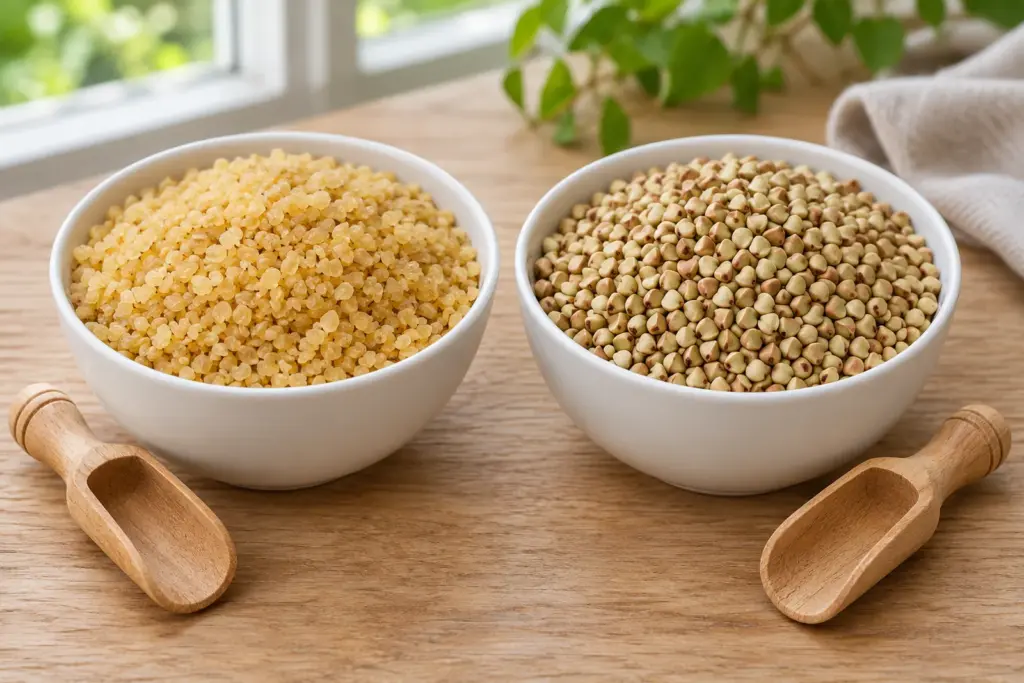
A cooked cup has about the same protein, 5.6 g for bulgur and 5.7 g for buckwheat, but bulgur has nearly double the fiber.
You see both grains in the same pilafs, soups and grain bowls, and the gap between them matters more than it does in most comparisons of look-alike grains. Bulgur is wheat that has been parboiled, dried and cracked. Buckwheat is the triangular seed of a leafy plant in the rhubarb family, so a recipe written for one will not automatically work when you use the other.
1. What Is the Difference Between Buckwheat and Bulgur?
The plant they come from decides most of it. Bulgur comes from wheat, so it has gluten and a wheat grain's chew. Buckwheat is a seed from a broadleaf plant in the Polygonaceae family, a relative of rhubarb and sorrel, so it has no gluten and tastes earthier. Use this table to compare the traits that change what you cook:
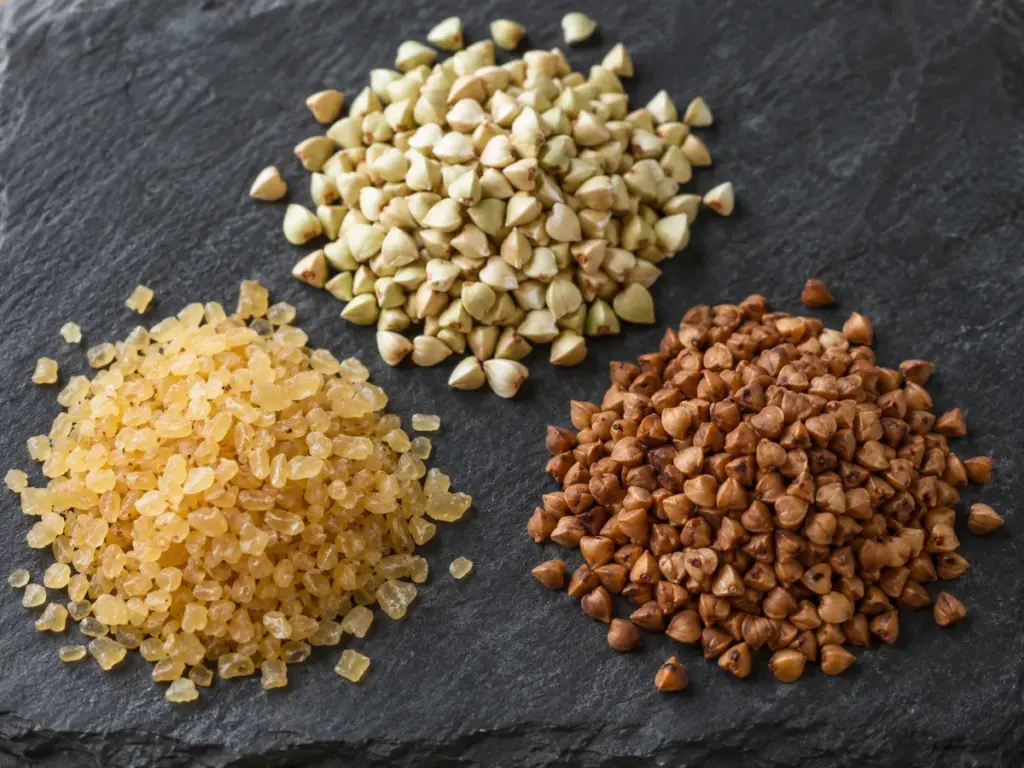
- It is the hulled seed of a broadleaf plant (Polygonaceae), not a grass.
- It is sold as raw groats (pale green-tan) or kasha (toasted, brown).
- It is wheat kernels, parboiled, dried and cracked.
- It is sold in fine, medium and coarse grinds.
| Trait | Buckwheat | Bulgur |
|---|---|---|
| Texture when cooked | Soft, and it turns mushy if overcooked | Fluffy and chewy, with separate grains |
| Cook per 1 cup dry | 2 cups liquid, 20 minutes, about 4 cups cooked | 2 cups liquid, 10 to 12 minutes, about 3 cups cooked |
- Per cooked cup, buckwheat has 155 calories, 5.7 g protein and 4.5 g fiber, while bulgur has 151 calories, 5.6 g protein and 8.2 g fiber.
- Pantry life by USDA FoodKeeper is 2 months for buckwheat, or 4 months frozen, and 6 to 12 months for bulgur.
Buckwheat is best in porridge, skillet sides, and cooked and cooled salads. Bulgur is best in tabbouleh, kibbeh, quick pilaf and stuffing.
Gluten and cooking time pull the two furthest apart, and nutrition is close enough that it rarely decides the pick.
2. Is Buckwheat or Bulgur Gluten-Free?
Bulgur is not gluten-free. It is made from wheat kernels, so it carries wheat gluten, and you need to skip it if you have celiac disease or a wheat allergy. Cracked wheat is the same grain crushed without the parboiling, so it has gluten too.
Buckwheat is gluten-free by nature. It is the seed of a broadleaf plant, and the Celiac Disease Foundation lists buckwheat groats, also called kasha, among naturally gluten-free foods. Freekeh is young green wheat that is roasted and cracked, so freekeh carries gluten just as bulgur does.
Soba is the other trap. Noodles made with only a percentage of buckwheat flour contain wheat, while 100% buckwheat soba does not, so read the ingredient list before you assume a buckwheat noodle is safe for you.
- Bulgur, in every grind
- Cracked wheat
- Freekeh
- Soba made with wheat flour
- Buckwheat groats
- Kasha (toasted buckwheat groats)
- Soba made from 100% buckwheat
- Buckwheat flour
3. How Are They Made, and How Do They Taste?
Bulgur is wheat that has already been cooked once. The kernels are parboiled, dried and cracked, which is why the grain needs only a soak or a short simmer, and the USDA counts it as a whole grain. It is sold in grinds from fine to coarse, and fine bulgur suits tabbouleh and kibbeh while medium and coarse suit pilaf and stuffing.
Buckwheat groats are the hulled seeds of the plant, sold raw or toasted. Toasted groats are the ones you will see labeled kasha, and toasted kasha smells stronger, looks dark brown and usually cooks a little faster than raw groats.
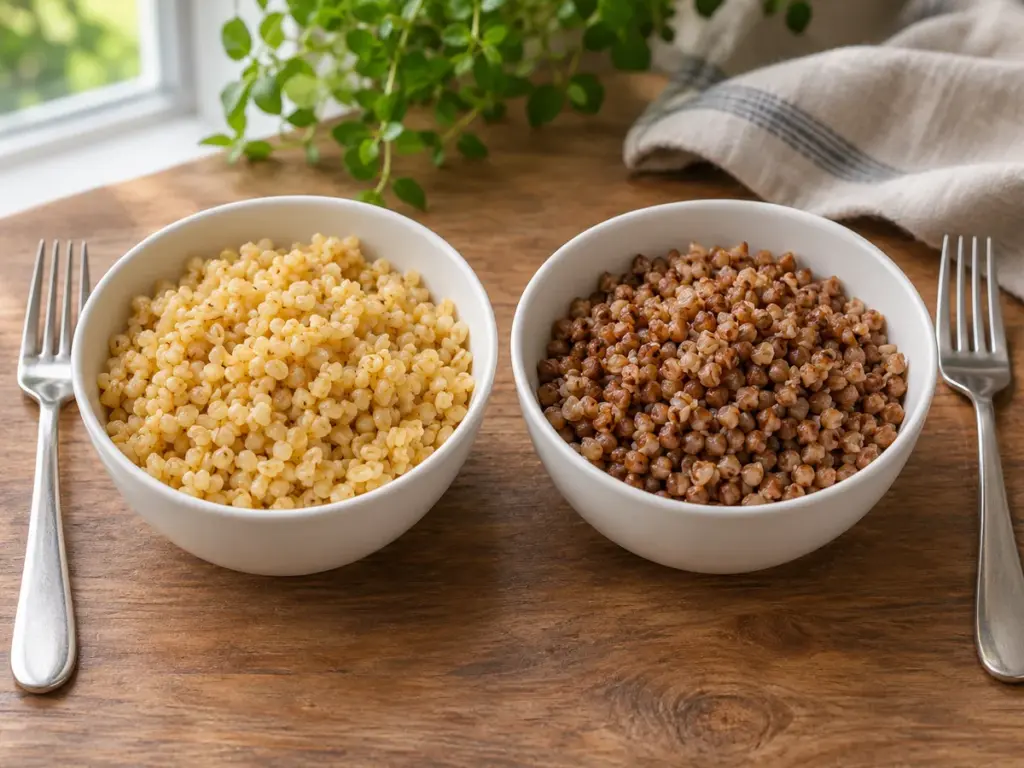
Cooked bulgur is fluffy and chewy with a mild, nutty wheat flavor, and the grains stay separate. Buckwheat tastes earthier, and raw groats can read slightly bitter, while kasha is deeper and nuttier. Buckwheat also softens fast, so check it early and drain any liquid left over instead of letting it sit.
4. How Do You Cook Buckwheat and Bulgur?
The Whole Grains Council gives both grains the same 2 cups of liquid per 1 cup of dry grain, so the clock is what separates them. Use this chart as a starting point:
| Grain | Dry | Liquid | Time | Cooked yield |
|---|---|---|---|---|
| Bulgur | 1 cup | 2 cups | 10 to 12 minutes | About 3 cups |
| Buckwheat | 1 cup | 2 cups | 20 minutes | About 4 cups |
Package directions beat this chart for kasha and for bulgur, because the brand and the grind change the numbers you need. You can often just soak fine bulgur in boiling water, while coarse bulgur can take closer to 20 minutes of simmering. Several brands do not print the grind size, so you judge it by the grain and the time on the bag.
- Measure. Use 1 cup of dry grain and 2 cups of water or broth.
- Boil. Bring the liquid to a boil, then stir in the grain.
- Cover and simmer low. Give bulgur 10 to 12 minutes and buckwheat about 20.
- Check and fluff. Taste at the early end of the range, drain any liquid left, and fluff with a fork.
5. Can You Swap Buckwheat for Bulgur?
Yes, in cooked dishes, with two changes. A cup of dry buckwheat makes about 4 cups cooked against about 3 for bulgur (Whole Grains Council), so use ¾ cup of dry buckwheat for each 1 cup of dry bulgur and give it 20 minutes instead of 10 to 12. To go the other way, you use 1 ⅓ cups of dry bulgur for 1 cup of dry buckwheat. Those amounts come from the council's yields, so adjust to taste.
- Pilaf and stuffed peppers
- Soups and stews
- Warm grain bowls
- Breakfast porridge
- Tabbouleh, where bulgur only soaks
- Kibbeh, built on fine bulgur
- Any dish that must be gluten-free, where bulgur is out
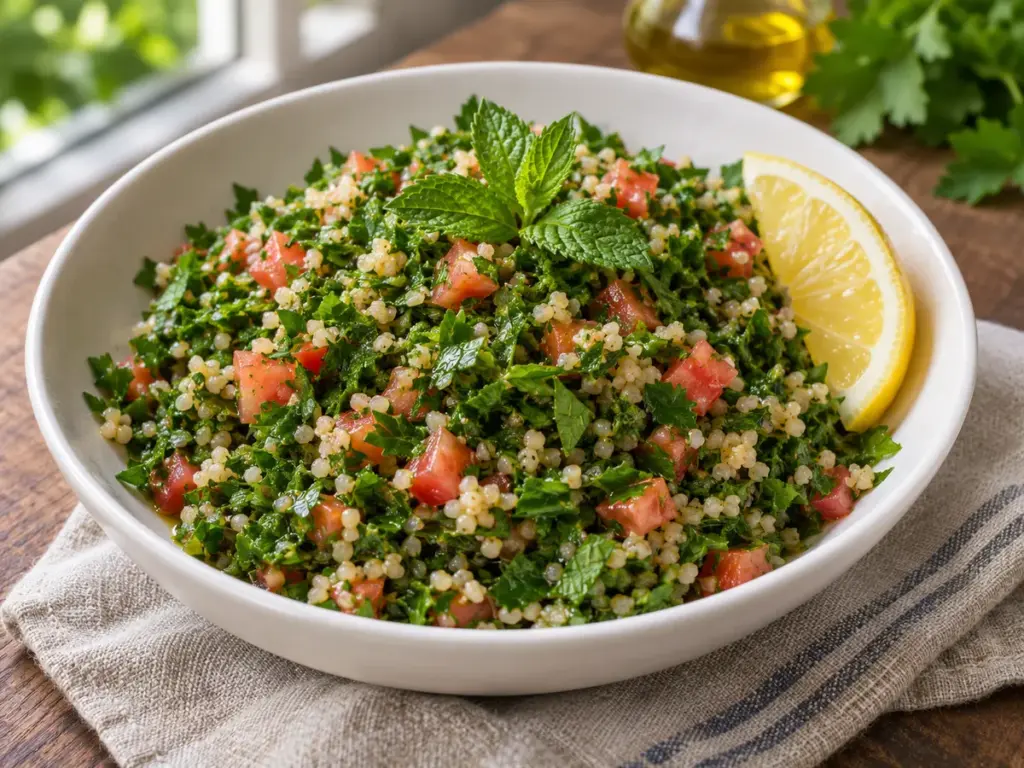
Tabbouleh is the clearest failure. Fine bulgur soaks up lemon juice and tomato juice with little cooking, while you have to cook buckwheat and cool it first, and it can turn soft under a wet dressing.
If you need a gluten-free tabbouleh, quinoa (2 cups of liquid per cup, 12 to 15 minutes, per the Whole Grains Council) is the closer stand-in for you to try, and it is one of several grains that work in salads, as you can see among the other grains that replace bulgur.
6. How Do the Nutrition Numbers Compare?
You get almost the same calories and protein from a cooked cup of either grain, and the gap shows up in fiber and minerals. These numbers come from USDA FoodData Central, using FDC 170686 (roasted buckwheat groats, cooked) and FDC 170287 (bulgur, cooked), scaled from 100 g to the USDA cup weight:
| Per cooked cup | Buckwheat | Bulgur |
|---|---|---|
| Weight | 168 g | 182 g |
| Calories | 155 | 151 |
| Protein | 5.7 g | 5.6 g |
| Fiber | 4.5 g | 8.2 g |
| Magnesium | 86 mg | 58 mg |
| Iron | 1.3 mg | 1.7 mg |
Protein is a tie, so you can ignore it when you choose. Bulgur has nearly double the fiber, 8.2 g against 4.5 g, and buckwheat has about 50% more magnesium. Published glycemic index values for both grains sit in the same low-to-medium range and shift with the study, so neither gets a clear edge there.
7. Which Should You Buy or Use?
Pick the grain that fits the job you are cooking for:
- You avoid gluten: buy buckwheat or kasha in a sealed package labeled gluten-free. Bulgur is wheat in every form.
- Tabbouleh, kibbeh or a side ready in about 12 minutes: fine or medium bulgur. You can serve tabbouleh with roasted cauliflower and chicken shawarma.
- Morning porridge: cook buckwheat groats, which can stand in for oats in a breakfast bowl when you need a gluten-free option.
- A skillet side with mushrooms and onions: choose kasha, because its toasted flavor holds up to browned vegetables.
- Fiber matters most: reach for bulgur, at 8.2 g per cooked cup.

Check your pantry before you stock up. USDA FoodKeeper lists bulgur at 6 to 12 months in the pantry, and whole-grain buckwheat at only 2 months in the pantry or 4 months in the freezer, so buy buckwheat in small bags, or freeze a larger bag.
Sources
- Celiac Disease Foundation, Gluten-Free Foods: buckwheat groats (kasha) listed as naturally gluten-free, cross-contact, bulk bins.
- Celiac Disease Foundation, Sources of Gluten: wheat derivatives, soba made with only a percentage of buckwheat flour.
- Whole Grains Council, Cooking Whole Grains: liquid, time and yield for bulgur and buckwheat.
- USDA FoodData Central, FDC 170686 (buckwheat groats, roasted, cooked) and FDC 170287 (bulgur, cooked).
- USDA FoodKeeper: pantry and freezer times for bulgur and buckwheat.
- Wikipedia, Bulgur: how bulgur is made, grinds, USDA whole-grain recognition.

Food writer at GustoMeadow. Writes ingredient substitutes, food comparisons, taste guides and storage guides for home cooks.
Storage and food-safety numbers follow USDA, FDA and university extension guidance.



