
Ramen is a type of noodle and also the name of a Japanese soup, which makes it a confusing food comparison.
- Ramen noodles are wheat noodles made with kansui, an alkaline salt mix behind their yellow color and springy chew.
- Udon, soba and Italian pasta have no kansui.
- The instant ramen you buy in a block or cup is the same noodle, fried and dried.
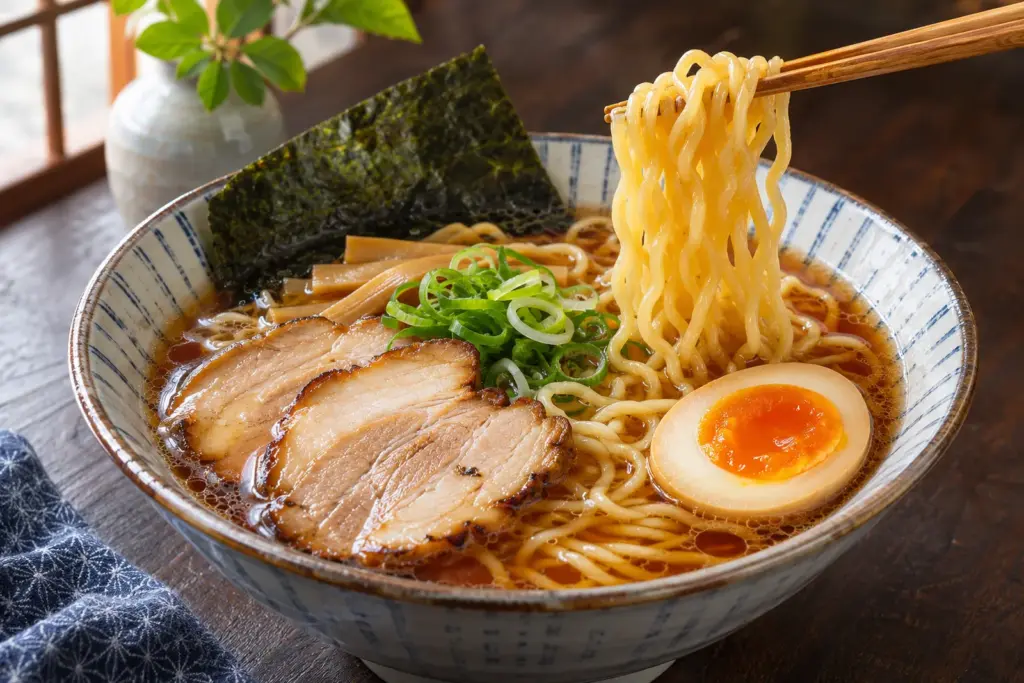
1. What Is the Difference Between Ramen and Noodles?
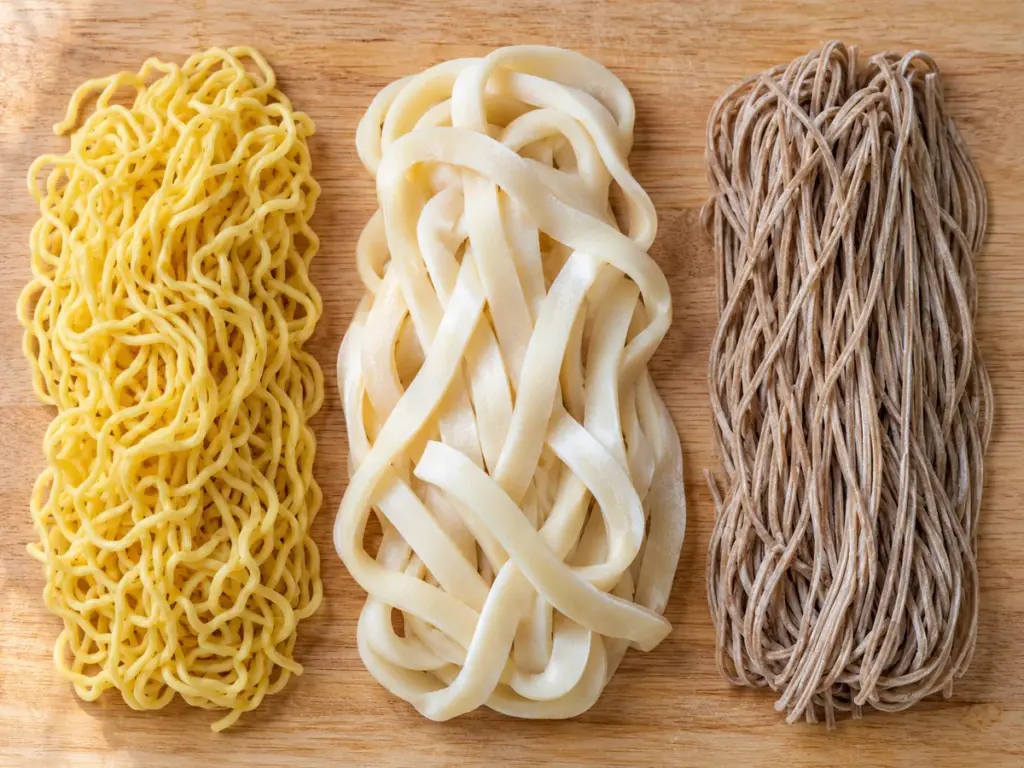
"Noodles" covers any dough cut into strips, and the ones you are most likely to buy or order next to ramen are udon and soba. All three are Japanese, and they differ in flour, color and bite.
| Noodle | Made from | Color and bite | Usually served |
|---|---|---|---|
| Ramen | Wheat flour, water, salt, kansui | Yellow, springy, firm | Hot broth, dipping bowls, stir-fries |
| Udon | Wheat flour, water, salt | Pale, thick, soft, chewy | Hot broth, or cold with sauce |
| Soba | Buckwheat, often with wheat flour | Grayish brown, thin, nutty | Cold with sauce, or hot broth |
Only the ramen row lists kansui, and that single ingredient is why you see a yellow, springy noodle in a ramen bowl and a pale or grayish one in the other two.
Two noodles from outside Japan also show up in most US grocery aisles.
- Italian dried pasta is durum wheat semolina and water, and it stays pale gold and firm when cooked al dente, which suits tomato, cream and oil sauces.
- Chinese egg noodles (lo mein, chow mein) are wheat flour and egg, pale gold to yellow and tender, and cooks stir-fry them or drop them in soup.
Between soba and udon noodles, the flour, the thickness and the broth each one suits all change.
If the soba label says 80 percent buckwheat (hachiwari), the other 20 percent is wheat flour holding the strands together, while juwari soba is 100 percent buckwheat and breaks easily.
Rice noodles, the base of pho and pad thai, are made from rice flour and water, so they have no wheat gluten for kansui to tighten. Glass noodles behave differently again, since they are made from bean or potato starch.
2. What Does Kansui Do to Ramen Noodles?
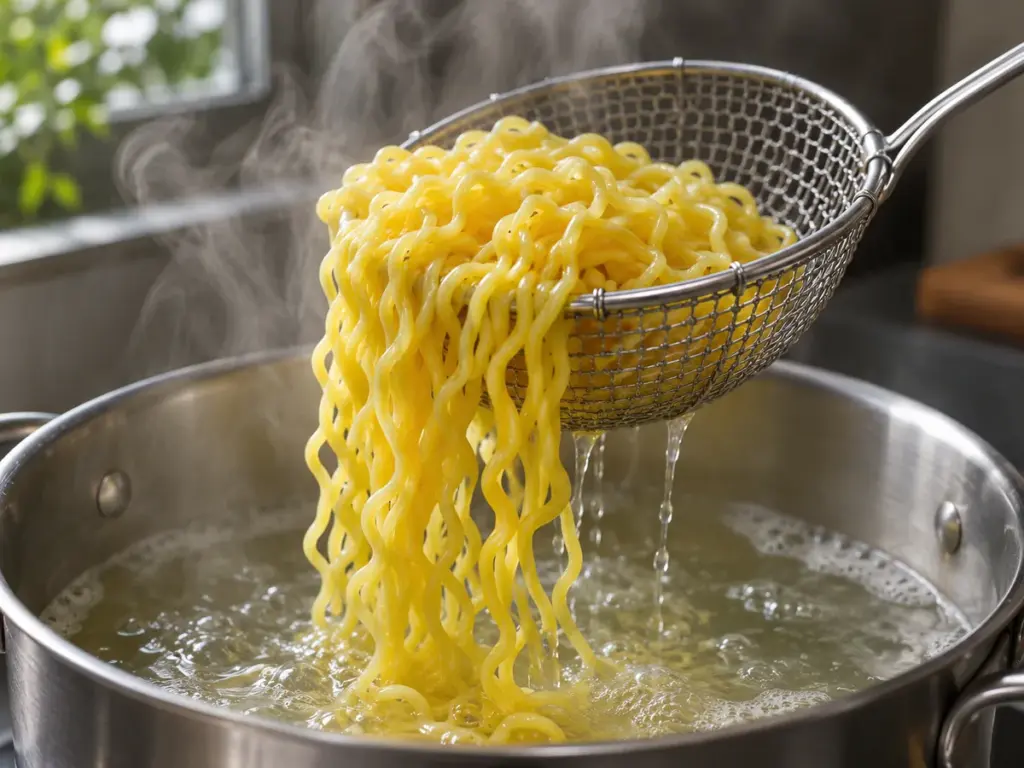
Kansui is a mix of potassium carbonate and sodium carbonate dissolved in water, and one common blend is about 80 percent potassium carbonate to 20 percent sodium carbonate. It raises the pH of the dough, and you see two results in the bowl.
- The yellow color. Wheat flour contains flavones that are nearly colorless in plain dough and turn yellow at alkaline pH, so ramen noodles turn yellow even when no egg goes in.
- The springy chew. Together with salt, kansui tightens the gluten in the flour, which is why ramen noodles stay firm and bouncy while you slurp them. The alkali also makes the strands slippery and elastic.
3. Does Ramen Mean the Noodles or the Whole Bowl?
When you order ramen in a restaurant, you get the whole bowl: wheat noodles in hot broth with toppings such as sliced chashu pork, scallions, bamboo shoots (menma), a seasoned soft-boiled egg and nori.
The broth and its seasoning base, called tare, separate one style from another, and the three main tare are shio (salt), shoyu (soy sauce) and miso.
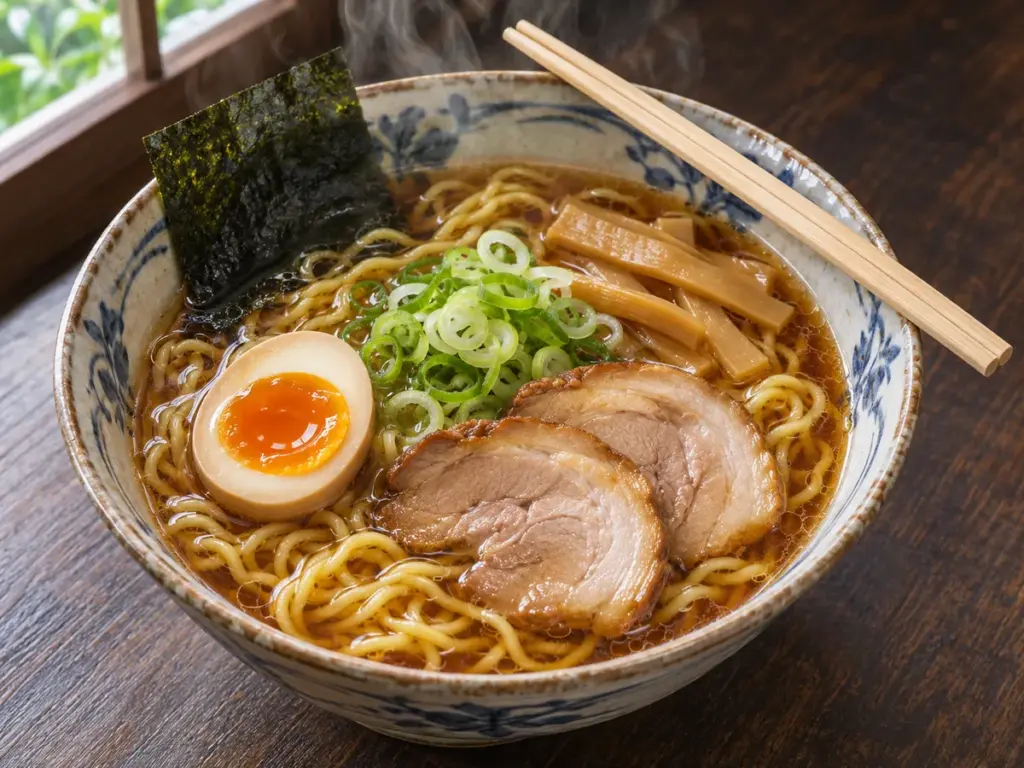
Chicken or pork usually goes into the broth, though vegetable and fish stocks appear too. You will find it served clear (chintan) or opaque and creamy (paitan), and pork-bone tonkotsu is the best-known creamy one.
How Do Regional Ramen Styles Differ?
Ramen noodles change in thickness and curl from city to city, and the broth changes with them.
- Sapporo ramen comes in a rich miso broth, often topped with sweet corn, butter, bean sprouts, pork and garlic.
- In Hakata, the broth is milky tonkotsu and the noodles are thin and straight.
- Tokyo ramen pairs a soy-flavored chicken broth with slightly thin, curly noodles.
- Hakodate is known for salt-flavored (shio) ramen.
- Kitakata ramen uses thick, flat, curly noodles in a pork and niboshi (dried sardine) broth.
Even so, the tare and broth decide most of what you taste. Shoyu broth is lighter and saltier, and miso broth is bolder, so miso and shoyu ramen feel like different meals.
If you have never ordered a miso bowl, expect it to taste earthy and bold.
With tsukemen, the noodles and the soup arrive in separate bowls, so you dip the noodles into a soup that can be hot or chilled before each bite.
In summer you can order hiyashi chuka, chilled ramen served on a plate with omelet strips, ham and cucumber and a vinegary soy dressing.
4. Is Ramen a Japanese or Chinese Noodle?
Noodles are far older than ramen: the oldest ones found so far, in a bowl dug up at the Lajia site in northwest China, are about 4,000 years old, and a 2005 report found millet in the residue.
The earliest written record of noodles comes from the Eastern Han period (25 to 220 CE), and ramen itself started as a Chinese wheat-noodle soup that became Japanese in the port cities where Chinese cooks settled.
You can follow that shift from Chinese noodle soup to Japanese ramen in five dates.
- 1860s. Japan reopens its ports, and Chinese noodle-eating culture arrives with the people who settle there.
- By 1887. About twenty Chinese restaurants in Yokohama's Nankin-machi district serve noodle dishes, which locals call "Nankin soba".
- 1910. A retired customs official opens a Chinese restaurant in Asakusa, Tokyo, that sells the dish as "shina soba" and adds chashu pork and menma.
- 1921. Takeya, a Chinese restaurant in Sapporo, is linked to the name "ra-men", and the dish becomes a city-wide fad.
- 1958. Momofuku Ando launches Chicken Ramen, the first instant ramen.
5. How Is Fresh Ramen Different from Instant Ramen?
Fresh and instant ramen both start from wheat flour and kansui salts, and the ingredient list on Maruchan's chicken ramen names potassium carbonate and sodium carbonate, for example. The two differ in what happens to the noodles after the dough is cut.
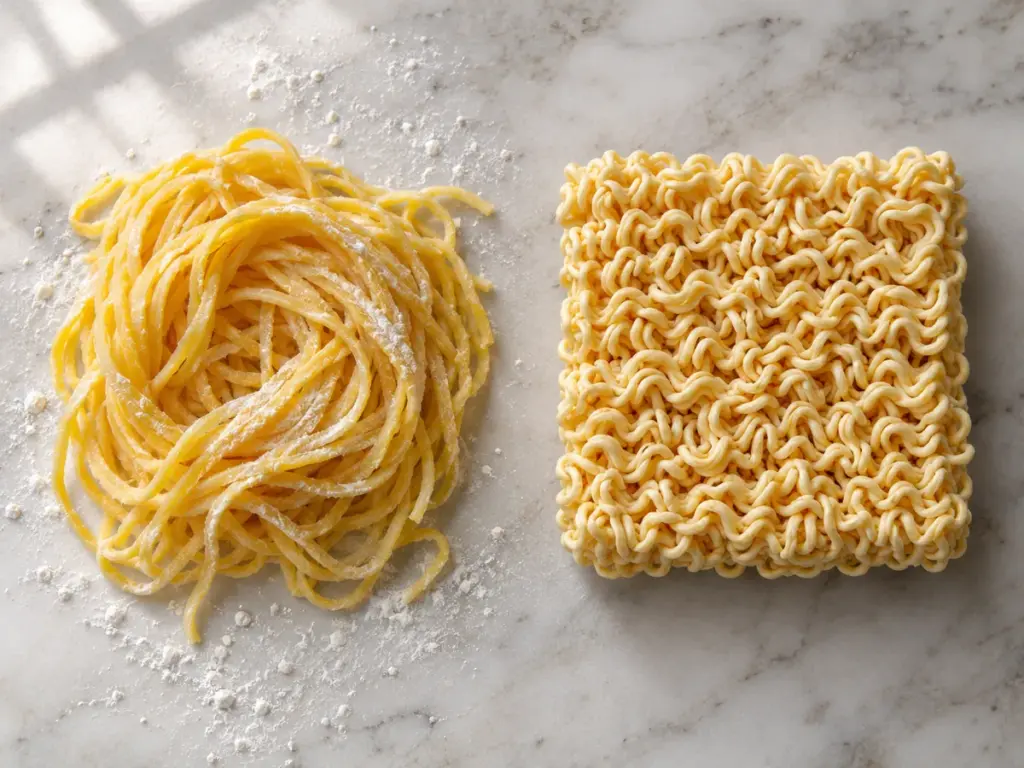
- It is sold chilled, frozen or fresh at a ramen shop.
- It cooks in a few minutes.
- Its bite is springiest, with a clean wheat taste.
- Seasoning is often left out, so you check the label for salt.
- It is flash-fried in palm oil (per the Nissin Cup Noodles label) to keep on a shelf.
- Hot water softens it.
- The seasoning packet carries most salt.
Instant blocks pick up fat in the fryer, and USDA's entry for dry instant ramen soup lists 17.59 g of fat per 100 g.
On instant ramen, sodium is the number to check: one 2.25 oz (64 g) cup of Nissin Cup Noodles Chicken Flavor lists 1,160 mg of sodium, about half of the 2,300 mg Daily Value the FDA uses on labels.
Block-style packs often count half a block as one serving (Maruchan's chicken ramen lists 43 g per serving), so you double the printed number if you eat the whole pack.
To compare a cup with a block pack, you divide each sodium number by the grams in its serving. Labels change by flavor and year, so the one on your package is the one to trust.
Dried instant blocks keep in the pantry, while fresh ramen belongs in the refrigerator, so how long ramen noodles last depends on which kind you bought.
6. Are Ramyeon, Pot Noodle and Indomie the Same as Ramen?
Ramyeon, Pot Noodle and Indomie are instant noodles sold under other names, and each one comes from a different country.
- Ramyeon is the Korean word for instant noodles, borrowed from Japanese rāmen.
- Pot Noodle is a UK brand: you add boiling water to a pot of noodles, dried vegetables and flavoring powder.
- Indomie comes from Indonesia, where Indofood has made it since 1972, and it is sold as soup noodles and as Mi Goreng, a fried noodle dish with no soup.
South Korean ramyeon tends to be spicier than Japanese ramen, and cooks often eat Shin Ramyun, a well-known spicy brand, with kimchi.
In English, ramen is the usual spelling, while brand names such as Shin Ramyun spell the Korean word differently.
7. Are Tan Tan, Wonton and Singapore Noodles Ramen?
Some noodle dishes look like ramen but follow different rules, so the name on the menu tells you which noodle to expect.
- Tantanmen is a Japanese ramen dish: ramen noodles in a red, spicy chili and sesame soup with minced pork and scallion, adapted from Sichuan dan dan noodles.
- Wonton noodles are fresh, thin Cantonese egg noodles, blanched for only about 10 seconds so they stay firm when you eat them in broth with dumplings.
- Pancit canton is the Filipino egg-noodle dish adapted from lo mein and chow mein, served stir-fried or as instant noodles.
- Singapore noodles are thin rice vermicelli stir-fried with curry powder. The dish comes from Hong Kong, so if you order it expecting ramen, you get rice noodles with no wheat and no kansui.
Wonton noodles and pancit canton are named for the egg in the dough, and ramen noodles are defined by their kansui, so the ingredient list tells you more than the name does.
8. Which Dishes Use Rice Noodles Instead of Wheat?
Several Southeast Asian noodle dishes are built on rice noodles, so kansui plays no part in them and you will not get a springy ramen bite.
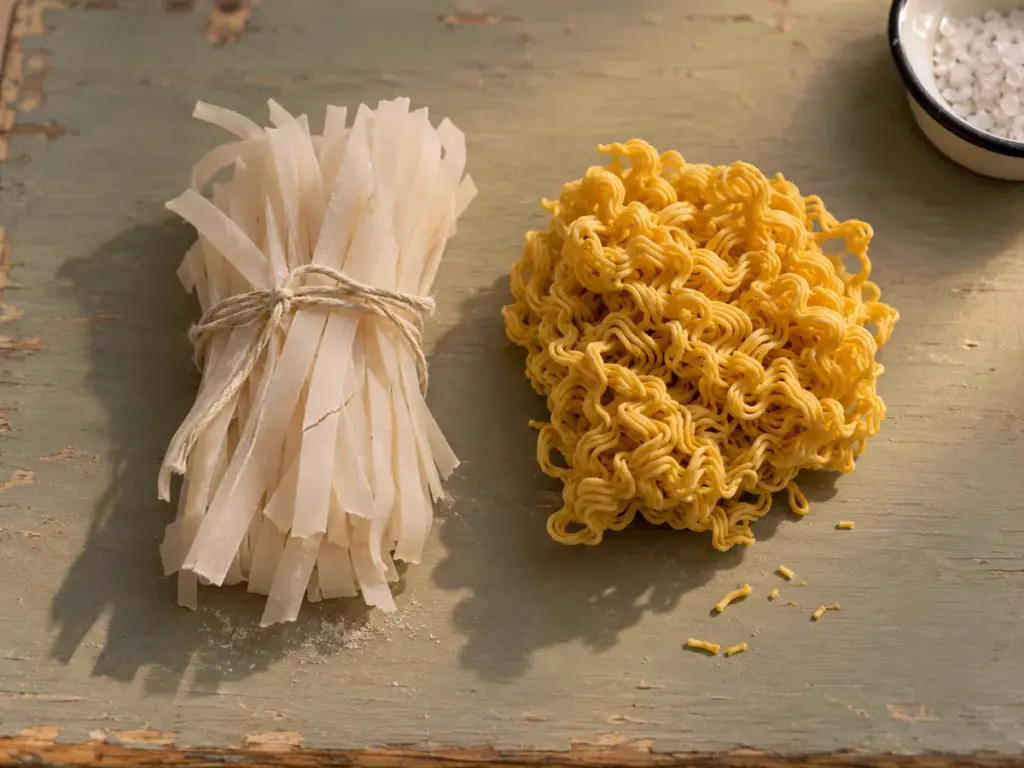
| Dish | Noodle | How it is served |
|---|---|---|
| Pho | Flat rice noodles (bánh phở) | Beef or chicken broth, Vietnam |
| Pad thai | Rice noodles | Stir-fried with egg and tofu, Thailand |
| Laksa | Thick rice noodles or rice vermicelli | Spicy coconut or sour tamarind soup |
Laksa sometimes breaks the pattern, because Johor laksa uses wheat-based spaghetti.
9. Can You Use Other Noodles Instead of Ramen?
Yes, but each swap changes the bite. We'd call thick udon the closest stand-in in a ramen bowl, though you get soft, chewy noodles instead of springy ones, and ramen noodle substitutes such as soba and Chinese egg noodles work too.
In a stir-fry, ramen noodles are a fair stand-in for lo mein noodles if you cook them until just tender and drain them well so the sauce clings.
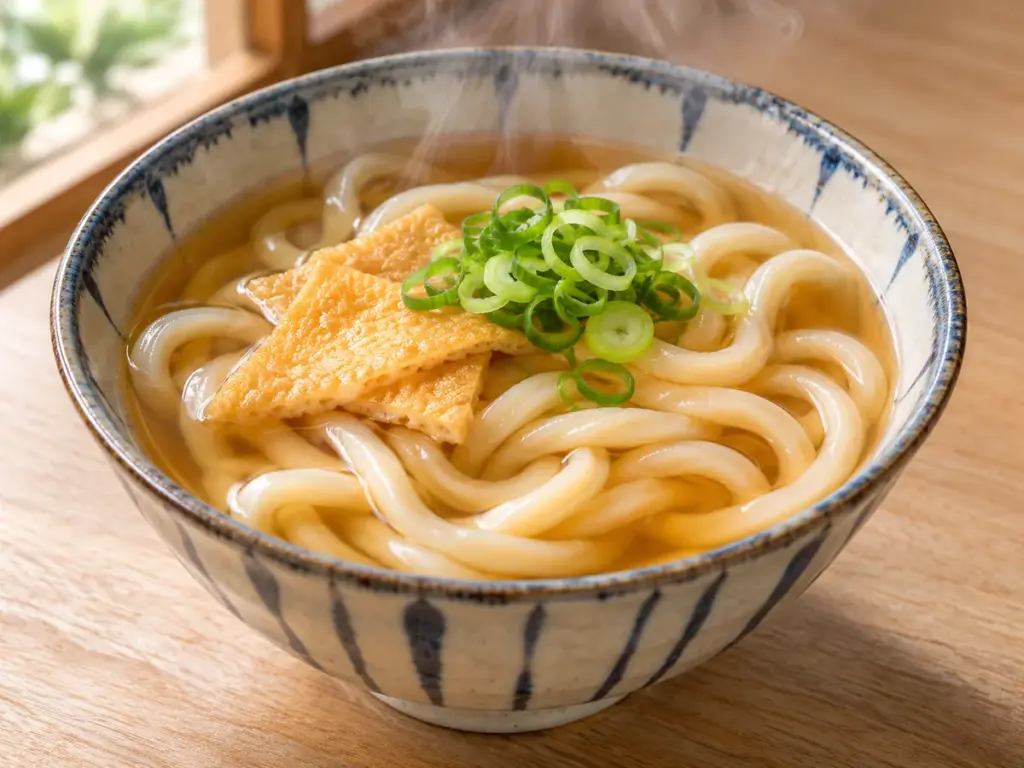
Spaghetti is the easiest swap to find, but plain spaghetti does not taste like ramen because it has no kansui. You can get closer if you raise the pH of the cooking water yourself.
Even with the trick, the pasta is still semolina, so the thinnest strand you have gives you the closest result. Real ramen noodles are the better buy whenever the noodles are the point of the meal.
10. Which Noodle Should You Buy?
The dish you are making decides which noodle fits best.
- Ramen soup. Fresh ramen noodles give you the springiest bite, so they are the first choice if you can find them. An instant block works on a weeknight when you add your own egg and scallions.
- Soft, chewy noodles in broth. Udon fits, because it has no kansui and stays pale and soft instead of bouncy.
- Cold noodles with a dipping sauce. Soba brings a nutty flavor, and the label tells you the buckwheat share: 100 percent buckwheat breaks easily, while an 80 percent blend holds together better.
- A stir-fry. Chinese egg noodles suit lo mein or chow mein, and in the US a package labeled egg noodles has to contain at least 5.5 percent egg solids, so you can trust the egg is really in there.
- Tomato or cream sauce. Italian dried pasta works here, because its firm semolina bite suits a sauce better than a springy noodle does.
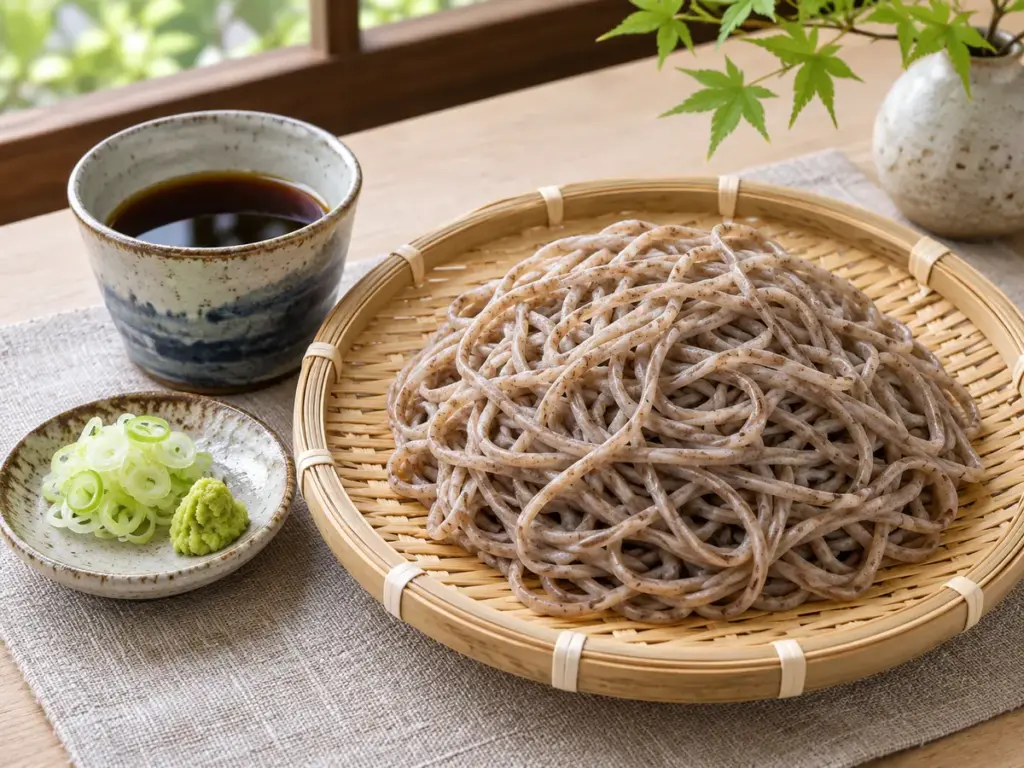
On a package, a ramen-style noodle lists kansui, potassium carbonate or sodium carbonate in the ingredients, and yellow color alone is not proof because egg noodles are yellow too.
Once you have picked the noodles, ramen bowl sides turn the bowl into a full dinner.
Sources
- Wikipedia, Alkaline noodles: kansui blend, yellow color from flavones at alkaline pH, elastic texture.
- Myojo USA, What Is Kansui?: kansui as sodium and potassium carbonate, firmness and springiness with salt.
- Wikipedia, Ramen: wheat flour, salt, water and kansui, tare, broths, regional styles, tsukemen, hiyashi chuka, tantanmen.
- Wikipedia, Noodle: the Lajia noodles and the earliest written record.
- Kikkoman, The Japanese Table: ramen's history from Nankin soba to shina soba and the name "ramen".
- Nippon.com, Ando Momofuku: Chicken Ramen in August 1958 and flash-frying.
- Food Lion listing, Nissin Cup Noodles Chicken Flavor and Open Food Facts, Maruchan Chicken Ramen: label sodium, serving sizes, ingredients.
- USDA FoodData Central, FDC 171177: fat in dry instant ramen soup.
- FDA, Daily Value on the Nutrition Facts label: sodium Daily Value of 2,300 mg.
- Wikipedia, Ramyeon, Pot Noodle and Indomie: origin and type of each brand.
- Wikipedia, Wonton noodles, Pancit canton and Singapore-style noodles: what each dish is made from.
- Wikipedia, Pho, Pad thai, Laksa and Q texture: noodles, broths and the QQ term.
- Just One Cookbook, Soba Noodles: juwari and hachiwari, soba versus udon.
- 21 CFR 139.150, Noodle products: 5.5 percent egg solids in egg noodles.
- The Takeout, turning pasta into ramen noodles: baking soda amounts and baked baking soda.

Food writer at GustoMeadow. Writes ingredient substitutes, food comparisons, taste guides and storage guides for home cooks.
Storage and food-safety numbers follow USDA, FDA and university extension guidance.



