
An electric griddle is a plug-in plate that holds the temperature you set, while a stove top heats your pans.
- Choose the electric griddle for pancakes, bacon and eggs in one batch.
- Choose the stove top to simmer or stir-fry, as in many cookware and appliance comparisons.
- Keep nonstick under 500°F, where Poison Control says Teflon starts to break down.
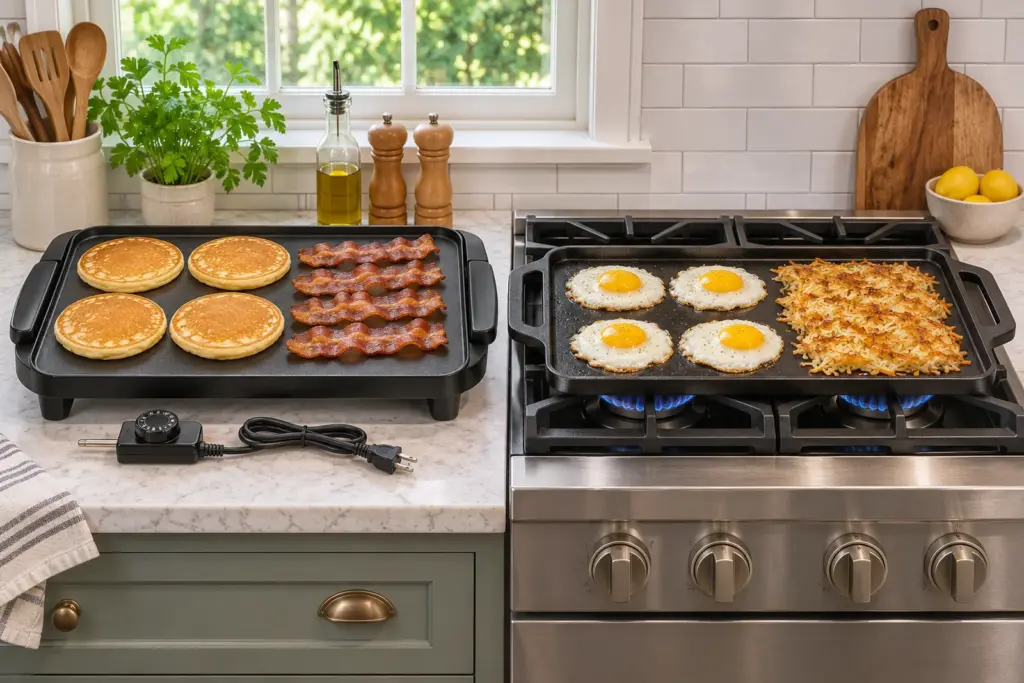
A Hamilton Beach electric griddle offers 200 square inches of cooking space, enough for a full breakfast at once.
1. What Is the Difference Between an Electric Griddle and a Stove Top?
An electric griddle is a flat plate with a low rim, its own heating element and a thermostat, so all it needs is an outlet. A stove top is the set of gas, coil, glass or induction burners on your range, and it heats whatever you set on it, a griddle plate included.
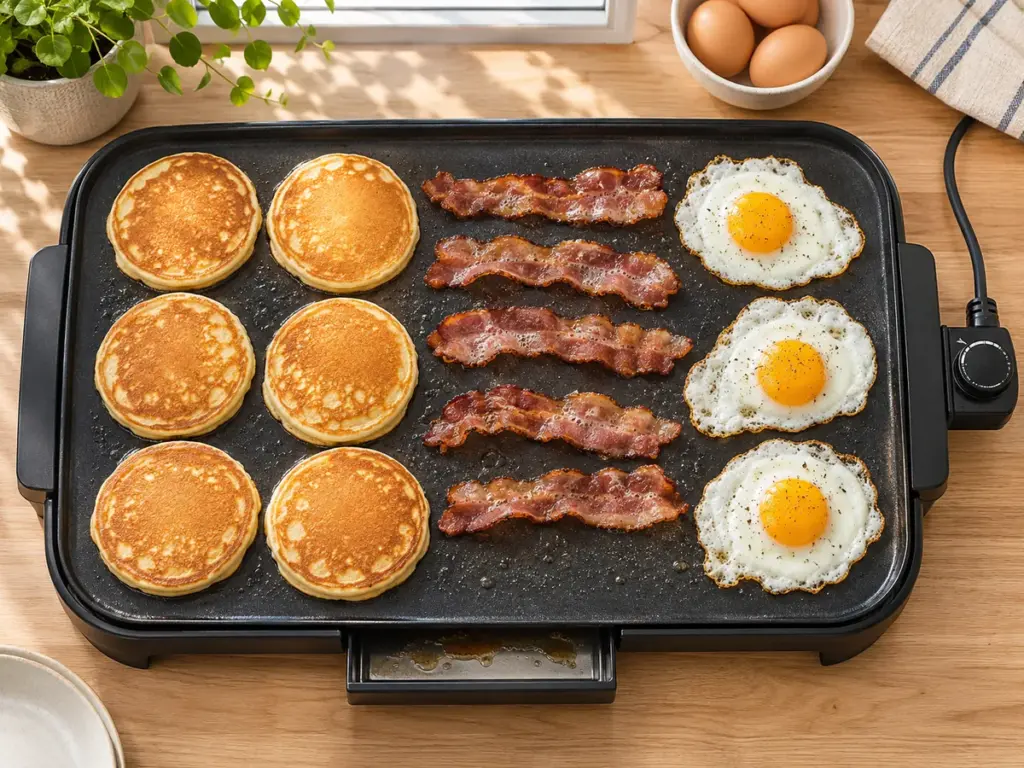
- The heat source is a built-in element on a 120 V outlet.
- You set a temperature and a thermostat holds it.
- The heat source is a gas flame, electric coil or element, or induction coil.
- You set a heat level and judge the pan by sight.
| Trait | Electric griddle | Stove top |
|---|---|---|
| Cooking area | One large flat plate | One pan per burner, or a griddle plate across two |
| Cookware | The plate only, with almost no wall | Pots, pans, wok or griddle plate |
- An electric griddle sits on any counter within reach of an outlet, while a stove top is fixed in your range.
- For cleanup, a griddle needs a drip tray plus a wipe-down or wash, and each stove top pan is washed on its own.
A griddle is one appliance with one job, and a stove top is a heat source you borrow for many jobs. An electric griddle also needs a wall outlet wherever you use it, so taking one camping only works at a site with power.
2. Which One Holds an Even Temperature?
The electric griddle has the advantage here. Presto says the heat control on its 22-inch model maintains the cooking temperature automatically, so cold batter or a handful of bacon pulls the plate down and the thermostat brings it back to your setting.
A burner knob sets how much heat the flame or coil gives off, not the temperature of the pan, so you learn the pan by feel. Lodge tells you to preheat cast iron for 3 to 5 minutes on medium-low and to look for water droplets that dance on the surface.
Each fuel adds its own quirk. Lodge says gas heats quickly but a little more unevenly, and electric burners heat evenly but respond slowly when you change the setting.
3. How Much Cooking Space Do You Get?
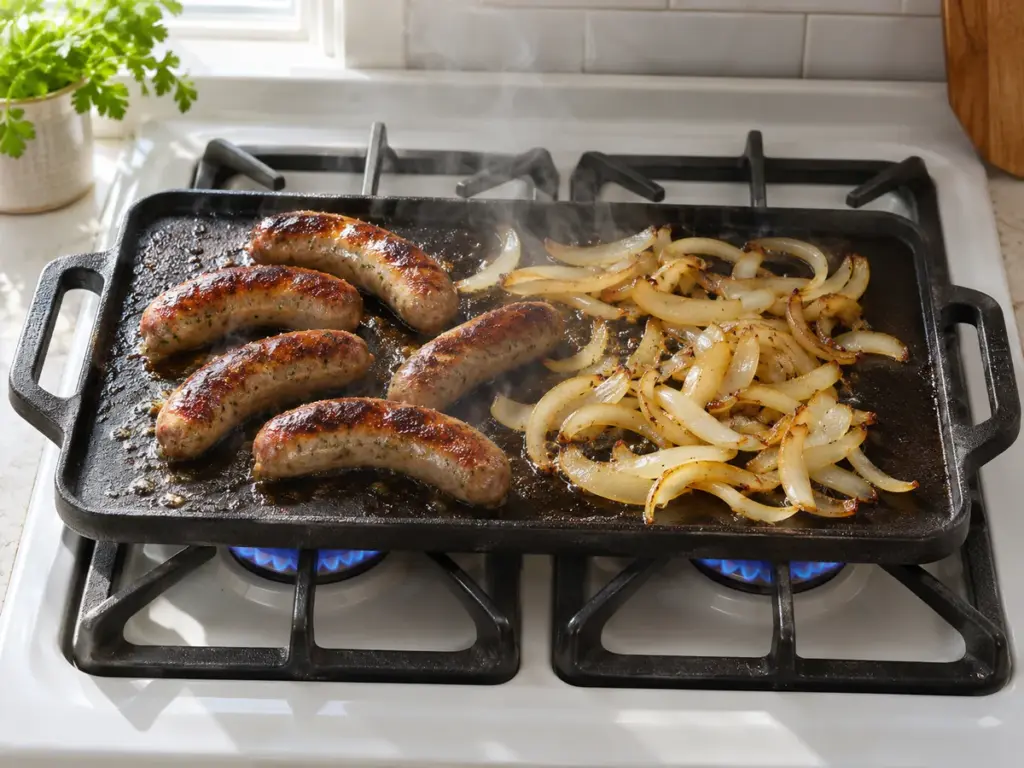
Plug-in plates are bigger than most stove top griddles. The Hamilton Beach Durathon model 38521 lists 200 square inches of nonstick surface, while Lodge's Pro-Grid plate measures 20 by 10.5 inches overall and its flat side is about 16.56 by 7.93 inches, or roughly 131 square inches. That is about half again as much room on the electric one.
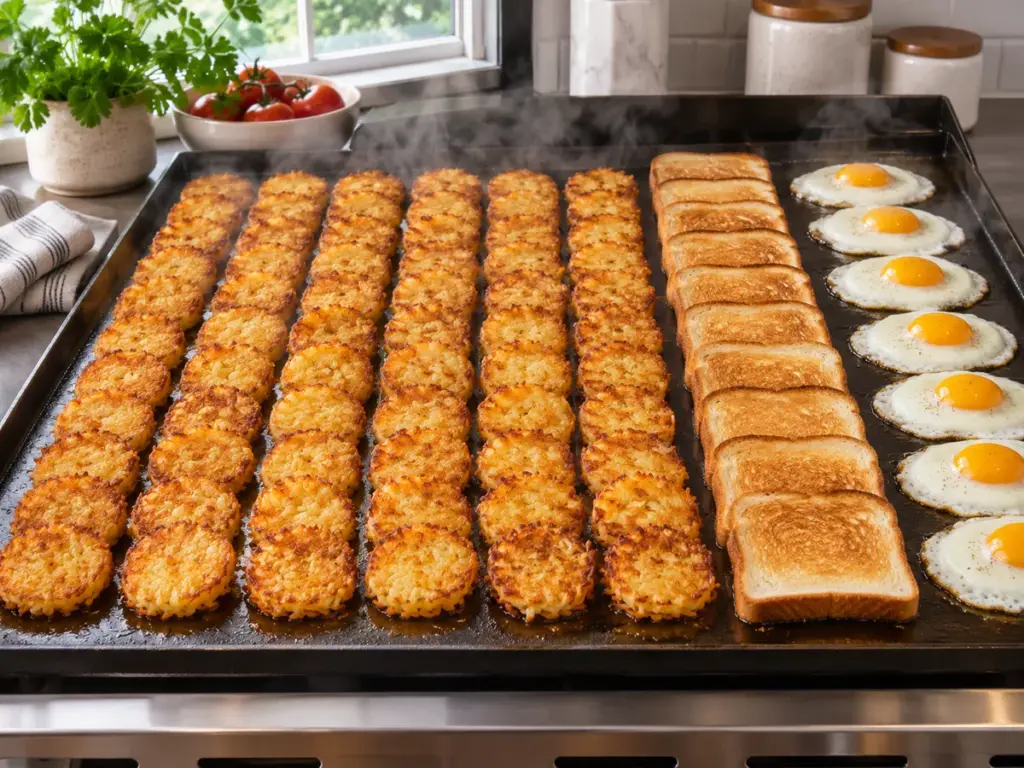
Space works differently on a range. Each burner carries one pan at its own heat, so you can keep eggs on low while a sauce simmers, and a griddle plate takes two burners away from you. For a brunch with sides to serve with pancakes and dishes that go with hash browns, a big plate leaves your burners free for coffee water or a pot of grits.
4. What Can a Stove Top Do That an Electric Griddle Cannot?
A griddle plate has a low rim, so it cannot hold a pot of boiling water, a simmering sauce or a deep stir-fry. Those jobs need a pot or a deep-sided pan on a burner, and a wok is the extreme case, which the electric versus stovetop wok page breaks down by wattage and burner output.
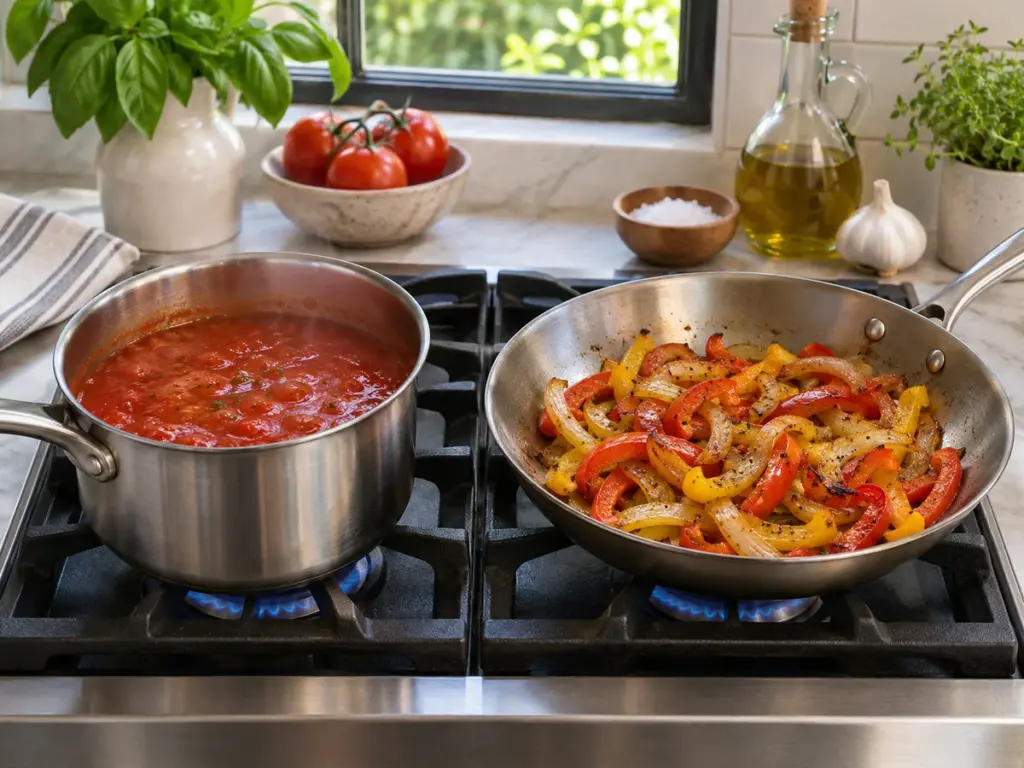
The reverse also holds. Lodge says a griddle suits food too large for a skillet, such as skirt steak and fish, plus pancakes, French toast, eggs and sausage. If a recipe only needs a ridged surface, a grill pan or a skillet on the burner does that without a second appliance.
5. How Hot Can a Nonstick Griddle Get Safely?
Most plug-in plates are nonstick. Presto's 07062 uses a ceramic nonstick surface, and Hamilton Beach says the plate on its 38521 is PTFE and PFOA free. A plate with a coating has a heat limit, and Poison Control puts it at about 500°F.
An electric griddle helps here because its dial stops at a set number. Hamilton Beach lists 200°F to 400°F on the 38521, which leaves 100 degrees of room under that limit. A stove top shows no temperature at all, so Poison Control's advice to avoid high heat and empty preheating matters most on a burner. For high heat on a stove top, an uncoated cast iron plate has no coating to overheat.
No source we checked says a nonstick plate makes food healthier. A coating changes how much food sticks and how easily it wipes clean, and the ceramic and PTFE coatings differ in material, not in whether either one can overheat.
6. Which Is Easier to Clean and Store?
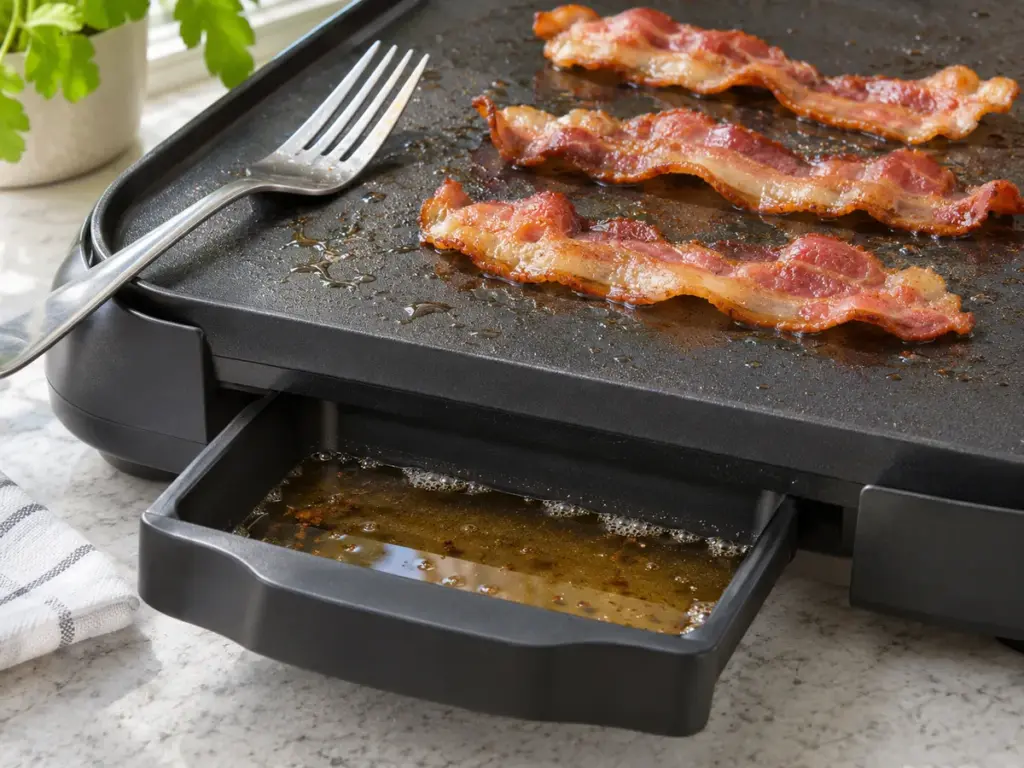
An electric griddle catches grease in a slide-out drip tray, and Hamilton Beach says the tray on the 38521 is dishwasher safe. Presto says its 07062 is fully immersible only with the heat control detached, so pull the control before the plate goes in the sink.
A cast iron plate on the stove asks for a different routine. Lodge's instruction for its Pro-Grid is hand wash, dry, oil. Storage splits the same way: the Lodge plate stands 0.81 inch tall but weighs 13.5 pounds, while the Hamilton Beach griddle measures 24.4 by 12.8 by 3.2 inches and Presto's slimline model is built to save cabinet space.
7. Can You Put a Griddle Plate on a Stove Top Instead?
Yes, and it is the simplest way to get a flat surface. Lodge's Pro-Grid is a double-burner plate that works on any stove top, induction included, and Lodge advises a lower setting on induction because it is very efficient. A bridge burner, which many electric and induction cooktops have, links the two zones.
- Pick two adjacent burners. Choose the two closest to the plate's size.
- Match the settings. Put both on the same level and bring the plate up gradually to medium.
- Check the heat. Water droplets that dance mean the plate is ready.
- Add a little oil or fat. Lodge says to do this before the food goes on.
You lose the thermostat, so you adjust the knobs yourself as the plate heats and cools. Restaurant-style units with their own burners are a different product, since a true flat top runs hottest in the center while a griddle holds steadier zones. For a pressed sandwich, a flat plate browns the whole crust, and a ridged grill pan leaves dark lines with paler bread between them.
8. Which Should You Choose?
- You cook pancakes, bacon and eggs for four or more
- You want a set temperature and a drip tray
- Your burners are busy with other pots
- The meal needs a pot, sauce or wok
- You have no cabinet space for a 24-inch appliance
- You want a cast iron plate that also fits the oven or grill
If you own only a range, buy a double-burner cast iron plate first, since Lodge lists it as compatible with any stove top and it needs no outlet. Buy the electric model when weekend breakfast for a crowd is the reason you want a griddle, and keep one eye on the 500°F limit if the plate is coated.
Sources
- Poison Control: Teflon Flu
- Presto 22-inch Ceramic Electric Griddle, model 07062
- Presto 22-inch Electric Slimline Griddle, model 07072
- Hamilton Beach Durathon Ceramic Griddle, model 38521
- Lodge Pro-Grid Reversible Grill/Griddle, 20 x 10.5 in
- Lodge: How to Use Cast Iron on Any Heat Source
- Lodge: Griddles 101

Food writer at GustoMeadow. Writes ingredient substitutes, food comparisons, taste guides and storage guides for home cooks.
Storage and food-safety numbers follow USDA, FDA and university extension guidance.



