
A countertop oven is usually bigger and more capable; a toaster oven is compact, for toast, small pizzas and reheating.
- A toaster oven usually fits a 9-inch pizza, a large countertop oven a 9x13-inch dish.
- Most countertop ovens have a convection fan; few toaster ovens do.
- Toaster ovens cost less and heat faster, so they suit one or two people.
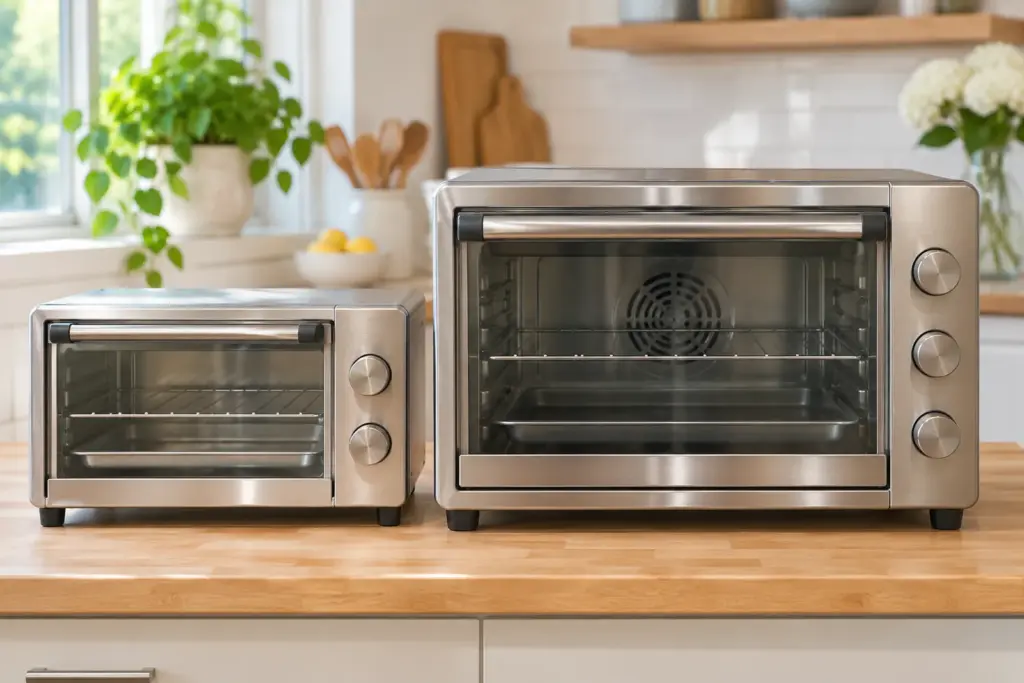
Stores use both names loosely, so this is one of the few cookware and appliance comparisons where the spec sheet tells you more than the label. A toaster oven is usually counted as one kind of countertop oven, so what separates the two is how much interior space, how many heating elements and whether there is a fan.
1. What Is the Difference Between a Countertop Oven and a Toaster Oven?
Most of the differences come from size, and size drives the rest: how much fits, how evenly it cooks and how much it costs to run. The figures below are typical ranges from Hamilton Beach, Breville and Tasting Table, and individual models vary.
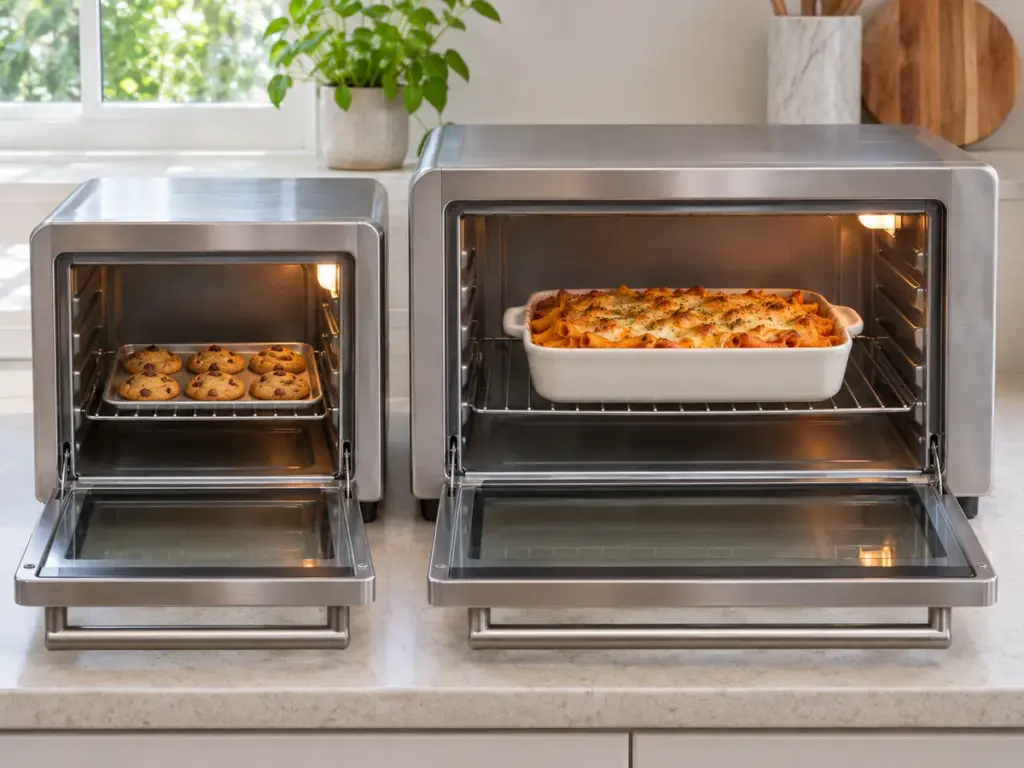
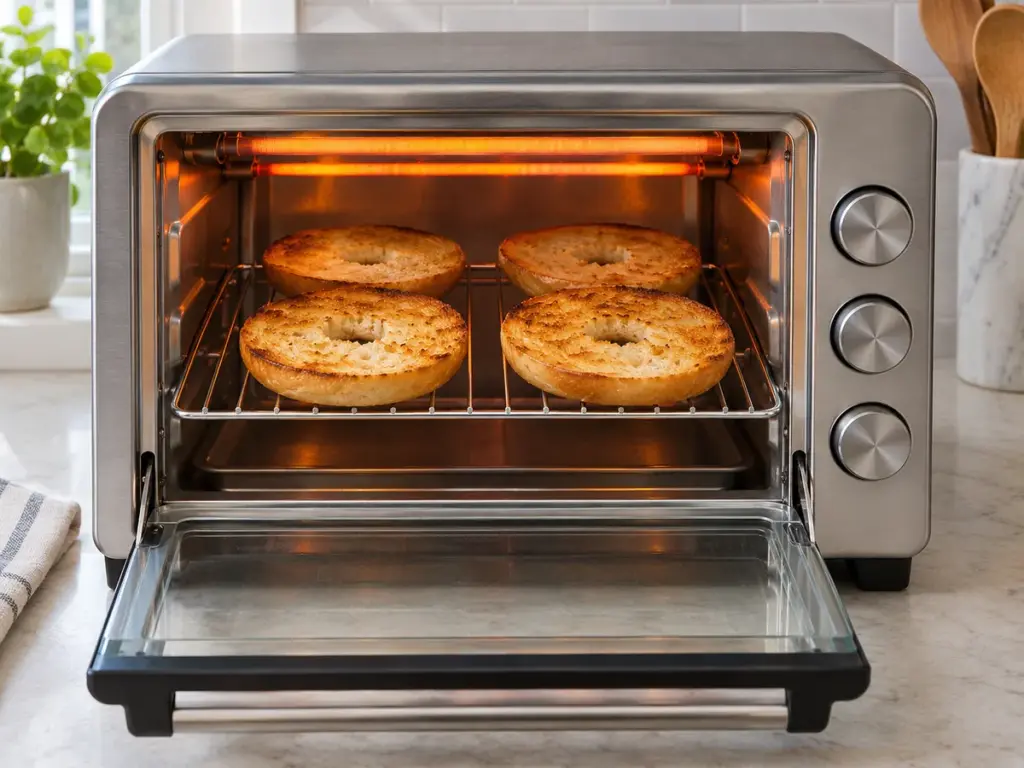
- Fits four to six slices of toast or a 9-inch pizza
- Fits a 12-inch pizza, and in the biggest models a 9x13-inch dish or two 12-inch pizzas
| Trait | Toaster oven | Larger countertop oven |
|---|---|---|
| Interior space | About half a cubic foot | One to two cubic feet |
| Counter width | About 15 to 16 inches | About 18 to 20 inches |
| Heating | Coils at the top and bottom, and a fan in some models | Top and bottom elements plus a convection fan in most |
- A toaster oven is usually the cheaper of the two, and it is best for toast, bagels, reheating and small batches.
- A larger countertop oven usually costs more, because of the size and extra modes, and it is best for roasts, casseroles and family-size meals.
Treat the table as a spectrum, because a big toaster oven and a small countertop oven can overlap. Interior volume and a fan are the two numbers worth checking on any model you are considering.
2. How Much Food Fits in Each One?
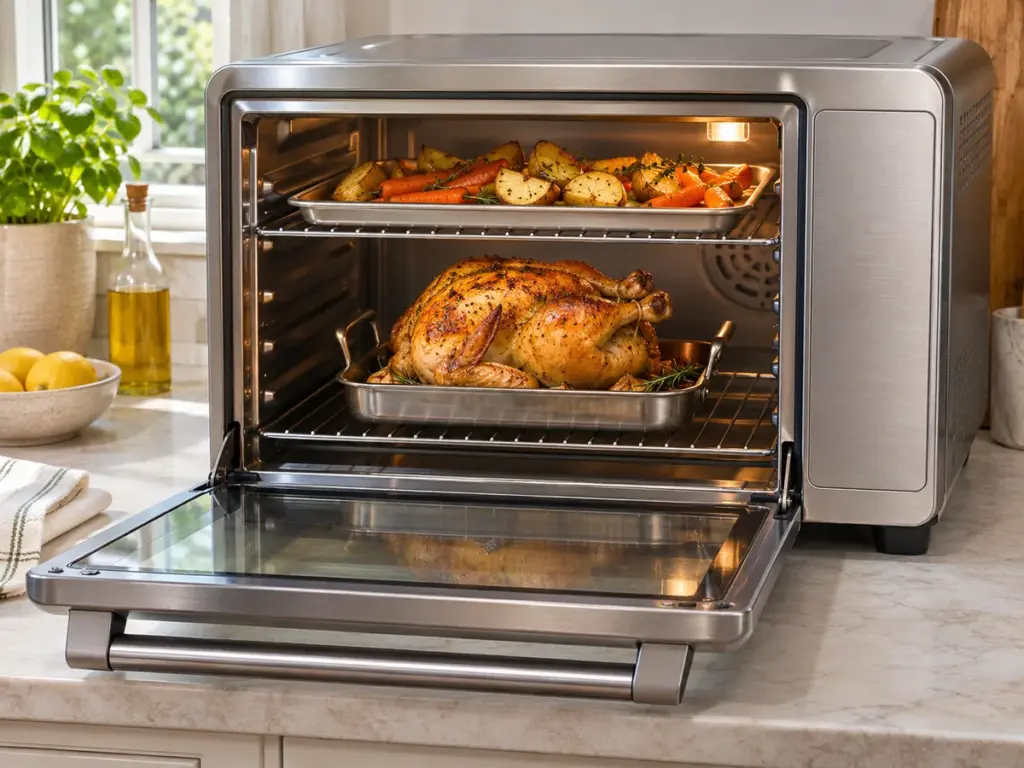
Capacity is the difference you notice first. A toaster oven handles four to six slices of toast or one 9-inch pizza, and a bigger countertop oven can take a whole chicken or a full-size baking dish with two racks of food at once.
- Four to six slices of toast or a 9-inch pizza
- A few cookies on a small tray
- Leftovers for one or two people
- A 12-inch pizza on the rack
- A 9x13-inch dish in the largest models
- A whole chicken, or two racks of food at once
Check the height as well as the width. Food that sits close to the top element browns or scorches before the middle cooks, so a tall casserole may fit in a larger toaster oven on paper and still cook badly.
If you cook for three or more people, a countertop oven saves batches. A whole bird roasts there with room left for a tray of vegetables, and the usual sides for roast chicken come out of the same oven. A baked pasta dish in a 9x13-inch pan, like those in the baked casseroles that reheat well, fits only the largest countertop models.
3. How Do Heating Elements and Convection Fans Differ?
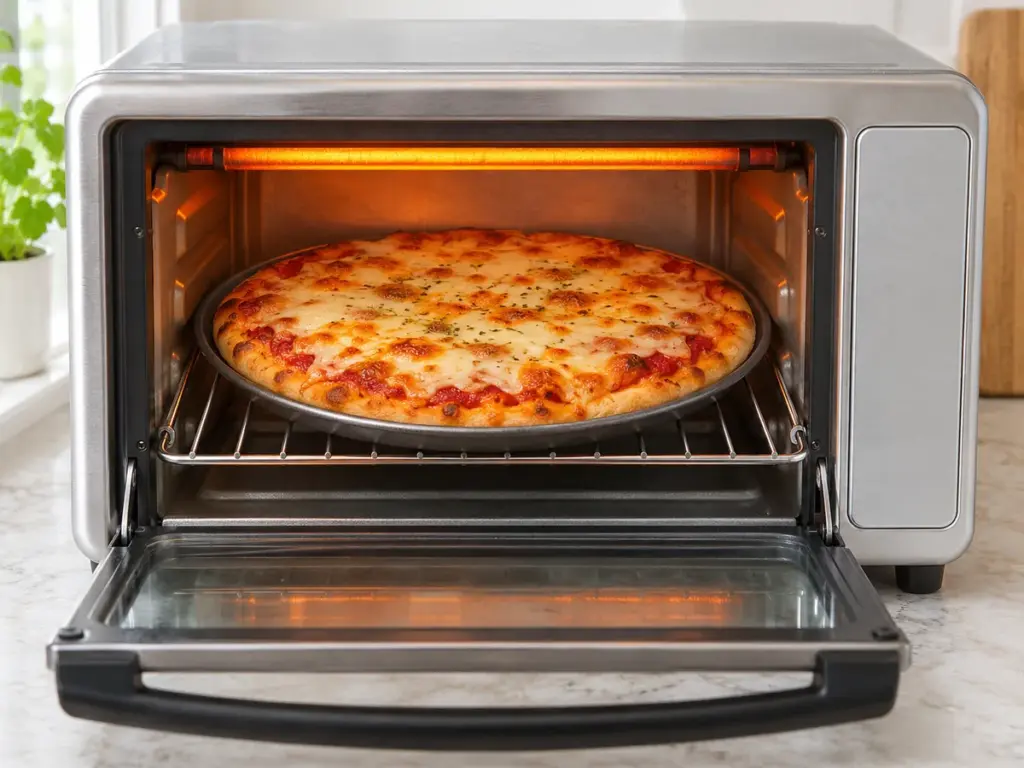
A toaster oven heats with coils at the top and bottom that radiate heat straight onto the food. Breville notes that this kind of heat is less even than a convection oven, which is why the top of a pizza or a tray of cookies can brown faster than the bottom.
A convection countertop oven adds a fan that moves hot air around the cavity. Hamilton Beach and Breville both say convection can cook food up to about 25% faster, so you check a dish earlier than the recipe says.
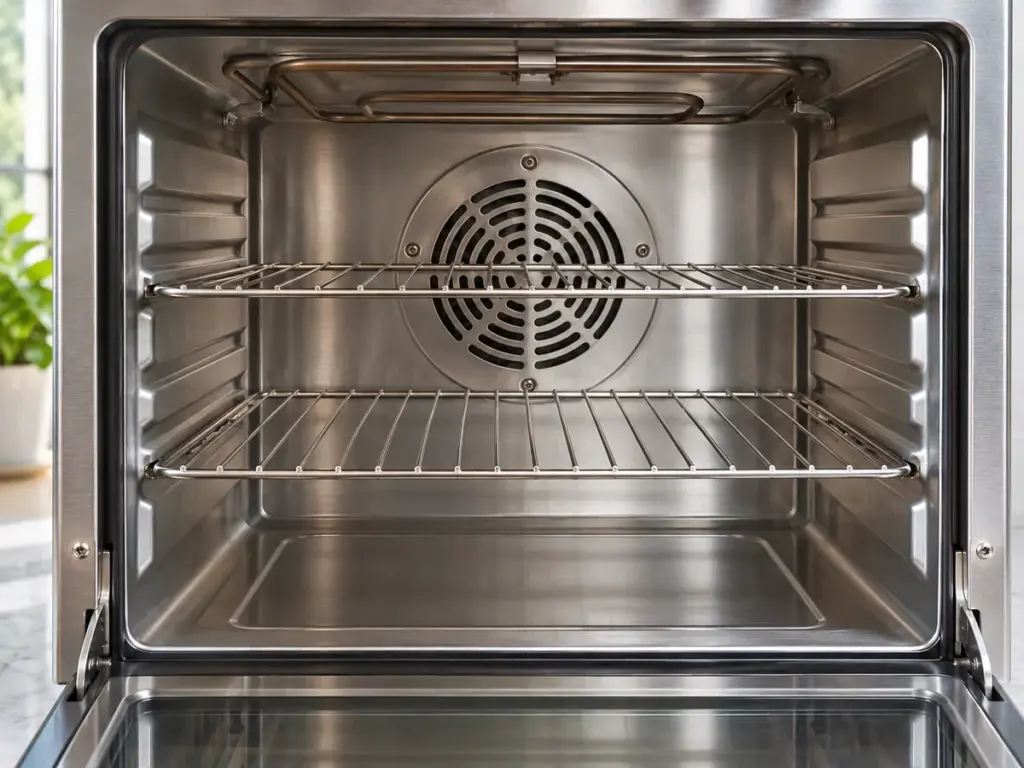
The fan is not always welcome. Breville points out that its airflow can disturb delicate bakes such as custards and cupcakes, so an oven with a fan-off setting is more useful than one where the fan always runs.
4. Which One Uses Less Energy and Heats Up Faster?
Both beat a full-size oven for small meals. The U.S. Department of Energy says a toaster or convection oven uses one-third to one-half as much energy as a full-size oven, and its Energy Saver guide adds that small appliances give off less heat in the kitchen in summer.
- Preheat: a toaster oven has less air to heat, so it usually gets to temperature sooner and costs less to run for one or two people.
- Power draw: Hamilton Beach says models with digital screens or convection tend to draw more power than basic ones.
- Batches: a larger countertop oven takes more food per cook, so it can need fewer rounds for a family meal.
Between the two, the smaller oven wins on speed and running cost for single servings, and the larger one wins once you cook for several people.
5. Can Either One Broil, Bake or Air Fry?
Unlike a plain toaster, either oven bakes, broils and reheats as well as toasting. Countertop ovens more often add multiple racks, rotisserie and a convection setting.
Broil mode runs on the top element only, and broiling differs from grilling because broiling heat comes only from above while grilling heat comes from below. That makes it the setting for browning cheese on a casserole.
Many newer models of either type can also air fry. Some list an air crisp mode, which uses the fan to crisp food with little oil. That makes chicken pieces and vegetables a reasonable job for either oven, and chicken made for an air fryer still apply when you check the cook time early.
6. Can You Use a Toaster Oven Instead of a Countertop Oven?
You can, as long as the pan fits with space around it. A recipe built for a 9x13-inch dish usually needs a smaller pan or two batches in a toaster oven, and a food that touches the elements will burn. The reverse works too, although you give up the energy savings above when you heat a large cavity for one bagel.
If you are shopping, the manual lists the clearance the oven needs around its sides and top. A crowded counter blocks the vents, so give it that space.
7. Which One Should You Buy?
Start with the biggest dish you cook, then the number of people at your table. The steps below settle most decisions in a few minutes.
- Measure your biggest pan. If it is a 9x13-inch dish or a roasting tray, you need a large countertop oven.
- Count the people you cook for. One or two people fit a toaster oven, and three or more fit a countertop oven.
- Measure the counter. A countertop oven is about 18 to 20 inches wide, and a toaster oven is closer to 15 to 16 inches.
- Check for a fan and a fan-off setting. Roasting and batch baking benefit from the fan, and custards do not.
- Check the modes you will use. Air fry, broil and rotisserie are not on every model.
- You cook for one or two people
- You mostly make toast, bagels or reheated leftovers
- Your counter is tight or you want a lower running cost
- You cook for three or more people
- You roast chickens or bake in a 9x13-inch dish
- You want it to stand in for the big oven in summer
Sources
- Hamilton Beach, Toaster Ovens vs Countertop Ovens
- Breville, Convection Oven vs Toaster Oven
- Tasting Table, Toaster Oven vs Countertop Oven
- U.S. Department of Energy, Kitchen Appliances
- NFPA, Safety With Cooking Equipment
- NFPA, Home Cooking Fires

Food writer at GustoMeadow. Writes ingredient substitutes, food comparisons, taste guides and storage guides for home cooks.
Storage and food-safety numbers follow USDA, FDA and university extension guidance.



