
Purple onion and red onion are the same vegetable (Allium cepa) sold under two names, so swap them 1:1.
- How sharp a bulb tastes depends on its variety and harvest season, not the name on the sign.
- If a raw slice bites too hard, rinse it under running water for a minute or soak it in ice water.
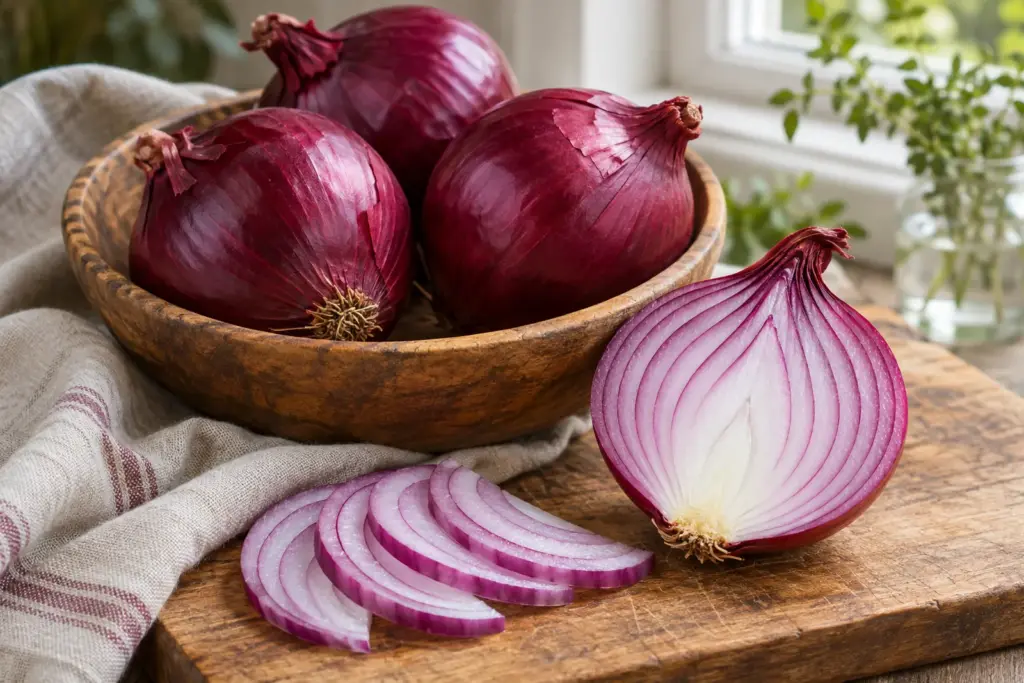
Recipes and produce signs use both words for the onion with a magenta-purple skin and white flesh ringed in purple, so the pair keeps turning up in side-by-side food comparisons even though the names give you nothing to compare. Sharpness, size, shape and keeping time do change from bulb to bulb, and the sections below show which of those you can predict at the store.
1. Are Purple Onions and Red Onions the Same Thing?
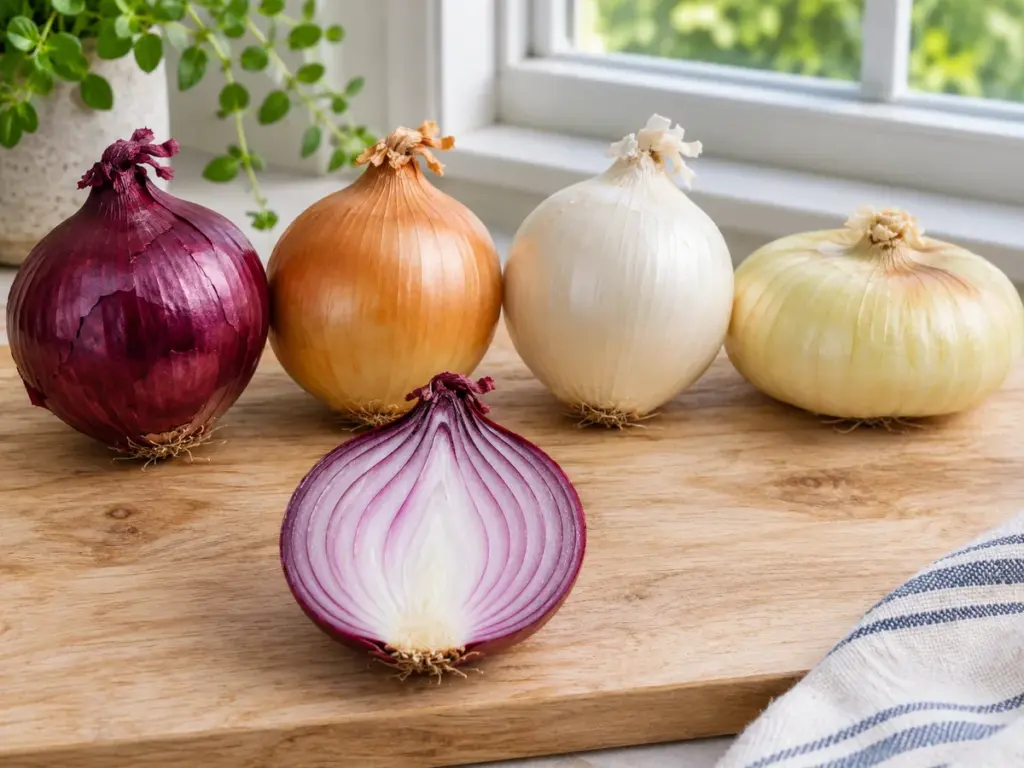
Yes. Both names describe Allium cepa bulbs with a papery skin that runs from deep purple to reddish brown and white flesh striped with purple-red rings. Neither name is a separate variety, and no rule says purple onions are milder, bigger or sweeter than red ones.
The color comes from anthocyanins, plant pigments built mostly on cyanidin 3-O-glucoside, which sits in the outer cells of the bulb. How dark the pigment looks depends on the variety and the growing season, so two bulbs from the same bin can look like different onions.
2. What Is the Difference Between Purple and Red Onion?
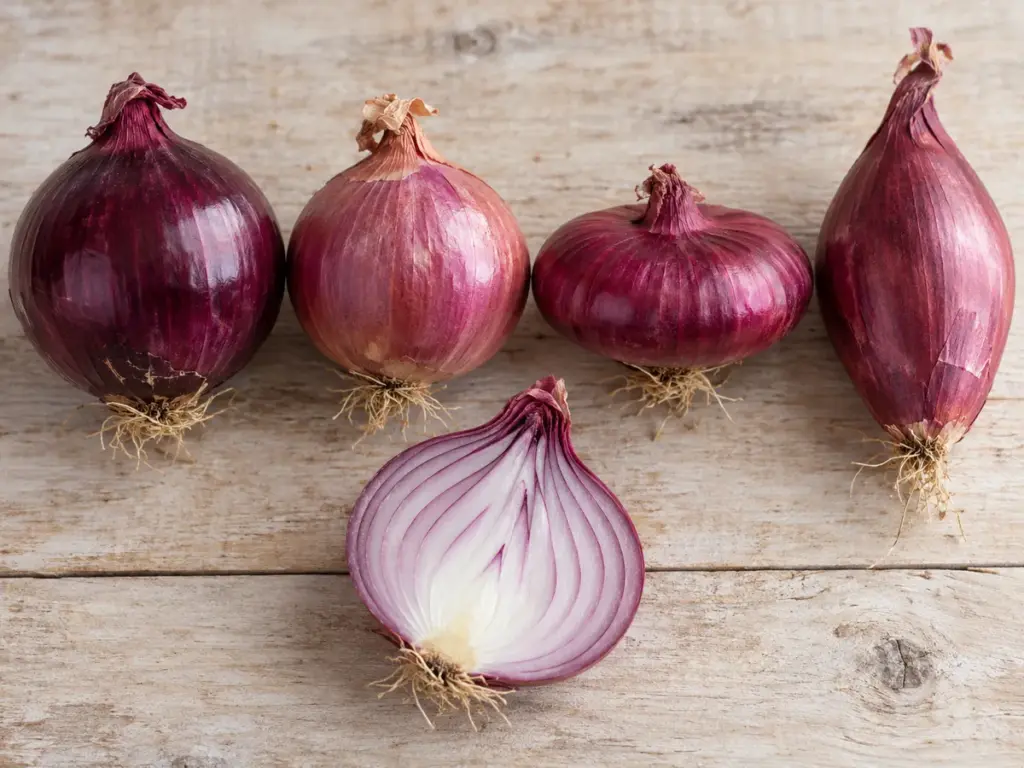
Since the name changes nothing, ask what does change from one red onion to the next. Each trait people blame on the name has a real cause, and here they are side by side:
| Trait | Set by the name? | What really changes it |
|---|---|---|
| Skin color | No | Variety and growing season, from deep purple to reddish brown |
| Flesh | No | Always white with purple-red rings, whichever name is on the label |
| Sharpness | No | Season: spring and summer onions run sweet to mild, fall and winter onions run mild to pungent |
The name sets neither of these either.
- Size and shape come from the variety, since round globes, flat bulbs and long torpedo shapes all exist.
- Shelf life depends on water content, because juicier spring and summer onions keep a shorter time.
So when a recipe says purple, you can read it as red and judge the bulb in front of you by its season, its firmness and how sharp a raw taste of it is.
3. Why Do Some Red Onions Taste Sharper Than Others?
When you cut an onion, you break its cells, and enzymes then turn sulfur compounds in the flesh into the pungent compounds that make a raw slice bite. A research review notes that the balance between pungency and sugar decides whether a bulb tastes sweet or harsh, so a bulb with plenty of sugar can taste mild even when it is not low in sulfur.
The National Onion Association splits the crop by season, and the split predicts what you will taste:
- Spring and summer bulbs (on sale from about March through August) range from sweet to mild. They hold more water, so they bruise easily and keep a shorter time.
- Fall and winter bulbs range from mild to pungent. They hold less water and keep longer.
So if you buy a red onion in summer, you can slice it raw into a salad without any prep, while a winter bulb more often needs a rinse first.
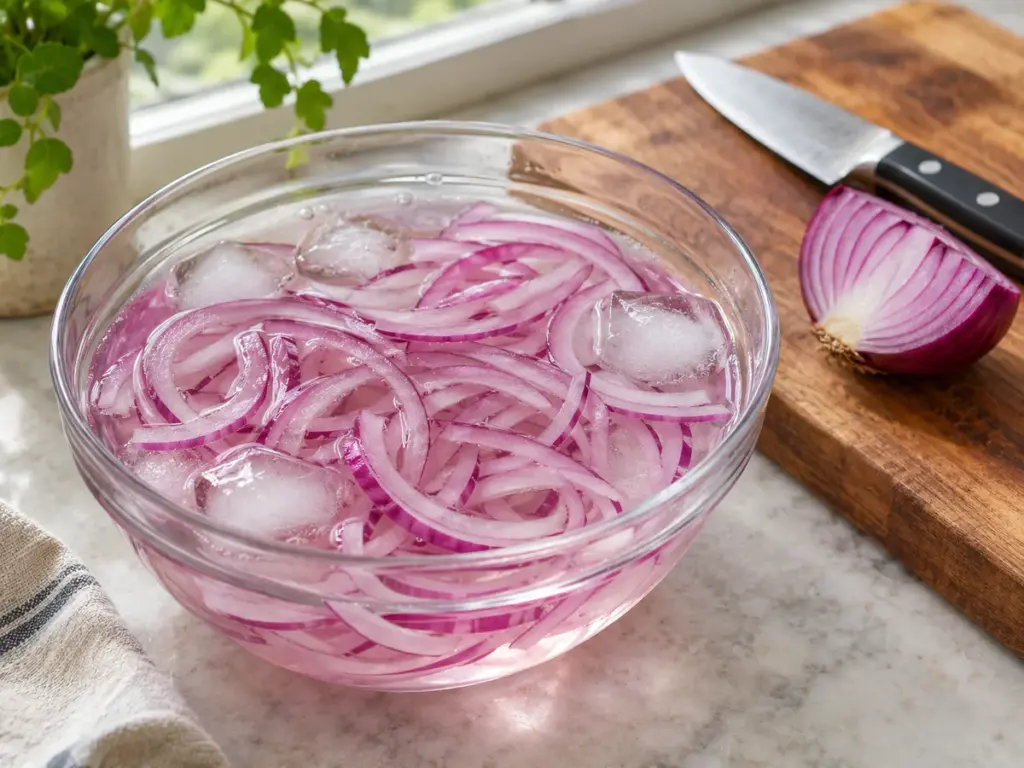
To tame a sharp bulb, you can work in this order:
- Chill it. Put the whole onion in the fridge for 30 minutes before cutting, which the National Onion Association says cuts down on tears.
- Leave the root end for last. The root end holds the highest concentration of the sulfur compounds that make your eyes water.
- Rinse the slices. Hold them under running water for at least a minute.
- Soak if it is still sharp. Ice water mellows a sharp bulb further, and the association's own instruction is 1 ½ hours in ice water, then drain.
4. How Does Red Onion Behave When You Cook or Pickle It?
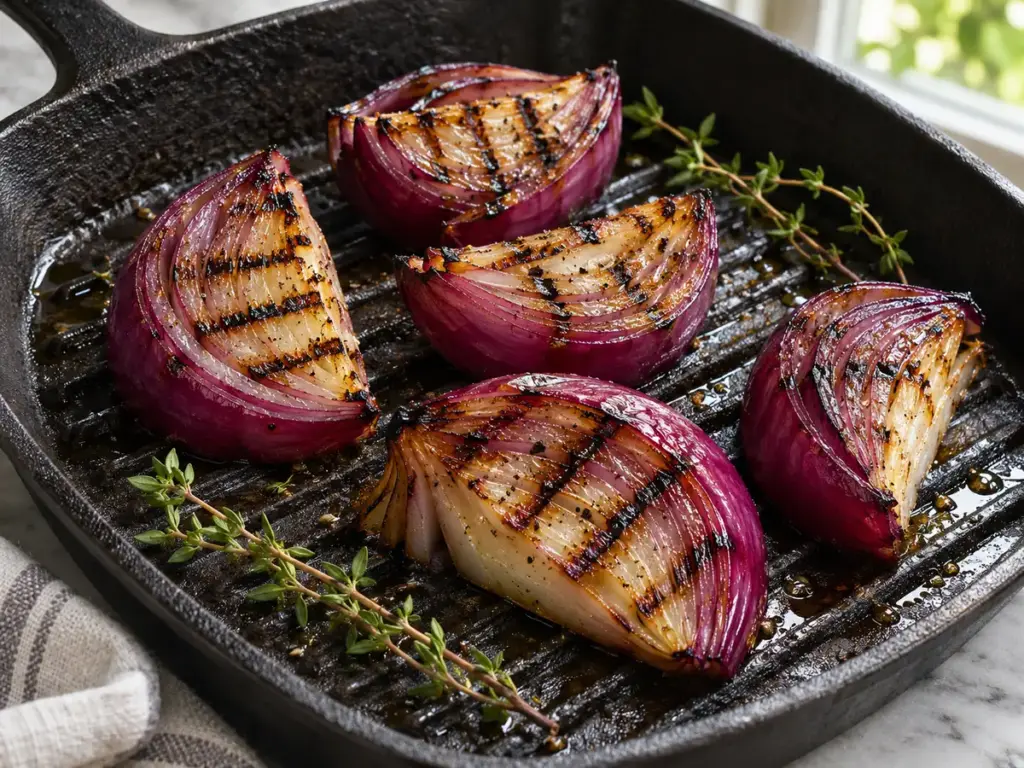
You get the most from red onion raw, because the color survives and you can tame the bite easily. The National Onion Association also lists grilling, charbroiling and roasting as good uses, since the color and firm texture hold up under high heat, which also suits sliced fajita onions.
If you cook red onion for a long time, the color goes. Anthocyanins break down under high heat, so a red onion stirred into a soup fades, while yellow onions turn rich dark brown and give French onion soup its tangy sweetness, according to the same association.
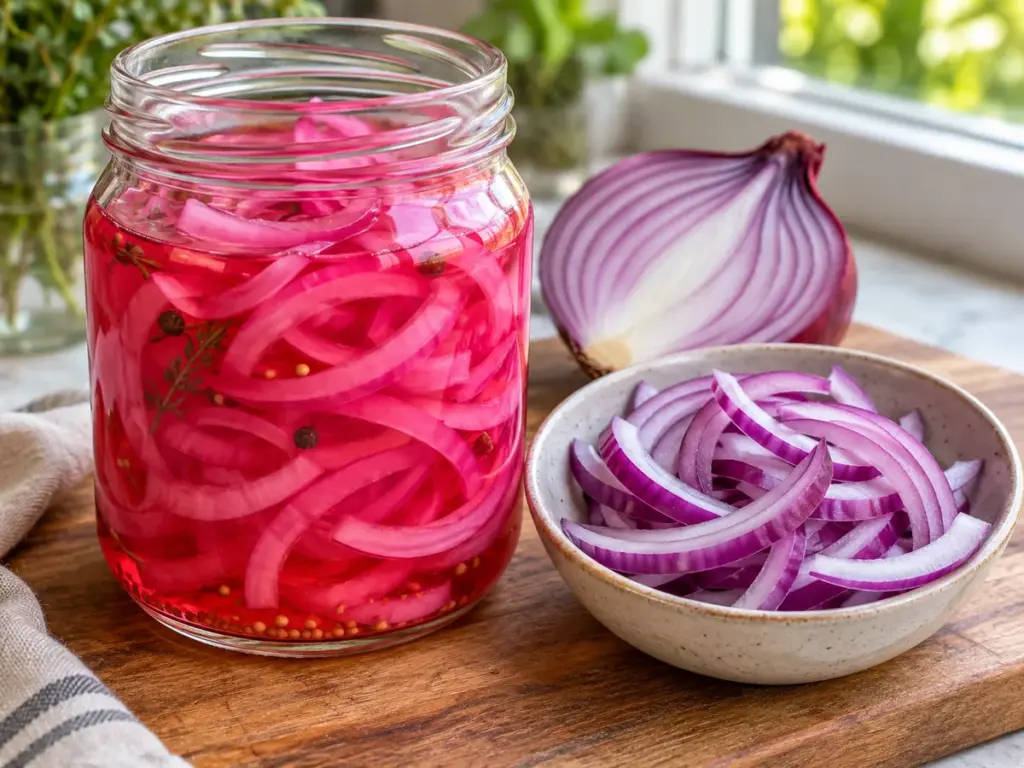
Acid pushes the other way. The same pigments show red hues at a pH of 3 or lower, so when you drop slices into vinegar or lemon juice, they turn a bright pink, which is why pickled red onions look so vivid next to the raw ones.
5. Can You Use Purple Onion Instead of Red Onion?
Yes, and you don't need to adjust anything, because it is the same onion. The swap that needs thought is from red to the other onion colors, and here is the ratio and what changes in each case:
| Recipe wants red, you have | Ratio | What changes |
|---|---|---|
| Purple onion | 1:1 | Nothing, it is the same onion |
| Yellow onion | 1:1 | No pink color, and a fuller raw flavor. Cooked, it browns deeply and tastes tangy-sweet |
White onion swaps 1:1 too, with no color. It is the classic onion in Mexican dishes and prepared salads, and it turns golden and sweet when sautéed. Sweet onion also swaps 1:1. It is milder and juicier, so it works raw but has little color and keeps a shorter time.
The reverse works the same way: you can use red in place of yellow onions in most cooked dishes, though it will fade and leave the dish a dull color. If you want the mildest option, sweet onions such as Vidalia onions are the pick. If you run out of onions, other red onion swaps such as scallions or chives still work as a raw topping.
6. Which Onion Should You Buy or Use?
Pick by the job, since the name won't help you:
- Raw on salads, tacos and sandwiches: use red, because it adds color and a mild bite, and a quick rinse fixes a sharp one.
- Quick pickles: use red, because the vinegar turns it pink, which no yellow or white onion can do.
- Grilled or roasted wedges: use red, because its color and firm texture hold up, as the association notes.
- Soups, stews and caramelized onions: use yellow, because red fades and yellow turns the deep brown those dishes are known for.
At the store, look for bulbs that are firm and dry, with no sprouts and no gray or black mold. Those are the National Onion Association's quality signs, and a soft spot near the root end means the onion is already breaking down inside.
7. Is One Healthier Than the Other?
Neither is healthier, because the two names describe one plant. Red cultivars generally hold more flavonoids than white ones, and the red color itself comes from anthocyanins. We found no source that ranks purple above red or the reverse for any health outcome, so we do not either.
8. How Do You Store Red Onions?
Keep whole bulbs in cool, dry air. The National Onion Association recommends 45 to 55°F in a well-ventilated spot out of direct sun, away from potatoes and other produce that gives off moisture, and never in a plastic bag. The USDA FoodKeeper lists about 1 month in the pantry and 2 months in the refrigerator for whole onions.
Store cut onions in a sealed container in the fridge at 40°F or below, where they keep 7 to 10 days. Throw out any bulb that is soft, sprouting, or showing gray or black mold. Green onions are a different case: their tender tops wilt quickly, so keep far less time than bulbs.
Sources
- National Onion Association, Seasons, Colors, Flavors and Sizes: seasons, water content, red onion uses, yellow and white onions.
- National Onion Association, Storage and Handling: 45 to 55°F, ventilation, no plastic bags, quality signs.
- National Onion Association, FAQs: cut onions 7 to 10 days, root end, chilling, rinsing and soaking.
- USDA FoodKeeper: whole onions, 1 month in the pantry and 2 months in the refrigerator.
- Montana State University Extension, Onions: storage, sweet and mild onions.
- Frontiers in Nutrition, anthocyanin review (2022): onion pigments, color at low pH, heat stability.
- Antioxidants (2023), Premanturska Kapula sweet onion study: pungency and sugar balance, flavonoids in red cultivars.

Food writer at GustoMeadow. Writes ingredient substitutes, food comparisons, taste guides and storage guides for home cooks.
Storage and food-safety numbers follow USDA, FDA and university extension guidance.



