
The names overlap, so go by the power source: a stovetop cast iron mold or a plug-in electric appliance.
- Wikipedia lists "waffle iron" and "waffle maker" as one tool.
- An electric maker signals with a light or beep; a stovetop iron needs a burner and a flip after 2 to 3 minutes.
- Belgian waffles need plates about 1½ inches deep.
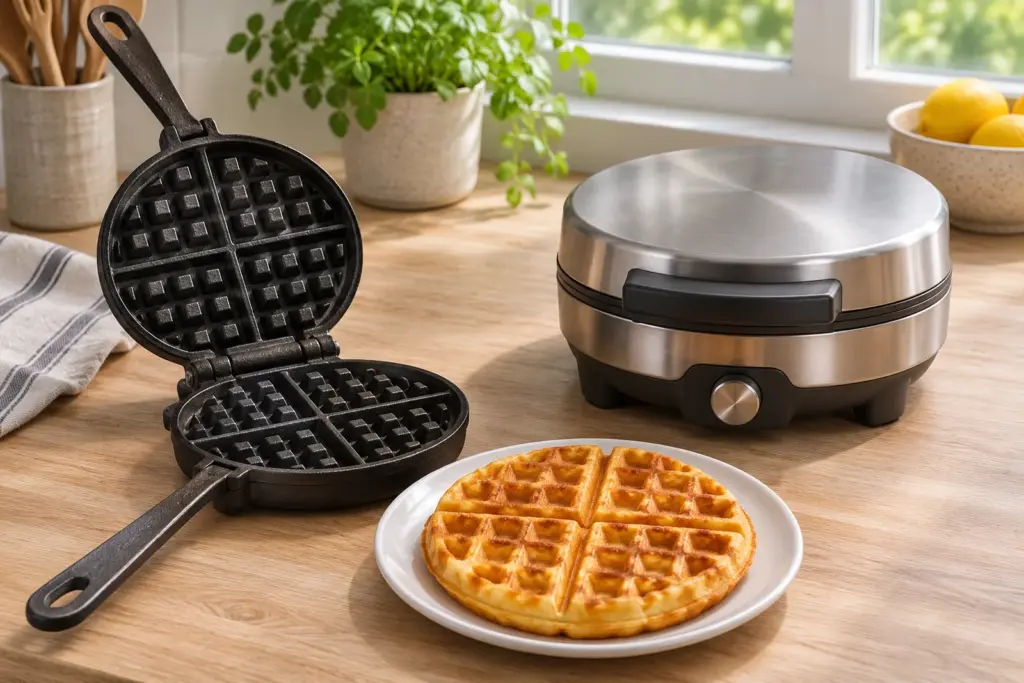
Few everyday kitchen comparisons are as muddled as this one, because two hinged, gridded plates describe both a cast iron mold that sits on a burner and the plug-in appliance on most counters. The name on a listing or in a recipe does not always say which one it means, so the sections below sort out what actually changes: how the plates heat, how you know a waffle is done, and how deep the grid is.
1. Is a Waffle Maker the Same as a Waffle Iron?
Often, yes. Wikipedia's waffle iron entry opens with "A waffle iron or waffle maker is a kitchen utensil used to cook waffles between two hinged metal plates," and it says most modern waffle irons are self-contained tabletop appliances. An electric appliance sold as a waffle maker is therefore also a waffle iron.
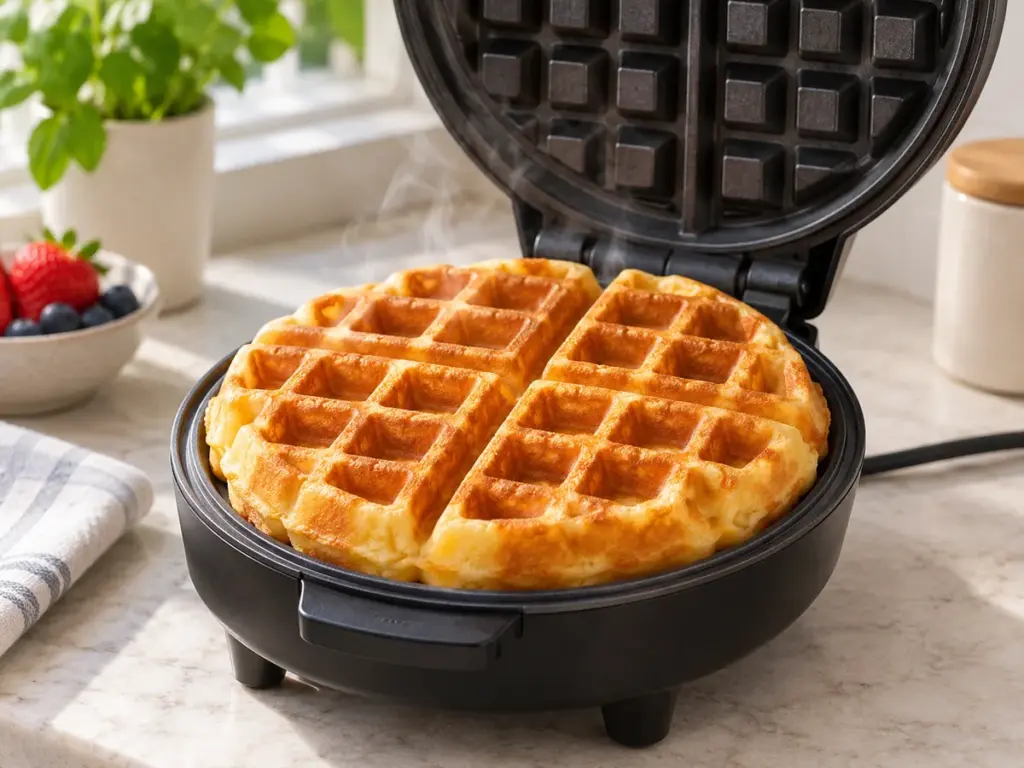
The older kind is the one people mean when they say "stovetop iron." The same entry describes traditional irons attached to tongs with wooden handles and held over an open flame or set on a stove. Professional irons are usually uncoated cast iron, and home models, particularly cast aluminum ones, are often nonstick coated.
2. What Is the Difference Between a Stovetop Iron and an Electric Maker?
Once you know which kind you hold, the differences show up in heat, doneness cues and upkeep. This table compares the two types on the points that change your result.
| What changes | Stovetop iron | Electric maker |
|---|---|---|
| Heat source | A gas or electric burner, or an open flame | A built-in element, plugged into an outlet |
| Plates | Cast iron that you season | Often cast aluminum with a nonstick coating |
- The doneness cue is steam that stops and a waffle that turns deep golden.
- To prevent sticking, preheat fully and grease both plates.
- It gives a ready light or beep, and a browning dial on many models.
- Nonstick helps, but grease it unless it is reliably nonstick.
Cleaning a stovetop iron means washing it by hand, drying it completely and wiping on a thin coat of oil. An electric maker needs only a wipe of the plates, and some models have a removable drip pan.
The biggest daily change is who watches the waffle. An electric maker tells you when it is done, while with a stovetop iron you judge by steam and color. King Arthur Baking says to never open any iron until steam stops seeping out of its sides, because an early lift can leave the waffle stuck to the top plate.
Upkeep follows the plates. Bare cast iron releases waffles through its seasoning, so you wash it by hand and never put it in the dishwasher, as Lodge's care guide says for all its cast iron. A nonstick finish releases them differently, which is why seasoning versus a nonstick coating matters when you pick a plate.
3. How Do You Cook Waffles in a Stovetop Iron?
Cast and Clara Bell, a cast iron seller, gives the clearest numbers for a stovetop iron that we found, and its main point is that a cold iron sticks. Work through the steps in this order:
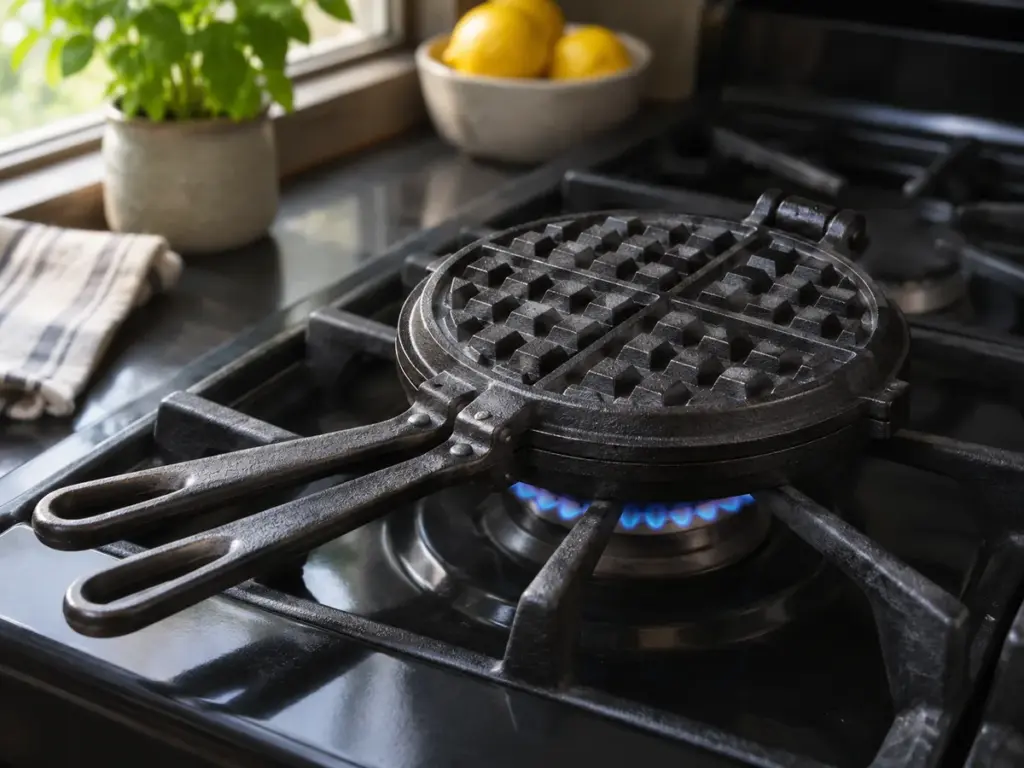
- Preheat both sides. Heat the closed iron on medium to medium-low for 5 to 8 minutes, until a drop of water dances and evaporates almost immediately, which that guide puts at about 375°F on the plate surface.
- Grease both plates. Coat each plate with oil or food release spray before the first pour, because the first waffle is the one most likely to stick.
- Pour the right amount. Measure the batter for your iron's depth, so it fills the grid without spilling over the rim.
- Flip. Close the iron and turn it over after about 2 to 3 minutes so both plates brown.
- Wait for the steam to stop. Open the iron when steam no longer seeps out and the waffle is deep golden.
- Keep batches crisp. King Arthur holds finished waffles on a rack set straight on the oven shelf at 200°F, which keeps them from going soggy.
4. What Makes a Waffle Belgian or Classic?
The thickness of a waffle comes from how deep the grid is. Wikipedia says Belgian waffles are set apart from standard American ones by "their use of 1½" depth irons", and thicker, larger-pocketed models are often labeled Belgian. King Arthur describes the result as a crisp outside around a fluffy inside, with pockets deep enough to hold butter, toppings and a pour of maple syrup or molasses.
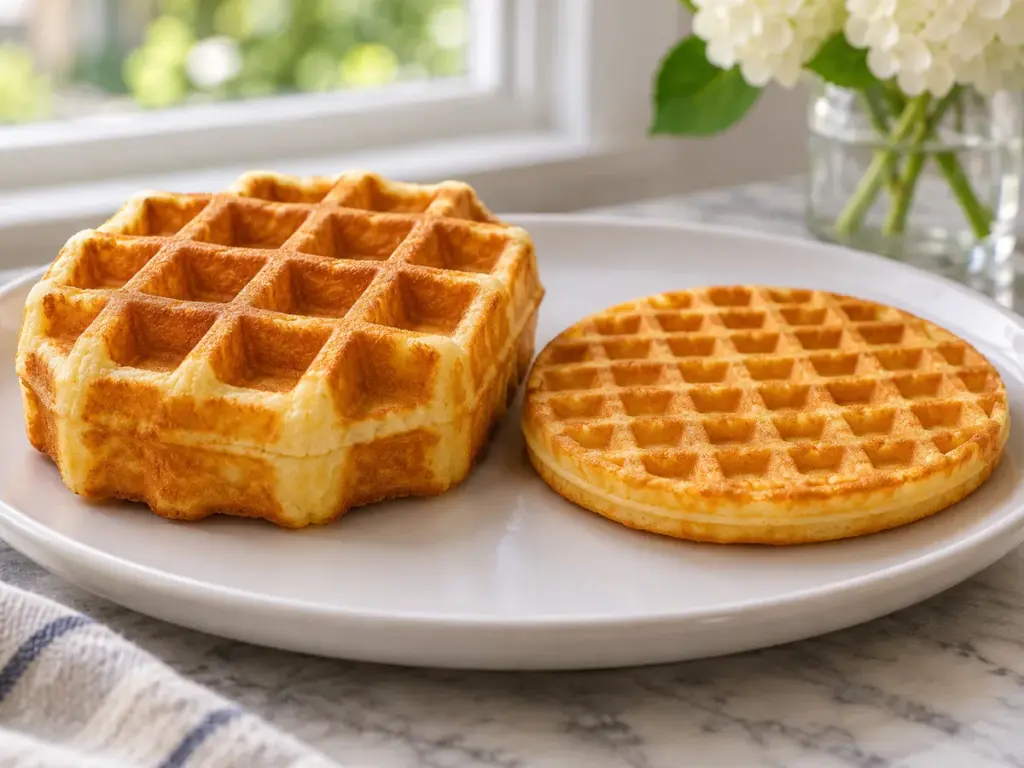
- Grid about 1½ inches deep
- About ¾ cup of batter for a 7-inch iron
- Thick waffle with deep pockets for syrup and toppings
- A shallower grid and a thinner waffle
- About ½ cup of batter for each 5-inch square waffle
- Less batter per waffle, so one batch makes more of them
Those batter amounts come from King Arthur's waffle tips, which also say to work out the amount for your own iron before the first waffle. Depth belongs to the plates, so look for it on the label of an electric maker or a stovetop iron instead of assuming it from the type. Savory toppings fit the deeper pockets too, and eggs and grilled tomatoes are two of the sides we list for them.
5. Can You Cook Anything Besides Waffles in a Waffle Iron?
Yes. King Arthur's waffle iron tricks include several foods that cook well between the grids, and Wikipedia adds that some electric irons have removable plates. Whatever you cook, it must be fully cooked before you lift the lid.
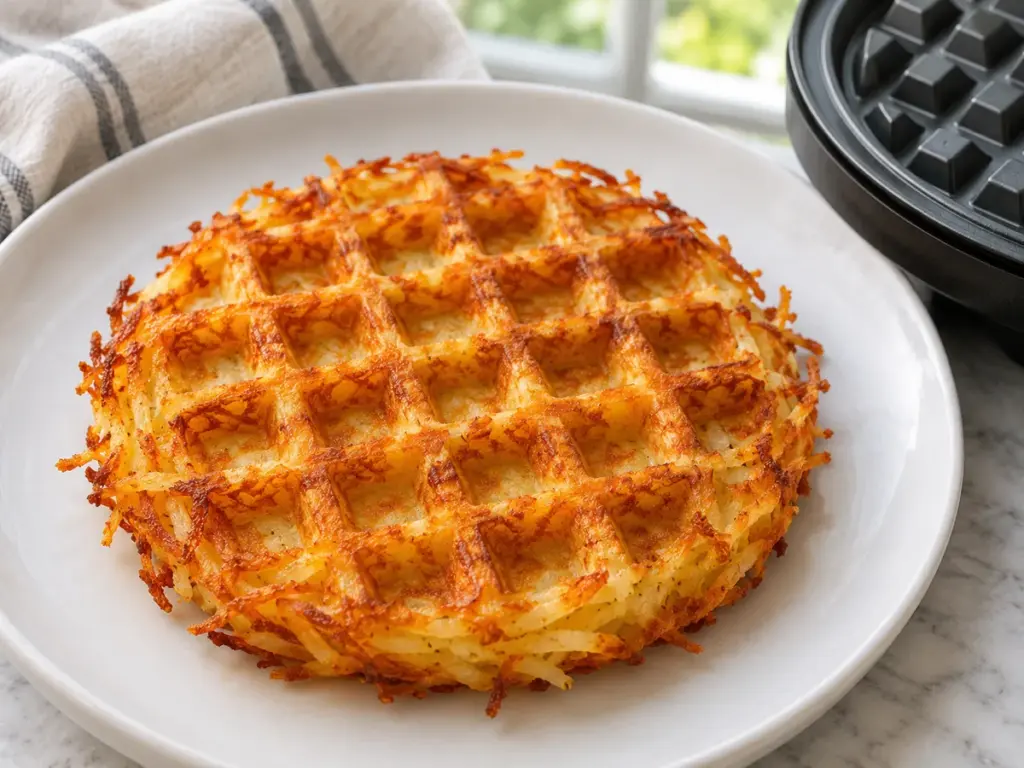
- Hash browns: you grate potatoes, wring out the liquid, season them and press a thick layer into the iron until it is crisp and brown, and the hash browns keep the grid pattern.
- Grilled cheese: you spray the iron, add bread, cheese and a second slice, close the lid and cook until the cheese melts, though a waffle grid does not pinch the edges shut the way the plates of a sandwich maker do.
- Brownies and cookies: you ladle in brownie batter or bake frozen scoops of cookie dough until they are baked through.
- Cones and wafers: Wikipedia says irons built on the same design bake waffle cones and pizzelle, the thin patterned cookie.
6. Which One Should You Buy?
Pick by how you cook, because both types make good waffles. These calls cover the situations that come up most.
- You want waffles with little watching: buy an electric maker, since the light or beep and a browning dial on many models do the timing for you.
- You cook on induction: buy an electric maker, because a stovetop iron heats unevenly on induction and burns the edges.
- You have a gas range and like cast iron: a stovetop iron works with a burner or an open flame and needs no outlet.
- You want thick waffles: look for plates about 1½ inches deep on either type, and expect to use about ¾ cup of batter in a 7-inch iron.
- You want easy cleanup: nonstick plates and a removable drip pan help, although King Arthur's writer admits all waffle irons are a pain to clean.
If you are still unsure, an electric maker is the simpler start, and a seasoned cast iron stovetop iron is the one to add later if you want the traditional method. Before you buy either, check the cord, the plate material and the grid depth, not just the name.
Sources
- Wikipedia, Waffle iron (definition, traditional and electric irons, materials, removable plates)
- Wikipedia, Waffle (Belgian waffles and 1½-inch depth irons)
- King Arthur Baking, Waffle tips (grease, steam, batter amounts, keeping waffles crisp)
- King Arthur Baking, Best waffle maker (Belgian-style texture, nonstick plates, indicator light, cleaning)
- King Arthur Baking, Waffle iron tricks (hash browns, grilled cheese, brownies, cookies)
- Cast and Clara Bell, All about waffle irons (stovetop temperature, timing and cooktops; a cast iron retailer's guide)
- Lodge Cast Iron, How to clean (hand washing, drying and oiling cast iron)

Food writer at GustoMeadow. Writes ingredient substitutes, food comparisons, taste guides and storage guides for home cooks.
Storage and food-safety numbers follow USDA, FDA and university extension guidance.



