Mojo chicken goes best with black beans and rice (moros y cristianos) and tostones or maduros, plus one cold salad.
- Mojo is sour, salty and heavy on garlic, so the best sides soak up the juices or add sweetness.
- You finish the plate with a cool avocado or cucumber salad.
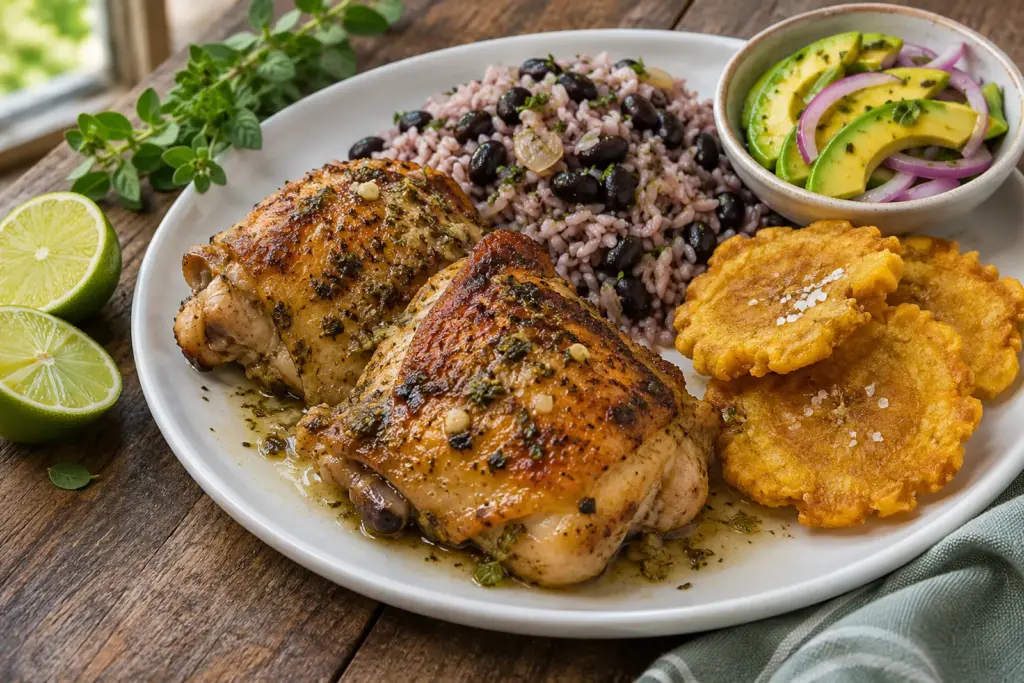
Cuban-style mojo chicken is marinated in mojo, a sauce of sour orange juice, plenty of garlic, oregano and cumin. Any side dish you pick has to stand up to that sour, garlicky flavor without adding more of it, and the twelve ideas below do that in different ways.
What Goes Well with Mojo Chicken?
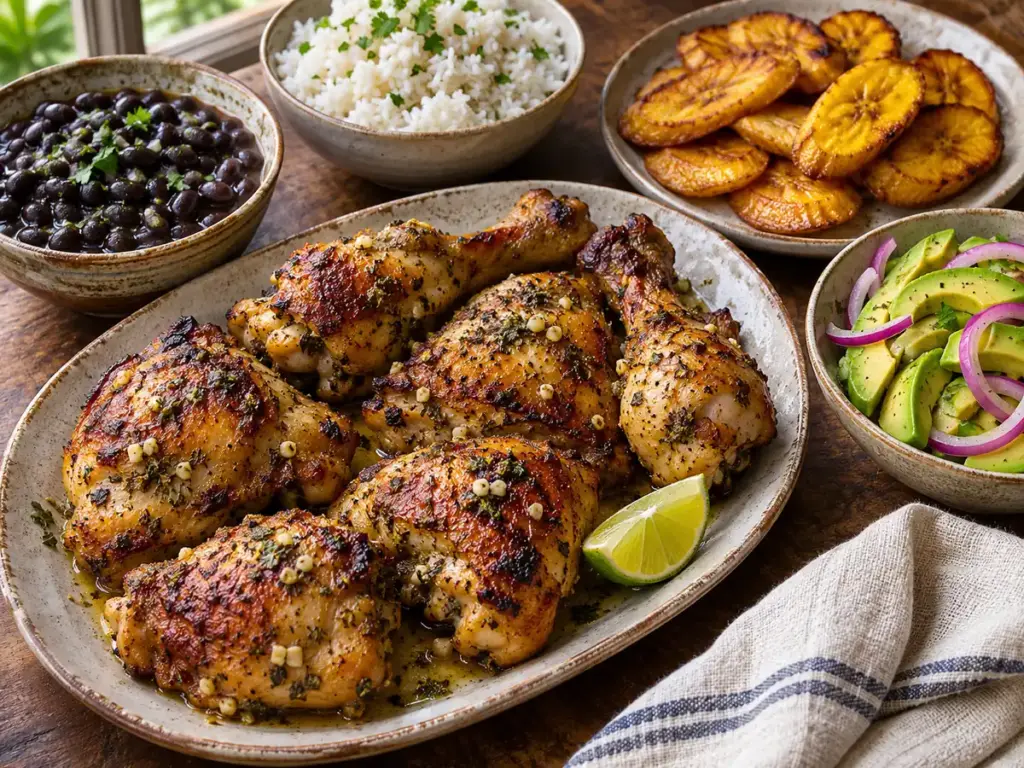
Tasting Table lists sour orange juice, garlic, oregano, cumin, salt and pepper as the usual mojo marinade and calls the sour orange juice an indispensable part of it. Since that sourness leads every bite of the chicken, the sides you choose either soften it or carry it.
The chicken comes out tangy, garlicky and salty, and each of those traits calls for a different kind of side.
| The chicken gives you | The side should | Sides that do it |
|---|---|---|
| Sour, garlicky juices | Soak them up | Moros y cristianos, yuca, herb rice, mashed potatoes, cheesy bread |
| Sharp acid | Add sweetness or richness | Maduros, avocado salad, citrus carrots |
| Salt and garlic heat | Cool the mouth or add crunch | Cucumber salad, watermelon feta salad, tostones |
You rarely need more than three sides, as long as you pick one from each row of the table. Raichlen's PBS recipe ends with fried sweet plantains, black beans and white rice, which covers the soaker and the sweet side.
If you cook another citrus-marinated bird such as citrus chicken, the same three jobs apply. They also hold for the same marinade on pork, where Cuban mojo pork leans on cilantro lime rice, pico de gallo and fried plantains.
12 Best Side Dishes for Mojo Chicken
The first four are the Cuban plate, and the rest add herb rice, cold salads and familiar American sides that still work once you adjust them.
1. Moros y Cristianos (Black Beans and Rice)
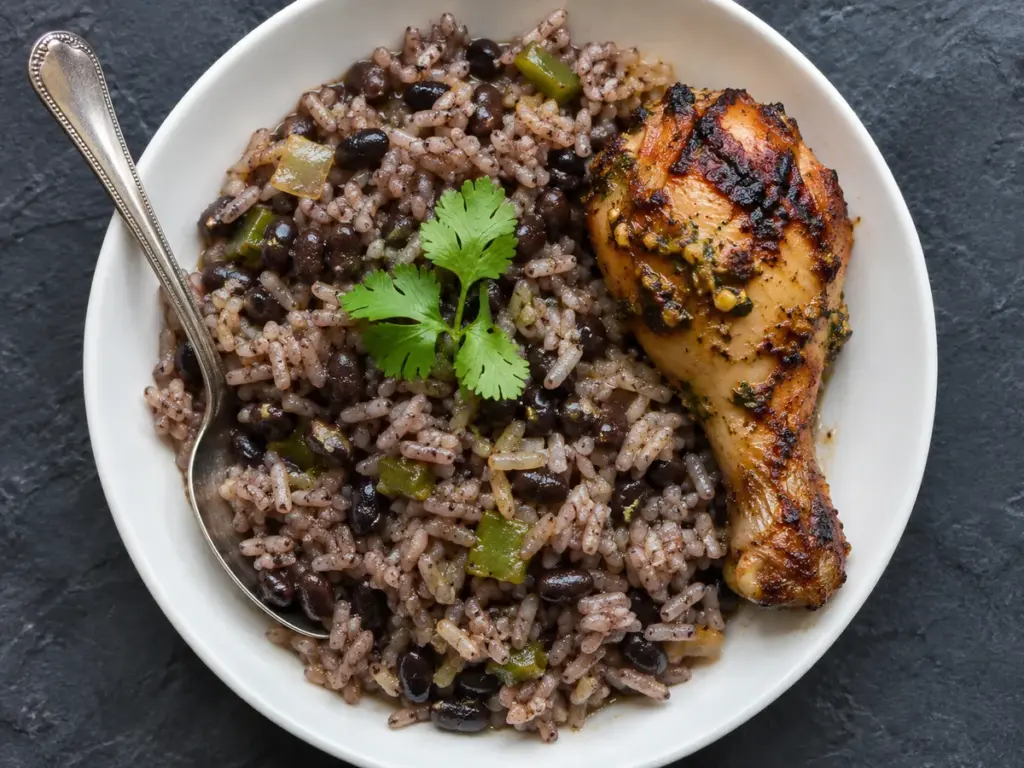
Moros y cristianos cooks black beans and white rice together in one pot from a sofrito of onion, garlic and red and green bell pepper, then seasons them with cumin and bay leaf. That seasoning gives you cumin and garlic that echo the mojo.
When you ladle it beside the chicken, the rice grains hold on to the juices, and the earthy black beans add depth that the sour marinade lacks. For a crowd we'd start this pot first, since it fills the most plates and needs the longest time on the stove.
2. Tostones (Twice-Fried Green Plantains)
Plantains are starchy relatives of the banana, and green and yellow plantains are the same fruit at different stages.
Tostones use the green, firm stage, cut into rounds about an inch thick. The Caribbean method fries the slices until yellow, smashes them between two plates and fries them again until crisp and golden, and you salt them right away.
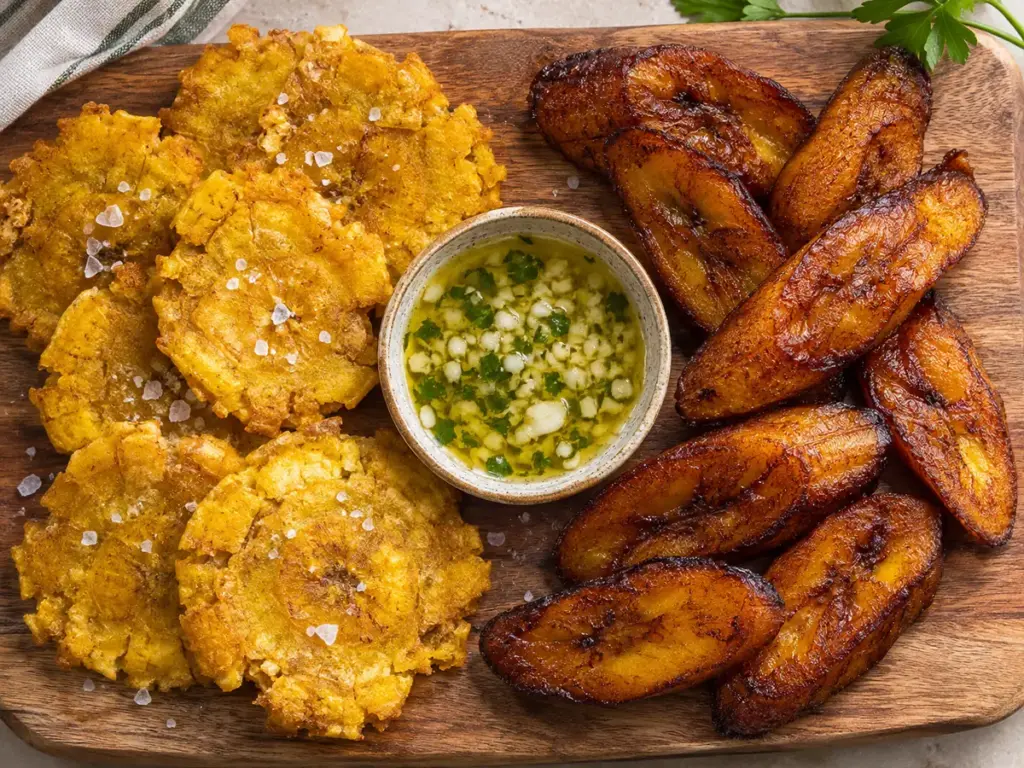
Tostones eat like a thick, savory chip and give you crunch with no sweetness on the plate.
3. Maduros (Sweet Fried Ripe Plantains)
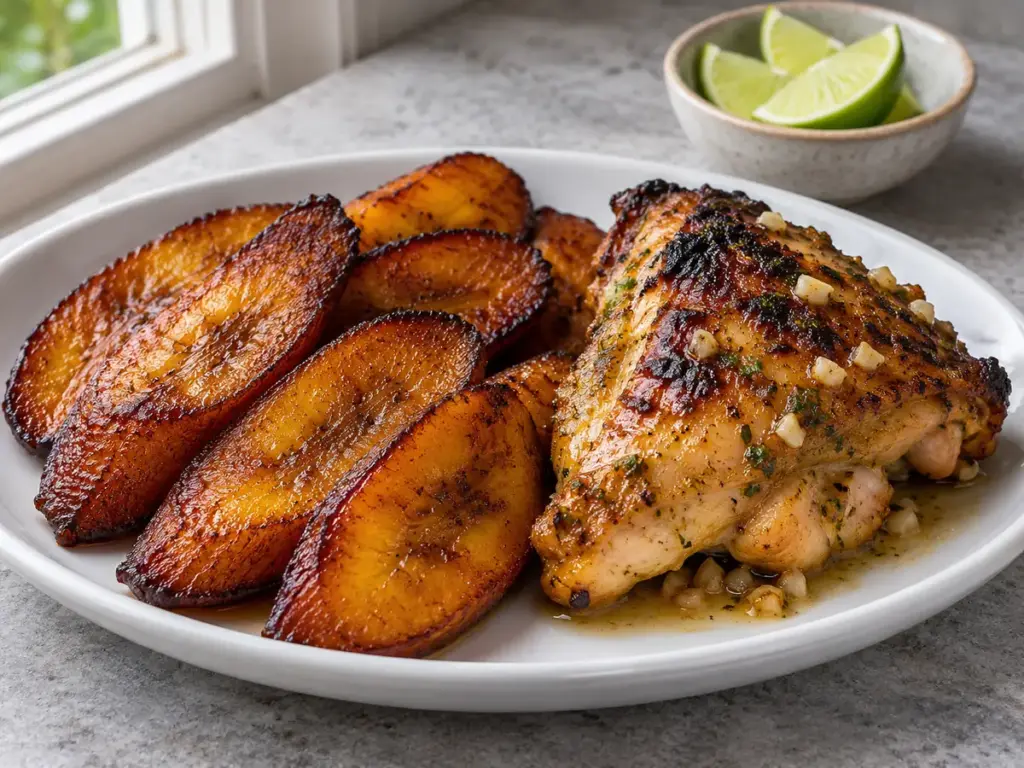
Maduros start with plantains whose peels have gone mostly black, the ripe stage. You slice them on a long diagonal and fry in shallow oil until the edges caramelize.
Wikipedia notes that the Spanish-speaking Caribbean serves sweet plantains with savory mains, where their sugar balances the sour orange.
You can buy green plantains a few days ahead, and the USDA's FoodKeeper gives ripe ones 1 to 2 days at room temperature or 3 to 5 days in the refrigerator.
- Your plate already has something sweet, like carrots or watermelon
- You want crunch to go with soft beans and rice
- You plan to dip them in extra mojo
- Your chicken is very sour or very garlicky
- Your guests like sweet and salty together
- You want a side that needs only one pan
4. Yuca con Mojo (Garlicky Cassava)
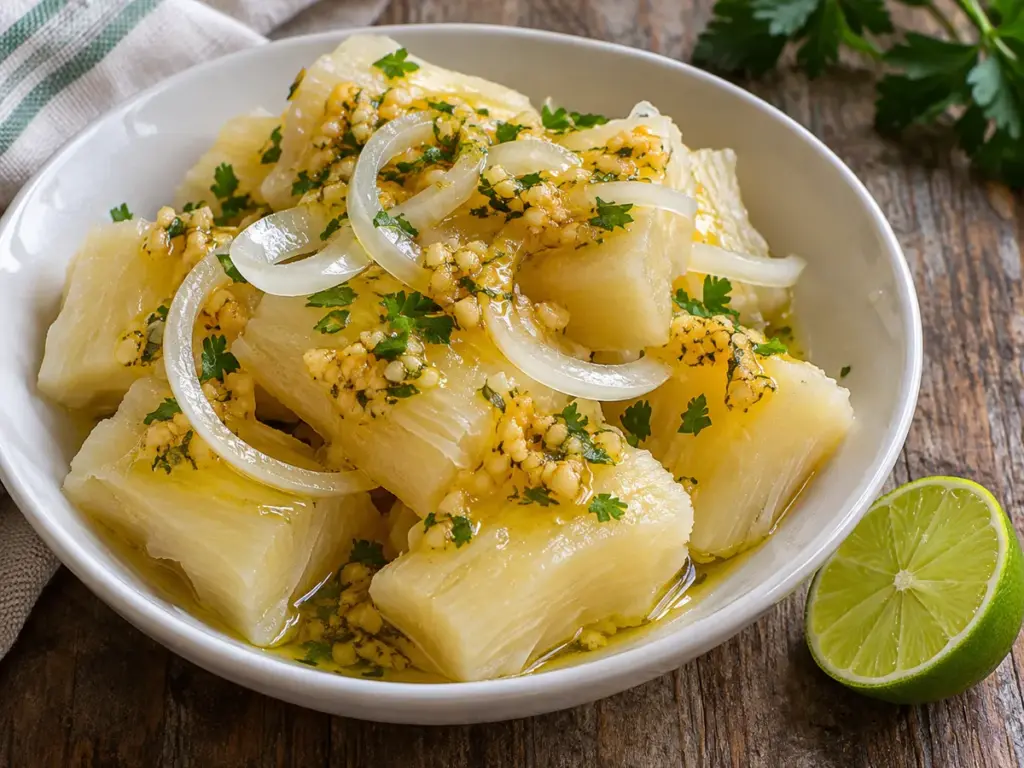
Yuca is cassava, a root you peel and boil in salted water until a fork slides in easily, then drain. You then pour a warm mojo made from sizzled garlic, olive oil and sour orange or lime juice over it and top it with raw onion rings.
5. Toasted Herb Rice
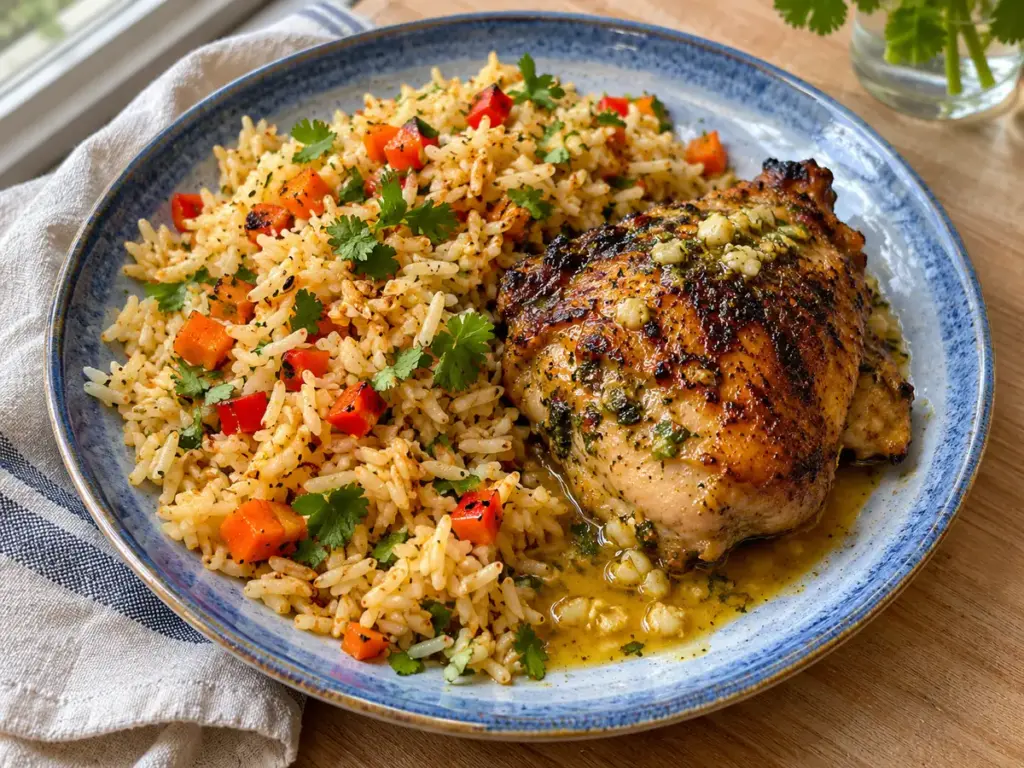
If you toast the dry rice in oil first, you get plain rice with more going on, in three steps:
- Toast. Stir 1 cup of dry rice in 1 tablespoon of oil until a few grains turn pale gold.
- Cook. Add the water and cook by the package directions.
- Fold in. Stir in chopped cilantro and roasted diced peppers or carrots at the end.
The rice stays neutral enough for the mojo to lead, while the roasted bits add small sweet pieces. When your table already has beans and plantains, this rice fills your plate without adding a second strong flavor.
6. Avocado Salad (Ensalada de Aguacate)
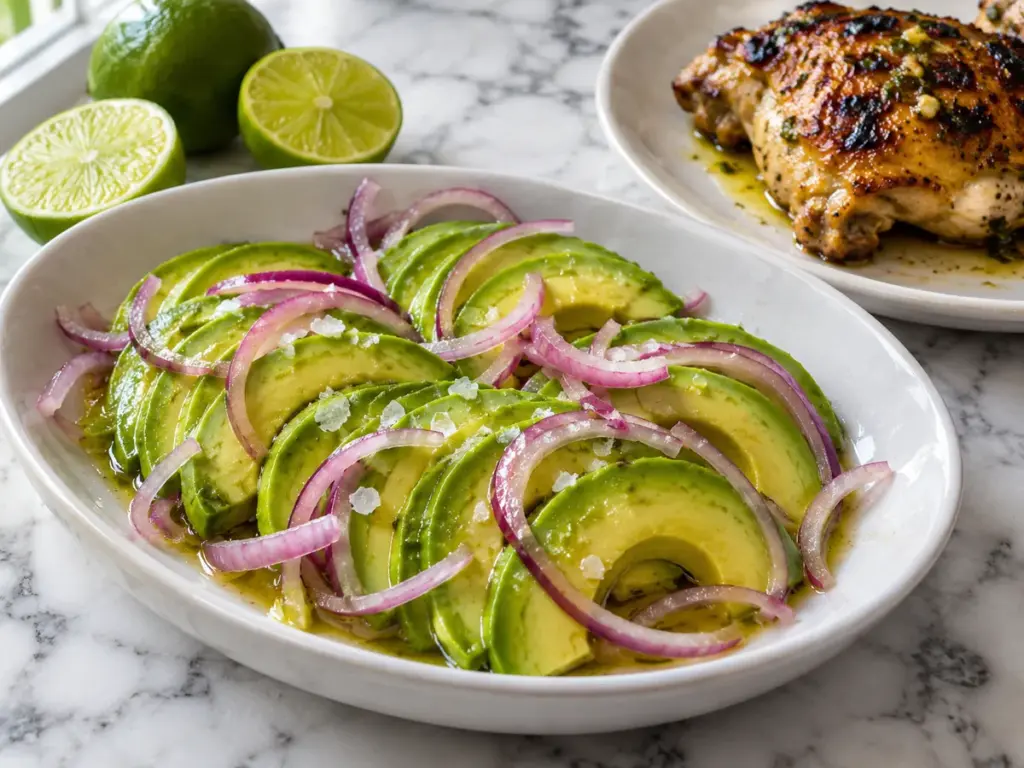
You slice 2 ripe avocados that give slightly when pressed, add thin red onion rings, then dress them with lime juice, olive oil and salt. The avocado's soft fat cools the garlic and rounds off the acid, and the lime ties it back to the marinade.
Avocado browns quickly once you cut it, so the slicing happens just before you serve it. We'd add it when the rest of the plate is warm and starchy, where a cold, soft salad stands out most.
7. Creamy Cucumber Salad
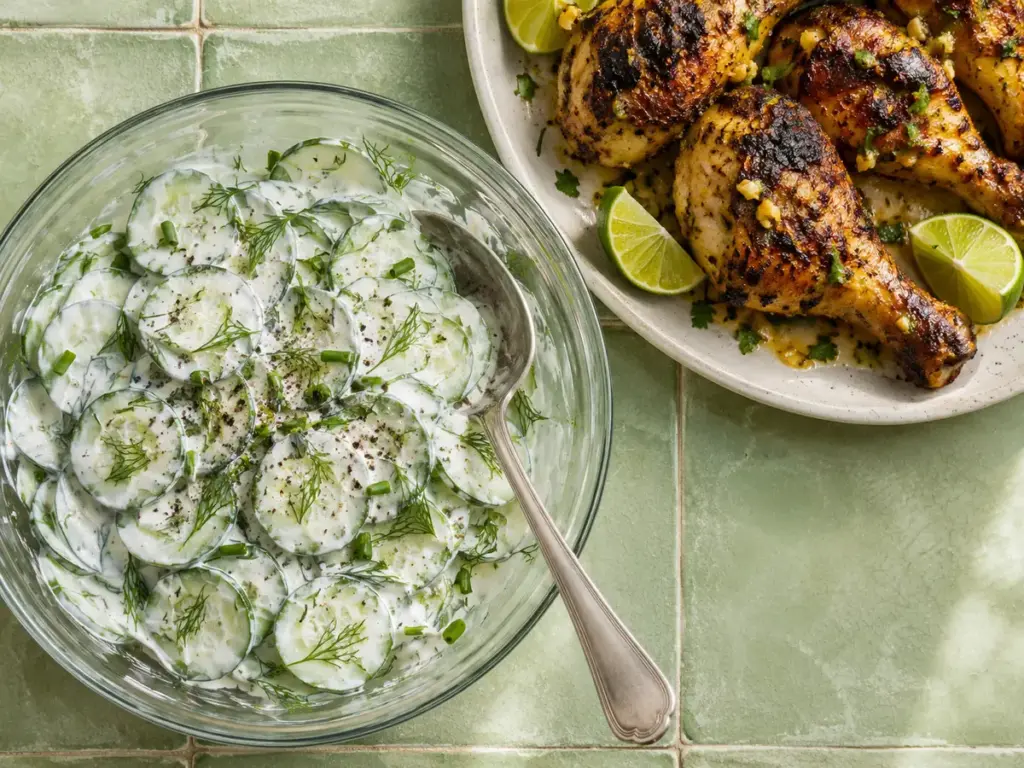
You make this salad in three quick steps:
- Salt. Slice 2 cucumbers thin, toss them with a little salt and let them sit until they release water.
- Drain. Pour off the water.
- Stir in. Add ½ cup of sour cream or plain Greek yogurt and chopped dill or chives.
The cucumber's crunch and the cool dairy calm the garlic, and draining first keeps the bowl from turning watery. The chicken already carries a bold marinade, so this mild bowl works as the cooling side without a second sauce.
8. Watermelon Cucumber Feta Salad
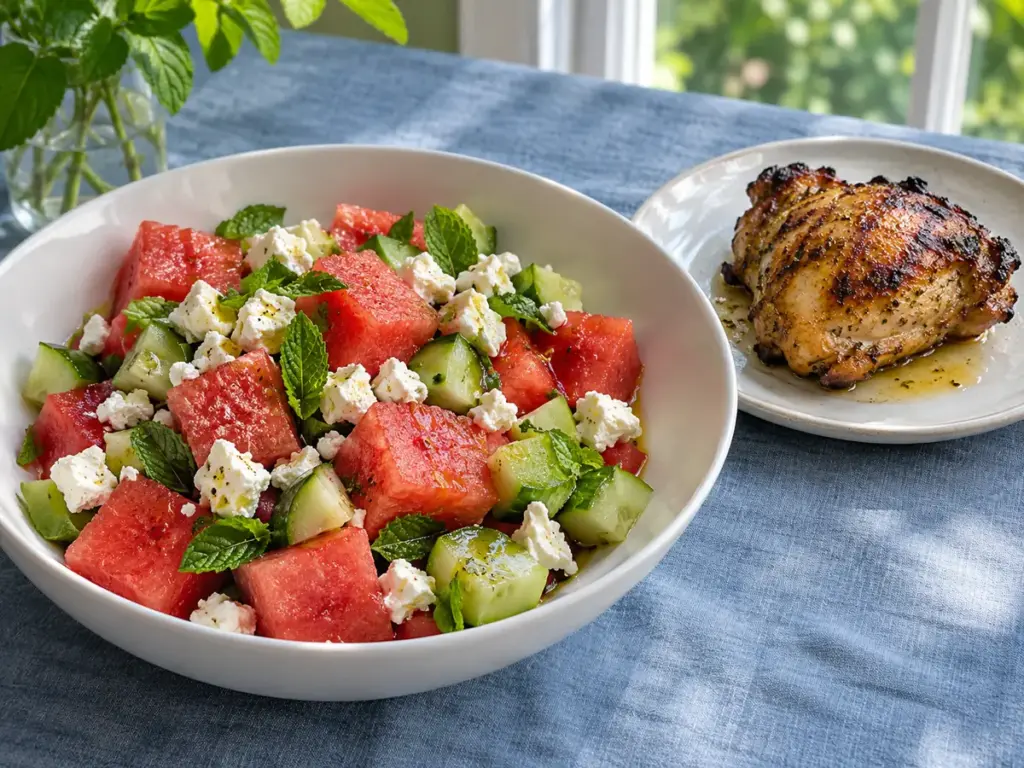
You cube watermelon and cucumber, crumble salty feta cheese over the top and add torn mint if you have it. The salad is finished as soon as the fruit is cubed, and it puts sweet, salty and cold next to the hot, sour chicken.
Similar-sized cubes of watermelon and cucumber land together on the fork, and feta added last stays in pieces instead of breaking into the juice.
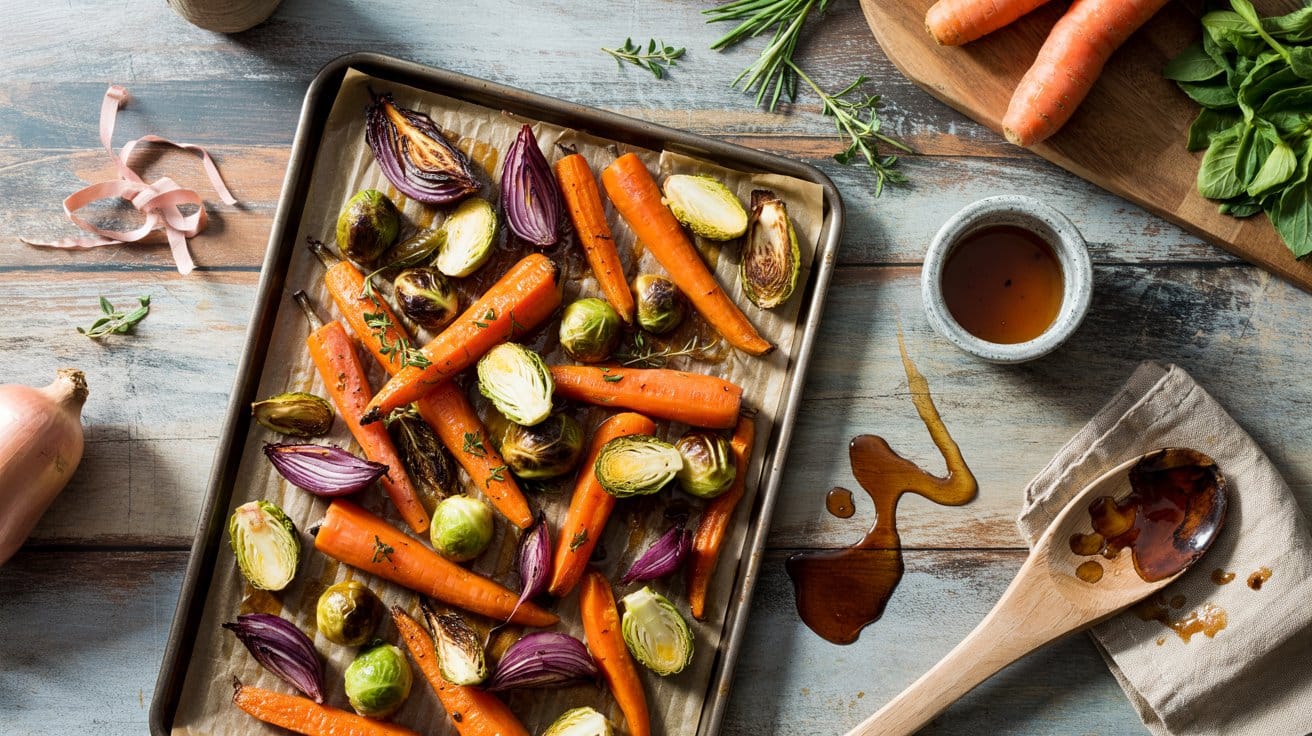
9. Citrus Roasted Carrots with Cumin
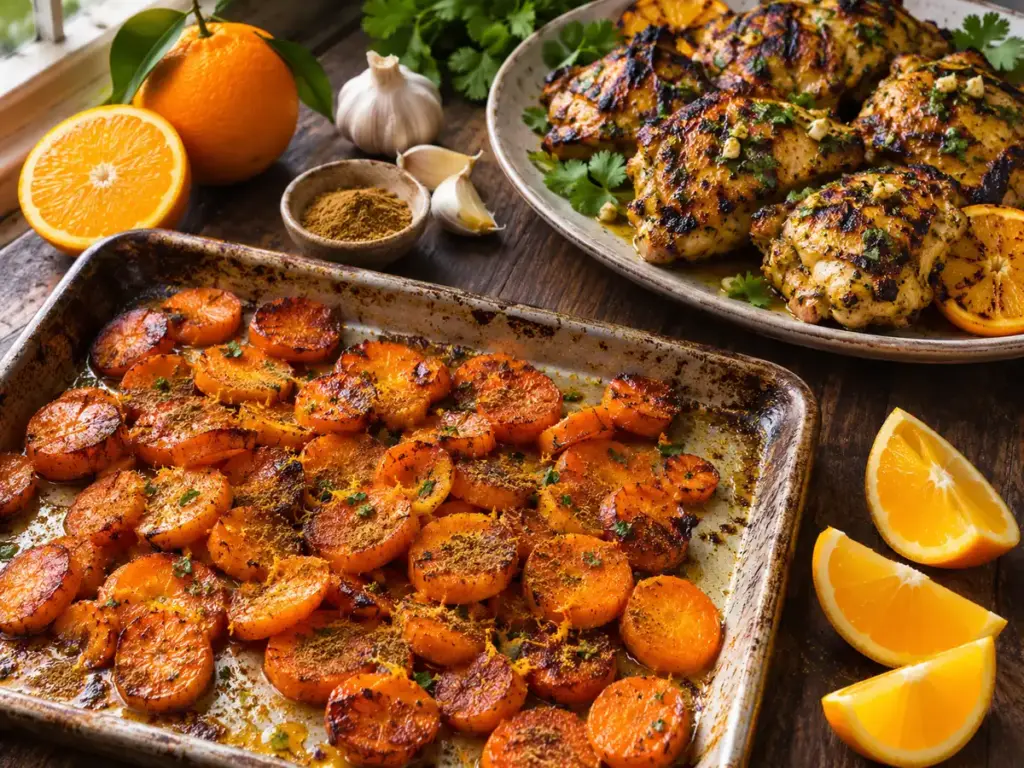
You cut carrots into ½-inch coins, toss them with oil, salt and 1 teaspoon of ground cumin, and roast them in a hot oven until the edges brown and a fork slides in. Once they come out of the oven, you squeeze orange juice over them.
The warm cumin repeats a spice from the marinade, and the browned edges bring a sweetness that softens the sour. Coins cut ½ inch thick keep a little bite after roasting.
10. Creamy Mashed Potatoes
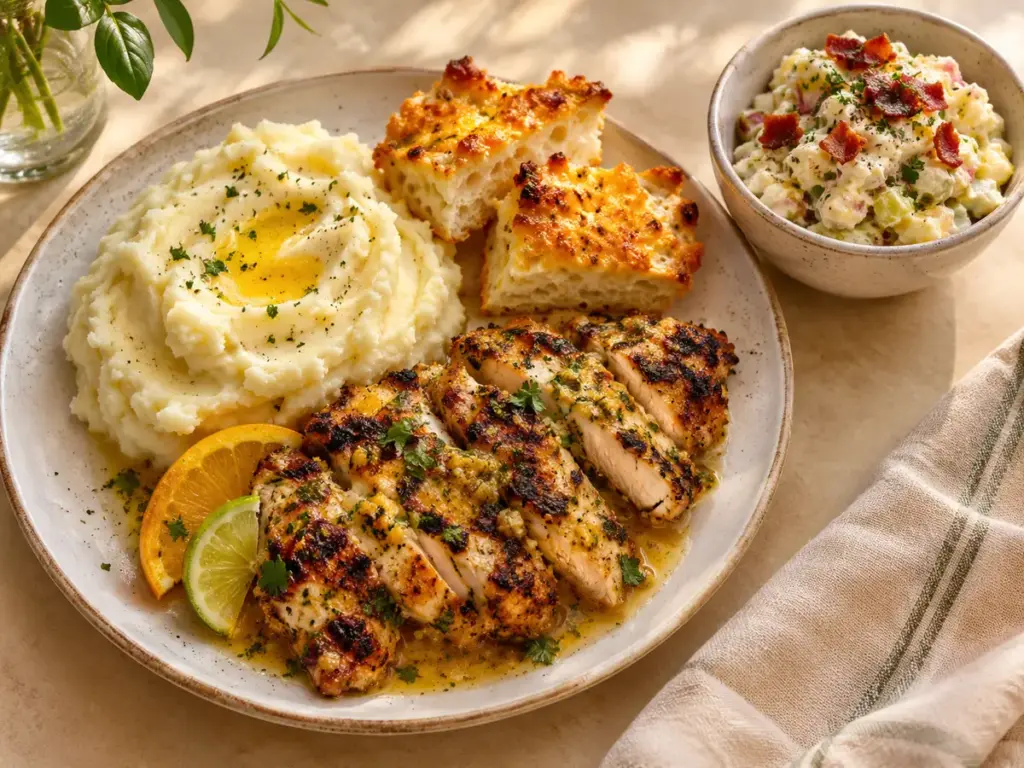
You do not have to cook Cuban sides every time. Creamy mashed potatoes soak up the juices like rice does, and when you mash them yourself you control the butter and salt.
Butter and a spoonful of plain yogurt go into the mash, and you leave out lemon or vinegar, since the chicken already has plenty of acid. If you want the bowl richer, a handful of grated cheese does the job.
11. Tangy Potato and Bacon Salad
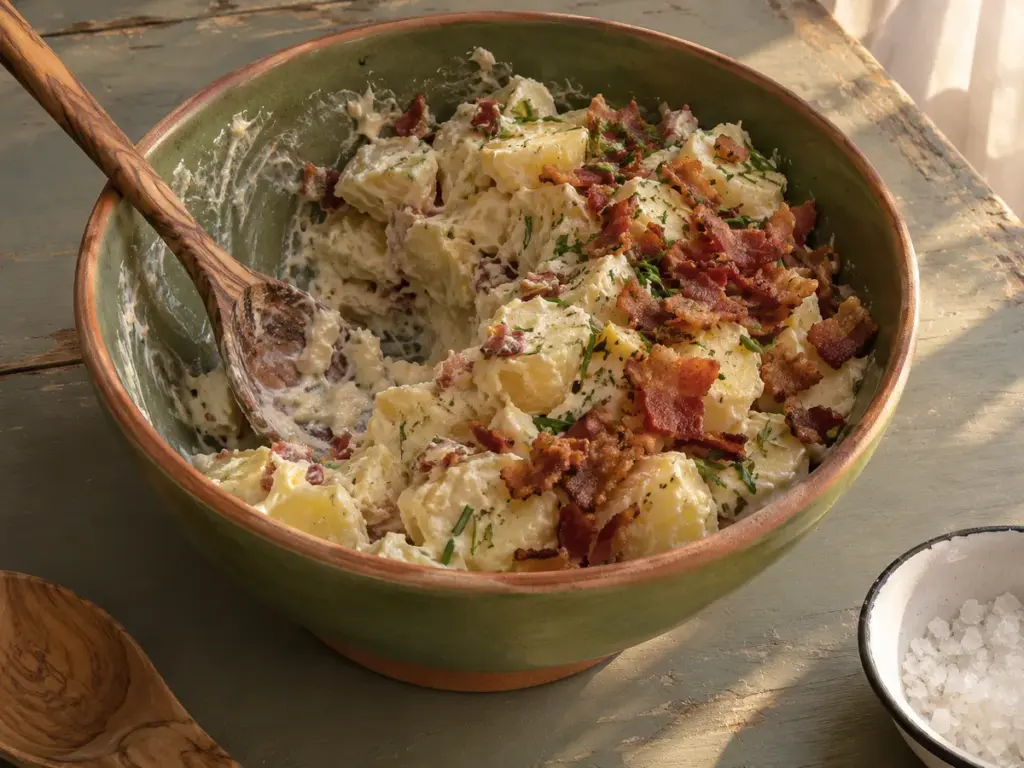
This salad works only if you dress it with mayonnaise and go easy on the vinegar. A vinegary salad next to a citrus marinade stacks two sharp flavors on one plate.
Bacon adds smoke and salt, and the chicken still leads as the main meat when you keep the bacon to a topping. Like any cooked, perishable dish, the bowl goes back in the refrigerator within the FSIS 2-hour limit, so we'd keep it cold until it goes to the table.
12. Crispy Cheesy Bread
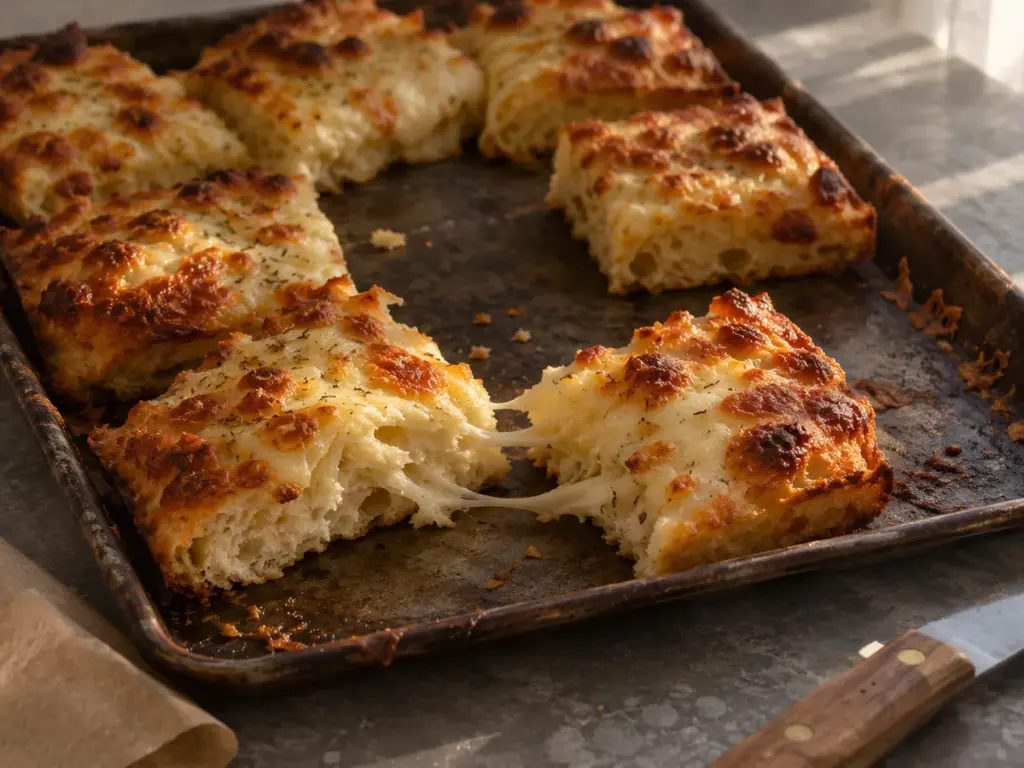
Crispy cheesy bread mops up the pan juices like a sponge, and the cheese's salt works with the tangy chicken. It is also heavy beside the juicy chicken, so you cut small pieces and put a cold salad on the same plate.
The bread has wheat and the cheese has milk, so guests who avoid either need another side. Since the beans and rice already take the juices, you serve this bread as the extra on the table.
Which Sides Clash with Mojo Chicken?
Mojo already brings acid and garlic, so a side that adds more of either makes your plate harder to finish. Three common pairings need care:
- Vinegar slaws and pickled salads stack a second sour flavor on top of the sour orange.
- Dressings and sauces with lemon repeat the citrus, and a squeeze is fine while a pour is too much.
- Garlic bread and garlic mashed potatoes double the garlic that the marinade supplies.
What Do You Serve with Mojo Sauce Itself?
Mojo is a sauce before it is a marinade. Wikipedia describes Cuban mojo as a sauce of garlic, olive oil or pork lard, and citrus juice, traditionally bitter orange, used to marinate roast pork and as a dip for plantain chips and fried cassava.
When you put a bowl of mojo on the table, tostones, plantain chips and yuca become the natural partners, and you can spoon the sauce over rice and beans as well.
How Do You Marinate, Cook and Store Mojo Chicken Safely?
Raw chicken sits in an acidic marinade for hours, so the safety steps cover doneness, marinating, the used marinade and leftovers.
You marinate the chicken in the refrigerator, and the USDA's FSIS fact sheet on basting, brining and marinating poultry says to keep it covered while it marinates and gives up to 2 days as the limit. PBS's mojo chicken recipe marinates for only 1 hour.
Marinade that touched raw chicken is not a sauce, because FSIS says to boil used marinade before you reuse it as a sauce or dip. You can skip that step by setting some mojo aside before the raw chicken goes in, or by mixing a fresh batch.
Leftovers follow FSIS rules too, so you refrigerate them within 2 hours of cooking, use them within 3 to 4 days, and reheat them to 165°F as measured with a food thermometer.
Sources
- USDA FSIS, Safe Temperature Chart
- USDA FSIS, Poultry: Basting, Brining, and Marinating
- USDA FSIS, Leftovers and Food Safety
- USDA FoodKeeper (plantains)
- FAO, Toxic substances and antinutritional factors (cassava) (more cyanide in the peel, boiling not always reliable)
- PBS Food, Chicken Adobo with Mojo (Steven Raichlen)
- Mojo (sauce), Wikipedia
- Moros y Cristianos (dish), Wikipedia
- Fried plantain, Wikipedia (twice-fried smashed plantains, sweet plantains with savory mains)
- Food Standards Australia New Zealand, Cassava (cyanogenic glycosides, peel and fully cook)
- Tasting Table, sour orange juice in Cuban mojo

Food writer at GustoMeadow. Writes ingredient substitutes, food comparisons, taste guides and storage guides for home cooks.
Storage and food-safety numbers follow USDA, FDA and university extension guidance.