
Barley is the grain you cook in soups, and malted barley is the same grain sprouted and then dried, which makes enzymes that turn starch into sugar.
- Cook plain barley, hulled or pearled, in soups, stews and grain salads.
- Use malted barley for beer, whisky, bagels, malt powder, malt syrup and malted milk.
- Both contain gluten, so neither is safe for celiac disease.
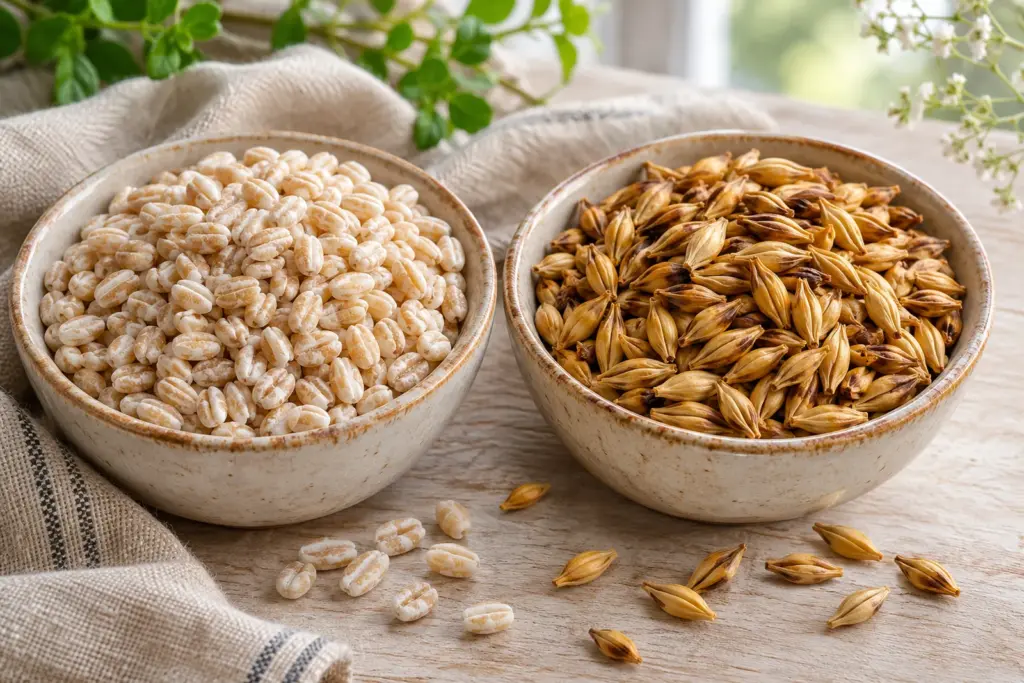
Recipes and labels call both products barley, and that confusion is common with other foods people mix up. A bag of pearled barley and a bag of malted barley flour come from the same plant, but a maltster has sprouted, kilned and ground the second one, so the two behave very differently in your kitchen.
1. What Is the Difference Between Barley and Malted Barley?
The difference is one processing step. Plain barley is cleaned, then hulled or pearled and sold as a grain. Malted barley is soaked, sprouted and dried in a kiln, and the sprouting is what builds the enzymes brewers and bakers want.
- It is cleaned, then hulled, or pearled to remove the bran.
- It has few active starch-converting enzymes.
- It tastes mild, nutty and chewy.
- It is steeped in water, sprouted, then kiln-dried.
- Its enzymes are built during sprouting and still active in diastatic malt.
- It tastes sweet and bready, from pale biscuit to dark roast depending on the kiln.
| Trait | Barley (hulled or pearled) | Malted barley |
|---|---|---|
| Form you buy | Whole kernels | Whole kernels, flour, powder, syrup or extract |
| Main use | Soups, stews, pilafs, grain salads | Beer, whisky, bagels, bread, malted milk, malt vinegar |
| Gluten | Contains gluten | Contains gluten |
You eat plain barley as the main ingredient of a dish, while you add malted barley in small amounts to change the flavor, color or sugar of something else.
2. How Is Barley Turned Into Malt?
A maltster sprouts the grain on purpose. The maltster soaks the grain, lets it sprout just long enough to build enzymes, and then dries it to stop the sprout in its tracks.
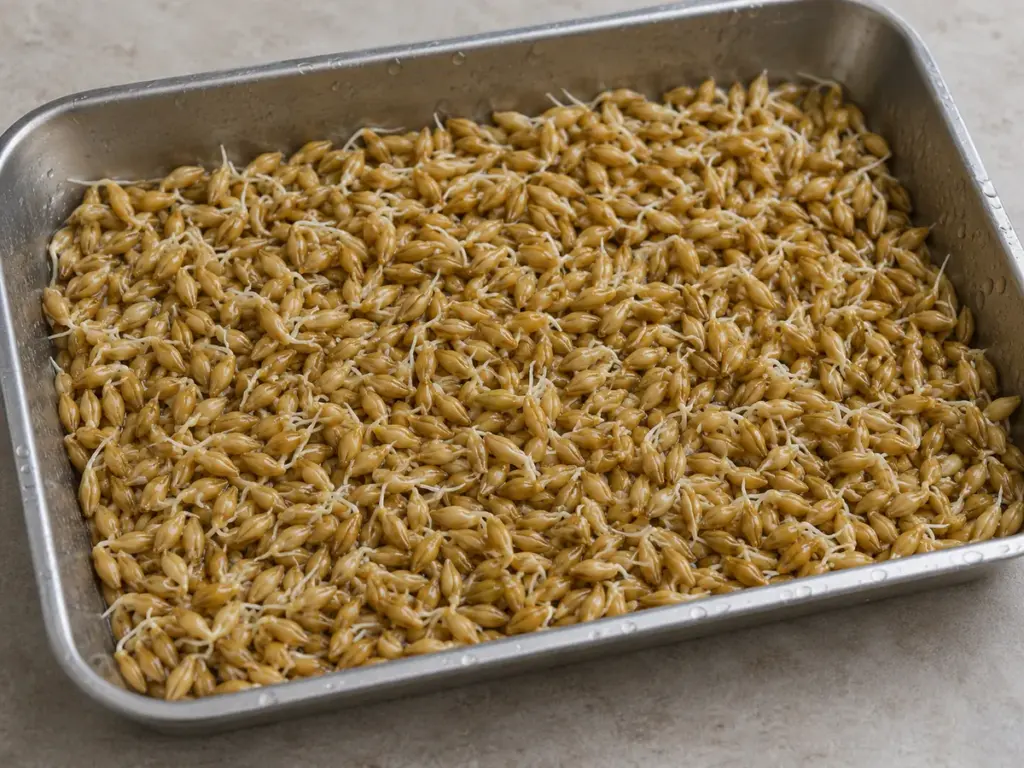
- Steep. The grain soaks in water, with rests for air, until it holds roughly 42 to 46 percent water, up from about 12 percent when it arrived.
- Germinate. The wet grain sprouts for about 5 days, and enzymes that break starch into sugar form while the shoot grows.
- Kiln. Hot air dries the sprouted grain, called green malt, to about 4 to 5 percent moisture, which stops the sprout and sets color and flavor.
The heat of the kiln decides the result. Gentle heat keeps the enzymes alive, while hotter kilning builds toasted flavors such as the biscuit notes of Victory malt and gives up most of the enzyme power. King Arthur notes that heating diastatic malt powder at 350°F for 5 minutes deactivates its enzyme, which shows how heat switches the enzyme off.
3. How Do They Taste and Cook Differently?
Plain barley tastes mild and nutty and stays chewy, because its starch is still locked inside the kernel. In a simmering pot it swells and thickens the broth, which is why it belongs in beef barley soup and mushroom stews. Farro gives a similar chew if your pantry runs out, though how barley compares with farro matters if you avoid gluten, since both contain it.
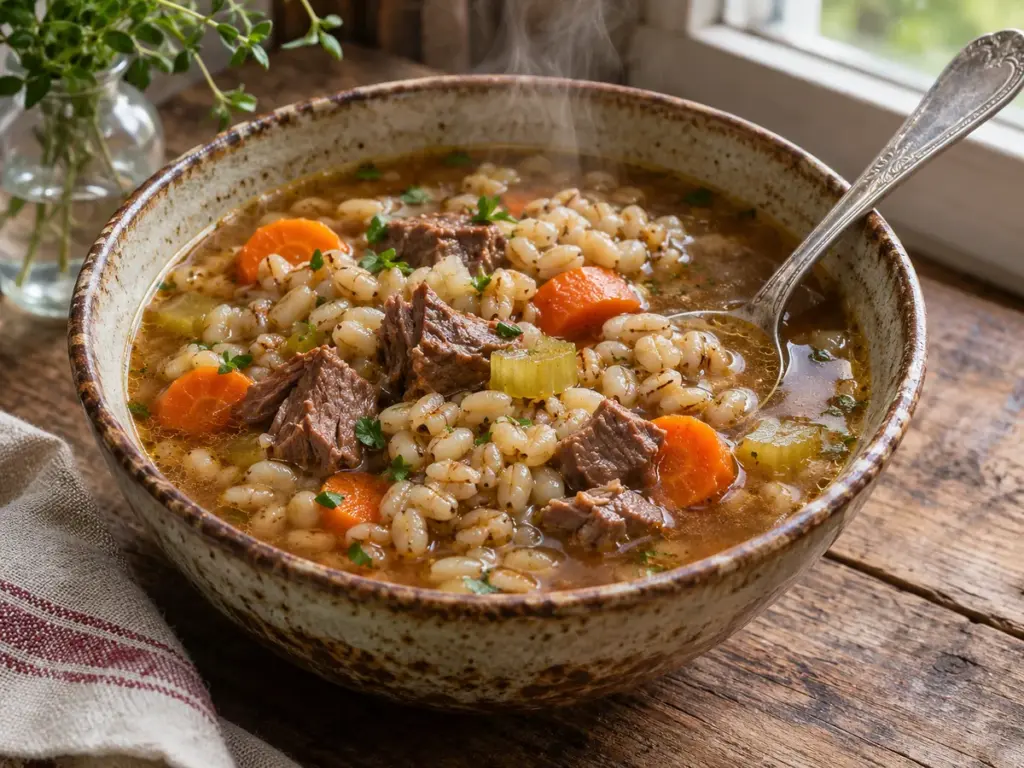
Two kinds of plain barley sit on most shelves:
- Hulled barley has only the inedible outer hull removed, so it keeps its bran, stays chewier and takes longer to cook.
- Pearled barley is polished to remove the hull and bran, so it cooks faster and turns softer.
Malted barley tastes sweet, bready and toasty, because sprouting turns some starch into sugars and the kiln adds toast. A pale malt reads as plain cereal sweetness, and a darkly roasted malt reads as dark toast or coffee. You rarely eat it as the main dish. You stir a spoonful of powder into dough, or you pour syrup into a bagel pot.
4. What Are Diastatic and Non-Diastatic Malt Powder?
Both powders are ground malted barley. The only difference is whether the enzyme still works, and that decides what the powder does to your dough.
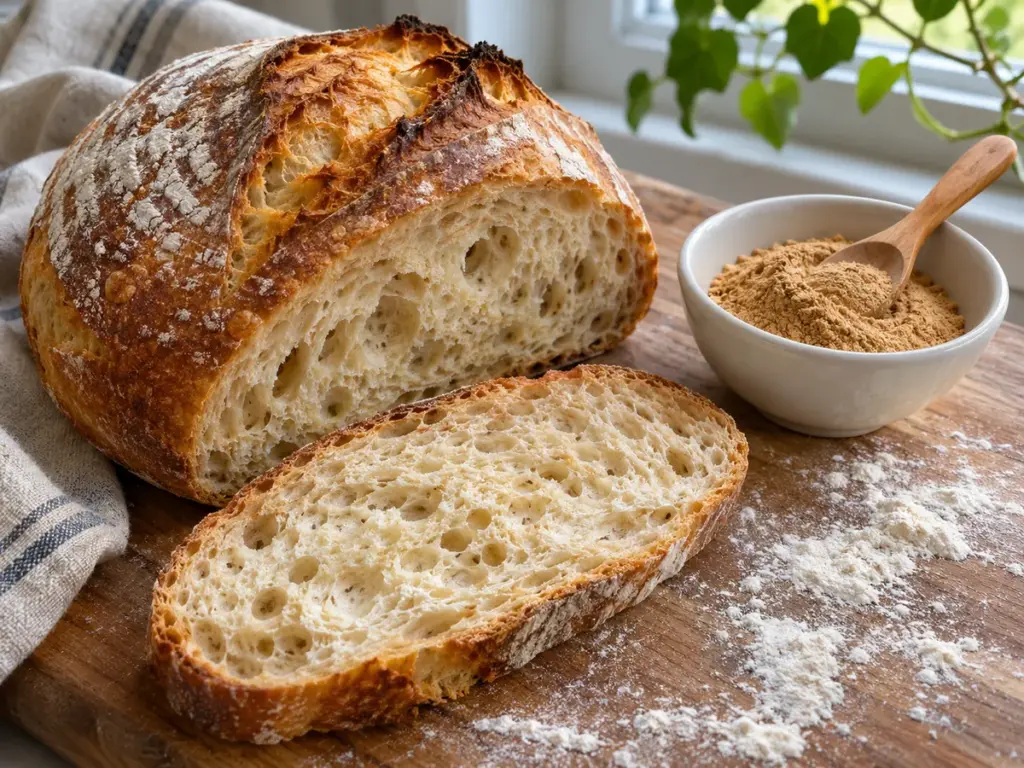
- Its active enzyme turns flour starch into sugar, so dough rises faster.
- It adds some sweetness and darker color.
- Use a pinch: 0.1 to 0.2% of the flour's weight, per King Arthur.
- Its enzyme is inactive, so it does not speed the rise.
- It adds sweetness and color, and often replaces sugar in yeast breads.
King Arthur cites baker Jeffrey Hamelman for the dose: 0.1 to 0.2% of the flour's weight, about 0.5 to 1 g of diastatic malt powder per 500 g of flour. Non-diastatic powder needs no tiny-dose rule, since you use it for flavor.
You can swap non-diastatic for diastatic in equal amounts, but expect a slower rise. If you put diastatic powder in a recipe written for the non-diastatic kind, the dough can turn gummy. Not every jar of malted barley flour is diastatic, so look for the word on the label when you want the rise.
5. Which Foods and Drinks Are Made from Malted Barley?
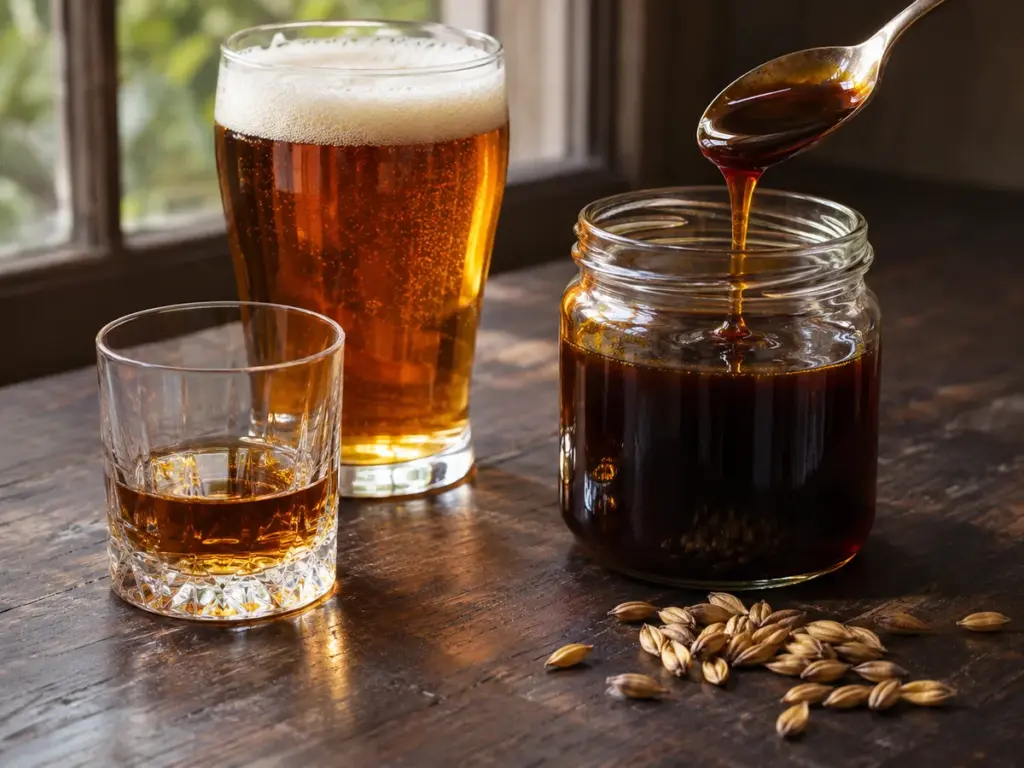
- Malt extract and malt syrup are a water infusion of germinated barley, concentrated into a syrup, according to FDA's compliance policy guide. Bakers boil bagels in water with barley malt syrup for an amber, shiny crust.
- Malted milk powder combines whole milk with the liquid from a mash of ground barley malt and wheat flour, then dries it, in the definition FDA's guide uses.
- Beer depends on the enzymes in malt to turn grain starch into sugar for yeast, and how barley wine differs from beer starts from that same malted barley.
- Single malt Scotch is made from water and malted barley only, under the Scotch Whisky Regulations 2009. Grain whisky may also use whole grains of other cereals.
- Malt vinegar is brewed from malted barley, so you need a malt vinegar replacement that does not come from barley if you avoid gluten.
6. How Do Hulled and Pearled Barley Compare on Nutrition?
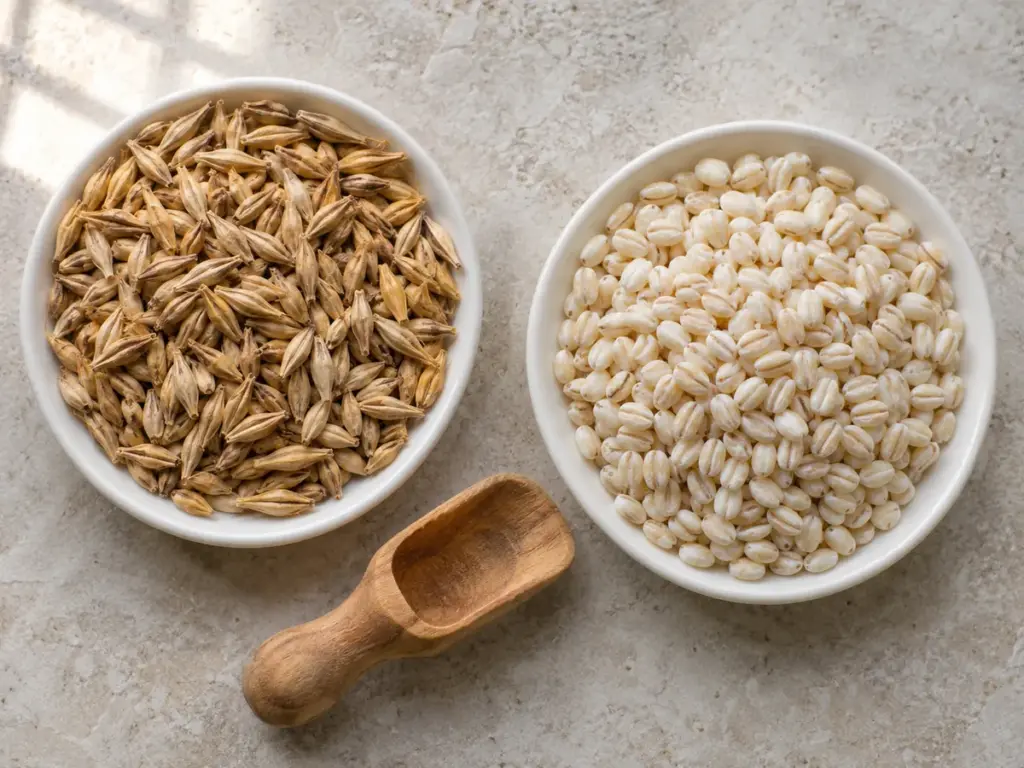
| Per 100 g, raw | Hulled barley | Pearled barley |
|---|---|---|
| Calories | 354 kcal | 352 kcal |
| Protein | 12.5 g | 9.91 g |
| Carbohydrate | 73.5 g | 77.7 g |
| Dietary fiber | 17.3 g | 15.6 g |
These are USDA FoodData Central values. Hulled barley has about 1.7 g more fiber per 100 g because it keeps its bran, and it has more protein too. FDA allows a heart-health claim for foods that supply 3 g a day of beta-glucan soluble fiber from whole oats, barley or both, so oats are the other grain behind it, and barley compared with oatmeal is a fair bowl-for-bowl question.
We give no nutrition numbers for malted barley. Malt powder, syrup and extract differ by product and by how much you use, so read the Nutrition Facts panel on the one you buy.
7. Are Barley and Malted Barley Gluten-Free?
The Celiac Disease Foundation's label guide lists malt extract, malt flavor and malt syrup among the ingredients to avoid. FDA's gluten-free labeling answers say the same: barley malt and malt extract cannot be used in a food labeled "gluten-free", because they come from a gluten-containing grain that was not processed to remove gluten.
FDA also limits the plain terms "malt extract" and "malt syrup" to barley products, so malt on an ingredient list means barley unless another grain is named.
8. Can You Use One Instead of the Other?
Plain barley cannot do malt's job. Cooked barley has far less starch-converting enzyme, so it will not sweeten dough or feed yeast the way malt powder does. Malted barley is also a poor stand-in for a cooking grain, because it is sold ground, or as brewing kernels that are not meant for the pot.
- Out of diastatic malt powder? stand-ins for diastatic malt powder start with non-diastatic malt and a longer rise.
- For a general baking malt, malt powder replacements cover the sweet, toasty part of the flavor.
- For bagels, King Arthur suggests brown sugar or non-diastatic malt powder in the dough and honey in the boiling water, in equal parts by weight, and barley malt syrup swaps go further.
- Barley flour is milled plain barley, not malted barley, so substitutes for barley flour belong to the cooking-grain side.
9. Which Should You Buy?
- Soup, stew or grain salad: buy pearled barley for a softer, faster pot, or hulled barley for more chew and fiber. When the store is out, grains that replace barley cover the gap.
- Bread or bagels: buy diastatic malt powder for a better rise and color, or non-diastatic for flavor alone, and measure it in grams.
- Homebrewing: buy malted barley kernels from a brewing supply shop, and choose pale malt for a light beer or a toasted malt for color and flavor.
- Gluten-free kitchen: buy neither, and check ingredient lists for the word malt.
Sources
- Michigan State University, A Study Assessing the Feasibility of Michigan Malt Houses: steeping moisture, germination and kilning.
- King Arthur Baking, Difference Between Diastatic and Non-Diastatic Malt: enzymes, dosage, swaps and bagel malt syrup.
- FDA, CPG Sec. 515.200 Malt Extract; Malt Syrup: definition of malt extract and syrup.
- FDA, CPG Sec. 527.500 Malted Milk: definition of malted milk.
- FDA, Questions and Answers on the Gluten-Free Food Labeling Final Rule: barley malt and gluten-free claims.
- Celiac Disease Foundation, Food Label Reading Guide: grains and malt ingredients to avoid.
- The Scotch Whisky Regulations 2009: single malt and grain whisky definitions.
- USDA FoodData Central: "Barley, hulled" and "Barley, pearled, raw" (SR Legacy).
- 21 CFR 101.81: soluble fiber from whole oats and barley and heart disease.

Food writer at GustoMeadow. Writes ingredient substitutes, food comparisons, taste guides and storage guides for home cooks.
Storage and food-safety numbers follow USDA, FDA and university extension guidance.



