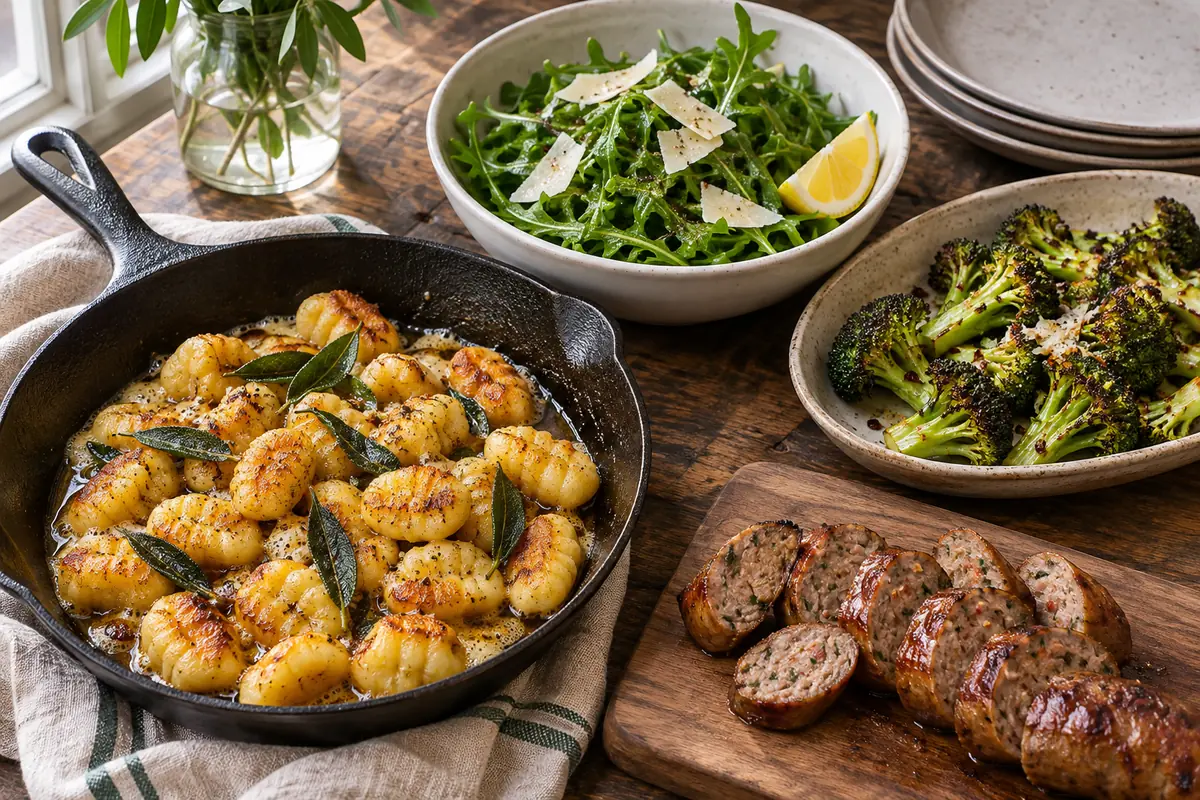
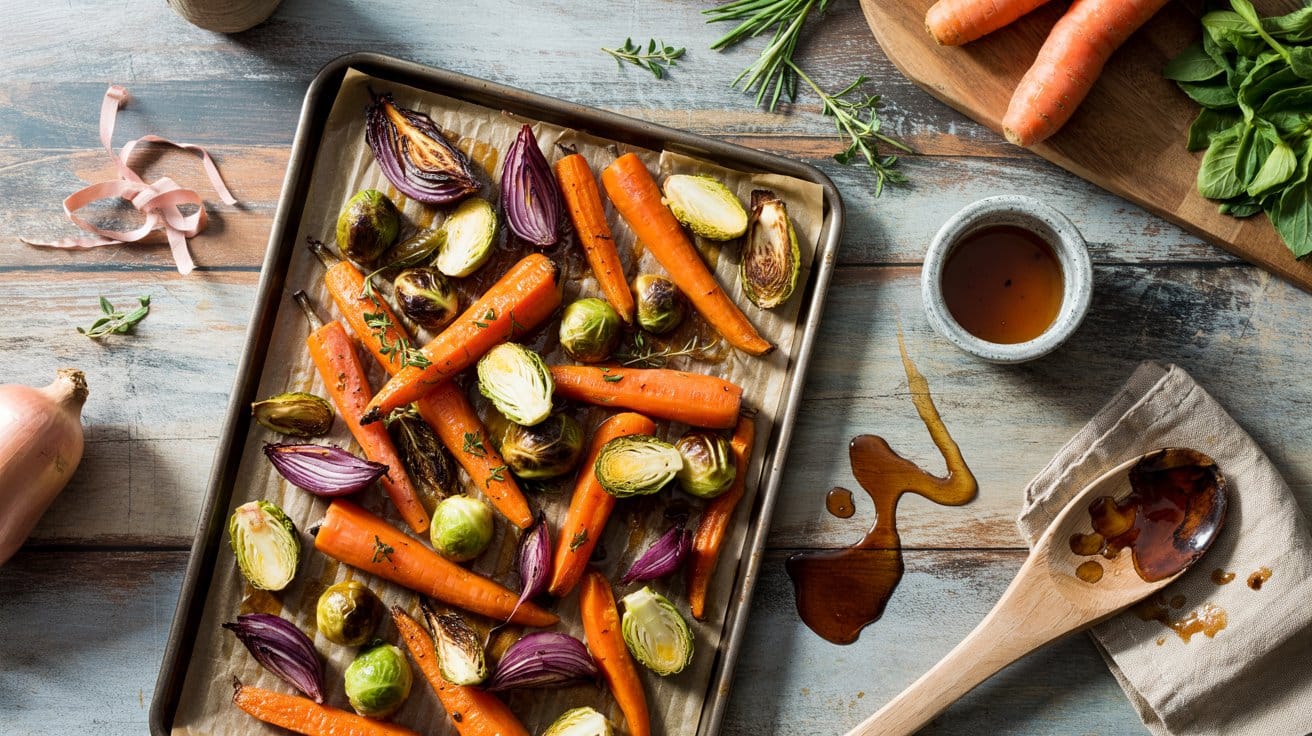
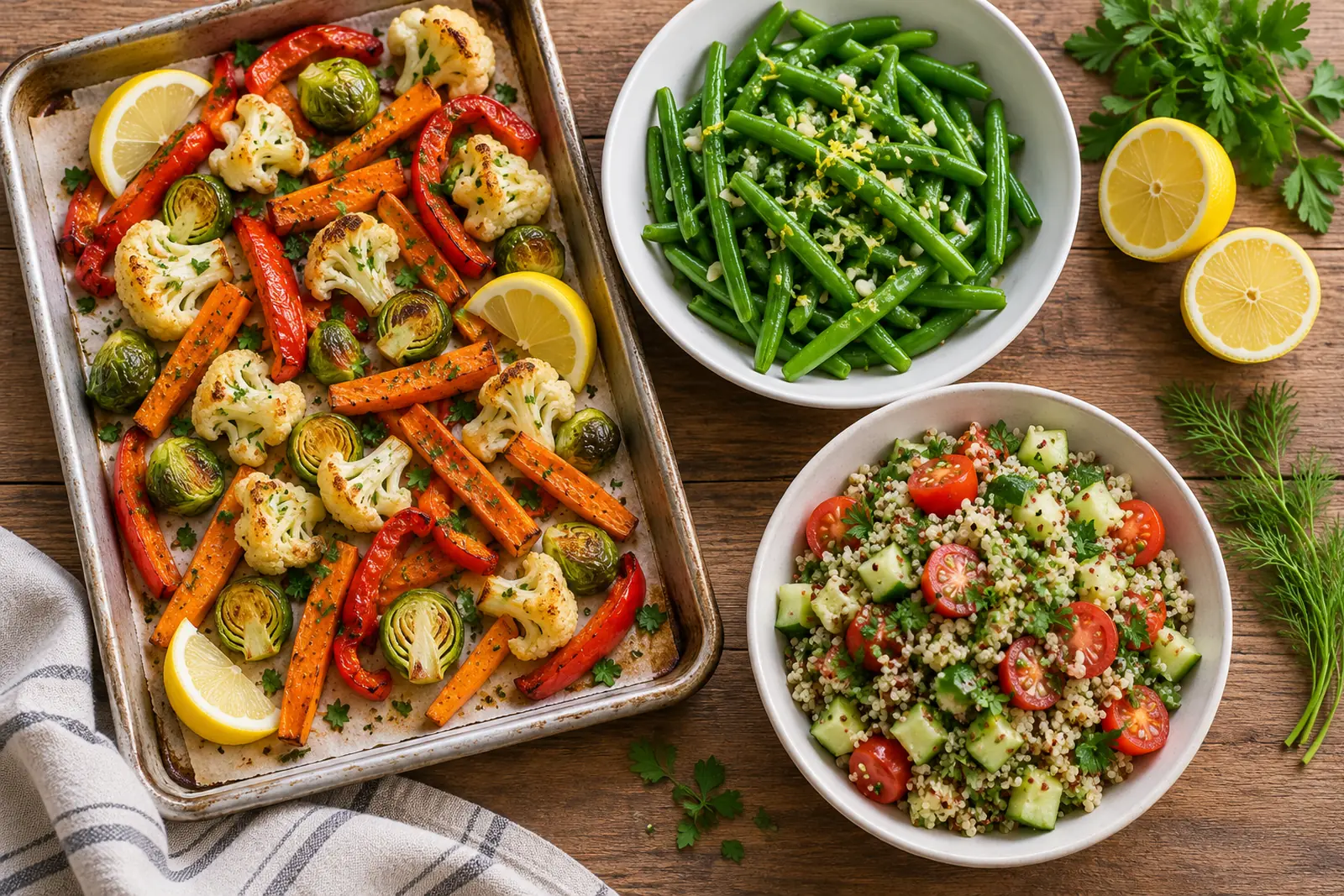
Beef barley soup goes best with crusty bread or soft rolls for dipping and a crisp salad with lemon dressing on the side.
- The bowl already holds beef, barley and vegetables, so the sides only need to add crunch, acid or something to dip.
- Fries and buttered corn stack a second starch on the barley, and barley contains gluten.
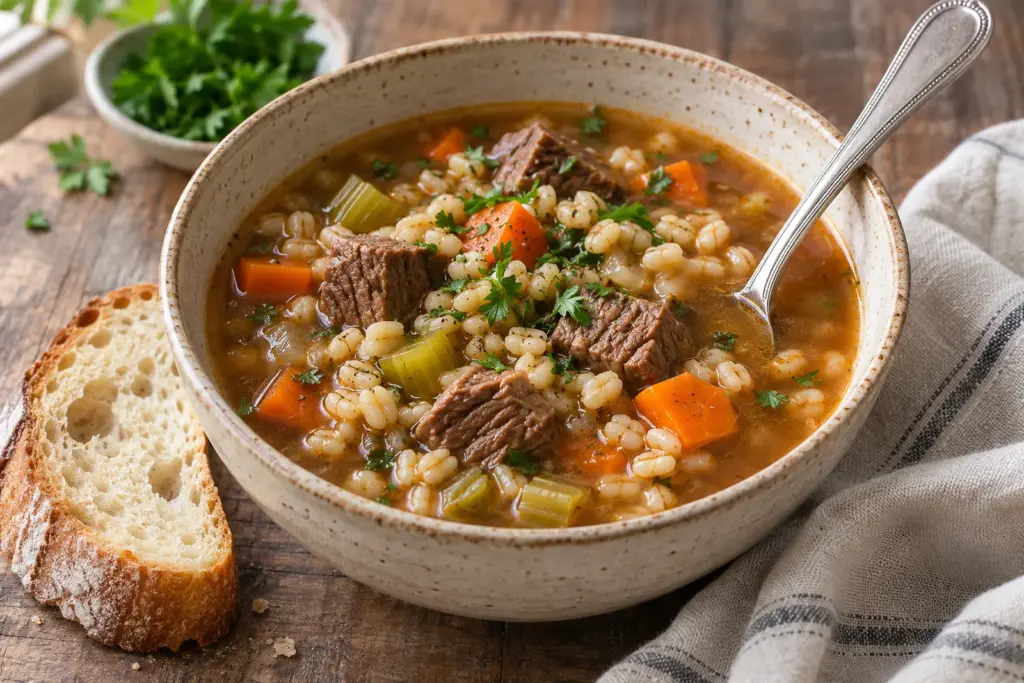
Beef barley soup is a full meal in a bowl, so the sides worth serving beside it only need to fill in what the pot lacks. The barley brings chew and the beef brings richness, and neither gives you anything cold or sour.
What Goes Well with Beef Barley Soup?
Every spoonful is soft, savory and warm, with barley adding starch, so we'd fill three gaps: something crisp, something sharp and something to dip.
| The soup has | The plate needs | Sides that do it |
|---|---|---|
| Soft barley, tender beef | Crunch | Green or cucumber salad |
| Rich, salty broth | Acid | Lemon dressing, balsamic peppers |
| Plenty of starch | No second heavy starch | Greens, fruit, half a sandwich |
| One brothy texture | Something to dip | Bread, rolls, grilled cheese |
If you pair one side to dip with one side that is crisp and sharp, the plate is complete. You already get protein and vegetables from the bowl, so a third side is optional.
The same plan works for a vegetable beef soup without barley, and if your pot is lighter, the sides for vegetable soup cover it. With no barley in the pot, one starchy side is fine, and the rest of the plan stays the same.
7 Best Side Dishes for Beef Barley Soup
1. Crusty Bread or Dinner Rolls
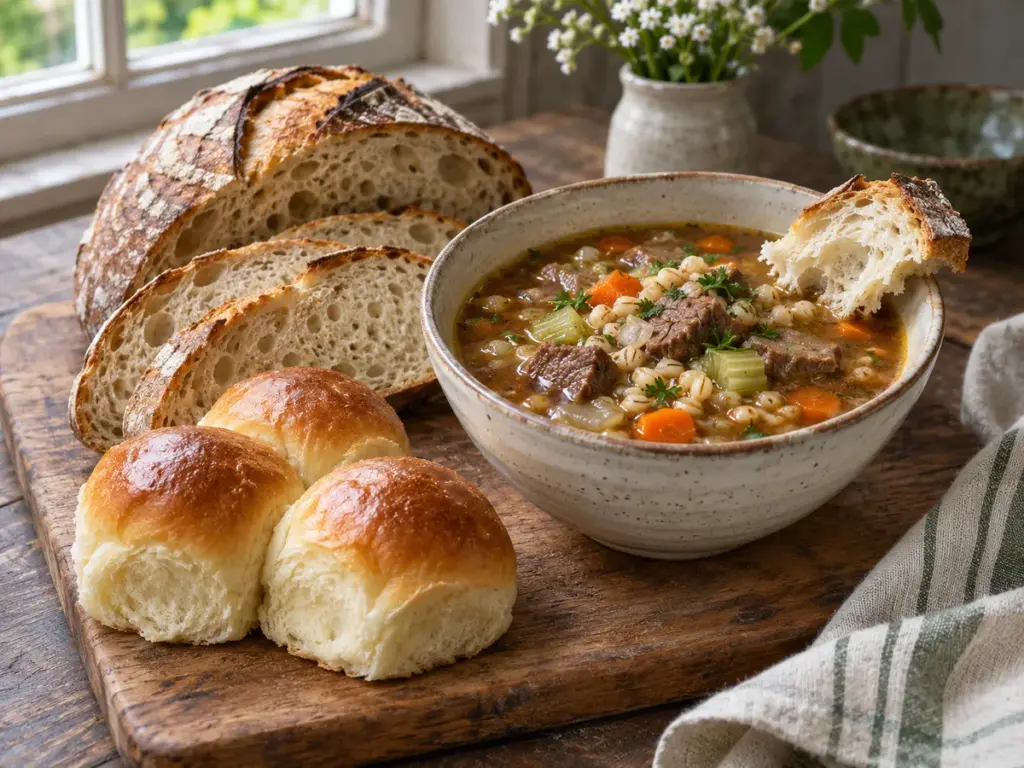
Bread is the easiest answer because it soaks up broth and lets you finish the bowl. The type you pick depends on how you eat your soup:
- Sourdough, baguette or rye
- You tear and dunk, and the crust keeps some bite in the broth.
- Soft rolls soak up broth faster than a crusty loaf.
Warm rolls and unsalted butter make sense when the broth comes from a can or bouillon, since USDA lists canned ready-to-serve beef broth at about 890 mg of sodium per cup. The soup itself is filling, so we'd plan on a roll or a slice or two per person.
If someone you are feeding avoids bread, the salad and pepper sides below fill the same gap, much like bread-free soup sides do for other soups.
2. Green Salad with Lemon Vinaigrette
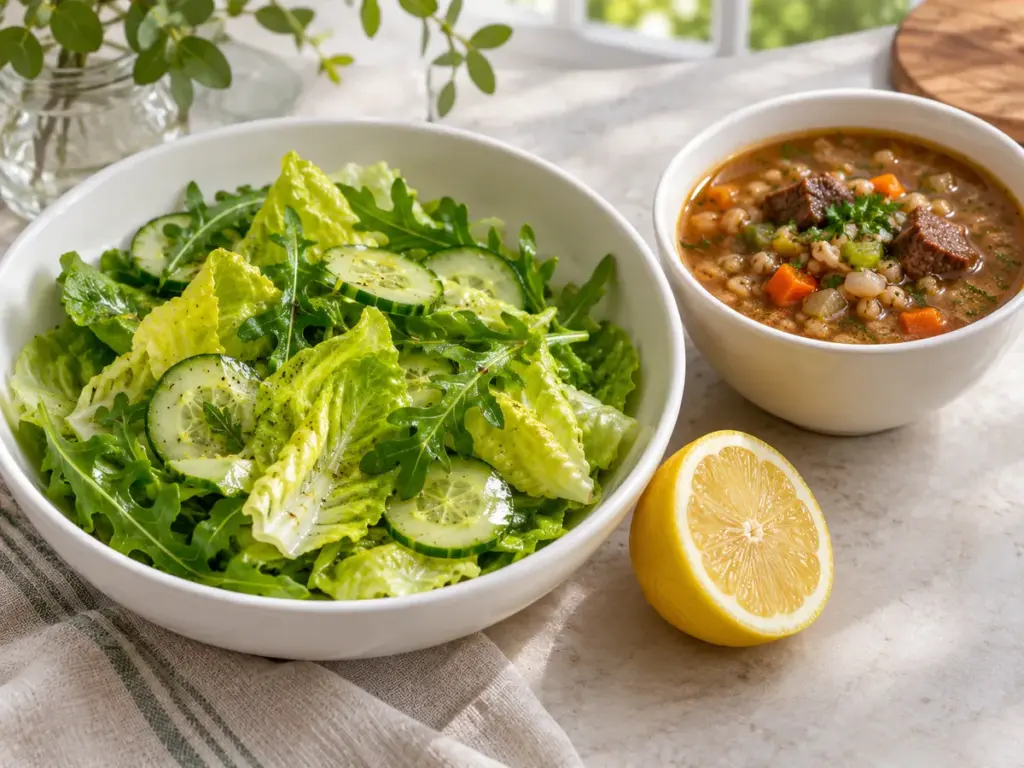
We'd add acid first, because a rich, salty broth has none. Crisp greens such as romaine or arugula go with a vinaigrette of olive oil and lemon juice, with more oil than juice, plus salt and pepper.
The acid softens the leaves soon after you toss them, so you dress the salad right before you sit down and serve it in its own bowl, which keeps the dressing out of the broth.
Lemon makes a good default dressing, and other green salad dressings such as a red wine vinaigrette cut through the broth in the same way.
3. Crisp Cucumber Salad
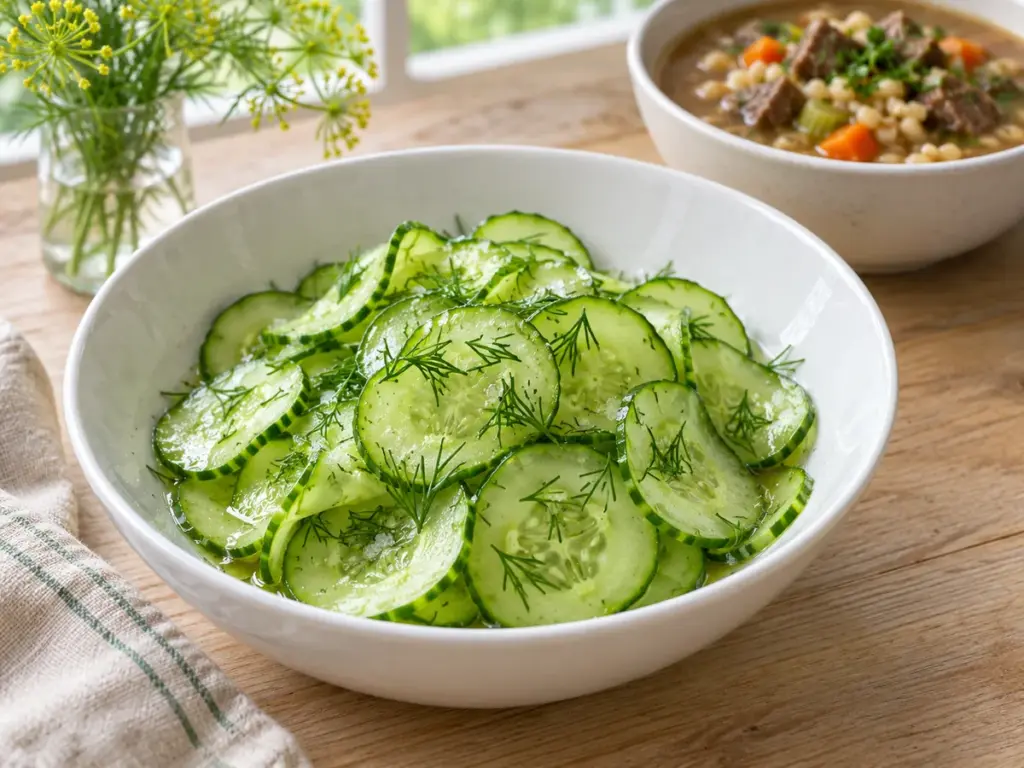
A thinly sliced cucumber tossed with rice vinegar, a pinch of salt and a little fresh dill is one of many crisp cucumber salads you can make.
The cold slices give you a break from the hot, soft bowl. Because cucumbers release water and thin the dressing as they sit, you mix the salad just before dinner.
4. Roasted Balsamic Peppers
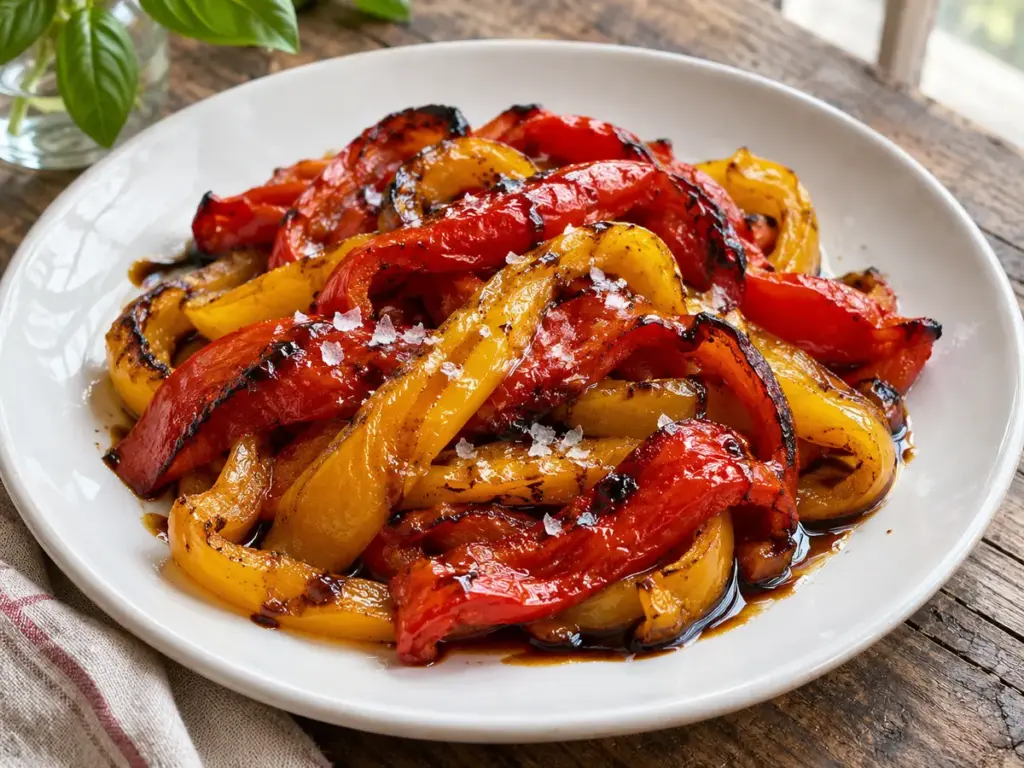
You need three short steps to make them:
- Roast the peppers. Put whole bell peppers in a hot oven and turn them once, until the skins blister and blacken in spots.
- Peel and slice. Take the skins off and cut the peppers into strips.
- Toss after roasting. Add balsamic vinegar and a pinch of salt now, so the vinegar does not scorch in the oven.
The sweet char and balsamic tang give you a sharp-sweet contrast to the soup, and red or yellow peppers add the color a brown bowl lacks.
5. Half a Grilled Cheese Sandwich
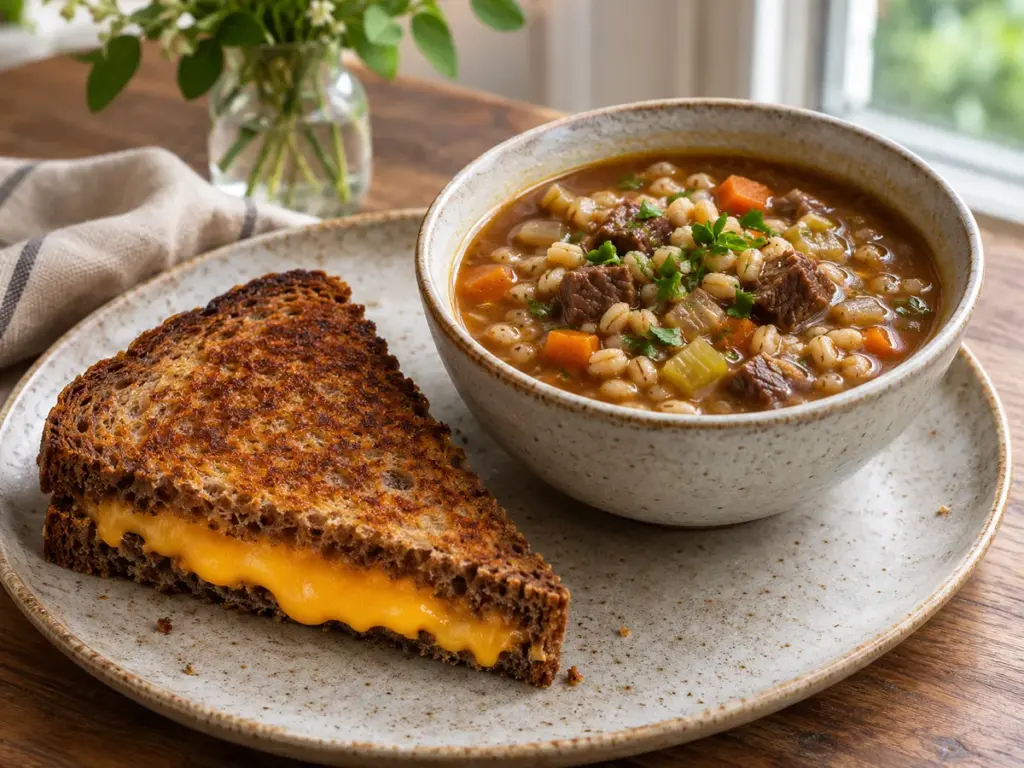
If a salad feels too light for dinner, a small hot sandwich fills you up without piling another bowl of grain on the barley. A grilled cheese on rye or sourdough, cut in half, gives you one half per bowl.
Strips of the sandwich give you something to dip, as long as the bread is toasted golden and the cheese has melted to the crust.
6. Cheese Quesadilla
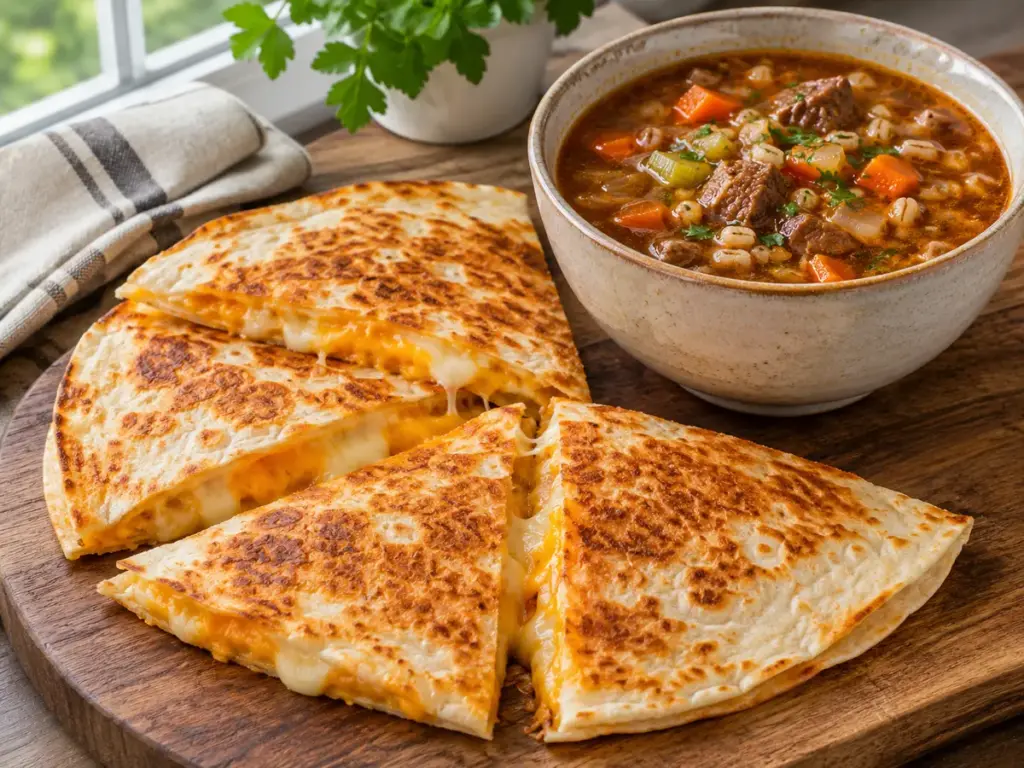
A thin quesadilla works like a quick hot sandwich. You fill one 8-inch flour tortilla with shredded cheddar, Monterey Jack or mozzarella, add a spoonful of finely chopped onion or pepper if you like, and fold it over.
A lightly buttered skillet and one flip cook it until the tortilla is crisp and golden and the cheese has melted, and you then cut it into wedges for dipping.
7. Honey-Cinnamon Fruit
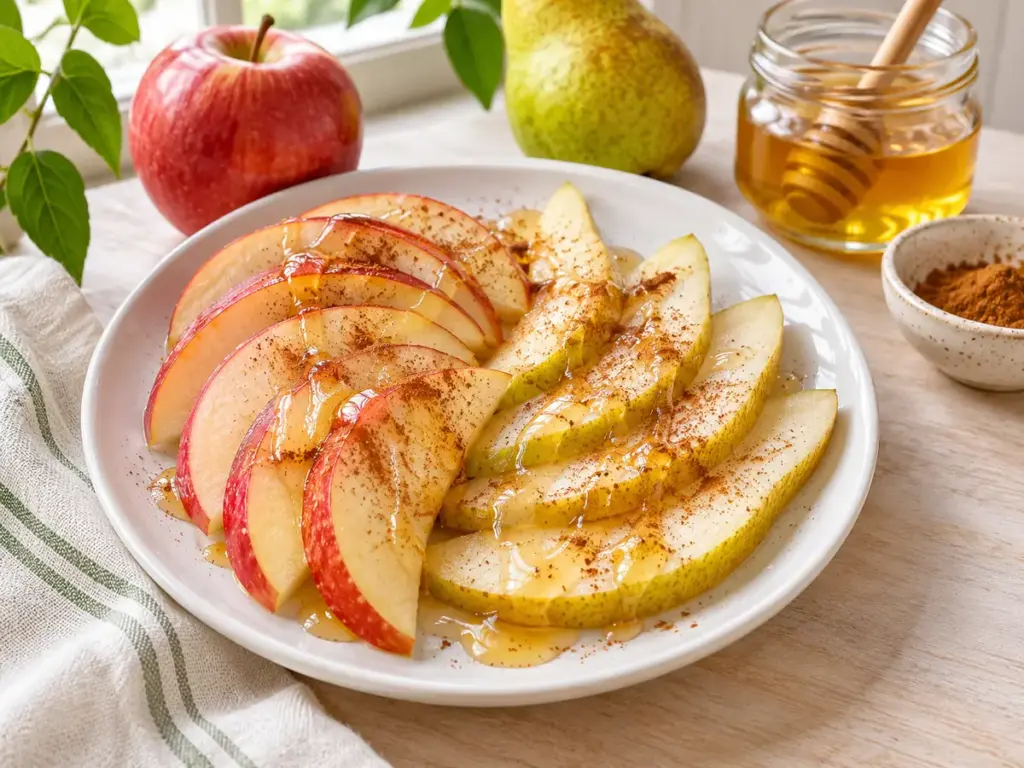
You slice an apple or pear, drizzle it with honey and dust it with cinnamon, then serve it after the soup as a light finish that fills the dessert gap without another heavy course.
Thin slices fanned on a small plate let every piece catch some honey. Whatever fruit is in season works here, with pears and apples in fall and winter and peaches or berries in summer.
Which Sides Should You Skip with Beef Barley Soup?
Barley is already a starchy whole grain, and many pots also hold potatoes or noodles. A heavy starch on the side stacks starch on starch, and you feel full before you finish the bowl.
- Crusty bread or soft rolls
- Crisp salads with lemon or vinegar
- Roasted peppers with balsamic
- Half a grilled cheese
- Fries or potato wedges, a second starch
- Corn boiled in milk and butter
- Mac and cheese, buttered noodles or rice
Baked wedges are lighter than fries, but they still put potato beside barley. Fries, corn and mac and cheese all suit a steak or a roast chicken, where the plate has no grain yet, and beside this soup they repeat the same soft starch.
Is Beef Barley Soup Gluten-Free?
No, beef barley soup is not gluten-free. The Celiac Disease Foundation names wheat, rye and barley as the grains that carry gluten, so pearl barley puts the pot off the table for a guest with celiac disease.
The barley has also simmered in the broth, so picking the grains out does not make the bowl safe.
If you are cooking for a guest who avoids gluten, they need a different soup, since swapping the side alone will not help.
Of the sides above, salad, cucumbers, peppers and fruit hold no gluten grain on their own. On bottled dressings you still read the ingredient list, since the Celiac Disease Foundation notes that barley and rye are not among the allergens a label must list.
Can You Change the Grain and Keep the Same Sides?
Yes, because the sides above answer what a beef-and-grain soup needs, whichever grain is in the pot. Three common swaps let you keep the same menu:
- If you cook the soup with farro, every side above still works, since farro and barley are both chewy, nutty grains. Farro is a type of wheat, so it contains gluten too, and a gluten-free guest still cannot eat it.
- If you run out of pearl barley, stand-ins for pearl barley such as farro or brown rice work, and the same bread and salad still go with them.
- If you want a quicker pot, grains that replace barley such as quinoa, buckwheat or millet cook faster, so they go in near the end of simmering at the time on the package.
How Do You Cool, Store, Freeze and Reheat Leftover Soup?
Nebraska Extension's first rule for cooling leftovers is that size matters, so the soup leaves the big pot in small portions instead of cooling on the stove.
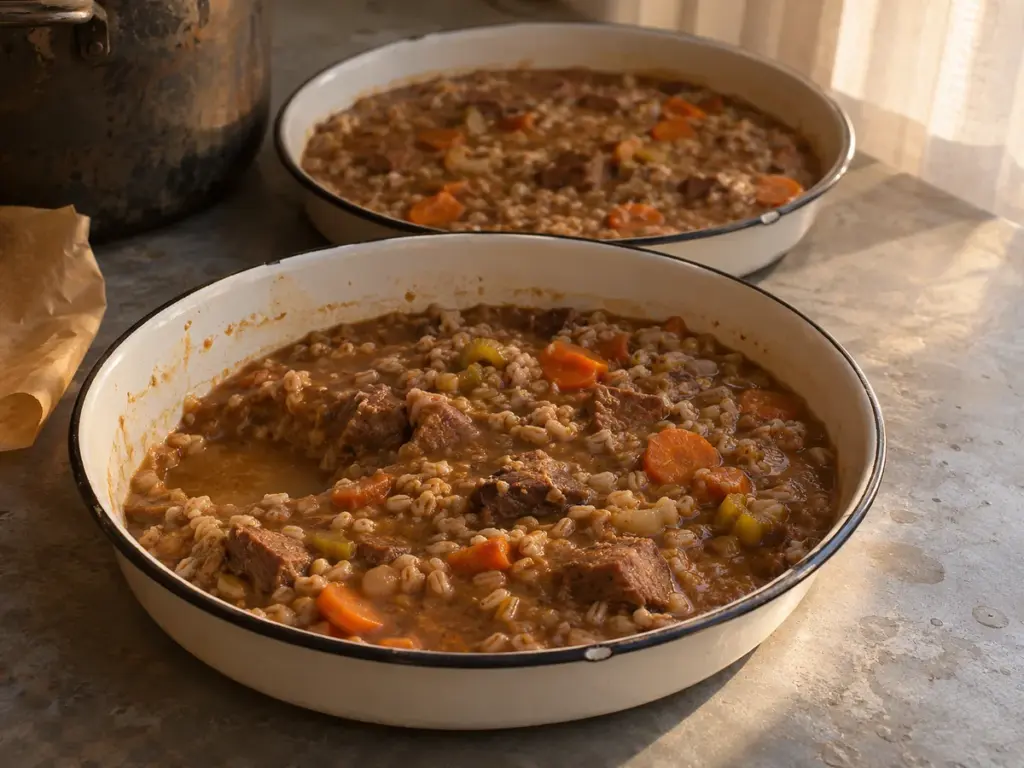
- Divide it. Ladle the soup into shallow containers, 3 inches deep or less.
- Chill it. Get the containers into the refrigerator within 2 hours of cooking.
- Freeze the extra. Cool the pot in ice water first, leave ½ to 1½ inches of headspace, more for a brothy pot, and leave the potatoes out.
When you reheat refrigerated or frozen soup, it should reach a rolling boil and at least 165°F.
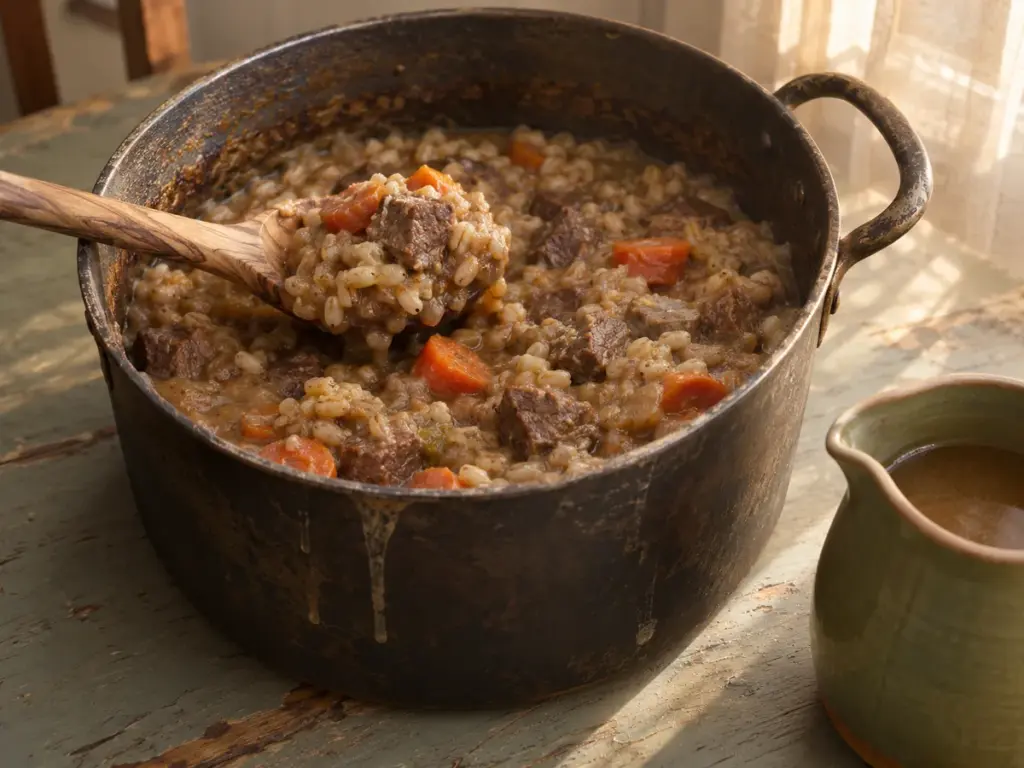
By the time you reheat it, the barley has soaked up broth and left a thick, stew-like pot, so you stir in broth or water a splash at a time and stop when the soup runs off the spoon in a slow, loose stream.
How Far Ahead Can You Make the Sides?
- Roasted peppers: You can roast them a day ahead, keep them in the fridge and serve them cold or at room temperature, since cooked vegetables keep 3 to 4 days.
- Sandwiches and quesadillas: These turn soft if they wait, so you cook them while the soup reheats.
Sources
- USDA FoodKeeper (soups and stews, leftovers)
- USDA FSIS, Leftovers and Food Safety
- University of Nebraska-Lincoln Extension, Leftover Food Safety
- USDA FoodData Central, beef broth or bouillon, canned, ready-to-serve (FDC 171538)

Food writer at GustoMeadow. Writes ingredient substitutes, food comparisons, taste guides and storage guides for home cooks.
Storage and food-safety numbers follow USDA, FDA and university extension guidance.