
Spinach is a mild leaf you can eat raw, while callaloo is a sturdier green you cook, and the name covers two different plants.
- In Jamaica callaloo means amaranth leaves, and in Trinidad it means taro (dasheen) leaves in a soup.
- Taro leaves must be cooked well in liquid, never raw, because they contain irritating calcium oxalate crystals.
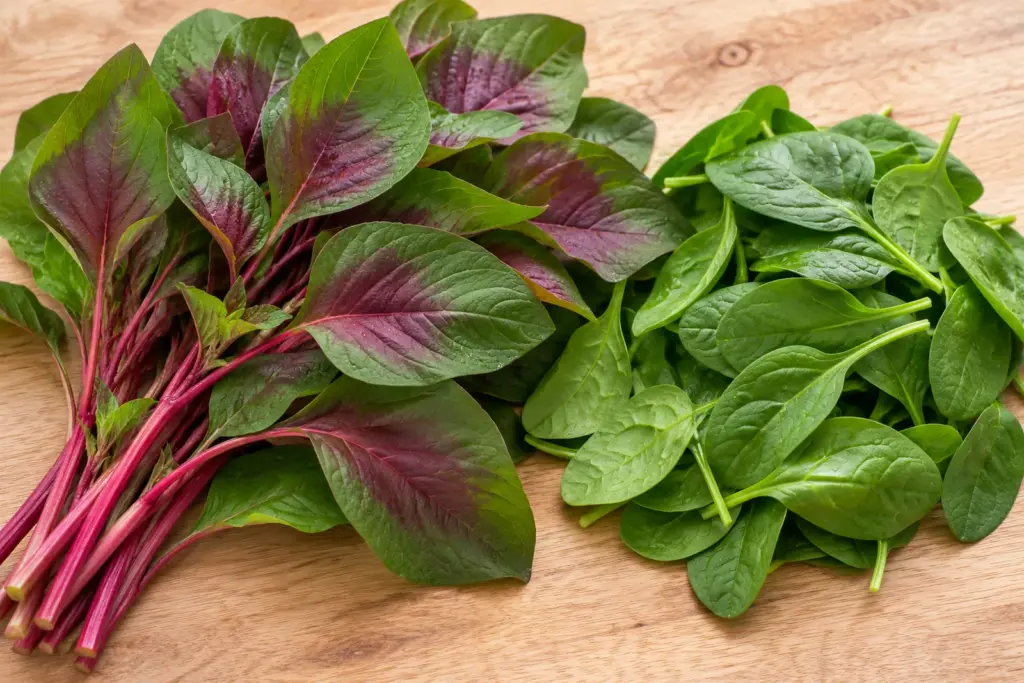
Per 100 g raw, amaranth has 215 mg of calcium to spinach's 99 mg, and spinach has 469 µg of vitamin A to amaranth's 146 µg.
Spinach is the green you already know, and callaloo is the one whose name changes with the island, which makes this one of the more confusing ingredient comparisons in the grocery aisle. Check which plant is in the bunch before you cook it, because the two callaloos need different handling.
1. What Does Callaloo Mean?
Callaloo names both a leafy green and the dish cooked from it, and the plant depends on the island. In Jamaica it is amaranth, usually Amaranthus viridis, which Jamaican cooks steam with tomato, onion, scallion and hot pepper, sometimes with saltfish. The same greens also go into patties and rice.
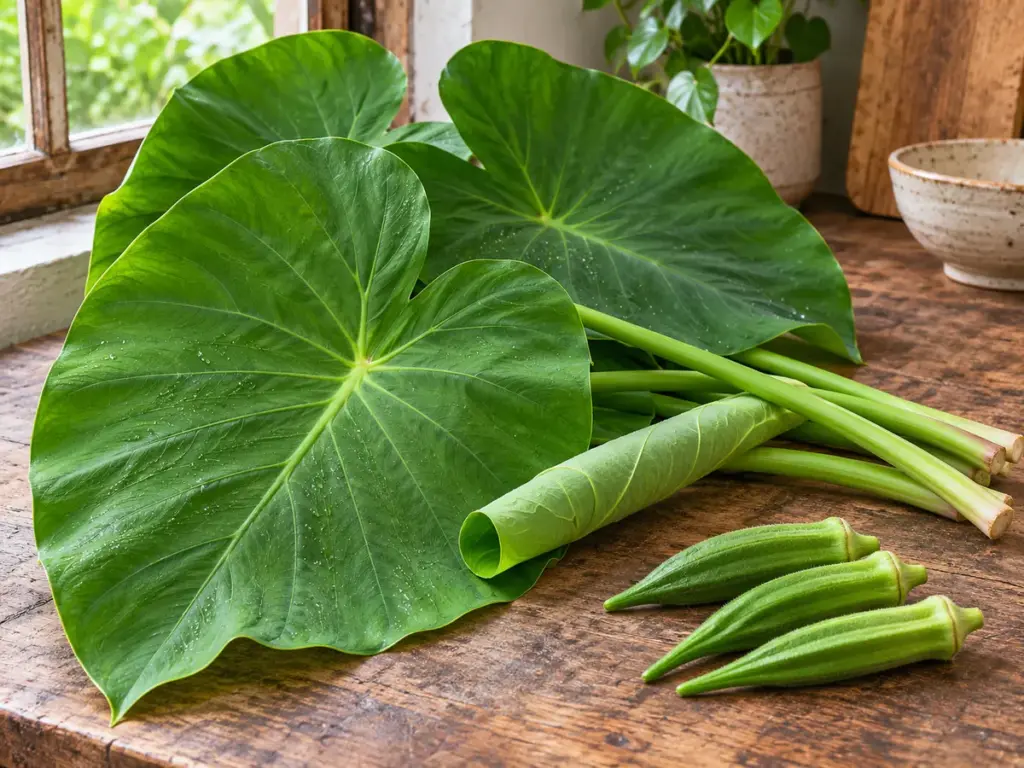
In Trinidad, Tobago and Grenada, callaloo is a soup, and the leaves are taro leaves, which cooks there call dasheen bush. Some cooks also use tannia or malanga leaves, so a bunch labeled "callaloo" can be any of these.
- Plant: amaranth leaves
- Dish: steamed greens with tomato, onion, scallion and pepper
- Often added: saltfish
- Plant: taro (dasheen bush) leaves
- Dish: soup with okra and coconut milk
- Often added: crab or salted pigtail
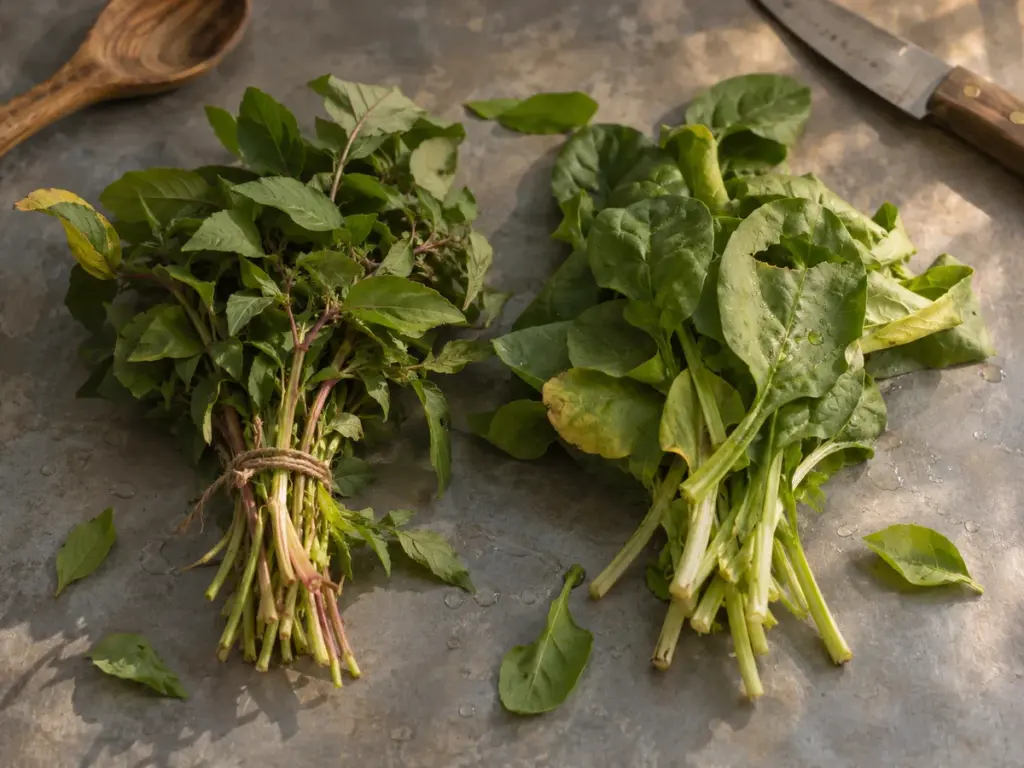
Amaranth has small oval leaves on thin stems, and taro has huge heart-shaped leaves on long stalks, so the leaf shape tells you which plant you hold. Amaranth is also grown for its seed, and the nutty grain is a different product from the leaf.
The name travels past these two islands, and other regions attach it to different plants again, so a recipe from another island may ask for a different leaf than you expect.
- Haiti: kalalou is an okra dish, often served in a beef stew called sos béf ak kalalou.
- Puerto Rico: calalu is the leaf of tannia, also called yautía, and malanga and taro are different plants.
- Brazil: caruru is a yellow amaranth, Amaranthus flavus.
- Dominica: cooks use taro leaves and also water spinach.
2. What Is the Difference Between Callaloo and Spinach?
Spinach is one plant with a mild, slightly earthy flavor and thin leaves that taste fine raw. Callaloo dishes are always cooked, and the two versions differ from each other almost as much as from spinach.
| Trait | Spinach | Jamaican callaloo (amaranth) | Trinidadian callaloo (taro leaves) |
|---|---|---|---|
| Leaf | Soft, rounded and thin | Small oval leaves on thin stems | Large, heart-shaped leaves on long stalks |
| Eat it raw? | Yes, in salads and smoothies | Not for callaloo, cook it first | Never, cook it well in liquid |
The row to remember is the second one. Spinach can go straight into a salad, and both callaloos go into a pot.
Taste and texture come next, and both vary with leaf age and how long you cook, so read them as editorial judgment.
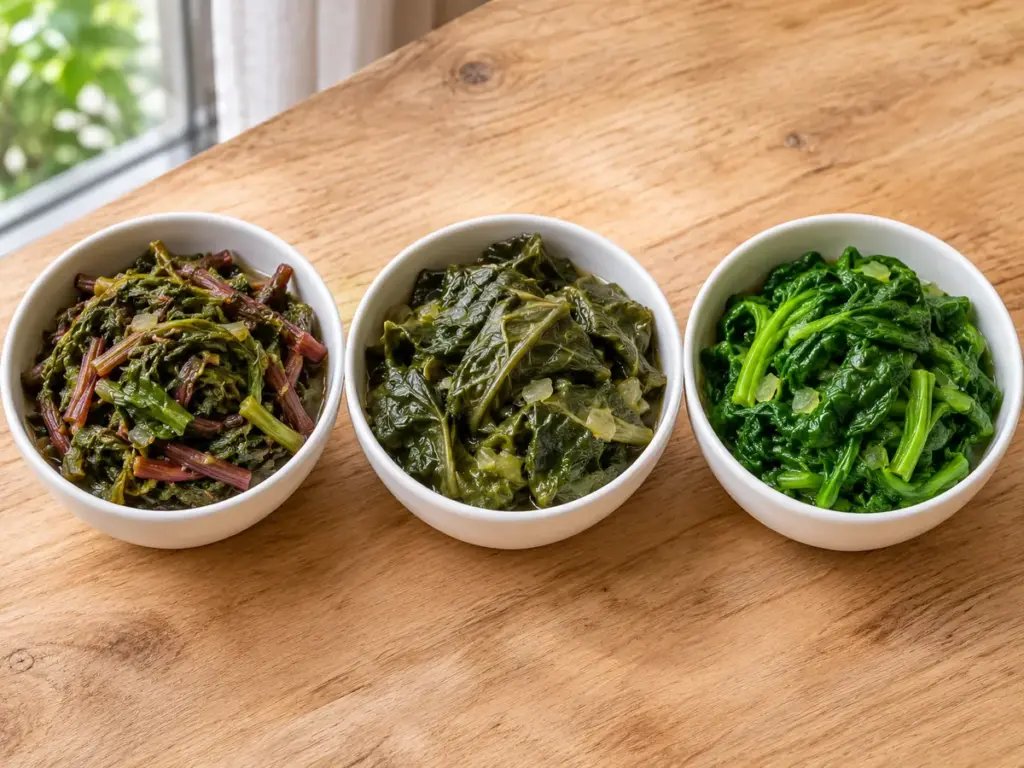
- Spinach: mild and slightly earthy, and it wilts soft in a minute or two.
- Jamaican callaloo: mild and earthy, a little more bitter than spinach, and tender but firmer.
- Trinidadian callaloo: earthy and silky, thick once it simmers into the soup, and it rounds out coconut milk.
3. Which Has More Nutrients, Callaloo or Spinach?
The USDA lists raw amaranth leaves (FDC 168385), raw taro leaves (FDC 168487) and raw spinach (FDC 168462). All values below are per 100 g, about 3.5 oz.
| Nutrient (raw, per 100 g) | Amaranth leaves | Taro leaves | Spinach |
|---|---|---|---|
| Calories | 23 kcal | 42 kcal | 23 kcal |
| Protein | 2.46 g | 4.98 g | 2.86 g |
| Fiber | not listed | 3.7 g | 2.2 g |
| Calcium | 215 mg | 107 mg | 99 mg |
| Iron | 2.32 mg | 2.25 mg | 2.71 mg |
| Magnesium | 55 mg | 45 mg | 79 mg |
Taro leaves carry the most protein and fiber (4.98 g and 3.7 g), amaranth has more than twice the calcium of spinach, and spinach has the most iron and magnesium.
| Nutrient (raw, per 100 g) | Amaranth leaves | Taro leaves | Spinach |
|---|---|---|---|
| Potassium | 611 mg | 648 mg | 558 mg |
| Vitamin C | 43.3 mg | 52 mg | 28.1 mg |
| Vitamin A (RAE) | 146 µg | 241 µg | 469 µg |
| Folate | 85 µg | 126 µg | 194 µg |
| Vitamin K | 1,140 µg | 108.6 µg | 482.9 µg |
The vitamin rows split three ways, so no green wins every row.
- Vitamin C: both callaloos beat spinach, with 43.3 mg in amaranth and 52 mg in taro leaves against 28.1 mg.
- Vitamin K: amaranth leads with 1,140 µg, against 482.9 µg in spinach.
- Vitamin A and folate: spinach leads with 469 µg and 194 µg.
The numbers change once you boil the leaves. Boiled spinach (FDC 168463) holds 3.57 mg of iron and 524 µg of vitamin A per 100 g, but its vitamin C falls from 28.1 to 9.8 mg. Boiled amaranth (FDC 169202) still has 41.1 mg of vitamin C and 209 mg of calcium, and steamed taro leaves (FDC 168488) have 35.5 mg of vitamin C.
A bowl of leaves weighs far less than 100 g. USDA counts a raw cup as 28 g of amaranth and 30 g of spinach, so a cup gives you under a third of the figures above.
- Calcium: about 60 mg in a cup of amaranth and 30 mg in a cup of spinach.
- Vitamin K: about 319 µg against 145 µg.
- Vitamin C: about 12 mg against 8 mg.
4. Are Callaloo and Spinach Good for You?
Raw amaranth and spinach each have 23 kcal per 100 g, and raw taro leaves have 42 kcal. Calories will not decide between them, and vitamin K sometimes will.
Vitamin K is the number to watch on a blood thinner. Raw amaranth has 1,140 µg per 100 g and raw spinach has 482.9 µg, and raw taro leaves have 108.6 µg, while the NIH lists 120 µg a day for men and 90 µg for women ages 19 and over.
5. How Do You Cook Each One?
Spinach
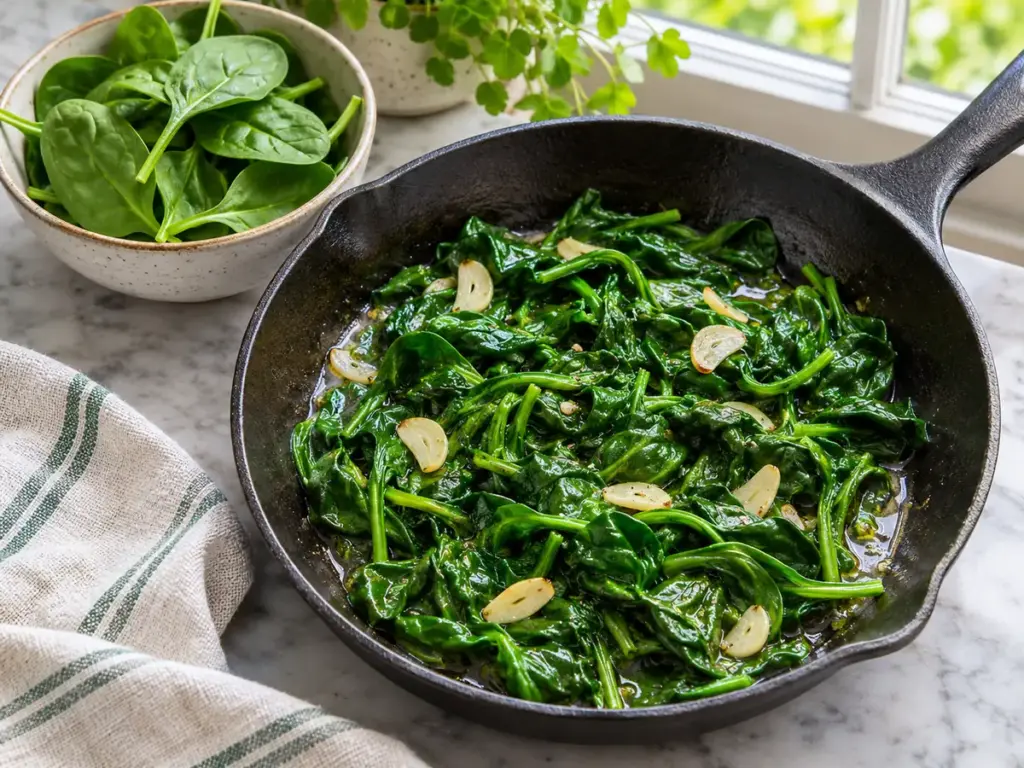
Spinach needs almost no cooking. Add it to a hot pan or soup for the last minute or two, and it wilts to a soft, dark green, or leave it raw for salads and smoothies. It also folds into omelets, quiches and frittatas.
Jamaican Callaloo (Amaranth)
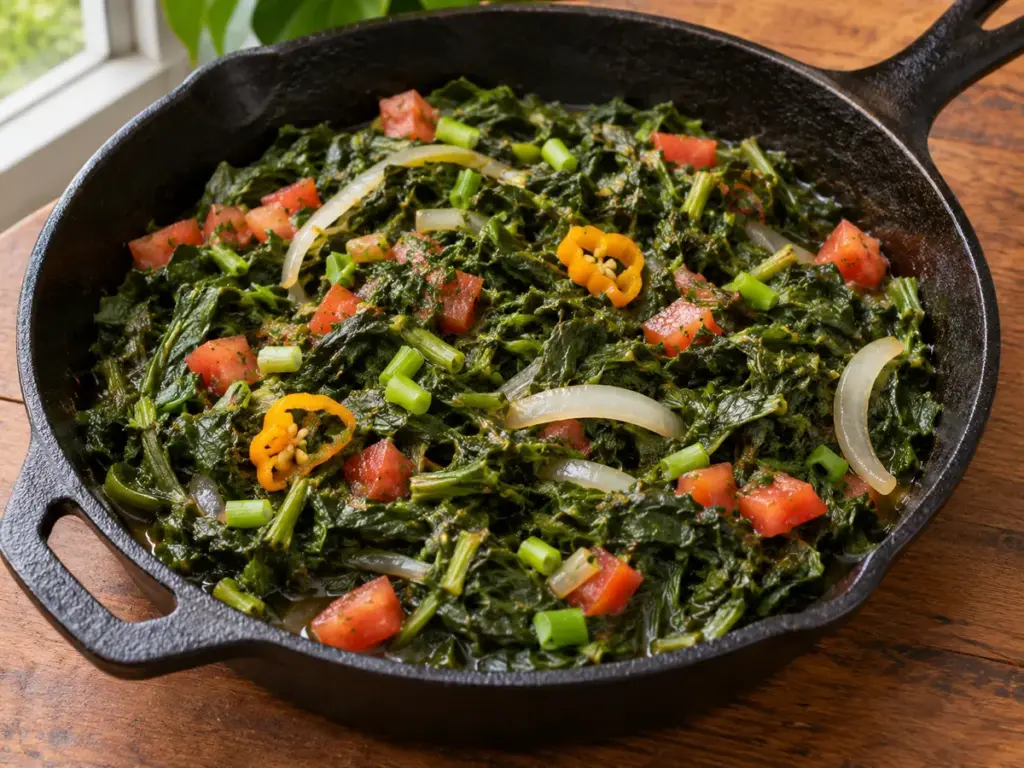
Jamaican callaloo takes longer, and the method is simple. Steam the leaves with the vegetables until they are soft, then let the extra liquid cook off. Amaranth callaloo also goes into stews and casseroles, where it holds its shape longer than spinach.
- Soften the base. Cook sliced onion, scallion and tomato in a little oil, with a piece of hot pepper if you like heat.
- Add the chopped leaves. Pour in a splash of water and cover the pan so the greens steam.
- Cook until tender. Uncover and let leftover water evaporate so the greens are moist, not soupy.
- Season and finish. Add salt, and flaked saltfish if the dish calls for it.
Trinidadian Callaloo (Taro Leaves)
Trinidadian callaloo is a different job, and it carries a safety rule you should follow every time.
Cooks simmer the leaves with okra, coconut milk, pumpkin and onion, plus crab or salted pigtail, until completely soft, then often blend the soup smooth. Okra helps thicken it, and if the store is out, stand-ins for okra can fill that role.
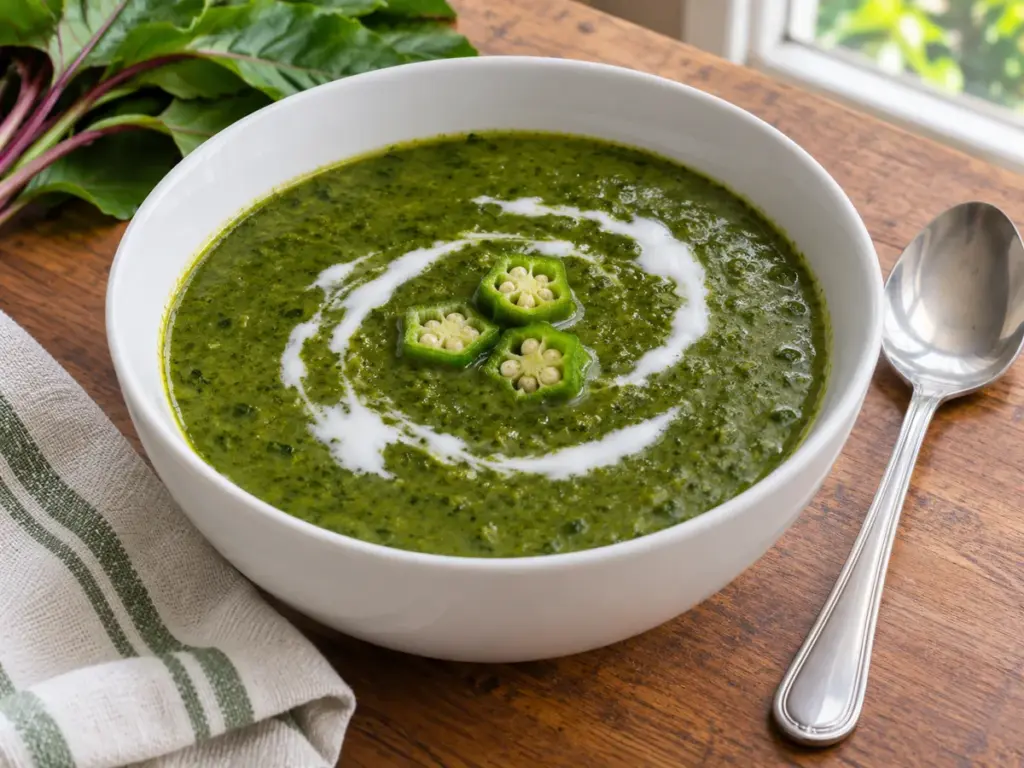
The soup has relatives across the region, and each island seasons the pot its own way.
- Grenada: cooks steam callaloo with garlic, onion and coconut milk, and the soup is traditionally eaten on Saturdays.
- Guadeloupe: crab callaloo is a traditional Easter dish.
- Virgin Islands: callaloo is served with fungee.
- Philippines: a similar dish called laing is popular in the Bicol region.
The root of the same plant is a separate food, and the starchy taro root will not work in a recipe that asks for the leaves.
6. Can You Use Spinach Instead of Callaloo?
Spinach in Place of Callaloo
In Jamaican-style steamed greens, yes. Swap spinach weight for weight and add it in the last few minutes, because it releases water and goes limp much sooner than amaranth does.
In callaloo soup, spinach can stand in for the leaf but not for the body. The okra does the thickening, so keep it, and expect a thinner, milder, greener soup than taro leaves give you.
- Simmer the body first. Cook the okra, onion and pumpkin in coconut milk until the okra is soft.
- Add the spinach last. Stir it in for the final minute or two, until it wilts.
- Blend if you like. Purée the pot for the smooth soup that Trinidadian cooks often serve.
You can also cook the two in one pot. Start the amaranth first and add the spinach once the amaranth softens, so neither leaf turns to mush before the other is done.
Callaloo in Place of Spinach
In the other direction, amaranth callaloo works in cooked spinach dishes such as egg bakes, pasta and soups, as long as you cook amaranth until soft first. Callaloo recipes always cook amaranth, so keep it out of salads and smoothies, and never use raw taro leaves anywhere. If your store has neither green, kale and Swiss chard are the usual stand-ins for spinach, though both need longer cooking.
7. Which Should You Buy?
Pick by the dish you are making: amaranth for a Jamaican recipe and taro leaves for a Trinidadian soup, with spinach for anything raw. The scenarios below cover the common cases.
- Salad, smoothie or sandwich: spinach, because it is the one of the three that recipes serve raw, and it anchors plenty of spinach salad recipes.
- Jamaican-style steamed greens: amaranth callaloo, with spinach as the fallback if you add it last. It is a vegetable side that suits Jamaican jerk chicken, rice or fried plantains.
- Trinidad callaloo soup: taro leaves with okra and coconut milk, cooked until completely soft.
- Baked dishes such as a soufflé: spinach, because it melts into the egg base.
- More vitamin C, calcium and vitamin K per 100 g raw: amaranth, on the USDA numbers above.
Spinach sits in every supermarket, while callaloo is mostly a Caribbean, African or Asian market item and may be sold fresh, frozen or canned. Ask the seller whether a bunch is amaranth or taro, or check the leaf shape yourself, because that answer decides how long you cook it and whether you can eat it raw. In Trinidad the taro leaves also go by "callaloo bush" and "dasheen bush", so either name gets you the right bunch.
Sources
- USDA FoodData Central, FDC 168385: Amaranth leaves, raw
- USDA FoodData Central, FDC 169202: Amaranth leaves, boiled, without salt
- USDA FoodData Central, FDC 168487: Taro leaves, raw and FDC 168488: steamed
- USDA FoodData Central, FDC 168462: Spinach, raw and FDC 168463: boiled
- Savage and Dubois (2006), The effect of soaking and cooking on the oxalate content of taro leaves, Int J Food Sci Nutr
- NIH Office of Dietary Supplements: Calcium fact sheet
- Callaloo (plants and regional dishes)
- NIH Office of Dietary Supplements: Vitamin K fact sheet for consumers
- NIH Office of Dietary Supplements: Iron fact sheet for health professionals
- USDA FoodKeeper: leaf spinach and bagged greens
Frequently Asked Questions
Is Callaloo High in Iron?
Callaloo is a source of iron but not a richer one than spinach. Raw amaranth has 2.32 mg per 100 g and raw spinach has 2.71 mg, and boiled they come to 2.26 mg and 3.57 mg.
Absorption is a second limit. The NIH Office of Dietary Supplements lists spinach among iron-rich plant foods with low iron bioavailability, because they contain inhibitors such as polyphenols.
How Long Does Fresh Spinach Keep?
USDA FoodKeeper gives loose spinach 3 to 7 days in the refrigerator. A bag of spinach keeps 3 to 5 days unopened and about 2 days after you open it.
What Do Callaloo Seeds Grow?
A packet of Jamaican callaloo seed grows amaranth, which Wikipedia names as Amaranthus viridis for Jamaica and Amaranthus tricolor for the wider Caribbean. It will not give you taro, the plant behind Trinidadian callaloo.

Food writer at GustoMeadow. Writes ingredient substitutes, food comparisons, taste guides and storage guides for home cooks.
Storage and food-safety numbers follow USDA, FDA and university extension guidance.



