
Colcannon is soft Irish mashed potato with cabbage or kale, while bubble and squeak is English leftover potato and cabbage fried into a crusty cake.
- Colcannon uses fresh boiled potatoes, milk, butter and greens.
- Bubble and squeak uses cold roast-dinner leftovers, fried brown and crisp.
- Pick colcannon as a creamy side for ham or corned beef, bubble and squeak for leftovers.
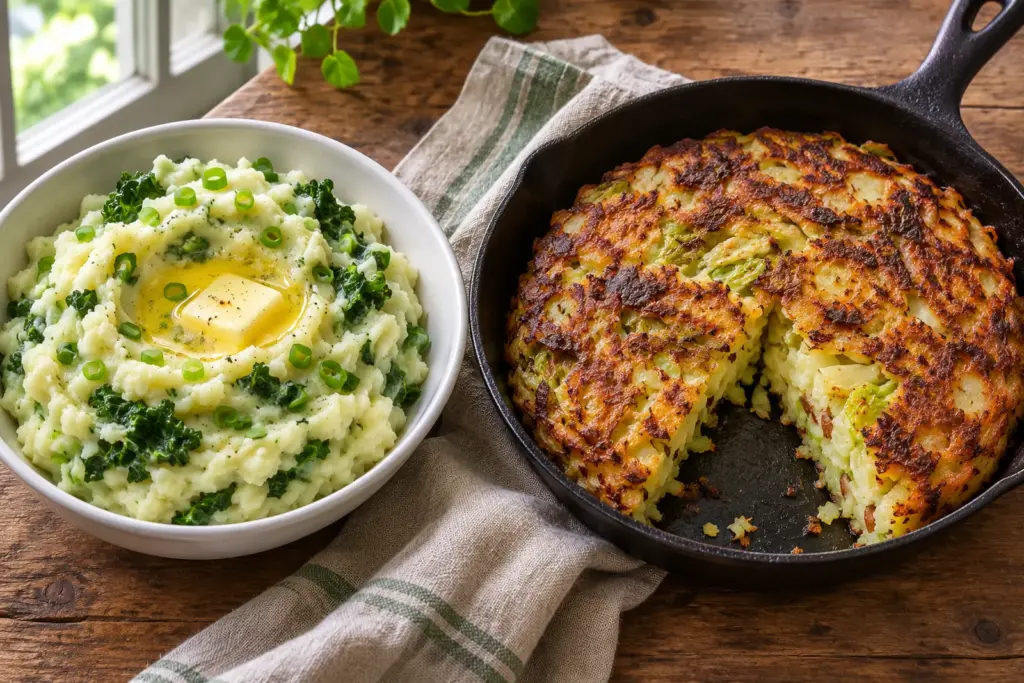
Both dishes combine potato with cabbage, so they get mixed up the way many other food comparisons do, with the ingredients overlapping and the method changing the result. The cooking method is the difference: colcannon is mashed and served, and bubble and squeak is fried.
1. What Is Bubble and Squeak?
Bubble and squeak is an English dish of cooked potato and cabbage, mixed together and shallow-fried until it browns. Cooks make it from leftovers, most often the vegetables from a Sunday roast, and eat it the next day for breakfast or lunch.
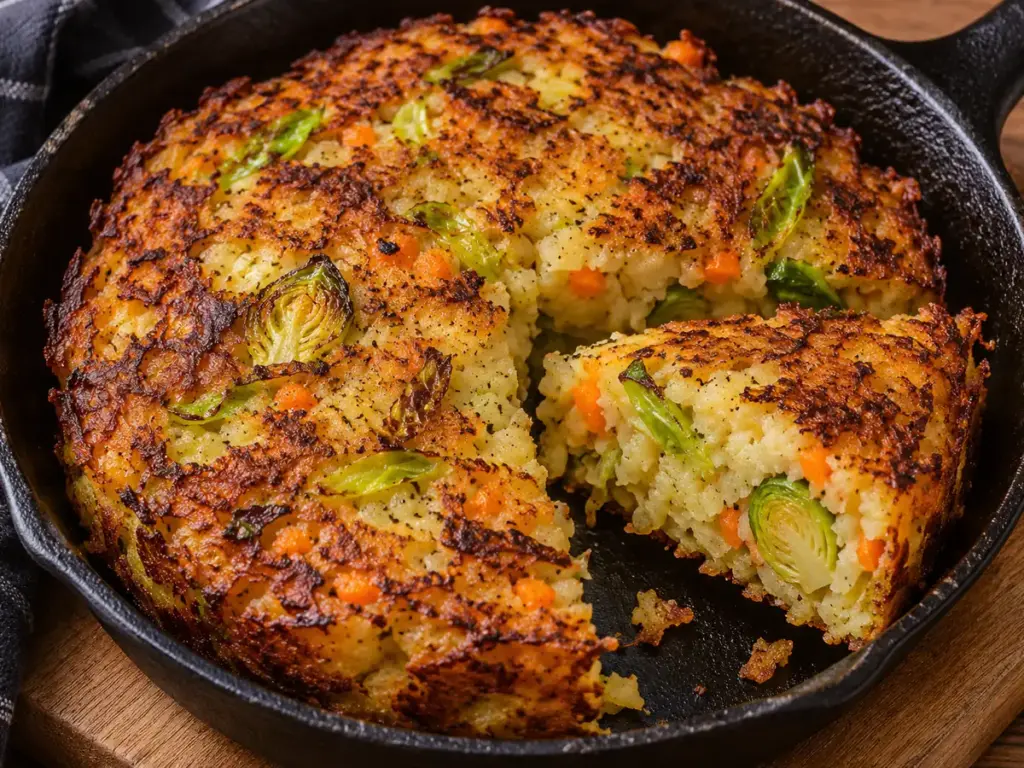
The name most likely describes the sound of frying. The Oxford English Dictionary links it to the noises the ingredients make in the pan, and its first recorded use is from 1762, so the dish is older than many cooks assume.
The first versions had no potato at all. Maria Rundell's 1806 recipe used rare roast beef and cabbage, and potatoes only start to appear in recipes in the 1880s. By the middle of the 20th century, potato and cabbage had become the two main ingredients.
Today the mix depends on what you have left in the fridge. Carrots, peas, parsnips and the bitter edge of Brussels sprouts all go in, and bacon or ham is optional. Jamie Oliver's one rule is that at least half of the mix should be potato, because the mash is what binds it.
2. What Is Colcannon?
Colcannon is a traditional Irish dish of mashed potatoes mixed with cooked cabbage or kale. Cooks stir in butter and milk and often scallions, leeks or chives. The name comes from the Irish cál ceannann, which means white-headed cabbage.
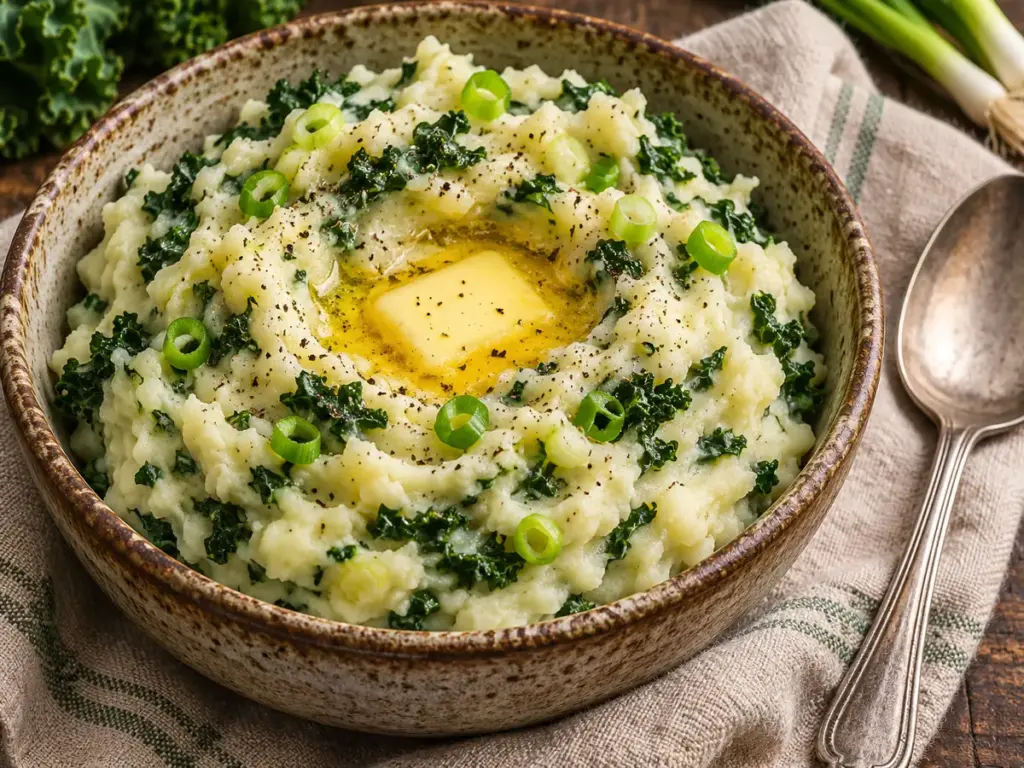
Which green goes in depends on the region. Some Irish cooks, including those in Limerick, use curly kale where others use cabbage. Curly kale gives the mash a grassier, slightly bitter flavor, while cabbage keeps it milder and sweeter, so you can pick the green by how bold you want the dish.
Colcannon belongs to the calendar as much as to the table. Irish families have traditionally eaten it on Halloween night, and it is also popular on St. Patrick's Day and on St. Brigid's feast day. Some households hid small charms in the mash, and the meaning depended on the town:
- A ring foretold marriage within a year.
- A coin meant luck or wealth, although in some places it meant the opposite.
- A thimble pointed to a tailor for a husband.
- A button or scrap of cloth meant the finder would stay single or be poor.
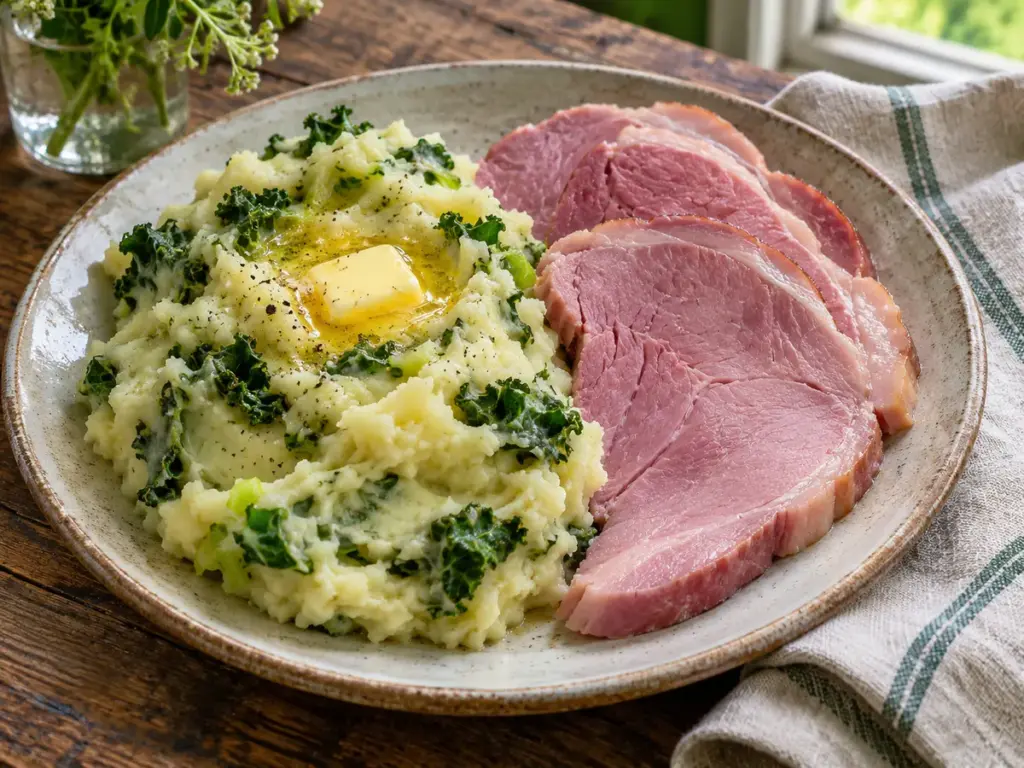
Colcannon usually sits beside boiled ham, bacon or salt pork, and it also goes next to corned beef and cabbage. Cooks traditionally treated it as a cheap dish for any time of year.
3. What Is the Difference Between Colcannon and Bubble and Squeak?
The two dishes start from similar vegetables, but they differ in country, in how the potato is prepared and in what the pan does to it. This table lets you compare the traits side by side:
| Trait | Colcannon | Bubble and Squeak |
|---|---|---|
| Country | Ireland | England |
| Potato | Freshly boiled and mashed | Cooked leftovers, usually mashed |
| Greens | Cabbage or kale, plus scallions | Cabbage, Brussels sprouts, carrots, peas, whatever is left |
| Fat | Butter and milk in the mash | Butter, oil or dripping in the pan |
- It is boiled, mashed and served soft.
- It is creamy and smooth with green flecks.
- It is usually served beside ham, bacon or corned beef.
- It is shallow-fried into cakes or one large pan.
- It has a crisp brown crust and a soft middle.
- It is usually served at breakfast or lunch, often with egg or bacon.
Chef Gary Rhodes calls colcannon a separate dish that is served almost like creamed potatoes. When you make colcannon, you want a soft, rustic mash, so a smooth potato puree would work against the green flecks. Bubble and squeak is closer to latkes and hash browns, since the point is a browned crust on fried potato.
4. How Do You Make Each One?
How to Make Colcannon
- Boil the potatoes. Cook peeled, diced potatoes in salted water until a knife slides in with no resistance.
- Cook the greens separately. Boil shredded cabbage or chopped kale until tender, drain it well and season it.
- Mash with hot milk and butter. Warm the milk first, then mash the potatoes with it and most of the butter, and keep a little butter back.
- Fold in the greens and scallions. Stir them through until the green is even, then taste for salt and pepper.
- Serve in a bowl. Press a well into the top and melt the last of the butter in it.
How to Make Bubble and Squeak
Start with about twice as much potato as vegetables by weight, which is the ratio one UK recipe uses. Chop the vegetables small before you mash them in. If the mix feels dry and crumbles, a beaten egg or 2 tablespoons of mayonnaise will bind it.
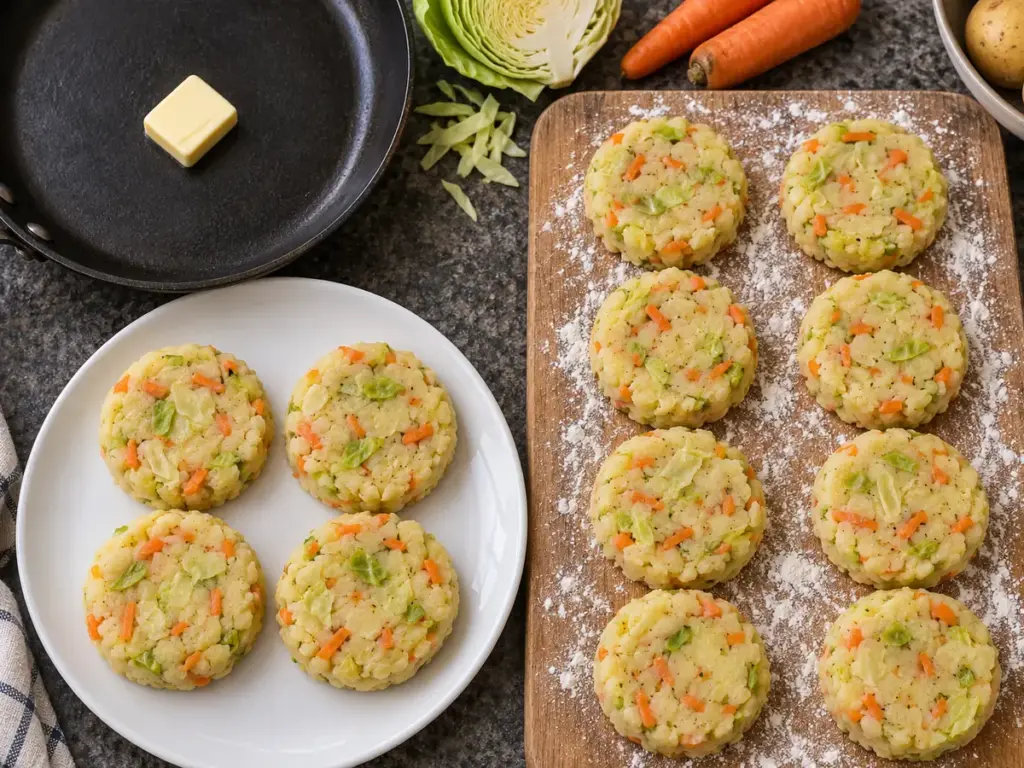
- Mash it together. Combine the cold potato and vegetables with seasoning, and leave it chunky.
- Shape the cakes. Press the mix into small patties, or into one flat layer in the pan if you plan to slice it.
- Fry in hot fat. Use butter, oil or dripping, and leave the mix alone for about 5 minutes so the crust can form.
- Flip and finish. Turn it once, cook about 5 more minutes until crisp, and press any broken pieces back together.
The fat matters more than it looks. Chef Clarissa Dickson Wright specifies dripping or lard because vegetable oil does not brown the mix well enough in her view, so butter or dripping is the safer choice if you want a deep brown crust.
5. How Do the Taste and Texture Compare?
Colcannon tastes buttery, mild and savory, with the cabbage or kale giving a green note and the scallions a light onion bite. Each spoonful you take is soft and creamy because the potato is mashed with hot milk and butter.
Bubble and squeak tastes toasted and savory, and its flavor changes with whatever vegetables went in. Carrots add sweetness and sprouts add bitterness, while the crust gives a crunch that colcannon never has. The browned crust is the point of the dish, so if you crowd the pan or start with a wet mix, you will get a pale, soggy cake.
6. Which Is Healthier, Colcannon or Bubble and Squeak?
USDA has no entry for either finished dish, so any calorie count printed for them reflects one cook's recipe. The USDA figures for the ingredients show what moves the numbers:
| Per 100 g, cooked | Calories | Fat | Fiber |
|---|---|---|---|
| Boiled potato, no skin (FDC 170440) | 86 | 0.1 g | 1.8 g |
| Mashed potato with whole milk and butter (FDC 168555) | 113 | 4.2 g | 1.5 g |
| Boiled cabbage (FDC 169976) | 23 | 0.1 g | 1.9 g |
| Boiled kale (FDC 169238) | 36 | 1.2 g | 4.0 g |
The milk and butter in colcannon add about 27 calories and 4 grams of fat per 100 grams to plain boiled potato. In bubble and squeak, the fat comes from the pan, so you set the amount yourself with a thin film of butter or a generous pour of dripping.
Kale has 4 grams of fiber and 150 mg of calcium per 100 grams cooked, against 1.9 grams and 48 mg for cabbage, so a colcannon made with kale carries more of both. Neither dish is the clear healthier pick, because the fat and the greens you choose decide it.
7. Can You Use Colcannon Instead of Bubble and Squeak?
Yes, in one direction. Leftover colcannon already holds potato, greens and fat, so it fries well, and recipes for colcannon cakes use about 3 cups of cold colcannon, 1 egg and 3 tablespoons of flour to hold the patties together. If you fry them, you end up with something very close to bubble and squeak, and Chowhound calls the two almost identical.
The other direction is harder. Fried bubble and squeak keeps its crust and its mixed vegetables, so it never turns creamy. If you want colcannon from leftover mash and cabbage, warm them with hot milk and butter and add scallions, and expect a rougher result than the traditional dish.
8. Which One Should You Make?
- You want a creamy side for boiled ham, bacon or corned beef
- It is St. Patrick's Day or Halloween
- You start with raw potatoes and want soft texture
- You have cold roast potatoes, sprouts or cabbage to use up
- You want something crisp for breakfast or lunch
- You want a plate with eggs, sausages or beans
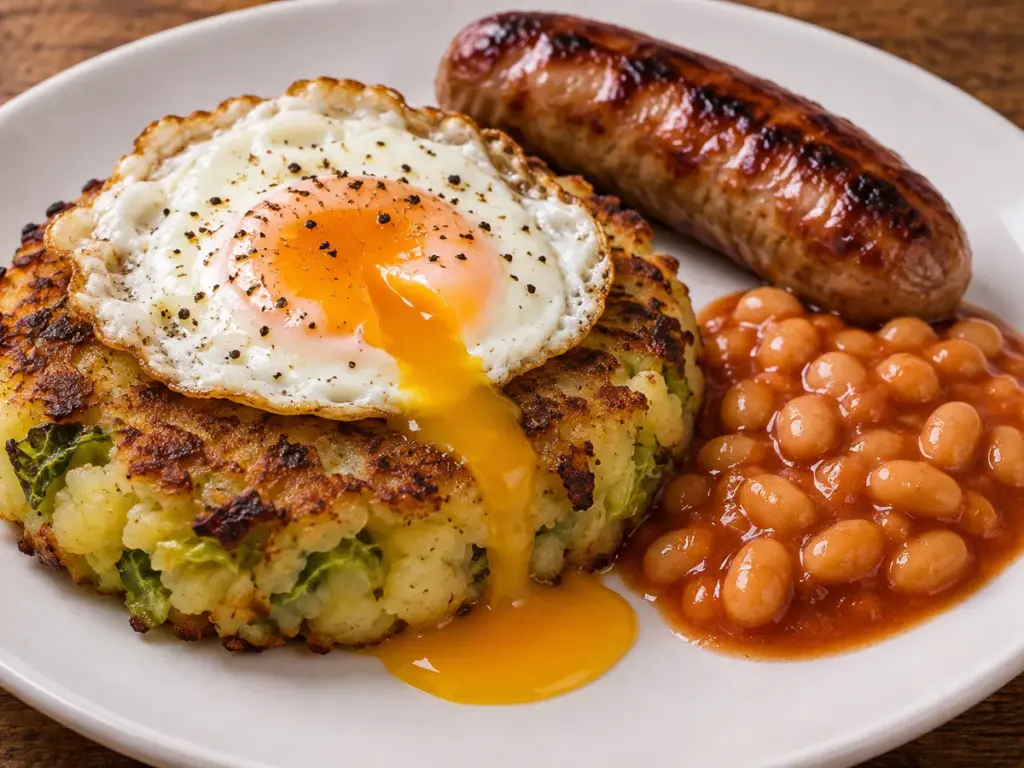
Bubble and squeak suits the morning plate, and Chowhound suggests a fried egg on top to turn it into a full meal. It slots in beside sausages and beans on a full English breakfast, and you can find what goes with bubble and squeak for lunch or dinner.
If you want a milder taste, savoy or green cabbage works in either dish. Cook it until it is tender and drain it well, because extra water will thin your colcannon and keep your bubble and squeak from crisping.
Sources
- Wikipedia, Bubble and squeak: OED 1762 first use, name, Rundell 1806 and 1880s potato recipes, fat, Gary Rhodes on colcannon.
- Wikipedia, Colcannon: ingredients, cál ceannann, St. Patrick's Day and St. Brigid's, serving with ham and corned beef.
- Irish Heritage News, Learn to make colcannon: Halloween charms, kale in Limerick, method.
- America's Test Kitchen, This British Dish Will Change the Way You Think About Leftovers: Sunday roast leftovers, half potato.
- Liana's Kitchen, Bubble and Squeak: 2:1 potato ratio, egg or mayonnaise binder, frying time.
- Chowhound, Bubble and Squeak Explained: ingredients, fried egg, colcannon comparison.
- Garlic and Zest, Colcannon Cakes: leftover colcannon cake quantities.
- USDA FoodData Central: FDC 168555, 170440, 169976 and 169238.
- USDA FoodKeeper: leftovers, 3 to 4 days refrigerated.
- USDA FSIS, Leftovers and Food Safety: refrigerate within 2 hours, reheat to 165°F.

Food writer at GustoMeadow. Writes ingredient substitutes, food comparisons, taste guides and storage guides for home cooks.
Storage and food-safety numbers follow USDA, FDA and university extension guidance.



