
A dirty martini is a regular martini with about ½ ounce of green olive brine added, so it tastes salty, savory and a little hazy.
- You make a regular martini with 2 ounces of gin and ½ ounce of dry vermouth, stirred with ice.
- The same 2 ounces of gin becomes a dirty martini once the brine and skewered olives go in.
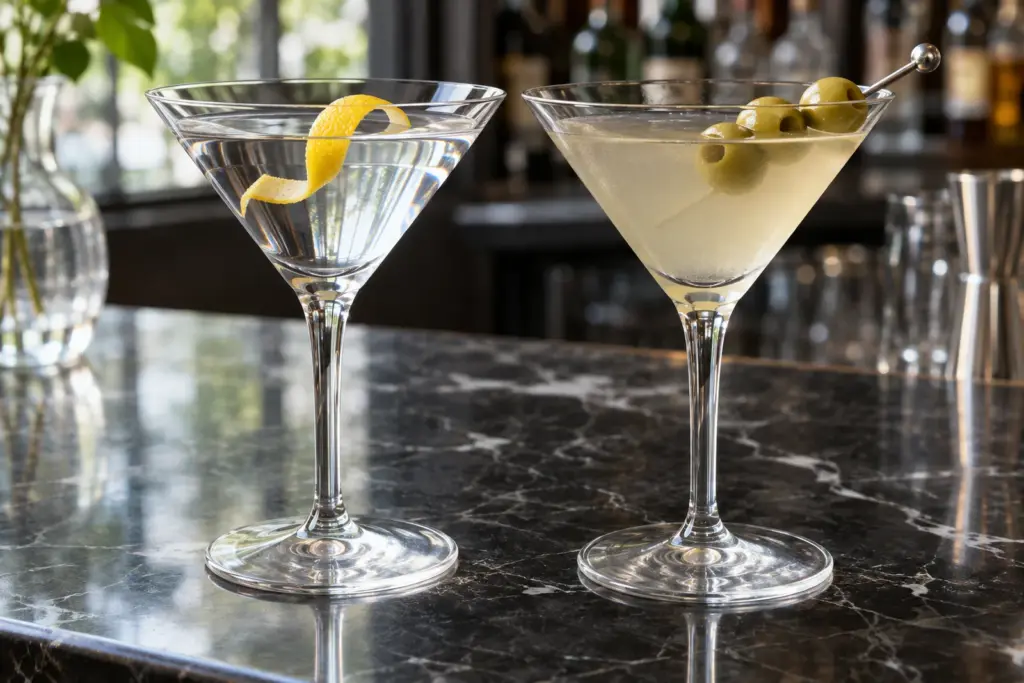
Among the cocktail pairs in our food and drink comparisons, we'd call these two the easiest to switch between, since both are stirred with ice, strained and served cold in a stemmed glass. You can turn a regular martini into a dirty one at home with a spoonful of olive juice.
1. What Is the Difference Between a Dirty Martini and a Regular Martini?
Difford's Guide, a bar reference that lists exact pours, builds its dry martini and its dirty martini on the same 2 ounces of gin. Only the brine and a little extra vermouth change in the dirty version.
| Trait | Regular (dry) martini | Dirty martini |
|---|---|---|
| Spirit | 2 oz London dry gin | 2 oz London dry gin |
| Dry vermouth | ½ oz | ¾ oz |
| Olive brine | None | ½ oz green olive brine |
| Method | Stir with ice, strain | Stir with ice, strain |
| Garnish | Lemon twist or green olive | Skewered green olives |
Once the brine and the extra vermouth go in, you will notice the change in how the drink looks and tastes.
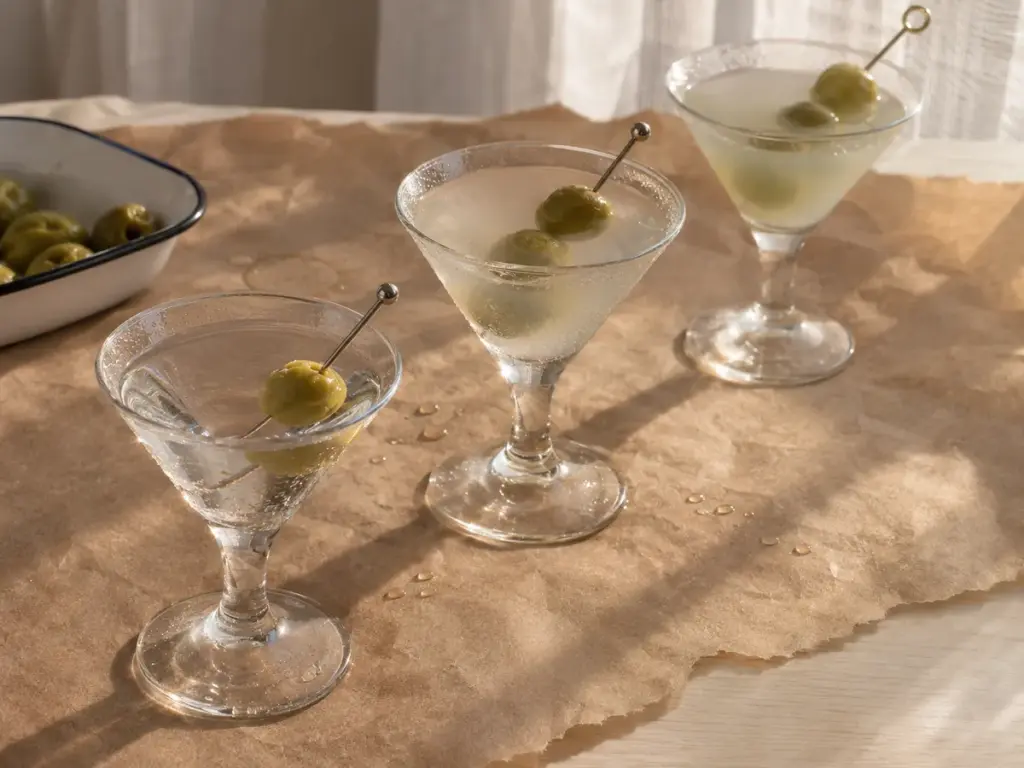
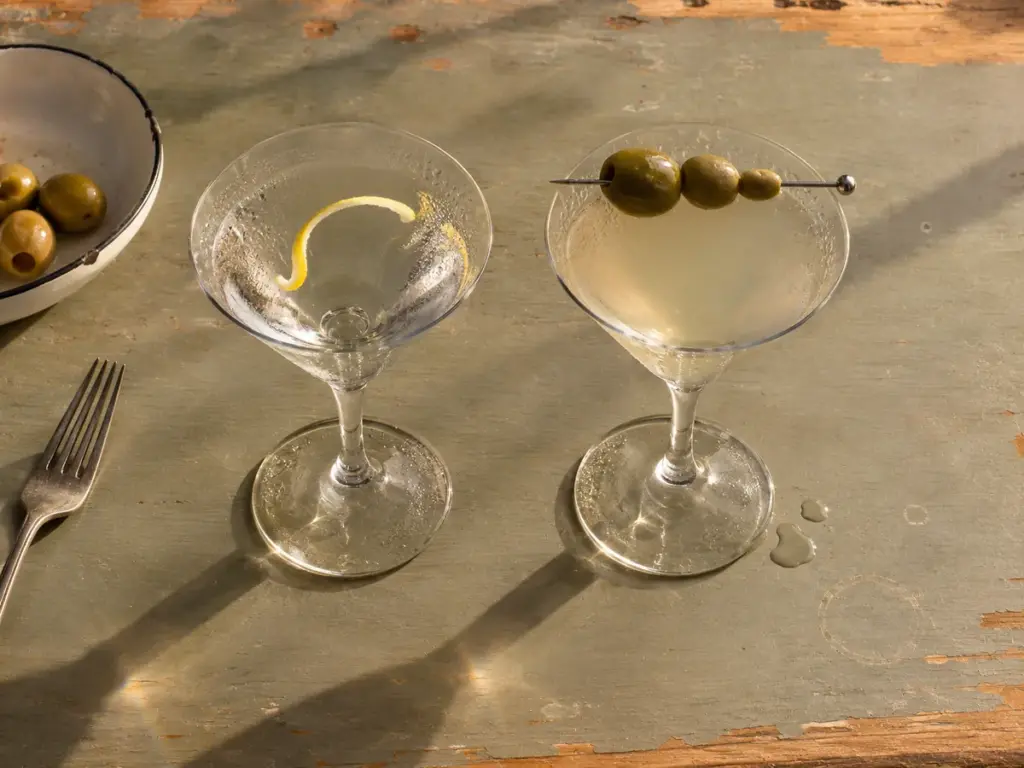
- In the glass, a regular martini looks clear and a dirty one looks pale and a little hazy.
- On the tongue, the regular martini is dry with the gin up front, while the dirty one is salty and savory.
Strength and calories move in opposite directions once the brine goes in.
- By volume, a regular martini comes in at about 28.8% alcohol and a dirty one at about 23.2%.
- Per drink, you are looking at about 150 calories for the regular and 179 for the dirty.
The brine and the extra vermouth add volume, so the same 2 ounces of gin spreads over a bigger drink and the percentage drops. Difford's lists both at about 1.6 standard drinks, which means you get close to the same amount of alcohol from either glass, and its calorie figures are approximate.
2. How Do You Make Each One?
The International Bartenders Association (IBA) sets the classic at 60 ml of gin and 10 ml of dry vermouth, which is 2 ounces and about ⅓ ounce, a drier 6 to 1 martini.
Difford's 4 to 1 version uses ½ ounce and its 2 to 1 "wet" version uses a full ounce, and since all three are accepted specs, you can choose the vermouth amount by how dry you like the drink.
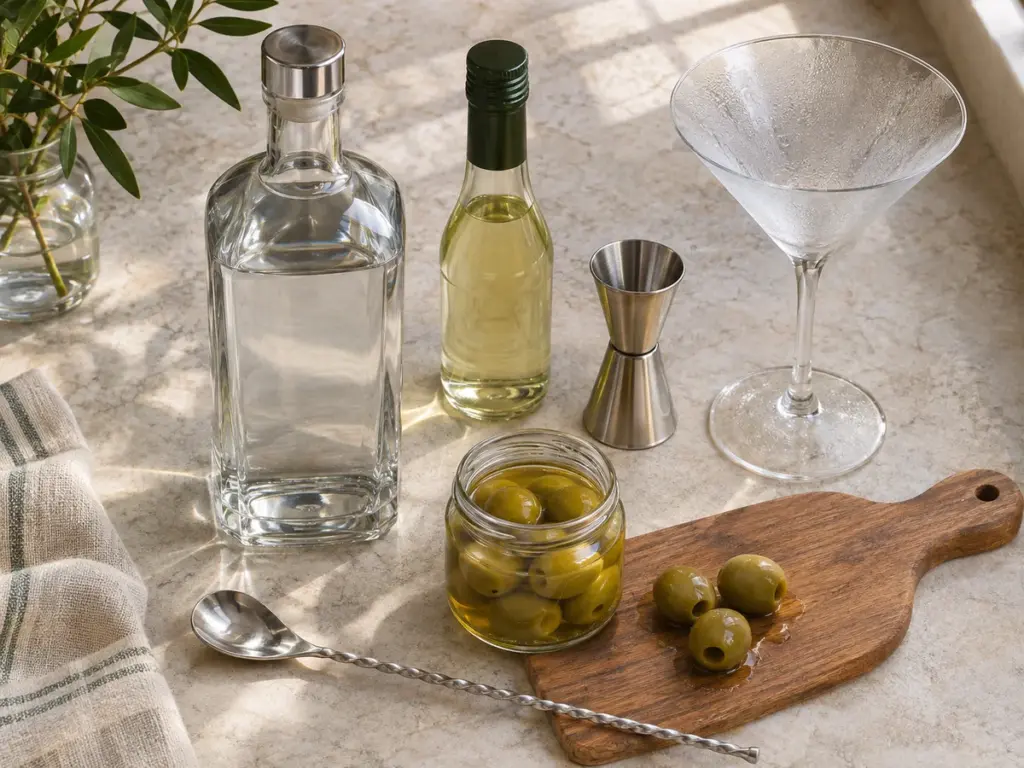
- 2 oz gin
- ½ oz dry vermouth (IBA uses ⅓ oz)
- Orange bitters, optional
- Lemon twist, or one green olive
- 2 oz gin or vodka
- ½ to ¾ oz dry vermouth
- ½ oz green olive brine
- Skewered green olives
Both drinks follow the same four steps below, and a chilled glass comes first.
- Chill the glass. Put a martini glass or coupe in the freezer, or fill it with ice water while you mix.
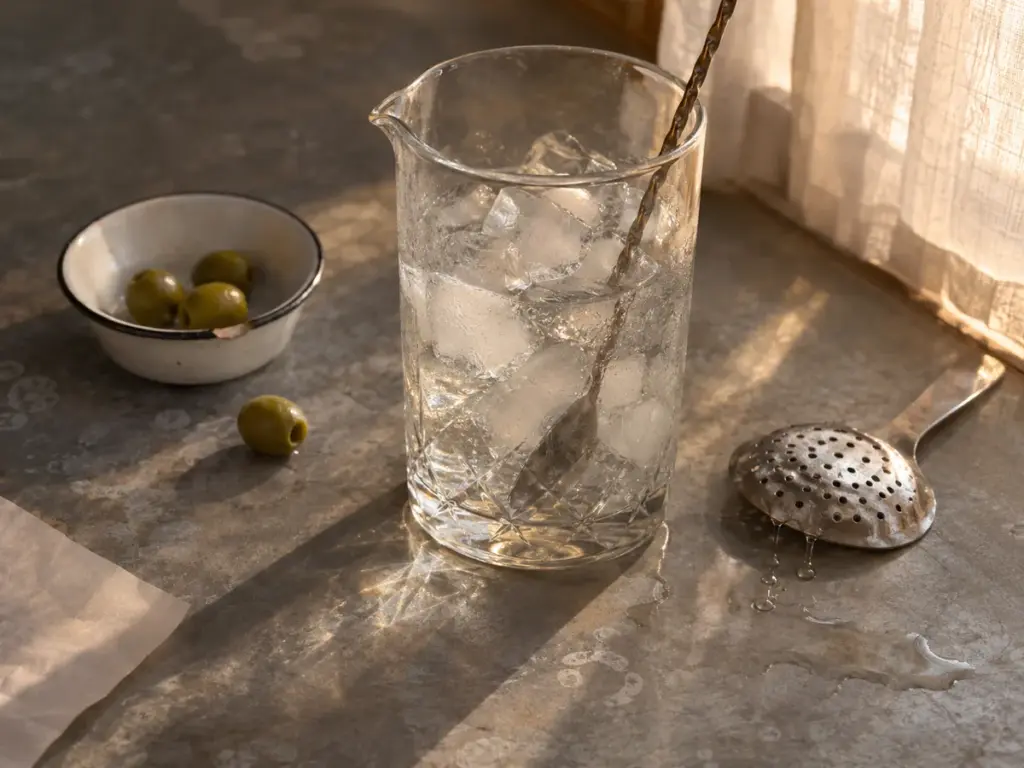
- Stir with ice. Add the gin, vermouth and, for a dirty martini, the brine to a mixing glass full of ice, and stir until the glass is very cold.
- Strain. Tip out the ice water if you used it, then pour the drink through a strainer into the chilled glass.
- Garnish. Squeeze a lemon peel over the top of a regular martini, or spear olives on a pick for a dirty one.
Both the IBA and Difford's tell you to stir, which is also the rule for a Manhattan.
Should You Stir or Shake a Dirty Martini?
You should stir it, because in its review of a Filthy Dirty Martini Difford's says that shaking amplifies the vermouth and brine and can mask the gin.
If you prefer yours shaken, a smaller pour of brine and vermouth keeps the gin from getting lost under them.
3. How Much Olive Brine Makes a Martini Dirty?
Difford's Guide uses ½ ounce (15 ml) of green olive brine for its standard dirty martini, and its reviewer says the amount can run anywhere from 5 ml to 22.5 ml, which is about 1 teaspoon to ¾ ounce. That reviewer prefers 10 to 15 ml depending on how salty the jar is.
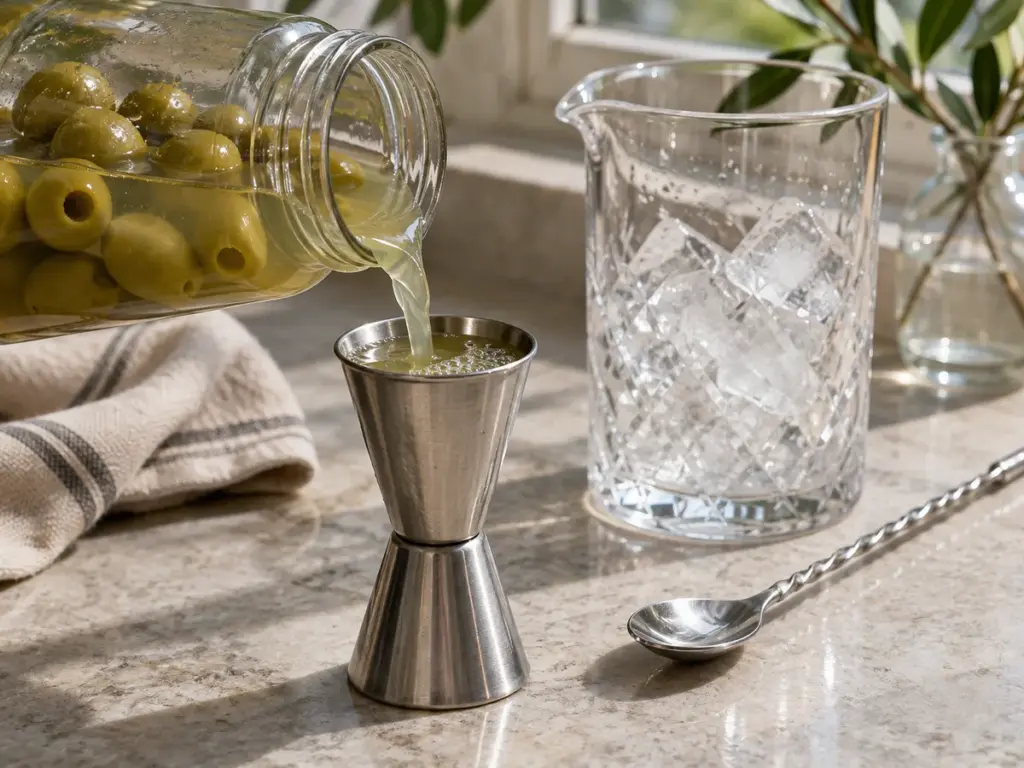
If you are new to dirty martinis, you can start with a teaspoon or two and stir in more after tasting, since brine cannot be taken back out once it is in the glass.
What Do Slightly Dirty, Dirty and Filthy Mean?
When you order, these words tell the bartender how much brine to pour, and no single standard sets them. Punch asked bars in several cities, and their pours overlap.
- At Bar Rêve, Bar Cecil and Supper Club, a slightly dirty martini gets ⅛ to ¼ ounce of brine.
- Bar Valentina, Cecchi's and Bar Cecil pour ½ to ¾ ounce as the house dirty martini.
- A filthy martini takes 1 ounce or more, and Supper Club goes up to 1¼ ounces.
Difford's Filthy Dirty Martini takes another route, with only 10 ml of brine, about ⅓ ounce, plus 7.5 ml of bianco vermouth and a little lime juice.
Since "filthy" is not the same pour at every bar and "extra dirty" has no fixed pour at all, the clearest order is the amount itself, such as ½ ounce of brine.
4. Do They Taste Different?
Yes, because the brine adds a salt and olive flavor that a regular martini does not have. In a regular martini the gin leads, and US rules require gin to take its main flavor from juniper berries (27 CFR 5.144).
Dry vermouth adds the second layer, since Difford's describes vermouth as a fortified wine flavored with botanicals, traditionally wormwood. The more vermouth you pour, the less dry the drink, which is how a dry, wet or perfect martini ends up tasting different.
A dirty martini keeps the juniper and the herbal vermouth and adds salt and olive on top, so it tastes savory. Difford's reviewer says your choice of olives and brine will make or break the drink.
If you swap vodka for the gin in either drink, the juniper that defines gin drops out and you are drinking a vodka martini instead.
5. How Do the Look, Glass and Garnish Differ?
Beyond the haze the brine leaves in a dirty martini, the garnish is the difference you spot first. The IBA garnishes the classic with the oil of a lemon peel, or with a green olive "if requested," and Difford's dirty martini uses skewered green olives as the standard.
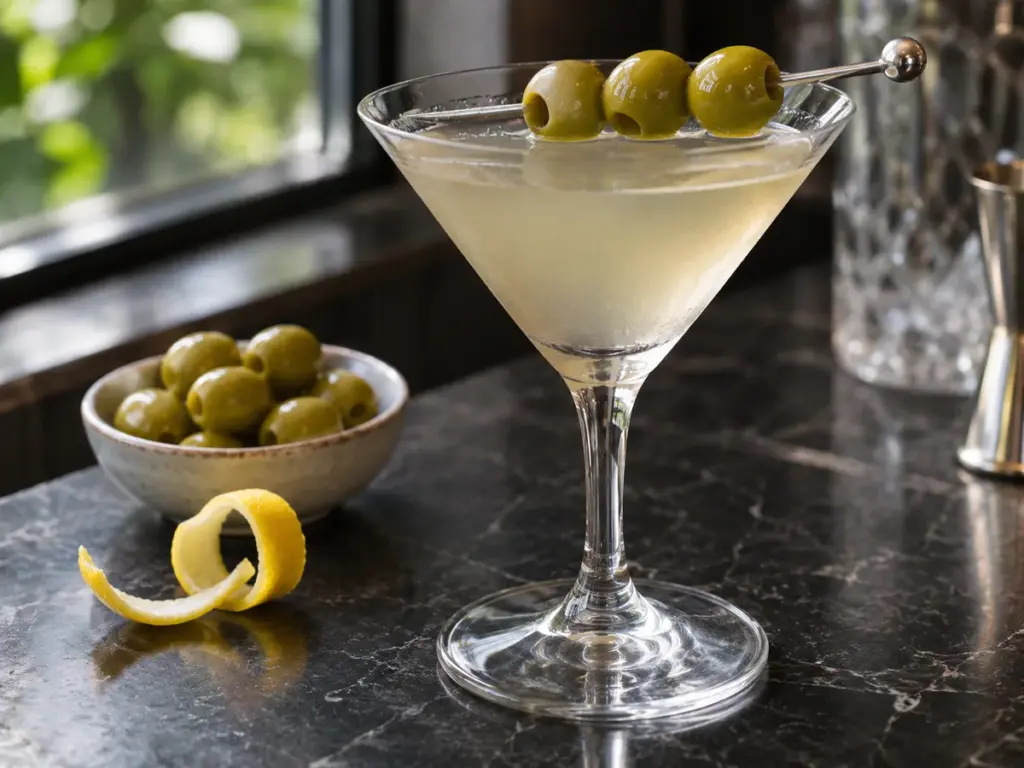
If you want to try a different olive, you can compare black olives with green olives first. A cocktail onion in place of the olive turns the drink into a Gibson.
Either drink goes in a stemmed glass, and Difford's pictures its dirty vodka martini in a coupe and its dirty martini in a small martini glass of about 12.5 cl. Either shape works, and you can weigh a coupe or V-shaped glass before you buy.
6. Is Dirty the Opposite of Dry?
No, because dry describes how much vermouth is in your glass and dirty describes whether brine is. Difford's says the martini was sweet at first and turned drier over the decades.
Difford's own numbers show the two are separate, since its dirty martini uses 60 ml of gin to 22.5 ml of vermouth, about 2.7 to 1, which is wetter than its 4 to 1 dry martini. Difford's calls the brine-free drink a dry martini, and this article uses "regular" for the same drink.
Brine and vermouth do different jobs, so one cannot replace the other. Brine brings the salt from the olive jar, while the amount of dry vermouth sets how dry the drink is, which is why the IBA recipe keeps vermouth even when no brine is added.
7. Can You Turn One Into the Other?
Yes, because the base is shared. To make a regular martini dirty, you stir in ½ ounce of olive brine with the gin and vermouth and trade the lemon twist for olives, and to go the other way you leave out the brine and keep the same gin and vermouth.
- Gin or vodka plus dry vermouth is the base of both.
- You stir each one with ice and strain it.
- Each is served up in a chilled stemmed glass.
You can adjust the vermouth, since the specs above range from ⅓ to 1 ounce, and if your bottle is empty there are stand-ins you can pour instead.
Any stand-in replaces the wine and wormwood flavor of real dry vermouth with its own, so you will want to taste the drink before you serve it.
8. Where Did the Two Martinis Come From?
The regular martini came first, and the dirty martini you order today grew out of it as a twist. Difford's dates the first known recipe for a "Martini" to 1888 and the first drink titled "Dry Martini Cocktail" to a 1904 French book.
- Harry Johnson's Bartender Manual printed the first known Martini recipe in 1888.
- Historian David Wondrich traces the dirty martini to bartender John E. O'Connor in 1901.
- A French book printed the first drink titled Dry Martini Cocktail in 1904.
- G.H. Steele's My New Cocktail Book gave the first written brine martini in 1930.
Difford's lists F.D.R. Martini as another name for the dirty martini, after President Franklin Delano Roosevelt, though it notes there is no evidence that he drank it with brine.
9. Which Other Martini Twists Sit Close to These Two?
You will see three drinks next to the dirty martini on a bar menu, and each changes one part of the build.
- Difford's serves a dirty vodka martini in a coupe, with 60 ml vodka, 15 ml dry vermouth and 15 ml brine.
- The Filthy Dirty Martini swaps in 10 ml brine, 7.5 ml bianco vermouth, lime juice and three olives.
- A Vesper pours gin and vodka together and uses no brine.
10. Which Martini Should You Order or Make?
- You want to taste the gin you paid for
- You are serving it before a meal and want something dry and cold
- You dislike salty drinks
- You like olives and salty snacks
- You want the olive flavor in every sip
- You enjoy a salty edge in a cocktail
If you are unsure, a regular martini first and a teaspoon of brine in your second one will show you which side you lean toward without committing to a full ½ ounce.
Sources
- Difford's Guide, Dirty Martini (gin, vermouth and brine amounts, strength, calories, garnish, history)
- Difford's Guide, Dry Martini (4:1 ratio) (spec, strength, calories, garnish)
- Difford's Guide, Dry Martini (2:1 ratio) Wet (2 to 1 spec)
- Difford's Guide, Dirty Vodka Martini (vodka build and coupe)
- Difford's Guide, Filthy Dirty Martini (brine, stir or shake)
- Difford's Guide, Vesper Dry Martini (spec)
- Difford's Guide, Martini History (1888 and 1904 recipes, sweet to dry)
- Punch, Dirty Martini Brine Scale (bar brine scales)
- International Bartenders Association, Dry Martini (60 ml gin, 10 ml dry vermouth, stirred)
- 27 CFR 5.144, Gin (US standard of identity) (main flavor from juniper berries)
- Difford's Guide, What Is Vermouth (fortified wine flavored with botanicals, wormwood)
Frequently Asked Questions
Does a Dirty Martini Have a Lemon Twist?
A standard dirty martini has no lemon twist, since Difford's garnishes it with skewered olives only. Difford's Filthy Dirty Martini does express a lime zest twist over the drink before the olives go in.
Does a Dirty Martini Need Bitters?
No, you can leave them out, since bitters are optional in both drinks. Difford's lists 8 drops of ginseng bitters for its dirty martini, and its reviewer says a few dashes add depth, while its dry martini lists one dash of orange bitters as optional.
Should the Gin and Brine Be Cold Before You Mix?
Difford's builds its dirty martini with the gin from the freezer and the vermouth and brine chilled, so the drink is already cold before it meets the ice.

Food writer at GustoMeadow. Writes ingredient substitutes, food comparisons, taste guides and storage guides for home cooks.
Storage and food-safety numbers follow USDA, FDA and university extension guidance.



