
Summary of key points
The main difference between dragon fruit and passion fruit lies in their appearance, flavor, and nutritional content. Dragon fruit has a bright pink or white exterior with greenish "scales," while passion fruit is smaller with a purple or yellow skin.
The inside of a dragon fruit is white with black seeds, while passion fruit has a bright orange pulp filled with small, crunchy seeds.
In terms of taste, dragon fruit is mild and often compared to kiwi, while passion fruit has a tangy and tart flavor. Nutritionally, both fruits are rich in antioxidants and vitamins, but dragon fruit is higher in fiber and lower in calories, making it a popular choice for smoothies and bowls.
Passion fruit is often used in cocktails or desserts for its distinct flavor.
Ever stood in the exotic fruit section and felt a bit lost?
Today, we're breaking down the not-so-mysterious case of dragon fruit vs. passion fruit.
It's a duel of the exotic fruits, folks.
Did you know? Dragon fruit looks like a pink art project gone wild.
On the other hand, passion fruit keeps it cool with a simple, round look.
We often grab one of each, laughing at our kitchen's soon-to-be colorful mess.
Their flavors? Worlds apart.
Dragon fruit whispers sweet, light notes. Passion fruit?
Bold, tangy tunes it belts out.
One bite, and we're on a flavor rollercoaster.
Trust us; it's going to be a juicy ride.
What is Dragon Fruit?

Dragon fruit, aka pitaya, is a tropical delight belonging to the cactus family - see rambutan vs dragon fruit comparison for how they differ.
It stands out with its vivid colors and dragon-like look.
Cut open the fruit to discover juicy flesh that can be white or red, speckled with tiny black seeds.
It has a mild, refreshing taste with a subtle sweetness.
Nutrition-wise, dragon fruit is a powerhouse.
It has Vitamin C which boosts immunity and healthy skin.
Plus, antioxidants to fight free radicals, fiber to aid digestion, and more.
Its versatility in the kitchen is impressive.
Mild taste allows it to fit into smoothies, ice creams, salads, cakes, and desserts.
And its bright colors make it attractive for food presentation.
To savor dragon fruit, choose a ripe one with vivid color and firmness.
Cut it in halves or slices; scoop out the flesh with a spoon or peel off the skin.
What is Passion Fruit?
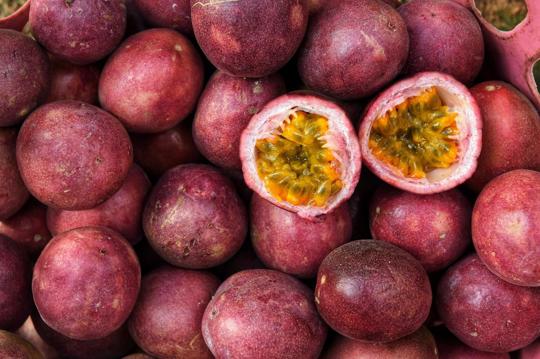
Passion fruit is a tropical vine fruit, distinguished by its bright hue and tangy taste - compare with guava vs passion fruit comparison to spot key contrasts.
Native to South America, it's now cultivated in many places across the world.
It's small, round or oval-shaped, with a thick skin of yellow or purple.
Inside lies juicy pulp with black seeds, which give it its signature taste.
Plus, it has a strong scent when cut into - sweet and fragrant.
As for nutrition, passion fruit is full of Vitamins A and C, dietary fiber and antioxidants.
These nutrients help strengthen immunity and aid digestion.
People enjoy eating passion fruit in different ways.
Raw, scooped out with a spoon.
Blended into smoothies.
As an ingredient in sweet or savory dishes like pies or tarts.
Plus, its zesty flavor makes it a good addition to any recipe.
To sum up, passion fruit is a tropical treat, packed with nutrients and full of flavor.
Try it raw or as an ingredient, and delight in its tropical goodness.
Differences Between Dragon Fruit and Passion Fruit
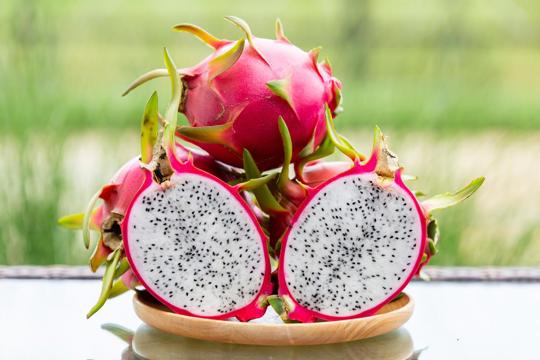
Dragon fruit and passion fruit look similar at first glance, but have major differences - freeze dried vs dried fruit comparison also highlights how processing shifts texture and flavor.
Dragon fruit, or pitaya, is native to Central America.
It has a bright pink or yellow skin, with white or pink flesh and tiny black seeds.
The taste is subtly sweet like melons and kiwis, with a crisp, juicy texture like a pear.
Passion fruit has a round shape, with a tough outer rind and soft interior filled with black seeds.
Its skin color ranges from purple to yellow or green when unripe.
Its flavor is intense and tropical, and its texture gelatinous and crunchy from the seeds.
Nutritionally, dragon fruit is full of vitamins like C, E, and B.
It's also rich in antioxidants for strong immunity.
Passion fruit has A, C, fiber, iron, phosphorus, and potassium.
Appearance and Outer Texture
Dragon fruit is bright pink/yellow with scale-like patterns and tiny bristles.
It's healthful and subtly sweet.
Passion fruit is deep purple/yellow, slightly wrinkled to the touch, yet smooth.
Inside is an array of aromatic seeds with a range of tropical flavors - from tangy to sweet - perfect for desserts/beverages.
Dragon fruit entices with its looks and flavor.
Passion fruit captivates with its seeds and tempting tastes.
Flavor and Taste
Dragon fruit has a mild sweetness, like kiwi and pear. Its texture is much like a melon.
Passion fruit, however, has a more intense and tangy flavor.
It's sweet and tart, with a hint of floral. Its pulp is slightly crunchy.
These two fruits have different flavors - for a look at how concentrated essences compare to whole flavors, see extract vs flavor comparison.
Nutritional Composition
Dragon fruit and passion fruit appear alike, yet their nutritional makeup differs.
Dragon fruit possesses vitamins C and E plus antioxidants, which help immunity and give skin a healthy glow.
In contrast, passion fruit contains a hefty dose of vitamin A, which is great for eye health.
Each fruit offers its own unique benefits for a balanced diet.
For a flavor reference from the pantry, nutritional yeast taste guide describes the savory, cheesy notes that can complement fruit in savory dishes.
Seed Texture
Dragon fruit has many small, black, edible seeds that offer a crunchy texture.
Passion fruit, however, has jelly-like flesh and smaller, flat, edible seeds.
This provides a different eating experience - learn how whole seeds differ from extracts in texture and use at anise seed vs extract comparison.
Dragon fruit seeds add a crunch to the taste. Passion fruit seeds are softer.
Both fruits have unique textures that appeal to different palates.
Do you prefer a crunch or a softer feel? Dragon fruit and passion fruit have you covered.
Similarities Between Dragon Fruit and Passion Fruit

Dragon fruit and passion fruit have lots in common.
One thing is their exciting colors - pink, yellow, and purple.
They're also both full of vitamins and antioxidants.
Plus, they both have the same texture - crunchy on the outside, juicy on the inside.
So, why not try both? Enjoy the delicious mix of flavors and textures that these tropical fruits offer.
Both fruits make colorful preserves; jam, jelly, and fruit preserves comparison explains which methods keep vibrant color and flavor.
Culinary Uses and Recipes
Dragon fruit and passion fruit are perfect for adding bright flavor to dishs.
These exotic fruits offer a pop of zesty and sweet flavors.
Incorporate dragon fruit into your cooking by using it in smoothies and juices.
It's a great addition due to its sweet taste and unique color.
You can also dice up dragon fruit and add it to fruit salads, or use it as a topping for yogurt and ice cream.
Passion fruit adds a tangy and tropical twist to both sweet and savory dishes.
Its flavor complements seafood well, so it's great for marinades and dressings.
It also works as an ingredient for desserts such as cakes and tarts.
If you're feeling adventurous, why not combine dragon fruit and passion fruit? Together, they create a nice balance of sweetness and tanginess that will tempt your palate.
Availability and Cultivation
Dragon fruit and passion fruit are two unique fruits known for their flavor and nutrition.
Dragon fruit, also called pitaya, grows in tropical regions like Southeast Asia and Central America.
It needs lots of sunshine and well-drained soil.
Its exterior is bright and the flesh ranges from white or red, with black seeds.
It is grown year-round due to its high demand.
Passion fruit is native to South America.
It grows in subtropical climates, but can adapt to other areas.
Its vine-like plant needs partial shade and organic-rich soil.
The fruit's skin is wrinkled and houses juicy pulp with black seeds.
Dragon fruit stands apart due to its cultivation methods.
It can be propagated by stem cuttings or seeds, making it easier to grow in large amounts.
There are three varieties: red-fleshed, white-fleshed, and yellow-skinned with white flesh.
Passion fruit cultivation focuses on two species: purple and yellow.
They require different methods based on climate.
For instance, purple prefers cooler temps than the yellow type.
Nutritional and Taste Differences: Dragon Fruit vs Passion Fruit
After exploring the various aspects of both dragon fruit and passionfruit, it is clear that although they are similar in many ways, there are distinct differences between the two.
Dragon fruit provides a good source of dietary fiber, which helps to bind with other nutrients in the stomach to improve digestion and optimize nutrient absorption.
On the other hand, passion fruit contains more Vitamin C and iron than dragon fruit does.
In terms of taste, passion fruit has a more tangy flavor whereas dragon fruit offers a more subtle sweetness.
For those who have never tried either one before, it can be difficult to decide which one to choose.
Nevertheless, it is important to try both kinds of fruits as each offers its own unique nutritional profile and flavor essence.
With this knowledge at hand, you can easily make an informed decision while incorporating these tasty fruits into your daily diet.
Frequently Asked Questions
The main difference between dragon fruit and passion fruit lies in their appearance, flavor, and nutritional content. They share some similarities but each has qualities that make it better suited for certain recipes.
Sometimes. Dragon Fruit works where Passion Fruit is called for in certain dishes, but not all.
Check whether the recipe relies on a specific quality before substituting.
Cold preparations like salads and dressings often favor the option with a sharper, more defined flavor. Heat can mellow both, so the distinction matters more in uncooked dishes.
Do professional cooks prefer one over the other?
Professional preference depends heavily on the dish and cuisine style.
Each has its context where it outperforms the other, so most experienced cooks keep both on hand.
Explore how dragon fruit presents on the palate at dragon fruit taste guide. Yellow varieties show distinct notes; see yellow dragon fruit flavor notes for specifics.