
The quick answer
Spanish coffee is a flamed, caramelized cocktail built on 151-proof rum and Grand Marnier, topped with whipped cream. Irish coffee is a smooth, whiskey-forward drink with a floating cream cap, invented in Ireland in 1943. They are not interchangeable.
Browse our full food comparisons guide for more side-by-side breakdowns like this.
Spanish coffee and Irish coffee share a glass and a temperature, but they deliver completely different drinking experiences.
The base spirit, the preparation technique, and the flavor profile diverge at every step.
Here is the full breakdown.
- Spanish coffee uses 151-proof rum and Grand Marnier; Irish coffee uses Irish whiskey and brown sugar.
- Spanish coffee is flamed tableside to caramelize a sugar-rimmed glass; Irish coffee is layered without fire.
- Spanish coffee is topped with whipped cream mixed into the drink; Irish coffee has a separate floating cream cap.
- Spanish coffee tastes caramelized, spicy, and citrus-forward; Irish coffee tastes smooth and whiskey-forward.
- Spanish coffee was popularized at Huber's Restaurant in Portland, Oregon; Irish coffee originated at Foynes Airport in Ireland in 1943.
- Both drinks are served hot in a glass, but they are built for different moments at the table.
Spanish Coffee vs Irish Coffee at a Glance Quick Reference
The table below covers the six dimensions that matter when choosing between them: spirit, preparation, cream, flavor, occasion, and ease of making at home.
| Spanish Coffee | Irish Coffee | |
|---|---|---|
| 🥃 Base spirit | 151-proof rum + Grand Marnier | Irish whiskey + brown sugar |
| 🔥 Preparation | Tableside flaming of sugar-rimmed glass | Layered without heat or fire |
| 🍦 Cream | Whipped cream mixed into the drink | Heavy cream floated as a separate layer |
| 👅 Flavor | Caramelized, citrus-forward, spicy | Smooth, whiskey-forward, lightly sweet |
| 🎯 Best for | Dessert drink with tableside theater | After-dinner warming drink |
| 🏠 Home-friendly | No: requires an open flame | Yes: no special equipment needed |
What Spanish Coffee Is
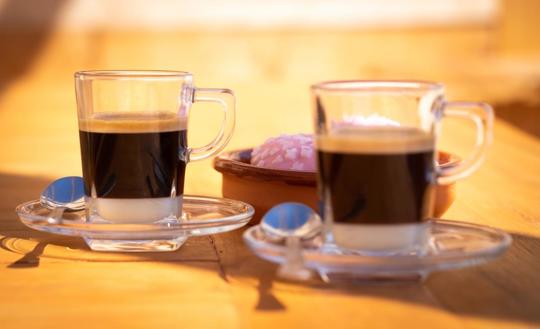
Spanish coffee is a hot cocktail made from 151-proof rum, Grand Marnier, and hot coffee, finished with whipped cream on top.
The glass rim is coated in sugar before the drink is assembled, and a bartender flames the rim tableside so the sugar caramelizes before coffee is added.
Huber's Restaurant in Portland, Oregon, open since 1879, is credited with popularizing this preparation in the United States.
Some versions substitute brandy for rum, which closes the brandy vs bourbon flavor gap slightly but changes the drink's character.
The Grand Marnier contributes orange citrus that cuts through the richness of the cream and the heat of the high-proof rum.
Spanish coffee sits firmly in the dessert drink category, separate from the everyday Spanish coffee cafe tradition of milk-based espresso drinks.
What Irish Coffee Is
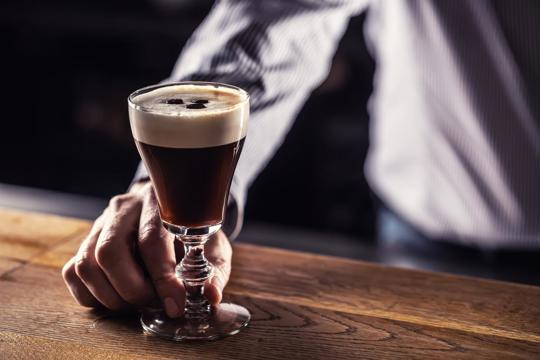
Irish coffee is a hot drink made from Irish whiskey, hot black coffee, brown sugar, and heavy cream floated on top.
Joe Sheridan invented it at Foynes Airport in Ireland in 1943 to warm passengers arriving by flying boat on a cold night.
The cream is poured slowly over the back of a spoon so it floats above the coffee as a distinct layer and does not mix in.
A properly made Irish coffee shows three visible layers: amber coffee at the bottom, dissolved brown sugar through the middle, and a cream cap on top.
The Irish whiskey profile is essential to the drink's identity, and substituting Scotch or bourbon changes the result in ways that matter.
The cream layer in Irish coffee is a structural element, not just a garnish, which separates it from drinks that use a cream topping distinction loosely.
The Spirit Is the Core Difference
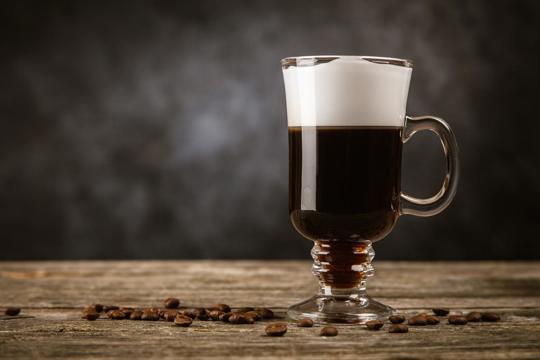
Spanish coffee requires 151-proof rum specifically because lower-proof spirits will not ignite for the tableside flaming step.
Irish coffee requires Irish whiskey by definition, and the drink's smoothness comes directly from that spirit's lighter, triple-distilled character.
The light rum vs dark rum choice does not apply here because Spanish coffee demands 151-proof specifically, not a style category.
Swapping spirits in either drink produces a different cocktail, not an acceptable variation.
Those looking for rum alternatives in cocktails will find that no substitute reaches the proof level needed to flame a Spanish coffee properly.
Preparation: Flamed vs Layered
Spanish coffee begins with a sugar-rimmed glass that a bartender flames until the sugar caramelizes, which takes roughly 30 seconds of controlled fire.
The rum and Grand Marnier go into the glass while it is still warm from the flame, then hot coffee is added, and whipped cream is spooned on top.
Irish coffee is built without heat or fire: whiskey and dissolved brown sugar go into a warm glass, coffee is poured in, and cream is floated on top over a spoon.
The choice of espresso base versus standard drip coffee changes both drinks' intensity, though neither recipe traditionally calls for espresso.
Spanish coffee tolerates whipped cream alternatives on top because the cream mixes into the drink; Irish coffee does not, because the float requires a specific fat content to hold structure.
Flavor: What Each Tastes Like

Spanish coffee leads with caramelized sugar from the rimmed glass, orange citrus from the Grand Marnier, and a sharp warmth from the high-proof rum.
The whipped cream softens the heat of the rum but does not eliminate it, so the finish remains spicy and warm.
Irish coffee leads with the smooth grain character of Irish whiskey, deepened by brown sugar, and the cream cap adds richness without sweetness.
You sip Irish coffee through the cream layer, so the first sensation is cool cream followed immediately by hot coffee, which creates a temperature contrast.
Neither drink pairs naturally with hot chocolate pairing flavor profiles because both are spirit-forward rather than dessert-sweet.
- 151-proof rum + Grand Marnier
- Flamed tableside, caramelized sugar rim
- Caramelized, citrus-forward, spicy finish
- Whipped cream mixed into the drink
- Requires a bartender and open flame
- Irish whiskey + brown sugar
- Layered without heat or fire
- Smooth, whiskey-forward, lightly sweet
- Cream floated as a separate layer
- Easy to make at home, no equipment needed
Use the verdict sections below to match each drink to your specific occasion.
When Spanish Coffee Wins Visual Theater
Spanish coffee is the right choice when the occasion calls for a dessert drink with visual theater.
The tableside flaming makes it a drink people watch being made, which adds to the experience at a restaurant or dinner party.
Its caramelized, citrus-forward flavor pairs well with chocolate-based desserts and anything with a bitter finish.
Choose Spanish coffee when the goal is a bold, sweet, warming end to a meal rather than a quiet after-dinner drink.
Drinkers who enjoy hazelnut coffee pairing profiles will find Spanish coffee's sweet-spicy balance moves in a similar direction.
When Irish Coffee Wins Home-Friendly
Irish coffee is the right choice when the goal is a warming after-dinner drink that does not compete with dessert.
Its smooth, whiskey-forward character makes it work as a standalone closer to a meal rather than a dessert drink.
Irish coffee is easier to make at home because it requires no open flame and no specialty glassware beyond a standard heat-safe glass.
Drinkers exploring Irish cream alternatives will find that Irish coffee without the floating cream cap misses the structural point of the drink.
Choose Irish coffee when you want a drink that is elegant in its simplicity and spirit-forward without being theatrical.
- Choose Spanish coffee when you want a dessert drink with tableside theater and caramelized citrus flavor.
- Choose Irish coffee when you want a smooth, warming after-dinner drink that lets the whiskey lead.
- Spanish coffee requires 151-proof rum to flame properly; no lower-proof substitute works for that step.
- Irish coffee requires Irish whiskey; bourbon and Scotch produce a different drink with a different character.
- The cream in Irish coffee must float as a separate layer; the cream in Spanish coffee mixes into the drink.
- These two drinks share a glass and a temperature but are built on different spirits, techniques, and flavor goals.
Sources
Frequently Asked Questions
Spanish coffee uses 151-proof rum and Grand Marnier as its base spirits. Some versions substitute brandy for rum, which lowers the proof and changes the flavor but keeps the orange liqueur component.
Joe Sheridan invented Irish coffee at Foynes Airport in Ireland in 1943. He made it to warm passengers arriving by flying boat on a cold night, combining Irish whiskey, hot coffee, brown sugar, and floating cream.
You can make a hot whiskey coffee drink with bourbon, but it is not Irish coffee. Irish whiskey has a lighter, triple-distilled character that bourbon does not share, and the substitution produces a noticeably heavier, sweeter result.
Spanish coffee is sweet from the caramelized sugar rim and the Grand Marnier, but the 151-proof rum adds enough heat and sharpness to keep it from tasting like a dessert syrup. The overall profile is sweet-spicy rather than simply sweet.
Spanish coffee is stronger by proof because it is built on 151-proof rum, which is nearly double the alcohol content of standard spirits. Irish coffee uses standard-proof Irish whiskey, typically 80 proof, so the alcohol impact is considerably lower per serving.