
Opera cake is a firm French cake of almond sponge, coffee buttercream and ganache, while tiramisu is a soft, no-bake Italian dessert of ladyfingers and mascarpone.
- Choose tiramisu when you have no oven time.
- Choose opera cake for neat slices when you can spend a day on five parts.
- Classic tiramisu has raw egg yolks, so use pasteurized eggs for anyone at higher risk.
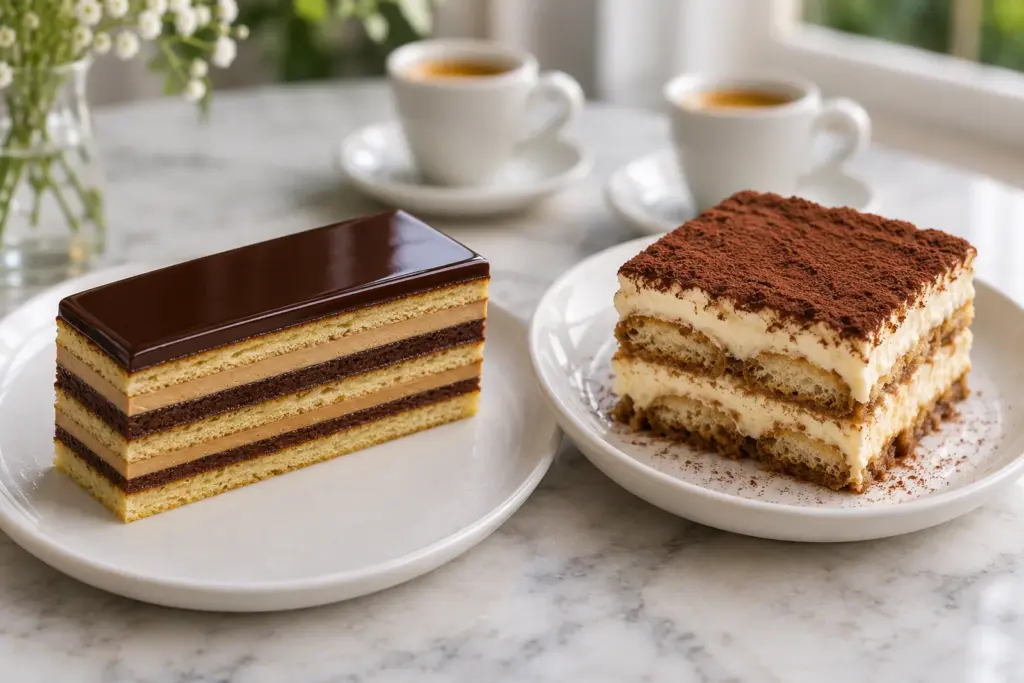
Both desserts taste of coffee, so people often put them side by side in side-by-side comparisons, but you cut one with a knife and scoop the other with a spoon. That gap decides how hard each is to make, how far ahead you can prepare it and how you serve it.
1. What Is the Difference Between Opera Cake and Tiramisu?
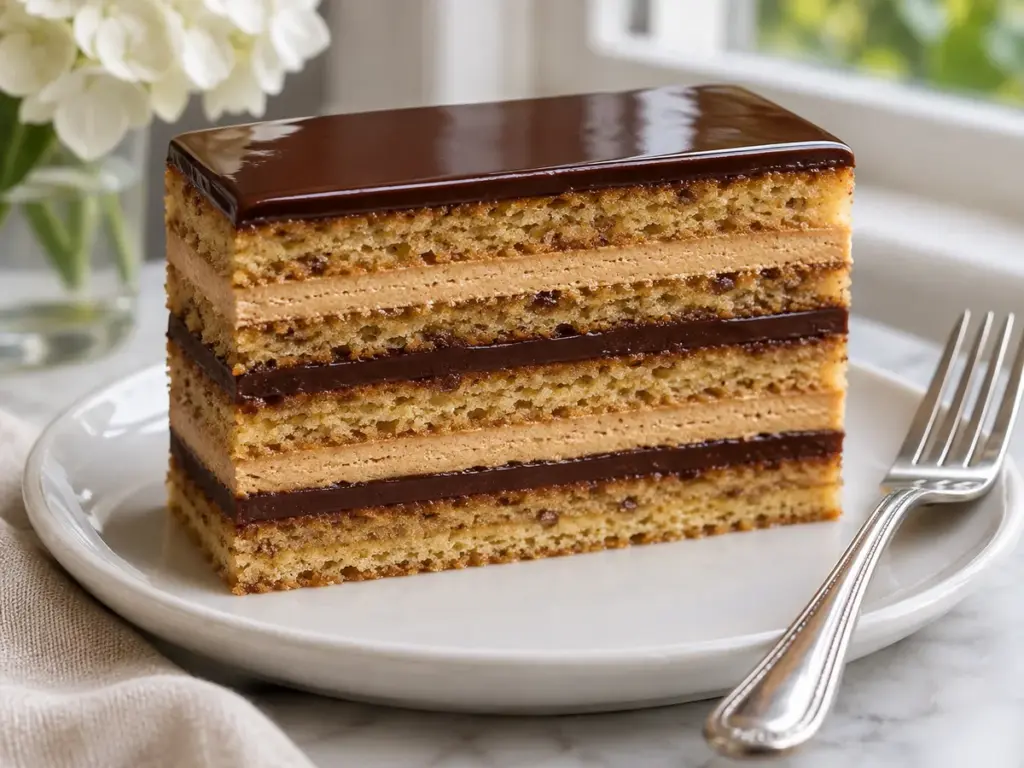
Opera cake is baked, built from thin layers and cut into clean rectangles. Tiramisu needs no oven and is scooped from the dish it chilled in. This table lines up the traits that change the result.
| Trait | Opera cake | Tiramisu |
|---|---|---|
| Style | French pâtisserie cake | Italian spoon dessert |
| Base | Joconde, a thin almond sponge baked on sheet pans | Savoiardi (ladyfingers), crisp sponge fingers |
| Coffee | Syrup brushed on the sponge, plus coffee in the buttercream | Espresso dip for the ladyfingers, often with Marsala or rum |
- The cream is French buttercream of egg yolks, sugar syrup and butter.
- The chocolate is ganache between layers, with a glossy glaze outside.
- The cream is mascarpone cream with egg yolks and sugar.
- The chocolate is cocoa dusted on top.
- Opera cake needs the oven for the sponge. Tiramisu needs no oven.
- Opera cake chills between and after layers, usually 2 hours or more at the end. Tiramisu chills in the dish, often 6 hours or overnight.
- For raw egg risk, check the buttercream method for opera cake. The classic tiramisu does have raw egg.
Texture and effort settle most choices: opera cake rewards a patient baker, and tiramisu rewards a cook who has a few hours of fridge time and no oven.
2. Where Did Opera Cake and Tiramisu Come From?
Neither dessert has a settled inventor, so read each name below as a claim, not a proven fact.
| Dessert | Who claims it | Where | Date given |
|---|---|---|---|
| Opera cake | Cyriaque Gavillon, Dalloyau | Paris | 1955 |
| Opera cake | Gaston Lenôtre | Paris | About 1960 |
| Opera cake | Louis Clichy | A Paris culinary exhibition | Decades before 1955 |
| Tiramisu | Le Beccherie restaurant | Treviso, Veneto | Late 1960s to 1972 |
| Tiramisu | Chef Norma Pielli, Albergo Roma | Tolmezzo, Friuli | Recipe written in 1959 |
The best-known account for opera cake credits Cyriaque Gavillon of the Paris pâtisserie Dalloyau, in 1955. Dalloyau says Gavillon's wife Andrée named it after the Opéra Garnier, while other tellings say the six layers stand for the acts of an opera or that the name honors Opera dancers who shopped there.
Gaston Lenôtre, the founder of Maison Lenôtre, claimed the cake around 1960, and Louis Clichy is said to have shown a similar cake at a Paris culinary exhibition decades earlier. We'd call 1955 the most repeated date, not a settled one.
Tiramisu has two regional claims. Le Beccherie in Treviso says its kitchen created the dessert, and it was on the menu as "Tiramesù" by 1972. Friuli points to Norma Pielli, who is said to have written down a tiramisu recipe in 1959 at the Albergo Roma in Tolmezzo. Italy listed the Udine (Friuli) version as a traditional regional food in 2017 and gave Treviso's version the same status in 2024.
You may see older pages trace tiramisu to Renaissance Venice or to workers building the city, but the sources we checked date it to the 20th century. The name means "pick me up" in Italian.
3. What Goes Into Each Dessert?
Eggs and coffee are the only ingredients the two desserts share, and everything else differs.
- Joconde: thin almond sponge baked on sheet pans
- Coffee syrup brushed on every layer
- Coffee buttercream: egg yolks, hot sugar syrup, butter
- Ganache and chocolate glaze on top
- Savoiardi, the dry Italian ladyfingers
- Espresso, often with Marsala, rum or amaretto
- Mascarpone cream: mascarpone, egg yolks, sugar
- Cocoa powder dusted on top
Opera cake's chocolate comes as ganache, which cools into a fudgy layer that sets firmer than frosting. The sponge uses mostly almond flour in place of wheat flour, so the cake tastes of almonds even though only one layer holds them.
Tiramisu depends on mascarpone, a fresh Italian cream cheese with a mild, milky sweetness. Some recipes fold in whipped egg whites or cream to lighten it, and others use only yolks and mascarpone.
4. How Do They Taste and Feel?
Both desserts carry coffee, but they spread it differently. Opera cake puts coffee in two places, the syrup and the buttercream, and then sets bittersweet ganache and glaze against it, so chocolate and coffee arrive together in each bite.
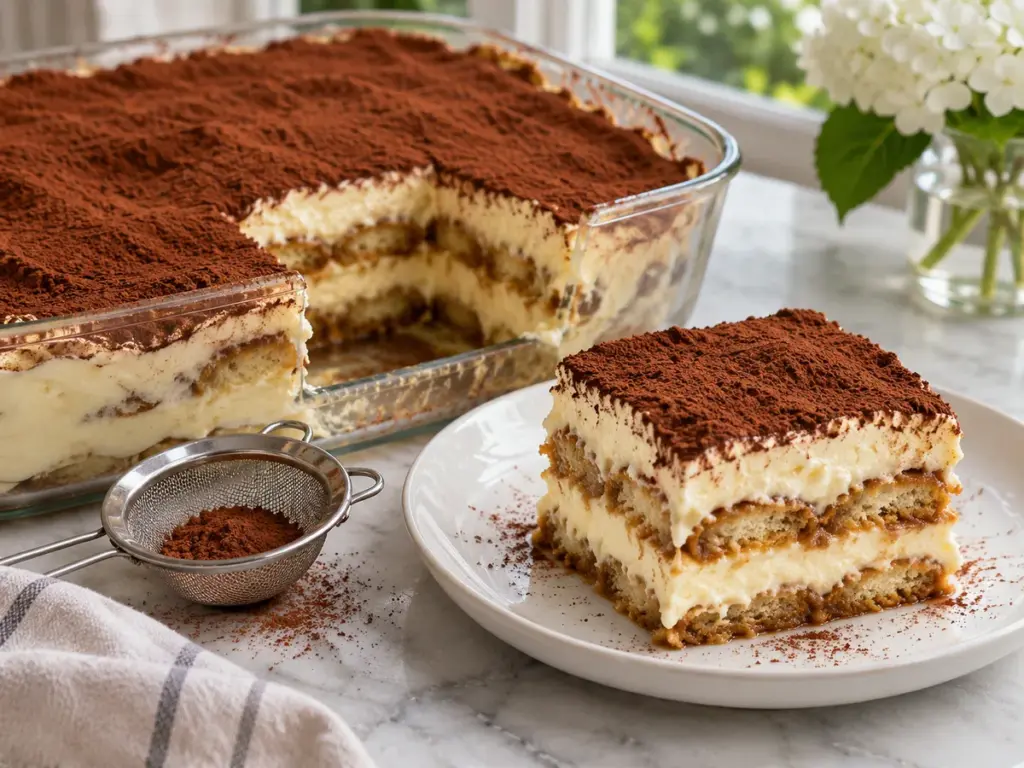
Tiramisu puts its coffee in the ladyfingers, which leaves the mascarpone cream as the main flavor. The cocoa dusted on top adds the bitter edge that keeps the cream from tasting flat.
- Dense and fine-grained, with a sharp cut edge
- Fudgy where ganache sits, silky where buttercream sits
- Cut by bakeries into small rectangles because it is rich
- Soft enough to slump when you scoop it
- Moist ladyfingers under thick, cold cream
- Holds its shape only after hours in the fridge
5. Which Is Harder to Make, and What Can You Make Ahead?
Tiramisu is the easier dessert, and opera cake is a project. Opera cake has five separate parts that you make, cool and stack in order, and that is where the extra work goes.
Opera Cake: Five Parts and a Long Assembly
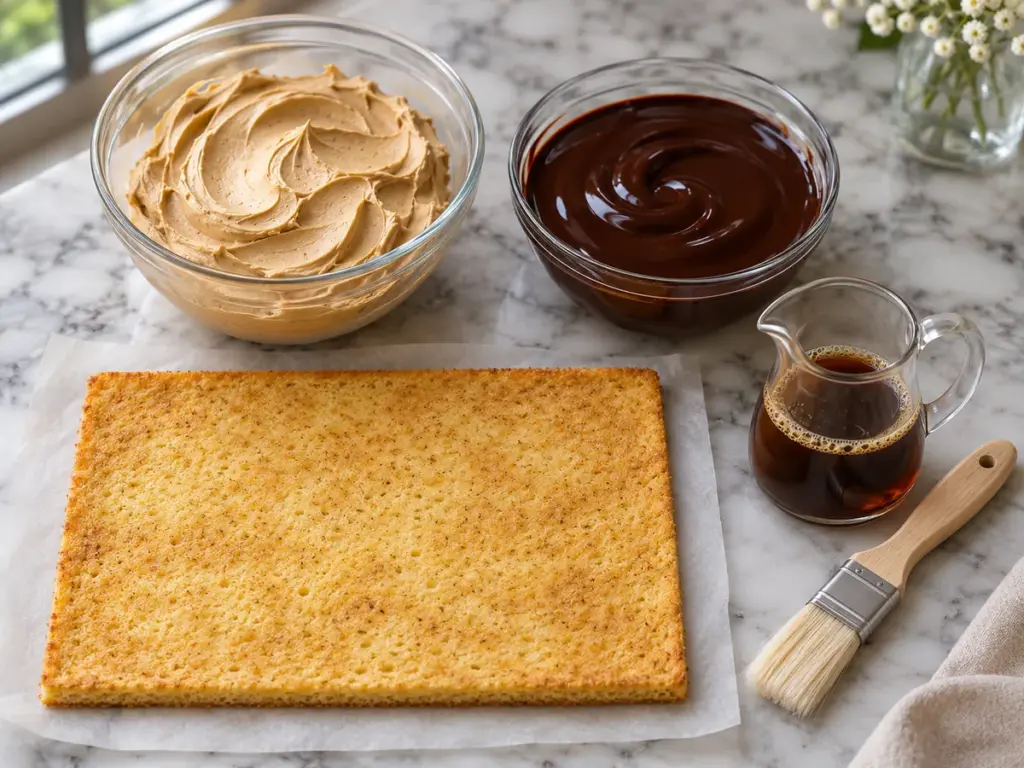
- Bake the joconde. Fold whipped egg whites into the almond batter and bake it in thin sheets.
- Soak with coffee syrup. Brush each sponge layer so the cake tastes of coffee all the way through.
- Make the French buttercream. Pour hot sugar syrup over whipping yolks, then beat in butter and coffee.
- Melt the ganache. Pour hot cream over dark chocolate and stir until smooth.
- Stack, chill and glaze. Alternate sponge, buttercream and ganache, chill, then pour the glaze on top.
You also need a candy thermometer, a mixer and two or three sheet pans. Home recipes commonly let you make the sponge, syrup and ganache a day or two ahead, then make the buttercream on assembly day and chill the stacked cake for at least 2 hours or overnight.
Tiramisu: One Dish and a Long Chill
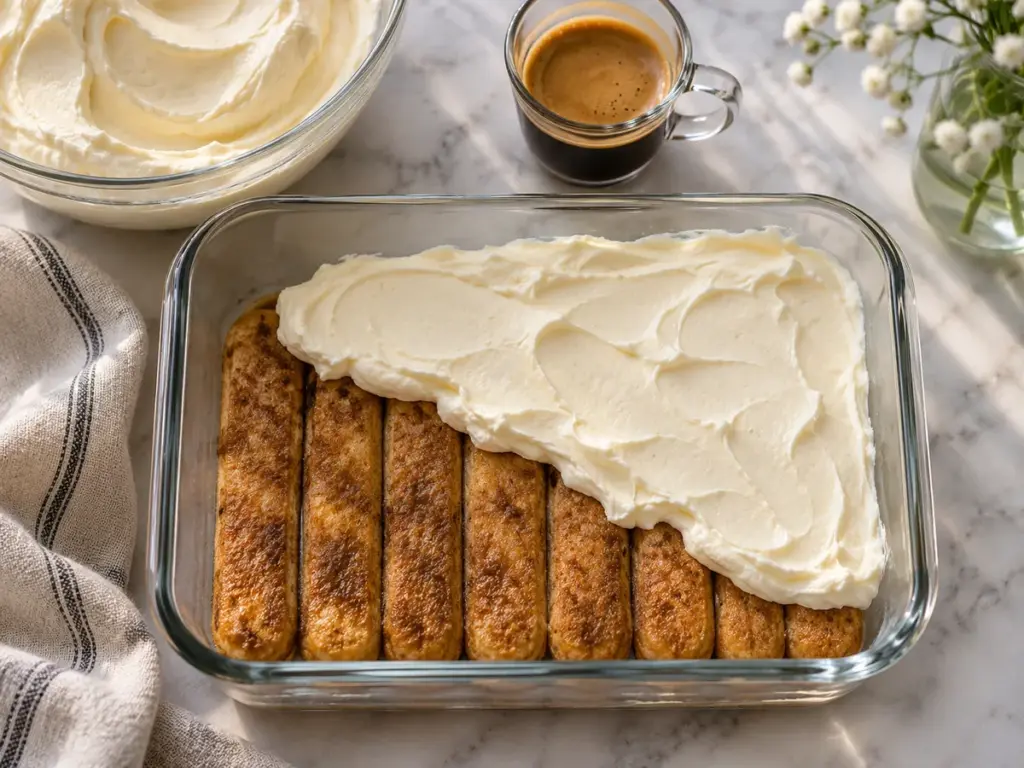
You whip the mascarpone cream, dip the ladyfingers and layer both in a dish. Dip each finger for a second or two, because dry savoiardi drink coffee fast and turn to mush if they sit in it.
The wait is the hard part. Most recipes ask for at least 6 hours in the fridge and many prefer overnight, and some say you can make it one to two days ahead. If the shop has no savoiardi, sponge cake strips or biscotti are the usual stand-ins.
6. Is Tiramisu Safe With Raw Eggs?
If anyone at your table is in one of those groups, you have three safe routes:
- Use pasteurized eggs. The FDA advises buying eggs labeled "pasteurized" for recipes that call for raw egg.
- Cook the yolks first. Whisk the yolks and sugar over simmering water, zabaglione style, until the mixture reaches 160°F, the USDA temperature for egg mixtures. Cool it before folding in the mascarpone.
- Buy it ready-made. Store-bought tiramisu is often made with pasteurized eggs, but read the label or ask the restaurant.
Opera cake's French buttercream also starts with egg yolks. Hot syrup goes over them, and a recipe may or may not bring the yolks to 160°F, so ask the baker, or check the buttercream with a thermometer if you make it for a higher-risk guest.
7. How Long Do They Keep?
Both desserts hold eggs, dairy or butter, so they belong in the refrigerator. USDA FoodKeeper has no entry for either, so the usual leftovers rule applies.
| Where | Tiramisu | Opera cake |
|---|---|---|
| Refrigerator, 40°F or below | 3 to 4 days | 3 to 4 days |
| Counter | 2 hours at most, 1 hour above 90°F | 2 hours at most, 1 hour above 90°F |
Plate the dessert just before serving and put the rest back in the fridge.
8. Can You Swap One for the Other?
As a dessert for guests you can, as long as you plan for the change in shape. Tiramisu will not arrive as neat squares in a box, and opera cake will not give the creamy spoonful that tiramisu fans want.
Inside one recipe, tiramisu is the more forgiving of the two. If the store is out of mascarpone, cream cheese or ricotta can stand in, as can crème fraîche, and the cream will taste tangier. Opera cake has no easy swap, because the joconde depends on almond flour. We'd buy it instead of replacing almond flour with regular flour, which gives you a different cake.
Most tiramisu recipes add a splash of Marsala, rum or amaretto to the coffee. You can leave it out, or use stand-ins for Marsala wine when a recipe names Marsala and you have none.
9. Which Should You Make or Buy?
- You serve 10 or more guests and want even, pre-cut slices
- You want a chocolate-forward dessert
- You can start one or two days ahead and a thermometer
- You have no oven or little time but can wait overnight
- You want a soft, creamy dessert with a clear coffee taste
- You can use pasteurized eggs or cook the yolks
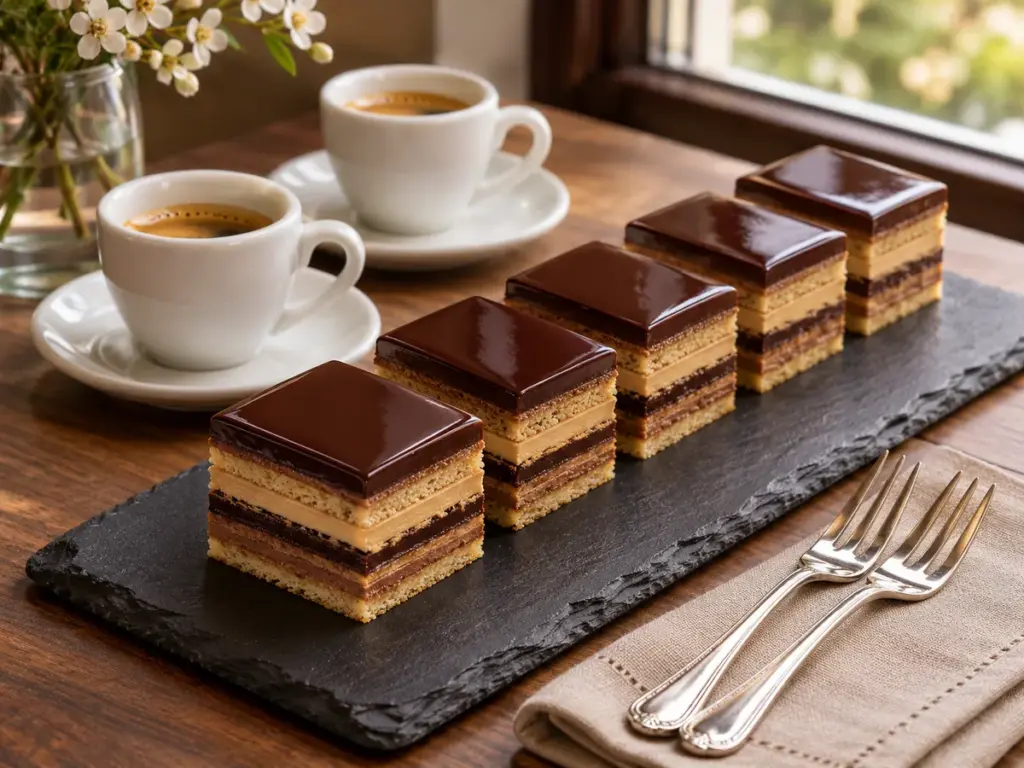
At a bakery, a good opera cake shows thin, even stripes and an unbroken, glossy glaze, and it sits in a refrigerated case. A good tiramisu has ladyfingers that are moist but still hold their shape and cream that stays put when cut. Tiramisu also has the shorter shopping list: ladyfingers, mascarpone, eggs, coffee and cocoa, while opera cake adds almond flour, chocolate, butter and cream.
For one dinner party we'd serve only one of them, because both lean on coffee and chocolate. Tiramisu already has coffee in it, so a small plain espresso, sweet Marsala and lemony berries make better partners than a second coffee dessert.
Sources
- U.S. Food and Drug Administration, Dairy and Eggs: Food Safety for Moms-to-Be (tiramisu on the raw-egg list, pasteurized eggs)
- U.S. Food and Drug Administration, What You Need to Know About Egg Safety (higher-risk groups, 40°F)
- USDA Food Safety and Inspection Service, Safe Minimum Internal Temperature Chart (160°F for egg dishes)
- USDA Food Safety and Inspection Service, Leftovers and Food Safety (3 to 4 days, 2-hour and 1-hour rule)
- Wikipedia, Opera cake (Gavillon, Lenôtre, layers)
- Chowhound, How Opera Cake Got Its Name (Clichy claim)
- The Irish Times, How many layers are in an opera cake? (six layers, name stories)
- The Takeout, The Competing Origin Stories Behind Tiramisu (Treviso, Friuli, 2017 and 2024 listings)
- Encyclopaedia Britannica, Tiramisu (Tolmezzo recipe, 1959)

Food writer at GustoMeadow. Writes ingredient substitutes, food comparisons, taste guides and storage guides for home cooks.
Storage and food-safety numbers follow USDA, FDA and university extension guidance.



