
Often referred to as mother nature's best-kept secret, the hickory plant is a resourceful tree used for many purposes.
Its wood is considered one of the best for making the beloved barbeque, but you may not know that you can actually eat its fruit too.
The hickory nut is overlooked many times because of its hard shell.
However, you will be richly rewarded if you take the trouble of breaking open its hard exterior.
Foragers search in a frenzy for this tough nut.
All because of the goodness available at the core of the nut.
The best time to get your hands on them is during autumn.
When the leaves turn color, the nuts ripen and fall to the ground.
So, what do hickory nuts taste like?
What are Hickory Nuts?
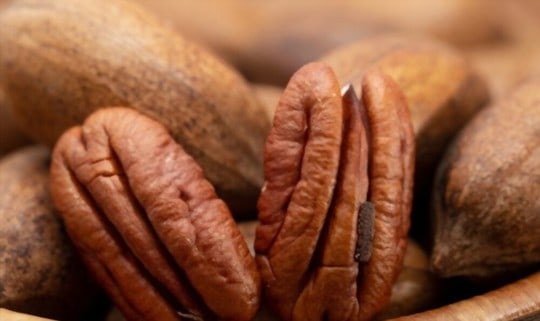
Hickory nuts come from the hickory tree, which belongs to the genus Carya.
Therefore, many people also refer to it as Carya nut.
There are eighteen species in the family, most of them growing in Asia and some in the USA and Canada.
The fruit from the hickory tree may look like a nut, but it's not considered a 'true botanical nut'.
They are actually 'drupes' or 'stone fruit.' Some fruits that are also categorized as drupes are coffee beans, cashew, sapote, olive, mango, etc.
When the trees are grown just for fruit harvesting, they are grafted and cultivated with multiple cultivars.
The same cultivar cannot pollinate because of incompatibility with the same plant.
However, its fruit contains enough genetic variations that the seedlings from the nuts of the same tree can be used to produce more cultivars.
For a comparison that references the hickory name in retail, read Swiss Colony vs Hickory Farms: brand comparison.
Hickory Nuts Flavor Description

You can eat the nuts as soon as it's harvested, which is excellent about hickory nuts.
But getting them out of the hard shell may be a task.
There are wide varieties of Carya fruit, including walnut and pecans.
Before you go foraging, you should know that not all species produce edible fruits.
Some can even be dangerous to consume, and you'll need to have a sharp eye to pick the right nuts.
They are found chiefly during fall in the USA.
This fruit has a high-calorie count within its small fleshy core and is considered the most calorie-dense food found naturally in the wild.
An ounce of cracked and de-shelled hickory can contain up to 190 calories.
Most of these calories are accounted as fat present in the fruit.
Once dried, the nut retains a significant portion of its fat content and has carbohydrates, minerals, vitamins, and a small amount of water.
It is, in fact, one of the richest sources of the daily value of Vitamin B and manganese.
Since they are from the same species, hickory nuts tend to have subtle flavor notes similar to that of pecan and walnut.
They have a rich mouthfeel when consumed and have a slightly sweet aftertaste.
Although it's a fruit, the nut-like edibles pair well with savory dishes and add a pleasant earthy undertone to cooked food.
For a creamier, buttery contrast in nut flavors, see macadamia nuts taste guide for creamy contrast.
How to Cook Hickory Nuts?

The flesh of the nuts is excellent to eat on its own, but you can incorporate them into many dishes to improve them - try adding chopped hickory to veggie sides under 12 minutes for a fast flavor boost.
One such dish is a traditional native American porridge called 'Pawcohiccora'.
All you'll need to do is boil the flesh of the fruit in water and stir continuously until its consistency turns thick and fatty, which means it is ready to eat.
If you're not keen on having porridge, you can try making a healthy drink.
This also requires boiling the nut, but you'll have to separate the fat before consuming the liquid.
The oil produced by this method was called hickory mild and used as cooking oil.
Another unique dish to make with this nut is cornmeal-hickory.
The nuts are pounded into a rough paste and boiled with water until a milky broth develops, then cornmeal is added, and finally, maple syrup is added for added taste.
To garnish, you can serve the meal with grits.
People have even incorporated this nut into baked goods by switching out pecans to make a hickory pie.
Or by adding them to chocolate chip cookies which gives the cookies an added dimension of flavor.
How to Use Hickory Nuts in Recipes
Don't let the hard exterior deter you from harvesting your own bounty of hickory nuts.
They are incredibly healthy and can prove to be a boon to your diet since they are packed with nutrients that your body needs and can be a good addition to your diet.
They are delicious and have such depth of flavor that can be imparted into many dishes.
Also, they are an inexpensive nut that is found growing all over the US.
The next time you come across a hickory tree ladened with fruits, why not pick up a few and use them for cooking a great meal?
Hickory and mesquite smoke profiles differ; hickory vs mesquite liquid smoke differences explains how they compare. Delicious Brazil nut substitutes lists five swap options.
Frequently Asked Questions
Often referred to as mother nature's best-kept secret, the hickory plant is a resourceful tree used for many purposes. So, what do hickory nuts taste like?
It is, in fact, one of the richest sources of the daily value of Vitamin B and manganese.
Freshness matters. Hickory Nuts tends to have a brighter, more pronounced taste when fresh.
Stored or aged versions may develop mellower or slightly different flavor notes.
Significantly. Younger or less ripe versions are often sharper, more astringent, or more bitter.
As it matures, flavors typically mellow and deepen into something more complex and approachable.
Texture and taste are inseparable. A pleasant texture encourages slower eating and better flavor perception.
Off-putting textures - too mushy, too fibrous, or unexpectedly gritty - can make even good flavors less enjoyable.