
Summary of key points
The main difference between Italian ice and gelato is in the ingredients and preparation method. Italian ice is made by freezing a fruit-based syrup, resulting in a smooth and icy texture.
Meanwhile, gelato is made with milk, cream, sugar, and flavorings like chocolate or fruit puree. This results in a denser and creamier frozen treat.
Apart from the base ingredients, gelato is also churned at a slower speed than traditional ice cream, which incorporates less air and gives it a smoother texture. Also, gelato is served at a slightly higher temperature than Italian ice, allowing for the flavors to be more pronounced on the palate.
Italian Ice and Gelato are not twins. Seriously, they're not.
Hot summer day, pacing the streets, craving something cold. You think, "Ice cream?" Nah.
Then you spot it. The dilemma: Italian Ice or Gelato?
Here's the scoop - no pun intended. Gelato is creamy, dense, and oh so rich.
Italian Ice? Picture this: frozen, flavored water.
Sounds simple, right? Yet, it's refreshingly good.
We remember our first encounter. Mistakenly ordered Gelato, expecting a slushy ice.
Boy, were we surprised.
Two treats, two entirely different vibes.
What is Italian Ice?

Italian Ice - the frozen treat from Italy.
Blended with fruit juice, water, and sugar, it's smoother than traditional ice cream or gelato.
Flavors ranging from classic lemon and strawberry to exotic mango and pineapple, this icy delight is bursting with color and flavor.
Perfect for those hot summer days when something cool and delicious is needed.
This delicacy stands out with its unique prep process.
Unlike ice cream or gelato, no churning or freezing is required.
The end result? A light dessert with a grainy texture that melts quickly.
Sweet and tangy flavors combine to refresh and satisfy.
Versatile Italian Ice can be served multiple ways.
Enjoy it alone or as a topping for your favorite dessert.
Or mix it into a beverage for an extra burst of flavor.
What is Gelato?
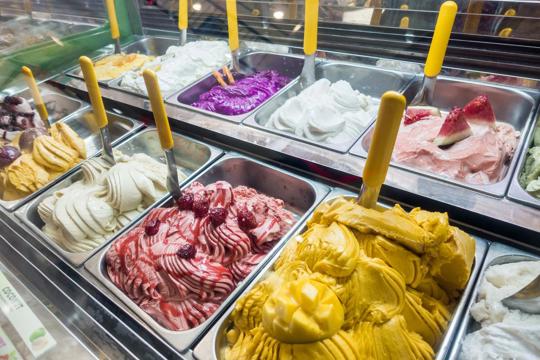
Gelato - an Italian frozen delicacy - is well-known for its creamy texture and intense flavors.
Unlike ice cream, it has less air whipped into it.
This results in a denser, creamier consistency.
Also, its low butterfat content allows the flavors to be more prominent.
The secret behind gelato is its slow churning process.
This incorporates less air into the mixture and prevents large ice crystals from forming.
This gives it a smooth texture and a luxurious melting sensation on the tongue.
Gelato is also served at a warmer temperature than ice cream.
This allows the flavors to unfold and tempt the palate even more.
Plus, the warmth enhances its softness and velvety mouthfeel.
Gelato comes in a variety of excellent flavors such as pistachio, hazelnut, chocolate and fruity options like strawberry and lemon.
It can be enjoyed alone or with toppings like crushed nuts or fresh fruit.
Some popular variations include stracciatella (chocolate chip) or affogato (gelato with a shot of espresso).
Differences Between Italian Ice and Gelato

Italian ice and gelato look alike, but they are different.
Ingredients Used
Ingredients are key for Italian ice and gelato.
They look similar, they have different ingredients.
Italian ice is made of fruit, water, and sugar.
The best fruits are used for the best taste and quality.
It is then churned slowly for an icy texture - and it's dairy-free.
Gelato has a creamy base with more milk than cream.
This gives an intense flavor.
Plus, nuts, chocolate, or coffee beans can add more flavor.
Both have less air than ice cream, giving a denser texture.
Enjoy these frozen delights.
Texture and Creaminess
Italian ice and gelato are both frozen treats; however, they differ greatly in terms of their texture and creaminess.
Italian ice has a granular, snow cone-like texture and an icy feel.
Gelato, on the other hand, is well-known for its creamy texture and indulgent mouthfeel.
Italian ice gets its unique texture from freezing flavored sugar water.
It's light, fluffy and filled with small icy particles, giving it a crunchy texture.
Gelato, however, uses milk instead of heavy cream as its base, resulting in a denser, smoother texture.
It also has less air during the churning process, making it creamier on the palate.
Italian ice has its roots in ancient Rome, while gelato is a 16th century Italian delicacy.
So, if you're looking for a chilled treat on a hot day, you can choose between the invigorating crunch of Italian ice or the velvety smoothness of gelato.
Serving Temperature
Italian ice and gelato differ when it comes to their serving temperature.
This is important as it can influence their taste and texture.
Italian ice should be served very cold, usually below freezing.
This allows it to stay icy and keep its flavor.
At the right temperature, it's an enjoyable summer treat.
Gelato, however, is best served slightly warmer than regular ice cream.
This causes the flavors to be more intense, and the texture to be creamy and slow-melting.
The heat also boosts the richness of the ingredients, making it a more indulgent experience.
Making Italian ice and gelato also differs.
Italian ice is made of fruit juice or puree, sugar, and water.
Gelato, on the other hand, is made with milk or cream and flavors like chocolate or strawberry.
Churning Process
The churning process is essential for Italian ice and gelato.
It's when the ingredients are stirred together, forming a smooth and creamy texture.
During churning, air is mixed with the mixture.
This avoids ice crystals and gives a light consistency.
Gelato churns slower than Italian ice.
This allows less air to be incorporated, making it denser and creamier.
Also, gelato churns at a higher temperature.
This lets more flavor be incorporated and gives a smoother result.
Italian ice has more water than gelato.
It's lighter and refreshing.
Gelato has more fat from milk or cream, making it richer and creamier.
The churning process and variations in ingredients give Italian ice and gelato distinct textures and flavors.
Whether you like Italian ice's lightness or gelato's richness, these frozen treats will satisfy your sweet tooth.
Flavor and Taste Comparison
Italian ice and gelato have distinct flavors and textures.
Italian ice is fruity and icy, like a snow cone.
Gelato is creamier and richer, with flavors such as chocolate, vanilla, and pistachio.
Italian ice is made with water, sugar, and flavoring.
It's refreshing and tangy.
Gelato is made with milk, making it creamier and more indulgent.
Italian ice is served colder than gelato.
It's great for cooling off in the summer.
Gelato is served warmer, so its flavor stands out.
Nutritional Value Comparison
Italian ice and gelato are two pleasant frozen desserts, yet they have contrasting nutritional values.
Both are great on hot days, but be aware of the differences between them.
Italian ice is made from water, sugar, and a variety of fruit flavors.
It usually has no fat and fewer calories than gelato.
However, it often contains more sugar due to its sweetness.
So, if you are monitoring your sugar intake, this is something to consider.
Gelato comes from Italy and is similar to ice cream, yet it has less air in it during the freezing process.
This makes it denser.
Gelato also has more fat due to the milk or cream used in its base.
This fat gives it its smoothness and richness.
Italian ice and gelato also differ in serving sizes.
Typically, one serving of Italian ice is smaller than a serving of gelato.
This means Italian ice may have fewer calories per portion, but you might need more of it to satisfy your craving.
When deciding between Italian ice and gelato, think about your preferences and dietary needs.
If you want a lighter option with less fat, go for Italian ice.
If you're looking for a creamy and indulgent treat, then gelato is the way to go.
Similarities Between Italian Ice and Gelato

Italian Ice and Gelato have lots in common.
Both are loved by all ages and come from Italy.
They are made with natural sugar, water, and flavours.
Plus, they each have smooth textures that melt on your tongue.
If you try either, you'll feel like you're on the streets of Italy.
Still, there are differences.
Italian Ice is icy and perfect for hot days.
Gelato has more milk and less fat, making it creamier.
Italian Ice comes in heaps of flavours, like lemon, cherry, and raspberry.
Gelato has classic and adventurous flavours too, like vanilla, chocolate, pistachio nut and hazelnut swirl.
Popular Italian Ice and Gelato Flavors
Italian ice & gelato - two beloved frozen treats, but what makes them special?
Italian ice comes in a variety of fruity flavors.
From classic lemon to watermelon, each scoop offers a pop of sweet tang.
Other popular options include mango, raspberry & orange - perfect for a cooling sensation on hot days.
Gelato has a rich taste & smooth texture.
Vanilla & chocolate remain classics for a reason - their creamy goodness is irresistible.
But gelato offers more than just the basics.
Stracciatella combines chocolate shavings & sweet cream, while pistachio adds a nuttiness to each spoonful.
The unique thing about gelato is its ability to show ingredients in creative ways.
Hazelnut praline swirls through hazelnut gelato like ribbons, while lavender transports the palate to fragrant fields.
For an extra kick, espresso has a bold coffee flavor that lingers on the palate.
Texture and Taste: Italian Ice vs Gelato
After reading this post, you now fully understand the difference between Italian Ice and Gelato.
Italian Ice is a flavor of water-based ice, usually made with sugar or syrup, fruit juice, or other flavored liquids.
It is served cold, often at room temperature.
Gelato is a type of dairy-based ice cream, flavored with intense natural flavors produced by using both fruit puree and whole fruits.
The texture of gelato is usually smoother and more velvety than that of Italian Ice.
The ingredients used to make it also affect the taste since each shop typically uses its own blend of milk, cream and sugar in different proportions.
Although these two frozen treats are similar in appearance they do differ significantly in composition and flavor.
In short - there's no reason not to enjoy both.
Try out both Italian Ice and Gelato for yourself and experience the unique flavors that have been celebrated around the world for centuries.
Frequently Asked Questions
The main difference between Italian ice and gelato is in the ingredients and preparation method. They share some similarities but each has qualities that make it better suited for certain recipes.
Sometimes. Italian Ice works where Gelato is called for in certain dishes, but not all.
Check whether the recipe relies on a specific quality before substituting.
Cold preparations like salads and dressings often favor the option with a sharper, more defined flavor. Heat can mellow both, so the distinction matters more in uncooked dishes.
Do professional cooks prefer one over the other?
Professional preference depends heavily on the dish and cuisine style.
Each has its context where it outperforms the other, so most experienced cooks keep both on hand.