
Summary of key points
The main difference between a slicing knife and a carving knife is in their blade design. A slicing knife has a longer, thinner, and more flexible blade, while a carving knife has a shorter, wider, and sturdier blade.
This difference in blade design makes each knife better suited for different tasks. A slicing knife is ideal for cutting thin slices of meat or fish, while a carving knife is better for larger cuts of meat like roasts or poultry.
In terms of uses, a slicing knife can also be used for other delicate tasks like slicing fruits and vegetables, while a carving knife is primarily used for cutting meat. Both knives are essential tools in the kitchen and can complement each other's functions.
Ever stood in the kitchen, slicing knife in one hand, carving knife in the other, and wondered, "What gives?" Well, we've been there too.
Slicing and carving knives may look twins at a glance. One's for crafting turkey art on Thanksgiving.
The other, a maestro for your everyday roast beef scenes.
We learned this the hard way during last year's holiday dinner. A mix-up turned our turkey into something less. picturesque.
Sure, both knives make cuts. Yet, their game is as different as night and day.
Stick with us as we slice (pun intended) through the confusion.
What is a Slicing Knife?

A slicing knife is a must-have in any chef's kitchen.
Its long, thin blade glides through delicate foods, giving clean slices without tearing or shredding.
It's perfect for creating even slices of roast beef, ham, or turkey.
And its sleek design is ideal for thin slices of fish or vegetables.
The blade's pointed tip and razor-sharp edge make precision cutting effortless.
It effortlessly travels through protein fibers and connective tissues in meats.
So you can serve juicy prime rib or lightly carved smoked salmon with uniform slices.
Ergonomic handles provide optimal comfort and control.
This enables chefs to maintain a steady grip while carving, resulting in beautifully carved pieces.
And some slicing knives come with Granton edges.
They are small indents along the blade that reduce friction and prevent food from sticking.
The slicing knife is the perfect tool for precision and finesse.
Mastering the art of carving requires skill and the right equipment.
So why settle for jagged cuts? Invest in a top-notch slicing knife and improve your cooking.
What is a Carving Knife?

Carving knives are a special tool, made for slicing meat like roast beef or turkey.
They have a long, slim blade which makes accurate cuts and smooth movements.
Unlike other kitchen knives, the carving knife has a pointed tip to separate fibers.
When carving, the right tool matters.
A carving knife has the perfect blend of sharpness and control for easy cutting.
The thin blade gives even slices - making them look great.
One detail about carving knives is that they are flexible.
Some think a stiff blade is needed for precision cutting, but carving knives are made with a bit of bend.
This makes it easier to cut around bones and joints - and makes every cut effortless.
Differences Between Slicing Knife and Carving Knife
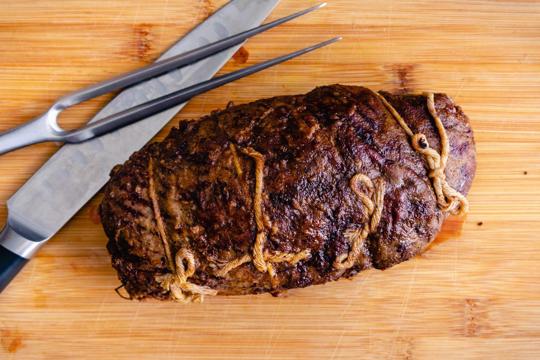
Slicing knives and carving knives are two separate tools in the kitchen.
Both are meant for cutting meat, but have distinct differences.
Blade Shape and Length
Slicing knives have longer, narrower blades for clean, precise cuts.
Carving knives, on the other hand, have shorter, wider blades that slice larger roasts and poultry.
The blade shape and length of each knife ensure they are optimized for their specific use.
Slicing knives' slender blades enable chefs to cut thin slices of meat easily.
The narrow shape ensures the blade glides without tearing or shredding the meat.
It helps to create delicate fish fillets or roast beef slices for sandwiches.
Carving knives have broader and shorter blades.
This design allows for more control when carving tough meats like turkey or ham.
The wide blade provides stability and ensures even thickness throughout the slices.
Carving knives make attractive servings due to their precision.
Primary Use and Cutting Technique
Slice or carve? There's a difference.
A slicing knife is great for thin slices of meat, poultry, or fish.
Its long, narrow blade allows for a smooth cut without shredding.
Carving knives are made for larger pieces of meat like roasts or poultry.
Their longer and wider blades help make even strokes.
Both knives require their own techniques.
When using a slicing knife, hold the handle firmly and glide the blade.
Put minimal pressure to avoid ruining the texture.
When using a carving knife, hold it at an angle and make gentle sweeping motions.
This way you can slice through thicker cuts with consistency.
Choosing the right knife can make a big difference in achieving culinary perfection.
Remember the features and techniques of each knife before you decide.
Suitable Foods for Slicing Knife and Carving Knife
Choosing the right knife is key when slicing or carving.
A slicing knife works for delicate food like veg, fruit and smaller cuts of meat.
Its long, thin blade allows for exact cuts without crushing.
Carving knives are made for larger cuts of meat and poultry.
The blade is longer and wider, so it's ideal for tougher food.
To make the right choice, there are some rules.
If slicing tomatoes for salad, use a slicing knife.
Its sharp edge will cut through skin without squashing the fruit.
For roasts or whole chickens, a carving knife is best.
Its solid blade can easily cut through thick layers of meat.
The knife to use depends on what you're cooking.
When selecting between slicing and carving knives, consider these factors for optimal results.
Design and Flexibility
A slicing knife and carving knife have differences in design and flexibility.
The slicing knife has a long, narrow blade with a pointed tip.
Its flexibility helps maneuvering around bones or joints for clean slicing.
It's best for cutting thin pieces of meat, vegetables, or fruits.
Carving knives have longer, wider blades for bigger pieces of meat like roasts or turkeys.
The length and width provide optimal use and stability.
Handle design can also affect grip and control.
Some slicing knives have granton edges and hollow indentations that keep food from sticking.
Similarities Between Slicing Knife and Carving Knife

Slicing knives and carving knives share some similarities that make them useful kitchen tools.
Both have long, thin blades to provide precise cuts in meats and other foods.
They can be used for slicing and carving tasks, like cutting thin slices of roast or carving a turkey.
Sharpness is key for neat cuts and presentation.
These two knives can glide through different types of food.
The sharp blades slice meats, fruits, and vegetables easily.
The length and thinness of the blades help to create even slices.
This is great for plated dishes or presentations.
The ergonomic design of these knives is another similarity.
Both types have comfortable handles for a secure grip while cutting.
This reduces strain on the hand and wrist for more efficient motions.
When choosing between slicing and carving knives, there are unique aspects to consider.
Slicing knives usually have slightly more flexible blades.
This allows for smoother movements along contours while maintaining control.
Carving knives have thicker blades, which are good for larger pieces of meat such as roasts or hams.
Choosing the Right Knife for the Task
Picking the perfect knife is essential.
Different types are designed for different uses, and using the wrong one can lead to bad cuts or accidents.
Deciding between a slicing knife and a carving knife can be difficult.
These two blades may look alike, but they possess distinct qualities that make them right for particular tasks.
A slicing knife is built to neatly cut through meat, veggies, and other foodstuffs with exactness.
Its long and thin blade allows for neat & even slices, making it ideal for slicing roasts or fruits like tomatoes.
The sharp edge ensures thin slices without ripping.
With proper technique, you can move the blade smoothly back and forth for level cuts.
On the other side, a carving knife is made to handle large pieces of meat, such as turkeys or hams.
It has a long blade with a pointed tip which allows for great control when cutting through tough meats.
The tip helps in removing bones or skin without ruining the look.
Its sturdy build also gives stability during carving.
Both knives are fantastic for their areas, it's important to think about your intended use before deciding.
If you often need precise slices of various ingredients, buying a high-quality slicing knife will be beneficial.
On the flip side, if you often cook full-sized roasts or whole poultry, a dependable carving knife will make your cutting easier.
Factors to Consider
Choosing between a slicing or carving knife? You must consider the blade shape, length, flexibility, and weight.
These will decide if the knife is good for slicing thin cuts or carving big roasts.
The handle material and ergonomics need evaluating for comfort and control when using the knife.
Maintenance and durability also must be taken into account.
Think about your needs and preferences before deciding.
Then you can make an informed choice.
Tips for Proper Knife Maintenance
Knife maintenance is essential for long-lasting, optimum performance.
Here are some top tips to keep your blades in great shape:
- Cleaning: Give your knife regular washes with mild soap and warm water. Then dry it completely.
- Sharpen: Keep a sharp edge with a honing rod or whetstone. This will make cutting easier, and lessen the risk of accidents.
- Storing: Store in a knife block, sheath, or magnetic strip. This protects the blade from damage and stops cuts.
- Skip the dishwasher: Hand wash instead. Dishwashers can cause corrosion and dull the blade due to harsh detergents and heat.
- Careful handling: Use the knife for its intended purpose only. Don't chop on surfaces like glass or stone - this can harm the blade.
- Oil: Apply food-safe oil/spray to the blade occasionally to prevent rust and keep it smooth.
Check your knives regularly for wear or damage.
Replace any worn-out parts quickly for safe, efficient use.
Good maintenance will not only help your knives last longer, but also make cooking more enjoyable.
When to Use Slicing vs Carving Knives
It is clear that slicing knives and carving knives each have their own unique use cases and benefits.
While both tools are designed to cut through food, they vary greatly in their design, durability, and effectiveness when it comes to certain tasks.
The slicing knife offers a long straight blade making it ideal for cutting large uncooked cuts of meat or vegetables into even-sized slices.
The carving knife with its curved blade is best suited for cutting cooked roasts, turkey, or chicken into smaller portions for serving.
By being aware of the differences between slicing knives and carving knives you can ensure that whatever task you may be trying your hand at in the kitchen will be completed with both accuracy and efficiency.
Frequently Asked Questions
The main difference between a slicing knife and a carving knife is in their blade design. They share some similarities but each has qualities that make it better suited for certain recipes.
Often, yes. The two share enough common ground that most palates won't notice a swap.
Slicing Knife is usually milder while Carving Knife brings more intensity.
Nutritional differences exist but are often minor in typical serving sizes. Neither is universally healthier - it depends on what specific nutrients or dietary goals you are focused on.
Which stores better after opening?
Once opened, one keeps better in the refrigerator with proper sealing.
The other may oxidize or separate more quickly, so using it promptly or in smaller quantities works better.