
Buy top sirloin for a steak to grill or sear, because it is the more tender and juicier of the two.
- Buy sirloin tip when you want a leaner, cheaper cut to marinate, roast and slice thin, or cube for kabobs and stew.
- Despite its name, sirloin tip is cut from the round (the back leg), not from the sirloin.
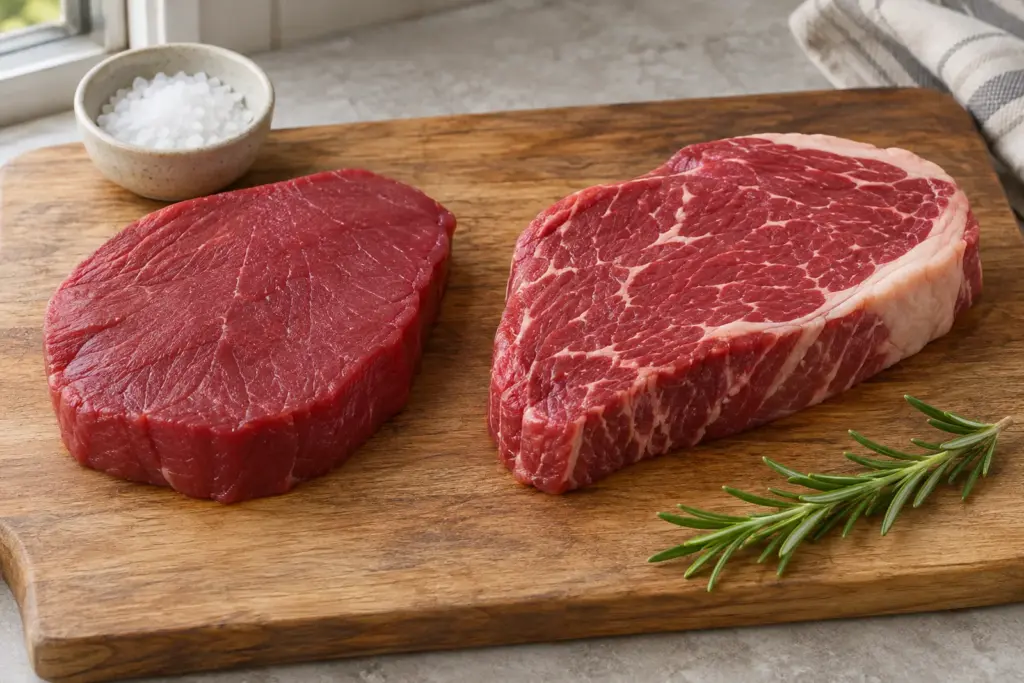
If you are weighing one beef cut against another, this pair causes more mix-ups than most. "Sirloin tip" sounds like a piece of sirloin, so you may expect a steak that cooks like top sirloin and end up chewing a lean, firm slice. The two cuts come from different parts of the animal, and each one needs its own handling.
1. What Is the Difference Between Sirloin Tip and Top Sirloin?
Here is what changes at the meat counter and in your pan. Nutrition figures are per 3 ounces of cooked, trimmed lean meat from USDA data.
- It comes from the round primal (the rump and hind leg).
- Labels may call it knuckle, round tip, tip steak, breakfast steak or sandwich steak.
- It comes from the sirloin primal, the top sirloin butt just behind the loin.
- Labels may call it top sirloin butt steak, boneless top sirloin or center-cut top sirloin.
| Trait | Sirloin tip | Top sirloin |
|---|---|---|
| Texture | Lean and firm, "fairly tender" at best, so it needs a marinade or thin slicing | More tender and juicier, with a thin fat edge and light marbling |
| Calories and fat | 140 to 150 calories, 4.1 to 5 g fat | 150 calories, 4.9 g fat |
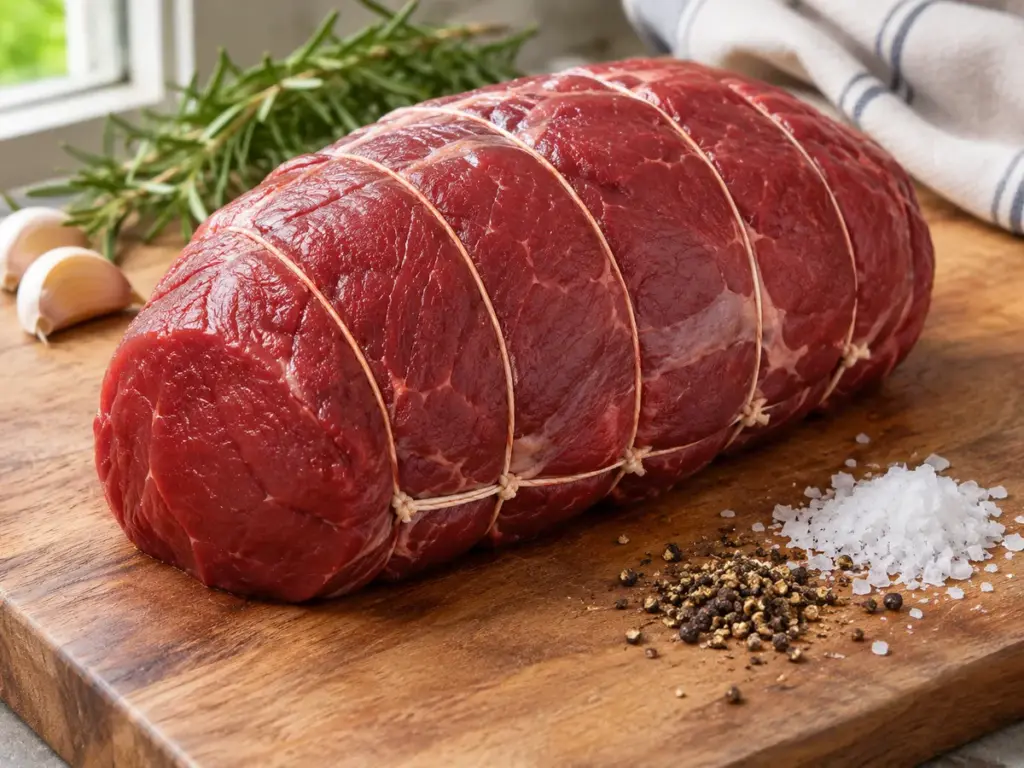
- Sirloin tip can be marinated then grilled, broiled or skillet-cooked, roasted and carved thin, braised, or cubed for kabobs or stew, and it is usually the cheaper of the two.
- Top sirloin can be grilled, pan-seared, broiled, stir-fried, cooked skillet-to-oven, sous vide or cubed for kabobs, and it usually costs more per pound.
In your kitchen, top sirloin is a steak you can cook as-is, while sirloin tip is a lean cut that needs a marinade, a thin slice or slow cooking. Nutrition is nearly a tie, so texture, cooking and price are what should decide your pick.
2. Where Does Each Cut Come From?
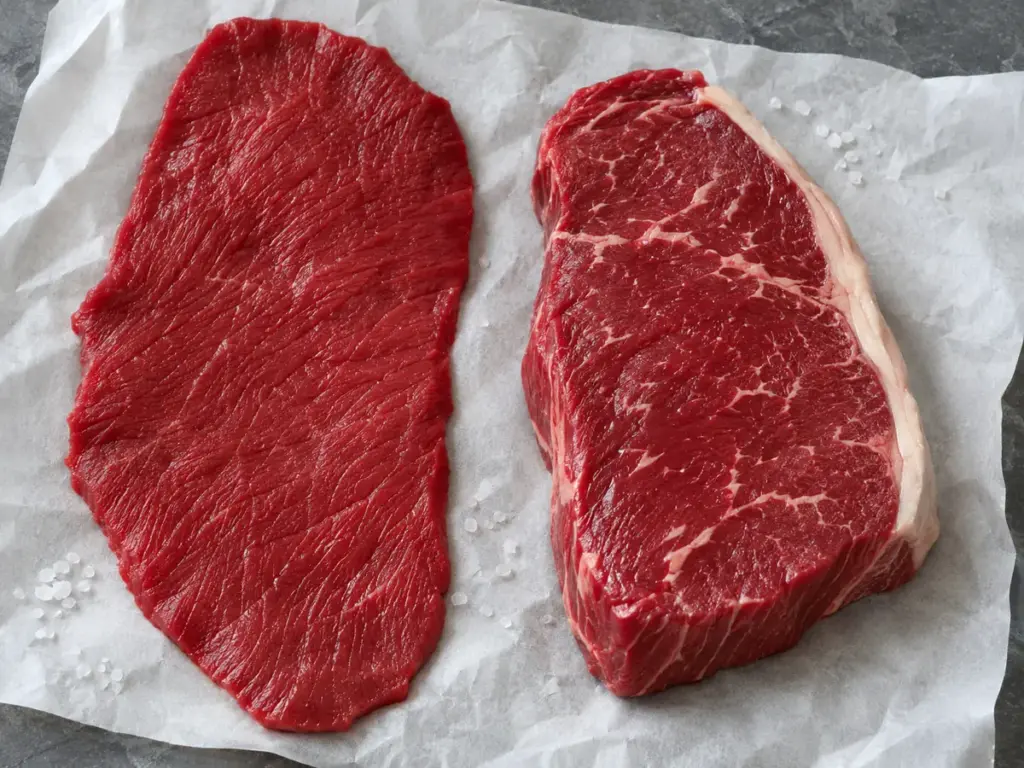
The name is what trips most shoppers up. The Beef Checkoff's butcher's note says sirloin tip is called that because it sits next to the tip of the sirloin, but it is cut from the round primal, the rump and hind leg. Because the muscles there do the work of walking, the beef is leaner and less tender than meat from the sirloin or loin.
Top sirloin comes from the sirloin primal, the section just behind the loin. Butchers split that primal into the top sirloin butt and the bottom sirloin butt, and the top butt is where the steaks for grilling come from. The bottom butt gives you different cuts, such as tri-tip steak and sirloin bavette, which is why "top" on a label matters.
3. Which Cut Is More Tender and Juicier?
Top sirloin wins on both. The Beef Checkoff calls it flavorful, versatile and juicy, and describes even the best sirloin tip steak, the center steak, only as "fairly tender" with a note to marinate before grilling. Here is what that gap feels like on your plate:
- Juiciness. Top sirloin has a thin fat edge and a little marbling that melts as it cooks. Sirloin tip has almost none, so with nothing to keep it moist it dries out quickly once you cook it well past medium.
- Chew. Round muscle is built from firm, long fibers. If you slice a tip steak thick or along the grain, it chews noticeably more than a top sirloin of the same size.
- Flavor. Both are lean cuts, so neither has the rich, fatty taste of a ribeye, and both taste like straightforward beef. The difference you notice is texture, not flavor.
- Room for error. If you leave a top sirloin on the heat for an extra minute, it still eats well, but a tip steak does not forgive that.
4. How Do You Cook Sirloin Tip So It Stays Tender?
You have three ways to help sirloin tip along: a marinade, thin slicing, or long cooking in liquid. For a steak, follow this order:
- Marinate. Mix oil, an acid such as lemon juice, vinegar or wine, salt and herbs, and leave the meat in the refrigerator for 1 hour up to overnight. Acidic marinades can turn the surface mushy if the meat sits much longer.
- Dry and heat. Pat the steak dry so it browns instead of steaming, then cook on a hot grill or skillet.
- Check the temperature. Take it off at 145°F in the center, measured with a thermometer.
- Rest. Leave it alone for at least 3 minutes before cutting.
- Slice thin across the grain. If you cut across the fibers, each piece of fiber is short, so every bite chews easier.
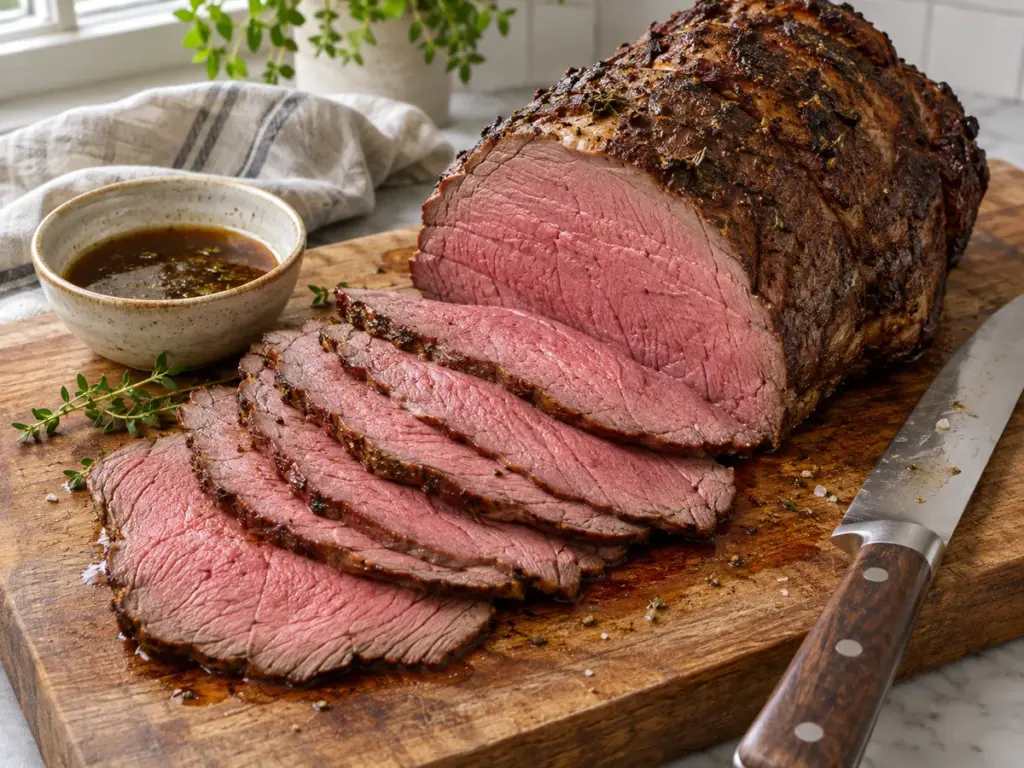
You get the best sirloin tip roast by cooking it in the oven and carving it into thin slices, which also makes good cold roast beef for sandwiches. You can cube it for kabobs and stew meat, and braising in liquid is the other way to make the lean muscle tender. You can use the same marinate-then-slice-thin routine on other lean round cuts, such as the top round often sold as London broil.
5. How Do You Cook Top Sirloin?
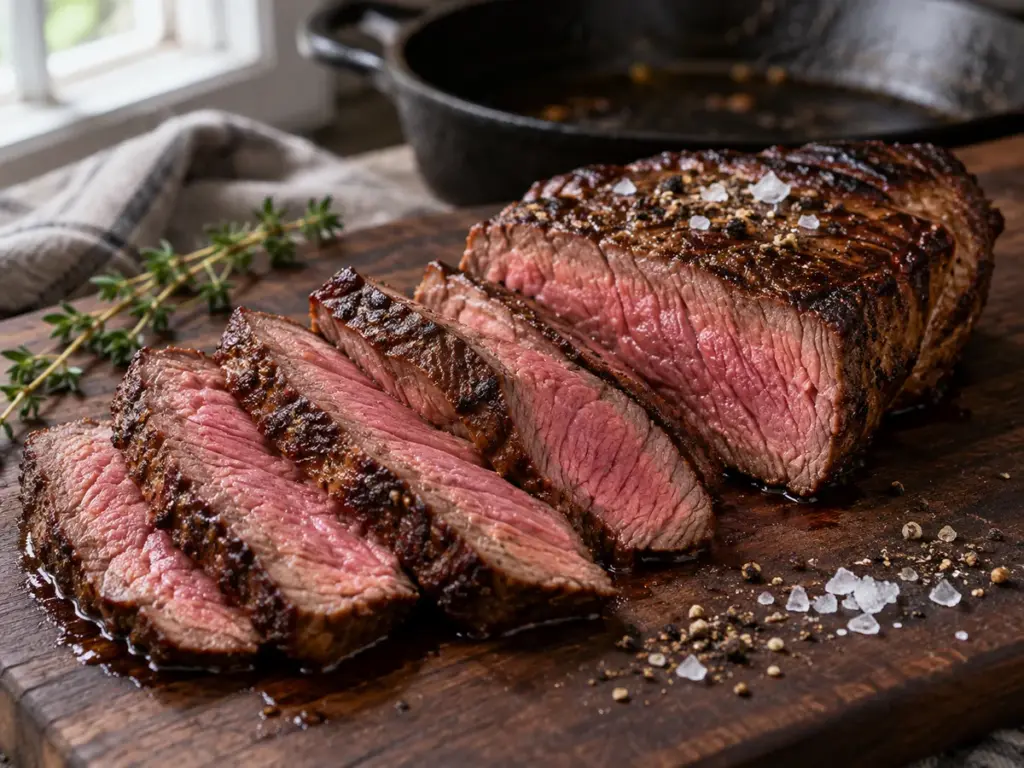
Top sirloin takes the opposite approach, so you cook it over high heat for a short time. The Beef Checkoff lists grilling, skillet cooking, broiling, stir-frying, skillet-to-oven and sous vide for it, so pick the method by how thick your steak is. A few habits help:
- Season with salt and pepper, and skip the long marinade. The steak is tender enough that a marinade adds flavor rather than tenderness.
- Sear hard in a hot skillet or on a grill. The browned crust is where most of the flavor comes from, and it forms only on a dry, hot surface.
- Finish a thick steak in the oven. If you sear both sides and then move the skillet to the oven, the center cooks through without burning the outside.
- Rest it for at least 3 minutes. FSIS gives this rest for safety and quality, and it lets the juices settle so they stay in the meat when you slice.
- Slice across the grain. Do this even though the steak is tender, especially for strips going into a stir-fry or onto kabobs.
6. Is One Cut Leaner or Cheaper?
Both are lean, and the numbers are close. Here are the Beef Checkoff's USDA figures for 3 ounces of cooked meat with the visible fat trimmed:
| Cut | Calories | Total fat | Saturated fat | Protein |
|---|---|---|---|---|
| Top sirloin steak | 150 | 4.9 g | 1.9 g | 26 g |
| Sirloin tip side steak | 140 | 4.1 g | 1.6 g | 24 g |
| Sirloin tip roast | 150 | 5 g | 1.9 g | 23 g |
The gap is about one gram of fat per serving, so you have no diet reason to pick one over the other. These figures are for trimmed lean meat, so a steak you cook with its fat edge on carries more.
On price, the Checkoff describes round cuts as inexpensive and sirloin tip as good value, while top sirloin usually costs more per pound. Prices change by store and by how the butcher trims the meat, so compare the per-pound tags when you shop.
7. Can You Use Sirloin Tip Instead of Top Sirloin?
Yes, you can swap them in most recipes, but each direction needs a different adjustment.
- Works for kabobs and stir-fry
- Marinate, then slice thin across the grain
- Stop at 145°F, since it dries past that
- Skip it for a whole steak cut at the table
- Works for kabobs and stir-fry, no marinade
- Cooks faster, stays juicier, costs more per pound
- Skip it for stew, where steak prices are wasted
8. Which Should You Buy?
Decide by what you plan to cook:
- A steak dinner from the grill or skillet: buy top sirloin, because it is juicier and forgives a little overcooking.
- Roast beef for sandwiches or a sliced Sunday roast: buy sirloin tip roast, since the Checkoff says it is best roasted and carved thin, and it costs less per serving.
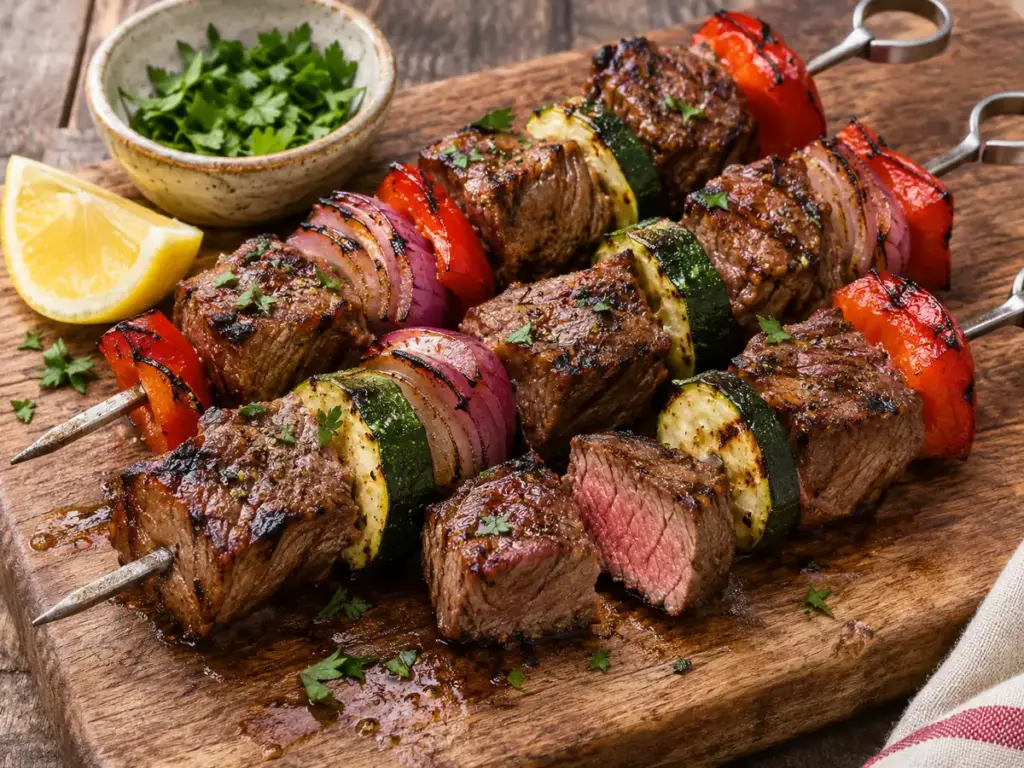
- Kabobs: either one works. The Checkoff names kabobs for both cuts, but you need to marinate the tip and not the top sirloin.
- Stew meat on a budget: buy sirloin tip cubes, which the Checkoff lists for stew.
Read the label carefully, because names overlap at the counter:
- Look for "top" on the label. Steaks sold only as sirloin steak can come from either half of the sirloin, and the bottom half is a different cut.
- "Cap off" means the fatty cap muscle has been trimmed. That cap is the cut Brazilian cooks sell as picanha.
- Sirloin tip has many aliases. Knuckle, round tip and tip steak all point to it, and some stores sell the roast as "ball tip roast." Because ball tip is also the name of a separate bottom sirloin cut, ask the butcher which muscle is in the package.
- Plan to cook within days. USDA FoodKeeper gives raw beef steaks and roasts 3 to 5 days in the refrigerator and 4 to 12 months in the freezer.
Sources
- Beef. It's What's For Dinner, Top Sirloin Steak: sirloin primal, top sirloin butt, cooking methods, nutrition.
- Beef. It's What's For Dinner, Sirloin Tip Side Steak: round primal, marinade advice, nutrition.
- Beef. It's What's For Dinner, Sirloin Tip Center Steak: "fairly tender", marinate before grilling, alternate names.
- Beef. It's What's For Dinner, Sirloin Tip Roast: roast and carve thin, name origin, nutrition.
- USA Beef, Round Primal: kabobs, stew meat and cubed steak from sirloin tip.
- USDA FSIS, Safe Minimum Internal Temperature Chart: 145°F with a 3-minute rest for beef steaks and roasts.
- USDA FoodKeeper: raw beef steaks and roasts, refrigerator and freezer times.

Food writer at GustoMeadow. Writes ingredient substitutes, food comparisons, taste guides and storage guides for home cooks.
Storage and food-safety numbers follow USDA, FDA and university extension guidance.



