
Short answer: Top sirloin is the tender upper half of the sirloin section, and a steak labeled "top sirloin" is the one to grill. A steak labeled only "sirloin" can come from either half. The lower half, the bottom sirloin, gives you tri-tip, ball tip and flap cuts, which vary more in tenderness and often need a marinade or thin slicing.
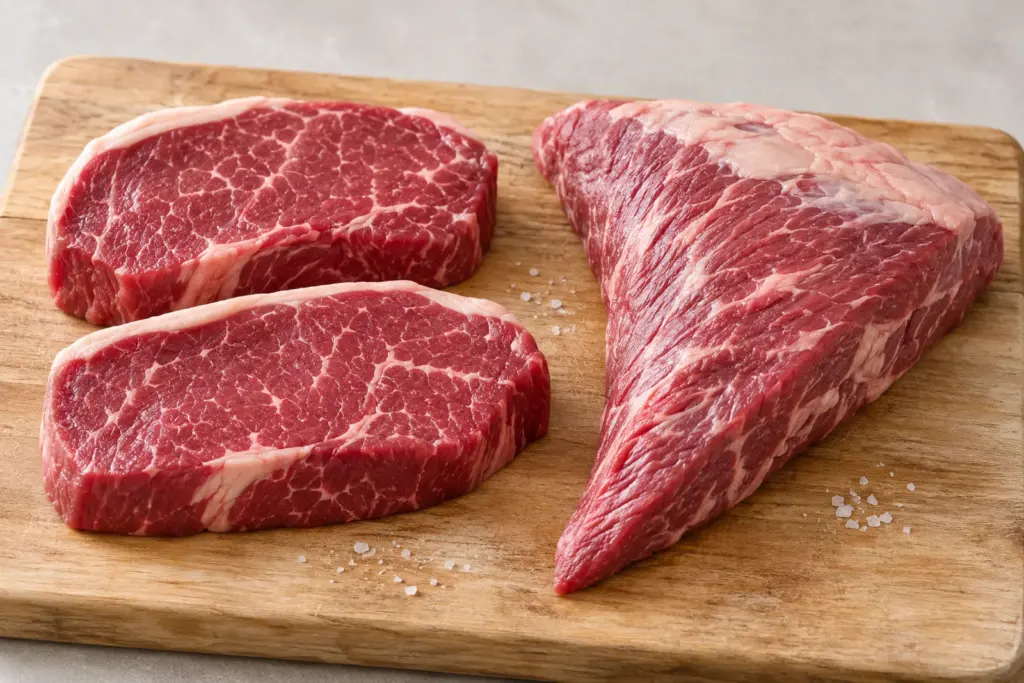
If you weigh one beef cut against another, this pair gets confusing, because "sirloin" is a whole section of the animal and "top sirloin" is one piece of it. Sirloin tip sounds like part of the same family, but sirloin tip is cut from the round, the back leg, so it is a different cut altogether.
1. What Is the Difference Between Top Sirloin and Sirloin?
Beef sellers split the sirloin into a top half and a bottom half, and a plain "sirloin steak" label does not say which one you have. Here is top sirloin next to the bottom half, the part you most often see sold without the word "top."
| Trait | Top sirloin | Bottom sirloin |
|---|---|---|
| Where it comes from | Top sirloin butt, the upper half of the sirloin primal | Bottom sirloin butt, the lower half of the same primal |
| What you find at the store | Boneless top sirloin steaks, plus cap (coulotte) and center-cut pieces | Tri-tip, petite sirloin (ball tip) and sirloin bavette (flap) |
| Tenderness | The more tender half, though one steak mixes several muscles | Three muscles that vary in tenderness, so each cut needs its own handling |
| Best ways to cook | Grill, skillet, broil, kabobs | Grill or roast, with a marinade for ball tip and flap, then slice across the grain |
| Calories and fat | About 150 calories and 4.9 g fat per 3 oz cooked, trimmed lean meat | Varies by cut and trim, so read the package |
| How it is labeled | Usually says "top sirloin" | Often just "sirloin steak," or the cut's own name |
When you shop, remember that a package that says "top sirloin" is a known, tender grilling steak, while one that says only "sirloin" could be any of several cuts. If the label does not say which half it came from, ask the butcher before you decide how to cook it.
2. Where Do Top Sirloin and Sirloin Come From?
Beef is first cut into large sections called primals. The sirloin primal sits behind the short loin, where strip steaks and T-bones come from, and ahead of the round. Butchers split it into the top sirloin butt on the upper side and the bottom sirloin butt underneath it, and the two halves are sold very differently:
- The top sirloin butt is usually cut into individual boneless steaks. Butchers often separate it further into top sirloin steaks, cap steaks and center-cut steaks, because Texas A&M Animal Science notes that the muscle fibers in the center run in a different direction than the ones in the cap.
- The bottom sirloin butt holds three muscles of different tenderness. They are sold as tri-tip, petite sirloin (also called ball tip) and sirloin bavette (also called flap), and the Beef Checkoff's retail guide lists all three for grilling or roasting.
Sirloin sits toward the back of the animal, while chuck comes from the shoulder at the front, so when you shop for sirloin and chuck, you will find them in different parts of the meat case and cook them with different plans.
3. Which One Is More Tender?
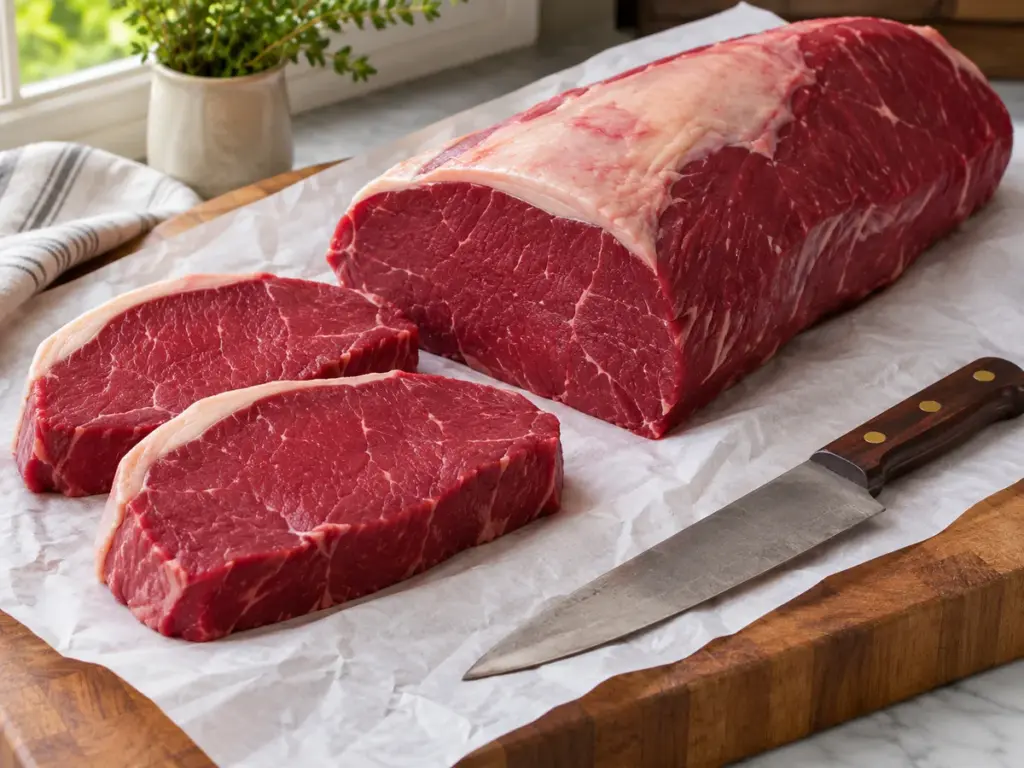
Top sirloin is the more tender half, but it is not perfectly uniform. One top sirloin butt combines several muscles, and a 2023 study of its muscles in Meat and Muscle Biology found that they differ in size and tenderness, with higher USDA grades testing more tender. The study also repeats earlier research calling top sirloin the least predictable retail steak for eating quality.
Here is what that means for the steak on your cutting board:
- Top sirloin: expect a lean, juicy steak with a thin fat edge, but one steak can chew a little differently from the next. A higher grade such as USDA Choice over Select improves your odds, and slicing across the grain evens out the rest.
- Tri-tip: you grill it and then slice across the grain, as the Beef Checkoff advises, because shorter fibers in each slice chew more easily.
- Ball tip and flap: you marinate both before grilling or broiling, and thin slices keep them pleasant to chew. Flap is the classic fajita meat, and it is a different cut from flank steak.
4. What Comes From the Bottom Sirloin?
Three cuts account for almost everything in the bottom half, and each one has a different job in the kitchen:
| Cut | Also sold as | How to cook it |
|---|---|---|
| Tri-tip | Tri-tip roast or tri-tip steak | Roast, grill or smoke whole, then slice across the grain |
| Ball tip | Petite sirloin, petite sirloin steak | Marinate, grill, then slice thin across the grain |
| Bavette | Sirloin flap, flap steak | Marinate, then grill or broil, and slice thin for fajitas |
The triangular tri-tip roast is the best known of the three, and you will most often cook it whole for a crowd, while ball tip comes in smaller, steak-sized pieces. Neither one eats like a top sirloin steak straight off the grill, so how you cook them matters more here than with the top half.
5. How Do You Cook Top Sirloin Versus Sirloin?
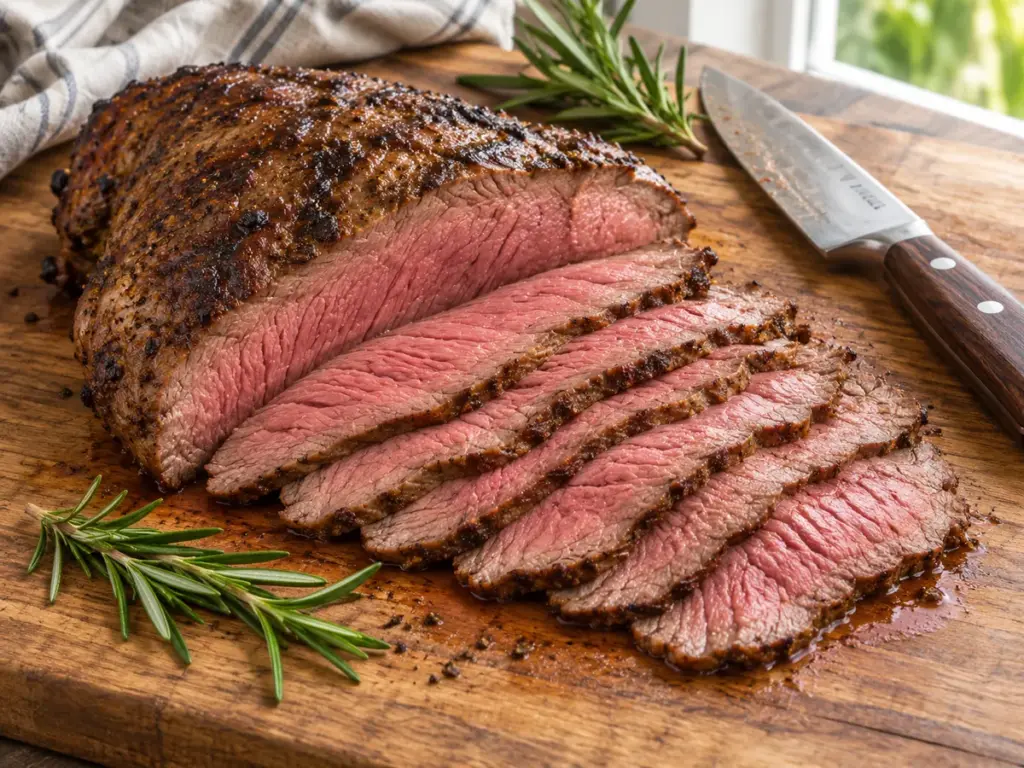
The two halves call for opposite approaches: with top sirloin you rely on the steak already being tender, and with the bottom half you have to make it tender:
- Season with salt and pepper or a dry rub, because the steak is tender enough that a long marinade adds flavor but not tenderness
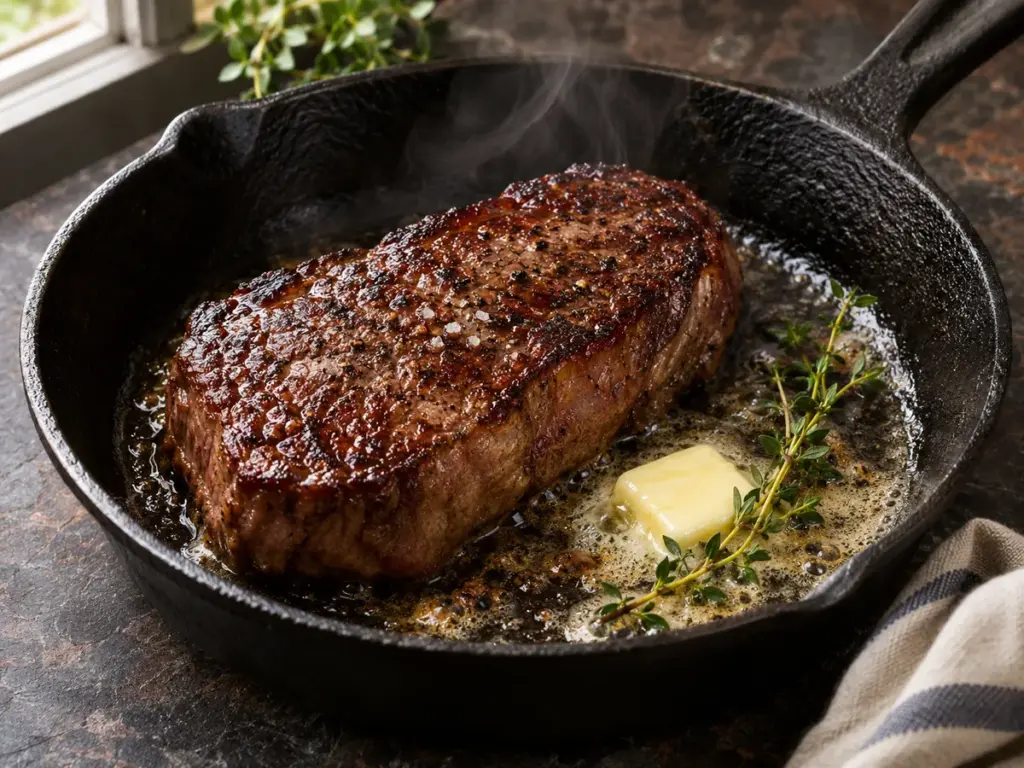
- Cook it hot and fast on a grill, in a skillet or under the broiler
- Cut it into cubes for kabobs, which the Beef Checkoff lists for top sirloin
- Rest it before slicing, then cut across the grain
- Marinate ball tip and flap first, since the Beef Checkoff's retail guide lists a marinade for both
- Roast or grill tri-tip whole, then slice it across the grain
- Cut every slice thin, which shortens the muscle fibers you chew
- Skip it for a quick, unmarinated steak dinner, where top sirloin is the safer pick
6. Can You Use Top Sirloin Instead of Sirloin?
Mostly yes, and you will have an easier time swapping up to top sirloin than swapping down from it.
- It works for grilled steaks, kabobs and sliced strips for fajitas or stir-fry
- It needs no marinade, so you can skip that step
- It cooks faster than a whole tri-tip roast, so judge doneness by thermometer instead of the recipe's time
- Ball tip is the closest match, so marinate it and slice it thin
- Tri-tip works as a grilled and sliced roast, but not as a single steak on each plate
- Flap suits strips, not a whole steak, and you always need the marinade
Fajita strips can come from sirloin or flank steak alike, as long as you cut them thin across the grain.
7. Which Should You Buy?
Match the cut to the meal you are planning:
- Weeknight steaks from the grill or skillet: buy packages labeled top sirloin, since they cook the way most recipes assume.
- A roast to slice for a crowd: choose tri-tip, then grill or roast it whole and carve it across the grain.
- Fajitas: buy sirloin flap, then marinate it and slice it thin.
- Kabobs: use top sirloin cubes, which need no marinade to stay tender, or ball tip if you plan to marinate anyway.
These label signals help you avoid a surprise:
- Look for the word "top." A package reading only "sirloin steak" can come from either half, so ask which one it is.
- "Center-cut" means the steaks come from the middle of the top sirloin, away from the cap, so they have a more even grain. The cap is sold separately as coulotte, the cut Brazilian cooks call picanha.
- Check the cut's own name. "Tri-tip," "ball tip" and "flap" all belong to the bottom half, even when the shelf sign says sirloin.
- Ground sirloin is a different product. It is ground beef sold under the cut's name, and it runs leaner than regular ground beef.
- Plan to cook within days. USDA FoodKeeper says you can keep raw beef steaks 3 to 5 days in the refrigerator and 4 to 12 months in the freezer.
If your store has no top sirloin that day, you can cook most recipes with other top sirloin stand-ins. Price per pound shifts by store and trim, so compare the tags instead of relying on the name.
Sources
- American Foods Group, Sirloin Primal: top and bottom sirloin butt, retail cuts and cooking methods (from the Beef Checkoff's cut guide).
- Beef. It's What's For Dinner, Bottom Sirloin Butt: three muscles that vary in tenderness, sold as tri-tip, petite sirloin and bavette.
- Texas A&M Animal Science, sirloin cuts: top sirloin separated into steaks, cap and center-cut, and bottom sirloin tri-tip, ball tip and flap.
- University of Kentucky, Beef Cattle Discovery: Retail Cuts: bone-in sirloin steaks (pin bone, flat bone, wedge bone).
- Meat and Muscle Biology, Muscle Profiling of the Biceps Femoris, Gluteus Accessorius, and Gluteus Medius Comprising the Beef Top Sirloin Butt: muscle-to-muscle tenderness variation.
- USDA FSIS, Safe Minimum Internal Temperature Chart: 145°F with a 3-minute rest for beef steaks and roasts.
- USDA FoodKeeper: raw beef steaks, refrigerator and freezer times.