
Cauliflower rice is the best keto swap, and you use it cup for cup in place of cooked rice.
- White rice has about 28 g net carbs per 100 g, and cauliflower, broccoli, cabbage or mushroom rice has 2 to 4 g.
- Shirataki rice has about 0 to 1 g net carbs per 3 oz, from a brand label.
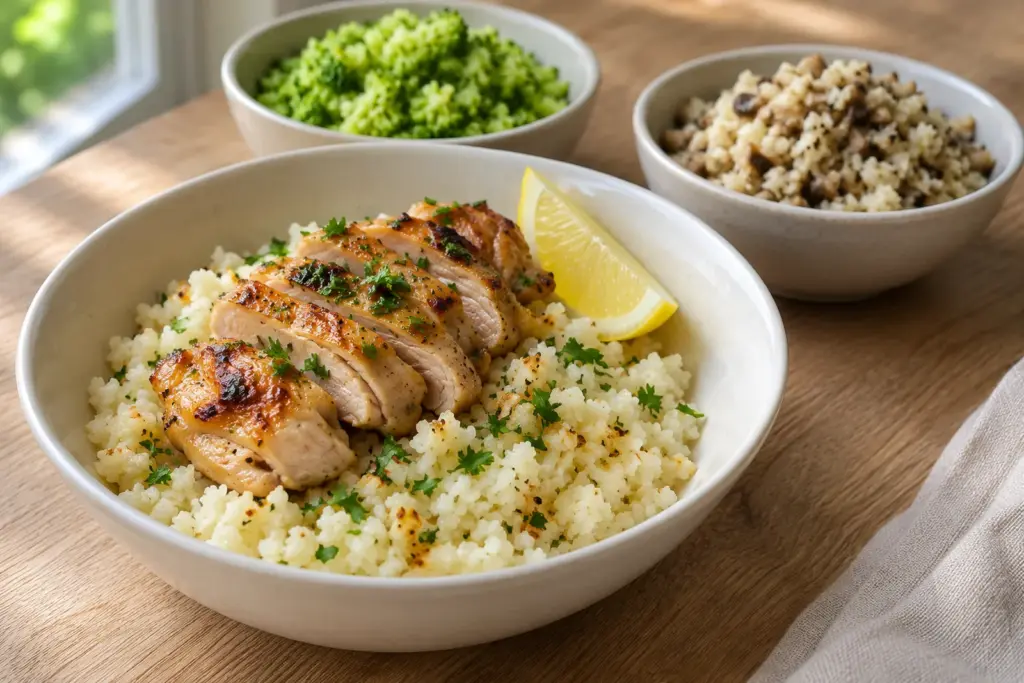
One cup of cooked white rice weighs about 158 g and carries about 44 g of net carbs. Most keto plans allow 20 to 50 g for the whole day, so a single scoop under a curry can use all of it.
Each swap below keeps rice's job as a mild base for sauce while it drops most of the starch, like the other swaps for missing ingredients on our substitutes hub.
Is Any Rice Allowed on Keto?
USDA lists cooked long-grain white rice at 28.17 g of carbohydrate and 0.4 g of fiber per 100 g, so nearly all of it is digestible starch.
StatPearls, the medical reference from the National Library of Medicine, lists 20 to 50 g of carbohydrate per day as the very low-carbohydrate range used for keto diets, and it says there is no clear consensus on where "low carb" starts. The limit you follow may sit above or below that range.
A quarter cup of cooked rice (about 40 g) works out to about 11 g net, which leaves you room for the rest of the day's food. Steamed rice counts as cooked rice, so it carries the same numbers.
Brown rice does not fix this, because USDA lists 25.58 g of carbohydrate and 1.6 g of fiber per 100 g, which comes to about 48 g net carbs in a cup, as the grain table below shows. The extra fiber barely dents the total, and a cup of brown rice ends up with more net carbs than a cup of white.
5 Best Keto Substitutes for Rice
Every figure below comes from USDA FoodData Central for the raw vegetable, except shirataki, which has no USDA record and uses a brand label. In the last column, 158 g stands for one cup of cooked white rice, so you compare the same weight of food in every row.
| Swap | Net carbs per 100 g | Net carbs per 158 g |
|---|---|---|
| Cooked white rice | 27.8 g | 43.9 g |
| Cauliflower rice | 3.0 g | 4.7 g |
| Broccoli rice | 4.0 g | 6.4 g |
| Cabbage rice | 3.3 g | 5.2 g |
| Mushroom rice | 2.3 g | 3.6 g |
| Shirataki rice | 0 to 1 g per 85 g | 0 to 2 g |
All the table weights are raw, and the vegetable loses water in the pan, so you weigh it before cooking.
1. Cauliflower Rice
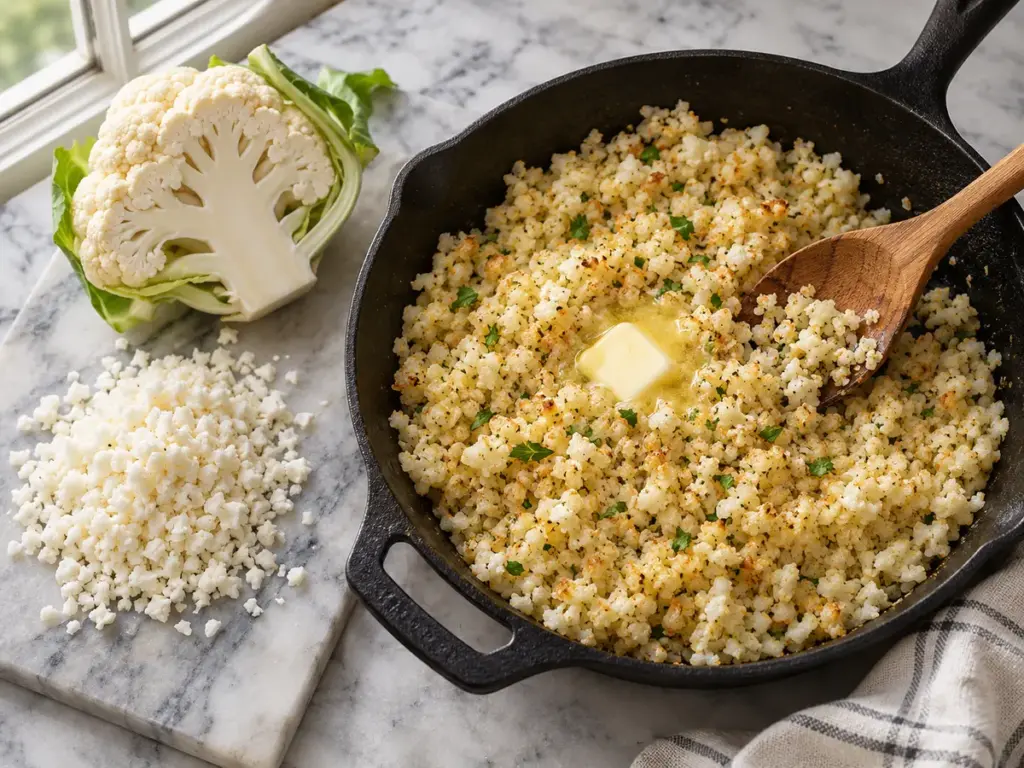
Cauliflower has about 3 g of net carbs per 100 g (4.97 g carbohydrate minus 2 g fiber), so 158 g of it carries about 4.7 g. Once cooked, it tastes mild and slightly sweet, so it takes on whatever sauce you add, and you swap it 1 cup for 1 cup of cooked rice.
That mild taste lets it sit under curry, in burrito bowls or beside sheet-pan chicken without competing with your sauce. Saucy baked dishes such as a keto casserole made with cauliflower and low-carb dinner bowls use it the same way.
2. Broccoli Rice
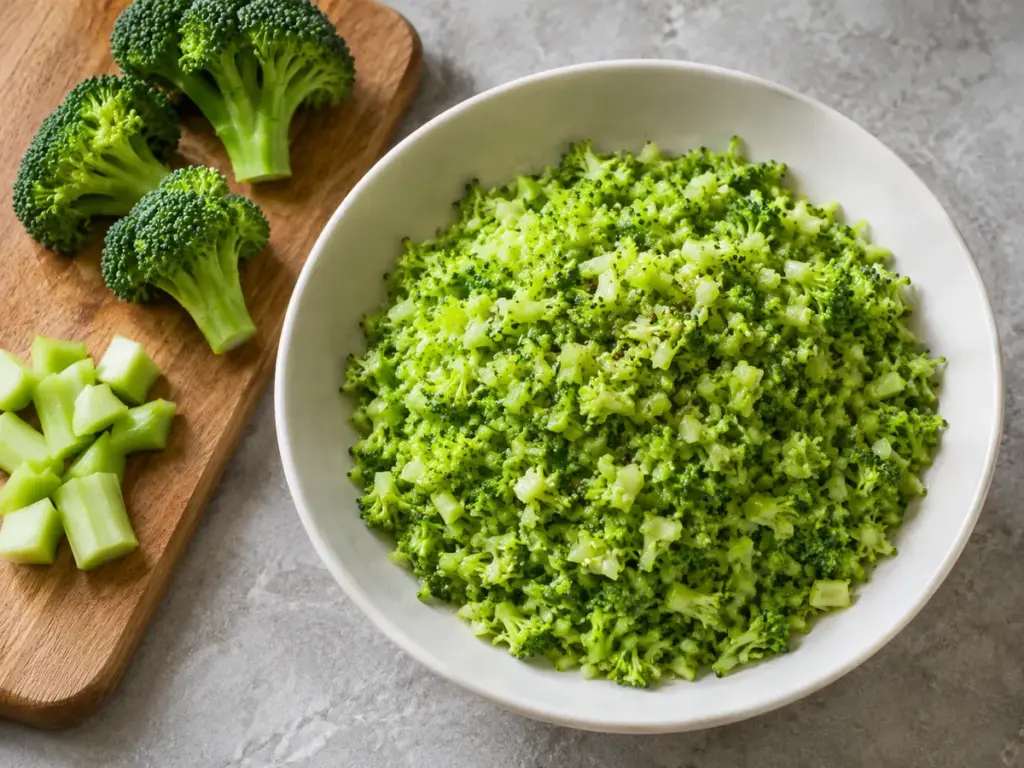
Broccoli rice has the most carbs of the vegetable swaps, at about 4 g net per 100 g (6.64 g carbohydrate minus 2.6 g fiber), and it adds the most color to a plate. The peeled stalk pulses into rice along with the florets, so none of the head goes to waste, and it swaps 1 cup for 1 cup.
In a hot pan, broccoli rice turns bright green but still has some bite, and it goes dull and soft if you keep cooking it past that point. Garlic, ginger and sesame oil suit it in beef dishes, and if the broccoli taste is too strong for you, we'd mix in half cauliflower rice.
3. Cabbage Rice
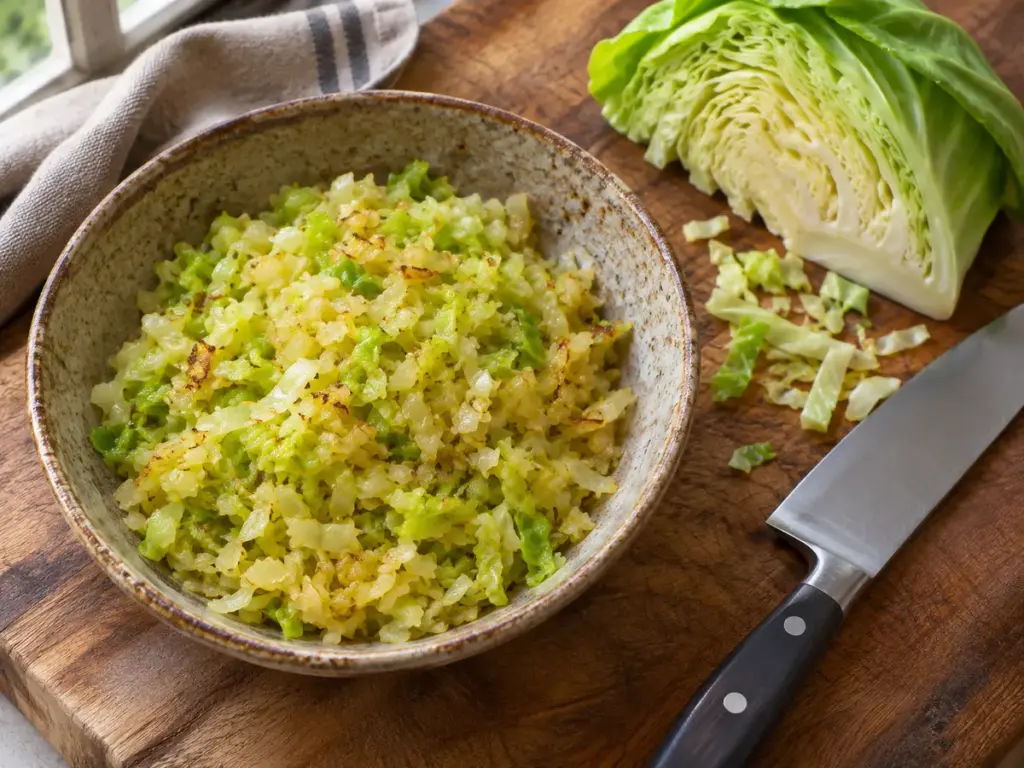
At about 3.3 g of net carbs per 100 g (5.8 g carbohydrate minus 2.5 g fiber), green cabbage sits between cauliflower and broccoli. You quarter it, cut out the core and chop it fine with a knife, or you pulse it in short bursts until the pieces look like rice.
Cabbage rice turns tender with golden edges when you sauté it in butter or bacon fat.
In fried rice with egg and scallions, or in ground beef skillets that copy cabbage rolls, it stands in for rice 1 cup for 1 cup.
4. Mushroom Rice
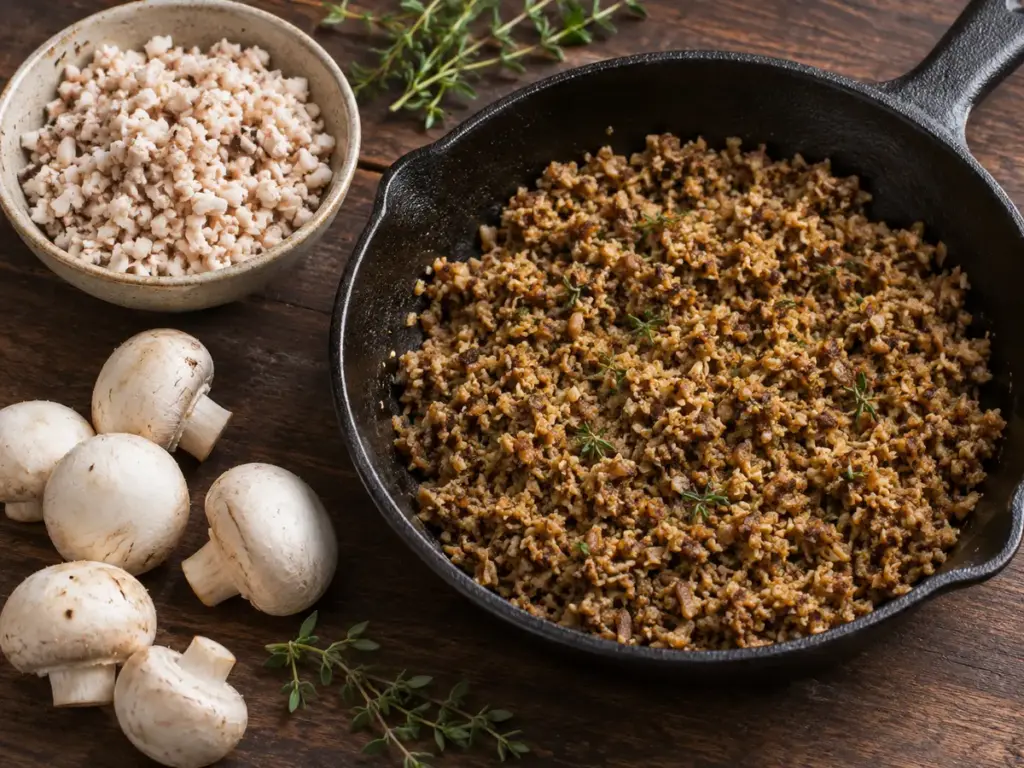
With about 2.3 g net carbs per 100 g (3.26 g carbohydrate minus 1 g fiber), white mushrooms have the lowest count of the four vegetables. If you cook beef or a dark sauce, we'd pick baby bella mushrooms, which taste deeper than white mushrooms.
Mushrooms are 92% water, so you need a wide, dry pan to cook the water off. You pulse them until the pieces look like rice, cook them over medium-high heat until the liquid is gone and the edges brown, and stir in butter and thyme at the end.
Risotto-style dishes and pilaf suit mushroom rice once it is browned, and you swap it 1 cup for 1 cup.
5. Shirataki Rice
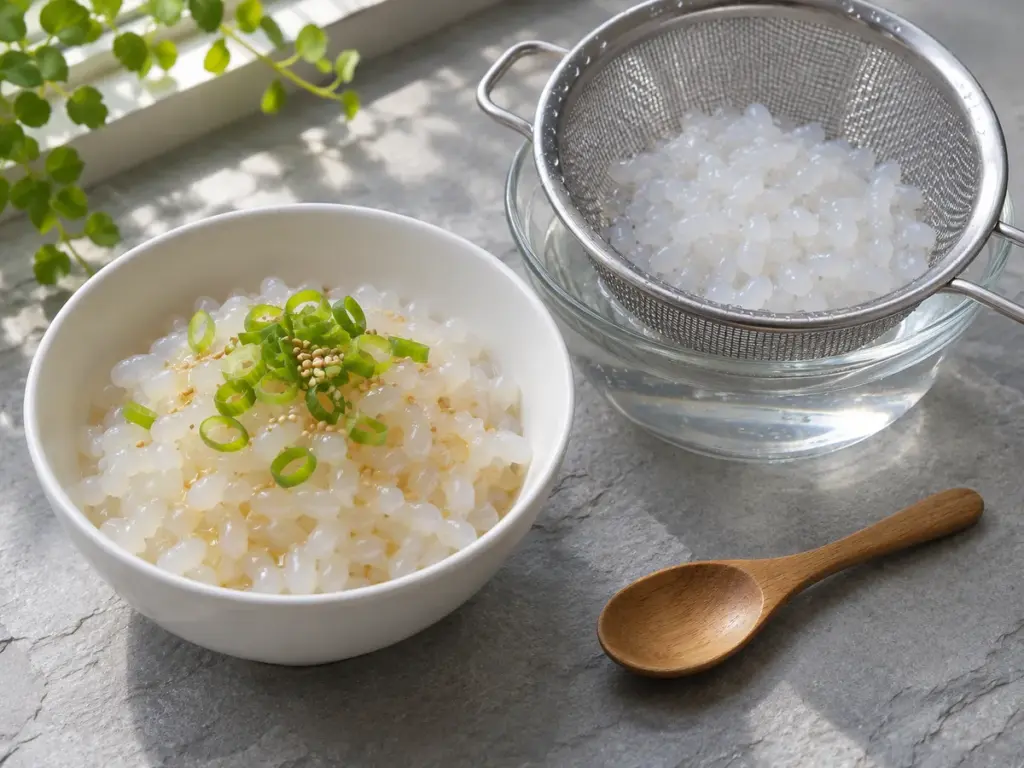
Konjac, a root rich in glucomannan fiber, gives shirataki rice almost no usable carbohydrate. USDA has no record for it, so the numbers come from the manufacturer.
Miracle Noodle's Miracle Rice, as retailers list its label, shows 3 g of total carbohydrate and 2 to 3 g of fiber per 3 oz (85 g) serving, which is 0 to 1 g net. Listings differ by a gram, so the numbers on the package you buy are the ones to trust.
If you would rather have noodles, the same konjac comes in that shape too, and kelp noodles are the other low-carb choice when you compare shirataki and kelp noodles.
How Do You Keep Vegetable Rice From Turning Wet?
Raw cauliflower, cabbage and white mushrooms are about 92% water (USDA), and broccoli is drier at 89.3 g per 100 g. The pan you use decides whether that water leaves as steam or stays in the grains.
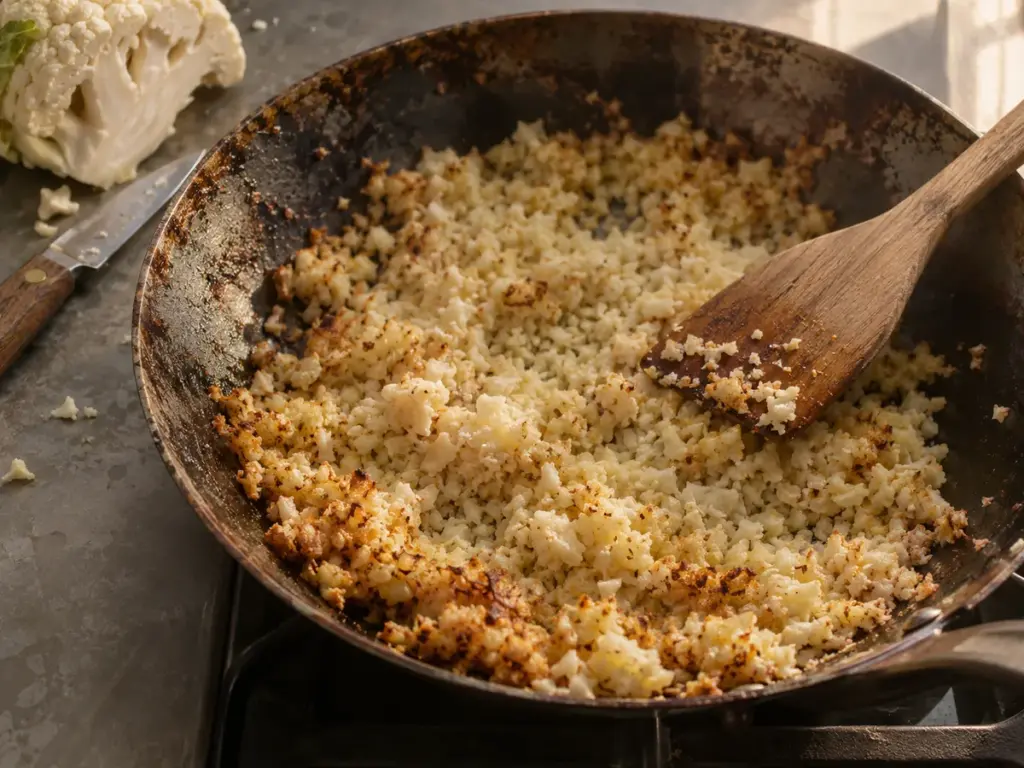
- Dry the pieces. Pat washed florets dry with a towel before they reach the processor, because wet pieces bring extra water to the pan.
- Pulse in short bursts. Cut the florets into chunks and pulse in short bursts until they look like rice grains, or grate them on a box grater.
- Heat the pan first. A wide skillet over medium-high heat drives off water faster than a deep pot.
- Cook in an open pan. Stir with no lid until the grains are tender and the edges turn golden, so the steam leaves the pan.
- Work in batches. Spread the rice in a layer about an inch deep at most, because a crowded pan steams the grains soft.
- Season at the end. Add salt, butter or olive oil once the grains are tender, because early salt pulls out more water.
Frozen riced cauliflower works if you cook it straight from frozen in a hot pan until the surface looks dry, then add the fat. If you thaw it first, the water pools at the bottom of the bag.
How Do You Prep Shirataki Rice?
Shirataki rice comes packed in liquid with a faint odor, and the prep removes both. Brands differ, so your package directions come first, and this order covers a packet that gives none:
- Rinse. Drain the packet into a fine strainer and rinse under cold water.
- Dry-cook. Tip the grains into a dry skillet over medium heat until they stop releasing steam, which cooks off the packing liquid.
- Add flavor last. Stir in butter, sesame oil or sauce once the pan is dry, because liquid at the start only waters the sauce down.
Which Keto Rice Substitute Fits Your Dish?
The right swap depends on how much liquid your dish has and how long it cooks:
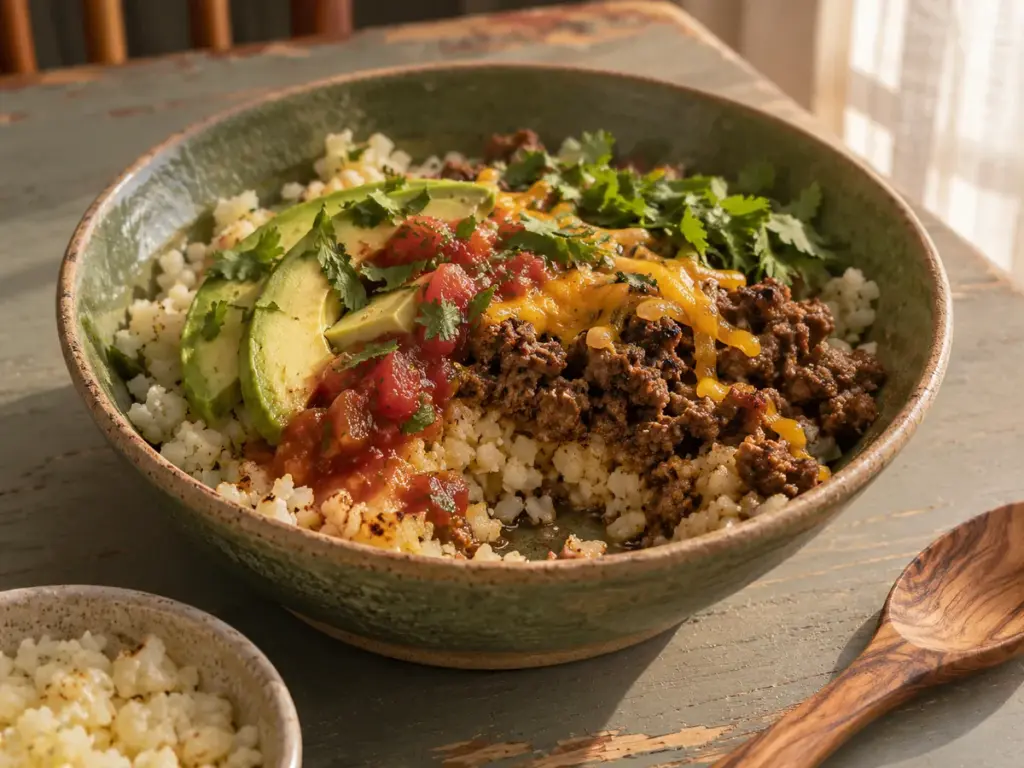
- Fried rice keeps its separate pieces when you cook cauliflower or cabbage in a hot open pan, and then the egg and scallions go in.
- Curry, chili and soup suit shirataki or mushroom rice.
- Beef and broccoli or garlic-butter dinners suit broccoli rice, which adds color and a stronger taste.
If you dislike cauliflower, cabbage rice, mushroom rice and shirataki rice give you a similar low count with none of its taste. Meatballs and stuffed cabbage fillings that call for rice take squeezed mushroom or cauliflower rice, and the squeeze test above keeps the filling from going loose.
For a pilaf, we'd mix half cauliflower and half mushroom rice, since the mushrooms add savory flavor and the cauliflower keeps the bowl light.
Noodle swaps follow the same carb math, and low-carb pasta alternatives come with net carbs per serving. If a potato side sits next to your rice, low-carb potato swaps cover that too.
Which Rice Swaps Are Not Actually Keto?
Wild rice, lentils, quinoa and brown rice show up in keto searches because they have fiber, but the fiber offsets only a small part of their carbs.
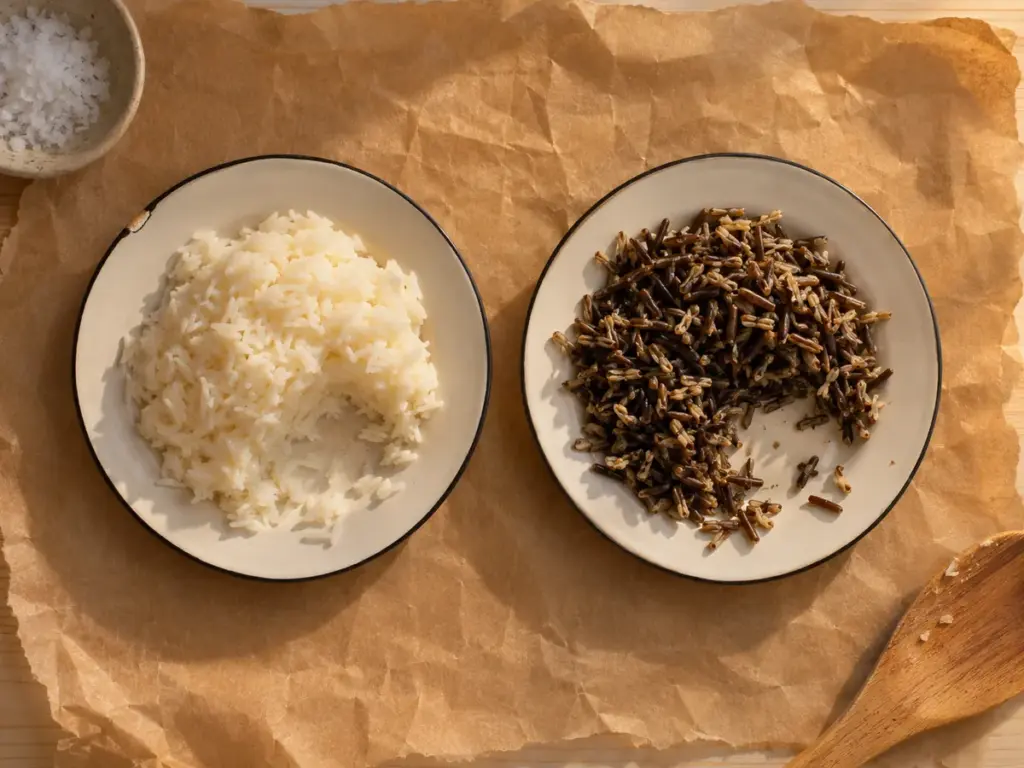
You serve cooked grains by the cup, and a cup weighs 158 g for white rice but 202 g for brown rice, so the carbs in a cup depend on the grain:
| Cooked grain | Net per 100 g | 1 cup weighs | Net per cup |
|---|---|---|---|
| Lentils | 12.2 g | 198 g | 24.2 g |
| Quinoa | 18.5 g | 185 g | 34.2 g |
| Wild rice | 19.5 g | 164 g | 32.0 g |
| Brown rice | 24.0 g | 202 g | 48.4 g |
| White rice | 27.8 g | 158 g | 43.9 g |
A cup of wild rice carries 32.0 g net against 43.9 g for white, so wild rice versus white rice is a small gap on a day that allows 20 to 50 g.
You will see quinoa and farro on diabetic-friendly rice lists, and quinoa and barley on healthier white rice swaps. Those lists were built for blood sugar or fiber goals, and the advice does not carry over to keto, where one cup of quinoa alone uses 34.2 g.
Black rice and jasmine rice are rice grains too, and neither has a record in the USDA data used here. For both, you read Total Carbohydrate and Dietary Fiber on the package and subtract, the way the callout above describes.
Sources
- USDA FoodData Central, SR Legacy: cooked white rice, FDC 168878; cauliflower, FDC 169986; broccoli, FDC 170379; cabbage, FDC 169975; white mushrooms, FDC 169251.
- USDA FoodData Central, SR Legacy: wild rice, FDC 168897; lentils, FDC 172421; quinoa, FDC 168917; brown rice, FDC 169704.
- StatPearls (National Library of Medicine), Low-Carbohydrate Diet: typical keto limit of 20 to 50 g of carbohydrate per day.
- FDA, How to Understand and Use the Nutrition Facts Label: the label lists Total Carbohydrate, Dietary Fiber and Total Sugars.
- Miracle Noodle Miracle Rice label data as listed by retailers, for example CarbSmart; no USDA record exists for shirataki rice.
- USDA Food Safety and Inspection Service, Leftovers and Food Safety: cooked leftovers keep 3 to 4 days in the refrigerator or 3 to 4 months frozen, and go into the refrigerator within 2 hours of cooking.
- USDA FoodKeeper, FoodKeeper app: cooked leftovers without meat or egg, 3 to 4 days refrigerated and 1 to 2 months frozen.
Frequently Asked Questions
How Long Does Leftover Cauliflower Rice Keep?
Cooked vegetable rice keeps 3 to 4 days in the refrigerator, the USDA FSIS window for cooked leftovers, as long as you refrigerate it within 2 hours of cooking (1 hour above 90°F). A shallow container helps it cool fast, and a hot dry pan drives off the water that collected in the container when you reheat it.
Can You Freeze Cooked Cauliflower Rice?
FSIS gives cooked leftovers 3 to 4 months in the freezer for best quality, and USDA FoodKeeper gives 1 to 2 months for cooked vegetable leftovers, so we'd use it within the shorter one. Vegetable rice turns softer after thawing, so you cook it again from frozen in a hot pan until the surface looks dry, the same way you cook store-bought frozen riced cauliflower.
Are Packaged Keto Rice Cups Worth Buying?
The serving size on a cup or pouch may not match a cup of cooked rice, so you judge each one by its label. You get the net carbs by subtracting Dietary Fiber from Total Carbohydrate, and then you scale that result to the amount you will eat.

Food writer at GustoMeadow. Writes ingredient substitutes, food comparisons, taste guides and storage guides for home cooks.
Storage and food-safety numbers follow USDA, FDA and university extension guidance.



