
Lamb shoulder is the cut for slow cooking, and lamb leg is the cut for roasting pink or grilling butterflied.
- Shoulder has more fat and connective tissue, so a long braise makes it pull-apart soft.
- Leg is the leanest lamb cut, so it stays tender roasted medium rare.
- The USDA minimum is 145°F with a 3-minute rest, or 160°F for ground.
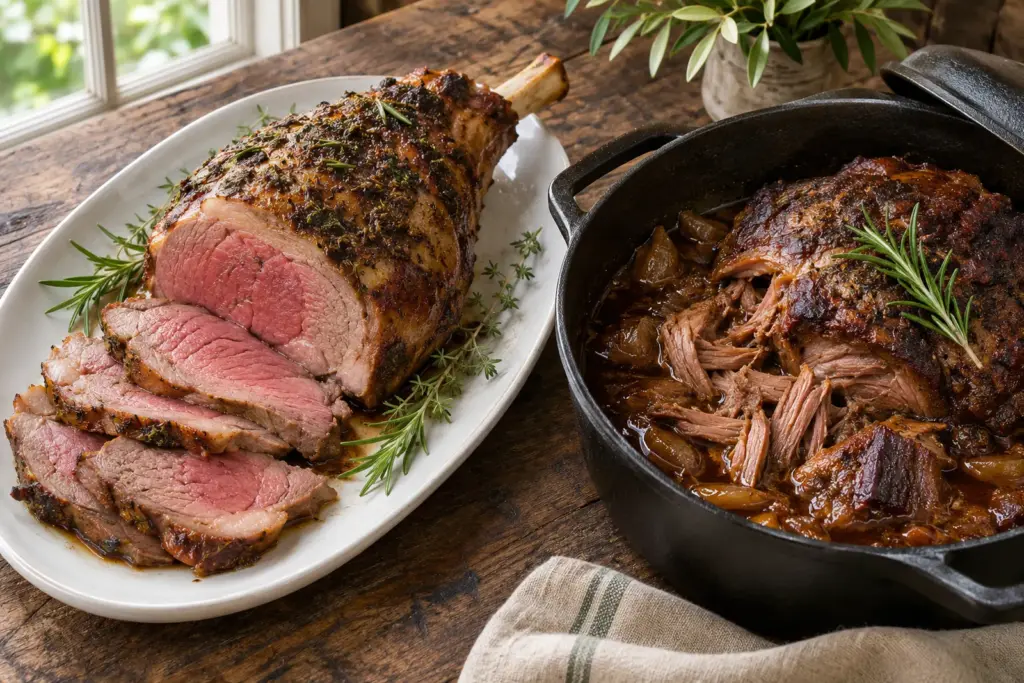
Both cuts come from the same animal, yet they sit at opposite ends of it and behave differently in the oven. If you buy the wrong one for your recipe, you end up with a dry roast or a chewy braise, and the other cut-versus-cut comparisons follow the same logic.
You choose by how long you plan to cook, and the other differences follow from that.
1. What Is the Difference Between Lamb Shoulder and Lamb Leg?
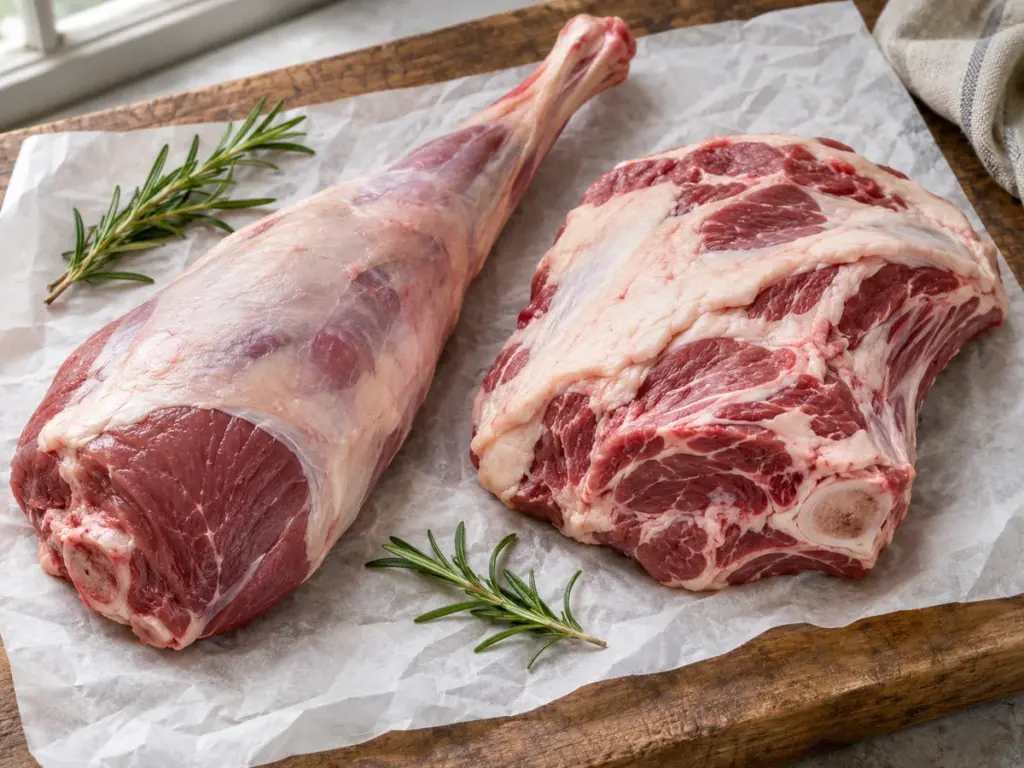
The shoulder comes from the upper front of the lamb and carries a lot of weight, so the American Lamb Board calls it a tough cut that needs low, slow cooking. The leg is the rear leg, and the Board describes it as leaner and more tender than the shoulder.
| Trait | Lamb shoulder | Lamb leg |
|---|---|---|
| Where it sits | Upper front of the animal | Rear leg |
| Fat | Higher fat, richer flavor | Leanest lamb cut |
| Best methods | Braise, slow roast, stew | Roast whole, butterfly and grill, kabobs |
| Price | Less expensive | More expensive |
Fat and connective tissue decide how long each cut needs and how much it forgives. Because of the extra fat, the Board calls shoulder more forgiving and says it stays juicier.
- Hours at low heat, mostly covered
- Judged by fork tenderness
- Minutes per pound at higher heat
- Judged by thermometer
Leg roasting times in the leg section below are for medium rare. Past that temperature, a lean leg dries out quickly.
2. Which Cuts Come From the Shoulder and the Leg?
Butchers sell each area as roasts, chops, steaks and cubes, and the name tells you how fast it cooks. The University of Kentucky's retail cut chart and the American Lamb Board list these:
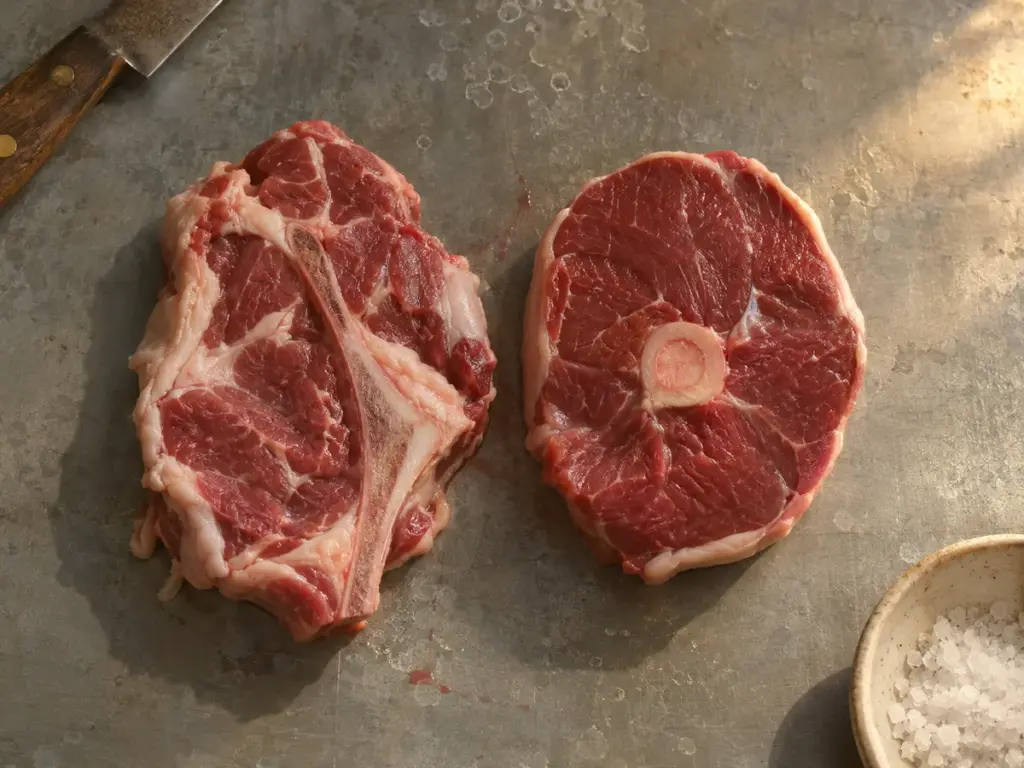
- Shoulder square cut: a thick roast, more than 2 inches thick, cooked with dry or moist heat.
- Shoulder blade chops: cut from the upper shoulder, less than 2 inches thick, and cooked with dry or moist heat. The American Lamb Board says shoulder chops need less cooking time than other cuts.
- Neck slices: cut from the neck end of the shoulder and cooked with moist heat.
- Whole leg, bone-in or boneless: the holiday roast, with the roasting times in the leg section below.
- Sirloin half and shank half: the upper and lower ends of the leg, both cooked with dry heat.
- Sirloin chops and center slices: cut from the leg, usually under 1 inch thick, and cooked with dry heat.
Chops from either cut cook quickly enough for a weeknight, and the side dishes that suit lamb chops work with a blade chop or a leg steak.
3. Which Cut Tastes Better and Which Is More Tender?
You will taste more richness in shoulder because it carries more fat, and that same fat is why it stays juicy through hours of cooking.
If you are new to lamb, know that it has a grassy, gamy edge that some people find strong. Texture splits between the two cuts: you get soft shreds from a braised shoulder, while a roasted leg carves into slices that hold their shape.
Seasoning can follow the cut. A shoulder that cooks for hours holds up to bold spices, such as cumin and coriander, while the Board's leg recipes use a rub of garlic, mustard, lemon zest and herbs.
4. How Do Lamb Shoulder and Lamb Leg Compare Nutritionally?
You get more fat from shoulder, and USDA data shows it: more calories and fat, a little less protein.
| Per 100 g | Shoulder | Leg |
|---|---|---|
| Raw, lean and fat: calories | 264 kcal | 230 kcal |
| Raw, lean and fat: fat | 21.5 g | 17.1 g |
| Roasted, lean only: protein | 24.9 g | 28.3 g |
| Roasted, lean only: fat | 10.8 g | 7.7 g |
All figures come from USDA FoodData Central for choice lamb trimmed to ¼ inch of fat: FDC 172496 and 174311 (raw), FDC 172499 and 174314 (roasted).
Even trimmed to lean, the leg is the lower-fat roast, so pick it when fat is your concern.
5. How Do You Cook Lamb Shoulder?
Shoulder is full of collagen, a connective tissue that is chewy when raw. Blue Jean Chef puts the start of collagen turning to gelatin at about 140°F, while ThermoWorks says it unwinds and melts into gelatin above 170°F. Either way, it takes hours at low heat and not minutes, and a covered pot with liquid keeps the surface from drying while it happens.
The American Lamb Board judges braised lamb by feel: it is done when it is fork tender.
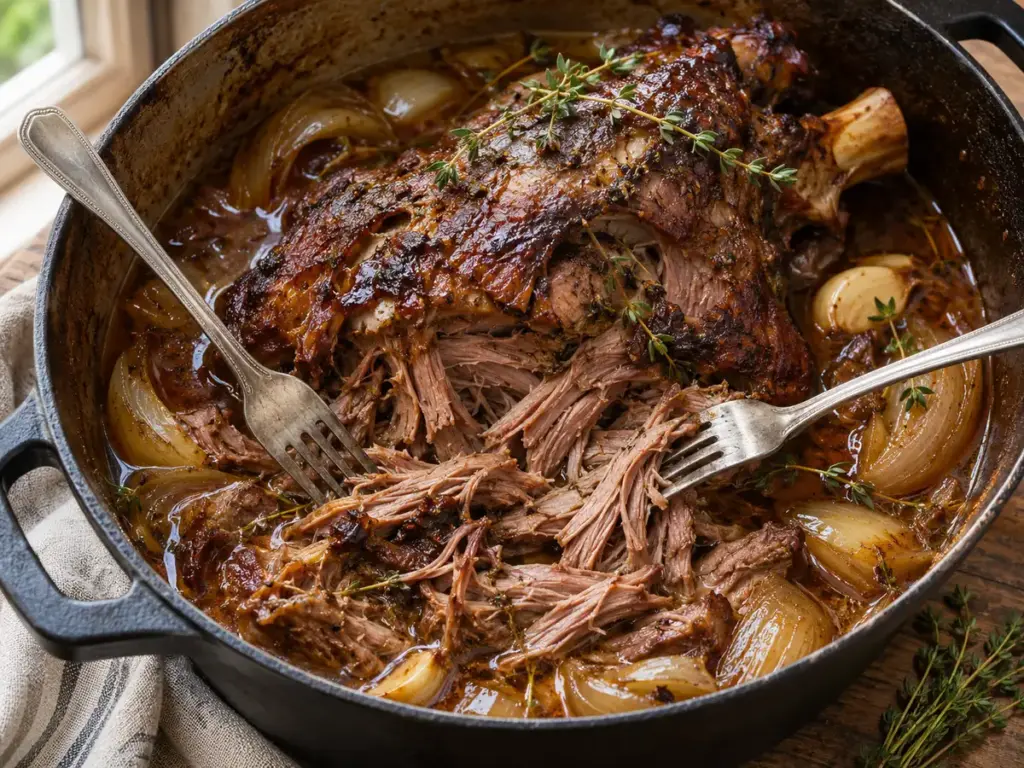
- Sear. Brown the shoulder on all sides in a hot pot, as the Board advises for braising.
- Add a little liquid. Pour in wine or stock, cover tightly and bring it to a simmer on the stove.
- Cook low and slow. One Board recipe roasts a covered shoulder at 325°F for 3 hours.
- Uncover and finish. The same Board recipe removes the lid and roasts another 30 to 60 minutes, until the lamb is deeply tender and pulls apart with a fork.
- Check tenderness. The Board says doneness is tenderness, not temperature. ThermoWorks sets its alarm at 203°F for braised lamb shanks, and no source checked gives a number for shoulder.
For a whole bone-in shoulder, one Board holiday recipe uses a 6 to 8 pound shoulder for 6 to 8 servings. It roasts at 400°F for the first hour, then at 350°F for another 2 to 2.5 hours under parchment and foil, and rests covered for 10 to 15 minutes.
A heavy Dutch oven or a roasting pan with foil both hold the moisture in, and the method counts as a braise instead of a stew when you add only a small amount of liquid. Shoulder chops are the quick exception, because the Board says they need less cooking time than other cuts.
6. How Do You Cook Lamb Leg?
Lean meat dries out once it passes the temperature you want, so a leg is a job for a thermometer and not for the clock. The Board's roasting guide gives one oven plan with two timings, depending on whether the bone is in:
- Bone-in leg: 425°F for the first 15 minutes, then 325°F for about 10 to 12 minutes per pound to medium rare. The Board's example is 80 to 90 minutes for an 8-pound leg.
- Boneless leg: 425°F for the first 10 minutes, then 325°F for about 25 to 30 minutes per pound to medium rare, about 2 ½ hours for a 6-pound rolled roast.
- Why the gap: the Board notes that bone-in leg roasts cook faster than boneless ones, so never use one timing for both.
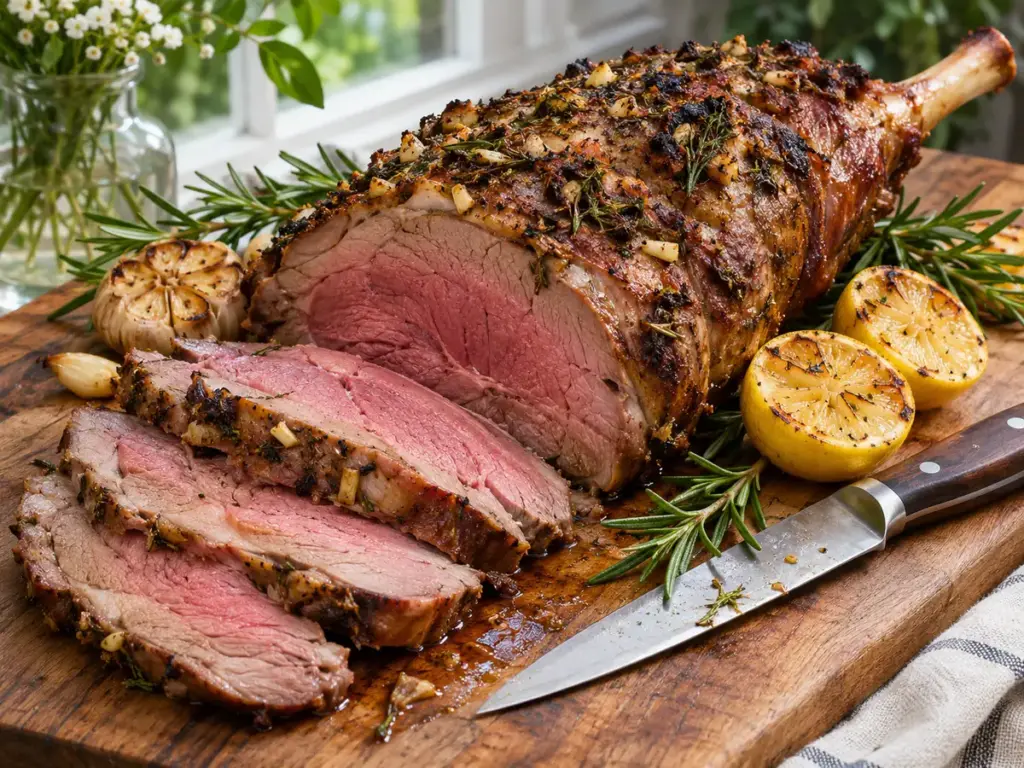
The Board's own recipes rub the leg with garlic, mustard, lemon zest and chopped herbs such as rosemary and thyme. Rosemary is stronger than thyme, so a heavy rosemary rub makes the crust piney while thyme stays in the background.
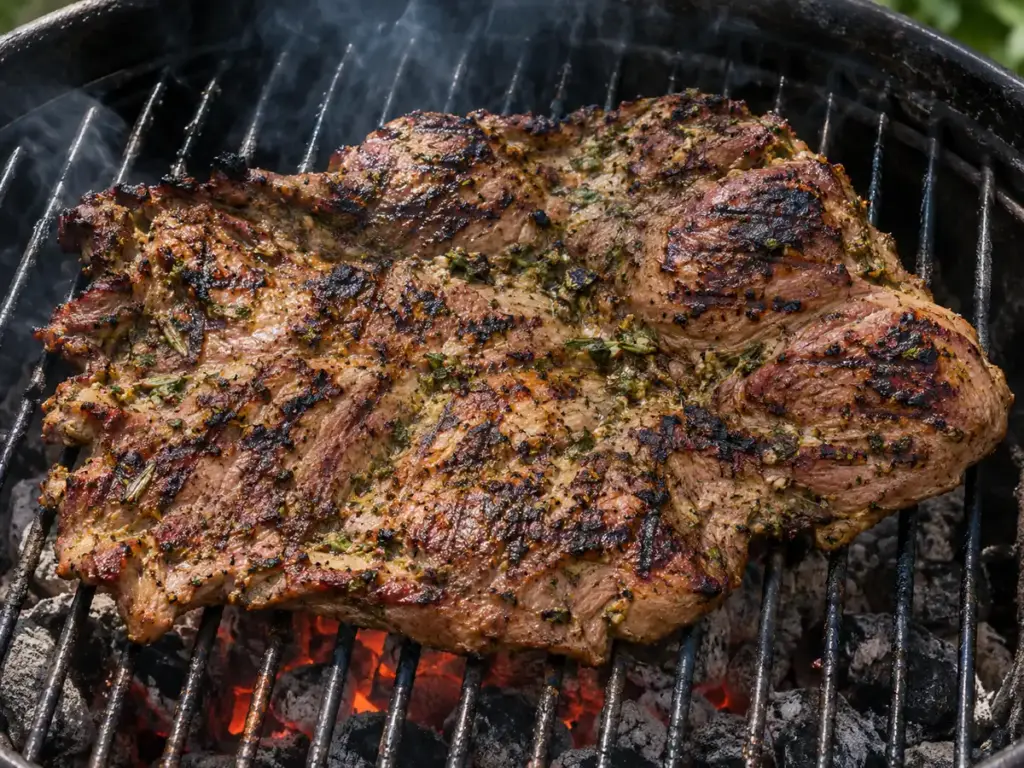
On the grill, the Board says to preheat to medium-high, use a thermometer instead of cutting into the meat, and take the lamb off about 10 degrees below your target.
7. What Internal Temperature Should Lamb Reach?
Three kinds of number appear in lamb recipes, and they are easy to mix up. This table keeps them apart, with the USDA safety minimum first:
| Source and goal | Temperature | Rest |
|---|---|---|
| USDA, whole cuts (roasts, chops, steaks) | 145°F | At least 3 minutes |
| USDA, ground lamb | 160°F | None listed |
| American Lamb Board, medium-rare leg | Remove at 130 to 135°F, then it rises about 10° to 140 to 145°F | 15 to 20 minutes |
- ThermoWorks, medium-rare roast leg: a final temperature of 130 to 135°F, so pull about 10°F early (125°F in its recipe), then rest 15 to 25 minutes.
- Braised shoulder: fork tender with no fixed number, and no rest needed.
8. Can You Swap Lamb Shoulder for Lamb Leg?
You can swap them in some recipes, but you have to change the method too, because the time each cut needs is not the same. These two cards show what happens in each direction:
- A quick roast to pink leaves shoulder chewy, since its collagen has not melted
- Cook it low and slow instead, as the Board recommends
- Shoulder chops cook faster
- Hours in a braise can dry a lean leg
- Cube it for kabobs or a short stew
- For pull-apart meat, buy the shoulder
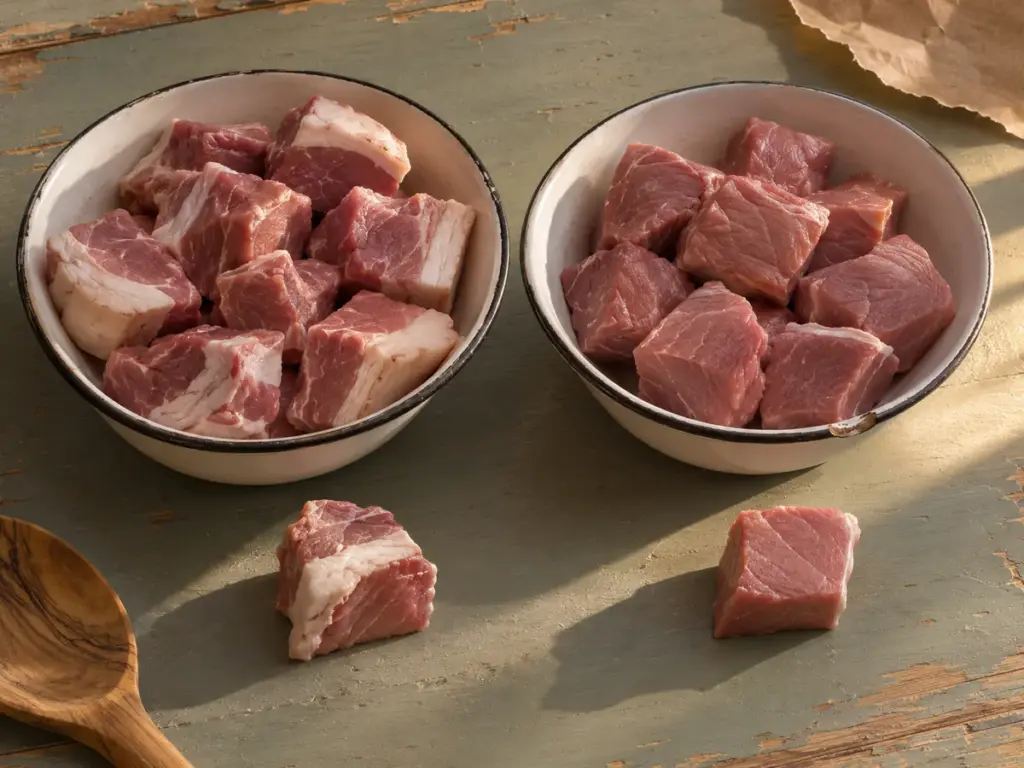
The kabob case is the one swap that works both ways: the Board lists cubed shoulder and cubed leg as kabob meat, and sides for lamb kebabs suit either.
9. Which Should You Buy?
Decide from the meal you are planning, not from the label. Each of these cases has a clear winner:
- Holiday roast with pink slices: bone-in leg. The Board says the bone adds flavor, and a whole boneless leg typically weighs 7 to 8 pounds, so you will have leftovers.
- Pull-apart lamb for tacos or a Sunday braise: shoulder, which is also less expensive than leg.
- Lamb stew: shoulder cut into cubes, served with sides for lamb stew.
- Grilling for a crowd: boneless leg, butterflied so it lies flat, which the butcher can do for you.
- A leaner roast: leg, because it has the least fat of the two.
Raw lamb roasts keep 3 to 5 days in the fridge and 4 to 12 months in the freezer, according to USDA FoodKeeper, which lists the same times for leg and for shoulder.
Ground lamb keeps for less time, only 1 to 2 days in the fridge.
Sources
- American Lamb Board, Cuts of Lamb: leg is the leanest cut, shoulder is higher in fat, cheaper and more forgiving, shoulder chops, boneless leg weight, kabob meat.
- American Lamb Board, Roasting Guide: oven temperatures, minutes per pound, removal temperatures, resting.
- American Lamb Board, Cooking Techniques: braising to fork tender, slow cooker, bone-in leg cooks faster, grilling, pulling 10 degrees early.
- American Lamb Board, Slow-Roasted Lamb Shoulder recipe: 325°F, 3 hours covered, then 30 to 60 minutes uncovered; also quotes the USDA 145°F and 160°F figures.
- American Lamb Board, Holiday Shoulder recipe: 6 to 8 pound bone-in shoulder, 6 to 8 servings, 400°F then 350°F, rest.
- University of Kentucky, Sheep Discovery: Retail Cuts: shoulder and leg retail cuts and their cooking methods.
- USDA FoodData Central: FDC 172496, 174311, 172499 and 174314, per 100 g.
- ThermoWorks, Braised Lamb Shanks: collagen above 170°F, 203°F probe target for shanks.
- Blue Jean Chef, How to Braise: collagen turns to gelatin at about 140°F.
- ThermoWorks, Roast Leg of Lamb: 130 to 135°F medium rare, 125°F pull, resting.
- USDA, Safe Minimum Internal Temperature Chart: 145°F with a 3-minute rest for whole cuts, 160°F for ground meat.
- USDA FoodKeeper: raw lamb roasts, shoulder and ground lamb storage times.
Frequently Asked Questions
Can You Cook Lamb Shoulder in a Slow Cooker?
Yes, you can. The Board says braising can be done on the stovetop, in the oven or in a slow cooker, and it names shoulder as a cut for moist methods.
Which Cut Is Better for Tagine or Curry?
Shoulder, because both dishes simmer in liquid for a long time, and that is the moist method the Board recommends for it.
Is Lamb Shoulder the Same as the Foreleg?
No. The shoulder is the upper front section, and the shank is the separate cut taken from below it, according to the University of Kentucky chart.
Shank is a moist-heat cut too, so it braises like shoulder.

Food writer at GustoMeadow. Writes ingredient substitutes, food comparisons, taste guides and storage guides for home cooks.
Storage and food-safety numbers follow USDA, FDA and university extension guidance.



