Mango sorbet is a dessert, so the sides go on the bowl or beside it.
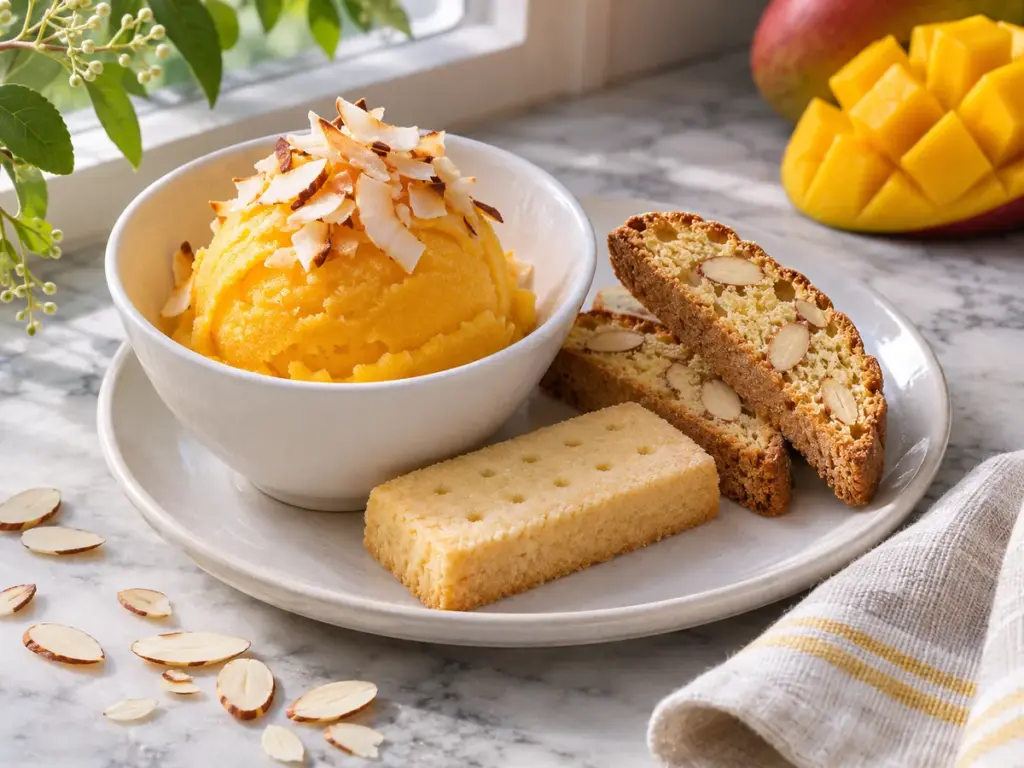
- Shortbread or biscotti add crunch, toasted coconut adds a nutty note, and fresh or macerated berries add tartness.
- It also works as the dessert after spicy Thai, Indian or Mexican food and grilled seafood, because a cold, sweet scoop is a light finish.

If you are choosing side dishes for a summer dinner, mango sorbet gives you less to work with than ice cream does. It has no cream or butter, so it tastes bright but can feel thin on its own.
What Goes Well with Mango Sorbet?
Ripe mango has a sweet, tangy flavor, so the sorbet you scoop already carries plenty of sugar and acid.
Sorbets usually hold a higher share of sugar than ice cream, so the side you pick should bring crunch, fat or a different fruit note. We'd add tart berries, kiwi or lime for contrast, since a second sweet fruit only makes your bowl sweeter.
Mango sorbet is sweet already, so you can skip the crushed meringue that suits less sweet sorbets.
| The sorbet lacks | Sides that fix it |
|---|---|
| Crunch | Shortbread, biscotti, toasted coconut, toasted almonds |
| Fat | Whipped cream, ice cream, crème anglaise |
| Tartness or salt | Fresh fruit, macerated berries, chili-lime fruit |
You get the best bowl from one side for crunch and one for fat or tartness, since three or four toppings bury the mango.
10 Best Sides for Mango Sorbet
1. Shortbread
Shortbread is mostly butter, flour and sugar, so it gives mango sorbet the fat it lacks. You can set one finger on the side of the bowl, or crush a cookie and sprinkle about 2 tablespoons of crumbs over each scoop.
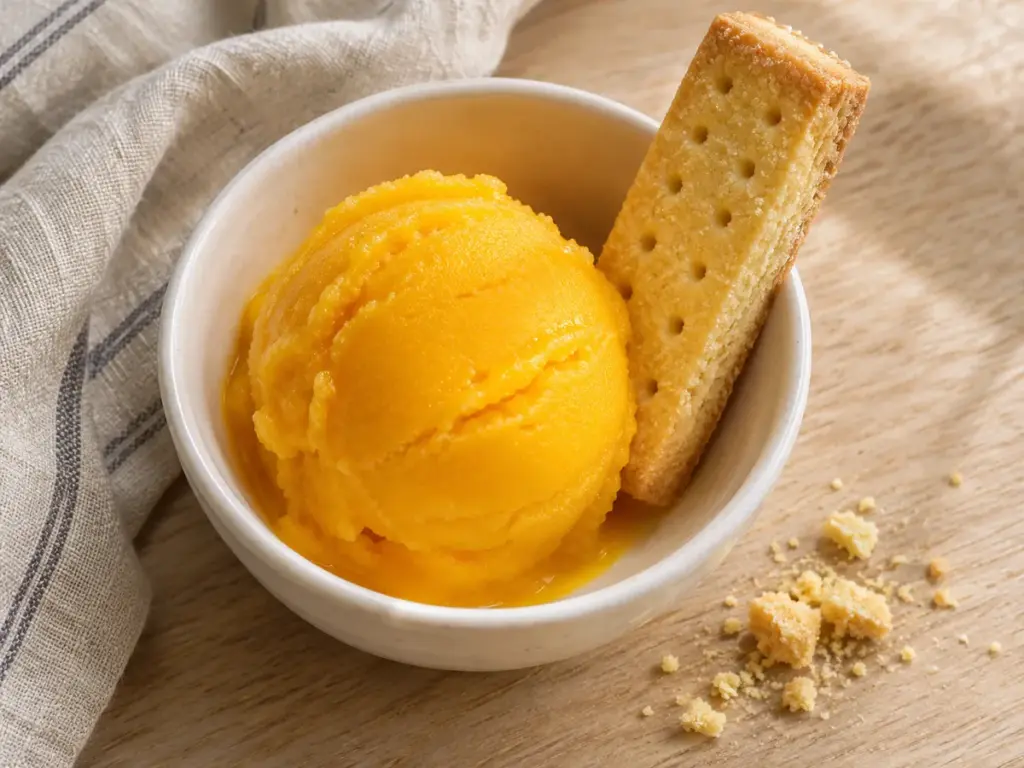
When shortbread feels too rich for you, graham crackers or animal crackers give a lighter crumb.
A chocolate drizzle covers the mango flavor, so we'd leave it off.
2. Biscotti
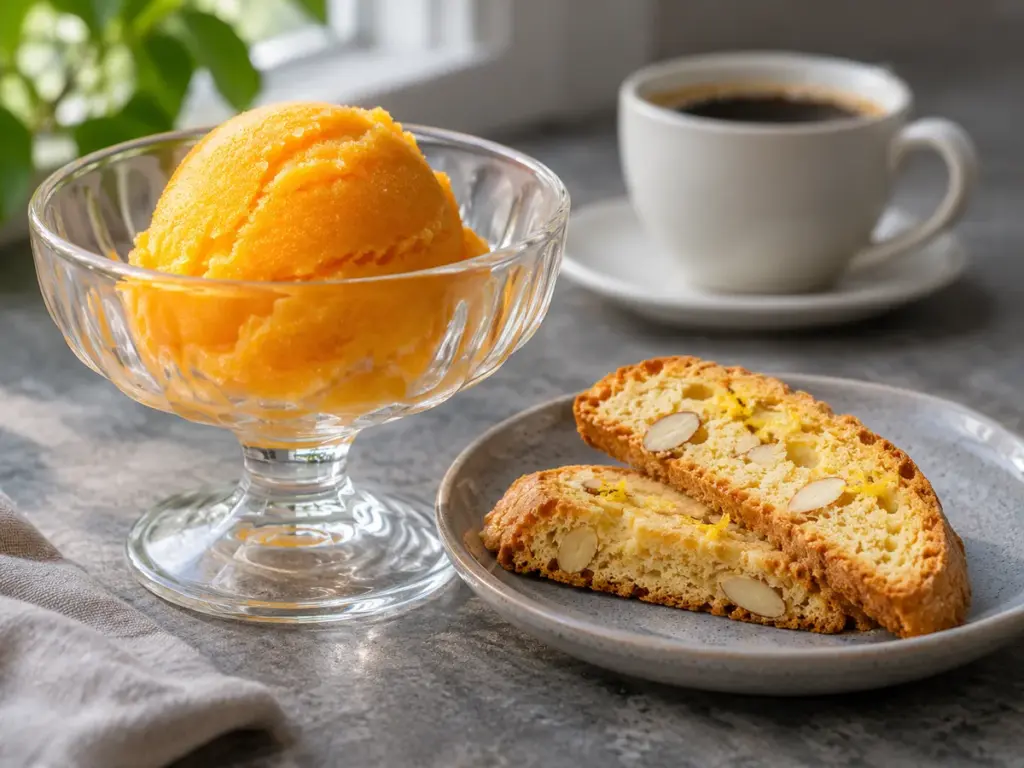
Biscotti are baked twice, which dries them into a hard, crisp cookie that stays crunchy beside a bowl of sorbet. Lemon or almond biscotti fit best, since they are only lightly sweet and the citrus or nut note suits mango.
For a plated dessert, you can crumble one slice over the scoop, or guests can dip a piece into the melting edge of the bowl while the coffee is poured.
For a guest who avoids nuts, lemon biscotti are the one to buy, as long as the label lists no nuts.
3. Toasted Coconut
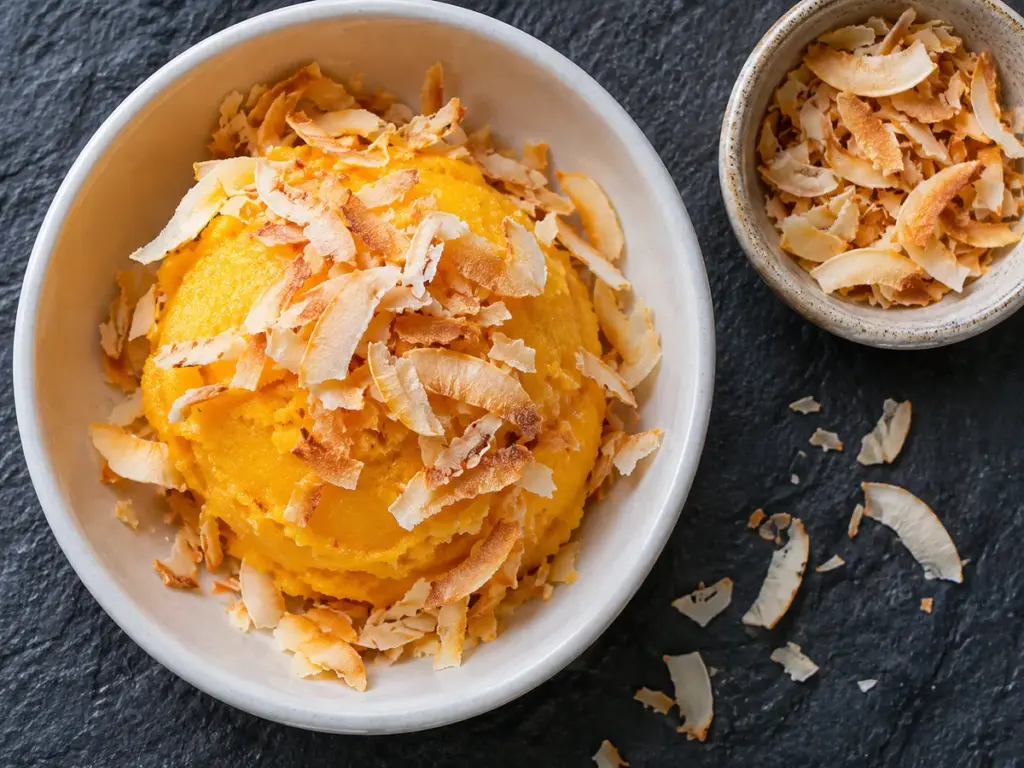
The National Mango Board blends mango with coconut cream in its chili mango sorbet, so coconut shavings sit naturally on a mango scoop.
Fresh coconut shavings work too, although you will find them chewy instead of crisp.
If you pour a spoonful of coconut milk around the scoop, it adds a little fat without any dairy.
4. Toasted Almond Flakes

When you toast flaked almonds in a dry skillet over medium heat and stir until they smell nutty and turn light gold, a small handful gives each scoop a nutty crunch.
About a teaspoon of honey drizzled over the almonds helps them cling to the sorbet instead of rolling off the sides.
A few flakes pressed into the soft top of the scoop stay in place until your last spoonful.
5. Fresh Fruit
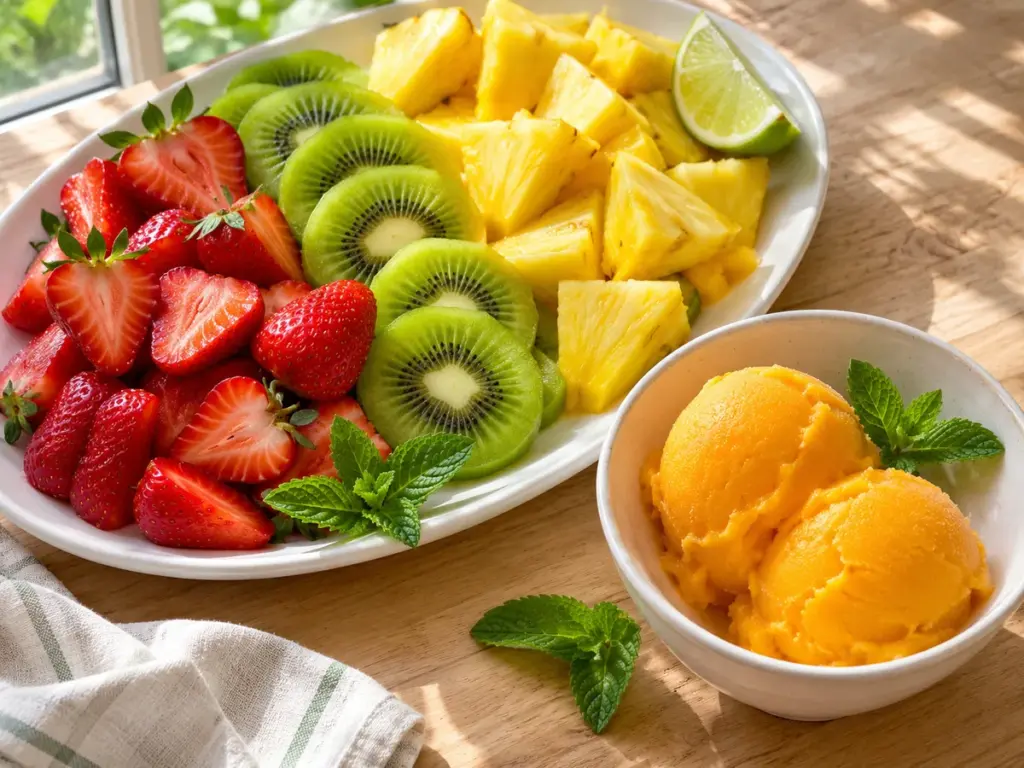
Strawberries, kiwi and pineapple are tart fruits that sharpen the sorbet, and the red berries and green kiwi give you a color contrast against the orange scoop.
If the fruit tastes flat once you have cut it into bite-size pieces and arranged it on a platter, toss it with a squeeze of lemon or lime juice. A teaspoon of honey rounds out fruit that is too sour.
Sliced fresh strawberries are the easiest choice for you, since they need no peeling.
6. Macerated Berries
Plain berries turn into a red syrup for the scoop once you macerate them, and strawberries, raspberries and blackberries all work in three steps:
- Stir. Mix 1 cup of sliced strawberries or whole raspberries with 1 to 2 tablespoons of sugar.
- Wait. Leave the bowl until the sugar has pulled juice from the berries and made a red syrup.
- Spoon. Spoon the syrup over the scoop.
You need only 1 tablespoon if the berries are sweet, and 2 if they are tart.
The berries will be ready by dessert if you start them when you sit down to dinner.
7. Chili-Lime Fruit
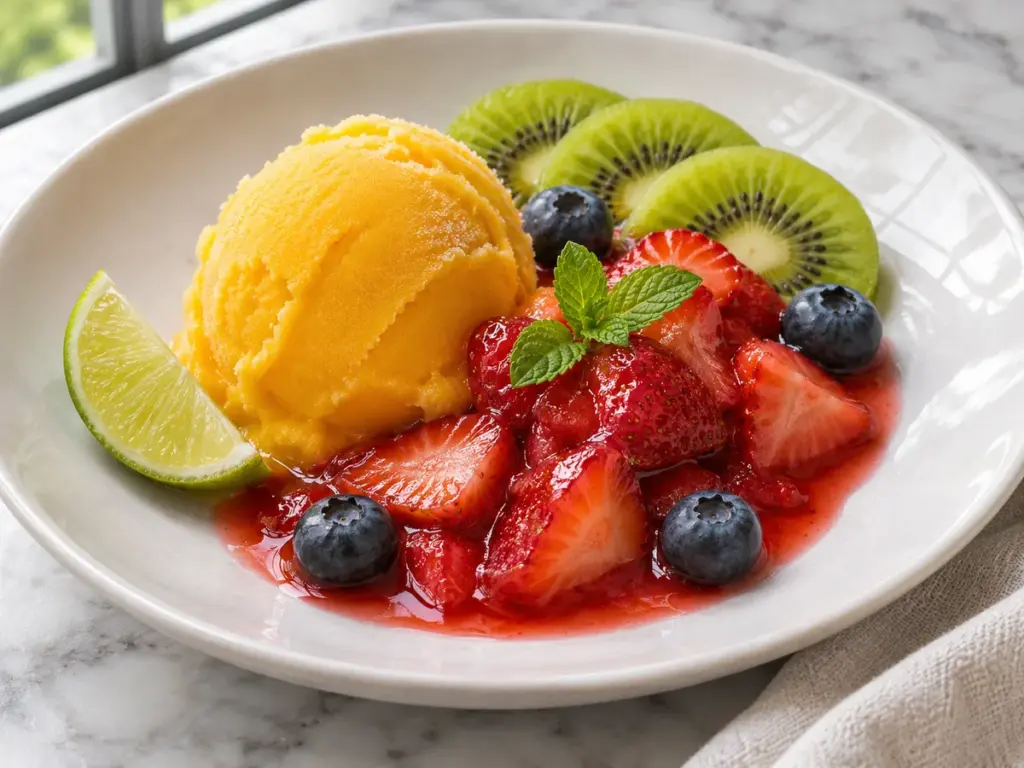
The National Mango Board dresses mango with lime juice, chamoy and Tajín in its Mexican mango on a stick, which it calls a sweet, tangy and spicy street-style treat.
You can borrow that idea by tossing cucumber sticks, jicama or pineapple chunks with lime juice and a pinch of a chili-lime seasoning such as Tajín, then setting a few pieces beside the scoop.
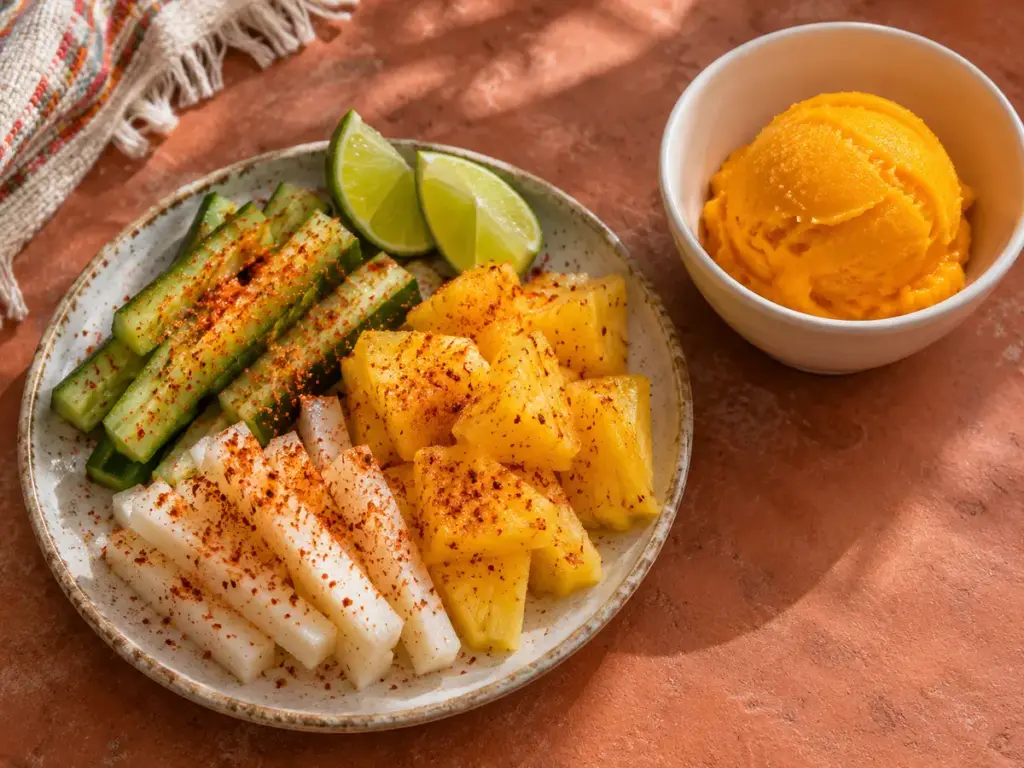
We'd serve it when you want a sharper contrast, since the salty, sour and slightly hot pieces sit at the opposite end from the sweet, cold scoop.
8. Whipped Cream

Whipped cream gives you the richness the sorbet lacks. Federal rules say heavy cream must contain at least 36 percent milkfat, so you want a carton labeled heavy cream.
- Dairy version. 1 cup of cold heavy cream whips with 2 tablespoons of powdered sugar and ½ teaspoon of vanilla to soft peaks.
- Dairy-free version. Full-fat coconut milk, chilled in the can, gives you a thick layer of cream on top that whips the same way.
- Shortcut. A tub of whipped topping holds its shape longer, although it tastes less like cream.
If you add a drop of almond extract or a little citrus zest to the bowl, the cream picks up a second flavor that matches the mango.
9. Vanilla or Coconut Ice Cream

Sorbet and ice cream make a good sundae because one is icy and fruity while the other is dense and creamy. Vanilla and coconut ice cream leave room for the mango, while rum raisin gives you a darker sweetness.
A sundae takes one scoop of each in the same bowl, with caramel or berry sauce spooned over both.
A handful of crushed cookies or nuts on top finishes the sundae, and the sides that suit ice cream work here too.
If a guest avoids dairy, you can serve the ice cream in a separate bowl so that person can skip it.
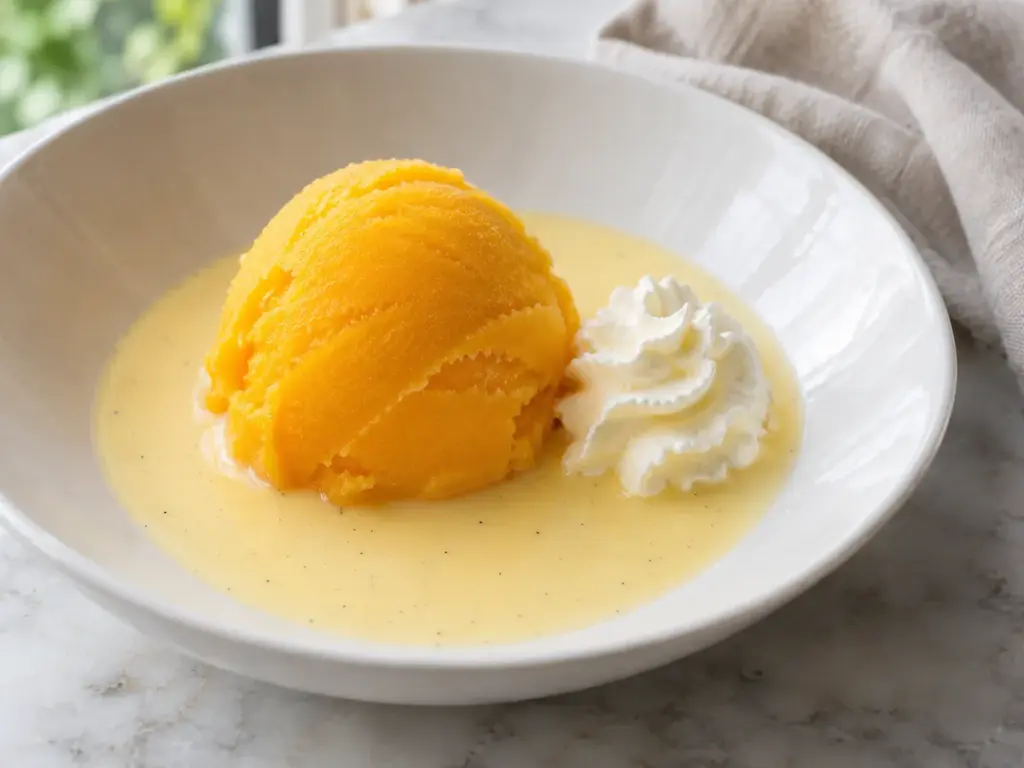
10. Crème Anglaise
Crème anglaise is a pourable vanilla custard made from milk, sugar and egg yolks. You heat 1 cup of whole milk with 2 tablespoons of sugar until the sugar dissolves, then whisk the hot milk slowly into 3 egg yolks so they do not scramble.
Back in the pan, the mixture goes over low heat while you stir until it coats the back of a spoon. A thermometer tells you when the custard is done, because it should reach at least 160°F, the USDA minimum for egg dishes, so the yolks are fully cooked.
A bowl of ice water stops the cooking once you set the pan in it, and you then chill the custard and pour about 2 tablespoons around each scoop.
How Do You Serve Mango Sorbet So It Scoops Cleanly?
Sugar lowers the freezing point of water, so a batch made with little sugar sets harder and you need to soften it a little before you scoop. The bowls should stay cold as well.

- Chill the bowls. Put them in the freezer while you eat dinner.
- Soften the sorbet. Leave it out for 5 minutes, as America's Test Kitchen does for its raspberry sorbet.
- Still too hard? Move it to the refrigerator for 10 to 15 minutes, the Food Network's instruction for a hard hibiscus sorbet.
Cookies and nuts soften quickly on a wet scoop, so you serve at once after you scoop and add the sides.
Which Dinners Does Mango Sorbet Follow Well?
- Spicy Thai. If you are serving shrimp pad thai or a Thai curry, you can serve the sorbet plain with a spoonful of toasted coconut.
- Indian. After a hot curry such as pork vindaloo, a shortbread finger beside the sorbet adds a little fat.
- Mexican. After fish tacos or enchiladas, a bowl with chili-lime fruit repeats the lime from the meal, with a little chili on top.
- Grilled seafood. Dishes like grilled shrimp skewers leave room for dessert, so sorbet with macerated berries feels light enough to finish the meal.
Can You Serve Mango Sorbet to Guests with Dietary Needs?
A store-bought tub can still contain milk or other allergens, and FDA requires labels to name the source of every major allergen used in the food. The ingredient line is the thing to read before you promise a guest the sorbet is dairy-free.
| Guest avoids | Skip | Serve instead |
|---|---|---|
| Dairy | Whipped cream, ice cream, crème anglaise, shortbread | Coconut cream, toasted coconut, almonds, fruit |
| Eggs | Crème anglaise, and biscotti that list eggs | Whipped cream, berries, toasted coconut |
| Wheat | Shortbread, biscotti | Coconut, almonds, fruit |
| Nuts | Almond flakes, almond biscotti | Shortbread, fruit |
FDA does not require "may contain" statements, so a missing warning tells you nothing about a guest's severe allergy. You need the full ingredient list of every cookie and tub, biscotti and shortbread included.
Which Pairings Should You Skip with Mango Sorbet?
A few common pairings work against the sorbet:
- Soft cake or brownies turn gummy and hide the sorbet.
- Candy and thick syrups bury the mango.
- A second mango dish on the same menu repeats the same fruit.
- Heavy cream-sauce mains right before the sorbet pair poorly with it.
If you are serving mango salsa chicken, the sorbet repeats the same fruit, so a lime or raspberry sorbet suits that dinner better.
Frequently Asked Questions
What Goes Well with Mango Ice Cream?
Mango ice cream already has the cream, so you can skip the whipped cream and crème anglaise and keep the crunch and tartness.
What Other Sorbet Flavors Go Next to Mango?
The National Mango Board's chili mango sorbet blends mango with lime juice and coconut cream, so you can set lime or coconut sorbet beside it.
On a plate with several scoops, we'd keep one tart flavor beside the mango so the row is not all sweet.
Sources
- USDA FSIS, Safe Minimum Internal Temperature Chart (160°F for egg dishes)
- 21 CFR 131.150, Heavy cream (at least 36 percent milkfat)
- FDA, Food Allergies (major allergens named on labels; "may contain" statements not required)
- Exploratorium, The Accidental Scientist: ice cream (sugar lowers the freezing point; sorbets hold more sugar than ice cream)
- America's Test Kitchen, Raspberry Sorbet (5 minutes to soften)
- Food Network, Hibiscus Sorbet (10 to 15 minutes in the refrigerator if too hard)
- National Mango Board, Mexican Mango on a Stick and Chili Mango Sorbet (lime, chamoy, Tajín; mango with lime juice and coconut cream)

Food writer at GustoMeadow. Writes ingredient substitutes, food comparisons, taste guides and storage guides for home cooks.
Storage and food-safety numbers follow USDA, FDA and university extension guidance.