
Summary of key points
The main difference between polenta and risotto lies in the grains used. Polenta is made from cornmeal, while risotto is made from arborio rice.
This results in different textures - polenta has a coarser texture, similar to grits, while risotto has a creamy and velvety consistency. Also, the cooking methods are different - polenta is typically cooked in boiling water or broth, while risotto is slowly cooked with constant stirring to release the starch and create its signature creaminess.
Both options offer a delicious and comforting base for a variety of toppings and flavor combinations.
Polenta and risotto sit at the big family dinner of Italian dishes. Each brings its own flair to the table.
We've all had that moment in a restaurant. The menu comes, and there they are.
Polenta? Risotto?
What's the difference? T4We've been there too.T5
Here's the breakdown. Polenta is corn's greatest hit, while risotto is rice's claim to fame.
They might hang out in the same section of the menu, but their stories are worlds apart.
We love them both, and we know the secrets behind their magic. No, it's not just butter and cheese, but almost.
Ready? We're about to serve you the ultimate guide.
What is Polenta?

Polenta is an Italian classic made from cornmeal.
It can be creamy or grainy, depending on the type of cornmeal used.
To prepare it, mix cornmeal with water or broth and simmer until thick.
Stirring is important to avoid lumps.
Butter or cheese may be added for extra flavor.
Polenta is great as a base for veggies, meat, or ragu sauce.
After cooling and solidifying, it can be grilled, fried, or baked.
Polenta is healthy too - gluten-free, packed with fiber, minerals, and low in fat.
Experience the unique taste of polenta by trying out different flavors and cooking methods.
Enjoy its richness as a side dish or main course - it's up to you.
Polenta-based cakes and desserts often pair well with citrus - see what goes with lemon in desserts ideas for complementary flavor combinations.
What is Risotto?
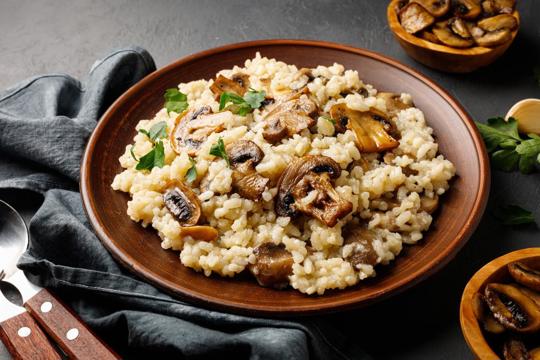
Risotto hails from Italy and is a well-known rice dish known for its creamy texture.
To make it, hot broth is slowly added to Arborio or Carnaroli rice while stirring constantly.
This releases starch, creating a velvety consistency.
Different flavors can be added, like vegetables, seafood, or meat.
The secret to an excellent risotto is choosing the right rice and mastering the technique of adding broth while stirring.
Arborio and Carnaroli are great options as they're high in starch and absorb liquid without becoming mushy.
Perfect risottos have a balance of al dente (firm to the bite) and creaminess.
Risotto is distinct from other rice dishes like polenta.
It involves stirring broth into rice until it's fully absorbed - a labor-intensive process.
This releases starch from the grains, forming a creamy texture.
Polenta offers a different experience, with a filling texture similar to cornbread or mashed potatoes.
Both provide comfort food, but their textures and techniques set them apart in terms of taste and presentation.
For unconventional pairings or fusion plates that include rice dishes, what to eat with guacamole combos offers inspiration for bold accompaniments.
Differences Between Polenta and Risotto

Polenta and risotto both offer pleasant Italian flavors, but have their differences - and 5 polenta substitutes for similar textures show how one can be swapped in recipes.
Ingredients Used
Polenta and risotto are two popular Italian dishes.
Each has its own ingredients, which give it a unique flavor and texture.
Polenta is made from ground cornmeal.
It's simmered in water or broth, and can be served soft, creamy, or chilled and firm.
Toppings like cheese, veggies, or meat can be added.
Its cornmeal gives it a sweet taste and smooth feel.
Risotto uses Arborio rice, which is known for its high starch content.
It's cooked slowly with broth in a pan, and often incorporates other ingredients like onions, garlic, wine, butter, and Parmesan cheese.
This creates a rich, creamy dish with savory flavors.
Polenta and risotto both provide a tasty base.
But their primary ingredients set them apart.
Polenta depends on cornmeal and risotto on Arborio rice.
Cooking Method
Polenta and risotto require similar techniques. However, they are distinct.
Polenta is a traditional Italian dish.
It's made by slowly cooking cornmeal in water or broth.
This lets the cornmeal absorb the liquid and become creamy.
Stirring stops lumps from forming and ensures even cooking.
Risotto is an Italian rice dish.
Hot broth is added to Arborio or Carnaroli rice, while stirring continuously.
The starch from the rice creates a creamy texture.
It takes skill to get the right balance of tenderness and firmness in the rice grains.
Polenta and risotto have different base ingredients.
Polenta has cornmeal; risotto has rice.
Polenta usually takes longer to cook.
When served chilled or grilled, polenta is thick enough to hold its shape.
In summary, although both dishes have similar cooking methods, their core ingredients and texture are different.
Knowing these distinctions will help you pick the dish that best suits your preference.
For added depth when cooking polenta or risotto, consider how white cooking wine vs white wine vinegar comparison affects flavor when used in place of or alongside broth.
Texture and Consistency
Polenta and risotto may seem similar, but they have clear differences when it comes to texture and consistency.
Polenta is creamy and smooth, while risotto has a more tender and chewy feel.
These variations are key for the dining experience. Polenta's texture is velvety and luscious.
This Italian favourite is made by boiling cornmeal with water or broth until thick.
This gives a creamy dish that melts in your mouth, offering a rich flavor - similar techniques produce ultra-smooth results in vegan hummus recipes for creamy texture.
Polenta's consistency is like mashed potatoes, but with a unique corn flavor.
Risotto's texture is unique.
This Italian rice dish is created by gradually adding broth to arborio rice, stirring continually until the liquid is absorbed and the rice is al dente.
This slow cooking process allows risotto to develop its characteristic tender yet slightly firm bite.
Each grain of rice keeps its shape while releasing starch, making a creamy coating.
Polenta and risotto may have Italian roots, but their textures set them apart.
Polenta offers a silky-smooth sensation for those who love culinary elegance.
Risotto has a nice mix of softness and resistance, perfect for those who love more substantial textures.
Polenta and risotto offer different experiences.
Whether you enjoy the creamy luxury of polenta or the tender bite of risotto, these dishes cater to a variety of palates and preferences.
Cultural Origins
Polenta and risotto have cultural origins in two different regions.
Polenta, a traditional Italian dish, is from Northern Italy.
It has been a food staple for centuries there.
Risotto, however, is from Lombardy, in the north of Italy.
This creamy rice dish is now an iconic part of Italian cuisine.
Polenta is made from coarsely ground cornmeal and has been eaten since ancient Roman times.
Over time, it's become a flexible dish that can be cooked and served in various ways.
It was historically seen as peasant food because of its affordability and simplicity.
Risotto is made with Arborio or Carnaroli rice, which absorbs liquids while staying creamy.
The cooking process involves adding stock gradually while stirring continuously until it reaches the right consistency.
These dishes mean more than just their origins.
Polenta stands for the rustic charm and simple traditions of Northern Italy.
It often goes with meat stews or sausages, and is savored by families around the dinner table.
Risotto, on the other hand, is a symbol of elegance and refinement.
It is often made with delicate ingredients like mushrooms, seafood, or truffles to create a luxurious meal.
Similarities Between Polenta and Risotto
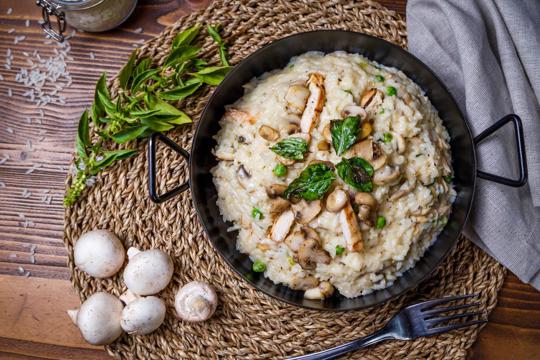
Polenta and risotto may seem different, but they hold some common features - compare polenta taste guide for flavor notes to better understand those shared qualities.
Both are traditional Italian meals that offer rich and satisfying flavors.
And they both have a creamy feel that makes them comforting to eat.
One similarity between polenta and risotto is their main ingredient: cornmeal for polenta and Arborio rice for risotto.
These ingredients make the base of each dish and lead to their distinctive textures.
Plus, polenta and risotto both need continuous stirring while cooking to guarantee a soft and velvety end result.
In addition, polenta and risotto can be modified with diverse toppings or ingredients for more flavor.
For example, both dishes can be enhanced with cheese, like Parmesan or Gorgonzola, which melts into the mixture and brings an indulgent creaminess.
Also, both polenta and risotto can add vegetables or meats to give extra texture and taste.
Variations and Regional Adaptations
Polenta and risotto are distinct.
Regional variations give them unique flavors and textures.
In Northern Italy, polenta is made with cornmeal and is a thick porridge-like dish.
Risotto hails from Lombardy and is made with Arborio rice cooked in broth until creamy.
Polenta can be a side or base for other ingredients.
Risotto is a main course, featuring additions like mushrooms, seafood, or saffron.
Plus, Italian regions all have their own signature styles of risotto, adding more flavor and versatility.
Nutritional Comparison of Polenta and Risotto
Polenta and risotto are two Italian delicacies with different tastes and textures.
Polenta is made of cornmeal, while risotto is created with arborio rice.
Polenta has more calories and fiber than risotto.
But risotto has more protein.
Polenta is naturally gluten-free - a good option for those with gluten sensitivities.
Nutritional value depends on the ingredients and cooking method used.
For those using vegan cheeses or savory toppings to boost protein and umami in polenta or risotto, nutritional yeast taste guide explains how that ingredient alters flavor profiles.
Cooking Techniques and Uses: Polenta vs Risotto
Polenta and risotto are both incredibly delicious and hearty dishes that no doubt will please the crowds.
The differences between polenta and risotto may be subtle, yet they are essential to understanding the true character of each dish.
It comes down to the grain used - corn or rice - for either polenta or risotto respectively.
This can be achieved through stirring constantly throughout the cooking process.
Ultimately, after experiencing each of these dishes you're left with a surprising flavour complexity due to the treatment of ingredients such as onion and garlic; parmesan cheese; broth; butter; cream and other combinations that truly highlight their unique flavours.
Both polenta and risotto offer us an excellent opportunity to explore regional variations in cuisine, offering an impressive selection of traditional delicacies.
To sum it up, there's nothing quite like caring about each ingredient employed in a recipe while making sure not to mix them up - after all, taking notice is part of what makes life so savoury.
Frequently Asked Questions
The main difference between polenta and risotto lies in the grains used. They share some similarities but each has qualities that make it better suited for certain recipes.
Sometimes. Polenta works where Risotto is called for in certain dishes, but not all.
Check whether the recipe relies on a specific quality before substituting.
Cold preparations like salads and dressings often favor the option with a sharper, more defined flavor. Heat can mellow both, so the distinction matters more in uncooked dishes.
Do professional cooks prefer one over the other?
Professional preference depends heavily on the dish and cuisine style.
Each has its context where it outperforms the other, so most experienced cooks keep both on hand.
If a recipe calls for white wine in risotto, consider substitutes listed at 5 best white wine substitutes for risotto. For a deeper look at the dish itself, read risotto unveiled: what risotto tastes like.