
If you're into whiskey, chances are that you have heard of Tennessee Whiskey and Kentucky Bourbon - two of the most popular whiskies in American drinking culture.
But what is the difference between them? This question has puzzled whiskey drinkers for years & now we're here to answer it.
Here, we'll explore the significant distinctions between these two types of whiskeys so you can understand each one better, from where they are distilled to how they taste.
So get ready, because this deep dive takes us down the rabbit hole and will leave even a seasoned tippler with newfound appreciation for whisky's rich history.
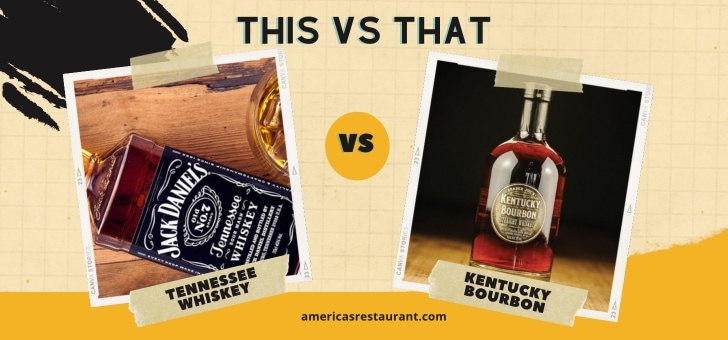
What is Tennessee Whiskey?
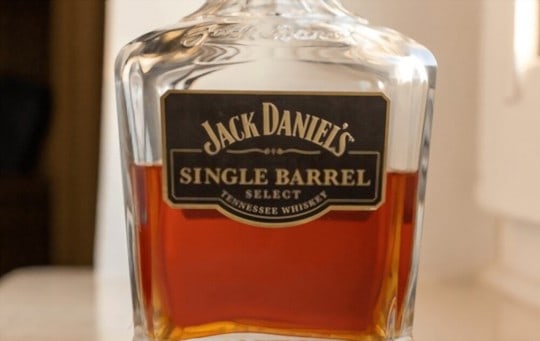
As a type of American whiskey, Tennessee whiskey is known for its unique characteristics that distinguish it from other American whiskeys.
The name "Tennessee whiskey" is designated for whiskey that meets specific requirements such as being distilled in Tennessee, charcoal filtered, and aged in new charred oak barrels.
These requirements are overseen by the Tennessee Whiskey Association, adding an air of exclusivity and distinction to this type of whiskey.
The process of charcoal filtering, also known as the Lincoln County Process, involves running the whiskey through sugar maple charcoal before aging, giving it a smooth and mellow flavor.
The wood used for barrel-aging also plays a significant role in the final product, as the charred oak imparts citrus, vanilla, and caramel notes to the whiskey - for a short primer on tasting terms see extract vs flavor distinctions.
These various factors work together to create a distinctive spirit that sets Tennessee whiskey apart from other types of American whiskey.
Tennessee whiskey's sweeter notes can pair nicely with citrus desserts; what goes well with lemon in desserts suggests complementary flavor matches.
What is Kentucky Bourbon?
Kentucky Bourbon is a type of whiskey that is produced exclusively in the state of Kentucky, United States.
It is made from a mash bill of at least 51% corn, and the remaining grains typically include rye, barley, or wheat.
The mixture is then fermented with yeast and distilled to create a clear, high-proof spirit.
But what sets Kentucky Bourbon apart is the aging process.
The spirit is aged in new, charred oak barrels for a minimum of two years, which imparts its distinctive color, flavor, and complexity.
From oaky and vanilla notes to spicy undertones and a smooth finish, Kentucky Bourbon offers a range of flavors that can appeal to any palate.
And since the state of Kentucky is known for its limestone-rich soil, many believe it contributes to the unique taste of the spirit.
With over 200 years of history, tradition, and craftsmanship, Kentucky Bourbon has become a staple not just in its home state, but worldwide.
Kentucky Bourbon's bold, oaky character suits hearty, savory pairings; for ideas on complementary savory combos see what to eat with guacamole which highlights robust flavor matches.
Differences Between Tennessee Whiskey and Kentucky Bourbon

There are discernible differences between the traditional spirits of Tennessee whiskey and Kentucky bourbon that connoisseurs should know about, and a whiskey vs liquor comparison clarifies how those spirits fit into broader legal categories.
Tennessee whiskey undergoes charcoal filtering before being aged in new, charred oak barrels, while a majority of Kentucky bourbons don't have this filtration process.
This gives Tennessee whiskey its signature smoky, sweet flavor while bourbon is characterized by its deep amber color and woody, vanilla notes.
Also, Jack Daniel's has to be produced in Tennessee (Lincoln County) specifically, whereas bourbon can be produced anywhere in the United States.
Production Process
The detailed process of crafting Tennessee whiskey and Kentucky bourbon begins with similar techniques.
The production method involves:
- milling the grains.
- adding yeast to ferment the mash.
- distilling it in copper pots and.
- aging it in charred oak barrels.
One of the variations between the two lies in the filtration step.
Tennessee whiskey filters through sugar maple charcoal before aging, while Kentucky bourbon undergoes no such filtration.
This step imparts a distinct flavour profile, making Tennessee whiskey sweeter than Kentucky bourbon.
Apart from filtering, one important difference is that to label as Bourbon, it must be made in Kentucky state containing at least 51% corn and stored for over two years in charred new oak containers.
On the other hand, Tennessee whiskey follows all regulations and requirements of being called Bourbon; however, undergoes an additional filtering process that makes a unique characteristic flavor.
While both types of whiskey share some common characteristics during the production process, such as use of comparable ingredients, most Tennessee whiskeys are sweeter due to their charcoal-mellowing technique before going into barrels which differentiates them from Bourbon.
Understanding these subtle differences can help individuals make a choice between Tennessee whiskey or Kentucky bourbon by identifying your preferred taste.
Ingredients Used
Whiskey and bourbon, famous for their strong flavors, complexity, and unique aromas, are distilled using different ingredients.
For whiskey, the primary ingredient is malted barley, while corn is the key ingredient in bourbon.
The quality of other grains used in whiskey and bourbon distinguishes them from one another.
The ingredients play a significant role in determining the final taste and color of these spirits.
flavor
The flavor of Tennessee whiskey is characterized by its smooth and sweet taste with a distinct smoky flavor.
It is made from at least 51% corn and is filtered through sugar maple charcoal before aging in new, charred oak barrels.
On the other hand, Kentucky bourbon has a diverse range of flavor characteristics due to its varying mash bill and barrel aging process.
Typically, it has a rich, oaky flavor with hints of vanilla, caramel, and sometimes even spice.
In terms of aroma, Tennessee whiskey has a distinctive scent of caramel and vanilla with subtle hints of smoke.
In contrast, Kentucky bourbon exhibits aromas such as toasted oak, nuts, dark fruits and spices.
However, both drinks have their own unique flavors that make them stand out from one another.
While bourbon can be made anywhere in the United States as long as it adheres to strict regulations, true Tennessee whiskey must be produced within the state's borders.
Also, Tennessee whiskey undergoes a unique filtering process known as the Lincoln County Process which gives it its characteristic smoothness.
Overall, whether you prefer the sweet smokiness of Tennessee whiskey or the rich complexity of Kentucky bourbon comes down to personal preference.
Both drinks offer unique flavors that are worth exploring for any whiskey enthusiast.
Aging Requirements
The maturation process or the age of a whiskey significantly impacts its taste and quality.
Both Tennessee whiskey and Kentucky bourbon are required to be aged for a specific period before being labeled as such.
Distilled from at least 51% corn, Kentucky bourbon must be aged in new, charred oak barrels for a minimum of two years.
In contrast, Tennessee whiskey follows similar regulations but undergoes further filtration through charcoal made from sugar maple wood before aging in new, charred oak barrels.
This unique filtration process, known as the "Lincoln County Process," adds distinct flavors to Tennessee whiskey that sets it apart from other American whiskeys.
Similarities Between Tennessee Whiskey and Kentucky Bourbon
Tennessee whiskey and Kentucky bourbon have various similarities that are quite noteworthy, and guidance on common serving styles appears in whiskey neat vs on the rocks comparison.
Both are whiskeys made from fermented grains, with their base being corn.
Federal law dictates they must be aged for a minimum of two years to bear the names 'Tennessee whiskey' or 'Kentucky bourbon'.
Also, distillers use the sour mash process to create both types of whiskey and they go through similar processes of vatting, blending, bottling, and aging.
The canning procedures employed by both types of beverages are equivalent as well.
Also, they both require virgin barrels for aging.
However, there are still specific differences between Tennessee whiskey and Kentucky bourbon that distinguish them from one another in taste and identity.
They undergo different filtering processes before being bottled, which lends a distinct flavor to each drink.
The location and unique environments also impact the final product.
Culinary Uses for Tennessee Whiskey and Kentucky Bourbon

Whiskey and Bourbon have become staples in culinary arts due to their unique flavors, and comparing other styles like irish vs scotch whisky differences helps explain which profiles suit sweet or savory dishes.
Their distinct profiles make them popular ingredients in both sweet and savory dishes.
From marinades to sauces, and even desserts, Tennessee Whiskey and Kentucky Bourbon have a variety of culinary uses that add depth to any recipe.
One of the most common uses for these spirits is as a flavoring agent for meats.
Tennessee Whiskey's sweetness makes it an elegant choice for pork recipes, while Kentucky Bourbon's oakiness pairs well with beef.
They can also be used as a marinade for fish or seafood.
Another way of incorporating whiskey or bourbon into your cooking is by making sauces.
Both Tennessee Whiskey and Kentucky Bourbon are great ingredients for BBQ sauces, steak sauces, salad dressings, and more.
Tennessee Whiskey can add complexity to cakes, ice-creams, puddings, amongst other desserts.
Also, they're now often used in cocktails and pair well with many seasonal drinks.
Using Tennessee Whiskey or Kentucky Bourbon in your kitchen improves your dishes to another level.
It's the perfect ingredient when you want to introduce a unique flavor into your recipe without altering its core ingredients' taste.
Famous Brands of Tennessee Whiskey and Kentucky Bourbon
Tennessee whiskey and Kentucky bourbon are both popular forms of American whiskey.
These spirits have their unique flavours, production methods, and geographical locations that distinguish them from each other, similar to comparisons like brandy vs bourbon differences that highlight production contrasts.
Several well-known brands of Tennessee whiskey include Jack Daniel's and George Dickel, while famous Kentucky bourbon brands include Maker's Mark and Woodford Reserve.
Both whiskeys strive to maintain a high level of quality and craftsmanship.
One significant difference between the two is that Tennessee whiskey undergoes an additional step in the production process known as the 'Lincoln County Process.
' This means that before aging, the alcohol content passes through a layer of maple charcoal.
This filtration helps create Tennessee whiskey's distinct flavour profile.
Tennessee Whiskey vs Kentucky Bourbon Differences
It is clear that Tennessee Whiskey and Kentucky Bourbon are two unique spirits with deep rooted history.
Both are they made in separate regions, but there are also differences in the production process, flavors, and even the laws governing their production.
When trying to decide which one you should purchase for your next celebration or collection, consider not only your flavor preferences but also the origin of the whiskey or bourbon.
No matter what type you choose, rest assured that each option features its own great qualities so you can't go wrong.
All things considered, do some research and make an informed decision when considering your next drink.
Frequently Asked Questions
But what is the difference between them? They share some similarities but each has qualities that make it better suited for certain recipes.
Sometimes. Tennessee Whiskey works where Kentucky Bourbon is called for in certain dishes, but not all.
Check whether the recipe relies on a specific quality before substituting.
Cold preparations like salads and dressings often favor the option with a sharper, more defined flavor. Heat can mellow both, so the distinction matters more in uncooked dishes.
Do professional cooks prefer one over the other?
Professional preference depends heavily on the dish and cuisine style.
Each has its context where it outperforms the other, so most experienced cooks keep both on hand.
bourbon sauce taste explained outlines how bourbon behaves in pan sauces, and bourbon substitutes for cooking lists five workable alternatives when a recipe calls for bourbon.