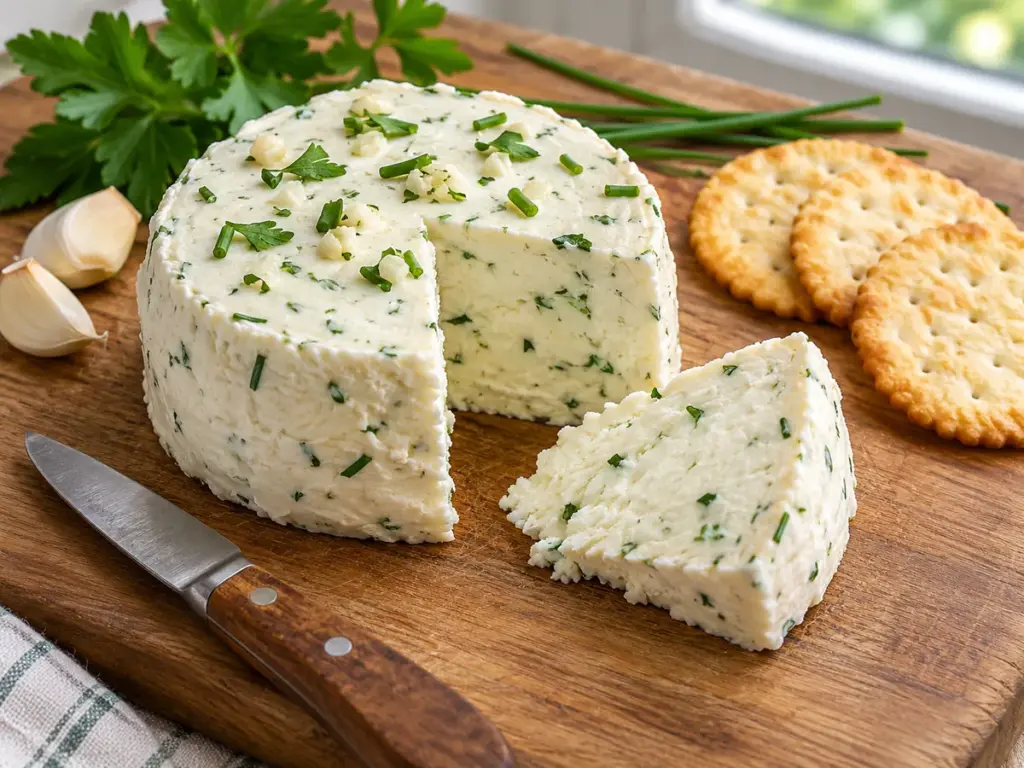
Classic Boursin Garlic & Fine Herbs tastes creamy, savory and garlicky, with a mild milky tang, parsley and chive on top, and a salty finish.
- It spreads like cream cheese but feels slightly crumbly.
- If garlic is too much for you, Shallot & Chive is the milder flavor.
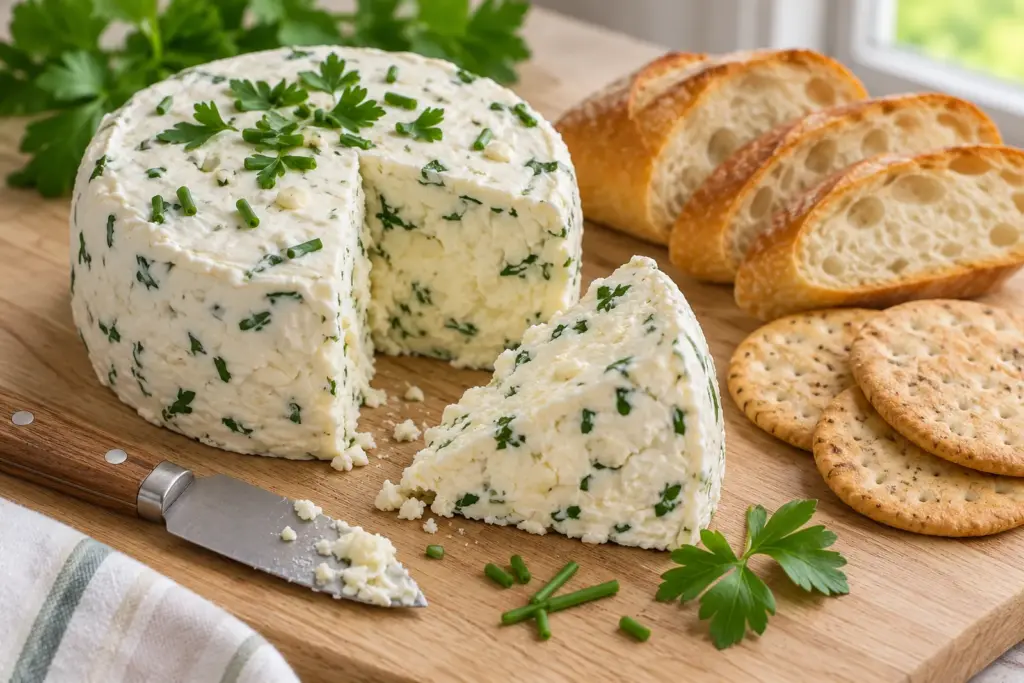
Boursin is a French brand with many flavors, so what you taste depends on the label you pick up. If you are matching it against other foods and their flavors, the classic is closest to a cream cheese seasoned like a garlic-and-herb dip.
1. What Does Boursin Cheese Taste Like?
The classic starts with pasteurized cultured milk and cream, so the first note is rich, buttery and a little tangy, the way a fresh cheese is. Garlic, herbs and salt then take over, and the overall taste reads as savory rather than sweet. The US ingredient list shows where each part of the flavor comes from:
- Milk and cream: Because the cheese is fresh and unaged, it has none of the sharpness of an aged cheese. Each 2 tablespoon (29 g) serving has 11 g of fat, 7 g of it saturated, which explains the full, buttery feel.
- Dried garlic: Garlic is the loudest flavor, but since it is dried, it tastes savory and rounded rather than hot like a raw clove.
- Parsley and dried chives: The parsley adds a green, grassy note, and the chives add an onion-like flavor from chives without a raw bite.
- Salt and white pepper: A serving has 170 mg of sodium, which is 7% of the Daily Value, and the white pepper adds a faint warmth in the background.
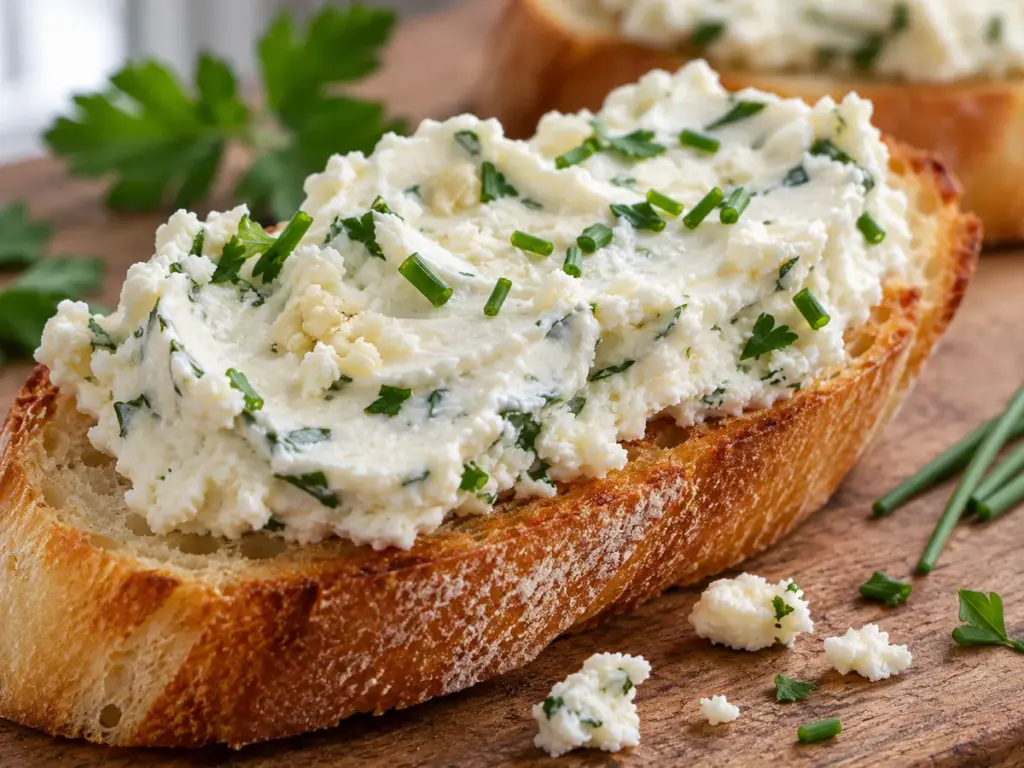
Boursin describes the classic as slightly crumbly yet creamy. Straight from the fridge, you will find it holds together and breaks into soft crumbs, and after a short rest on the counter it spreads smoothly. Keep that rest well under the 2-hour limit the USDA sets for perishable food, or 1 hour when the room is above 90°F.
If you like ranch flavor, you will probably like Boursin too, because both lean on garlic, herbs and a creamy dairy base.
2. How Do the Boursin Flavors Compare?
Boursin's US spreads go well beyond the original, and a different label changes the whole taste. This table pairs the brand's own description of each flavor with the dishes we would use it in:
- Boursin describes Garlic & Fine Herbs as slightly crumbly yet creamy and easy to spread on crackers.
- Boursin describes Shallot & Chive as mild, with subtle shallot and more robust chive.
- Boursin describes Basil & Chive as sweet basil with zesty chive.
- Boursin describes Caramelized Onion & Herbs as tangy caramelized onion with herbs.
- Boursin describes Rosemary & Black Garlic as rich, earthy black garlic with bright rosemary.
- Boursin describes Black Truffle & Sea Salt as earthy truffle balanced with herbal and salty notes.
- Boursin describes Hot Honey & Roasted Garlic as sweet honey and savory roasted garlic with a spicy finish.
| Flavor | Where we'd use it |
|---|---|
| Garlic & Fine Herbs | Crackers, baked potatoes, hot pasta |
| Shallot & Chive | Scrambled eggs, bagels, anyone who finds garlic too strong |
| Basil & Chive | Tomato toast, sandwiches |
| Caramelized Onion & Herbs | Burgers, steak, flatbread |
| Rosemary & Black Garlic | Roasted potatoes, mushrooms |
| Black Truffle & Sea Salt | Cheese boards, plain crackers |
| Hot Honey & Roasted Garlic | Pizza, charcuterie boards |
Only the classic leads with garlic and fine herbs, so if a recipe calls for Boursin, check which flavor it means before you buy. Shallot & Chive is the safest pick for a mild dish, because the brand itself calls it mild.
3. How Do You Eat and Cook With Boursin?
You can eat Boursin straight from the tub, or you can melt it into a warm dish. The cold and warm uses work differently, so here is how we would split them:
- Spread it on a baguette or cracker.
- Crumble it over salad in place of dressing.
- Use it on sandwiches instead of mayo.
- Whisk a spoonful into vinaigrette.
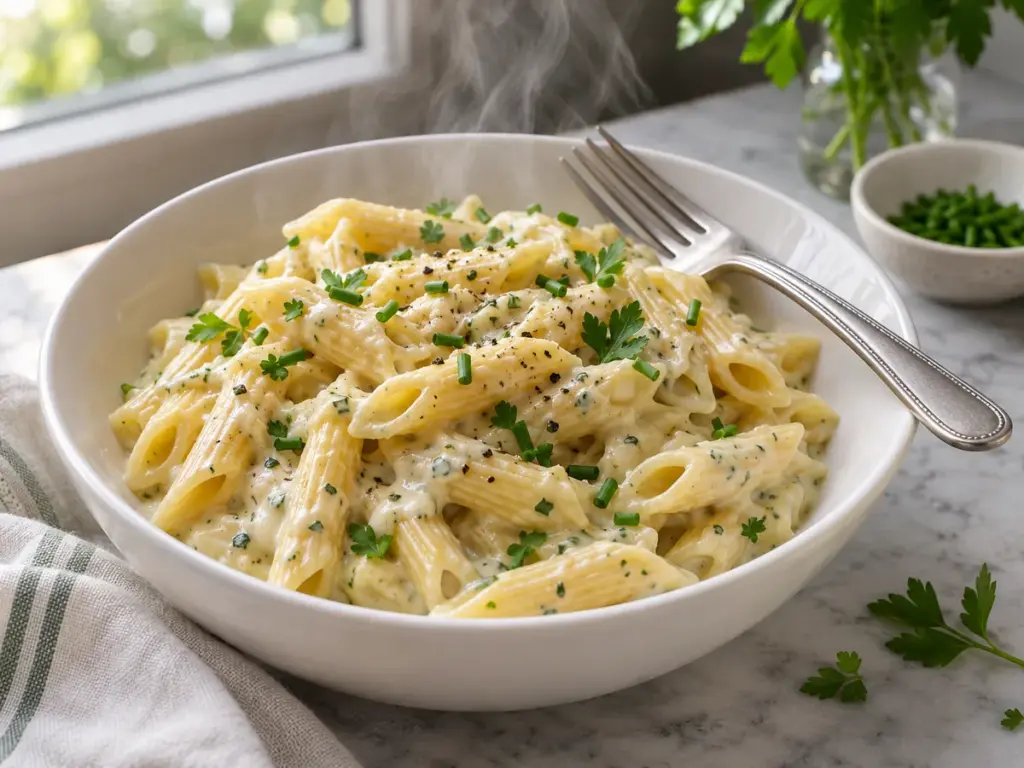
- Stir it into hot pasta with a splash of pasta water.
- Fold it into mashed potatoes.
- Stuff it into chicken breasts before baking.
- Swirl it into scrambled eggs as they set.
We would pick pasta for the warm uses, because the cream in the cheese turns a splash of hot pasta water into a light, garlicky coating. At about 2 tablespoons per plate, one 5.3 oz container, which holds about five servings, covers five plates.
4. Which Cheeses Taste Closest to Boursin?
No other cheese tastes exactly like it, but when the store is out, several cheeses that stand in for Boursin work well in dips and pasta. They differ in how much seasoning you have to add:
- Cream cheese: It is the closest match in texture, but it is plain, so you need to mix in minced garlic, parsley and chives to get near the flavor.
- Ricotta: Its mild, milky flavor is a blank slate, so it needs the same garlic and herbs, plus salt.
- Camembert: You will taste earthy, buttery notes from its white rind instead of garlic, so it suits a cheese board better than a recipe that depends on the herb flavor.
5. Where Does Boursin Cheese Come From?
Boursin is a French brand of soft, fresh Gournay-style cheese made from cow's milk and cream. Its maker, the Norman cheesemaker François Boursin, based the recipe on fromage frais, a traditional party dish that blends garlic, cream, soft cheese, herbs, salt and pepper. The brand's own history gives this timeline:
- 1957: François Boursin opens his cheese factory in Croisy-sur-Eure, in northern France.
- 1961: A French newspaper wrongly reports that a garlic Boursin has launched, and customers start asking for it.
- 1963: After about two years of work, he launches Garlic & Fine Herbs, which becomes the brand's best-known flavor.
Some encyclopedia pages date the garlic and herb flavor to 1957, but the brand's own history puts it in 1963, so we use that date. The name also has a small twist: the fine herbs of French cooking usually mean parsley, chives, tarragon and chervil, yet the US ingredient list names only parsley and chives.
6. How Long Does Boursin Last in the Fridge?
The package says to keep Boursin refrigerated, and the brand's US page gives no shelf life for an opened tub, so go by the date printed on your package. For a ceiling, USDA FoodKeeper lists 2 weeks for cream cheese and 1 to 2 weeks for soft cheeses such as brie. Plan to finish an opened package within that range, and skip freezing, since FoodKeeper does not recommend it for cream cheese and Boursin is a similar fresh cheese.
Sources
- The Boursin Story (Boursin, brand history and dates)
- Boursin Garlic & Fine Herbs (Boursin, ingredients and nutrition per serving)
- Boursin products (Boursin, flavor descriptions)
- Boursin cheese (Wikipedia, Gournay-style cheese)
- Fines herbes (Wikipedia, classic herb mix)
- FoodKeeper (USDA, cream cheese and soft cheese storage)
- "Danger Zone" (40°F - 140°F) (USDA FSIS, 2-hour and 1-hour limits)

Food writer at GustoMeadow. Writes ingredient substitutes, food comparisons, taste guides and storage guides for home cooks.
Storage and food-safety numbers follow USDA, FDA and university extension guidance.