
When you fry a turkey without peanut oil, refined avocado, safflower, sunflower, soybean and canola oil all work, because each one stays below its smoke point at 350°F.
- The oil goes only up to a line you mark with water, because the bird raises the level.
- The fryer belongs outdoors, and the bird goes in thawed and dry and comes out at 165°F.
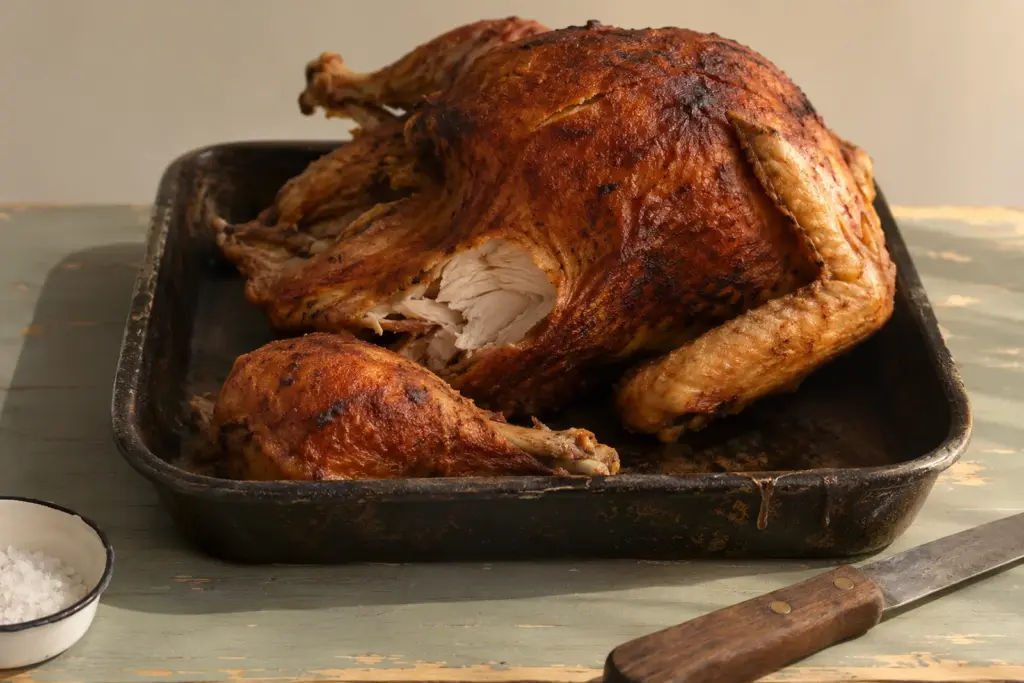
You pick a frying oil the way you pick any ingredient swap, but a turkey fryer adds safety rules that a skillet never needs. When a peanut allergy or an empty store shelf rules out peanut oil, you still have five oils below that clear the frying temperature.
What Does Peanut Oil Do in a Turkey Fryer?
Peanut oil holds 350°F for the whole cook without smoking. Clemson Cooperative Extension and USDA both give 350°F as the frying temperature, and Mississippi State University Extension lists peanut oil's smoke point at 441 to 445°F, so the oil stays well short of its limit while you fry.
If the oil starts smoking, University of Illinois Extension says it is no longer fit to eat and should be discarded, and the Consumer Product Safety Commission (CPSC) tells you to turn the gas supply off right away.
Whatever oil you pick needs a smoke point well above 350°F. Unrefined sesame oil misses that mark, since University of Illinois Extension lists it at just 350°F and that leaves you no margin at all.
If you are cooking a stir-fry or a cake instead, a broader list of peanut oil swaps fits those dishes better.
5 Best Substitutes for Peanut Oil for Deep-Frying Turkey
All five oils clear 350°F, and refined avocado oil gives you the widest margin.
| Oil | Smoke Point | Headroom Over 350°F |
|---|---|---|
| Refined avocado | 520°F | 170°F |
| Safflower | 510°F | 160°F |
| Sunflower | 486 to 489°F | 136 to 139°F |
| Refined soybean | 453°F | 103°F |
| Refined canola | 400°F | 50°F |
| Peanut (the oil being replaced) | 441 to 445°F | 91 to 95°F |
Four of the five oils have more headroom than peanut oil itself, and refined canola is the only one with less.
Smoke points come from Mississippi State University Extension, except safflower, which comes from University of Illinois Extension. Headroom is the smoke point minus 350°F, calculated for this page.
Mississippi State does not say whether its avocado and soybean oils are refined, so the bottle label on those two tells you what you are buying.
1. Refined Avocado Oil
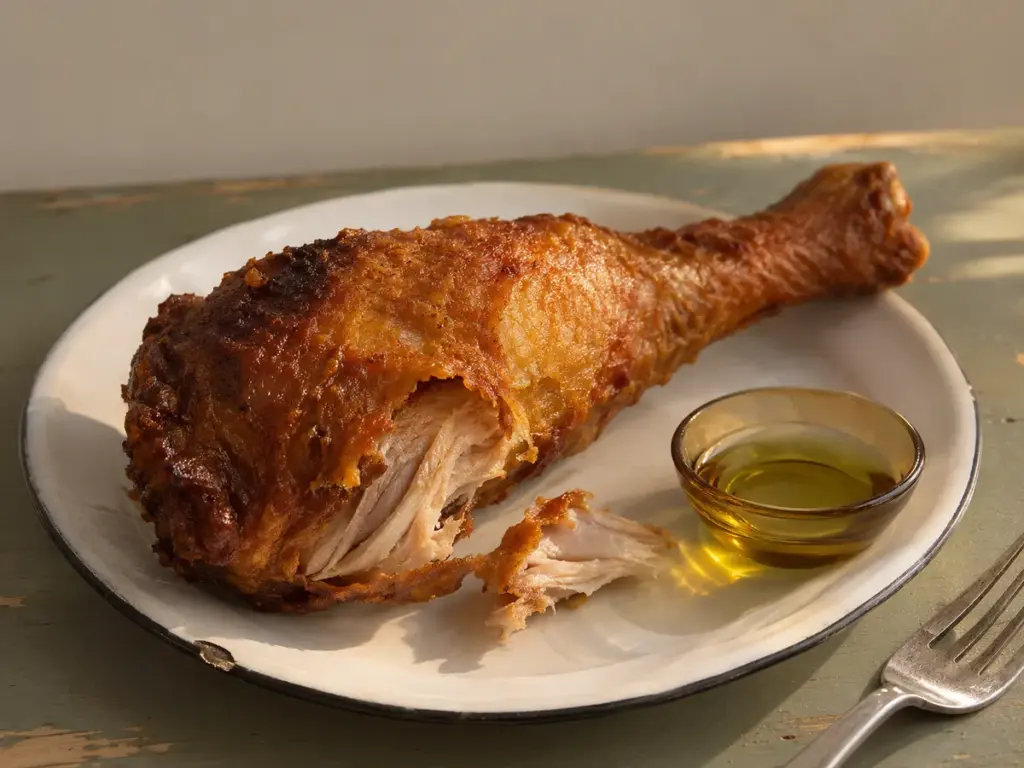
With a smoke point of 520°F according to Mississippi State University Extension, avocado oil gives you the most headroom of the five. Because that table lists "avocado oil" without saying refined, you want a bottle label that shows a smoke point of at least 400°F, the minimum Illinois Extension names for frying.
Avocado oil comes from the fruit, while the other four oils here come from seeds or beans, so it is the one to pick if you want to avoid seed oils.
With 170°F of room over the frying temperature, you can overshoot by a few dozen degrees and still stay clear of smoke. Because a turkey fryer holds several gallons, you also want to measure the pot before you buy that much.
2. Safflower Oil
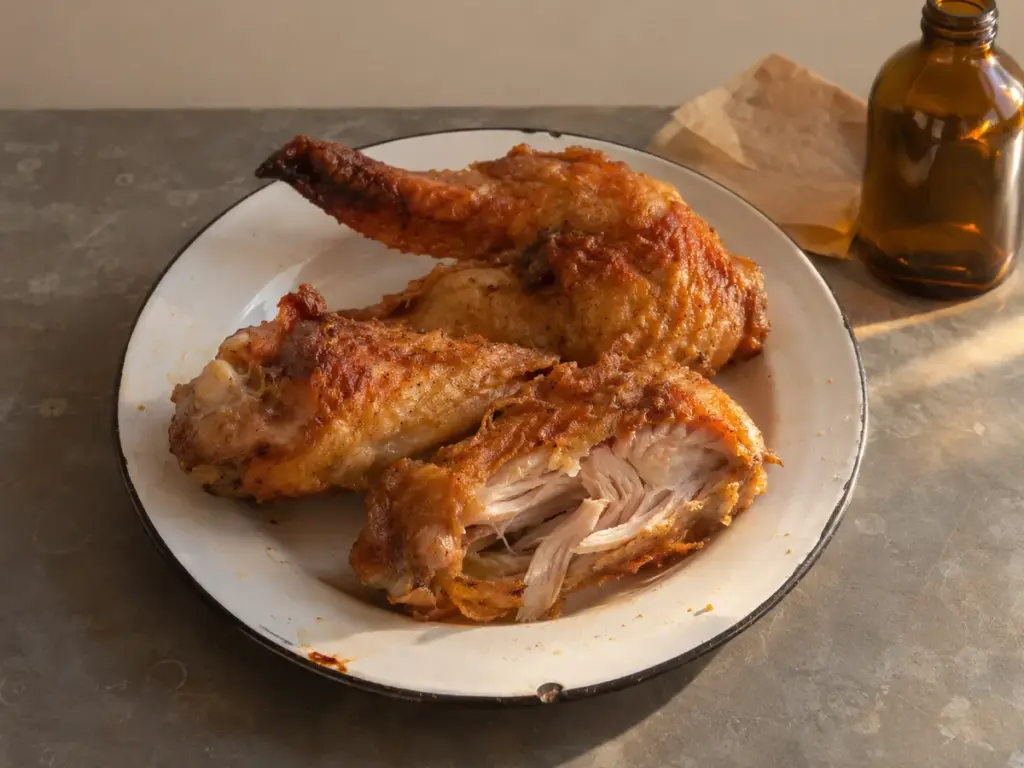
According to University of Illinois Extension, safflower oil comes second at 510°F, and the same source advises oils with a smoke point of at least 400°F for frying. That puts safflower 110°F above the frying minimum and 160°F above the 350°F turkey temperature, so you have plenty of room.
Avocado and safflower are the only two oils here above 500°F, and both sit above peanut oil. When safflower is hard to find where you shop, oils that stand in for safflower include several from this list.
3. Sunflower Oil
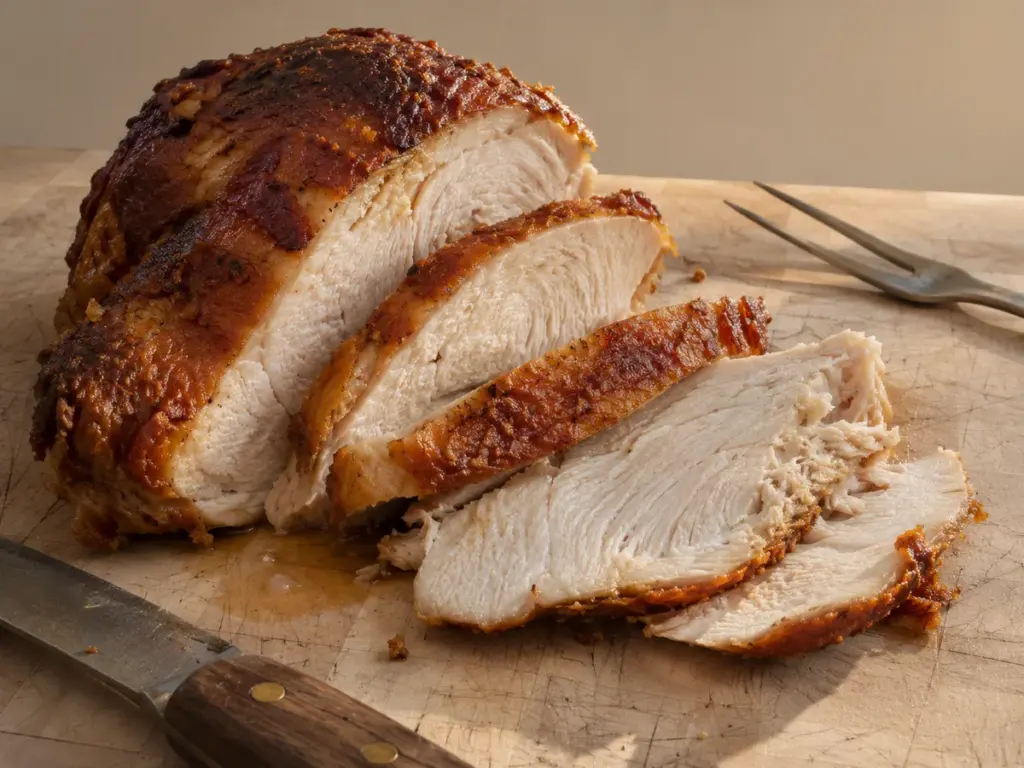
University of Illinois Extension names sunflower oil among the oils to aim for in deep frying, and Mississippi State University Extension gives it a smoke point of 486 to 489°F. That leaves you 136 to 139°F of headroom.
If you preheat to 375°F, the top of the range University of Illinois Extension gives, sunflower oil still keeps 111 to 114°F of headroom. When you find the shelf empty, other oils that replace sunflower cover the gap.
4. Refined Soybean Oil
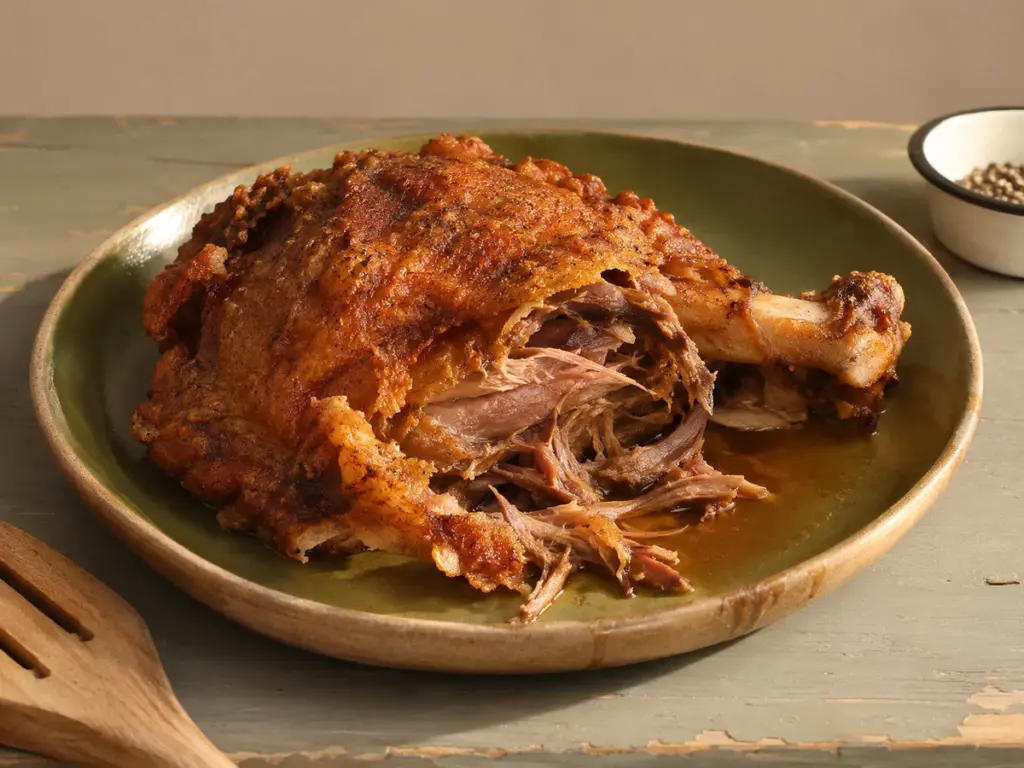
At 453°F (Mississippi State University Extension), soybean oil sits only a few degrees above peanut oil's 441 to 445°F, so it behaves most like the oil it replaces. Mississippi State's table does not say whether its soybean oil is refined, so you confirm a smoke point of at least 400°F on the bottle label.
Soybeans are a major food allergen, so this is the one oil on the list you skip for a guest with a soy allergy. When the shelf is empty or a guest avoids soy, soybean oil alternatives give you more choices.
5. Refined Canola Oil
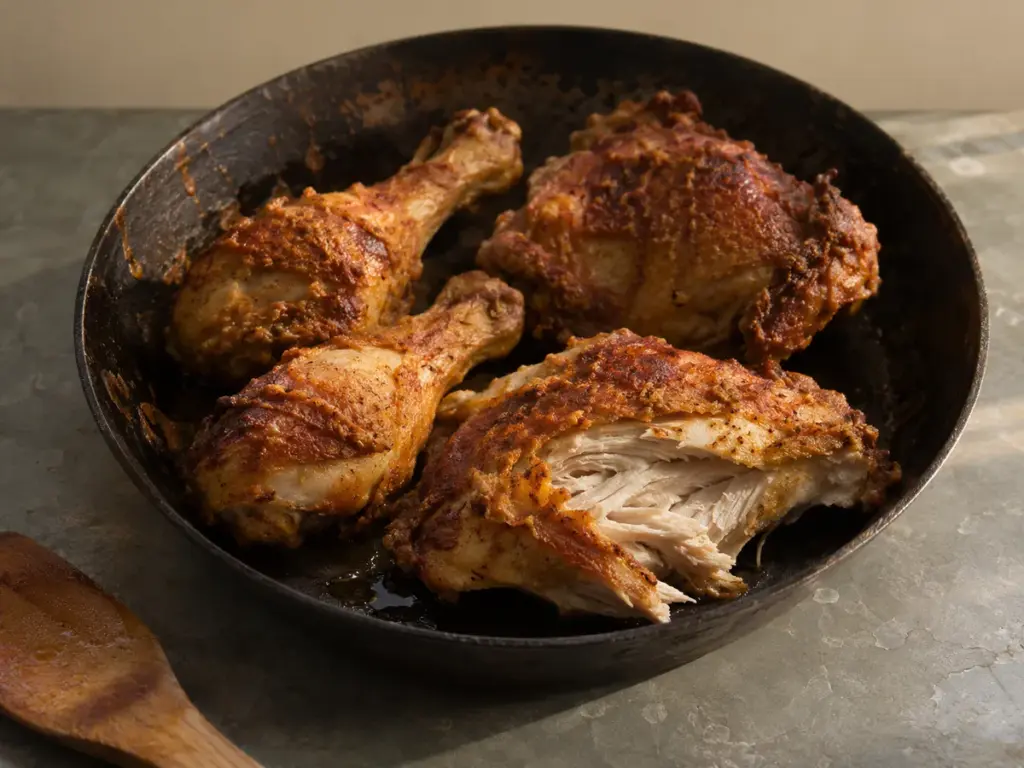
Refined canola oil gives you the least headroom here, because Mississippi State University Extension lists 400°F for refined canola and 428 to 446°F for pressed canola. A refined bottle therefore sits 50°F above the frying temperature.
That margin is enough, though it leaves less room for error, so the thermometer needs a closer eye than it does with the other four. When canola is not on your shelf, canola oil alternatives offer more options.
Can You Mix Peanut Oil With Another Oil?
Yes, as far as smoke point goes, you can blend them. Peanut oil is 441 to 445°F and every oil in the table is 400°F or higher, the minimum Illinois Extension names for frying, so a blend clears 350°F.
Whichever oil in a blend has the lowest smoke point sets the limit you work with. University of Illinois Extension lists generic vegetable oil at 400 to 450°F, which also clears 350°F.
If a guest has a peanut allergy, a blend still puts peanut oil in the pot with the turkey, so one of the five oils on its own is the safe choice.
How Much Oil Does a Turkey Fryer Need?
Because the turkey pushes the level up when it goes in, you pour oil to a mark instead of measuring it in cups. A pot of water shows you where that mark belongs.
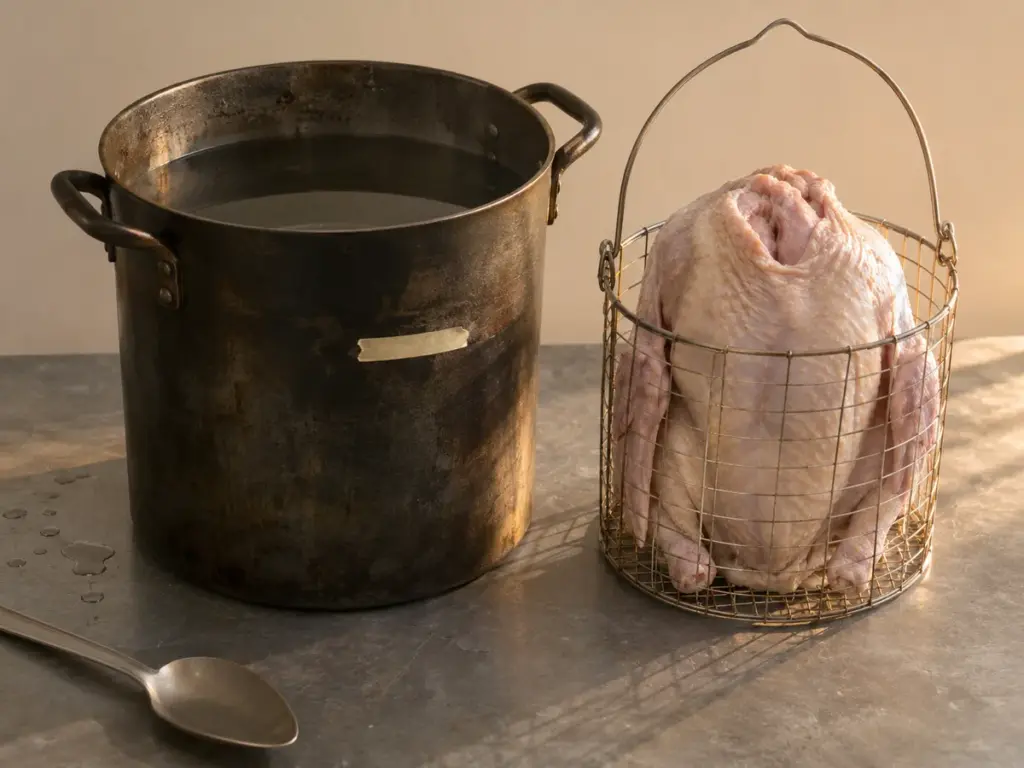
- Set the turkey in its basket and lower it into the empty pot.
- Add water until it covers the bird by at least 1 inch.
- Lift the turkey out and mark the water level on the pot.
- Dump the water and dry the pot and the bird completely.
The oil goes in only up to that mark. University of Illinois Extension estimates 5 gallons for an 8 to 10 pound turkey, but the mark on your own pot gives you the real number.
If the water covered the bird only when the pot was nearly full to the rim, the pot is too small, and USDA says to choose a pot large enough to submerge the turkey without spilling.
The National Turkey Federation gives the 1-inch water cover, as reported by University of Illinois Extension, and the mark-and-dump steps follow the National Park Service.
Turkey Fryer Safety Rules
- Fully thawed and dry: CPSC advises that the turkey be completely thawed and dried before it goes in the oil.
- Outdoors only: the fryer belongs on open ground away from walls and fences, and never under a garage or porch roof (CPSC).
- Never overfill: oil spills out of an overfilled pot when the bird goes in, as the National Park Service warns.
- Fryer in view: CPSC says the fryer should stay in your full view the whole time the burner is on.
- Bird size: USDA guidance caps the bird at 12 pounds, and you can fry parts such as breasts, wings or legs instead (UW-Madison Extension).
University of Illinois Extension warns that a mixture of water and oil can cause an explosion, which is why the pot and the bird both have to be completely dry before the oil goes in.
What Temperatures Should the Oil and the Turkey Reach?
USDA and Clemson Extension both give 350°F for the oil, while University of Illinois Extension's turkey page has you preheat to 365 to 375°F.
All five oils clear 375°F too, but refined canola would leave you only 25°F of headroom.
The turkey is done when your thermometer reads 165°F in the innermost part of the thigh and wing and in the thickest part of the breast. USDA advises you to lift the bird out of the oil to take the reading, and the oil you choose changes neither temperature.
Once all three spots read 165°F, the bird is ready to carve, and side dishes that suit fried turkey can go on the table.
Can You Reuse Frying Oil, and How Do You Throw It Out?
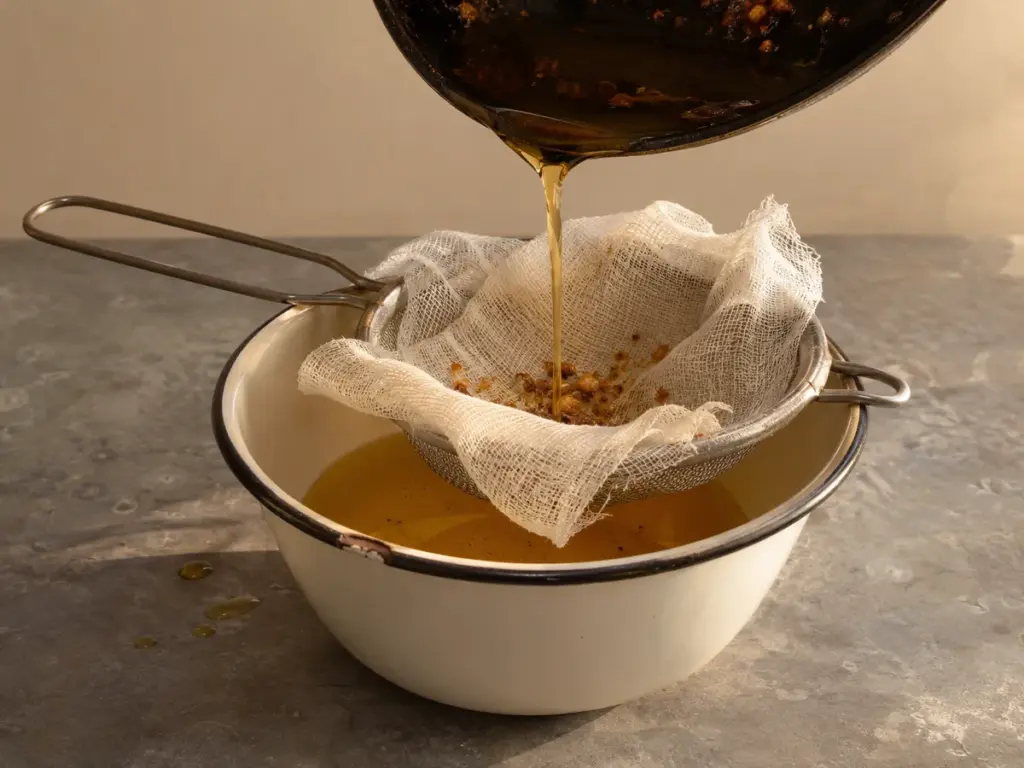
- It cools completely first.
- You strain it through cheesecloth or a coffee filter.
- You refrigerate it and reuse it within a month.
- It smoked or turned dark.
- It has an off odor.
- It foams when you reheat it.
Clemson Extension gives those rules for reusing turkey-frying oil, and it warns that used oil never belongs down the drain, because grease cools and hardens in sewer and septic lines.
Cooled oil goes into a sealed can or bottle, and from there into the trash or to a recycling center that accepts cooking oil.
What Does the FDA Say About Peanut Oil and Allergies?
FDA's allergen labeling law treats highly refined oils differently from other foods made from an allergen. Section 201(qq)(2)(A) of the Federal Food, Drug, and Cosmetic Act leaves highly refined oils made from a major food allergen out of the definition of a major food allergen, and the Senate report behind the law describes them as "refined, bleached, deodorized oils."
FDA still requires the oil's source in the ingredient name, and an oil from a major allergen that is not highly refined must carry its source as an allergen.
The National Peanut Board says unrefined, expeller-pressed or cold-pressed peanut oils still contain the protein that can trigger allergies.
That labeling rule cannot tell you whether a particular guest will react, so for a guest with a peanut allergy we'd fry in one of the five oils above and leave any other question to the guest and their allergist.
Sources
- Clemson Cooperative Extension: How to Cook Turkey
- UW-Madison Extension: Don't Make Turkey Frying a Disastrous Situation (USDA guidance)
- University of Illinois Extension: Fried Turkey
- University of Illinois Extension: Are You Using the Right Oil for the Right Job?
- Mississippi State University Extension: All About Air Fryers (oil smoke points)
- CPSC: Safety Tips for Turkey Fryers
- National Park Service: Deep Fried Danger
- NFPA: Thanksgiving Safety Tips
- FDA: Major Food Allergen Labeling and Cross-contact (CPG Sec. 555.250)
- National Peanut Board: Peanut Oil and Allergy
- Clemson Extension: Kitchen Fats, Oils, and Grease

Food writer at GustoMeadow. Writes ingredient substitutes, food comparisons, taste guides and storage guides for home cooks.
Storage and food-safety numbers follow USDA, FDA and university extension guidance.



