
Russet (Idaho) potatoes are the closest US swap for Maris Piper, because both are floury, high-dry-matter potatoes that roast and mash well.
- Swap them 1:1 by weight and prep them as the recipe says.
- In the UK or Ireland, King Edward is the nearest match, and Rooster or Desiree work.
- Yukon Gold is the backup for mash and roasts, with a creamier, less fluffy bite.
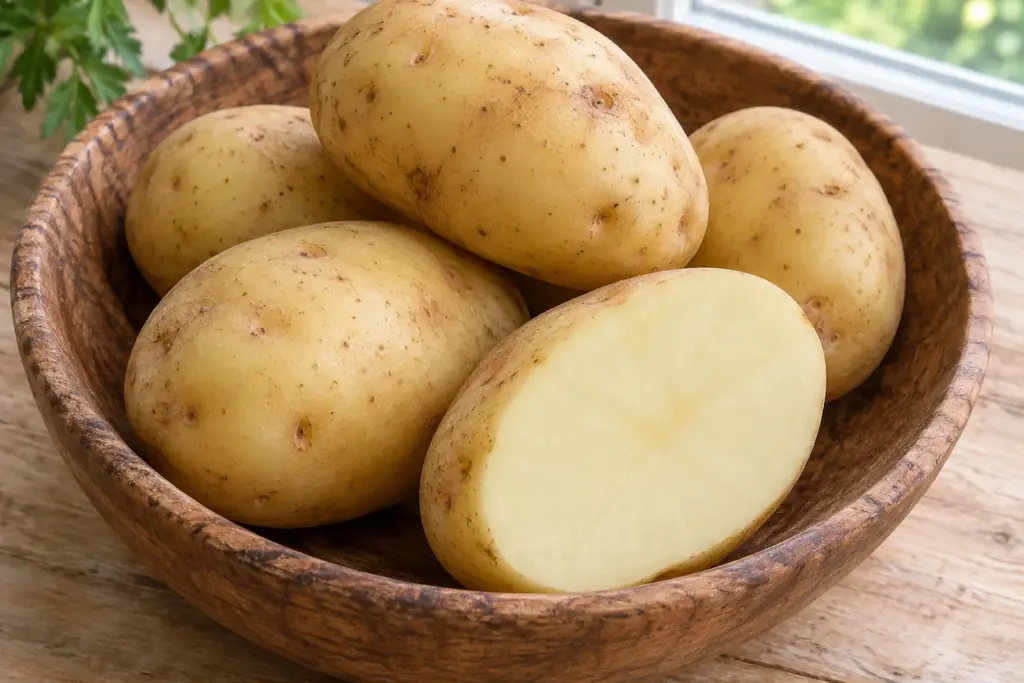
Maris Piper is the potato British recipes name for fluffy chips, roast potatoes and mash, and most US supermarkets do not stock it. If you hit that wall, it is one of the easier ingredient swaps you will make, because any other floury potato gets you a dish that comes out close to the original.
What Does a Maris Piper Do in a Recipe?
Maris Piper was bred at the Plant Breeding Institute in Cambridgeshire and reached growers in the 1960s. Wikipedia notes that it has high dry matter and low reducing sugars, the two traits that make it a favorite for chips. Dry matter is everything in the potato that is not water, mostly starch, and reducing sugars are the sugars that brown fast in hot fat.
When a potato is high in the first and low in the second, you get a dry, fluffy inside and chips that fry to gold instead of dark brown. Potato sellers describe it as a fluffy all-rounder that is great for chips and roast potatoes and good for mash and wedges.
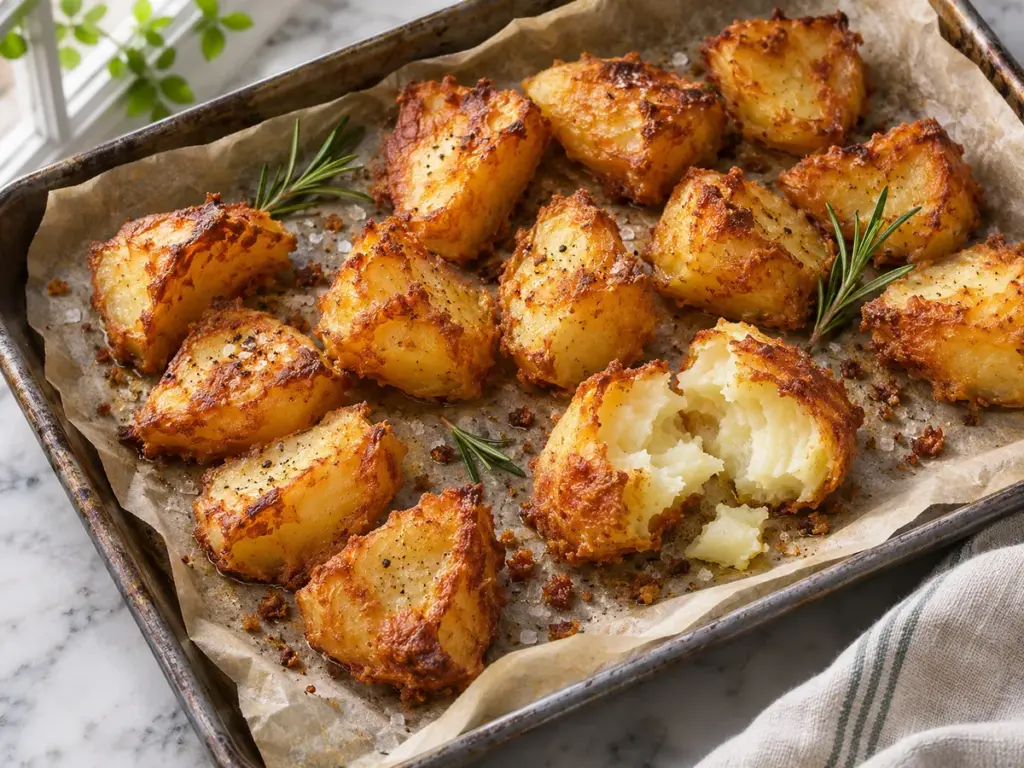
Whatever you use instead has to cover three jobs:
- The inside has to turn light and crumbly when cooked, which a roast potato or a baked potato needs.
- The outside has to crisp without burning, so the potato needs plenty of starch and little sugar.
- The flesh has to soak up butter or milk in mash without turning pasty.
5 Best Substitutes for Maris Piper Potatoes
| Substitute | Where you find it | Next to Maris Piper |
|---|---|---|
| Russet (Idaho) | Every US store | Floury, a little drier |
| King Edward | UK and Ireland | Floury, nearest match |
| Rooster | UK and Ireland | Less floury, holds shape |
| Yukon Gold | US and Canada | Creamier and denser |
| Desiree | UK and Europe | Slightly mealy, firm |
All five swap 1:1 by weight. The first two stay closest to the fluffy crumb of a Maris Piper, and the other three trade a little fluff for a firmer, creamier bite.
1. Russet (Idaho) Potatoes
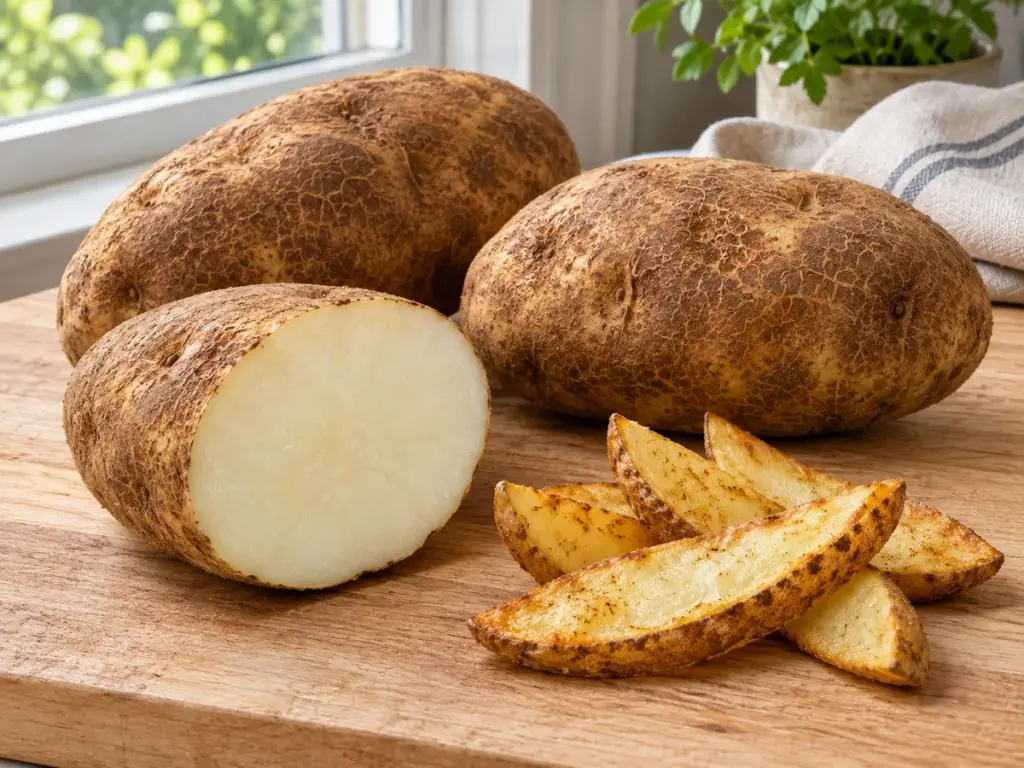
Russets are the best match you can buy in a US store. Penn State Extension says russets have a dry, mealy flesh best suited for baking, frying, and mashing, which covers nearly everything a Maris Piper does. A listing for Russet Burbank adds that it bakes up dry and fluffy and fries crisp and golden brown.
Use the same weight the recipe gives for Maris Piper. A bag of Idaho potatoes is usually russets too, so either label works for this swap.
Russets are a little drier and more crumbly than a Maris Piper, so they fall apart if you boil them too long. Take them off the heat while a knife still meets slight resistance, and for roast potatoes shake the drained pieces in the pot so the rough edges catch the hot fat.
2. King Edward Potatoes
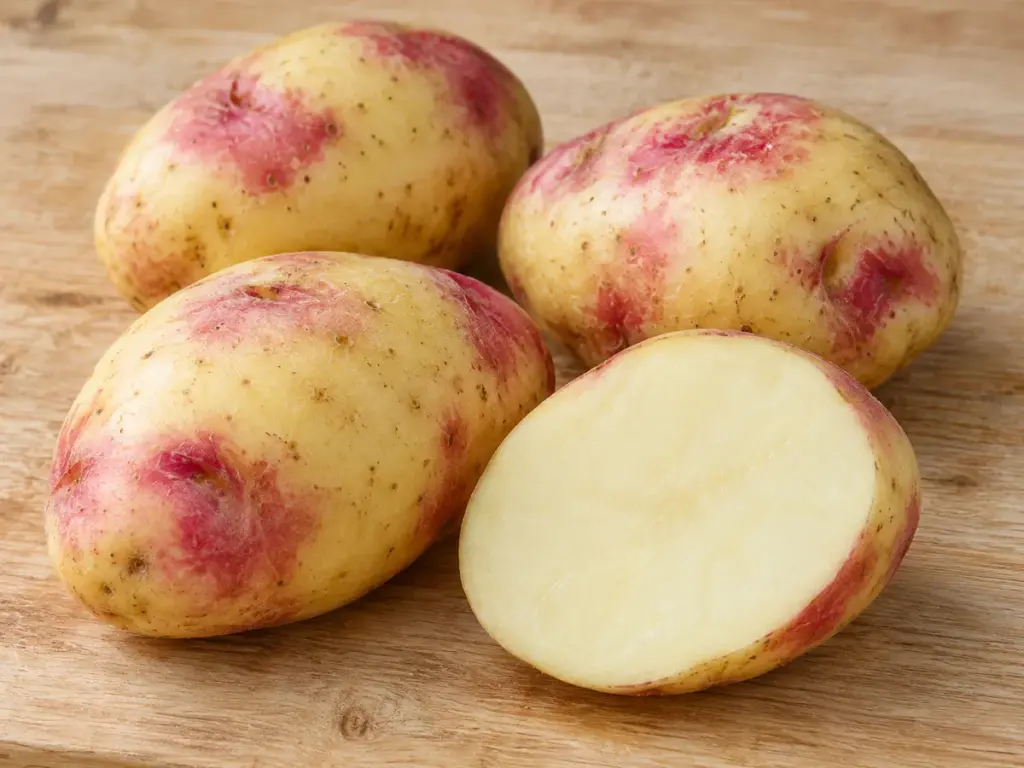
King Edward is the closest match if you cook in the UK or Ireland, and the pink patches on its cream skin make it easy to spot. PotatoPro lists it as a 1902 variety bred by John Butler, and as floury, ideal for baking, roasting, and mashing.
Because it is floury like a Maris Piper, you can cook it the same way, with the same weight, the same cut size and the same oven time. Outside the UK and Ireland it is hard to find, so a US cook is better off buying russets.
If you are choosing between the two, PotatoPro lists King Edward for baking, roasting and mashing and Maris Piper for chips and roast potatoes. For chips, a russet is the safer pick.
3. Rooster Potatoes
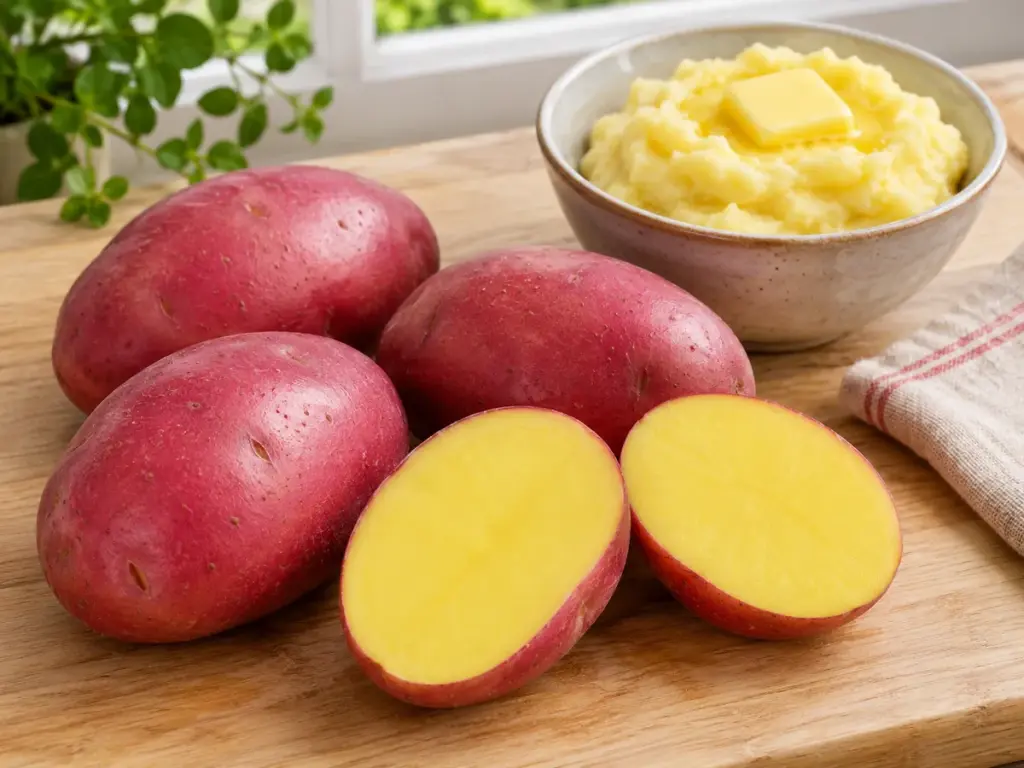
Rooster has smooth red skin and yellow flesh. Teagasc in Ireland bred it, and PotatoPro lists it as introduced in 1991 with low to medium dry matter. That makes it less floury than a Maris Piper, so you get a slightly denser mash and roast potato that holds its shape better.
The same listing says it gives very good results boiled with the skins on, mashed, chipped, roasted, steamed or baked. Use it 1:1 for roast potatoes and chips, and expect the mash to look pale gold because of the yellow flesh.
4. Yukon Gold Potatoes
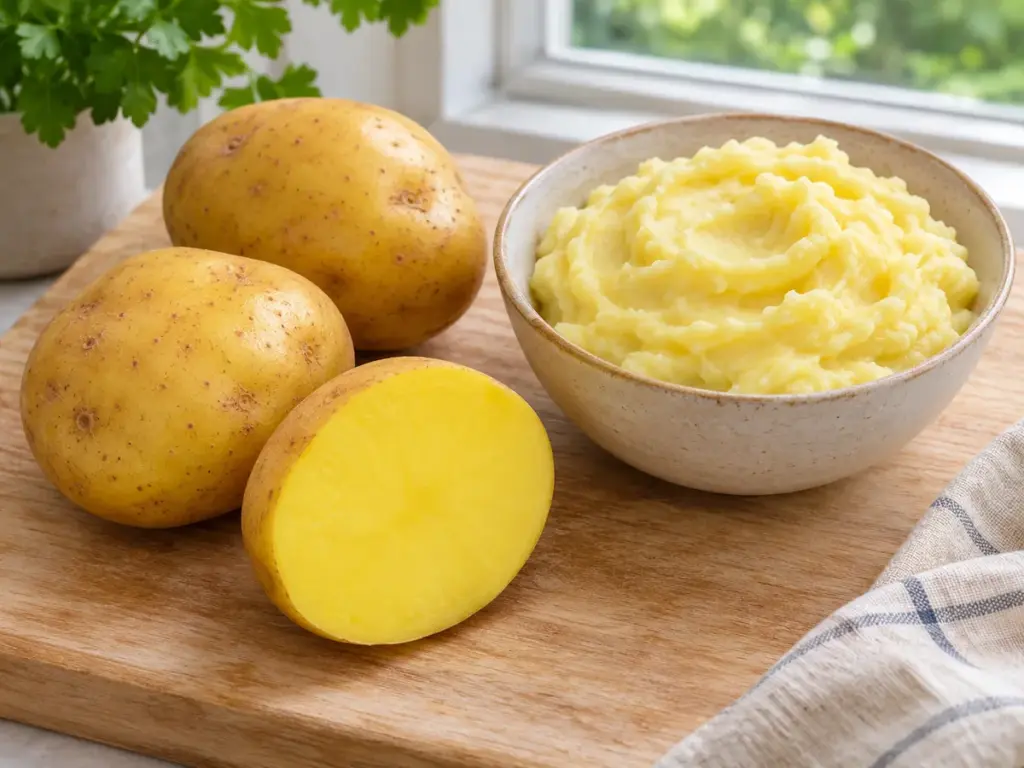
Yukon Gold is the all-purpose choice in US stores. It was bred at the University of Guelph in Ontario and reached the market in 1980. Penn State Extension calls it an all-purpose potato with a balance between dry and moist flesh.
You will get a creamier, denser result than with Maris Piper: very good mash and a good roast potato, but a less fluffy crumb inside. When Yukon Gold is out of stock too, a russet or Carola potato can stand in for it. A bag marked only "gold potatoes" may hold a different yellow-fleshed variety, and Yukon Gold and gold potatoes can differ in firmness.
5. Desiree Potatoes
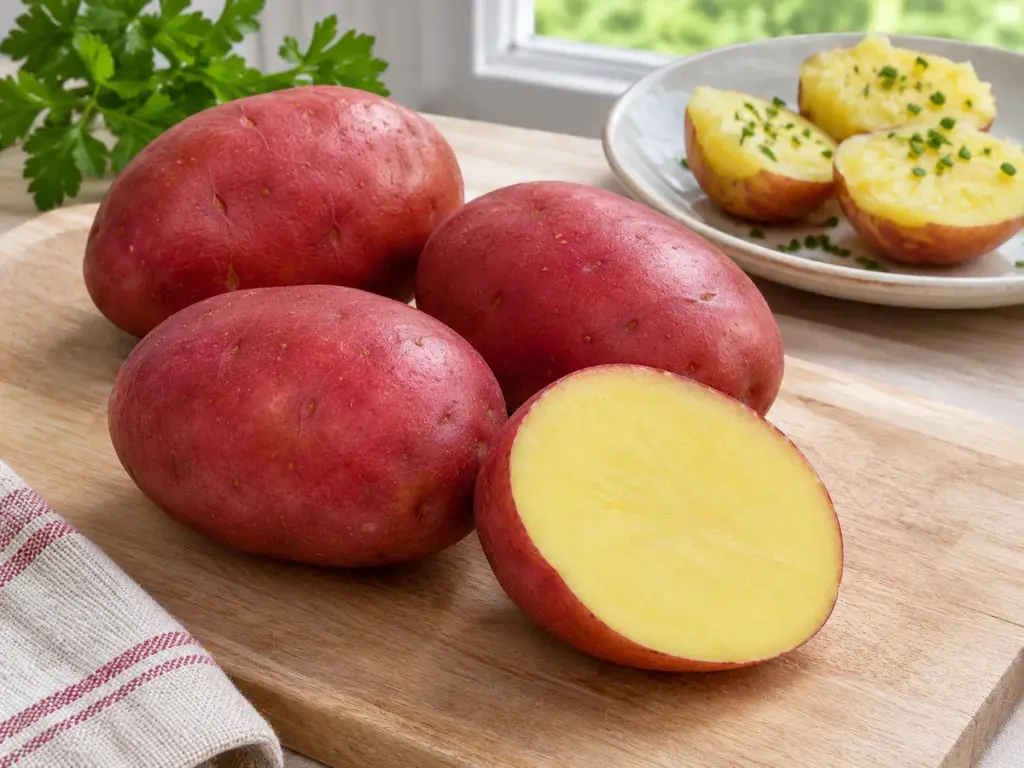
Desiree has red skin and light yellow flesh after cooking. PotatoPro lists it at 21.5% dry matter and rates it slightly mealy, with a firm cooked texture and good boiling, fry and mash quality.
Choose it when you want a firmer potato: boiled, mashed or cut into chips. Next to Yukon Gold, which gives the creamiest mash, a Desiree keeps a firmer bite after boiling. For roast potatoes, you will get a firmer center than a Maris Piper gives, so leave the pieces a bit longer in the hot fat.
What Replaces Maris Piper in Canada and Europe?
- Canada: Yukon Gold was bred in Ontario at the University of Guelph, so it is the home-grown choice among the swaps above.
- Continental Europe: PotatoPro lists Agria as floury with excellent fry qualities. A russet is the nearest US stand-in when a recipe names Agria (a starting point, not a published match).
Which Potato Should You Use for Chips, Roast Potatoes, Mash or Baked Potatoes?
- Chips and french fries: russet first, then Rooster or Desiree.
- Roast potatoes: King Edward or russet, then Yukon Gold.
- Baked potatoes: russet, because its dry flesh bakes up light.
- Creamy mash: Yukon Gold or Rooster.
- Light, fluffy mash: russet or King Edward.
- Boiled potatoes and wedges: Desiree or Rooster.
Floury potatoes drink up milk quickly, so stir in warm milk a splash at a time until the mash is soft. A dairy-free cook can stir in unsweetened soy milk or almond milk the same way.
Serve chips the British way with mushy peas and tartar sauce. A baked russet makes a full supper with creamed spinach or coleslaw on the side.
How Do You Roast Substitute Potatoes So They Stay Fluffy?
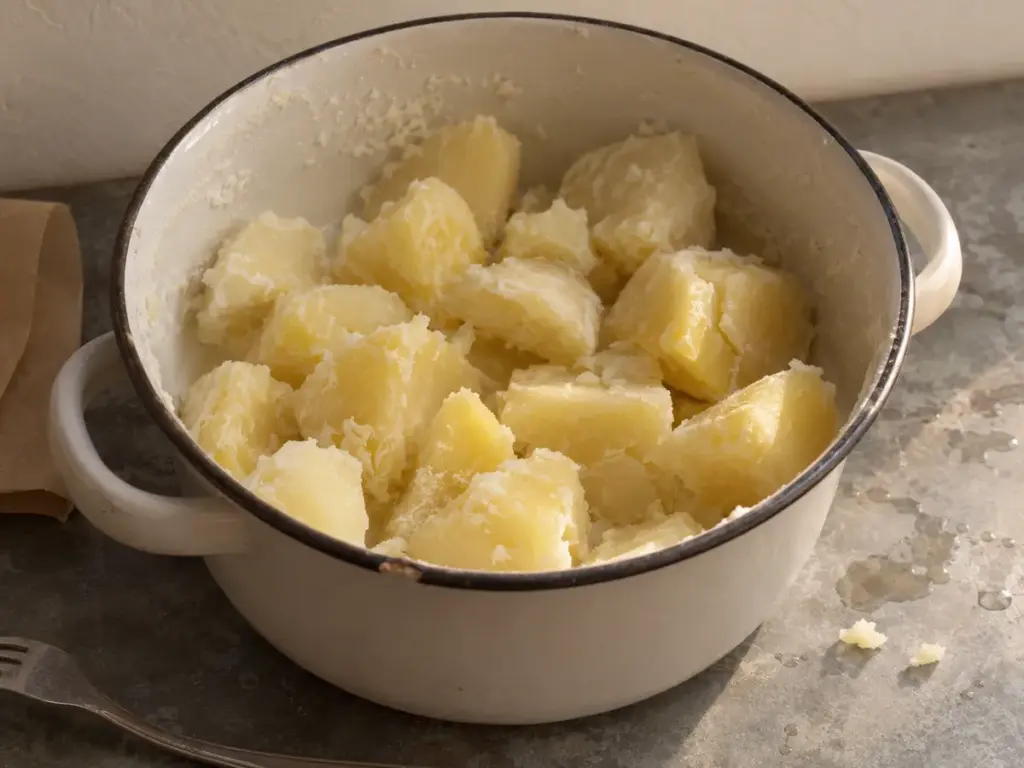
- Cut the potatoes evenly so every piece is about the same size and they finish together.
- Parboil them in salted water until the edges soften and a knife meets slight resistance. Pull russet and King Edward a little earlier, because they fall apart sooner than firmer potatoes.
- Drain, let the steam escape, then shake the pieces in the pot so the surface turns rough and fuzzy.
- Roast them in hot fat, turning once, until they are deep gold and crisp on every side.
Which Potatoes Make a Poor Swap for Maris Piper?
Waxy and moist potatoes keep their shape when you cook them, the opposite of what a Maris Piper does. Penn State Extension puts round red-skinned and white potatoes in the group with a moister, creamier texture best suited for boiling and frying. Illinois Extension says waxy potatoes like fingerlings are perfect for boiling.
If you compare the numbers, the USDA lists 15.9 g of carbohydrate per 100 g in raw red potatoes (FDC 170029) and 18.07 g in raw russets (FDC 170027), and potato carbohydrate is mostly starch. Yukon Gold sits between russet and red on the dry-to-moist scale, which is also how gold and red potatoes split on moisture and texture.
- Red and fingerling potatoes make a firm boiled potato or a good salad, but their roast potatoes stay dense instead of fluffy.
- Purple potatoes vary by variety, so the only sure thing they add is color.
- Sweet potatoes taste sweet and make a different dish, so they do not stand in for a floury potato.
If you are leaving potatoes out altogether, turnips, rutabaga and cauliflower are the usual low-carb stand-ins. For a softer mash, mashed parsnips and carrots are the closest options.
Sources
- Wikipedia: Maris Piper
- PotatoPro: Maris Piper
- PotatoPro: King Edward
- PotatoPro: Rooster
- PotatoPro: Desiree
- PotatoPro: Agria
- PotatoPro: Russet Burbank
- Penn State Extension: Potatoes in the Garden and the Kitchen
- University of Illinois Extension: Potatoes
- Wikipedia: Yukon Gold potato
- USDA FoodData Central: FDC 170027 and FDC 170029

Food writer at GustoMeadow. Writes ingredient substitutes, food comparisons, taste guides and storage guides for home cooks.
Storage and food-safety numbers follow USDA, FDA and university extension guidance.



