Rutabaga tastes mildly sweet and earthy, like a turnip with the sharp edge turned down and a hint of cabbage.
- Raw, it is crisp with a faint peppery bite.
- Cooked, it turns soft, sweeter and savory, so it mashes and roasts well.
- Pick a root 3 to 5 inches across for mild, tender flesh, and one grown in cool weather for sweetness.
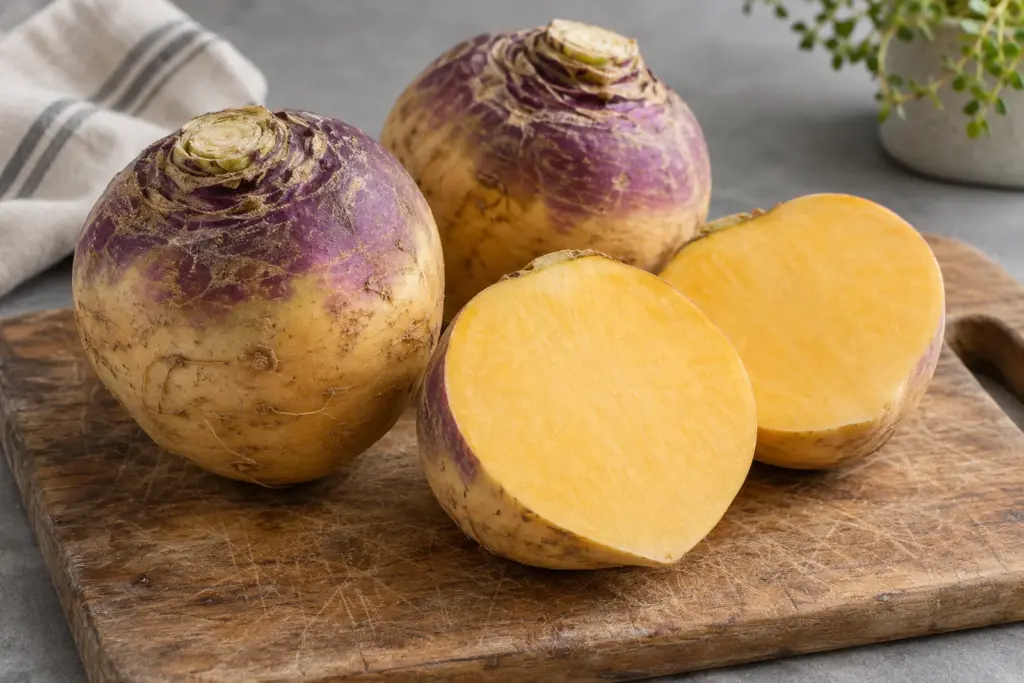
Rutabaga, called swede or Swedish turnip in many places, is one of the mild, sweet roots in our food taste guides. Because it is a cross between a cabbage and a turnip, it has both a sweet side and a slight bite. You will taste quite a different root raw, boiled or roasted, and its flavor also changes with how big it is and how it was grown.
1. What Does Rutabaga Taste Like Raw and Cooked?
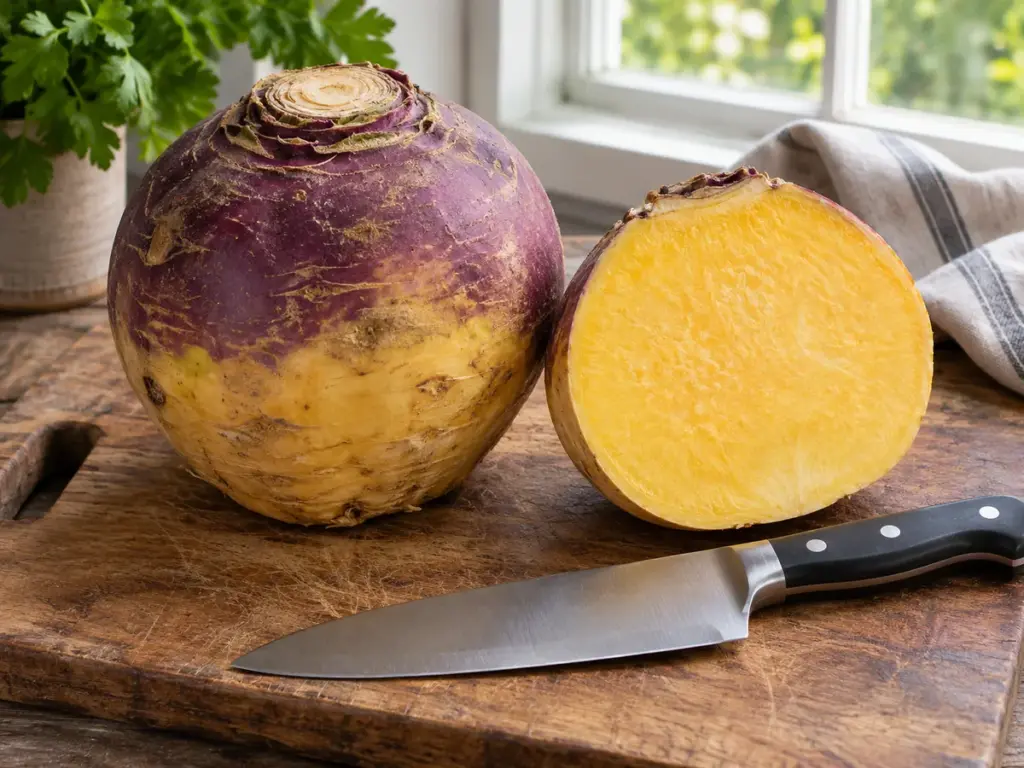
When you bite into a raw rutabaga, it is firm and crunchy, with a mild sweetness first and a faint peppery, cabbage-like bite after it. Heat changes that quickly. University of Illinois Extension says cooked rutabaga tastes sweet and savory, and that roasting it with other root vegetables takes away much of its tangy edge.
| How you eat it | What it tastes like | Texture | Good for |
|---|---|---|---|
| Raw, shredded or in matchsticks | Mild sweetness, then a faint peppery, cabbage-like bite | Crisp and dense | Slaws and salads |
| Boiled | Mild, sweet and savory, with the sharpness mostly gone | Soft and tender | Soups and stews |
- It tastes sweeter and earthier than potato, with a trace of the cabbage side.
- Its texture is smooth and dense.
- It makes a side for roasts and sausages.
- It is the sweetest version, with a toasty note where the edges brown.
- It is tender inside and browned outside.
- It suits sheet-pan sides and root vegetable trays.
When you cook it, the flesh softens and the sweetness comes out, so the longer and drier the heat, the sweeter and more roasted the flavor gets. The sharp edge in the raw root comes from its family: rutabaga (Brassica napus) belongs to the cabbage group, along with turnips and mustard. You should stop cooking once a fork slides in easily, because overcooked cabbage-family vegetables turn strong and watery.
2. Is Rutabaga Bitter, and How Do You Pick a Sweet One?
Some roots are a little bitter. A good rutabaga has only a faint bitterness, but a root that had a hard growing season tastes stronger. Utah State University Extension says roots that mature in hot weather do not develop their typical sweetness and flavor, and that irregular watering adds bitter flavors. Illinois Extension adds that rutabagas may be sweetened by cool weather, which is why you should look for fall roots.
Illinois Extension also says medium roots 3 to 5 inches in diameter have the best mild, tender quality, so you do not get a bargain on flavor from a giant rutabaga. Because taste sensitivity differs from person to person, a root that seems mild to you can taste sharper to someone else at the table.
- A root about 3 to 5 inches across, firm and heavy for its size
- Smooth skin with yellow and a hint of purple
- A fall or winter root, since cool weather builds sweetness
- Soft spots, deep cuts, punctures or signs of decay
- A very large root, which loses that mild, tender quality
- A light, spongy root that feels dry for its size
3. How Does Rutabaga Compare With Turnip, Parsnip and Potato?
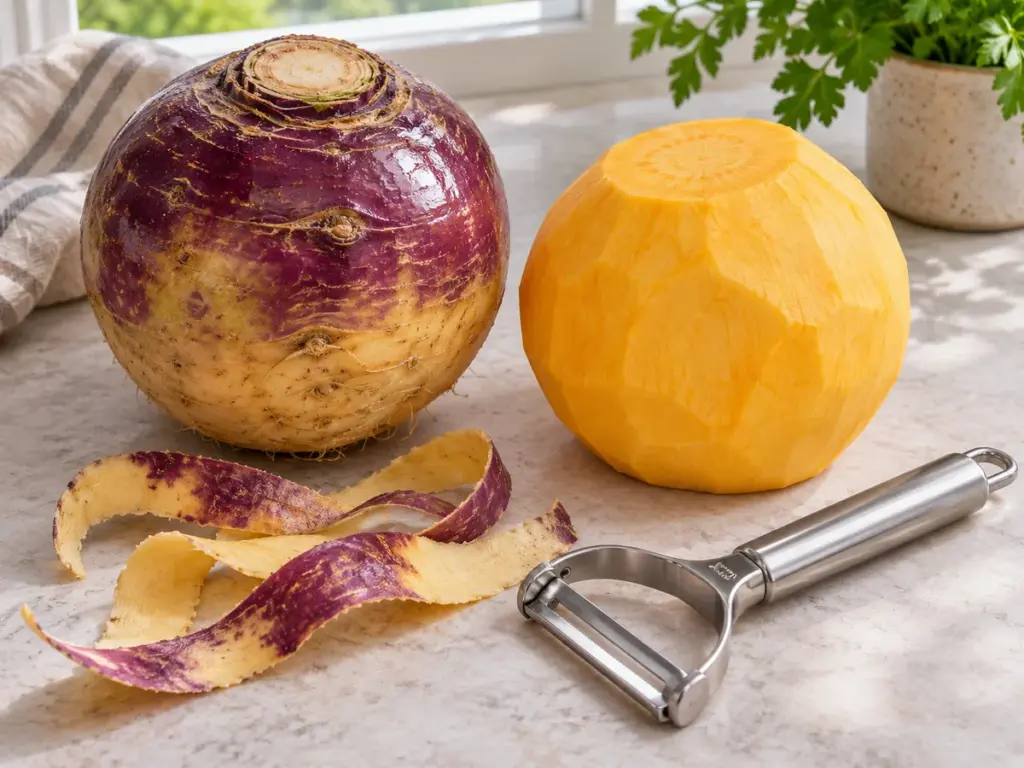
Next to a turnip, a rutabaga root looks rounder, larger and firmer, with yellow flesh and a darker, purplish-brown skin. According to Illinois Extension, you also get an excellent source of vitamin C and potassium from it. This table shows how its flavor lines up with the roots you would swap it for:
| Root | Flavor | Looks |
|---|---|---|
| Rutabaga | Mild, sweet and earthy, with a faint cabbage note | Large, round, firm, tan with a purple crown, yellow flesh |
| Turnip | Sharper and more peppery, closer to a radish | Smaller, white with a purple top |
| Parsnip | Sweeter, with a nutty, almost spicy edge | Long, cream-colored and tapered |
| Potato | Neutral and starchy, with little sweetness or bite | Varies by type |
| Carrot | Clearly sweeter than rutabaga | Long and orange |
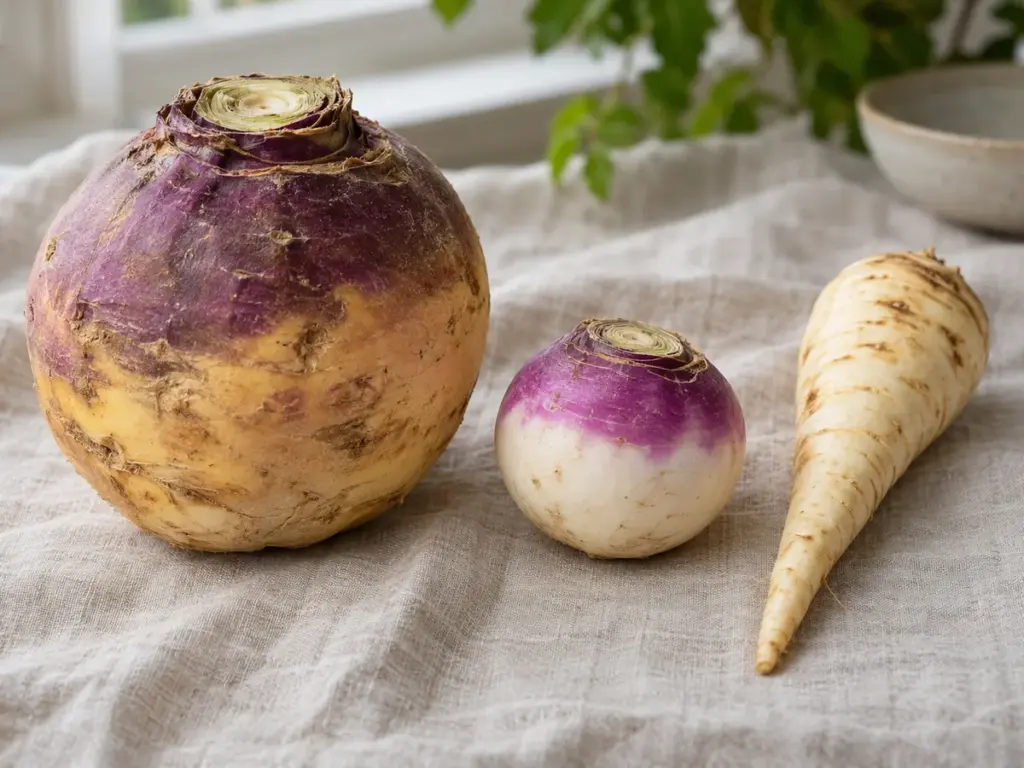
Because a turnip is smaller, whiter and sharper, you can trade turnips and rutabagas evenly in a long-simmered stew but not in a raw salad. A parsnip tastes sweeter and nuttier, so if you roast rutabaga and parsnip on one tray, they pull in different directions, earthy against sugary.
Because potato is neutral and starchy with none of that sweetness, a half-and-half mash of potato and rutabaga is a gentle way to start if you have never cooked the root. If you want another knobbly winter root, celeriac has a mild celery-like flavor and takes mashing and roasting just as well.
4. How Do You Prepare and Cook Rutabaga?
You prep the root the same way for every method:
- Scrub and peel. Rinse the root under cool running water, then remove the waxed skin with a sharp peeler.
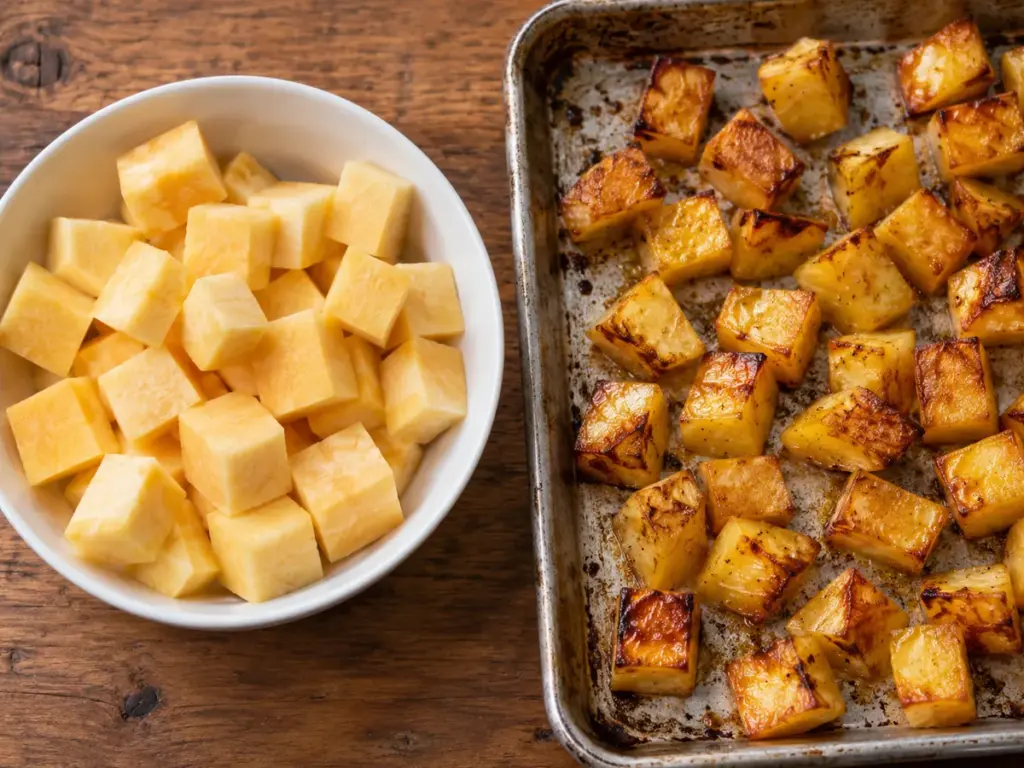
- Cut evenly. Use 1-inch cubes for boiling and roasting so every piece finishes together, or matchsticks if you plan to eat it raw.
- Choose the heat. Boil or microwave for a soft, mild result, or roast for the sweetest, most browned one.
- Test with a fork. Take it off the heat once the fork slides in without pushing, then season.
You can follow these times from Illinois Extension for cubed rutabaga, and the roasting time comes from its mixed root vegetable tray:
| Method | How | Time |
|---|---|---|
| Boil | Cubes in boiling water | 20 to 35 minutes |
| Microwave | Cubes with 2 tablespoons of water | 4 to 6 minutes |
| Roast | 1-inch cubes with other root vegetables, 3 tablespoons oil and 3 tablespoons Parmesan on baking sheets at 350°F, stirred every 15 to 20 minutes | About 1 hour |
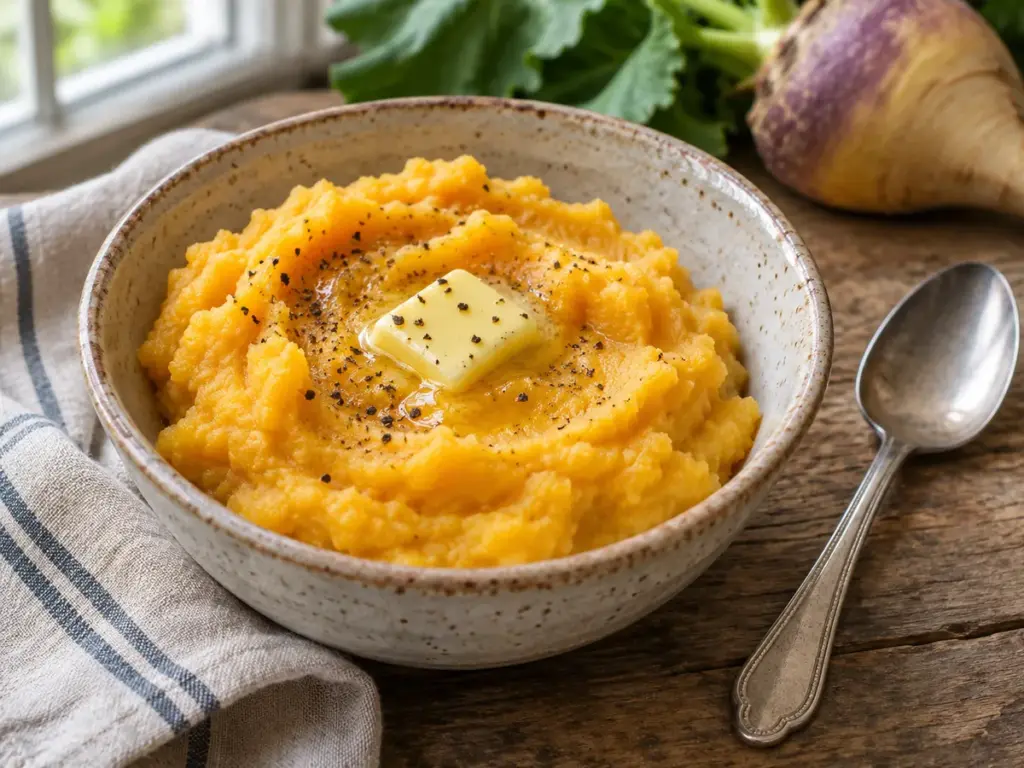
For mash, boil the cubes until soft and mash them with milk or sour cream, as Illinois Extension suggests, or with butter, salt and black pepper. If you mash half potatoes with half rutabagas, you get a milder, creamier result than with rutabaga alone.
5. What Goes Well With Rutabaga?
You balance rutabaga's earthy bite with fat, salt and a little sweetness or acid, and these pairings do exactly that:
- Butter, milk or sour cream round off the sharpness when you mash, which is why a plain boiled cube tastes thinner than a buttered one.
- Apple adds sweet-tart crunch if you toss it into a raw salad of shredded rutabaga, and it lifts the root's mild flavor.
- Beets and balsamic vinegar can roast alongside rutabaga on one tray, where the vinegar's acid and sugar offset its earthiness.
- Beef and chicken suit a rutabaga mash or stew you serve with them, since a warm, hearty main dish matches its sweet, savory flavor.
- Other root vegetables roasted on the same tray soften the tangy edge, according to Illinois Extension.
When your store has none, turnips and parsnips are the nearest stand-ins for rutabaga, though a turnip makes the dish sharper and a parsnip makes it sweeter.
6. How Long Does Rutabaga Keep?
The USDA FoodKeeper gives rutabaga about 1 week in the pantry, 2 to 3 weeks in the refrigerator and 8 to 10 months in the freezer. Iowa State University Extension agrees on up to 3 weeks in the fridge, in a plastic bag. If you have a cold, damp root cellar, garden roots held at 35°F and 95% humidity can last 3 to 4 months, according to Utah State University Extension, far longer than on a kitchen shelf.
Sources
- University of Illinois Extension, Rutabaga for the Win!: cross of turnip and cabbage, waxing, sweet and savory flavor, boiling and microwave times, roasted root vegetables, vitamin C and potassium.
- University of Illinois Extension, Turnip: rounder, larger, firmer roots, sweetening in cool weather, 3 to 5 inch diameter for mild, tender quality.
- Utah State University Extension, Rutabagas and Turnips in the Garden: heat and sweetness, irregular watering and bitterness, cold storage.
- Iowa State University Extension, Rutabaga: selecting, scrubbing, refrigerator storage up to 3 weeks.
- USDA FoodKeeper: pantry, refrigerator and freezer times for rutabagas.

Food writer at GustoMeadow. Writes ingredient substitutes, food comparisons, taste guides and storage guides for home cooks.
Storage and food-safety numbers follow USDA, FDA and university extension guidance.