Soy sauce tastes salty first, then deeply savory, with a faint sweetness and a roasted aroma.
- Brewed soy sauce tastes rounder and more layered than non-brewed, made from hydrolyzed protein in hours.
- One tablespoon of regular soy sauce holds about 880 mg of sodium, so a splash seasons like salt.
- Light, dark, usukuchi and tamari differ in color, thickness, sweetness and saltiness.
Brewed soy sauce gets its savory depth from months of fermentation, which sets it apart from sweeter and tangier sauces and pantry staples that rely on sugar or vinegar. The bottle you grab changes how salty, sweet and dark your dish turns out.
1. What Does Soy Sauce Taste Like?
Soy sauce reaches your tongue in a clear order: salt first, then a meaty savory depth, then a mild sweetness and a toasted finish. If you taste it on plain rice, the salt comes from the brine the sauce ferments in. Enzymes from the koji mold break soybean protein into amino acids, which makes the savory note, and the wheat adds the gentle sweetness.
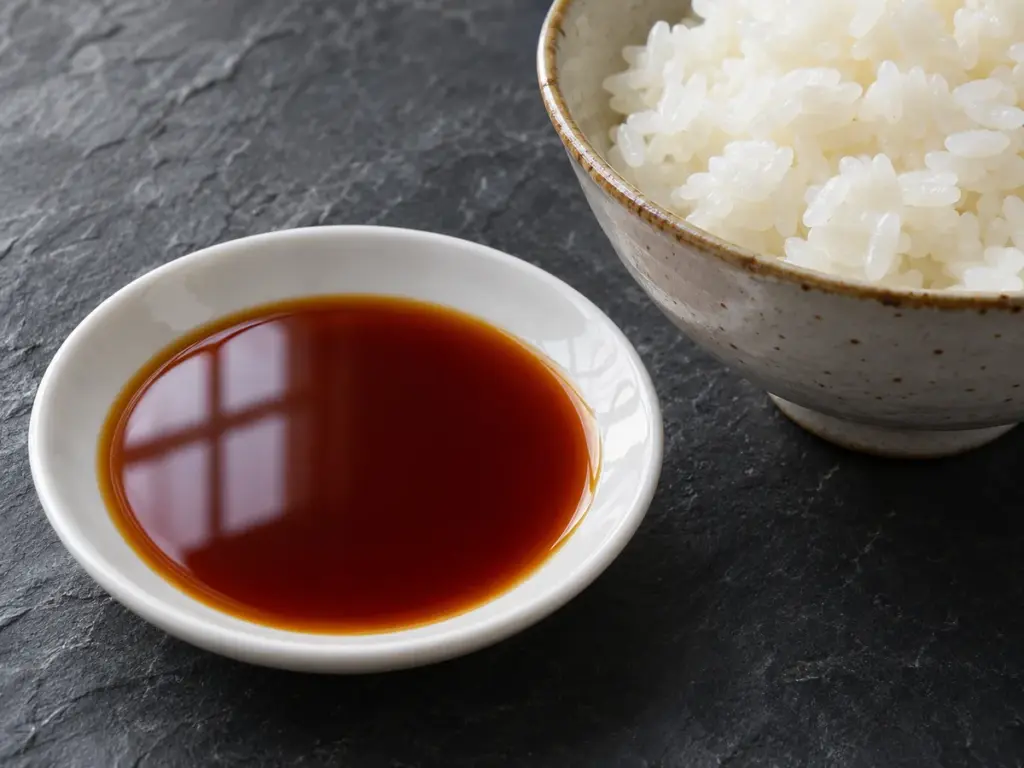
Kikkoman counts more than 300 flavor and aroma components in a traditionally brewed sauce, and these are the notes that stand out most:
- Salty is the loudest note and arrives first, which is why a few drops can season a whole bowl of rice.
- Savory (umami) follows with a meaty, broth-like depth that makes soups and sauces taste fuller.
- Lightly sweet notes come from the wheat, and they get stronger in sweet soy sauces.
- Roasted and caramel-like aromas sit underneath, a little like toasted bread.
2. Why Does Brewed Soy Sauce Taste Different From Non-Brewed?
A brewed bottle contains just water, soybeans, wheat and salt, and the flavor builds slowly. Kikkoman describes the process in four stages:
- Make the koji. Soybeans and wheat get a mold starter and rest for about 3 days.
- Add brine. The koji goes into salt water, which forms a mash called moromi.
- Ferment and age. The mash works for several months, and Kikkoman lists three months to two years for koikuchi.
- Press and bottle. The liquid is pressed out of the mash and bottled.
Non-brewed soy sauce skips those stages. Kikkoman says it is made in a matter of hours from hydrolyzed vegetable protein and caramel coloring, so you do not get the layers a brewed bottle builds.
- Made from water, soybeans, wheat and salt
- Ferments for months, which builds layered, rounded flavor
- About 880 mg sodium per tablespoon in USDA data (FDC 174277)
- Made from hydrolyzed vegetable protein and caramel color, often with corn syrup
- Ready in hours or weeks, and tends to lack depth of flavor
- About 1,230 mg sodium per tablespoon in USDA data (FDC 174279)
Check the ingredient list on the bottle you buy. If you see hydrolyzed vegetable protein, corn syrup or caramel coloring, you are holding a non-brewed sauce.
3. How Do Light, Dark, Japanese and Tamari Soy Sauces Taste?
Two naming systems cause most of the confusion. Chinese cooks sort soy sauce into light and dark, while Japanese makers use five categories, and koikuchi is the everyday one.
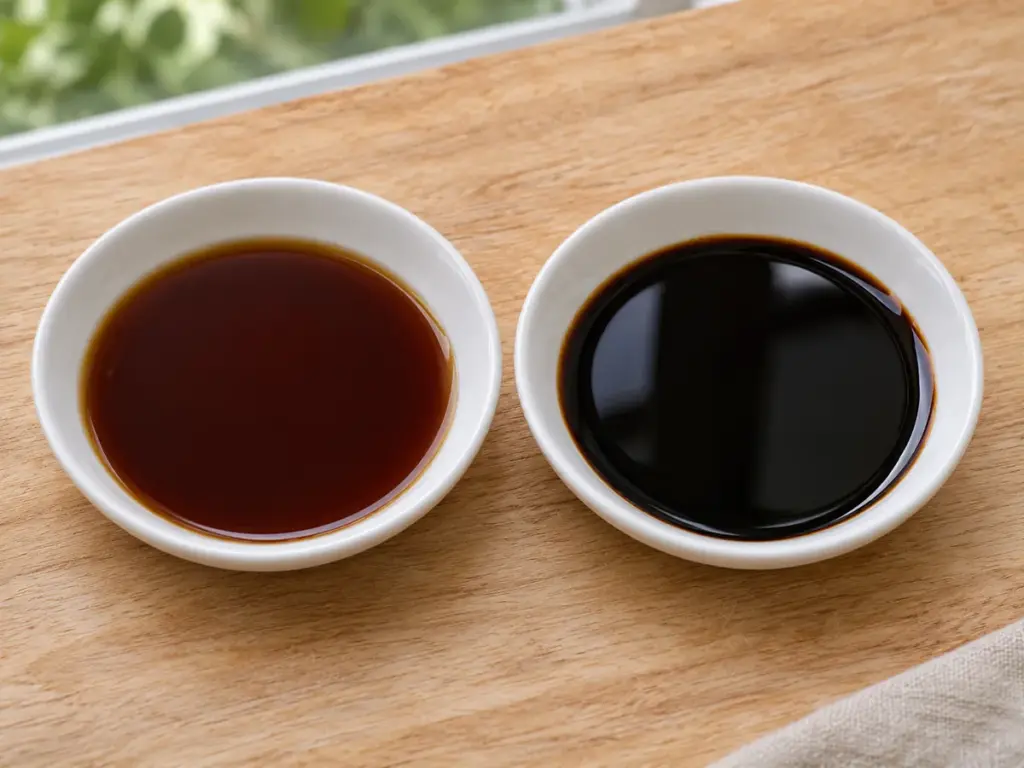
- It is thin and reddish brown.
- It tastes salty and savory, the main seasoning.
- It fits stir-fries, clear soups, dressings and dipping sauces.
- It is thick and nearly black.
- It tastes rich and mild, used mainly for color, with sweetness that varies by brand.
- It fits color and gloss in stews and meat dishes.
| Type | Look and body | Taste | Where it fits |
|---|---|---|---|
| Usukuchi | Lighter amber | Saltier than koikuchi, because "light" describes color | Soups and simmered dishes that should stay pale |
| Tamari | Darker and thicker | Rich and savory, made mostly from soybeans with little or no wheat | Sashimi, sushi and grilled meat |
Shiro (white) soy sauce is pale golden and sweet, made mostly from wheat, with a distinct aroma. It fits dishes where savory flavor should not darken the food.
Chinese cooks use light soy sauce for salt and savory flavor and a small splash of dark soy sauce for color and body. Kikkoman notes that Chinese dark soy sauces frequently contain caramel coloring. Sweetness and saltiness vary by brand, and sources disagree on which one is saltier by volume, so check the sodium line on your own bottle.
Most all-purpose supermarket soy sauce works wherever a recipe asks for light soy sauce, which saves you a trip to an Asian grocery. Shiro is mostly wheat, so it tastes sweeter and keeps clear soups pale, and cooks who cannot find a bottle can use white soy sauce stand-ins.
Tamari has little or no wheat, but some bottles still contain it, so if you eat gluten-free, look for a wheat-free statement on the label. Liquid aminos, another soy-based seasoning sold as an alternative to soy sauce, usually taste a little sweeter and tangier than tamari.
4. How Salty Is Soy Sauce?
A tablespoon of regular brewed soy sauce carries about 880 mg of sodium, which is roughly 38% of the 2,300 mg daily limit in the Dietary Guidelines for Americans. The USDA lists these records:
| USDA record | Sodium per 100 g | Sodium per tablespoon |
|---|---|---|
| Soy and wheat soy sauce (shoyu), FDC 174277 | 5,493 mg | About 880 mg |
| Tamari, FDC 174278 | 5,586 mg | About 1,010 mg |
| Hydrolyzed vegetable protein soy sauce, FDC 174279 | 6,820 mg | About 1,230 mg |
| Low-sodium shoyu, FDC 172473 | 3,598 mg | About 510 mg |
| Reduced-sodium hydrolyzed protein soy sauce, FDC 172474 | 2,890 mg | About 430 mg |
If you want less sodium, tamari will not help, because USDA’s generic record sits slightly above regular shoyu per tablespoon. Only the bottles labeled low-sodium or reduced-sodium drop the number much.
5. How Does Soy Sauce Taste in Different Dishes?
As a Dip or Finishing Sauce
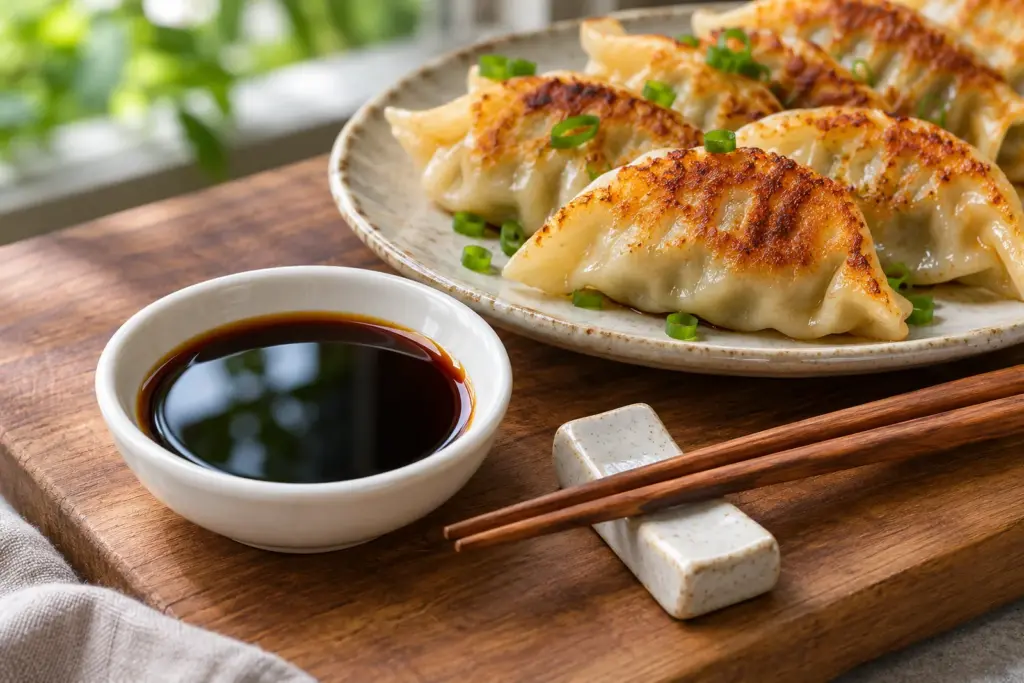
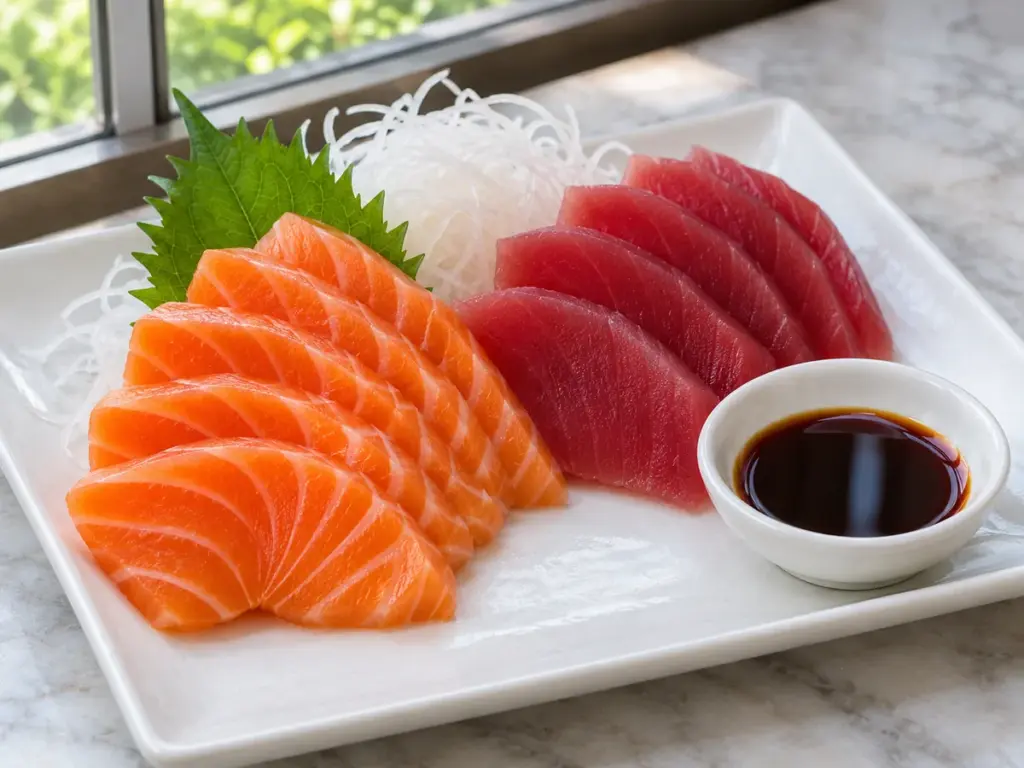
Straight from the dish, soy sauce gives you its salt and savory notes cleanly, and you notice its sweetness and aroma more. That is why tamari and koikuchi are the usual choice for sashimi, sushi and grilled meat, where the sauce is not cooked.
In Stir-Fries, Marinades and Fried Rice
Heat browns the sugars and amino acids in soy sauce, so you get darker food and a deeper savory taste while the sharp edge softens. A splash of dark soy sauce gives your stir-fry its glossy brown color, and a little goes a long way.
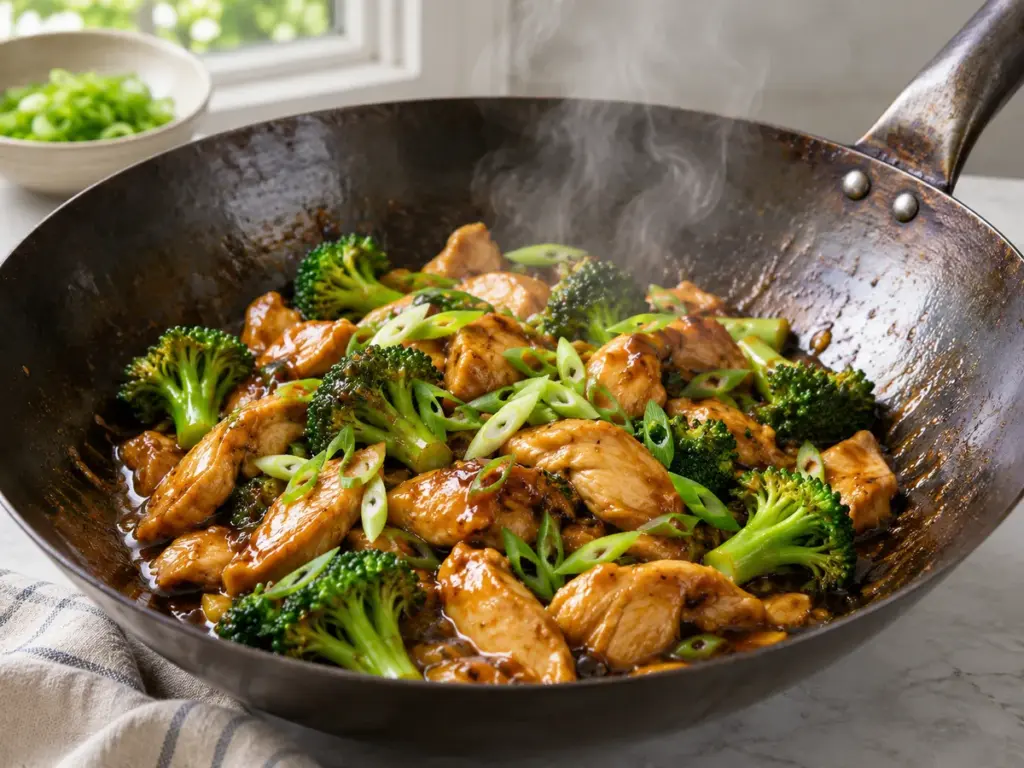
If you pour too much, it can cover the other ingredients and leave the dish too salty to fix.
Next to Other Savory Sauces
- Teriyaki sauce starts from soy sauce and adds sugar and mirin, so a teriyaki glaze tastes sweeter and thicker than plain soy sauce.
- Hoisin is a thick paste with sugar, garlic and spices, which makes thicker, sweeter hoisin a poor match when you need pure saltiness.
- Worcestershire sauce adds vinegar and tamarind, so Worcestershire sauce’s tangy, savory flavor lands sharper than soy sauce.
- Shoyu ramen gets its savory flavor from a soy sauce seasoning, while miso ramen uses fermented soybean paste, a split covered in shoyu and miso ramen.
6. What Can You Use If You Are Out of Soy Sauce?
The closest soy sauce replacements are tamari, which is also brewed from soybeans and tastes a little richer, and coconut aminos, which are soy-free, sweeter and less salty. You can also use oyster sauce, fish sauce or miso paste for the savory note, but each brings a flavor of its own, so add them in small amounts and taste as you go.
Sweet soy sauces, such as Indonesian kecap manis, are thickened with sugar and taste closer to a syrup than a seasoning, so a recipe that calls for one needs a sweet soy sauce stand-in that is also thick and sugary.
7. Does Soy Sauce Go Bad, and Does the Taste Change?
USDA FoodKeeper lists about 3 years in the pantry for shelf-stable soy sauce. After you open it, it stays safe at room temperature, and USDA says the refrigeration advice on the label protects quality. Keep the cap tight and the bottle away from the stove, and move it to the fridge if you use it slowly.
Sources
- USDA FoodData Central, FDC 174277 (soy sauce made from soy and wheat), FDC 174278 (tamari), FDC 174279 (hydrolyzed vegetable protein), FDC 172473 and FDC 172474 (reduced sodium)
- Kikkoman, The Story of Soy Sauce: ingredients, koji, moromi, brewing time, non-brewed sauce, 300 flavor components
- Kikkoman, Are all soy sauces the same?: koikuchi brewing time, usukuchi salt level
- Kikkoman UK, Differences between light and dark soy sauce: caramel color, uses of light and dark
- OIST, Soy sauces: how are they different?: the five Japanese soy sauce types
- FDA, Sodium in Your Diet: 2,300 mg daily limit, about 1 teaspoon of table salt
- USDA FoodKeeper: soy sauce storage

Food writer at GustoMeadow. Writes ingredient substitutes, food comparisons, taste guides and storage guides for home cooks.
Storage and food-safety numbers follow USDA, FDA and university extension guidance.