
Both are 40% ABV blended Irish whiskeys, and Tullamore D.E.W. adds malt whiskey while Jameson does not.
- Tullamore's notes lean to citrus and green apple, and Jameson's lean to nutty sherry and honey.
- You can swap them 1:1 because both pour at 40% ABV.
- Jameson is the older brand (1780 against 1829) and sells far more cases.
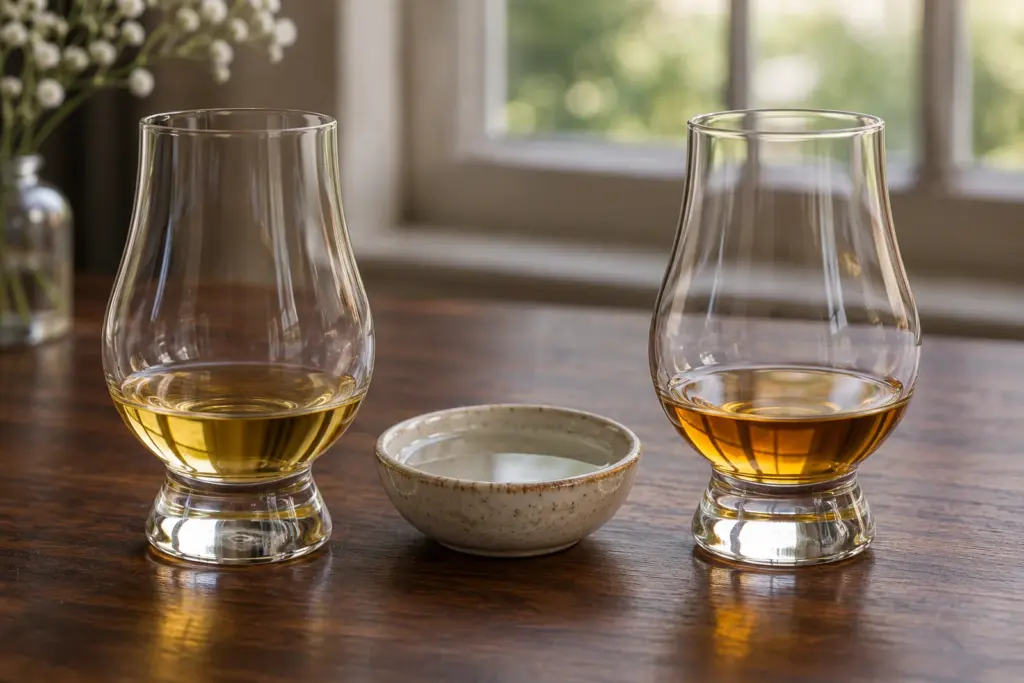
Most shoppers meet these two on the same shelf, and like most food and drink comparisons, the gap is smaller than the packaging suggests. Both are Irish blends bottled at 40% ABV, so your choice comes down to what goes into the blend, how each one tastes, how easy each is to find and which drink you are making.
1. What Is the Difference Between Tullamore Dew and Jameson?
These are the two standard bottles, Tullamore D.E.W. Original and Jameson Original, and their history, blend and sales figures come from Wikipedia's Tullamore Dew entry, its Jameson entry and Difford's Guide.
| Trait | Tullamore D.E.W. Original | Jameson Original |
|---|---|---|
| Brand founded | 1829, Tullamore | 1780, Dublin |
| Owner | William Grant & Sons | Irish Distillers (Pernod Ricard) |
| Blend | Pot still, malt, grain | Pot still, grain |
| Strength | 40% ABV | 40% ABV |
| Casks | Ex-bourbon, sherry | Ex-bourbon, oloroso sherry |
Strength and cask types match, so the differences you can act on are the malt whiskey in Tullamore's blend, the flavor each brand reports and how widely each is sold. Neither Original carries an age statement, and both are triple distilled in at least part of the blend.
2. Which Brand Is Older, and Who Owns Each One?
Jameson is the older brand. John Jameson founded his Dublin distillery in 1780, and Tullamore's first distillery opened in 1829, a gap of about 49 years.
No, they do not share an owner today. Jameson is made by Irish Distillers, which Pernod Ricard bought in 1988, while Tullamore changed hands several times before William Grant & Sons bought it.
- 1780: John Jameson founds his distillery in Dublin.
- 1975: Production moves to Midleton in County Cork.
- 1988: Pernod Ricard buys Irish Distillers, the company that makes Jameson.
- 1829: Michael Molloy sets up a distillery in Tullamore, County Offaly.
- 1954: The original distillery stops production.
- 1960s to 1994: John Powers & Son, then Irish Distillers, own the brand until it sells to C&C Group.
- 2010: William Grant & Sons buys the C&C Group's spirits and liqueur business, Tullamore D.E.W. included, for 300 million euros.
If you have wondered what D.E.W. stands for, it is the initials of Daniel Edmund Williams (1848 to 1921), who managed the original distillery and later owned it, according to Wikipedia.
What Else Does Each Brand Sell?
Both brands sell far more than the Original. These lists follow Wikipedia and The Whiskey Wash and change over time, so check a bottle on the brand's own site before you hunt for it.
- Tullamore D.E.W.: Original, 12 Year Old Special Reserve, 14 and 18 Year Old Single Malts.
- Tullamore D.E.W. finishes: Old Bonded Warehouse Release, Cider Cask Finish and XO Caribbean Rum Cask Finish.
- Jameson: Original, Crested, Black Barrel, Signature, Makers Series and an 18 Year Old.
- Jameson flavors and finishes: Caskmates, matured in stout or IPA casks from Irish craft brewers, and Jameson Orange.
3. How Are Tullamore Dew and Jameson Made?
Irish law requires the spirit to mature at least three years in wooden casks on the island of Ireland, as the rules summarized on Wikipedia's Irish whiskey page and in Difford's Guide say. The casks do not have to be oak, whereas Scotch must age in oak casks, as the Scotch Whisky Regulations 2009 require.
The same rules set a 40% minimum strength and a 700-litre cask limit, and they allow caramel coloring. Triple distillation is common in Irish whiskey but not a legal requirement, so you need to look for "triple distilled" on the label.
- A triple blend of pot still, malt and grain whiskey
- Triple distilled
- Ex-bourbon and sherry casks
- Own Tullamore distillery opened in 2014, and since 2017 it can make all three parts of the blend
- A blend of pot still and grain whiskey, with no malt whiskey added
- Pot still part triple distilled
- Ex-bourbon and oloroso sherry casks
- Made at Midleton, County Cork
What Goes into Each Blend?
Irish whiskey comes in three spirit types, and a blend mixes them. The definitions below follow Wikipedia's Irish whiskey entry.
- Pot still: a mixture of malted and unmalted barley, distilled in a pot still.
- Malt: made entirely from malted barley, distilled in a pot still.
- Grain: made by continuous distillation in a column still.
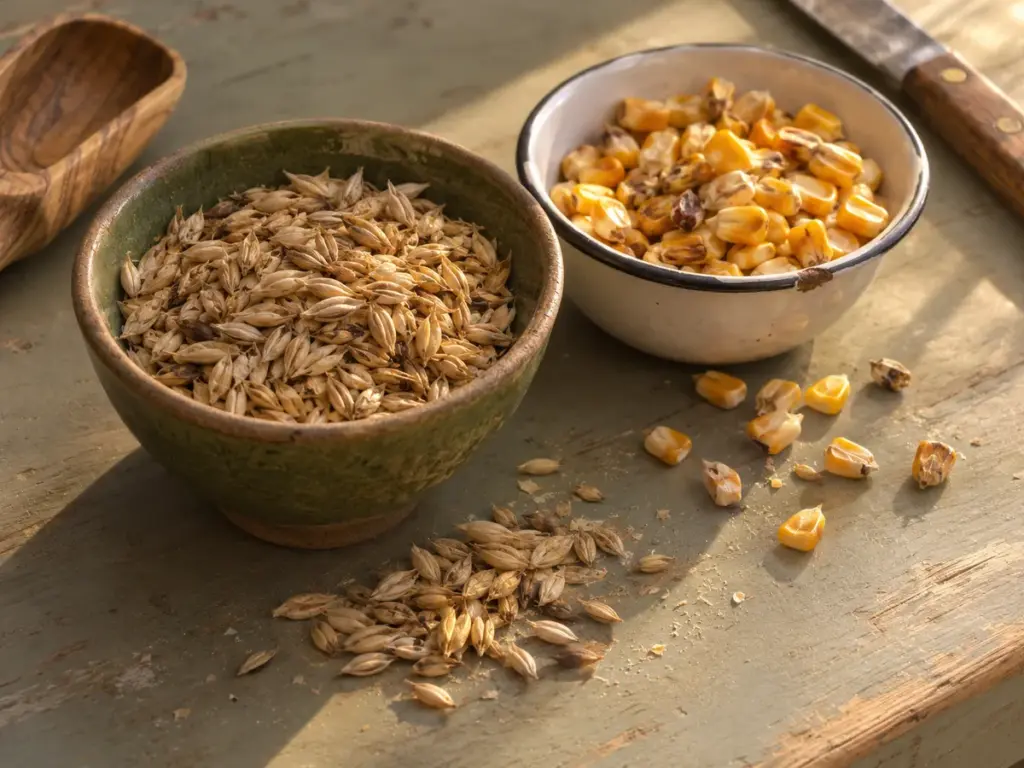
On a Tullamore D.E.W. Original label, "triple blend" means all three types are in the bottle. Jameson Original uses two, and Difford's Guide says its pot still part is dried in closed kilns, so the malted barley picks up no smoke flavor.
Difford's Guide says Jameson's grain whiskey is made from corn and barley and matured in first-fill ex-bourbon barrels for this bottling. The pot still part spends 5 to 6 years in bourbon casks, with some sherry-matured stock added for fruitiness. The Whiskey Wash reports that Jameson Original is aged at least 4 years, and Wikipedia adds that the barley comes from within about 50 miles of the Cork distillery.
Is Tullamore D.E.W. Still Made at Midleton?
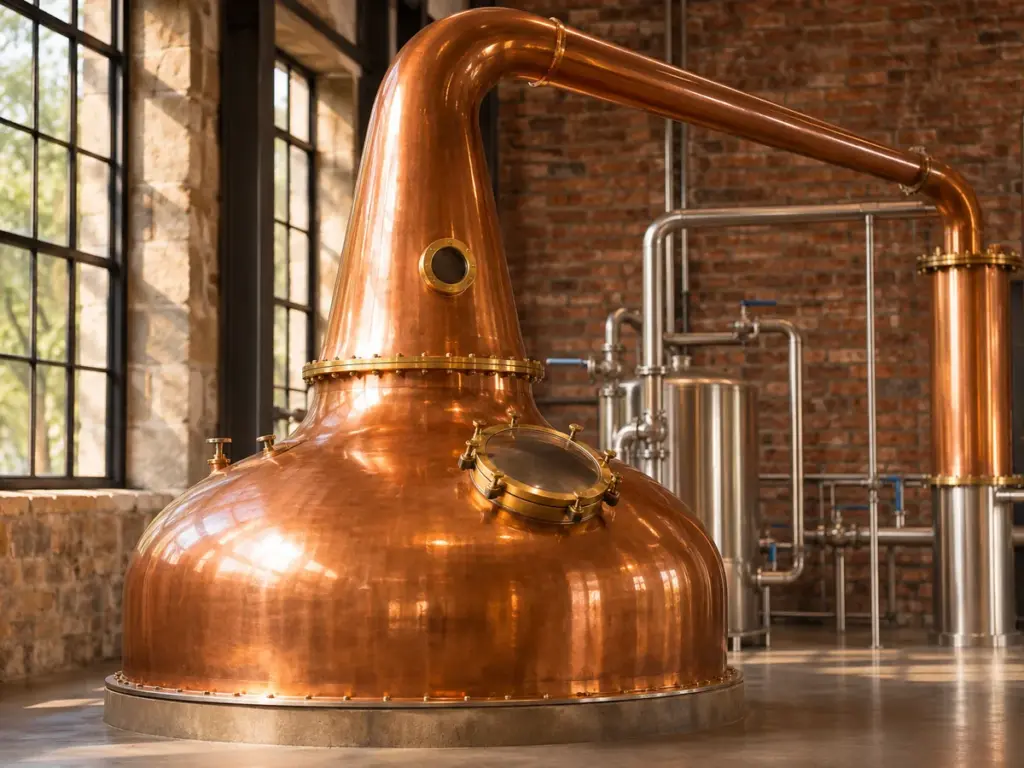
Where Tullamore is made trips up many buyers. The original Tullamore distillery stopped production in 1954, and the brand was later produced under contract by Irish Distillers at Midleton, the Cork complex Jameson has used since 1975.
William Grant & Sons then built a new Tullamore distillery, established in 2014 at a cost of 35 million euros. A 2017 expansion of 25 million euros added a grain distillery and bottling plant, and Wikipedia says the site can now produce all three components of the blend.
That entry does not say whether Original's blend still includes whiskey made at Midleton, so the bottle's label is your best guide if the distillery matters to you.
4. How Do Tullamore Dew and Jameson Taste?
These notes come from the brand and from named reviewers, so you can see who said what. The Whiskyphiles review quotes Tullamore's official notes and adds its own, and Difford's Guide gives the Jameson notes.
- Tullamore D.E.W. Original, official notes: a nose of citrus, green apple and vanilla, a palate of fresh fruit, light spice and toasted wood, and a medium finish with a hint of marzipan.
- Tullamore, The Whiskyphiles reviewer: banana, apple, pear and citrus with cinnamon and nutmeg, and a medium-short finish. The review scored it 83 out of 100.
- Jameson Original, Difford's Guide nose: a clear, pale golden color and a nose of linseed, leather, popcorn and spicy oak.
- Jameson Original, palate and finish: creamy barley, buttery sweetcorn, cinnamon, nutmeg, nutty sherry, vanilla and honey, then a lightly sweet, spicy finish.
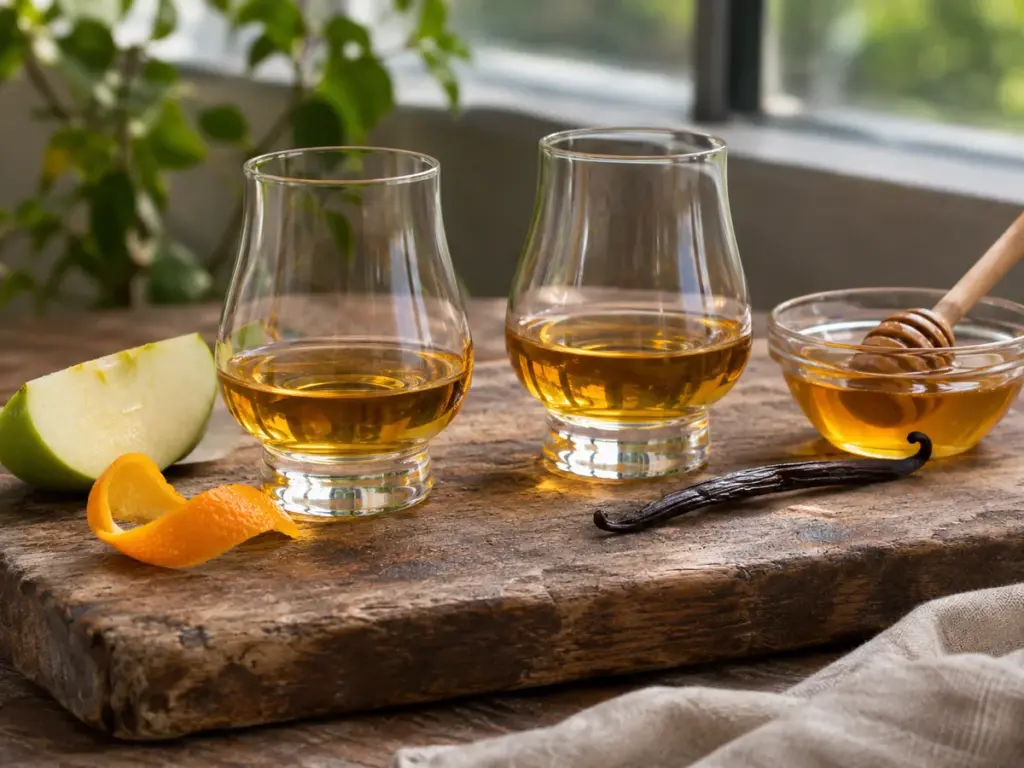
Read together, the published notes put orchard fruit and citrus against cereal, nuts and honey. Both lists share vanilla and baking spice, so if you like one you are unlikely to find the other a big jump.
Is Tullamore D.E.W. Smooth?
Smoothness is a selling point in Irish whiskey. The Whiskey Wash calls Jameson "renowned for its distinctive smoothness", and Difford's Guide notes that some distillers market triple distilled spirit as smoother. No source ranks these two Originals against each other, so you should read "smoother" as a taste preference, not a fact about either bottle.
Wikipedia notes that peat is rarely used to dry malted barley outside Scotland, and peat smoke is the source of most of the smoky notes in Scotch. Neither brand's own notes mention peat smoke, though The Whiskyphiles reviewer noted a touch of wood smoke in the Tullamore.
To judge for yourself, pour about an ounce of each into the same kind of whiskey tasting glass and taste both neat. Add one ice cube to each and taste again, so you see how each holds up served neat or on the rocks.
5. How Do the Older and Flavored Bottles Compare?
If you compare Tullamore D.E.W. 12 Year with Jameson Black Barrel, you are looking at the step-up bottles from each brand. Their blends and casks differ from Original's, so Original's notes do not predict how they taste.
| Trait | Tullamore D.E.W. 12 Year | Jameson Black Barrel |
|---|---|---|
| Age | 12-year statement | None, average about 12 years |
| Casks | Bourbon and sherry | Charred bourbon and sherry |
| Notes | Chocolate, dried fruit, nuts | Apricot, stewed apple, vanilla |
The brand's own page says its 12 Year is a blend with a high proportion of pot still and malt whiskeys, drawn from whiskeys 12 to 15 years old. Difford's Guide says Black Barrel's grain whiskey is distilled once a year in small batches and matured in heavily charred ex-bourbon barrels, while its pot still whiskeys sit in sherry and first-fill bourbon casks.
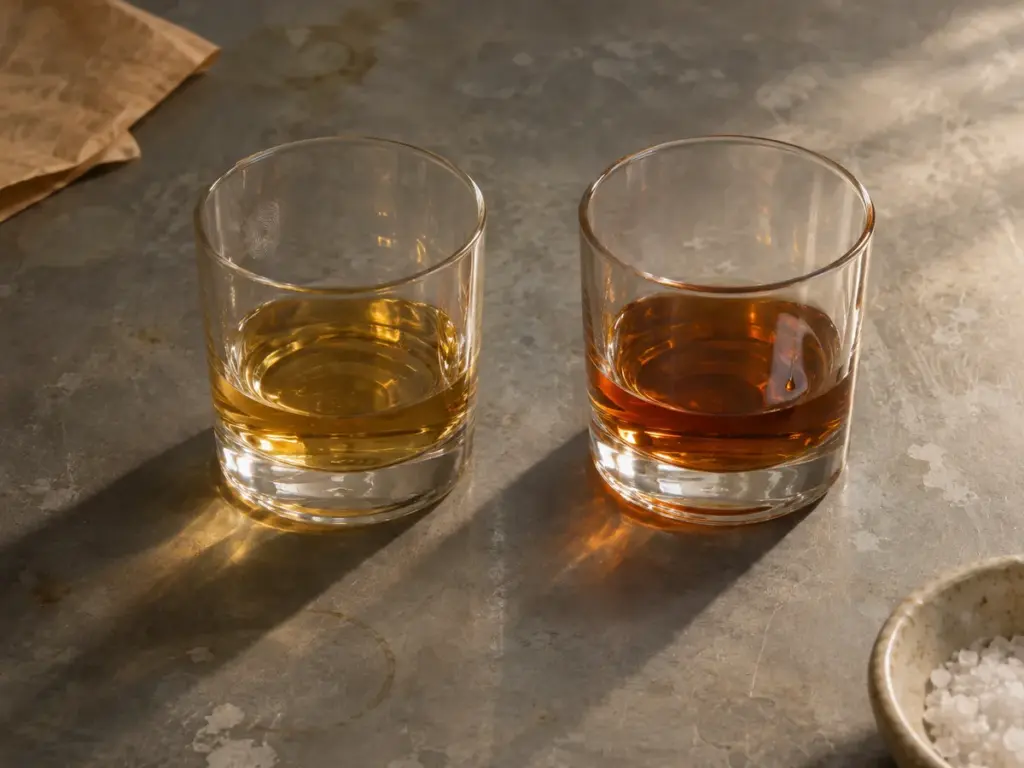
Tullamore D.E.W. Honey vs Jameson Orange
If you reach for a flavored bottle, you get one that pours below 40%, so neither works as a 1:1 stand-in for an Original in a drink.
- Tullamore D.E.W. Honey: a whiskey-based liqueur at 35% ABV, made from Tullamore D.E.W.'s flagship whiskey and honey from Bohemia in the Czech Republic, per Just Drinks.
- Jameson Orange: a flavored whiskey at 30% ABV, made from triple distilled Jameson and natural orange flavor, per The Whiskey Wash.
What About Chivas Regal 12?
If you weigh Chivas Regal 12 against these two, note that it is a blended Scotch whisky made from whiskies matured at least 12 years, and its maker, Chivas Brothers, belongs to Pernod Ricard like Jameson. It sits in a different category from the two Irish Originals, which carry no age statement and follow Irish rules.
6. Which Costs More, and Which Is Easier to Find?
The price you pay depends on the store and your state, so a figure printed here would be out of date by the time you shop. The two 750 ml Originals usually sit on the same shelf, which makes that the place to compare them.
Availability favors Jameson. Wikipedia reports it passed 8 million cases a year in 2019 and calls it by far the best-selling Irish whiskey in the world, against more than 1.5 million cases for Tullamore in 2020, which makes Tullamore the second-largest Irish brand. A bar or small store is more likely to stock Jameson, and you may have to ask for Tullamore.
7. Which Is Better in Cocktails and Hot Drinks?
Strong mixers cover most of the gap between them, so the flavor difference shows most in spirit-forward drinks. These pairings are the site's judgment from the published notes above, not tasting results.
For an Irish mule, you pour 2 oz whiskey over ice, add 1 oz lime juice and top with about 3 oz ginger beer, a build from VinePair. Tullamore's citrus notes suit the lime, and the spice in ginger beer masks most of the difference between the two whiskeys.
The mule is the whiskey version of the vodka-and-ginger-beer Moscow mule, and VinePair says a copper mug suits it as well as a tumbler.
For a whiskey and ginger ale, you build roughly 1 part Jameson to 3 parts ginger ale over ice with a lime wedge, the highball The Whiskey Wash lists. Tullamore works at the same ratio.
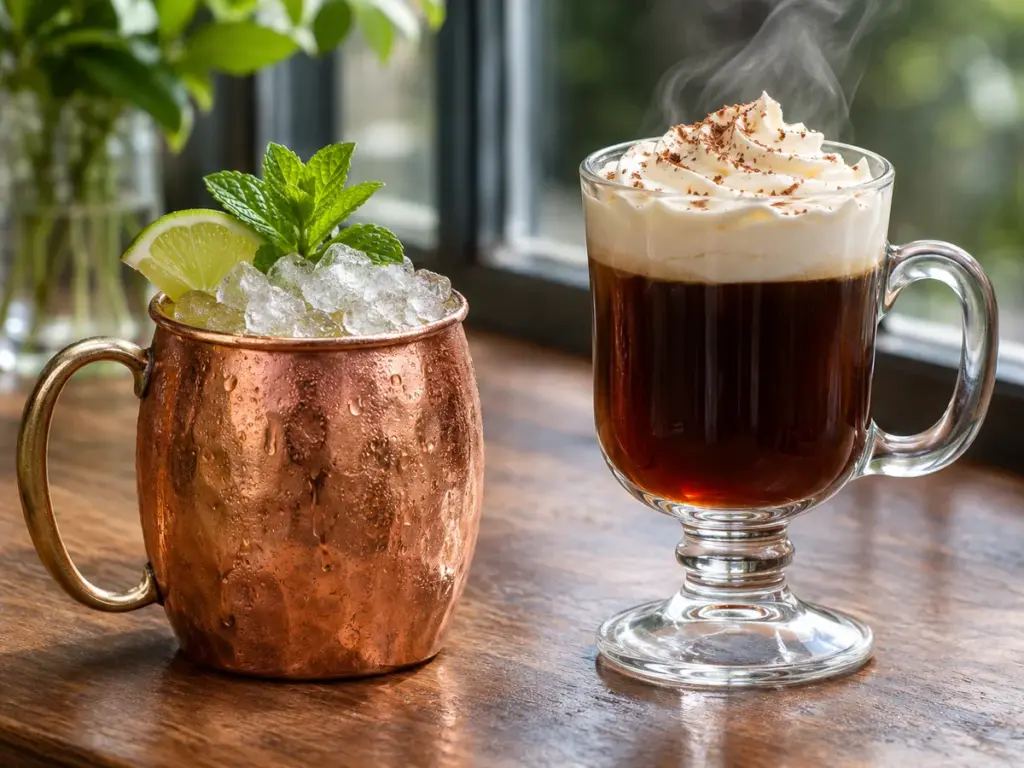
An Irish coffee takes about 1.7 oz (50 ml) whiskey, 4 oz (120 ml) hot coffee and a teaspoon of sugar, topped with chilled cream that you pour over the back of a spoon, per Wikipedia. Jameson's honey and vanilla notes sit well with sugar and cream in a classic Irish coffee.
A hot toddy in Difford's Guide uses 1.5 oz (45 ml) blended Scotch, 2 oz (60 ml) boiling water, a little lemon juice and honey syrup. An Irish blend fits the same build, so you can use whichever bottle you have.
In an Old Fashioned, you stir 2 oz whiskey with simple syrup, bitters and an orange twist over ice. Jameson's cinnamon and nutmeg notes line up with the spice in bitters, and Tullamore gives a lighter, fruitier Old Fashioned.
Neat, on Ice or Mixed?
The Whiskey Wash says Jameson can be enjoyed neat, with a splash of water, over ice, with a mixer or in a cocktail. Both pour at 40%, so the same serve works for either one.
8. Can You Use Tullamore Dew Instead of Jameson?
Yes, and 1:1 is the right ratio in both directions. Both Originals are 40% ABV, so a drink keeps the same strength when you swap one for the other. Only the flavor shifts, a little lighter and fruitier with Tullamore and a little creamier and nuttier with Jameson, going by the published notes.
Keep the swap to Original for Original, because the Honey and Orange bottles pour at 35% and 30%.
9. Which Should You Buy?
- You sip it neat or with one cube and like orchard fruit and citrus: buy Tullamore D.E.W.
- You like creamy, nutty, honeyed whiskey: buy Jameson.
- You make Irish coffee or hot toddies for a crowd: buy Jameson, or whichever costs less in your store.
- You want a bottle any bar or store is likely to carry: buy Jameson.
- You want to go older: look for Tullamore D.E.W. 12 Year Old Special Reserve, a separate bottle from Original.
- You want a richer Jameson for sipping: look at Black Barrel, whose grain whiskey matures in heavily charred ex-bourbon barrels.
- You want sweetness without mixing: Tullamore D.E.W. Honey, a 35% liqueur.
Sources
- Wikipedia, Tullamore Dew: founding, name, ownership, range, sales
- Wikipedia, Jameson Irish Whiskey: founding, ownership, range, sales
- Wikipedia, Tullamore Distillery: 2014 opening, 2017 expansion, earlier production at Midleton
- Difford's Guide, Jameson Irish Whiskey: blend, casks, kilns, tasting notes
- Difford's Guide, Jameson Black Barrel: casks, age, notes
- The Whiskey Wash, Jameson guide: Midleton move, minimum age, serves
- The Whiskey Wash, Jameson Orange: 30% ABV, flavor
- Just Drinks, Tullamore Dew Honey: 35% ABV, honey
- Tullamore D.E.W., 12 Year Old Special Reserve: blend, casks, notes
- The Whiskyphiles, Tullamore Dew Original review: official and reviewer notes
- Wikipedia, Irish whiskey and Difford's Guide, Irish whiskey: three-year rule, casks, strength, spirit types
- Wikipedia, Scotch whisky and Chivas Regal: oak rule, age statement
- VinePair, Irish Mule and Wikipedia, Irish coffee
- Difford's Guide, Hot Toddy
- USDA FoodData Central, FDC 174815: 80 proof distilled spirits
- NIAAA, What Is a Standard Drink?
Frequently Asked Questions
How Many Calories Are in a Shot of Tullamore Dew or Jameson?
If you pour a 1.5 fl oz shot of an 80 proof spirit, you get about 97 calories and no carbohydrate, from USDA FoodData Central's figure of 231 kcal per 100 g (FDC 174815) and 42 g per jigger. Both Originals are 80 proof (40% ABV).
How Many Standard Drinks Are in a Shot of Each?
When you pour one, the NIAAA counts a 1.5 oz shot of 40% spirits as one standard drink, defined as 0.6 fl oz or 14 grams of pure alcohol. A 1.5 oz pour of Tullamore D.E.W. Honey at 35% holds about 0.9 standard drinks, by that same arithmetic.

Food writer at GustoMeadow. Writes ingredient substitutes, food comparisons, taste guides and storage guides for home cooks.
Storage and food-safety numbers follow USDA, FDA and university extension guidance.



