
Rock cod is a nickname for rockfish, a different genus from true cod: rockfish are genus Sebastes and cod are genus Gadus.
- Rockfish has firmer, medium flakes and a mild taste, while cod has softer flakes.
- The FDA and EPA mercury chart rates cod Best Choice and rockfish Good Choice.
- You can swap them at the same weight and thickness, cooked to 145°F.
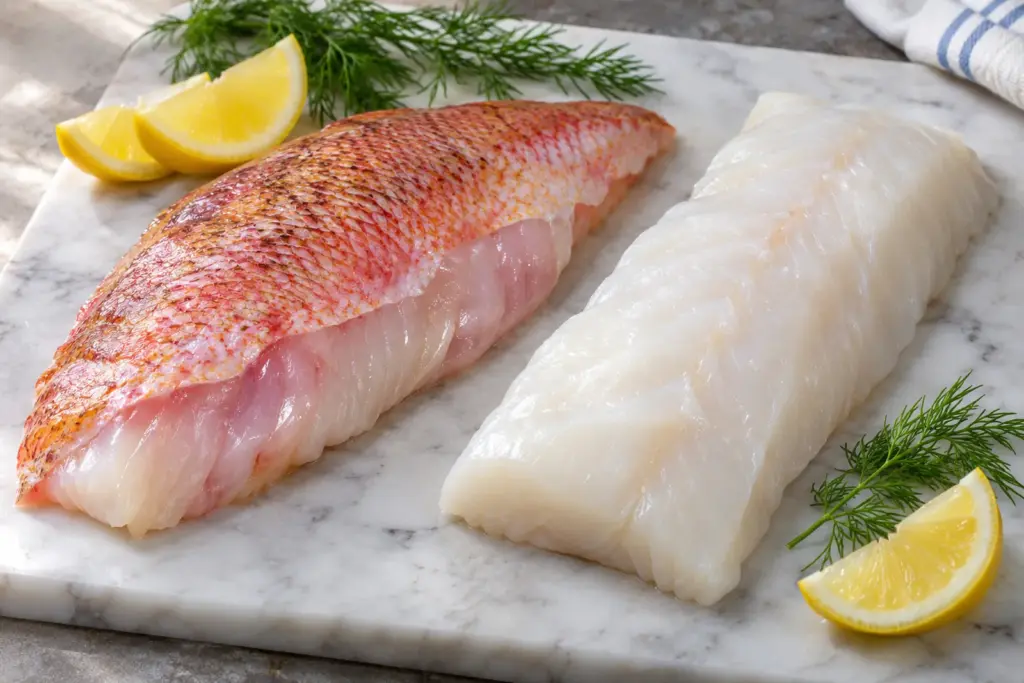
Fish counters use loose names, and these two mild white fish get mixed up more often than most foods people compare. If a recipe calls for cod and the store sells "rock cod" or "Pacific snapper," you need to know which fish you are actually buying before you decide how to cook it.
1. Is Rock Cod the Same as Cod?
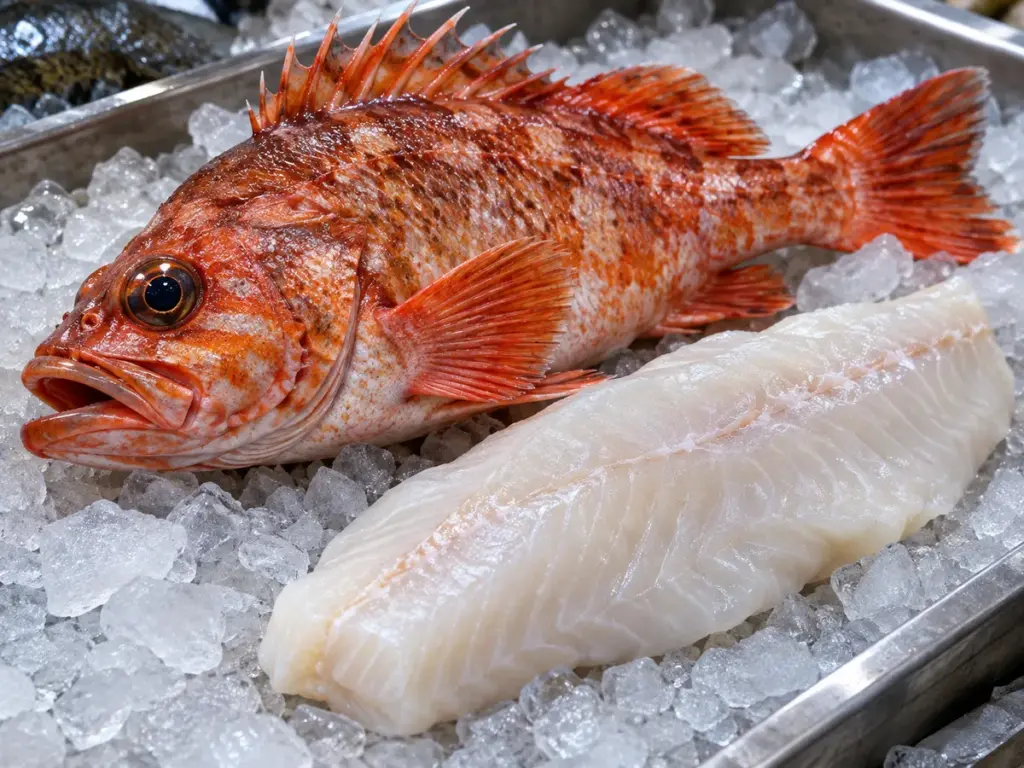
Rock cod is a regional name for Pacific rockfish, so a fillet sold under that label belongs to a different group of fish than cod. NOAA lists "rock cod" and "Pacific snapper" among the other names for yellowtail rockfish, and the FDA's Seafood List uses "rockfish" as the market name for the whole Sebastes genus.
True cod are Atlantic cod (Gadus morhua) and Pacific cod (Gadus macrocephalus). A rock cod fillet will not cook or taste exactly like either one, which matters when your recipe was written for cod.
In March 2026 the FDA said industry groups had asked it to rename some rockfish "snapper" and opened a public comment period.
Until that changes, "rock cod," "Pacific snapper" and "rockfish" can all be the same fish. A "black cod" is another case, because sablefish sold as black cod is neither a cod nor a rockfish.
2. Are Lingcod and Black Cod Real Cod?
True cod are the Gadus fish, and NOAA says haddock and pollock belong to the cod family too, so they are real relatives. Two other fish only borrow the name as a nickname:
- Lingcod is a greenling. It reaches 5 feet and 80 pounds and tastes mild with large, tender flakes, and raw lingcod can show a blue-green tint that cooks to snow white.
- Black cod is sablefish, which NOAA says is "not actually part of the cod family." It is oily, with 15.3 g of fat per 100 g raw against 0.67 g for Atlantic cod.
- Haddock is a true cod relative that wears a black thumbprint on each side, and it is slightly sweet and firm yet tender, with a finer flake than cod.
- Pollock also sits in the cod family with mild flesh and a fine texture, and NOAA says the taste of pollock is close to cod or haddock.
If you see "rock cod," "black cod" or "lingcod" at the counter, you are looking at three different fish, and none of them is the cod in a fish and chips shop.
3. What Is the Difference Between Rockfish and Cod?
When you pick between the two, we'd weigh flake size and mercury first.
| Trait | Rockfish | Cod |
|---|---|---|
| Genus | Sebastes, many species | Gadus, mainly Atlantic and Pacific cod |
| Flavor | Very mild and slightly sweet (yellowtail) or delicate and nutty (widow) | Mild and clean, with Atlantic cod sweeter than Pacific cod |
| Texture | Lean, medium-fine to firm, medium flakes | Lean, large flakes, softer than haddock |
| Mercury (FDA/EPA) | Good Choice | Best Choice |
4. What Do Rockfish and Cod Look Like?
Rockfish is one market name for many Sebastes species, so the color changes from fish to fish. NOAA describes the yellowtail as grayish-brown on the back, fading to white on the belly, with a trace of yellow spotting and a yellowish-green tail.
NOAA describes the widow rockfish as dusky-brown with traces of light yellow and red, black fin membranes and short head spines.
If you hold a cod next to a rockfish, you notice the shape first, because cod has a stocky body, a large head and a blunt snout.
Atlantic cod has a whisker-like barbel under the lower jaw and ranges from light yellowish-green to red and olive, while Pacific cod is brown or gray with dark spots and a long chin barbel.
- Yellowtail: more than 2 feet
- Widow: up to 24 inches
- Atlantic: up to 51 inches and 77 pounds
- Pacific: up to 6 feet
Cod is the bigger fish, since one that can reach 77 pounds yields thick loins and wide fillets. The rockfish above top out near two feet, so the fillets you get from them are thinner.
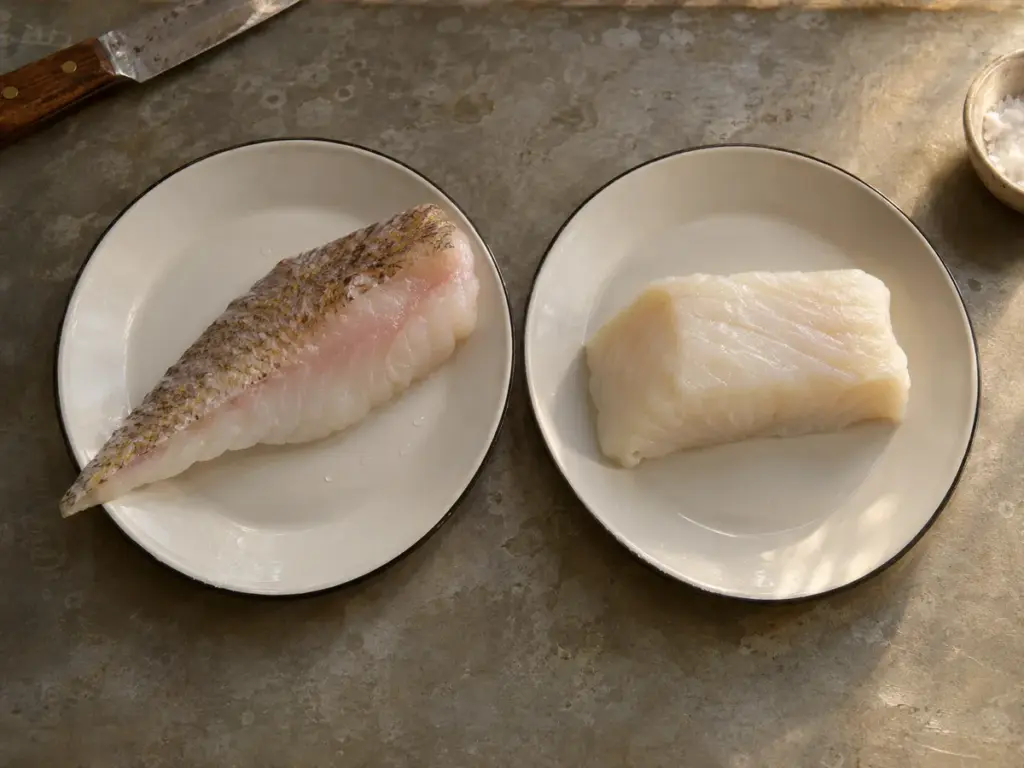
The raw flesh differs too, because raw yellowtail is bright white with a pinkish sheen and raw widow rockfish runs from light pink to red before it turns white when cooked.
Raw Pacific cod is opaque and creamy white, so when you see a pink raw fillet in the case, it can still be rockfish.
5. How Do Rockfish and Cod Taste and Feel Different?
NOAA describes yellowtail rockfish as very mild and slightly sweet, with a very lean, medium-to-firm texture and medium-sized flakes. Widow rockfish is delicate and nutty with a medium-fine texture.
Atlantic cod is mild and clean with large flakes, and NOAA rates it less firm than haddock.
NOAA says Pacific cod holds a bit more moisture than Atlantic cod, which makes it less firm than Atlantic cod, so a thick fillet needs a gentle hand when you turn it at the stove.
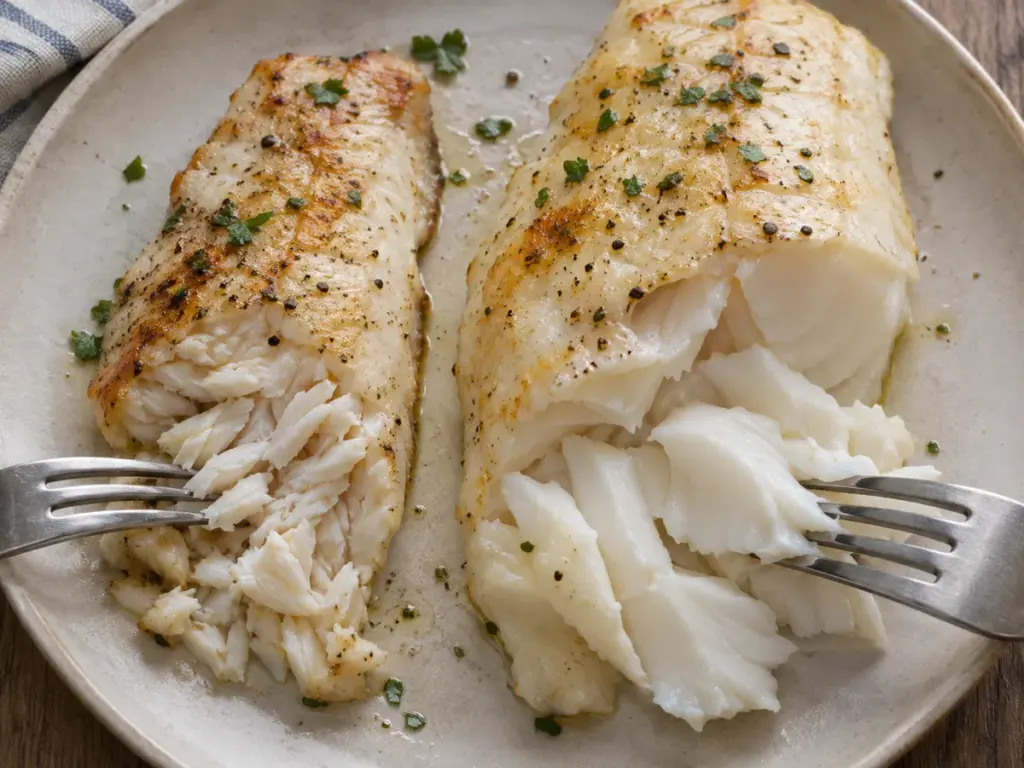
Neither fish tastes strongly of the sea, so you can choose by sweetness and texture. For picky eaters we'd start with cod, while rockfish gives you a little sweetness and a fillet that holds a sauce.
A third mild option is haddock, the cod relative to pick when you want a firmer fillet than cod gives you.
Which Fish Is Closest to Each One?
If you cannot find cod, haddock and pollock are the nearest matches because they are cod relatives. For cod's large, soft flakes, lingcod comes closest outside the family.
Pacific snapper is only another label for rockfish, so when a counter offers it you are buying the same fish as rock cod.
Tilapia is another mild white fish, and the FDA puts it in the Best Choice group like cod. The comparison of cod and tilapia helps when you are weighing those two.
6. Which One Should You Cook for Which Dish?
Flake size decides most of this, because you can lift large cod flakes out whole when the fish is the star, while rockfish stays together in liquid or over heat for a while.
- Rockfish in a tomato stew or seafood soup works because its mild sweetness goes with tomatoes, peppers and shellfish.
- Rockfish pan-roasted or baked crisps best skin side down, and you finish it with lemon butter or a quick salsa.
- Rockfish in tacos stays together in a tortilla because a firm fillet breaks into chunks, and pico de gallo or mango salsa goes on top.
- Cod baked or in parchment steams in its own juices when you wrap it with sliced zucchini and red bell pepper, and plain baking works too, as these baked cod recipes show.
- Cod flaked into fish cakes or chowder suits the job because the large flakes break down easily, and these sides for fish cakes go well with the cakes.
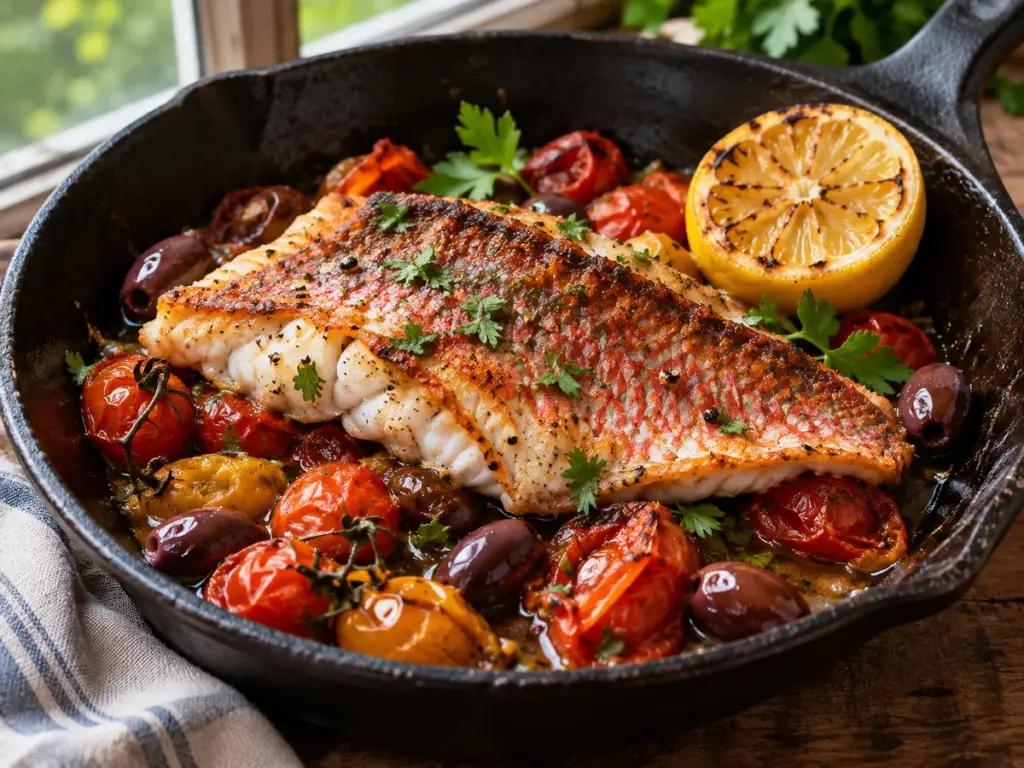
Whichever fish you cook, 145°F is the finished temperature. The USDA and FDA temperature charts give 145°F for fin fish, with a fork test as the fallback when you have no thermometer: the flesh turns opaque and separates easily.
- Dry the fillet. Pat both sides with a paper towel so the surface browns instead of steaming.
- Season and cook. Salt and pepper it, then pan-roast, bake or fry it by your recipe.
- Check the thickest part. Slide an instant-read thermometer into the center of the thickest part of the fillet.
- Stop at 145°F. Take it off the heat then.
Rockfish in Fish and Chips, Soup and on the Grill
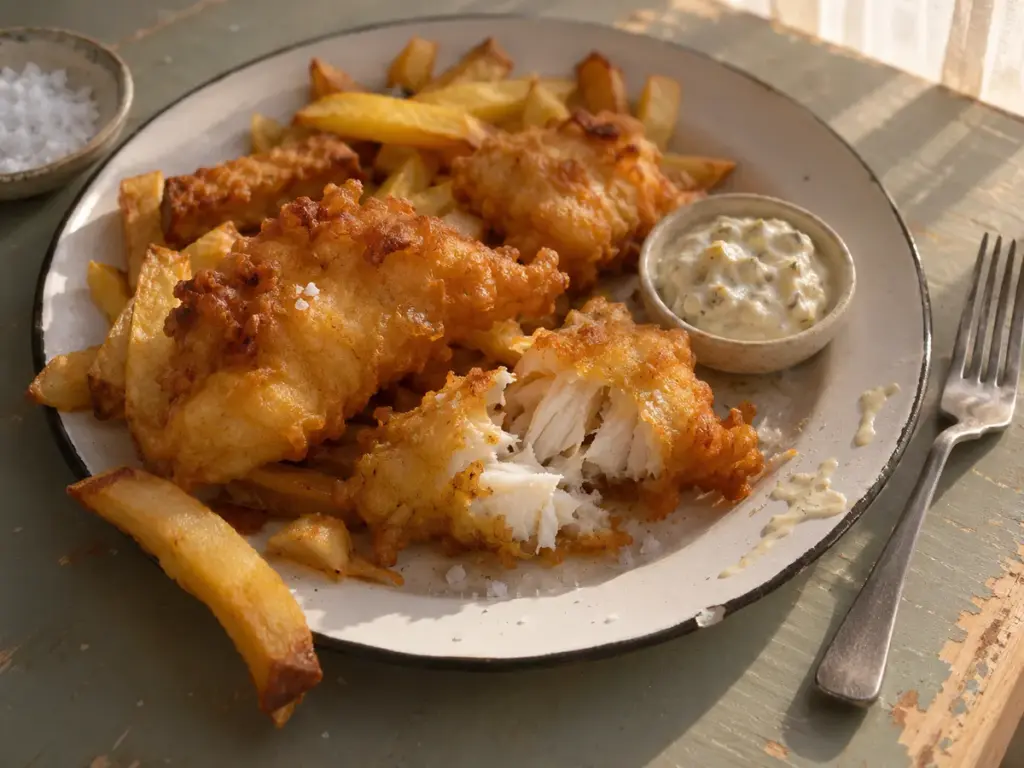
- Fish and chips suit cod because its thick, large-flake fillets take a batter well, and mushy peas and tartar sauce go on the side. Rockfish works too if the fillets are thick, and its medium flakes make smaller bites than cod.
- Sour tomato soup (canh chua style) keeps rockfish intact, since its medium-to-firm flakes hold their shape in a simmering broth when the fish goes in late and comes out at 145°F.
- Grilled rockfish does best as a thick, skin-on fillet on an oiled grate, while a thick cod loin needs a gentler turn because its flakes are softer.
- Butter pan-frying suits cod, because its mild flavor needs little more than salt, pepper and lemon in browned butter.
7. Can You Substitute Rockfish for Cod?
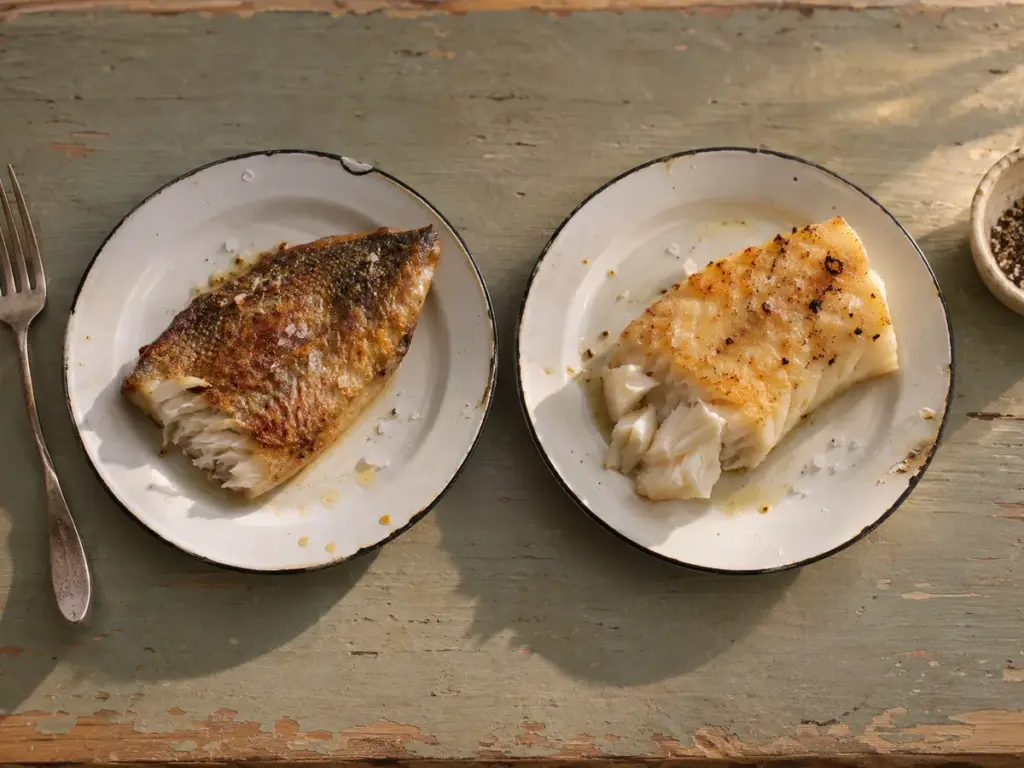
You can swap rockfish for cod in most baked, pan-fried and stewed recipes if you match the fish by weight and thickness and ignore the name on the label.
A cod loin is the thick center cut, so when your rockfish fillet is thinner, it reaches temperature sooner and you start checking early.
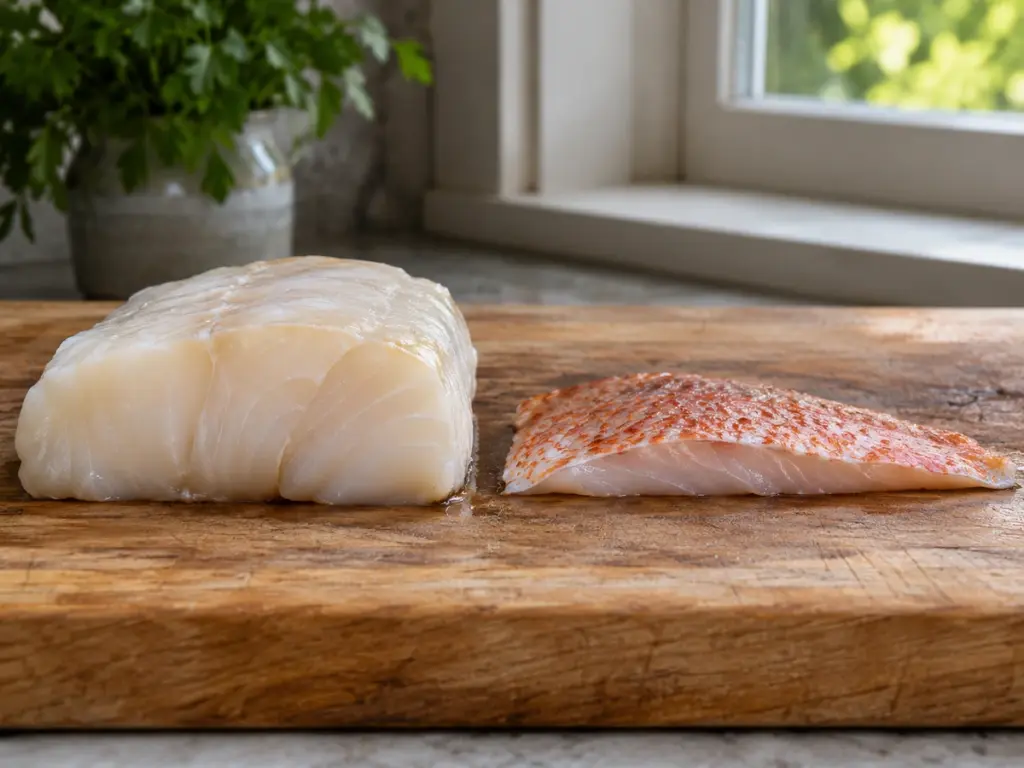
- You get a firmer bite and a little more sweetness.
- Thinner fillets reach temperature sooner, so you check them early.
- You get larger, softer flakes.
- When you simmer cod for long, its flakes break up, so you handle the fillet gently.
If the store has neither, you can use haddock or pollock, which are white fish that replace cod under the same weight-and-thickness rule.
8. Which Has More Nutrition and Less Mercury?
You get a lean, high-protein fish either way. Per 100 grams raw, NOAA lists these figures:
- Atlantic cod has 82 calories, 17.81 g protein and 0.67 g fat.
- Yellowtail rockfish has 90 calories, 18.36 g protein and 1.34 g fat.
- Widow rockfish has 94 calories, 18.8 g protein and 1.6 g fat.
Raw to raw, rockfish has about 8 more calories and twice the fat. Once both are cooked, the gap nearly closes, since USDA lists 109 calories for cooked Pacific rockfish and 105 for cooked Atlantic cod per 100 grams.
USDA data show where rockfish pulls ahead, in the vitamins and omega-3 fats:
| Per 100 g raw | Pacific rockfish | Atlantic cod |
|---|---|---|
| EPA + DHA (omega-3) | 0.26 g | 0.18 g |
| Vitamin D | 3.8 mcg | 0.9 mcg |
| Vitamin B12 | 1.39 mcg | 0.91 mcg |
| Selenium | 63 mcg | 33.1 mcg |
Rockfish has about 40% more omega-3 and over four times the vitamin D. USDA's rockfish record mixes Pacific species, so single species differ, and NOAA lists 63 mcg of selenium for yellowtail and 36.5 mcg for widow.
The gap is small in calories and large in a few nutrients, so you can decide by taste, cooking method and mercury. The FDA rates cod a Best Choice and rockfish a Good Choice for mercury, so cod is the safer pick for frequent meals.
FDA monitoring data show an average of 0.111 ppm for cod and 0.167 ppm for the bass and rockfish group.
If you cook for children ages 1 to 11, the advice is 2 servings a week from the Best Choices list, and a serving grows with age: 1 ounce at ages 1 to 3, 2 ounces at ages 4 to 7, 3 ounces at ages 8 to 10 and 4 ounces at age 11. Cod, haddock, pollock and tilapia are on that list, while rockfish and sablefish are Good Choices.
9. Which Is Better for the Environment?
The answer changes with the species and the place, so you cannot trust a single "rockfish is sustainable" or "cod is overfished" rule. NOAA's current stock reports say:
- Atlantic cod stocks in the Eastern Gulf of Maine, Western Gulf of Maine, Georges Bank and Southern New England are overfished.
- Pacific cod stocks in the Bering Sea, Aleutian Islands and Gulf of Alaska are not overfished.
- The Pacific Coast widow rockfish stock was overfished, then rebuilt in 2011, and it is not overfished now.
- The northern Pacific coast yellowtail rockfish stock is not overfished.
Life span matters too, because yellowtail can live up to 50 years and widow rockfish mature at about 8 years old and may live up to 60, although fish older than 20 are uncommon.
Pacific cod live 20 years or less, and fish that grow slowly take longer to replace what is caught.
The gear decides how much a fishery touches the sea floor. NOAA lists these main methods:
- Atlantic cod is caught with trawl nets, gillnets, bottom longlines, and rod and reel.
- Pacific cod is caught with longlines and bottom trawls, plus pots in the Gulf of Alaska.
- Widow and yellowtail rockfish are caught mostly with midwater trawls, which have minimal impact on the ocean bottom.
If you want one rule, we'd buy Alaska Pacific cod or a West Coast rockfish species named on the label, and your fishmonger can tell you how it was caught.
10. How Do You Buy Good Rockfish or Cod?
The FDA's buying signs work for both fish, so you start with the smell, which should be fresh and mild and never sour or ammonia-like.
On a whole fish you also look for clear, shiny eyes, firm flesh and red gills.
Color alone does not show freshness and raw rockfish can be white or pink, so you rely on smell and firmness. You should buy only fish kept on a thick bed of ice or in a refrigerated case.
A package of frozen fillets that is torn or shows frost or ice crystals belongs back in the case, and the fish should not be bendable. Frost can mean the fish was thawed and refrozen.
What Changes the Price at the Counter
- The name: a label that names the species (widow, yellowtail) tells you more than "rock cod."
- The form: a whole fish includes head, bones and skin you will not eat, so you compare the per-pound price of the fillet you will actually cook.
Whether the fish is fresh or frozen and how far it traveled also change the tag, so rockfish can cost more than cod in one store and less in another.
Storing and Thawing at Home
If you will cook the fish within 2 days, it keeps at 40°F or below, and for longer you freeze it wrapped tightly in foil, plastic or moisture-proof paper.
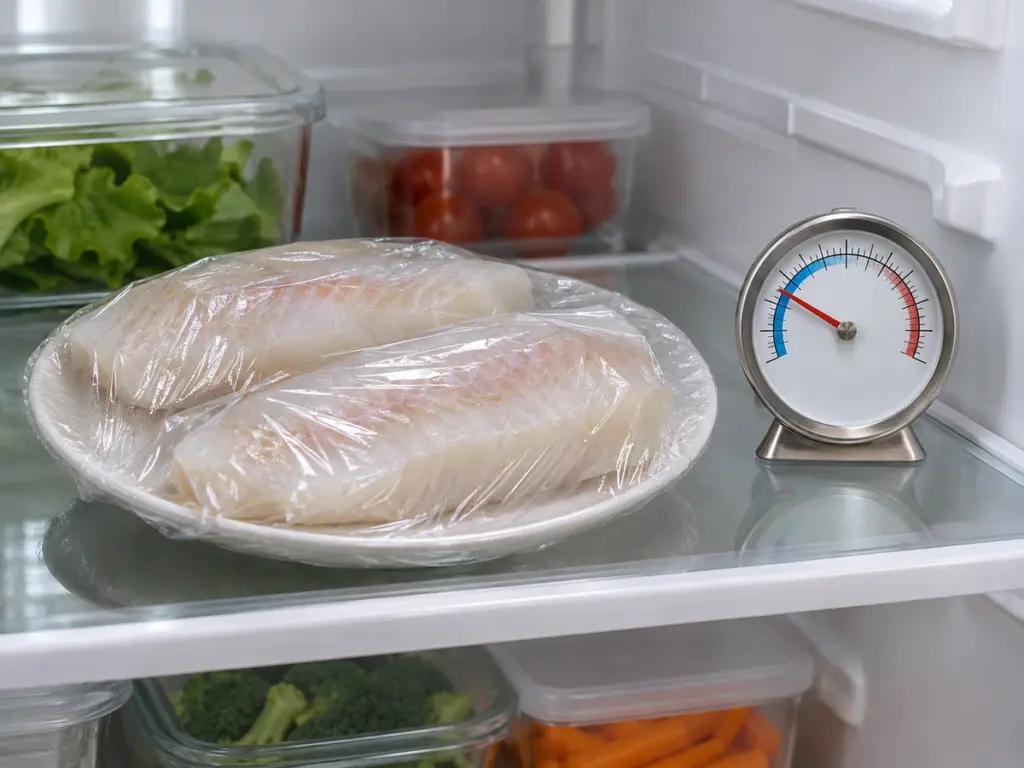
- Overnight in the refrigerator is the gentlest way to thaw frozen fillets.
- Cold water thaws faster when you seal the fish in a plastic bag and submerge it, and the microwave defrost setting works only if you will cook the fish right away.
11. Which Should You Buy?
- Stew, soup or taco filling needs flakes that hold together
- You want skin-on fillets to crisp in a pan
- The counter labels the species, such as widow or yellowtail
- Fish and chips batter or a bake with a mild sauce is the plan
- The FDA's Best Choice for mercury matters to you
- Kids at the table need the mildest flavor
Sources
- NOAA Fisheries, Yellowtail Rockfish: other names, appearance, taste, texture, nutrition, stock status, lifespan, gear.
- NOAA Fisheries, Widow Rockfish: appearance, size, maturity, taste, texture, nutrition, rebuilt stock.
- NOAA Fisheries, Atlantic Cod: Gadus morhua, appearance, size, taste, texture, nutrition, gear, overfished stocks.
- NOAA Fisheries, Pacific Cod: Gadus macrocephalus, appearance, size, texture, gear, stock status.
- NOAA Fisheries, Lingcod: family, size, color of raw flesh, taste, texture.
- NOAA Fisheries, Sablefish: black cod, family, fat content.
- NOAA Fisheries, Haddock: cod family, taste, texture, thumbprint.
- NOAA Fisheries, Alaska Pollock: cod family, taste, texture.
- NOAA Fisheries, Eight Delicious Fish You May Not Have Tried: shortspine thornyhead sold as Pacific rockfish.
- FDA, Potential Market Name Change for Certain Rockfish Species: Sebastes market name.
- FDA and EPA, Advice About Eating Fish: Best and Good Choices, serving sizes for adults and children.
- FDA, Mercury Levels in Commercial Fish and Shellfish: cod and rockfish averages.
- FDA, Selecting and Serving Fresh and Frozen Seafood Safely: buying signs, storage, thawing, raw fish, leftovers.
- FoodSafety.gov, Safe Minimum Internal Temperatures: 145°F for fin fish.
- USDA FoodData Central, SR Legacy: FDC 173684 and 175131 (Pacific rockfish, raw and cooked), 171955 and 171956 (Atlantic cod, raw and cooked).
Frequently Asked Questions
Can You Eat Rockfish or Cod Raw?
The FDA says freezing kills any parasites in fish, so fish you eat raw should have been frozen first, but freezing does not kill all harmful germs. The safest option for you is to cook it to 145°F.
Can You Serve Cooked Rockfish or Cod Cold?
Yes, if you cooked it to 145°F and chilled it promptly. You should never leave cooked seafood out for more than 2 hours, or 1 hour when the air is above 90°F.

Food writer at GustoMeadow. Writes ingredient substitutes, food comparisons, taste guides and storage guides for home cooks.
Storage and food-safety numbers follow USDA, FDA and university extension guidance.



