
Ever sliced a tomato so thin, you could read through it? That's the magic of a sharp knife.
Now, not all knives are created equal. It's not you, it's your knife.
Enter the battlefield of Granton vs. Straight edge knives.
Our culinary conquests led us to an epic duel between these two titans. Spoiler alert: they've each got their own secret sauce.
Granton edge, with those funky divots, slides through cheese like a hot knife through butter. Seriously, less stick, more slick.
Straight edge, on the other hand, offers precision. Think surgeon's scalpel meets kitchen countertop.
We've had our fair share of "oops" moments. Tomato guts on the ceiling, anyone?
Through trials and too many errors, we've learned a thing or two.
Each knife has its stage to shine. Choosing the right one can turn kitchen time from a chore to a score.
What is a Granton Edge?
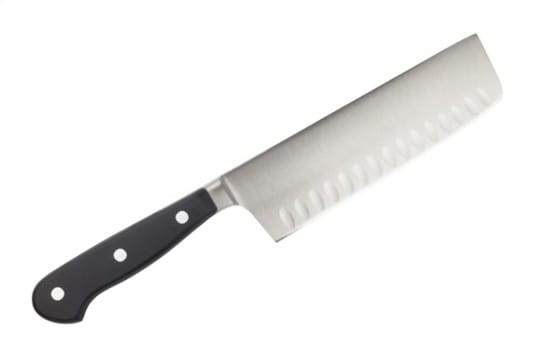
A Granton Edge is a type of knife edge that features scalloped indentations on the sides.
These indentations, also known as kullens or hollows, create tiny air pockets that reduce friction between the blade and food.
As a result, food doesn't stick to the blade and makes it easier to slice and chop.
In contrast to a straight edge, which has a continuous cutting surface from base to tip, the Granton Edge has a varying thickness along its length due to the indentations.
In addition to reducing sticking and friction, Granton knives are well suited for preparing thin slices of meat or fish as they prevent tearing or shredding of delicate foods like ham, salmon or sushi.
The unique shape also ensures precision cutting while creating less strain on your wrist and hands.
Granton Edge blades aren't suitable for all tasks.
They do not perform as well with harder vegetables like carrots or potatoes because these require more pressure to be exerted during cutting.
Nonetheless, these knives should still be an essential part of every kitchen since they offer both ease and efficiency in food preparation while being safe to handle due to constant modulation.
The way a Granton Edge reduces sticking is similar to pairing flavors for the best result; see what goes well with lemon in desserts for examples of complementary matches in the kitchen.
What is a Straight Edge?

A straight edge is a tool used to draw consistently straight lines and edges.
It is commonly used by draftsmen, engineers, architects, and artists for precise technical drawings or artwork.
The straight edge is typically made of metal or plastic materials that are durable and resilient.
It comes in various lengths ranging from six inches to four feet long.
The straight edge offers excellent accuracy due to its flatness, parallelism, and smoothness.
It can be used as a guide for cutting, scoring, or marking surfaces like paper, cardboard, plastic sheets, or fabrics.
Its utility extends to woodworking and construction industries for creating perpendicular lines or leveling surfaces.
The straight edge's functionality also includes checking the flatness of any curved surface by laying it on them.
In summary, while the straight edge is a professional drawing tool with exceptional precision in making lines and edges for engineering works and artistry projects, Granton distinguishes itself by offering ease when it comes to cutting through meat without sticking to knives' blades at most times when making meals in the kitchen.
The straightforward nature of a straight edge mirrors simple pairings in cooking; what to eat with guacamole combos offers uncomplicated, reliable matches.
Differences Between Granton Edge and Straight Edge
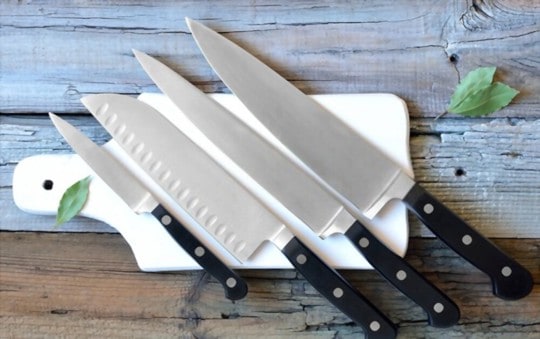
The Granton edge and Straight edge knives have clear differences in their design.
Granton edges have oval-shaped indentations on the blade's sides that create an air pocket between the slicing food and blade.
It reduces food sticking and creates a clean cut, primarily used for meat slicing.
In contrast, straight edge knives offer a sharp beveled edge with no indents, perfect for chopping vegetables or fruits but less effective for raw meat slicings.
A Granton Edge blade excels in cutting small or thin cuts of meat by creating minimal friction between the blade and food, which prevents wastage.
On the other hand, Straight Edge's sharpness makes them ideal for making precise cuts that require accuracy, from dicing to julienning.
One more factor to consider while choosing one is maintenance; Granton edges require extra care as they are hard to sharpen due to their number of temporary serrations carved into the blade side panels.
Whereas, maintaining straight edges becomes easy using sharpening stones.
Blade Design and Function
The design and function of a blade play a important role in determining its efficiency and practicality - similar to how a burr vs blade grinder comparison explains performance differences between tools.
The shape, thickness, and length of the blade are essential factors that contribute to its cutting performance.
A proficient blade should have a sharp edge that can cut through materials with ease.
Also, the grip handle should provide a comfortable and secure hold for precision cuts.
Blade design can differ depending on the intended use for the tool; hence it's important to select the appropriate type according to your needs.
When selecting between Granton Edge and Straight Edge blades, it's essential to understand their distinct features.
The Granton Edge contains wavy scallops on both sides of the blade, reducing contact with food when slicing, making them ideal for delicate foods such as fish and vegetables.
On the other hand, straight-edge knives provide firmness during use due to their sharpness while making sure broad contact with food for accurate cuts.
Both knives have unique advantages that depend on their intended use.
To make an informed decision when choosing between these two types of blades, consider what you will be using it for frequently.
The material used in making a blade also contributes significantly to its overall effectiveness.
Different steels are used based on their unique properties, including hardness, corrosion resistance, and toughness.
Therefore it's important to consider these aspects too when selecting a suitable knife.
Food Release and Slicing Efficiency
The efficiency of cutting and the ability to prevent food from sticking to the blade are important factors in determining the quality of a knife - much like how a food mill vs ricer comparison highlights differences in kitchen tool performance.
A comparison between Granton Edge and Straight Edge knives can provide insight into how these attributes are affected by design and construction.
Granton Edge knives, also known as fluted knives, have shallow grooves that run along the blade.
These grooves create pockets of air between the blade and the food, reducing surface area contact and allowing for smoother cutting.
The result is less pressure needed to cut, which can reduce fatigue during food preparation.
Straight Edge knives are designed with a continuous sharpened edge without any indentations or grooves on their blades.
As such, they might require more pressure when slicing through certain foods with moist surfaces like cheese or potato, but can still produce clean cuts if sharpened properly.
Both types serve different purposes entirely as both will be better suited for distinct tasks in your kitchen arsenal.
The selection of one over the other depends on individual preference as well as specific culinary tasks that need to be accomplished.
Overall it is essential to choose a knife that suits your cooking style and preferences while improving your efficiency in combination with maintaing versatility to meet diverse needs.
Suitability for Different Types of Cuts
Blades come in different varieties, each suited to particular kinds of cuts.
Some blades are better equipped to make straight cuts, while others excel at curved cuts and chops.
The blades' curves and edges play a significant role in determining the type of cut it is best suited to.
The Granton edge is designed for making clean, straight cuts through meat, cheese, and vegetables.
Its scalloped gullets help reduce friction between the blade and the food being sliced, resulting in smoother cuts with less effort.
On the other hand, a straight edge blade is perfect for chopping firm foods like fruits and vegetables.
When choosing the right blade for your desired cut, take into account the task's nature.
For instance, a Granton edge might be more suitable when dealing with delicate ingredients that require finer slices without much disintegration.
At the same time, when handling meats that require precision cutting or chopping coarse vegetables that won't break apart, a straight edge blade may be ideal.
Similarities Between Granton Edge and Straight Edge
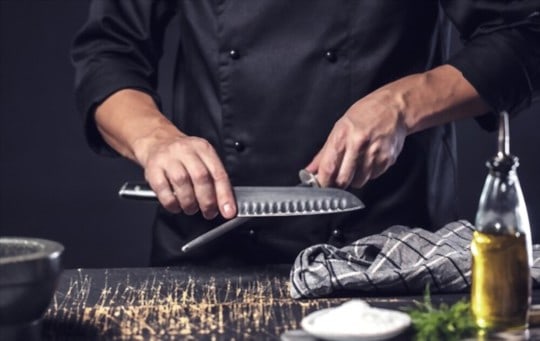
Both Granton Edge and Straight Edge are commonly used in kitchen knives for a smoother cutting experience.
They both share similarities in terms of sharpness and durability.
They have a straight cutting edge that can cut through food effectively.
Also, they are made of high-quality steel that can withstand everyday wear and tear.
However, there are some differences between these two types of edges.
Granton Edge has recessed oval-shaped hollows (also known as divots) on the blade which help reduce friction and prevent food from sticking to it.
On the other hand, the Straight Edge has no such divots.
This makes the Straight Edge more straightforward to sharpen but less effective when it comes to slicing thin pieces of meat or vegetables.
Considerations When Choosing Between Granton Edge and Straight Edge
When selecting a knife, the type of blade edge is important.
There are two popular types of knife edges, Granton and Straight.
When choosing between them, several considerations need to be kept in mind - including practical substitutes in technique, similar to guidance on eggless breading substitutes for crisp results.
The key factors to consider include the intended use of the knife and the type of food being cut.
Granton edge knives have dimples or hollow grounds on either side of the blade which allows air pockets to form at the cutting surface.
This helps reduce friction and prevent food from sticking to the blade, making it an ideal choice for slicing meat, poultry and fish without tearing it apart.
Straight edge knives are better suited for chopping vegetables, fruits, breads and cheeses.
Other important contemplations range from ergonomics and grip styles to sharpening maintenance and safety measures.
Also, factors such as durability and price should also be considered when deciding between these two blades.
Intended Use and Cutting Style
The purpose for which a Granton edge or Straight edge knife is intended to be used and the cutting styles are different - comparable to how a charcuterie board vs cutting board comparison helps pick the right surface for each task.
While the Straight edge is traditionally used for chopping and slicing through tough materials like meat, vegetables, etc.
The Granton edge is more suited for cutting delicate food items such as fish or sushi.
This is because, unlike the Straight edge, a Granton knife has semi-circular hollows etched on both sides of the blade which helps reduce friction between the food and the blade.
Looking deeper into the intended use and cutting style, while using a Straight edge knife requires more strength due to its sharpness and lack of features to support easy cuts, a Granton edge knife alleviates this need.
With less strength required by users, Granton knives allow for precise cuts while minimizing wastage of food items being cut.
The difference in intended use and cutting style between these two types of knives gives individuals an option based on their personal preferences in terms of what they want from their kitchen cutlery.
Maintenance and Sharpening
Maintenance and sharpening of knives is an integral part of making sure their longevity and performance.
Proper maintenance also reduces the risk of accidents during usage.
Here are three important points to keep in mind when maintaining and sharpening your knives:
- Regular cleaning: After each use, clean the knife with warm water and mild detergent to prevent corrosion and tarnishing.
- Sharpening methods: Depending on the type of blade you have, take care to use the appropriate sharpening method - whether it be honing or whetting. This helps maintain its sharpness over time.
- Prevention is key: Avoid using knives on surfaces that may damage or dull them, such as stone or glass. Store them safely in a block or rack to prevent unnecessary contact with other kitchen tools.
Different types of knives require different levels of maintenance and sharpening techniques.
Understanding these differences can help prolong the life of your blades while also improving their overall performance.
By keeping these things in mind, you can ensure that your knives stay sharp, safe, and effective for all your kitchen needs.
Choosing the right approach for blade upkeep matters - a sharpening steel vs stone comparison explains which tools suit different edges.
Examples of Culinary Tools with Granton Edge and Straight Edge
Kitchen utensils come in different shapes and sizes, each designed to serve a specific purpose.
Some of these utensils have unique edges that determine their functionality.
One such type of edges is the Granton edge and Straight edge.
These edges are found in various culinary tools and are widely used by chefs worldwide.
Granton edge knives are widely known for their distinct patterned scallops along the blade's surface, which reduce friction when slicing through meat or vegetables.
On the other hand, Straight Edge knives lack these markings and offer a smooth blade that helps make precise cuts on fruits, vegetables, and meats.
Other kitchen tools with granton or straight edges include chopping knives, boning knives, carving knives, butcher knives, and fillet knives.
These tools can help you perform different cooking tasks depending on your needs.
When choosing between Granton Edge and Straight Edge kitchen tools, consider what you'll be using them for to determine which one you'll need most.
If you're after a versatile knife that can handle both meat and vegetables tasks effectively, then choose a granton edge knife.
But if you prefer more precise cuts with your cooking ingredients that don't require much friction or drag while slicing through them? A straight knife will be ideal.
Understanding these edges' differences will help you pick the right tool for your job based on its design features and potential usage scenarios without undermining quality requirements in both categories' selection criteria.
Benefits of Granton Edge vs Straight Edge Knives
Granton edge and straight edge are both types of knife edges used for different purposes.
Also, Granton edges are ideal for cutting meat, fish and vegetables as they can effortlessly glide through any texture.
Also, note that there are different types of Granton edges available in the market today.
For instance, some have wider scallops than others resulting in larger air pockets and smoother cuts.
While others are more suitable for slicing dense meats like ham or brisket.
For blade construction context, see forged vs stamped knives comparison for how build affects performance. For upkeep considerations, review sharpening steel vs stone comparison to match maintenance to edge type.
Frequently Asked Questions
The unique shape also ensures precision cutting while creating less strain on your wrist and hands. They share some similarities but each has qualities that make it better suited for certain recipes.
In many recipes, yes. Granton Edge and Straight Edge fill similar roles, though each brings its own character.
Try a small test batch before committing to a full swap.
Availability varies by region. One is usually a standard grocery store item while the other may require a specialty or international market depending on where you live.
Can a beginner tell the difference by taste?
In a side-by-side tasting, yes.
The difference becomes less obvious when mixed into a recipe with other ingredients.
Most people notice the distinction more clearly on its own.