
Buy a pull-through or electric sharpener for speed, or a whetstone if you want to set the angle and will practice.
- America's Test Kitchen's top electric model took 2 minutes to sharpen a dull knife.
- A whetstone has a learning curve, so practice on a cheap knife first.
- Western knives sit near 20 degrees per side, Japanese knives near 15 degrees.
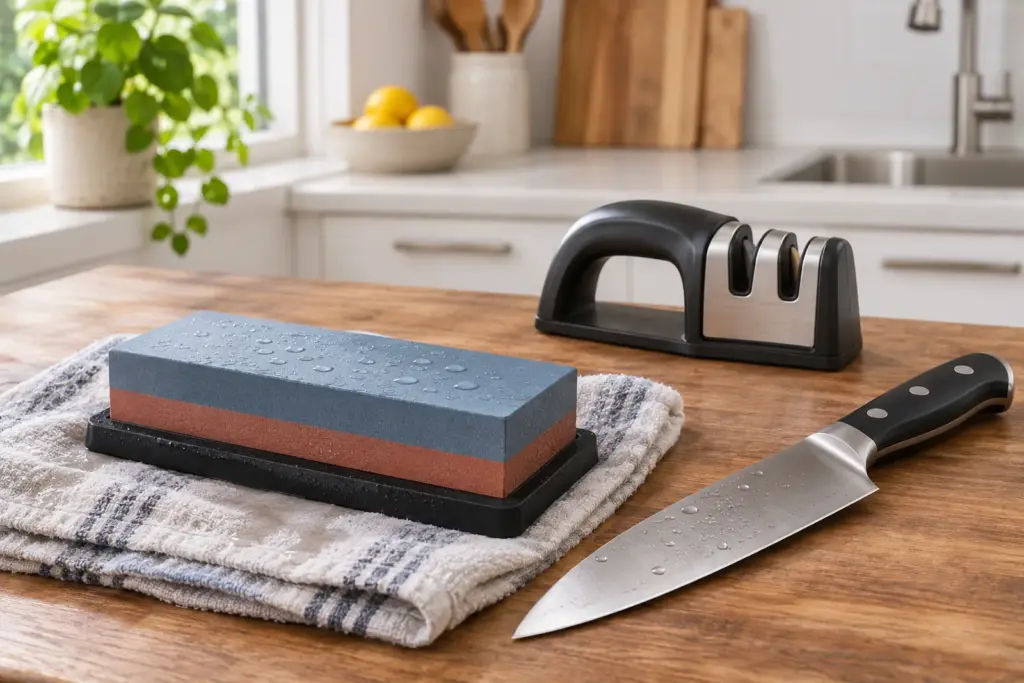
Both tools grind a little steel off a dull edge to make a new one, and the choice comes down to the same trade you meet in most kitchen tool comparisons: speed and ease against control. A sharpener with slots fixes the angle for you, while on a stone you hold the angle with your own wrist. That one difference explains the learning curve, the time it takes and the kinds of knives each tool suits.
1. What Is the Difference Between a Knife Sharpener and a Whetstone?
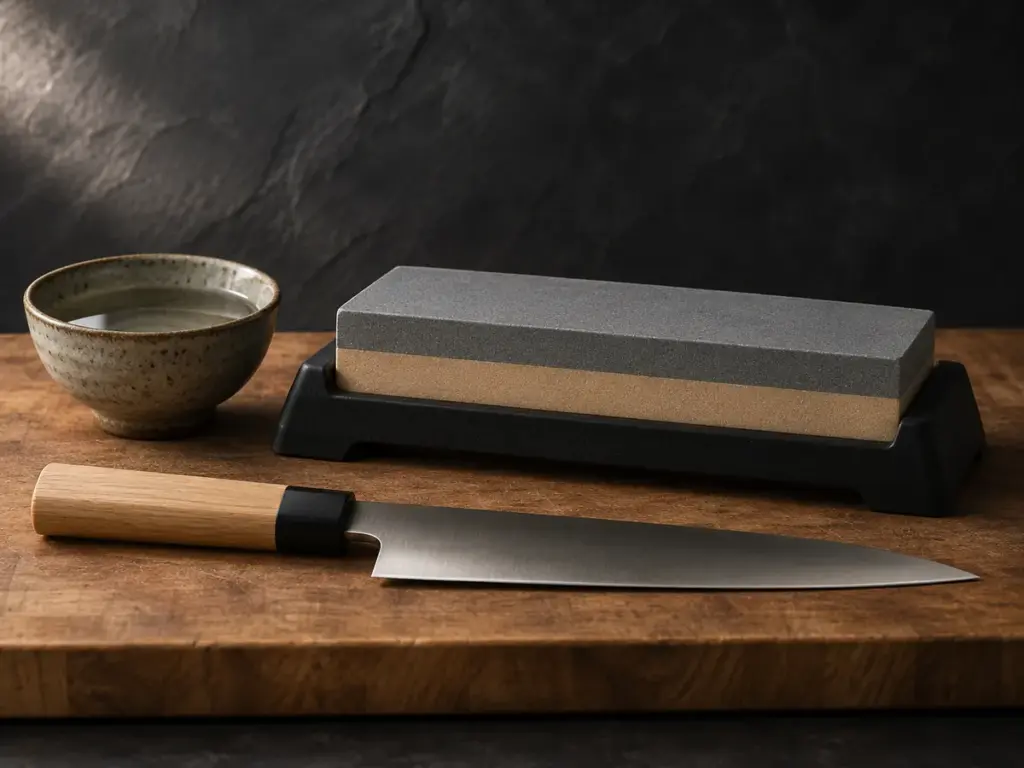
A pull-through sharpener has abrasive slots, and you draw the blade through them. An electric sharpener spins an abrasive disk or belt, and spring-loaded slots hold the blade at a set angle. A whetstone is a flat block of abrasive that you wet, then slide the edge across at an angle you hold. Wüsthof notes that hand-held and electric sharpeners both have preset angles.
| Trait | Pull-through | Electric | Whetstone |
|---|---|---|---|
| Who sets the angle | The slot guides | Spring-loaded guides | You do |
| Speed | Slower than electric | About 2 minutes for a dull knife (ATK's top model) | Slower while you learn |
| Skill | Very little | None needed | America's Test Kitchen says much practice is required |
For space, a pull-through fits a drawer. An electric sharpener is about the size of a loaf pan and needs an outlet, while a whetstone takes little space and is easy to carry.
Read across the rows and the pattern is clear: the more the tool decides for you, the faster you finish and the less you control. A serrated bread knife is the exception, because none of these three tools fits its scalloped edge (more on that below).
2. Do Pull-Through and Electric Sharpeners Wear Out Your Knives?
America's Test Kitchen's equipment reviewers say a well-designed electric sharpener removes no more metal than a whetstone. They also found that many electric models they tried were poor, with microserrated edges and damaged heels or handles, so the model you buy matters more than the type.
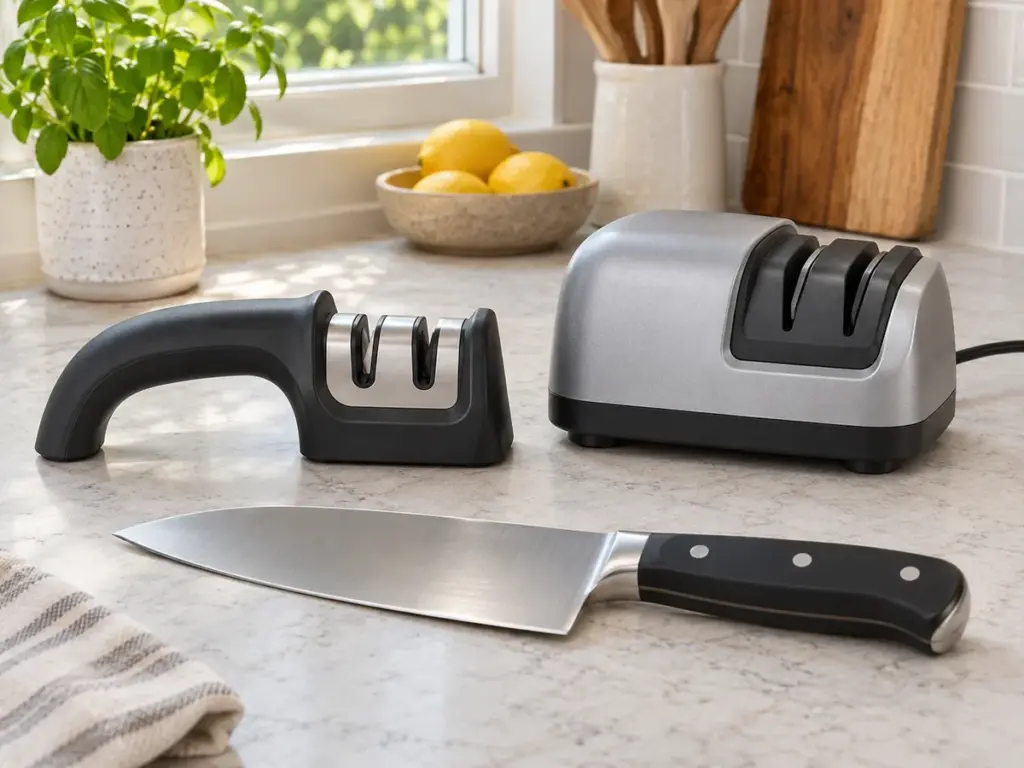
Wear comes from how often you sharpen. Every session takes steel off, so sharpening before the knife needs it shortens its life. Wüsthof tells pull-through owners to use the fine slot for regular touch-ups and the coarse slot only once or twice a year.
- Hone first, and sharpen only when honing stops helping
- Use the coarse slot once or twice a year
- Match the sharpener to your knife's 15 or 20 degree angle
- Sharpening on a schedule when the edge still cuts
- Regrinding a 20-degree knife to 15 degrees, which removes metal
- Using an electric model with poor edge reviews
3. What Angle Should You Sharpen At?
Angles are measured per side of the blade, and a smaller angle gives a thinner, sharper-feeling edge. Knifewear says Western knives are often sharpened at 20 degrees because their softer steel cannot hold a finer edge, while Japanese knives sit at 15 degrees, and some owners go as low as 12. Narrow angles cost something, though: America's Test Kitchen warns that softer Western steel at 15 degrees needs more frequent sharpening.
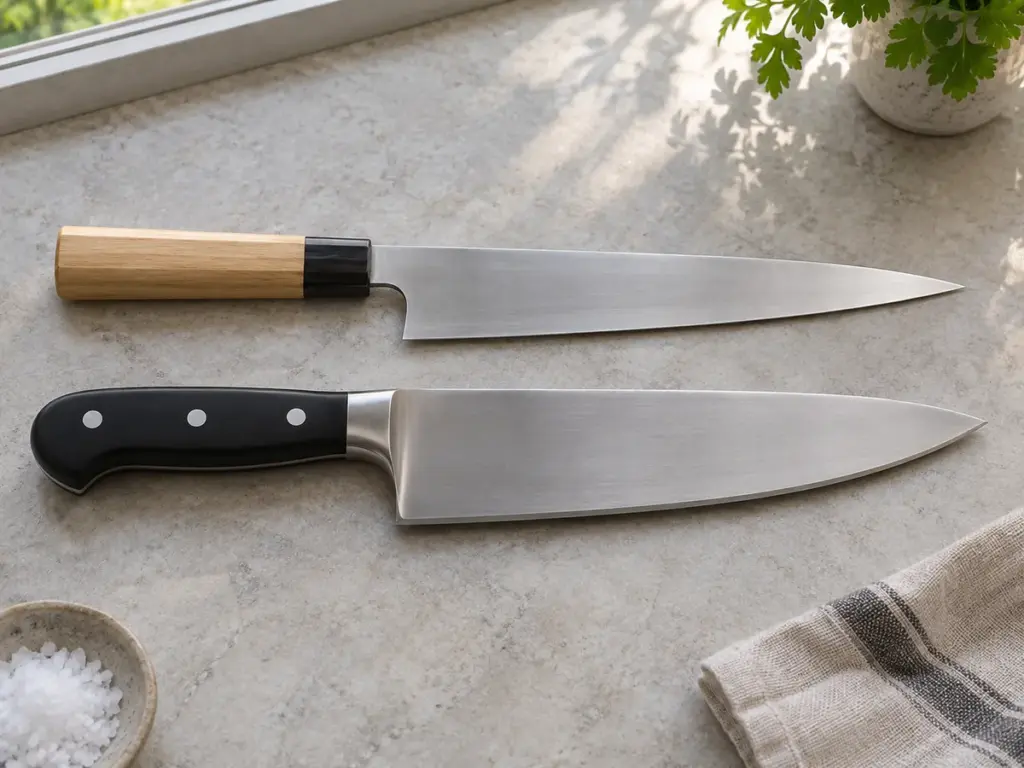
"German" does not always mean 20 degrees, so check your maker's number before you pick a tool:
- Many Western knives: about 20 degrees per side (America's Test Kitchen, Knifewear).
- Japanese-style knives: about 15 degrees per side, sometimes 12.
- Shun: its Japanese-style Shun knives are ground to 16 degrees per side, and its whetstone base is built to hold 16 degrees.
- Wüsthof: its German-made Wüsthof knives use about 14 degrees for standard blades and 10 degrees for Asian-style blades.
Pull-through and electric sharpeners come in 15-degree and 20-degree versions, so you have to buy the one that matches your knives. A whetstone fits any angle, but only if you can hold it steady. Shun sells a stone base that fixes the angle for you, and Wüsthof sells a slider guide for the same job.
4. Which Whetstone Grit Do You Need?
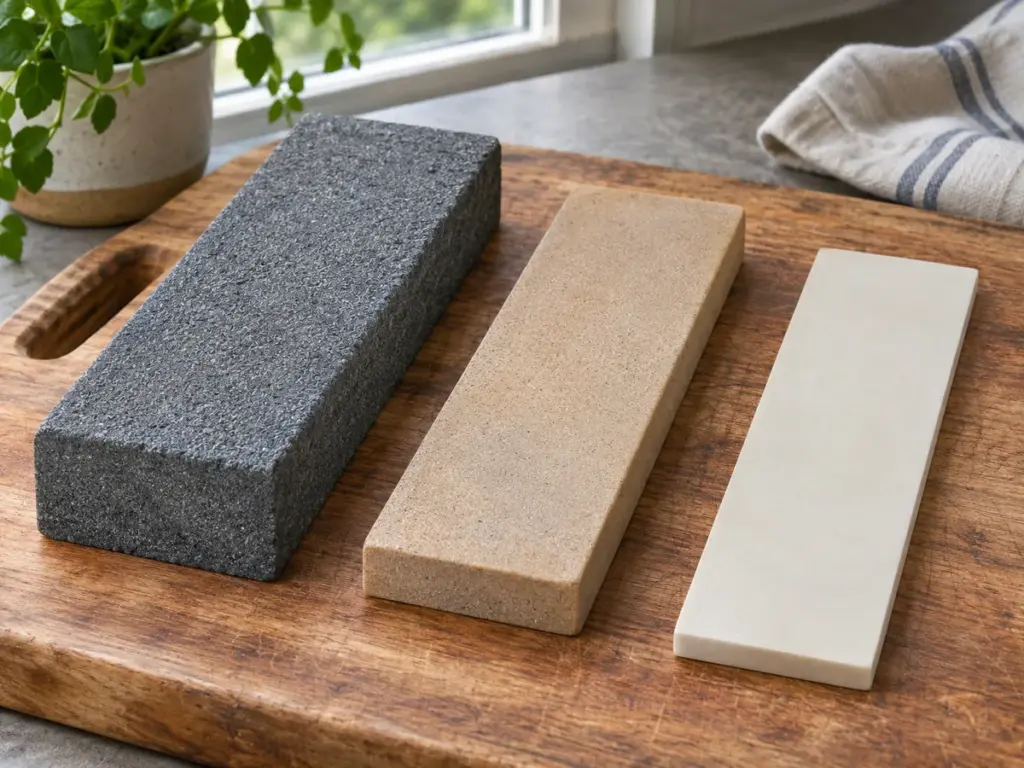
Grit is the fineness of the abrasive. A low number cuts fast and leaves a rough edge, and a high number cuts slowly and leaves a smooth one. Knifewear's guide breaks the common stones down like this:
- About 220: builds a new edge quickly and repairs chips, but on its own it leaves the edge rough, which Knifewear calls "semi serrated."
- 1000: the finishing stone for most Western kitchen knives.
- 2000 to 4000: a smoother edge, where 4000 also works as a day-to-day polishing stone.
- 8000: a super-polished edge for Japanese knives.
Do You Soak a Whetstone?
It depends on the stone, so read the maker's label. Sharpening Supplies says soaking stones must be submerged until saturated, while splash-and-go stones only need water on the surface. It lists Naniwa Traditional and Suehiro Cerax as soakers, and Shapton's Kuromaku, HR, HC and G7 lines and the Naniwa S1 as splash-and-go. Wüsthof tells owners of its stone to soak for about ten minutes and keep pouring water on it as they work.
How Do You Keep a Stone Steady and Flat?
A stone holder keeps the stone stable and gives your knuckles room, and a damp folded towel under the stone also stops it sliding. Flatten the stone from time to time. Knifewear says every stone wears into a concave surface, and a dished stone makes a steady angle hard to hold.
5. How Do You Know When to Hone and When to Sharpen?
You hone a knife to straighten its edge and sharpen it to grind a new one. Shun says honing realigns a rolled edge and removes no metal, and some cooks do it weekly or daily. When you sharpen, Shun says about once a year is often enough for most home cooks.
- Hone first. Wüsthof gives 6 to 8 passes per side on a ceramic or steel honing rod, at 14.5 degrees or 10 degrees for Asian-style knives.
- Test the edge. America's Test Kitchen suggests slicing a sheet of paper or an onion to see whether the knife still cuts cleanly.
- Touch up. Use the fine slot of a sharpener, or a fine stone, when honing no longer makes the blade feel keener.
- Reset the edge. Use the coarse slot once or twice a year, or a coarse stone. Wüsthof also offers a sharpening steel for an edge reset.
6. Which Should You Buy?
- You want a sharp knife in minutes with no practice
- Your knives share one angle, 15 or 20 degrees
- You have drawer space and no spare shelf
- You own Japanese or asymmetrical-edge knives, where America's Test Kitchen says stones remain useful
- You want to choose the angle yourself
- You will practice on a cheap knife first
If your set mixes 15-degree and 20-degree knives, America's Test Kitchen points to an adjustable-angle sharpener instead of a fixed one. If you own a mid-priced German-style set such as the Henckels and Calphalon lines, look up the maker's angle before you buy a pull-through.
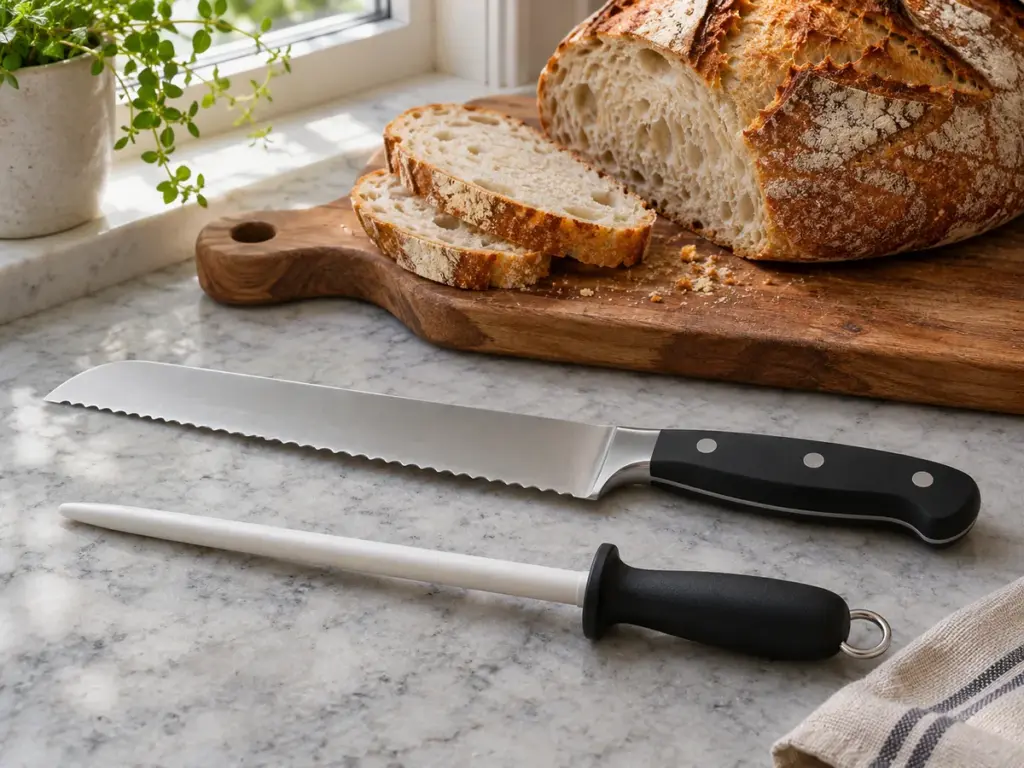
For a serrated bread knife, skip all three tools. Made In says whetstones and electric sharpeners do not suit serrated blades, which need a tapered sharpening rod, ideally ceramic. If you can sharpen only one knife first, start with the chef's knife you use most.
Sources
- America's Test Kitchen, Which Knife Sharpener Is Right for You: electric speed, manual limits, whetstone learning curve, honing before sharpening.
- America's Test Kitchen, Electric Knife Sharpeners review: metal removal, chip repair time, 15 and 20 degree models, poor models.
- Cook's Illustrated, Adjusting the Angle of Western Knives: 20 degree Western edges, 15 degree Eastern edges, metal lost when regrinding.
- Knifewear, What Angle Should I Sharpen My Knives At: 15 degrees for Japanese knives, about 20 for Western.
- Knifewear, Gear Guide to Knife Sharpening: grit numbers, stone holders, dished stones.
- Shun, Sharpening and Honing Are Not the Same: honing versus sharpening, 16 degree angle, sharpening about once a year.
- Shun, 3-Piece Whetstone Sharpening System: 1000 and 6000 grit, 16 degree base.
- Wüsthof, How to Sharpen Your Wüsthof Knives: soaking about ten minutes, honing passes, pull-through slot use.
- Wüsthof, Sharpening Guide Slider: 14 degree angle guide.
- Sharpening Supplies, Japanese Water Stones: soaking stones versus splash-and-go stones.
- Made In, How to Sharpen a Serrated Knife: tapered sharpening rod for serrated blades.

Food writer at GustoMeadow. Writes ingredient substitutes, food comparisons, taste guides and storage guides for home cooks.
Storage and food-safety numbers follow USDA, FDA and university extension guidance.



