
Both are wheat pasta, but couscous is tiny granules you soak for 5 minutes, while orzo is rice-shaped pasta you boil for 8 to 10 minutes.
- Couscous turns soft and fluffy, while orzo keeps a firm, chewy bite.
- Use couscous under stews and orzo in soups and bakes.
- Both are durum wheat, so neither is gluten-free.
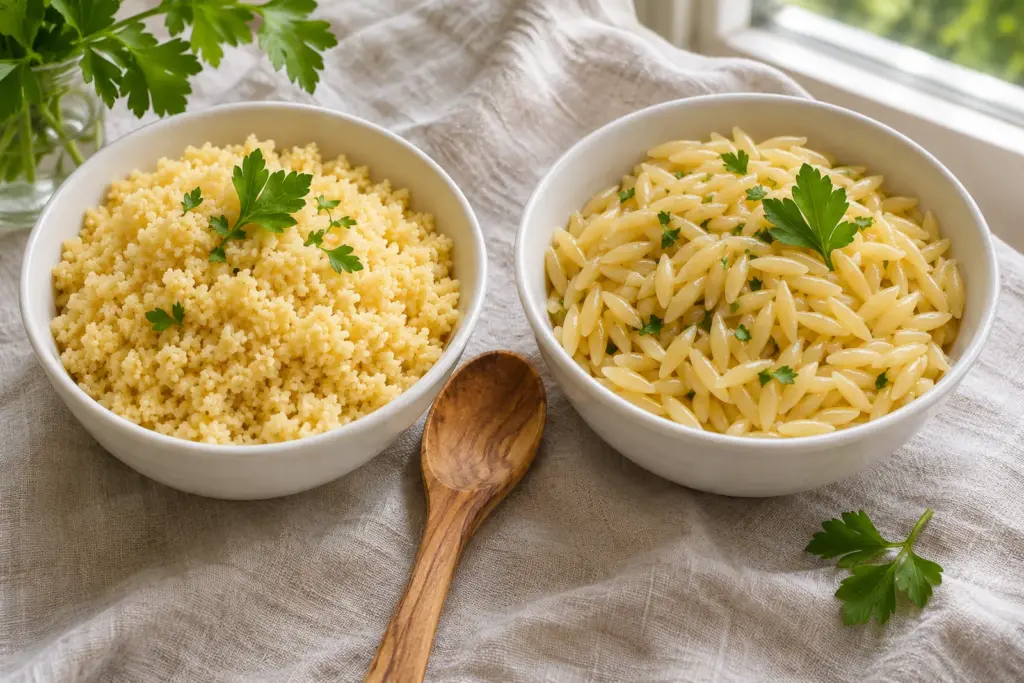
Couscous and orzo sit in the same grocery aisle and look alike in a bowl, so they get swapped by mistake, and the recipe suffers. Among the foods that people compare, this pair is one of the easiest to mix up. Couscous is not a grain. Food Network's glossary calls it "a form of pasta" and it is pasta made from semolina and water, while orzo is made from the same durum wheat.
1. What Is the Difference Between Couscous and Orzo?
Your pantry may hold one of two products labeled "couscous", and they cook very differently. Pearl couscous, also sold as Israeli couscous, is the one that behaves like orzo.
| Trait | Moroccan couscous | Pearl couscous | Orzo |
|---|---|---|---|
| Made from | Semolina, rolled and steamed | Semolina, toasted | Durum wheat flour |
| Shape | Granules, about 2 mm | Pea-size beads | Rice-shaped pasta |
| Cooked by | Soaking in boiling water | Simmering | Boiling |
| Time | About 5 minutes | About 10 (boiled like pasta) | 8 to 10 minutes |
You will feel the gap in 5 minutes off the heat against 8 to 10 minutes of boiling, and you will taste it in the texture. Instant couscous needs only a kettle and a covered bowl, while orzo needs a pot of boiling water that you watch and drain.
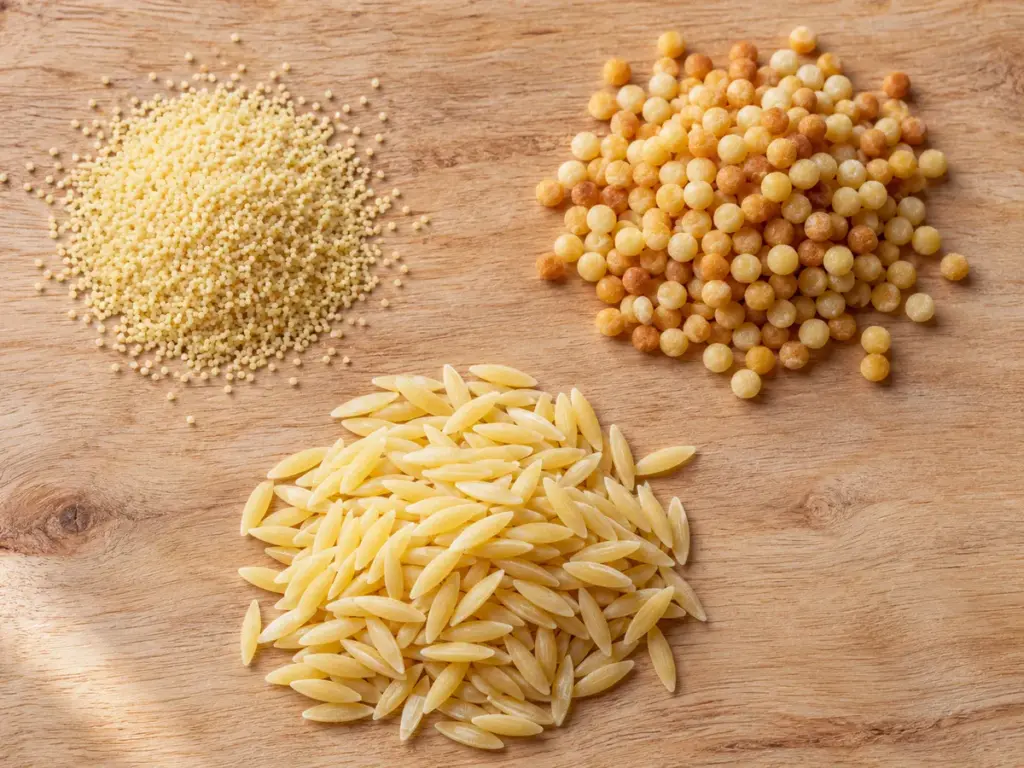
Semolina is the coarse flour milled from durum wheat, and it is why Moroccan and pearl couscous look pale gold. Orzo is made from durum wheat flour and looks the same color. It is often confused with farina, the wheat cereal that is a different product.
2. Why Does Couscous Cook in 5 Minutes While Orzo Needs 10?
Most couscous in a grocery store box is already cooked. It is usually pre-steamed and dried, so the boiling water you add only rehydrates it.
The traditional version starts as semolina sprinkled with water and rolled by hand into small pellets. Cooks then steam the pellets in a steamer that sits on a tall pot (a couscoussier), so the granules soak up the flavor of the stew below.
- Boxed Moroccan couscous: pre-steamed and dried, so it needs hot liquid and 5 minutes.
- Pearl couscous: toasted pasta beads, so it needs a simmer like other pasta.
- Orzo: dried pasta that nothing has cooked yet, so it needs a full boil.
That is why a splash of hot water cooks couscous but not orzo. If you let orzo sit in hot water for 5 minutes, you usually get a hard center.
3. Which Kind of Couscous Do You Have?
A box that says only "couscous" usually holds the Moroccan type, which Food Network calls "the tiniest form of couscous." Pearl couscous is a different product: toasted semolina pasta formed into pea-size beads, and Food Network says it was invented in Israel in the 1950s. Because it is bigger and sturdier, pearl couscous is the closest stand-in for orzo.
- The smallest form, and the one most recipes mean
- Soak 1 cup in 1 cup boiling water or broth, covered, for 5 minutes, then fluff.
- Pea-size beads that stay tender and chewy
- Simmer about 10 minutes, then let it stand a few minutes.
Size sets the cook time, so a finer granule needs less of it. Pearl couscous also tastes a little nuttier, because the semolina is toasted before the beads are dried.
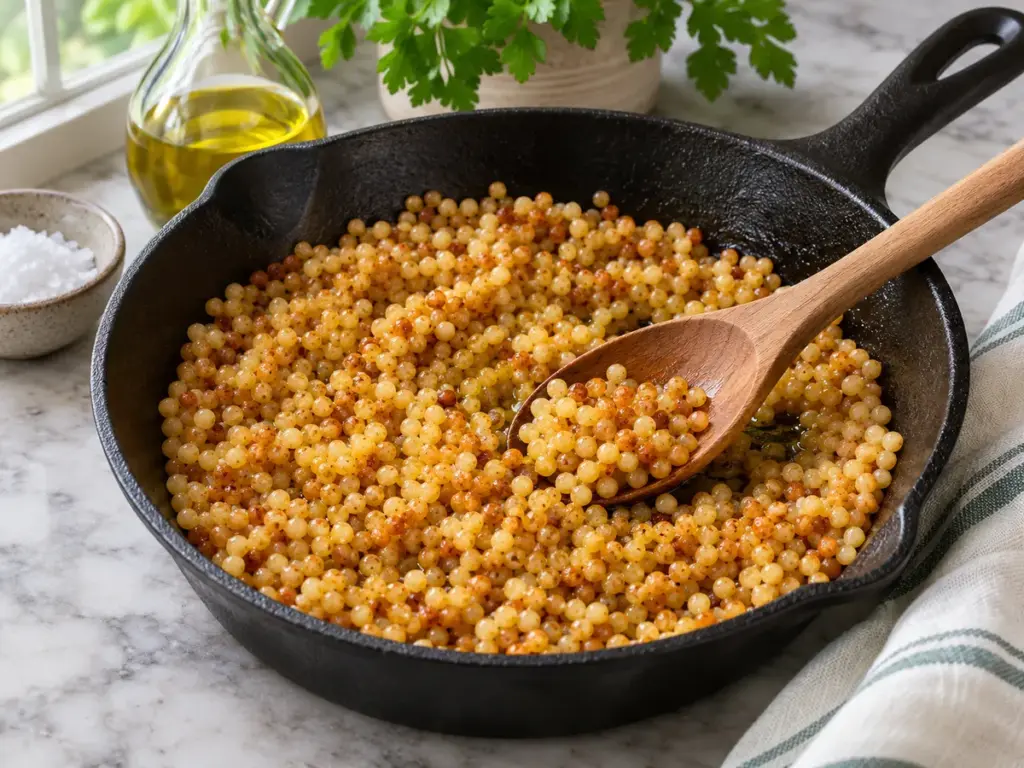
A third kind, Lebanese couscous (moghrabieh), is hand-rolled into pearls about 5 to 6 mm across. Cooks usually simmer it in a stew or flavor it with cinnamon, so follow the box time for it and do not treat it like the instant kind.
4. How Do You Cook Couscous and Orzo?
How Do You Cook Moroccan Couscous?
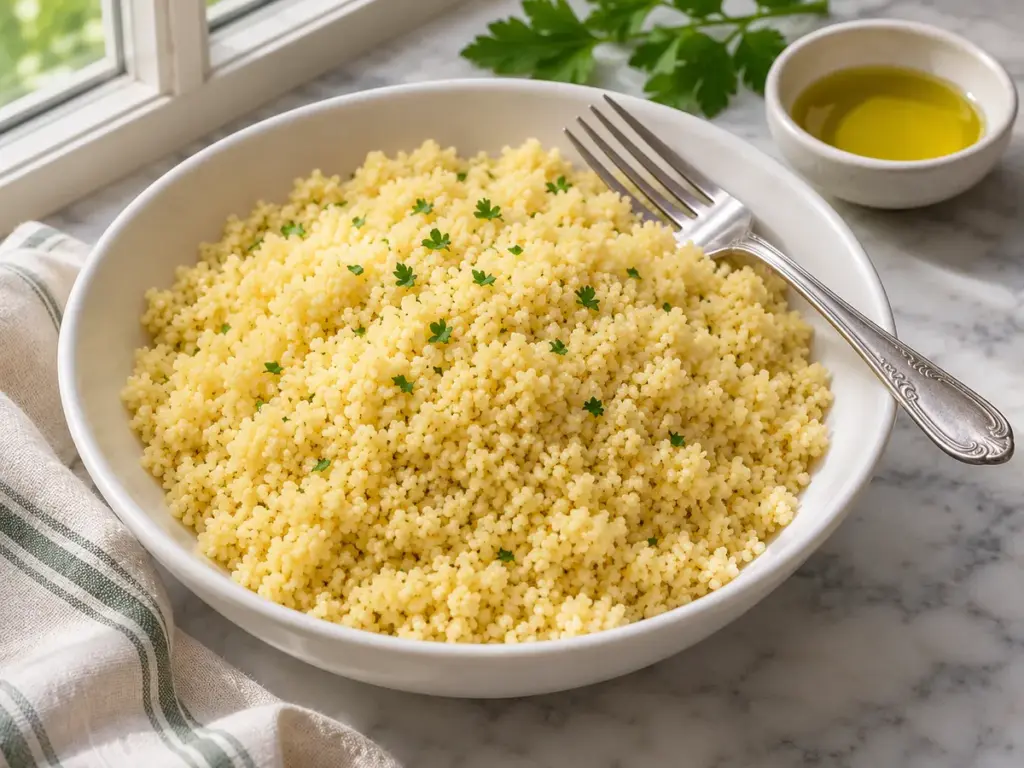
Moroccan couscous never goes in a pot of boiling water. Food Network's method uses the 1 to 1 ratio of liquid to couscous and finishes in four steps:
- Boil the liquid. Bring 1 cup of water or broth to a boil, with ½ teaspoon of kosher salt if you use water.
- Add the couscous. Stir in 1 cup of couscous and take the pot off the heat.
- Cover for 5 minutes. The granules swell in the steam without any more cooking.
- Fluff with a fork. Taste it and add salt if it needs more.
Cook it in broth instead of water when you want more flavor, and stir in a drizzle of olive oil or a pat of butter if you like. Some brands print a different amount of water on the box, so follow the box when its ratio is not 1 to 1.
How Do You Cook Orzo and Pearl Couscous?
Orzo cooks the way any pasta does. Boil it in plenty of salted water for 8 to 10 minutes and check it a minute early, because brands differ by a few minutes. If it will finish in a soup, pull it a minute or two short, since it keeps softening in the hot broth.
You cook pearl couscous in a pot too. Food Network boils it about 10 minutes, and Near East's package adds a 4 to 5 minute covered stand after its simmer, so check the box, because brands differ.
America's Test Kitchen toasts the beads first and then lets them absorb a measured amount of water, which it says gives more evenly cooked results than boiling. For 2 cups of pearl couscous:
- Toast. Stir the couscous with 1 tablespoon of oil over medium heat for 5 to 6 minutes, until about half the beads turn golden.
- Add water. Pour in 2 ½ cups of water and ½ teaspoon of salt, and bring it to a boil.
- Simmer. Cover on medium-low for 9 to 12 minutes, until the water is gone.
- Rest. Leave it covered off the heat for 3 minutes.
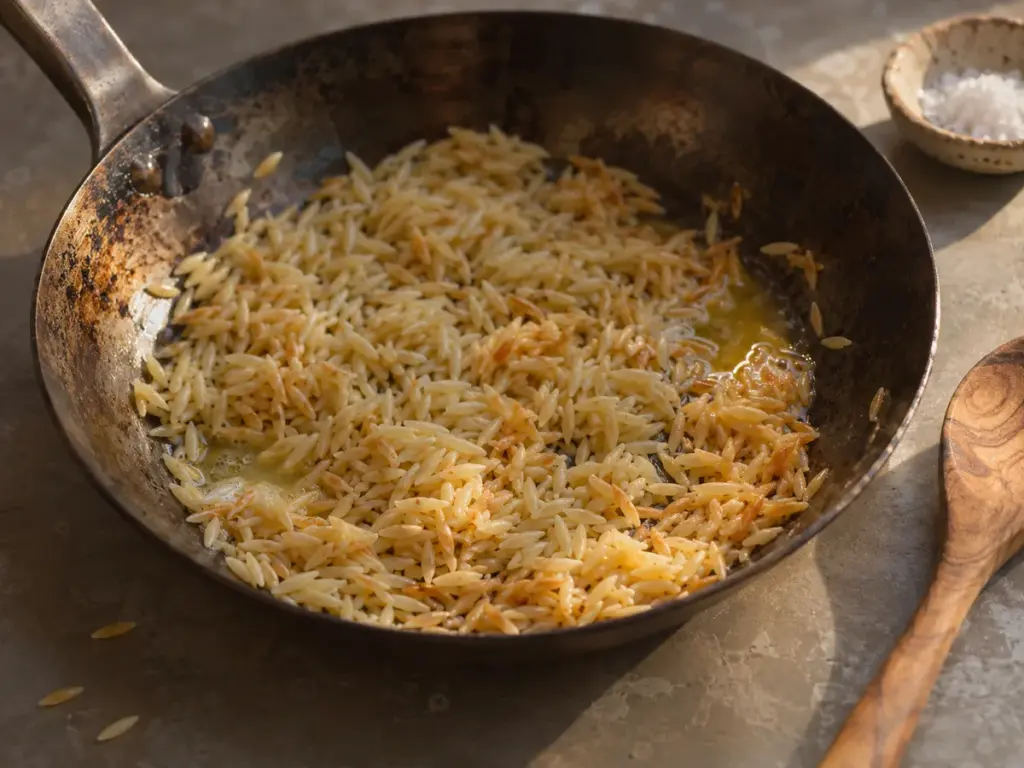
For a creamy, risotto-style pot, skip the big pot of water. DeLallo's skillet method for 1 cup of orzo runs in four steps:
- Coat. Melt 2 tablespoons of butter and stir the dry orzo in.
- Toast. Stir for about 4 minutes, until it just turns golden.
- Add liquid. Pour in 2 cups of water or broth and bring it to a boil.
- Simmer. Cover on low for about 15 minutes, adding a splash more liquid if it dries early.
5. How Do Couscous and Orzo Taste and Feel?
Both taste mild and slightly nutty, like plain pasta, so the flavor in your dish comes from what you cook them in. What you will notice is the mouthfeel in the bowl:
- Couscous is light and soft. Its fine granules take up broth or dressing within minutes, which is why it suits saucy stews.
- Orzo is firm and slippery. It holds its shape in simmering liquid and gives a spoonful of soup something to chew.
- Couscous leans toward North African flavors such as cumin, coriander, cinnamon and saffron.
- Orzo leans toward Mediterranean flavors such as olive oil, garlic, tomatoes, lemon and basil.
Orzo gets its name from the Italian word for barley, which is why a recipe or a menu may use another name for it. Orzo is often mistaken for rice, but it is pasta, while arborio risotto rice is a short-grain rice that releases starch as it cooks.
- Orzo: risoni in Italy, krithiraki in Greece, piñones in Spain, and "bird tongue" pasta in the Middle East.
- Pearl couscous: Israeli couscous, which Food Network says is just another name for it.
- Lebanese couscous: moghrabieh, the large hand-rolled pearls.
6. How Do the Nutrition Numbers Compare?
USDA FoodData Central has no record for orzo itself, so the table uses its enriched pasta records, since orzo is made from the same durum wheat. Every number is per 100 grams.
| Food (USDA FDC id) | Calories | Protein | Fiber | Fat |
|---|---|---|---|---|
| Couscous, dry (169699) | 376 kcal | 12.8 g | 5.0 g | 0.6 g |
| Pasta, enriched, dry (169736) | 371 kcal | 13.0 g | 3.2 g | 1.5 g |
| Couscous, cooked (169700) | 112 kcal | 3.8 g | 1.4 g | 0.2 g |
| Pasta, enriched, cooked (169737) | 158 kcal | 5.8 g | 1.8 g | 0.9 g |
Dry, the two are nearly identical, at 376 and 371 calories per 100 grams. Cooked, couscous looks lighter only because it absorbs more water, so 100 grams of cooked couscous holds less food.
- Couscous by the cup: a cup of cooked couscous weighs 157 grams, which works out to about 176 calories.
- Orzo by the cup: USDA has no cup weight for orzo, so use the per-100 gram figures in the table: cooked enriched pasta holds 158 kcal against 112 kcal for cooked couscous.
Enrichment also matters. The enriched pasta record has 3.3 mg of iron and 237 micrograms of folate per 100 grams dry, against 1.08 mg and 20 micrograms for couscous. Cooked, couscous holds a little more potassium, at 58 mg per 100 grams against 44 mg for enriched pasta.
If you want more fiber, look for whole-wheat orzo, since USDA lists whole-wheat dry pasta at 9.2 g of fiber per 100 grams (FDC 169738), almost double plain couscous.
7. Can You Use Couscous Instead of Orzo?
Sometimes, and the type of couscous decides it. Plan on the same cooked amount of either one, and you can match the swap to the dish:
- Orzo salad: use pearl couscous, simmered per the box. Instant couscous makes a softer, finer salad that soaks up the dressing.
- Orzo soup: stir instant couscous into the hot soup at the very end, off the heat. A long simmer turns its fine granules mushy.
- Couscous under a stew: boil orzo separately, drain it and spoon the stew over it. Expect a firmer bite than couscous gives.
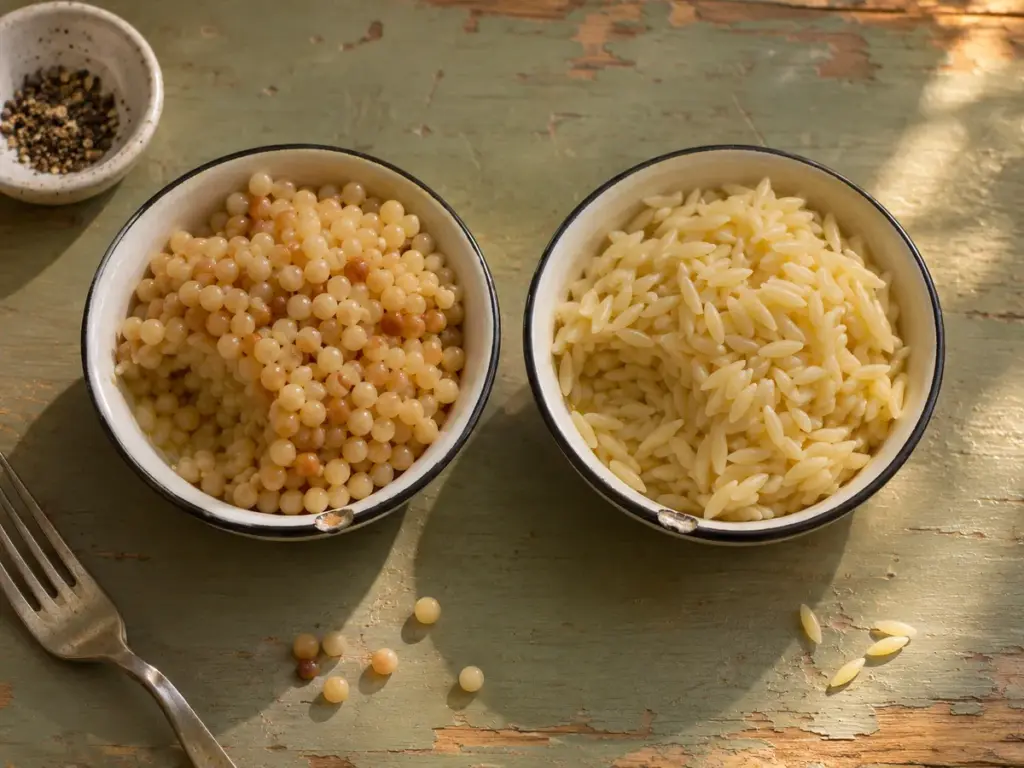
Pearl couscous and orzo are the pair that swap best, because both are small wheat pasta that holds up in boiling water. The beads are rounder and chewier than orzo, which stays softer and slippery.
For a cold salad, spread cooked pearl couscous on a rimmed baking sheet and let it cool completely, about 15 minutes, before you dress it.
If you have no orzo at all, ditalini or stelline go in at 1 to 1, as do small elbow macaroni.
8. Which One Should You Use?
Pick by the dish and the clock:
- A side dish in 10 minutes or less: instant couscous, ready after 5 minutes off the heat. It works as a base for any of the couscous side dishes.
- A saucy stew or tagine: couscous, because its fine granules drink up the cooking liquid. When your main dish is dry, a garlic or cilantro sauce moistens it.
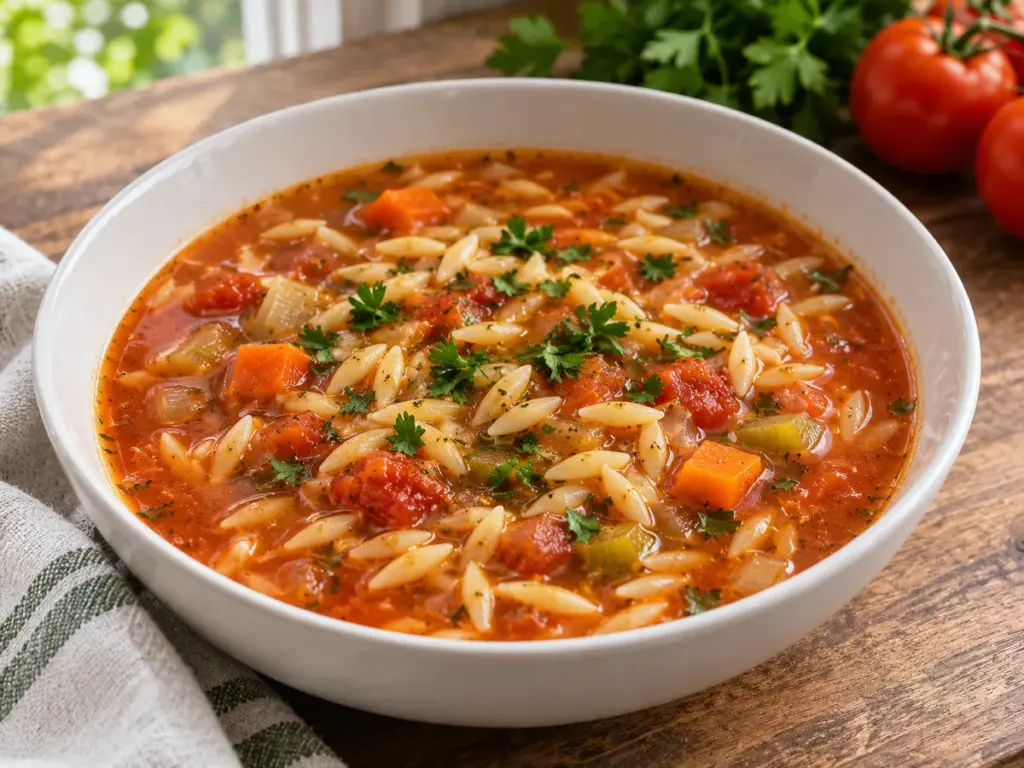
- Soup, a bake or a creamy one-pot dish: orzo, because it keeps its shape in hot liquid. It turns up in Italian wedding soup, avgolemono, minestrone and baked casseroles.
- A cold pasta salad: orzo or pearl couscous, since both stay distinct. A lemony vinaigrette, such as one of these orzo salad dressings, coats either one.
- A gluten-free meal: neither one.
At the store, a box marked "instant" or "Moroccan" holds the 5-minute couscous, while "pearl" or "Israeli" means the boiled kind. Orzo sits with the pasta, and a "whole wheat" label tells you it has more fiber.
9. How Long Do Leftover Couscous and Orzo Keep?
You can keep cooked couscous or orzo 3 to 4 days in the fridge, the USDA FSIS limit for cooked leftovers. USDA's FoodKeeper adds 1 to 2 months in the freezer for cooked pasta, which covers orzo.
- Cool fast: refrigerate within 2 hours, or within 1 hour when the room is above 90°F.
- Reheat well: bring leftovers to 165°F before you eat them.
- Soups and salads: orzo keeps soaking up liquid in the fridge, so add a splash of broth or dressing when you reheat it.
Sources
- Food Network, What Is Couscous?
- Food Network, How to Cook Couscous
- America's Test Kitchen, Moroccan Couscous vs. Pearl Couscous and Simple Israeli Couscous
- Wikipedia, Couscous, Orzo and Hominy
- DeLallo, What Is Orzo?
- Near East, Pearled Couscous directions
- USDA FSIS, Leftovers and Food Safety, and USDA FoodKeeper (cooked pasta)
- USDA FoodData Central: FDC 169699, FDC 169700, FDC 169736, FDC 169737, FDC 169738
Frequently Asked Questions
Is Couscous the Ingredient That Gives Pozole Its Texture?
No. Pozole is a Mexican stew of hominy and pork, chicken or other meat. Hominy is dried corn treated with an alkali, a process called nixtamalization, and that treatment softens the kernels.
If you have no hominy, samp, sweet corn or chickpeas are the stand-ins to reach for, and pasta is not on that list.
What Is Similar to Couscous?
Pearl couscous is the nearest match, since it is toasted semolina in bigger beads. Orzo works under a stew when you boil it separately. For a gluten-free swap, quinoa, millet and sorghum take the place of couscous.

Food writer at GustoMeadow. Writes ingredient substitutes, food comparisons, taste guides and storage guides for home cooks.
Storage and food-safety numbers follow USDA, FDA and university extension guidance.



