
In a US store, mazapan usually means a Mexican candy of peanuts and sugar, while marzipan is a smooth almond paste.
- Mexican mazapan breaks into sandy crumbs in your mouth, while marzipan rolls smoothly.
- Spanish Mazapan de Toledo is mostly almonds and much closer to marzipan.
- With a peanut or tree nut allergy, you read the label, since the sweets use different nuts.
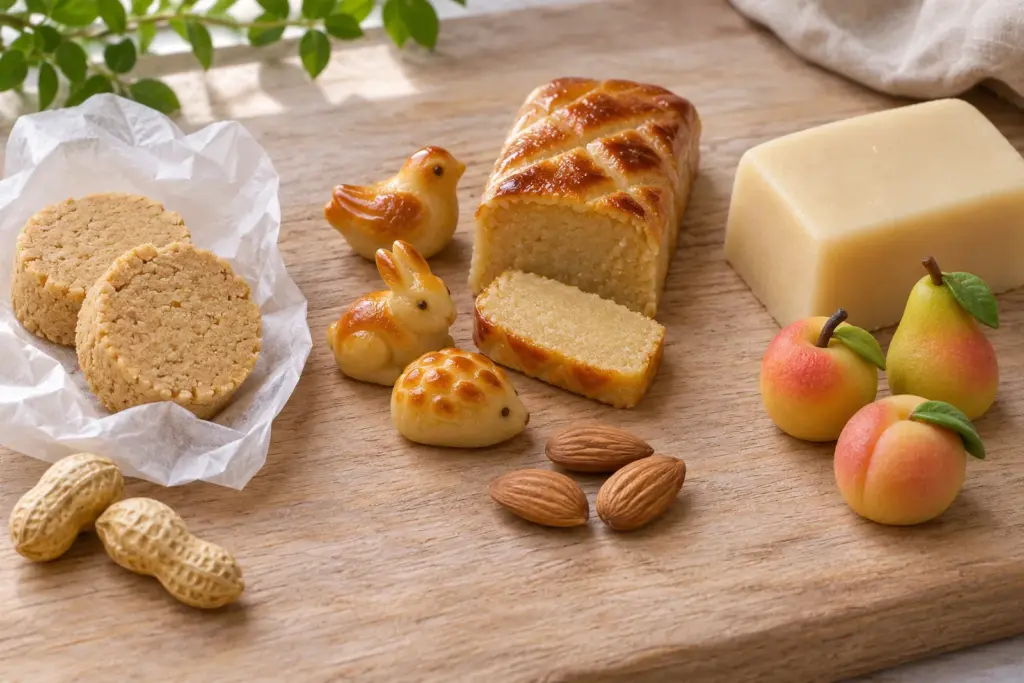
One word names three different sweets, so you have to read the label closely, as with other look-alike food comparisons.
A peanut mazapan disc falls apart when you try to roll it over a cake, and marzipan bought for the dry, sandy bite of the candy turns out to be a chewy almond dough.
1. What Is the Difference Between Mazapan and Marzipan?
You can tell the three sweets apart by what is inside them and how they behave in your hands.
| Trait | Mexican mazapan | Spanish mazapan | Marzipan |
|---|---|---|---|
| Main nut | Peanuts | Almonds | Almonds |
| Almond share | None, sugar is listed first | At least 50% by weight | 28% at Odense, more in German paste |
| Texture | Dry, sandy, crumbles | Dense almond dough | Smooth, pliable |
Because the nut sets the texture, a peanut candy holds a disc shape but gives way the moment you bite it, while an almond dough stays together when you knead it. That is why only the almond versions work for shaping and covering.
- You find Mexican mazapan in the candy aisle and in Mexican groceries, as wrapped discs.
- Spanish mazapan turns up in Spanish shops and gift boxes, mostly at Christmas.
- Marzipan is on the baking aisle shelf and in bakeries, and it fills holiday sweets.
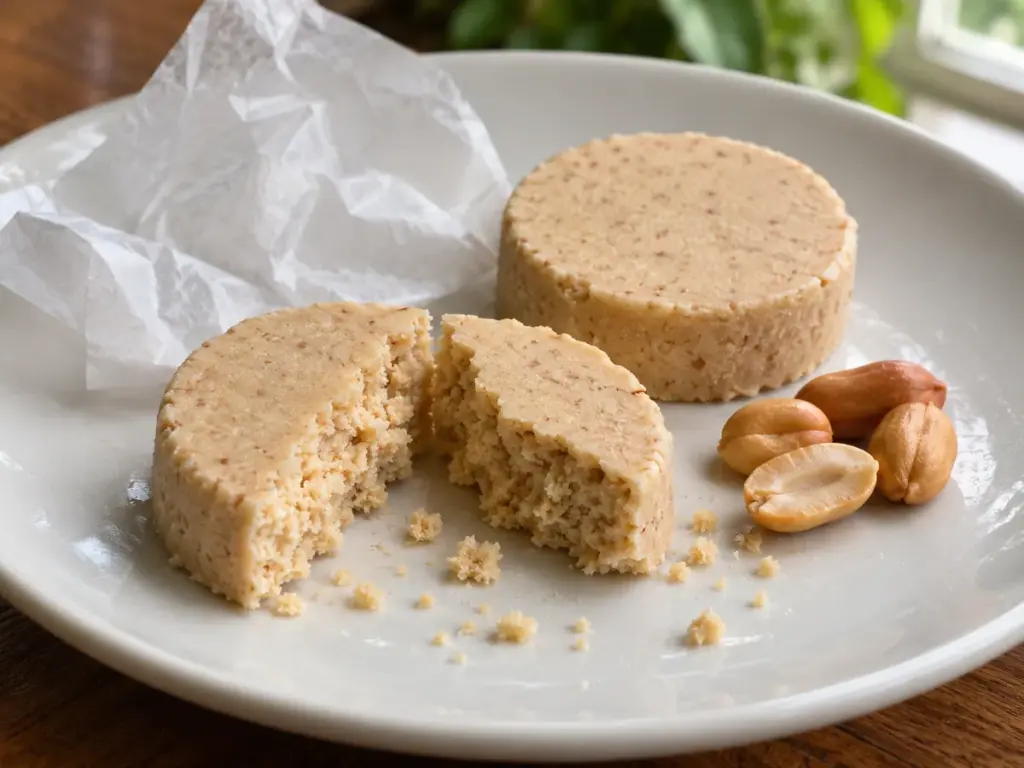
2. What Is Mexican Mazapan?
Mexican mazapan is typically made from peanuts, and the De la Rosa candy in small wrapped discs is the version you meet most often in the US. The listing for its original shows just three ingredients.
Tasting Table describes the candy as a local take on Spanish almond marzipan, made by switching the almonds for peanuts and dropping the egg. De la Rosa says its own story began in 1942 with candy made by hand at home, and it calls its first peanut candy, Conitas, the first peanut marzipan.
So the name belongs to an almond sweet, but the candy is a peanut product. When a US recipe for a Mexican dessert calls for "mazapan," it means this candy unless the recipe also lists almonds or almond paste, which points to one of the other two.
3. What Is Marzipan?
Marzipan is ground almonds kneaded with sugar into a smooth dough, and German rules for the paste set the limits. It comes from peeled sweet almonds, bitter almonds can make up at most 4% of them, and finished marzipan can never have more sugar than paste by weight.
When you buy Lübeck marzipan, you get 70 parts paste to 30 parts sugar, and Lübeck Edelmarzipan, the top grade, is 90 parts paste to 10 parts sugar.
Makers also add flavor and body, so you may find almond extract, a splash of rose water, or a binder such as starch syrup or sorbitol in the jar. Syrian marzipan takes its scent from orange flower water.
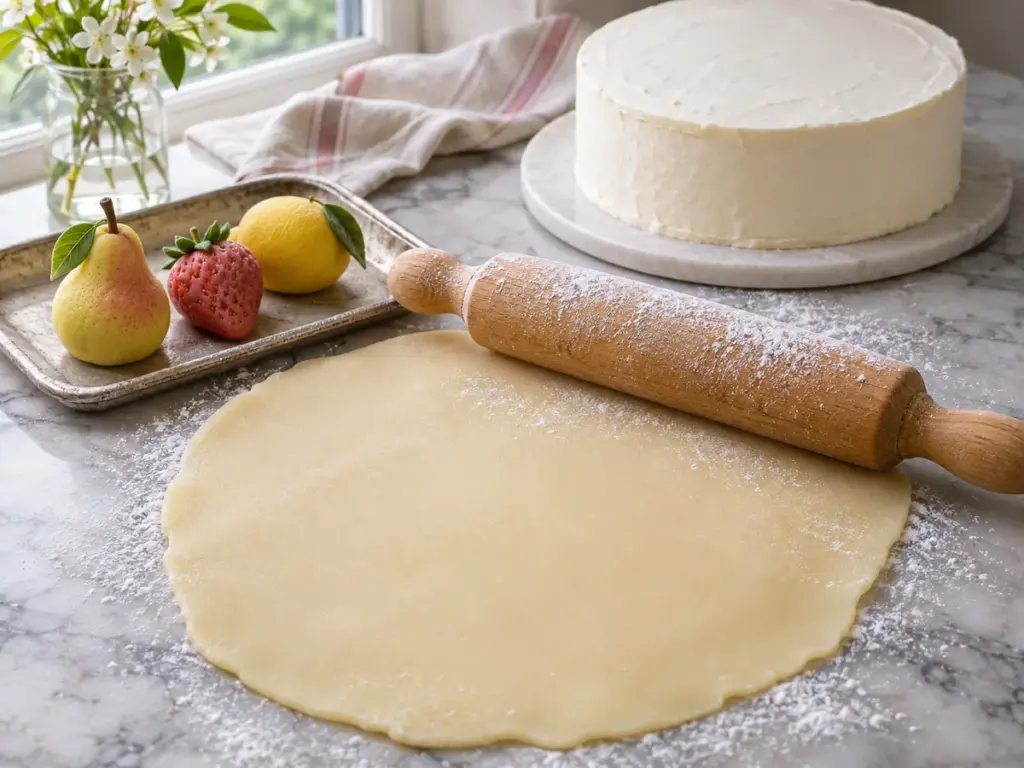
US brands vary a lot, because marzipan has no official definition in the US, and two products from the same maker show how far apart they can be.
Odense recommends against swapping one for the other, so you want to read the jar before you bake. A recipe that asks for almond paste turns sweeter with marzipan, so other almond paste swaps are the safer route.
Some pastes use apricot kernels or peach kernels (called persipan) in place of almonds, and only the first ingredient on the label shows which kernel you are buying.
Where marzipan began is uncertain, and Venice, Byzantium, Toledo and the Middle East all appear in the stories. It became a specialty of Hanseatic port towns such as Lübeck and Tallinn, and it turned cheap enough for everyday use only after sugar beet farming took off in the 18th century.
When a tart recipe calls for frangipane, it means a baked almond cream, which is a separate sweet from marzipan you roll and shape.
4. What Is Spanish Mazapan de Toledo?
In Spain, mazapan is an almond sweet, and the earliest written mention found for it in Toledo dates to 1512. Today Mazapan de Toledo carries the EU's Protected Geographical Indication (PGI), which limits production to Toledo province and requires sweet, peeled almonds that make up at least 50% of the weight.
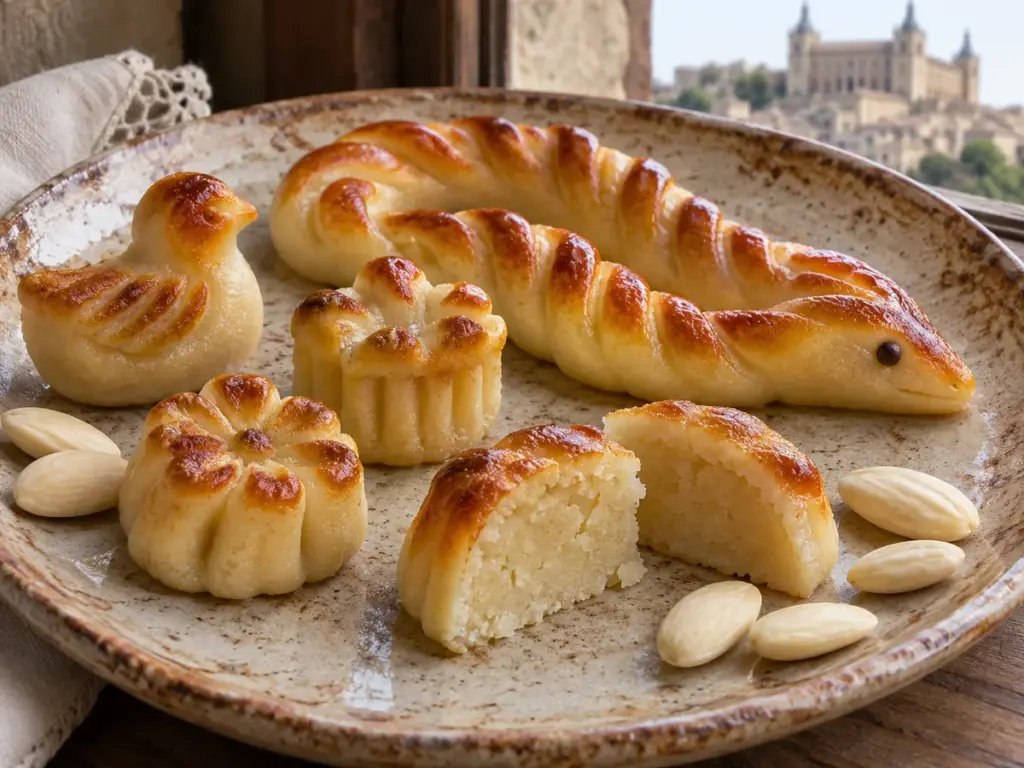
With half its weight in almonds, a Toledo piece is closer to a high-almond marzipan than to the Mexican candy, and Spain makes its marzipan without bitter almonds.
To taste the Spanish version, you need a box that says "Mazapan de Toledo" and shows the PGI seal, because a plain "mazapan" label on a US shelf is far more likely to be the peanut candy.
5. Why Does One Name Cover So Many Sweets?
The Spanish word mazapán and its cousins in other languages now name very different products, so what you get depends on where the recipe comes from:
- Mexico: the most common kind of mazapan there is a dry peanut candy.
- Guatemala: a specialty from Amatitlán is made with pumpkin seed (pepita), rice and sugar.
- Philippines: mazapán de pili is made from pili nuts and was brought over from Spain.
- Goa, India: cooks make marzipan from cashews, a sweet that came from Portugal.
A name on a label tells you where the recipe came from, and the ingredient list tells you the nut, which matters most when someone at the table has an allergy.
6. How Do They Taste and Feel Different?
You notice the difference in the first bite, because each sweet is built around a different nut:
- Mexican mazapan is sweet, crumbly and creamy in Tasting Table's words, so it breaks into fine crumbs in your mouth as soon as you bite it.
- Marzipan is a smooth, pliable dough that you chew, and marzipan's almond flavor gets stronger as the almond share goes up.
- Mazapan de Toledo is at least half almond by weight, so it tastes mostly of almond and holds together as a dense dough where the peanut candy crumbles.
Marzipan flavored with rose water or orange flower water, as the Syrian kind is, carries a floral scent on top of the almond, while a plain Spanish piece keeps the flavor of the nut.
7. How Do You Use Each One?
You roll, shape and bake marzipan into other desserts, while Mexican mazapan is eaten as a candy, one disc at a time, and Toledo mazapan is eaten as a sweet.
You find marzipan covering and filling cakes and pastries in many places:
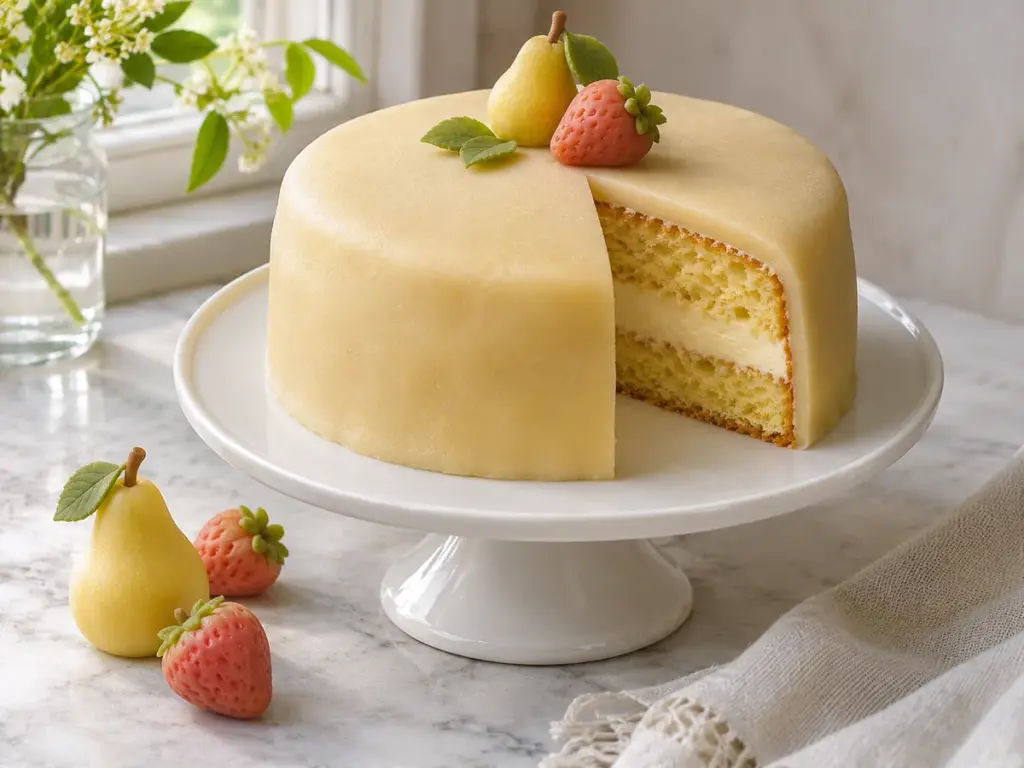
- Cake covering: thin rolled sheets cover birthday, wedding and Christmas cakes.
- British cakes: marzipan makes a layer on fruitcake and Simnel cake and the wrapper on Battenberg cake.
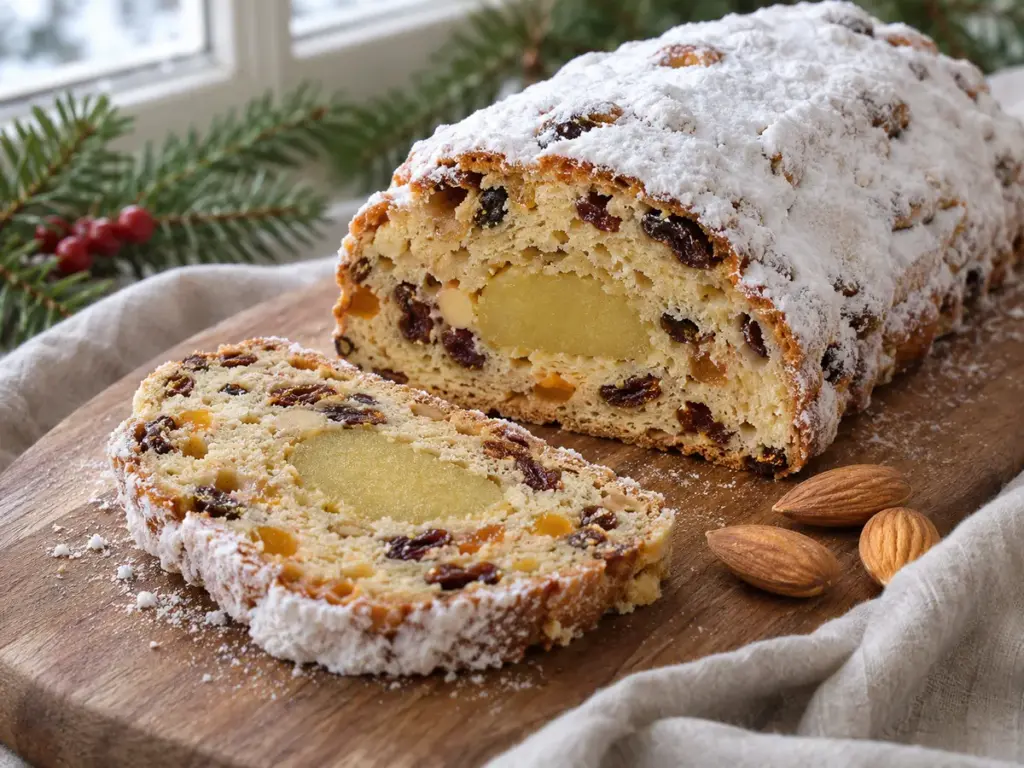
- Stollen and banket: a log of paste runs through stollen, and it fills the Dutch banket.
- Fillings: marzipan fills Maltese figolli and some king cakes at Carnival.
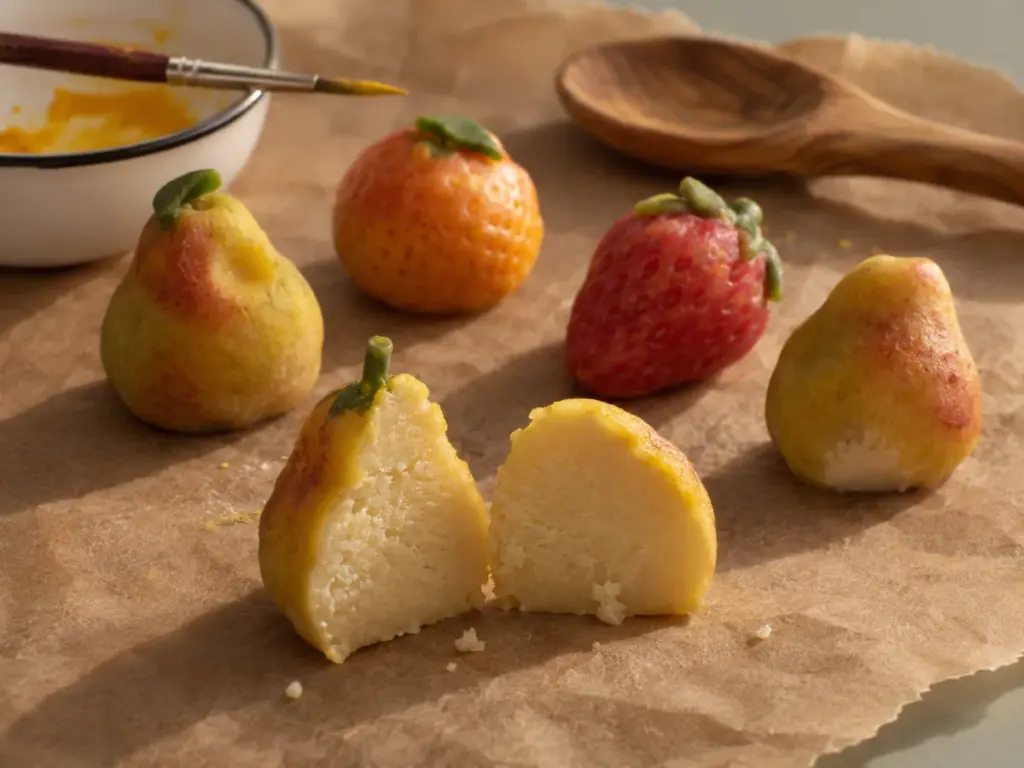
- Fruit shapes: cooks mold small pears, oranges and strawberries and paint them with food coloring, and Palermo's frutta martorana are painted to look like real fruit.
- Color: Greece and Cyprus leave it white, and Swedish princess cake takes pale green or pink.
8. When Do People Eat Each One?
Most of marzipan's holiday ties are to Christmas, but the day and the shape you find on the table depend on the country:
- Spain: marzipan is a traditional Christmas dessert, and Toledo sells it all year.
- Mexico and Hispanic America: marzipan is a traditional Christmas sweet.
- Germany: marzipan belongs to Christmas, and Lübeck is its best-known marzipan town.
- Italy: Palermo makes frutta martorana for Christmas and for All Souls' Day on November 2.
- Scandinavia: marzipan eggs are an Easter sweet.
- Elsewhere: marzipan pigs are shaped for New Year or Christmas, and Goan cashew marzipan becomes Easter eggs.
9. Can You Use One Instead of the Other?
You cannot use the peanut candy in place of the almond pastes, because a peanut mazapan disc will not roll, wrap a cake or hold a petal shape. It also brings peanut flavor and a peanut allergen into a dessert that expected almond.
Marzipan, in turn, will not give you the dry, crumbly bite that a Mexican dessert built on the candy relies on.
Spanish mazapan and marzipan are the closest pair, since both are almonds and sugar. The sugar level differs from brand to brand, so you may need less sugar in the rest of the recipe once you taste the piece you have.
If you ran out of marzipan in the middle of a recipe, almond-based marzipan stand-ins work far better than the peanut candy.
10. Which One Should You Buy?
- Cake covering, since the sheet rolls thin without cracking
- Fruit, flowers or figures you want to shape
- Stollen or other pastry fillings
- Gifts and holiday sweets
- A quick candy, one wrapped disc at a time
- Recipes that name the candy
- Anyone who likes peanut and sugar and has no peanut allergy
At the shelf, these checks tell you what is in your hand:
- Read the ingredients. "Peanuts" or "cacahuate" means the Mexican candy. "Almonds" means marzipan or Spanish mazapan.
- Look for the almond share. A higher almond percentage means more nut and less sugar, which is why Odense sells its 45% paste for baking and its 28% marzipan for candy.
- Check the name on the box. "Mazapan de Toledo" with the PGI seal is the Spanish almond sweet.
- Press a piece. In a bakery or from an opened pack, a dough that dents and holds together is almond. A dry disc that crumbles is the peanut candy.
11. How Should You Store Opened Marzipan?
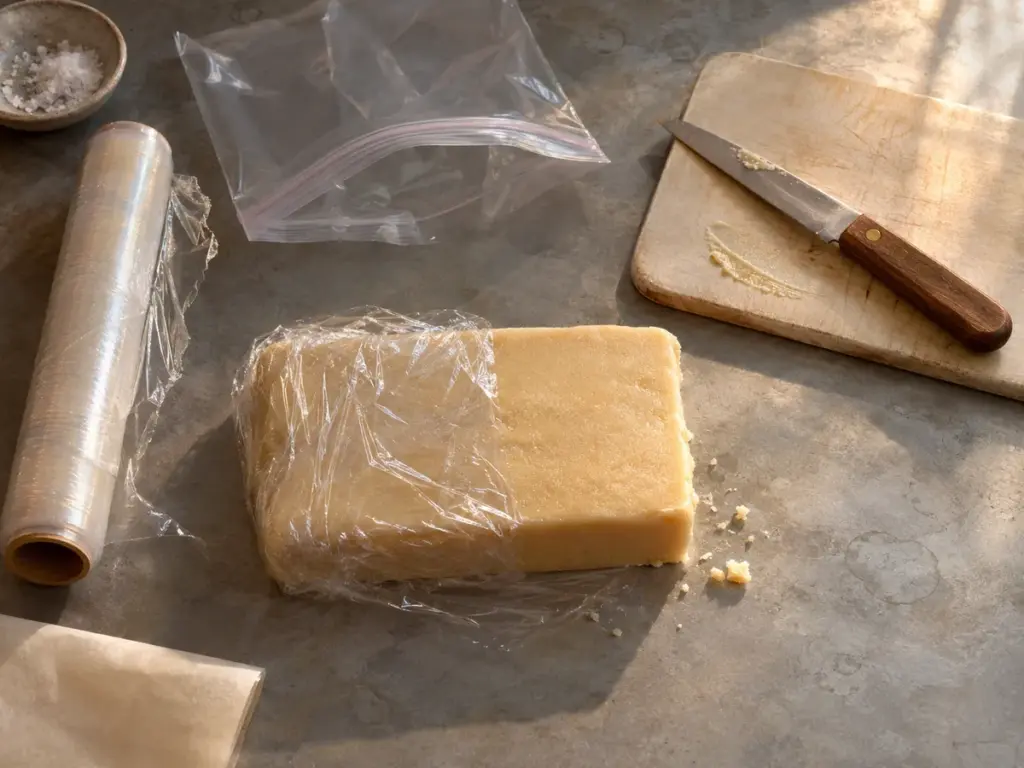
You can wrap what you have left tightly in plastic wrap and seal it in a plastic bag. Odense says wrapped paste or marzipan keeps up to 2 weeks in the refrigerator and up to 3 months in the freezer.
12. Is Mazapan or Marzipan Safe With a Nut Allergy?
US labeling helps you here, because FDA rules require a label to name the type of tree nut, such as almonds, and to list peanuts as their own allergen.
A peanut allergy rules out the Mexican candy, and you still need to check the "may contain" line on any marzipan. With a tree nut allergy, marzipan and Spanish mazapan are off your list, and your allergist can tell you whether the peanut candy is safe for you.
If a guest avoids tree nuts and you still need a smooth cake covering, fondant is made from sugar with no nuts in its recipe, although its label still needs the same check for a nut warning.
Sources
- Open Food Facts, Mazapan Original, De la Rosa: ingredient list (sugar, peanuts, artificial flavor) and peanut allergen.
- Lubeca, Marzipan Knowledge: German paste rules, bitter almond limit, Lübeck marzipan and Edelmarzipan ratios, origin.
- Dulces de la Rosa, History: 1942 start, Conitas as the first peanut marzipan.
- Odense, Frequently Asked Questions: almond paste at 45% almonds, marzipan at 28%, uses, storage times, roll size.
- Infoagro, Mazapan de Toledo PGI: sweet peeled almonds, at least 50% almonds by weight.
- Spain's Ministry of Agriculture, IGP Mazapan de Toledo: register entry for the protected name.
- Wikipedia, Mazapan: peanut-based mazapan in Mexico, Guatemala, the Philippines and Goa, Toledo's first written record in 1512.
- Wikipedia, Marzipan: ingredients, uses, regional kinds, origin theories, storage.
- Tasting Table, 14 Mexican Candies You Should Try: mazapan as a peanut version of Spanish marzipan.
- FARE, Peanut Allergy: peanuts versus tree nuts, 40% overlap, cross-contact.
- FDA, Food Allergies: major allergens, tree nut type must be named.
Frequently Asked Questions
Which Spelling Is Right: Mazapan, Marzapan or Masapan?
English uses marzipan, and Spanish writes the word mazapán with an accent on the last letter. Spellings such as marzapan, masapan and matzapan are slips for the same word, and a store clerk will still know which sweet you mean.
Is Turkish Marzipan the Same as Mexican Mazapan?
They are different sweets, because the Turkish badem ezmesi is an almond paste, while the Mexican candy is a peanut product from a separate tradition.
Is Mexican Marzipan the Same as Mazapan?
Yes, "Mexican marzipan" is a nickname for the same peanut candy, and on a shelf the ingredient list is what settles it for you.
How Much Does One Roll of Almond Paste Hold?
Odense says one roll equals ¾ cup, or 12 tablespoons, so you can measure a partly used roll before you wrap it.

Food writer at GustoMeadow. Writes ingredient substitutes, food comparisons, taste guides and storage guides for home cooks.
Storage and food-safety numbers follow USDA, FDA and university extension guidance.



