
Spelt and wheat berries are wheat kernels you can swap 1:1, but neither is safe for celiac disease or wheat allergy.
- Spelt is a wheat species, so it contains gluten.
- Soak overnight, then simmer 1 cup in 4 cups of water for 45 to 60 minutes.
- Per 100 g dry, spelt has 10.7 g fiber, hard red wheat 12.2 g.
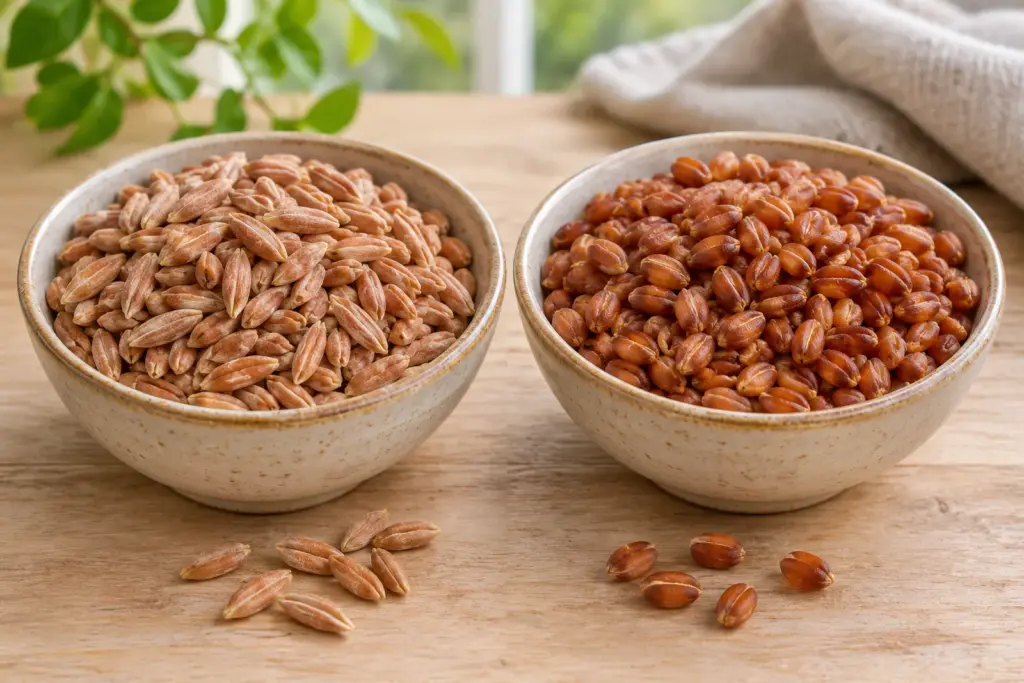
The names on the bags differ, but the grain family does not: spelt (Triticum spelta) is a type of wheat, and its whole kernels cook and taste a lot like ordinary wheat berries. That makes this pair one of the closer matchups among our comparisons of look-alike ingredients, with small gaps in cook time and nutrition and one safety point you should read before you buy.
1. Is Spelt Safe for Celiac Disease or a Wheat Allergy?
No. The Celiac Disease Foundation lists spelt, emmer, farro, KAMUT khorasan wheat and einkorn among the wheat varieties that contain gluten, next to wheat berries themselves. Spelt is wheat, so it carries the same gluten problem for anyone with celiac disease.
US rules treat it the same way. FDA's gluten-free labeling rule uses spelt wheat as its example of a gluten-containing grain, and FDA's allergen labeling guidance defines wheat as every species in the genus Triticum, which includes spelt.
A wheat allergy is a separate problem from celiac disease, and spelt does not escape it either. In a 2024 study from the Technical University of Munich, reported by Healio, 35 of 39 patients with a wheat allergy that needs a trigger such as exercise tested positive to spelt on a skin prick test, compared with 32 of 39 for wheat. The authors advised these patients to avoid spelt as well as wheat.
Some people with non-celiac gluten sensitivity say they feel better on spelt than on modern wheat. A personal report is not evidence of safety, because the gluten is still in the grain, so ask your doctor or dietitian before you try it if you have any diagnosis.
2. What Is the Difference Between Spelt Berries and Wheat Berries?
You are choosing between two whole-grain wheat kernels with the bran and germ still on, so the gap is smaller than the packaging suggests. Wheat berries usually means hard red winter, hard red spring or soft wheat, according to Today's Dietitian, while spelt berries come from one species.
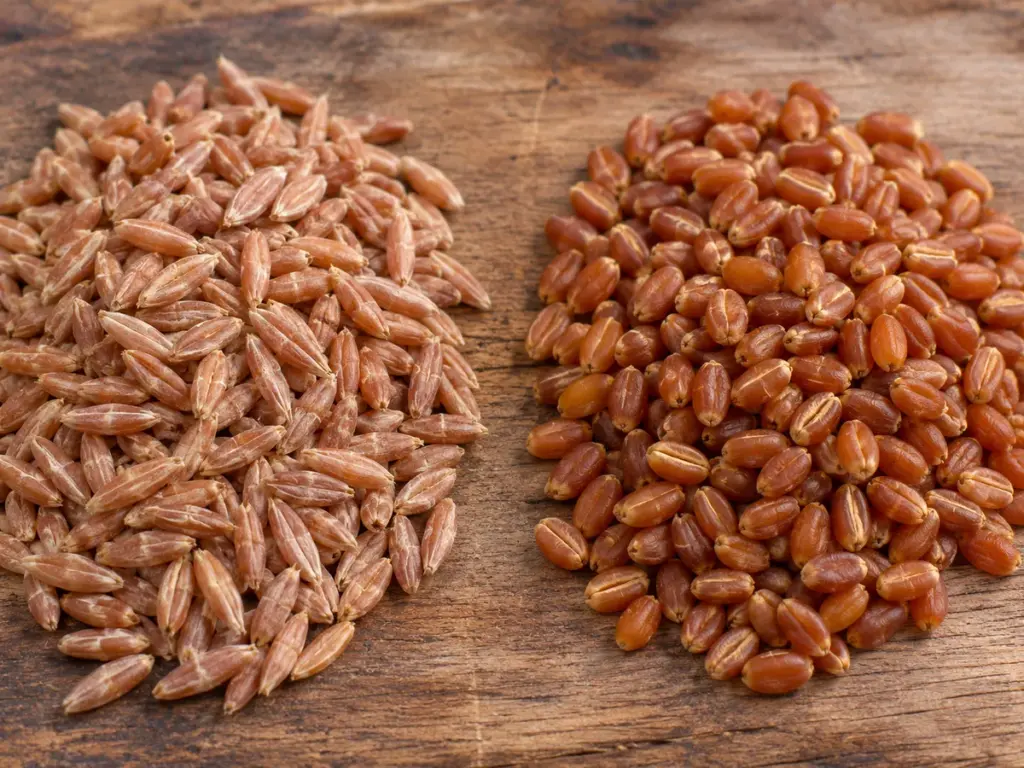
- They are the whole kernel of spelt, a species of wheat.
- Contains gluten.
- The flavor is sweet and nutlike, per Bob's Red Mill.
- They are the whole kernel of common wheat, usually hard red or soft.
- Contains gluten.
- The flavor is nutty and sweet, per Today's Dietitian.
| Trait | Spelt berries | Wheat berries |
|---|---|---|
| Texture when cooked | Chewy | Chewy, firmest in hard red types |
| Soaking | Overnight, per the Whole Grains Council | Overnight, 10 to 12 hours per Montana State Extension |
| Simmer time after soaking | 45 to 60 minutes | 45 to 60 minutes |
| Cooked yield from 1 cup dry | About 3 cups | About 2½ to 3 cups |
Spelt and wheat berries overlap far more than they differ. Cooks describe a sweet, nutty grain with a chewy bite, and the Whole Grains Council's cooking chart gives spelt and wheat berries the same water ratio and time. Only the cooked yield differs, since the chart lists about 3 cups from spelt and about 2½ cups from wheat berries.
Within wheat berries, the class on the bag changes the result a little. A grain seller's guide says hard red berries stay the firmest and have the boldest flavor, while soft or white berries cook a little sooner and taste milder, but that comes from one seller and not from a test you can repeat, so treat it as a tendency.
3. How Do Spelt and Wheat Berries Compare on Nutrition?
Both grains land in the same range for calories, protein and fiber. USDA FoodData Central lists these figures per 100 g of dry grain (about ½ cup), and because wheat berries vary by class, you get three of them to compare.
| Per 100 g, dry | Spelt (FDC 169745) | Hard red winter (FDC 168890) | Hard red spring (FDC 168889) | Soft white (FDC 169720) |
|---|---|---|---|---|
| Calories | 338 kcal | 327 kcal | 329 kcal | 340 kcal |
| Protein | 14.57 g | 12.61 g | 15.4 g | 10.69 g |
| Fiber | 10.7 g | 12.2 g | 12.2 g | 12.7 g |
| Iron | 4.44 mg | 3.19 mg | 3.6 mg | 5.37 mg |
| Magnesium | 136 mg | 126 mg | 124 mg | 90 mg |
Spelt's protein sits inside the wheat range of 10.7 to 15.4 g, so neither grain wins on protein. Its fiber is lower than all three wheat berries, which corrects the common claim that spelt has more fiber, and its magnesium is a little higher. If you cook it, 100 g of cooked spelt has 127 kcal, 5.5 g of protein and 3.9 g of fiber (FDC 169746), because the grain absorbs water as it softens.
4. How Long Do Spelt Berries and Wheat Berries Take to Cook?
Both grains need soaking and a long simmer because the bran stays on. If you soak the berries first, the bran softens, you spend less time at the stove, and the grains cook more evenly. Start the soak the night before and the rest is easy.
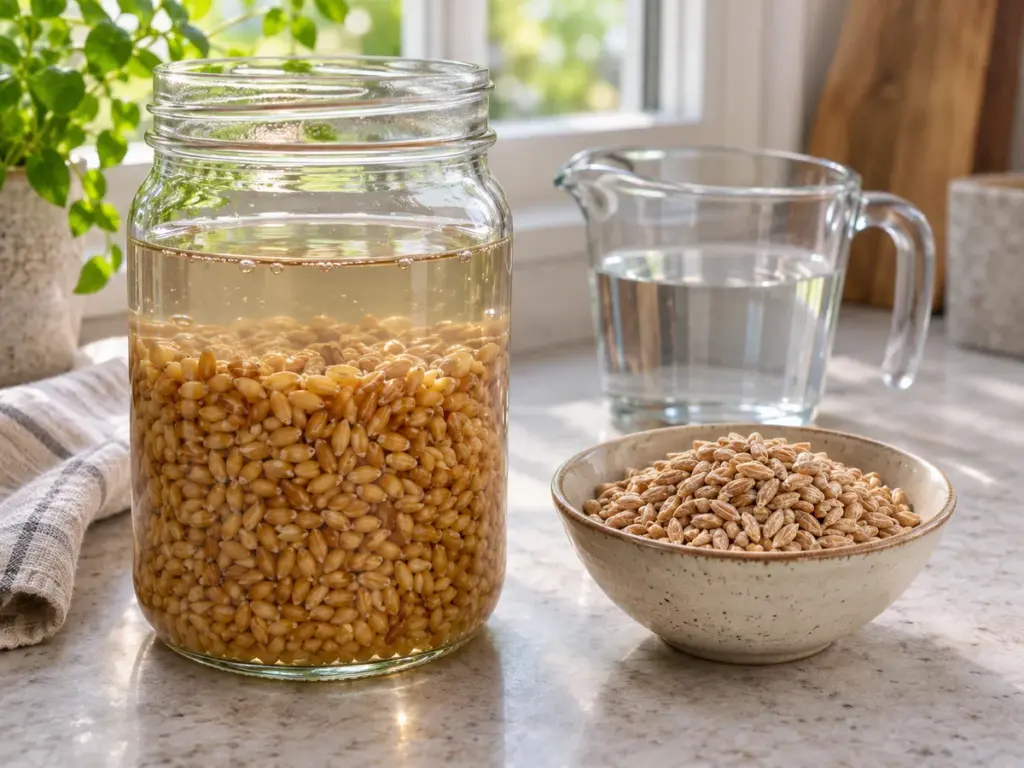
- Rinse 1 cup of berries under cold water and drain them.
- Soak them in water overnight. Montana State University Extension gives 10 to 12 hours for wheat berries, and the Whole Grains Council says overnight for both grains.
- Simmer the drained berries in 4 cups of water or broth for 45 to 60 minutes, following the Whole Grains Council chart for both grains.
- Bite one to check. It should be chewy with no hard center, and the Council says to add water if the pot runs dry.
- Drain the berries and use them warm or chilled.
Skip the soak and the times split by brand. Bob's Red Mill boils unsoaked spelt for about 30 minutes, while Today's Dietitian says wheat berries take about an hour unsoaked and about 35 minutes after a soak.
| Method | Spelt berries | Wheat berries |
|---|---|---|
| Stovetop, soaked | 45 to 60 minutes, 1 cup to 4 cups water | 45 to 60 minutes, 1 cup to 4 cups water |
| Stovetop, unsoaked | About 30 minutes, boiled uncovered | About 1 hour |
| Slow cooker | 4 hours on low or 3 hours on high | 8 to 12 hours on low, 3 parts liquid to 1 part grain |
For spelt, Bob's Red Mill also gives 25 minutes at high pressure with 3 cups of water and a quick release. If you use a pressure cooker for wheat berries, start with that spelt time, then taste and add a few minutes, because we did not find a published pressure time for them.
5. Can You Substitute Spelt Berries for Wheat Berries?
Yes, in both directions. Swap them cup for cup of dry grain in grain salads, soups, pilafs and stuffing, then adjust the time and the amount of water you cook them in. The cooked spelt will fill a bowl a little more, since the Whole Grains Council yield for spelt is higher.
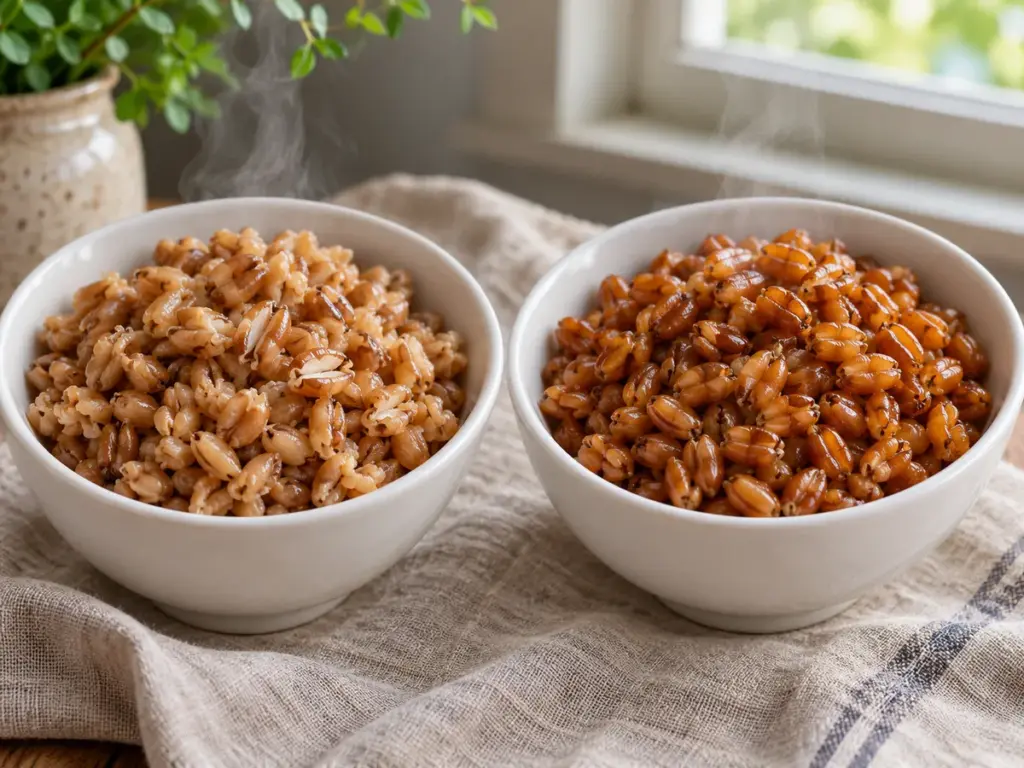
- Spelt in place of wheat berries: you can start tasting at 30 minutes when you skip the soak, because published spelt times run shorter.
- Wheat berries in place of spelt: you should soak overnight and leave up to 60 minutes, since unsoaked wheat berries take about an hour.
- Out of both grains: you can use a stand-in from wheat berry stand-ins, and cracked wheat or bulgur cook in about 10 minutes, as cracked wheat and bulgur show.
Farro and barley also give a chewy grain after a long simmer, and barley versus farro shows which of the two is closer to wheat berries. Both contain gluten, so the celiac warning above applies to them as well.
Berries and flour are different products, so whole berries cannot replace spelt flour in a baking recipe. If a recipe asks for spelt flour, read the spelt flour swaps and buy flour or mill the berries yourself.
6. Which One Should You Buy?
- You want a sweet, nutlike grain for pilaf
- You skip the soak and want dinner in 30 minutes
- You have no wheat allergy or gluten limit
- You want the firmest chew in a cold salad, so pick hard red
- You want a milder flavor, so pick soft or hard white
- You want a bag that names its class
Check the bag before you pay. A wheat berry bag that names its class (hard red winter, hard red spring, soft white or hard white) tells you the texture you will get, while a bag that says only "wheat berries" leaves that to chance.
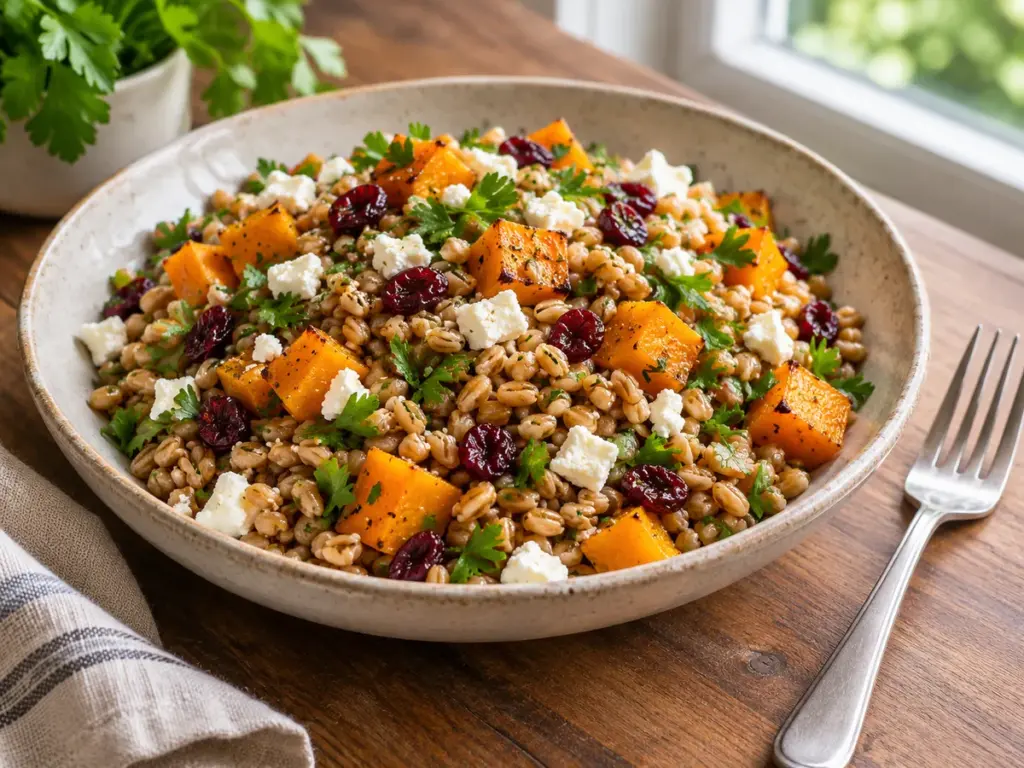
Either grain keeps its bite in a salad that sits for a day, so a vinaigrette from dressings built for farro salad works just as well on cooked spelt or wheat berries. For a gluten-free bowl, use quinoa and leave both of these out.
Sources
- Celiac Disease Foundation, Sources of Gluten
- FDA, 21 CFR 101.91, gluten-free labeling of foods
- FDA, Questions and Answers Regarding Food Allergen Labeling, Edition 5
- Healio, Patients with wheat allergy may be cross-sensitized to spelt, barley (Faihs et al., Annals of Allergy, Asthma & Immunology, 2024)
- Whole Grains Council, cooking whole grains chart
- Montana State University Extension, Whole Grains fact sheet
- Today's Dietitian, Ancient Grains: Spotlight on Wheat Berries
- Bob's Red Mill, Basic Preparation Instructions for Organic Spelt Berries
- USDA FoodData Central: FDC 169745 spelt, uncooked, FDC 169746 spelt, cooked, FDC 168890 hard red winter wheat, FDC 168889 hard red spring wheat, FDC 169720 soft white wheat

Food writer at GustoMeadow. Writes ingredient substitutes, food comparisons, taste guides and storage guides for home cooks.
Storage and food-safety numbers follow USDA, FDA and university extension guidance.



