
A Bosch Universal Plus suits big batches of bread dough, and a KitchenAid suits cookies, cakes and whipping with 10 speeds.
- Bosch lists 500 W and a 6.5-quart plastic bowl, with the motor under the bowl.
- The KitchenAid Artisan has a 5-quart bowl, 325 W and 10 speeds.
- KitchenAid says its Pro Line motor rating is not the power at the bowl.
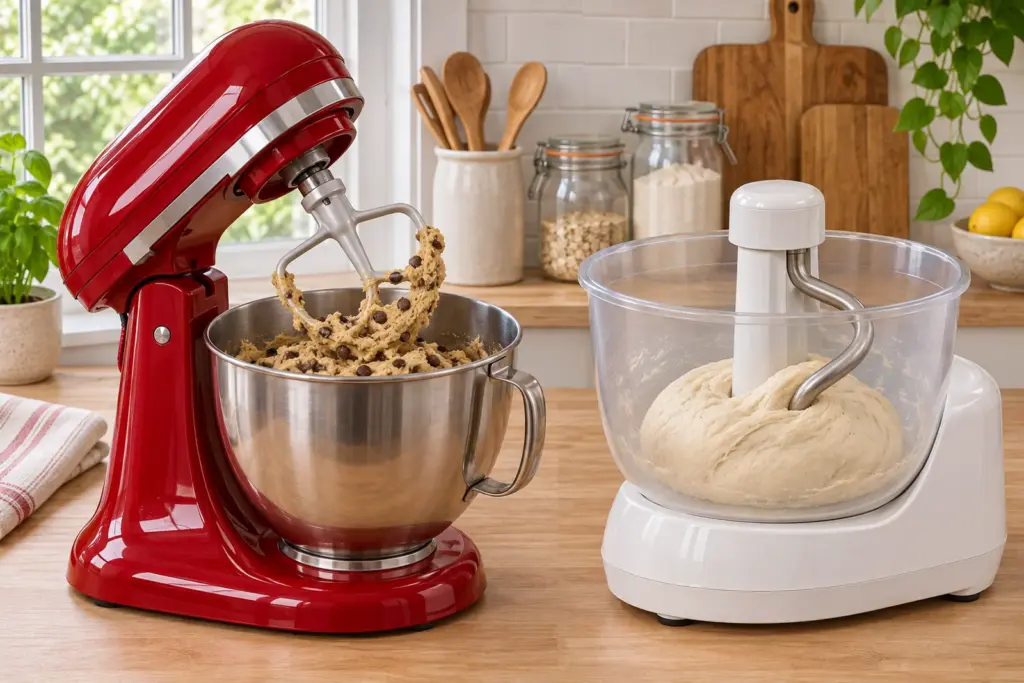
As in other mixer and appliance comparisons, the right machine depends on your batch size: how much dough you knead at once and how you like to add ingredients.
Both brands sell several models, so we compare three common US ones: the KitchenAid Artisan 5-quart tilt-head, the KitchenAid Pro Line 7-quart bowl-lift and the Bosch Universal Plus 6.5-quart (Bosch model MUM6N10UC). Each number below belongs to one of those three, and we flag any figure that comes only from a retailer.
1. What Is the Difference Between a KitchenAid and a Bosch Mixer?
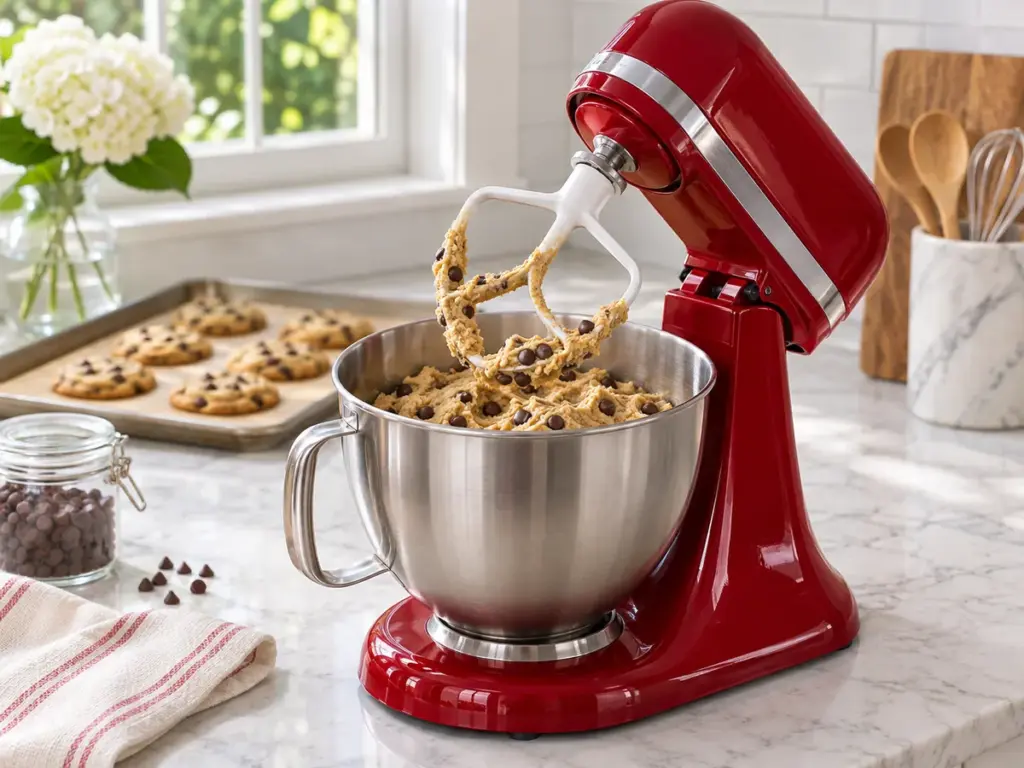
A KitchenAid keeps its motor in a head above the bowl, while a Bosch puts it in the base under the bowl, so nothing hangs over a Bosch bowl.
| Trait | KitchenAid Artisan 5 qt | KitchenAid Pro Line 7 qt | Bosch Universal Plus 6.5 qt |
|---|---|---|---|
| Body | Tilt-head, motor in the head | Bowl-lift, motor in the head | Bottom drive, motor in the base |
| Motor rating | 325 W | 1.3 HP motor, 0.44 HP to the bowl | 500 W |
The Artisan has a 5 qt bowl in stainless steel or ceramic by model, the Pro Line has a 7 qt stainless steel bowl, and the Bosch has a 6.5 qt plastic bowl. Both KitchenAid mixers have 10 speeds, while the Bosch has 4, plus a pulse switch.
- The Artisan claims 9 dozen cookies and carries a 1 year, limited warranty.
- The Pro Line claims 14 dozen cookies and carries a 5 year, limited warranty.
- The Bosch claims up to 14 lb of dough (retailer text) and carries 3 years on the motor and transmission and 1 year on parts.
Read the table as a trade. The Bosch gives you the biggest dough claim, while the KitchenAid gives you 10 speeds and, on the Pro Line, a 5-year warranty.
2. How Do the Two Mixing Actions Differ?
A KitchenAid beater spins on its own axis while the whole shaft circles a stationary bowl. KitchenAid calls this planetary action and lists 59 planetary touch points on the Artisan.
- The motor sits in the head.
- The attachment orbits the spinning bowl.
- You tilt the head back (Artisan) or crank the bowl up (Pro Line).
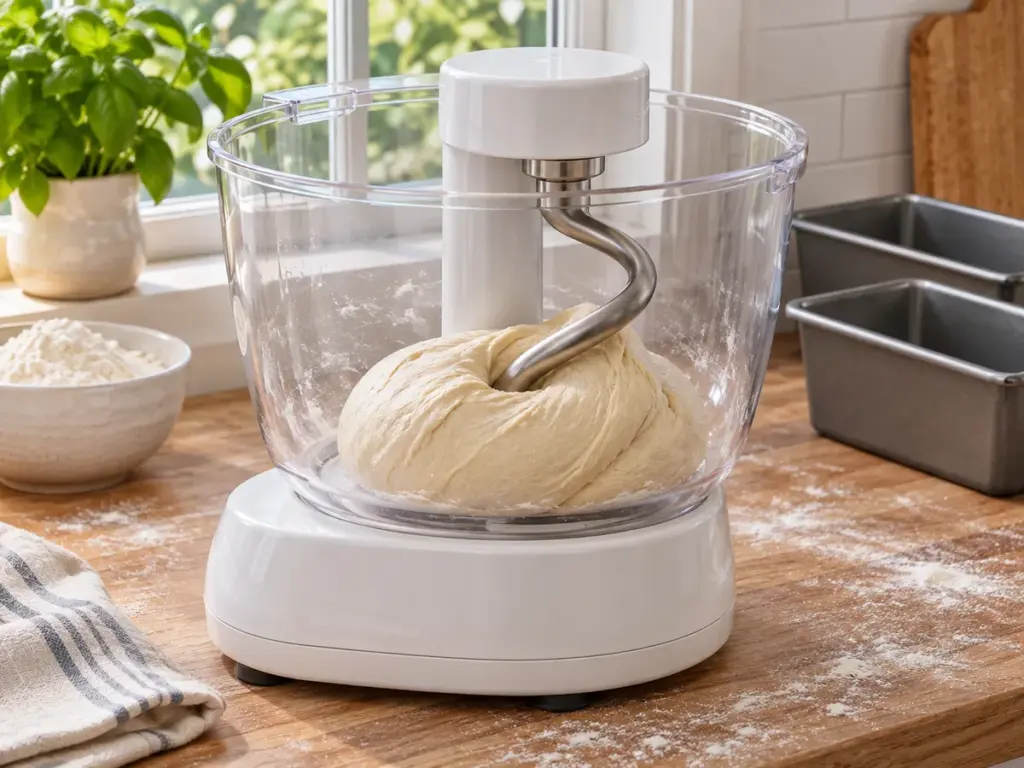
- The motor sits in the base, under the bowl.
- The hook or two wire whips run off a shaft inside the bowl.
- No head to lift; add ingredients through the open top.
One US retailer's Bosch listing says the dough hook, which has a blade and two hooks, stretches, folds and tucks the dough. It adds that the two wire whips rotate around the bowl and spin independently of each other.
Dough and batter ask different things of a mixer. The Bosch text above stresses kneading, and KitchenAid stresses reaching the whole bowl with its 59 touch points. On the KitchenAid side, the choice between tilt-head and bowl-lift bodies matters too. KitchenAid says the bowl-lift gives sturdy support for heavy ingredients, and the tilt-head makes it easy to add ingredients.
3. Is Wattage a Fair Way to Compare Them?
No, because the two brands do not rate power the same way. KitchenAid says on its Pro Line page that the 1.3 HP figure describes the motor itself, and that the mixer delivers 0.44 HP to the bowl. Since one horsepower equals 746 W, that is about 330 W at the bowl.
Bosch lists 500 W for the current US Universal Plus. Older listings and some manuals still quote 800 W for it, and the Bosch US page we checked gives only 500 W. A 325 W Artisan, a 1.3 HP Pro Line and a 500 W Bosch are three ratings that were not measured at the same point, so you cannot rank the mixers by the biggest number.
4. Which Mixer Handles Bread Dough Better?
Bosch gives the bigger number: up to 14 pounds of dough in the 6.5-quart bowl. One US retailer turns that into 14 one-pound loaves, and NutriMill, a Bosch seller, repeats the 14-pound limit and says to split the dough into two portions if the motor struggles. If you only bake one sandwich loaf at a time, a bread machine may be all you need.
KitchenAid's product pages give cookie counts instead of dough weight: 9 dozen for the Artisan and 14 dozen for the Pro Line, using the flat beater and 28 g of dough per cookie. We found no dough weight on those pages, so we cannot set a KitchenAid number against the 14 pounds. Your manual lists a flour limit for your exact model, and you should stay under it.
5. Which Is Better for Cookies, Cakes and Whipping?
The KitchenAid has the finer control. Its 10 speeds start at a stir speed, and KitchenAid points to speed 8 for whipping cream. The Bosch has 4 settings plus a pulse switch, so a recipe that says "speed 2" or "medium-low" means the closest of four settings on a Bosch.

For egg whites, the same retailer listing says the two wire whips whip even one egg white, which matters if you only need a little for meringue. Stop when the peaks stand upright, which stiff peaks describes. For cookies, the 9 dozen KitchenAid claim assumes 28 g of dough each, so one 5-quart bowl holds a party-size batch of drop cookies.
6. How Do Attachments and Cleanup Compare?
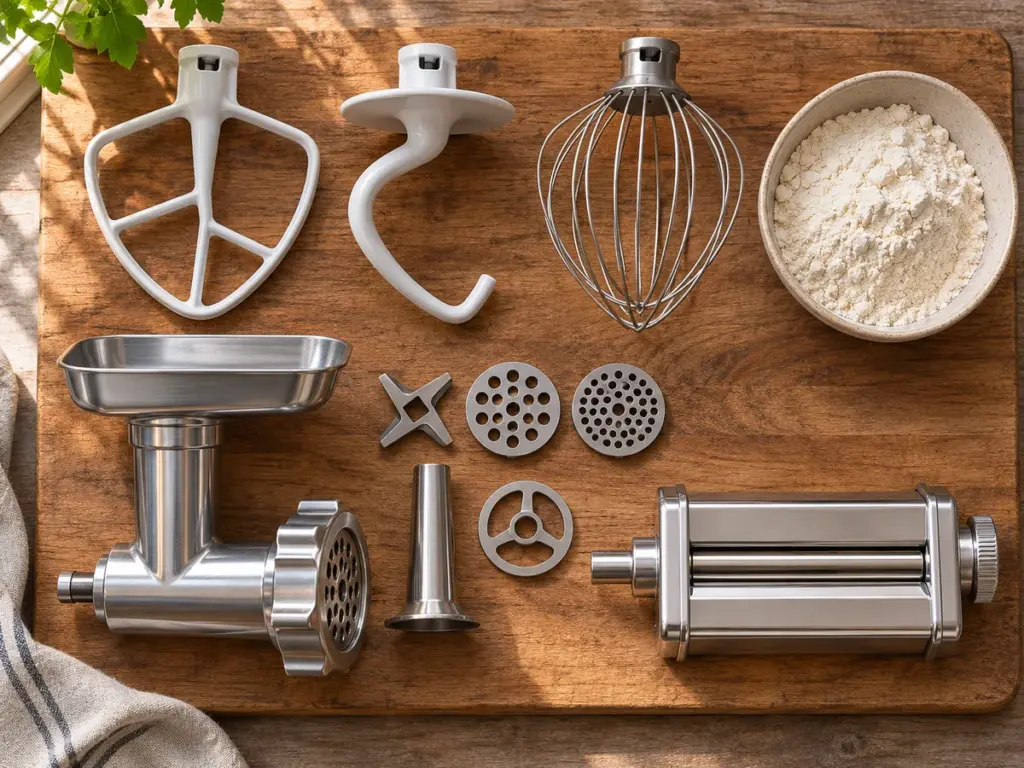
Both makers sell optional attachments. The Bosch listing names a meat grinder, citrus juicer, ice cream maker, pasta maker and blender, and KitchenAid builds an attachment hub into the head of its mixers. If you plan to grind meat, see how the metal and plastic grinder parts for a KitchenAid grinder differ before you buy.
- Dishwasher: the Bosch bowl and many of its parts are dishwasher safe, and KitchenAid lists the Pro Line steel bowl as dishwasher-safe too, so cleanup does not separate them.
- Weight: Bosch lists a net weight of 12 lb. KitchenAid lists shipping weights of 24.2 lb (Artisan) and 32 lb (Pro Line), and those include the box, so the real gap is smaller.
- Stability: the Bosch holds still on four suction feet, so it stays put while it mixes.
7. Which One Should You Buy?
Match the machine to the batch you make most often. Each call below follows from the numbers above.
- You bake several loaves at once: the Bosch Universal Plus, because 14 pounds is the only dough weight these pages state.
- You bake cookies, cakes and meringue: the KitchenAid Artisan, for its 10 speeds and its 9 dozen cookie claim.
- You double batches or knead stiff dough on a KitchenAid: the Pro Line 7-quart, with its 7-quart bowl and 5-year warranty.
- You mix a little, once in a while: a hand mixer or a whisk takes less counter space and storage.
Check three things before you pay: the bowl material (plastic on the Bosch, steel or ceramic on the KitchenAid), the warranty length on the motor, and your cabinet height, since a tilt-head needs room to swing up.
At the time of writing, one US retailer listed the white Universal Plus at $499, and KitchenAid prices vary by color and sale, so compare several stores. The Wolf stand mixer is another premium brand that shoppers set against KitchenAid.
8. Can You Use a Recipe Written for the Other Mixer?
Yes, with two changes. A recipe built around a KitchenAid speed number needs the closest Bosch setting, and a Bosch recipe measured in pounds of dough needs a check against your KitchenAid manual's flour limit. A recipe sized for a 5-quart bowl also fits a 6.5-quart bowl by volume, so scaling up to the Bosch works on capacity.
Sources
- Bosch US, MUM 6 kitchen machine MUM6N10UC (500 W, 4 stages, plastic bowl, pulse, 12 lb net weight).
- Abt, Bosch 6.5 Qt. Universal Plus (14 pounds of dough, warranty terms, attachments, price at the time of writing).
- NutriMill, Bosch mixer FAQs (14 lb of dough, 3-year motor and transmission warranty).
- KitchenAid Pro Line 7-Qt Bowl-Lift (KSM7586PMZ), product page on the Whirlpool parts portal (1.3 HP, 0.44 HP to the bowl, 14 dozen cookies, 5-year warranty).
- KitchenAid Artisan 5-Qt Tilt-Head (KSM192XDWF), product page on the Whirlpool parts portal (325 W, 10 speeds, 59 touch points, 9 dozen cookies).

Food writer at GustoMeadow. Writes ingredient substitutes, food comparisons, taste guides and storage guides for home cooks.
Storage and food-safety numbers follow USDA, FDA and university extension guidance.



