Horchata is a cold, alcohol-free drink of soaked rice and cinnamon, while coquito is a Puerto Rican Christmas drink of coconut, canned milk and rum.
- Horchata has no alcohol and goes over ice with meals, especially spicy food.
- Coquito has rum and is served chilled in small glasses, mainly at Christmas.
- Choose horchata for kids or a summer table and coquito for an adults-only holiday toast.
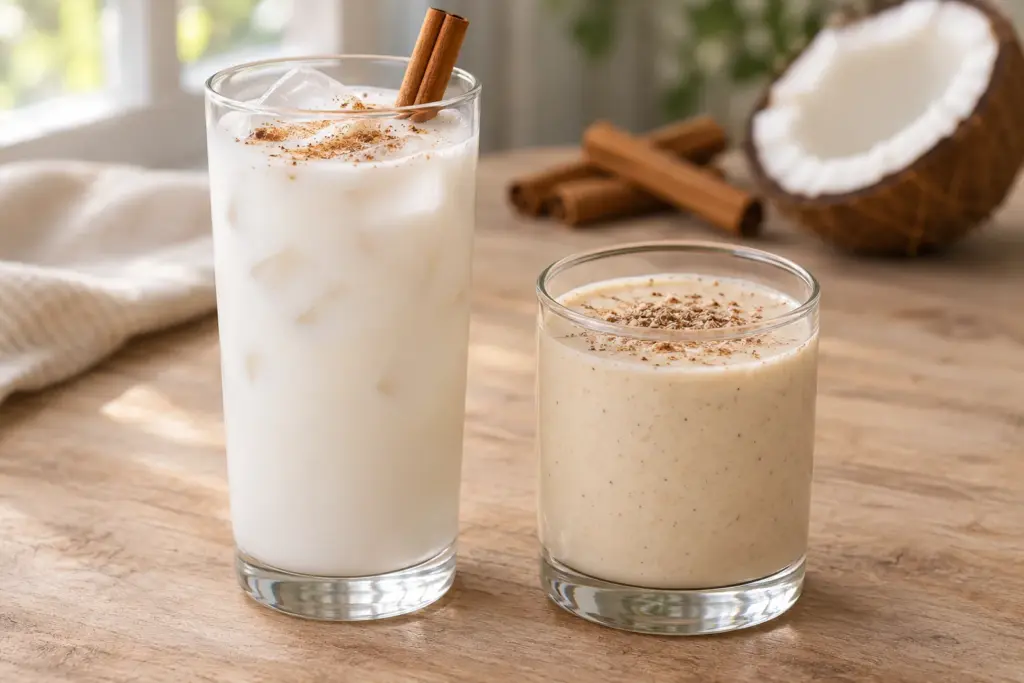
Both are cold, creamy, cinnamon-spiced drinks, so they get mixed up on holiday menus with other look-alike foods and drinks, but the base, the alcohol and the season all differ.
1. What Is the Difference Between Horchata and Coquito?
| Trait | Horchata | Coquito |
|---|---|---|
| Main base | Soaked rice in Mexico, Guatemala and the US, tiger nuts in Valencia, seeds elsewhere | Coconut milk and coconut cream, plus evaporated and sweetened condensed milk |
| Alcohol | None in standard recipes | Rum, about 2½ to 4 cups per batch in the two recipes we checked |
- It often has no dairy, though some cooks add milk.
- It has no eggs.
- It is spiced with cinnamon, often vanilla.
- It has dairy, from the canned milks.
- It usually has no eggs, but some families add yolks.
- It is spiced with cinnamon, nutmeg and vanilla.
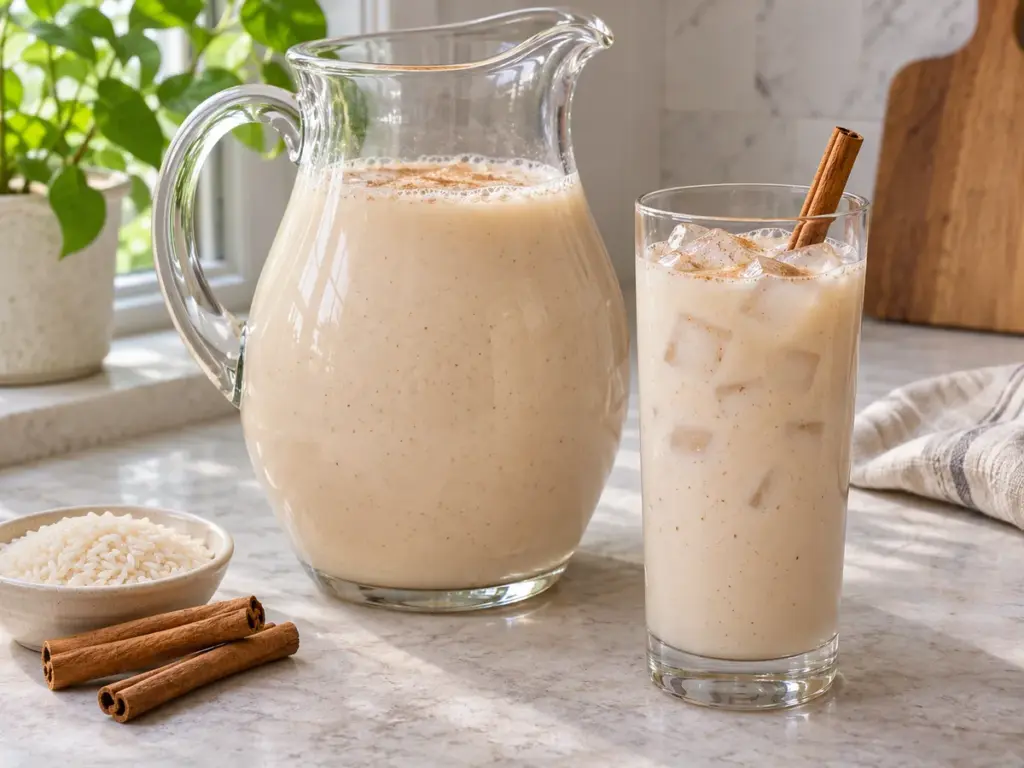
Horchata is served over lots of ice, in a full glass, with food. It is a drink for any time, especially hot days, and it comes from Spain, Mexico and Central America.
Coquito is served chilled, in a shot or rocks glass, after dinner. It is mainly a Christmas drink, for some families from Thanksgiving to January 6, and it comes from Puerto Rico.
Most choices come down to two rows. Coquito contains rum and belongs to the holidays, while horchata has no alcohol and works on any day of the year, so the guest list and the date usually pick the drink for you.
2. What Is Horchata Made From?
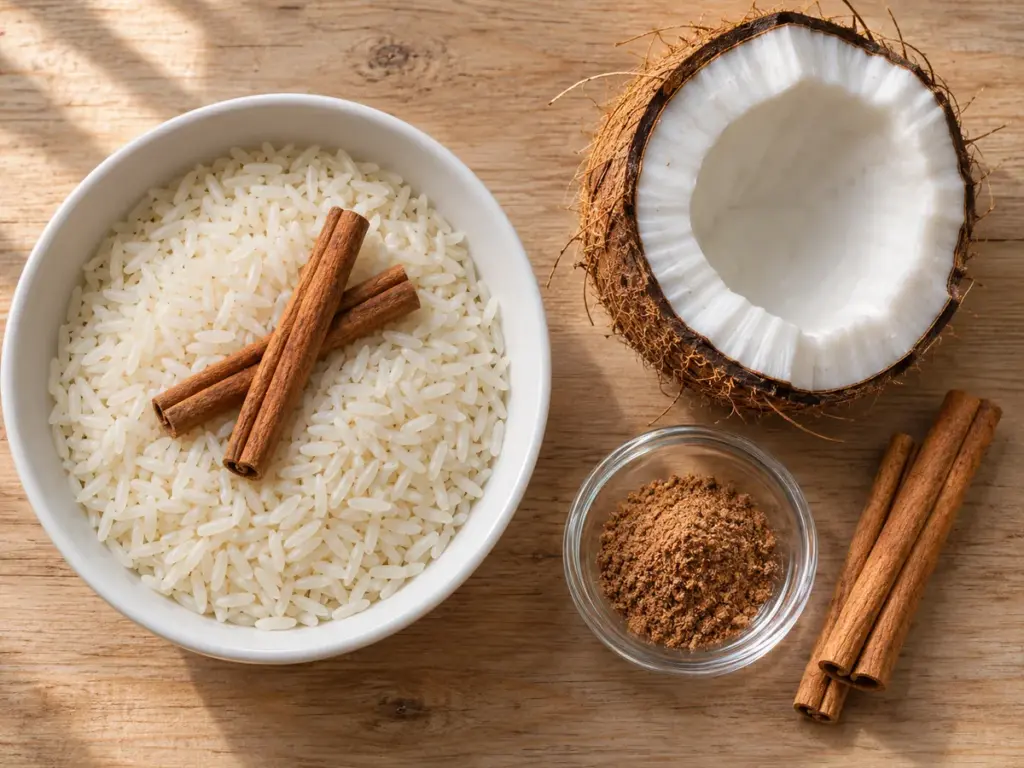
Horchata is a name for several plant-based drinks, and Tasting Table lists four of them:
- Rice horchata from Mexico, Guatemala and the US is the most widespread version in North America.
- Tiger nut horchata is the famous Valencia, Spain, version.
- Morro seed horchata comes from El Salvador.
- Sesame horchata, called horchata de ajonjolí, comes from Puerto Rico, the home of coquito.
Most traditional versions are dairy-free and made with cold water, but some cooks add milk for a thicker drink and condensed milk is a common sweetener, so ask before you pour a glass for someone who is vegan or avoids dairy.
Mexico News Daily's rice recipe uses 1 cup of rice to 5 cups of water, and it warns that some solids always sink, so stir the pitcher before every pour. Rice horchata tastes sweet, creamy and cinnamon-forward, while the tiger nut and morro versions taste different.
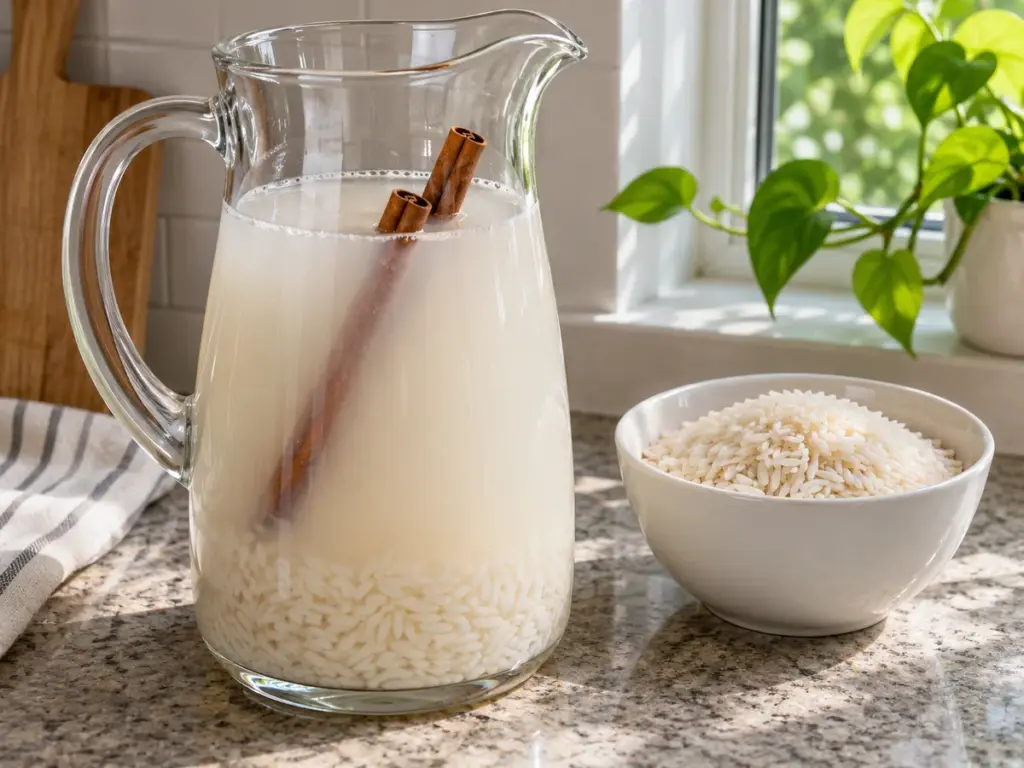
Tiger nuts are closer to sweet potatoes than to almonds, and the ground form is sold as tiger nut flour. Many recipes add a few cinnamon sticks to the soaking water, which gives the drink its warm smell.
3. What Is Coquito Made From?
Coquito means "little coconut" in Spanish, and PureWow says the coconut is what makes it uniquely Puerto Rican. A typical batch combines coconut milk, coconut cream, evaporated milk and sweetened condensed milk with rum, vanilla, cinnamon and nutmeg.
The Crumby Kitchen recipe uses a 15-ounce can of sweetened cream of coconut, and plain coconut cream without sugar would make the batch noticeably less sweet.
Rum is the other big choice. The Crumby Kitchen recipe allows "white, spiced, coconut, or a combination," and its author likes Barceló Añejo, while PureWow's chef uses Ron del Barrilito, an aged Puerto Rican rum. If you are weighing white and spiced rum, spiced rum brings its own spices on top of the cinnamon and nutmeg already in the batch.
Eggs are usually left out. PureWow says coquito "usually doesn't contain eggs," and a recipe that does use yolks has to be cooked so it is safe to drink. Classic eggnog builds its body on eggs and cream, while coquito builds it on canned milks and coconut, even though the nickname "Puerto Rican eggnog" sticks to it.
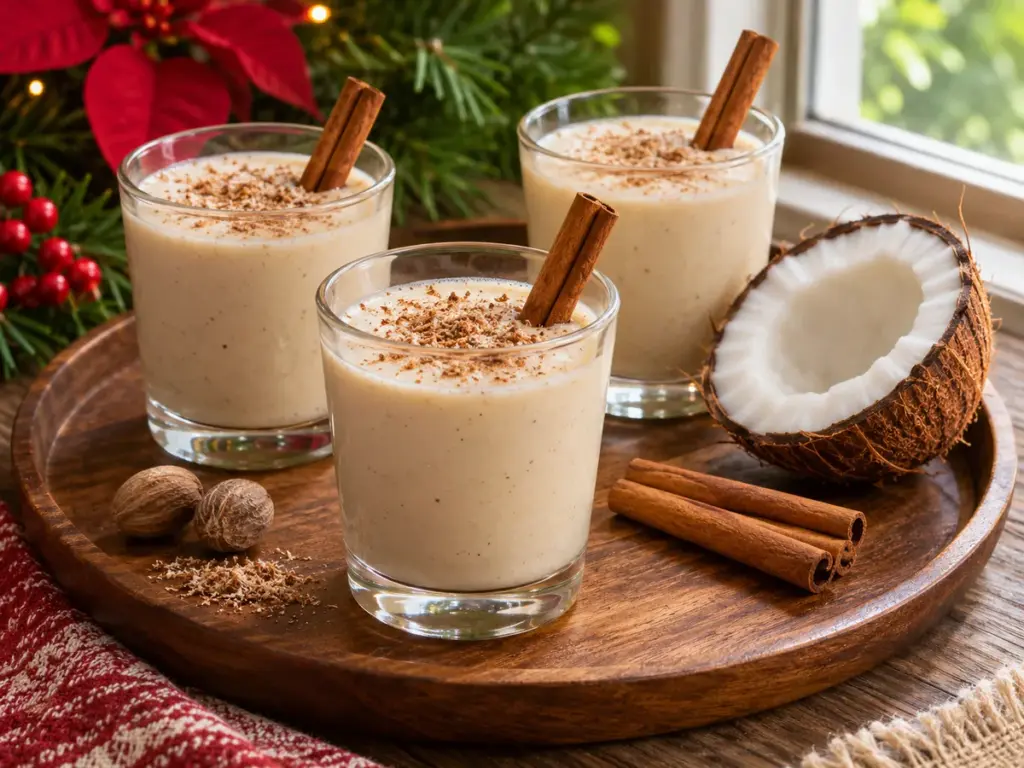
4. How Do They Taste and Feel Different?
- Sweet and cinnamon-forward, with a soft rice flavor
- Creamy but light enough to drink by the glass
- A little grainy, with solids that settle
- Served over plenty of ice
- Sweet from condensed milk and cream of coconut
- Coconut up front, with cinnamon, nutmeg and vanilla behind it
- A warm rum finish
- Served cold in a shot or rocks glass
A glass of horchata is a full drink you sip with a meal. Coquito gets its sweetness from sweetened condensed milk and is usually poured cold into shot or rocks glasses after dinner, according to PureWow, and the sugar and rum make a small glass plenty.
5. Do Horchata and Coquito Contain Alcohol?
Coquito does and horchata does not. The Crumby Kitchen recipe adds 2½ cups of rum to five cans totaling 67 ounces, and PureWow's chef recipe adds 4 cups of rum to 48 ounces of canned milk and coconut. With 80-proof rum, which is 40 percent alcohol, our math puts those batches at roughly 9 percent and 16 percent alcohol by volume.
VinePair puts the horchata-inspired cream liqueur RumChata at only about 12.5 percent, so a pour of coquito can land near or above it.
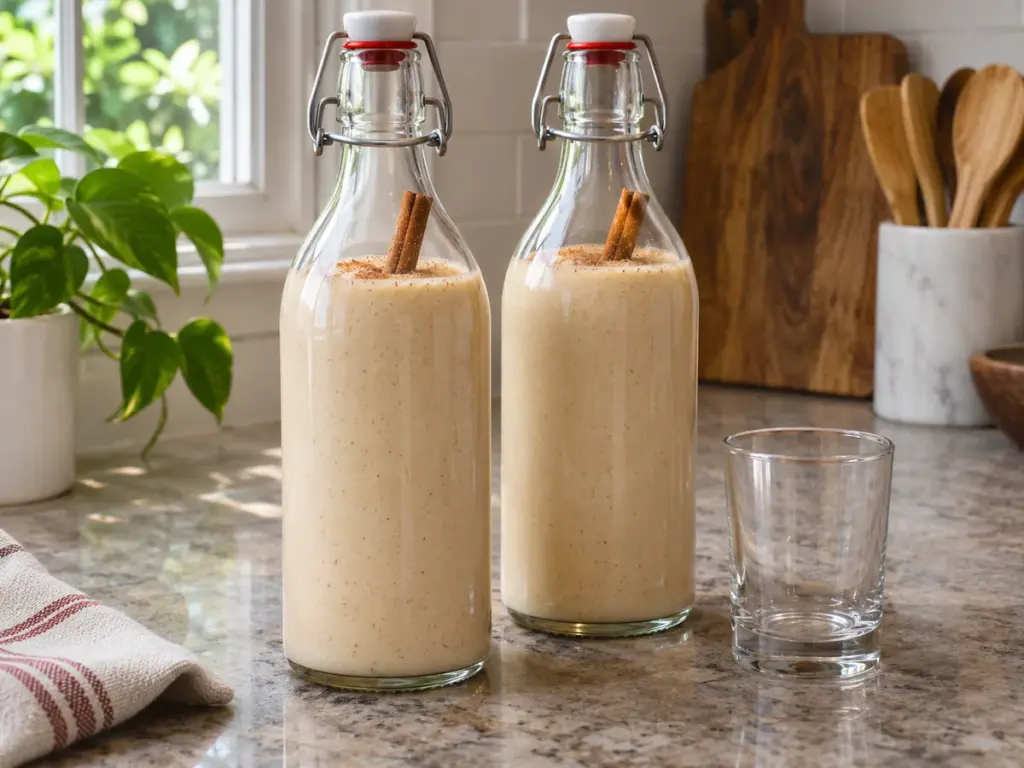
6. How Many Calories Are in Horchata and Coquito?
USDA FoodData Central lists restaurant horchata at 54 calories per 100 grams, which works out to about 130 calories in a 240 gram glass by our math. It is a sweet drink with little protein, since USDA lists 0.48 grams of protein and 0 grams of fiber per 100 grams.
USDA has no record for coquito, and recipes vary, but each ingredient in a typical batch is denser than horchata:
| Food | Calories per 100 g | USDA FDC id |
|---|---|---|
| Horchata, as served in restaurant | 54 | 171941 |
| Evaporated milk, canned | 134 | 171276 |
| Coconut milk, canned | 197 | 170173 |
| Rum, 80 proof | 231 | 174817 |
| Sweetened condensed milk | 321 | 171275 |
| Coconut cream, canned, sweetened | 357 | 170171 |
Rum alone adds about 97 calories per 1½-ounce shot (roughly 42 grams, our math from 231 per 100 grams) before any milk or sugar, which is one more reason coquito is poured small.
7. How Long Do Horchata and Coquito Keep?
Horchata often holds milk, so treat it as a perishable drink. Clemson Cooperative Extension says perishable drinks should not sit out more than 2 hours, or 1 hour when the air is above 90°F. We found no USDA or extension number for how many days a homemade batch keeps, so we give none.
Coquito has the same gap, because we found no USDA or extension day count for homemade batches and PureWow's recipe gives none. Blog estimates run from a few days to several months, so here are the numbers that do have a source:
- USDA FoodKeeper lists commercial eggnog at 3 to 5 days in the fridge and up to 6 months in the freezer.
- FoodKeeper gives 4 to 5 days in the fridge for opened condensed or evaporated milk and 4 days for canned coconut milk, so leftover cans from a batch need their own container.
- The Crumby Kitchen recipe says up to 2 weeks in an airtight container, and its notes say 2 to 3 weeks, so treat that as one recipe author's figure and not a safety limit.
8. How Do You Make Each Drink?
Horchata
- Blend 1 cup of long-grain white rice with 5 cups of water for about a minute, until the rice just begins to break up.
- Let it stand with cinnamon sticks for at least 3 hours or overnight, as Mexico News Daily's recipe does at room temperature.
- Strain the liquid into a pitcher and discard the rice and cinnamon sticks.
- Stir in ½ cup of milk, ½ tablespoon of vanilla, ½ tablespoon of cinnamon and ⅓ cup of sugar.
- Chill, stir and pour the horchata over plenty of ice.
Coquito
- Cook the coconut milk, coconut cream, evaporated milk and sweetened condensed milk with cinnamon sticks on the stove. PureWow says cooking keeps the ingredients from separating and gives the drink a longer shelf life.
- Cool the mixture to room temperature.
- Stir in the rum, 4 cups in PureWow's recipe or 2½ cups in the Crumby Kitchen's, then the vanilla, cinnamon and nutmeg, and take out the cinnamon sticks.
- Chill for at least 4 hours before you pour it into small glasses.
9. Can You Swap One for the Other?
You cannot swap them one for one, because horchata has no coconut or rum and coquito has no rice.
What you can do is move each drink toward the other. For an alcohol-free coquito, use the Crumby Kitchen swap of coconut milk or whole milk plus water. For a spiked horchata, Mexico News Daily lists rum, tequila, mezcal and vodka as partners, and its recipe allows coconut milk or coconut water in place of the regular milk.
10. Which One Should You Make or Serve?
- Spicy tacos or enchiladas, or kids at the table: make horchata, since Mexico News Daily says it gives the palate relief from heat and it has no alcohol.
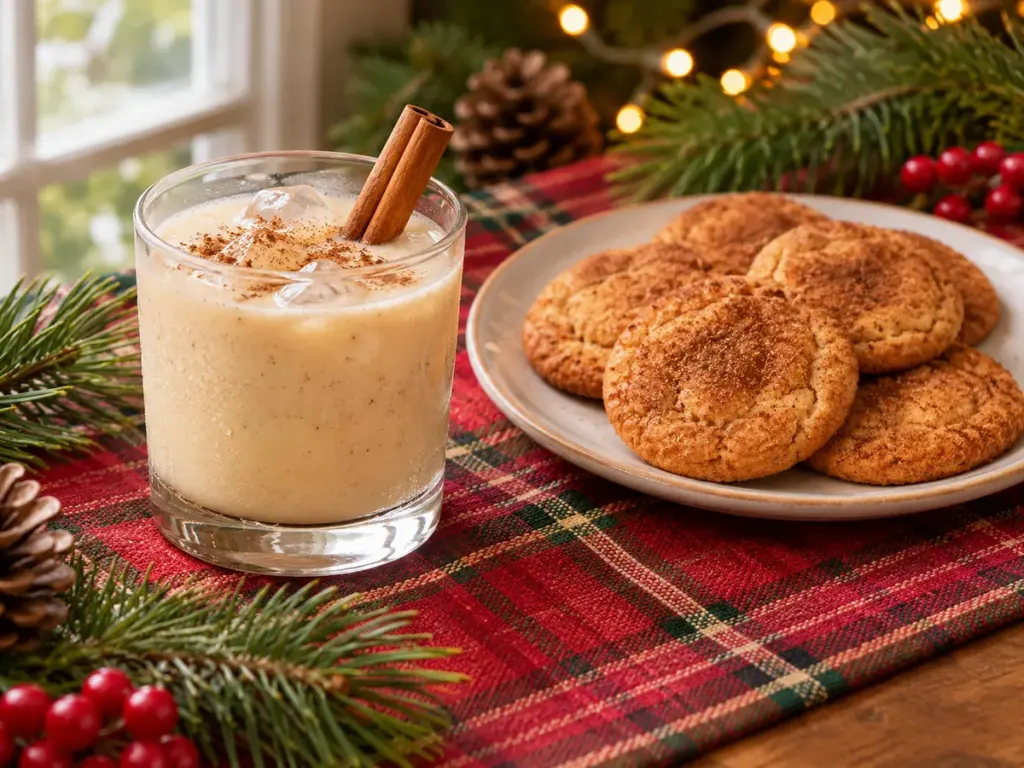
- An adults-only toast after Christmas dinner: pour coquito cold into small glasses with a little nutmeg on top.
- A hot afternoon or a summer cookout: make horchata and serve it over lots of ice.
- Gift bottles or a make-ahead holiday drink: make coquito, chill it at least 4 hours, and keep it in the fridge.
The shopping list differs too. Horchata needs rice, sugar, cinnamon and a little milk. Coquito needs four canned products plus 20 to 32 ounces of rum, which is most of a 750 mL bottle (about 25 ounces) or more, so coquito is the pricier batch.
Sources
- Janet Blaser, Horchata is a rice-based drink that pairs well with spicy food, Mexico News Daily
- Nikita Ephanov, What's Really In Horchata?, Tasting Table
- What Is Coquito? We Asked a Puerto Rican Chef for His Authentic Holiday Recipe, PureWow (Chef Hector Prieto, Caribe Hilton)
- Puerto Rican Coquito Recipe, The Crumby Kitchen
- RumChata liqueur guide, VinePair
- Holiday Goodies: Food Safety for Moms-to-Be, FDA
- Alcohol content doesn't matter; raw eggs can spike your nog with Salmonella, Food Safety News
- USDA FoodData Central: FDC 171941 (horchata), 171276 (evaporated milk), 170173 (coconut milk), 174817 (rum), 171275 (sweetened condensed milk), 170171 (sweetened coconut cream)
- USDA FoodKeeper, eggnog, canned milk and canned coconut milk entries
- Effects of Temperature on Food, Clemson Cooperative Extension

Food writer at GustoMeadow. Writes ingredient substitutes, food comparisons, taste guides and storage guides for home cooks.
Storage and food-safety numbers follow USDA, FDA and university extension guidance.