Balut tastes like a rich, savory chicken broth, followed by a creamy yolk and a soft, slightly chewy center.
- It is a fertilized duck egg, incubated about 17 days in the Philippines.
- You eat it warm from the shell with salt or spiced vinegar after it is steamed or boiled.
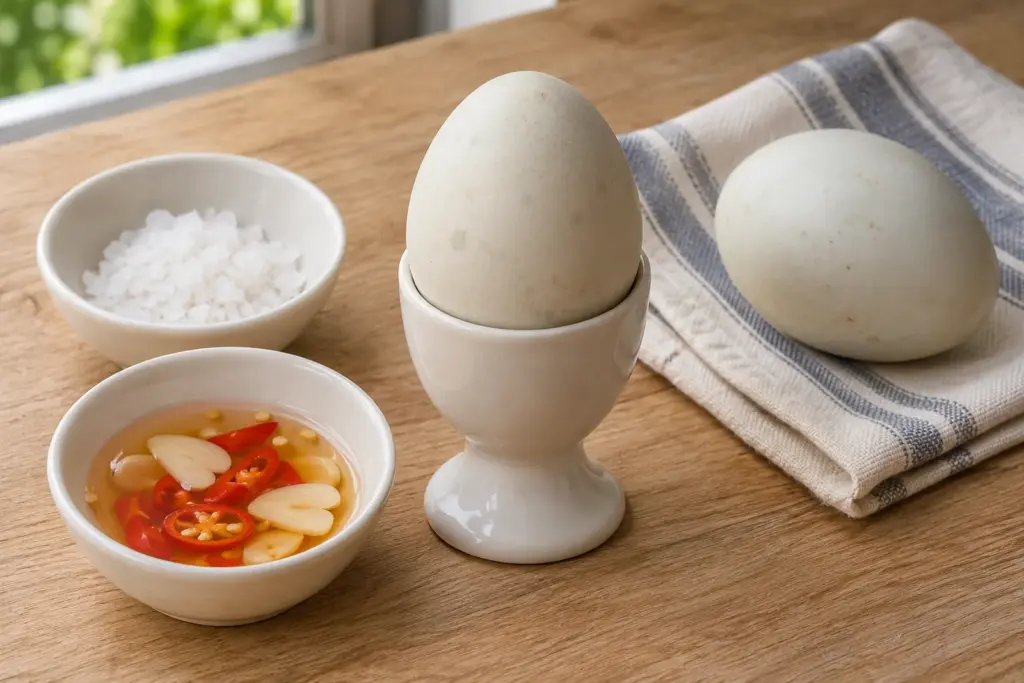
Balut is a Filipino street food that is also eaten in Vietnam and Cambodia. Like the unusual foods in our taste guides, it is much easier to picture once you know what sits inside the shell and which part you taste first.
1. What Is Balut and What Is Inside the Shell?
Balut is a fertilized duck egg that has been incubated for a set number of days, then cooked and eaten from the shell. The longer it incubates, the more the embryo develops, which changes both the chew and the look of the egg. Most Philippine makers aim for about 17 to 18 days of incubation before cooking.
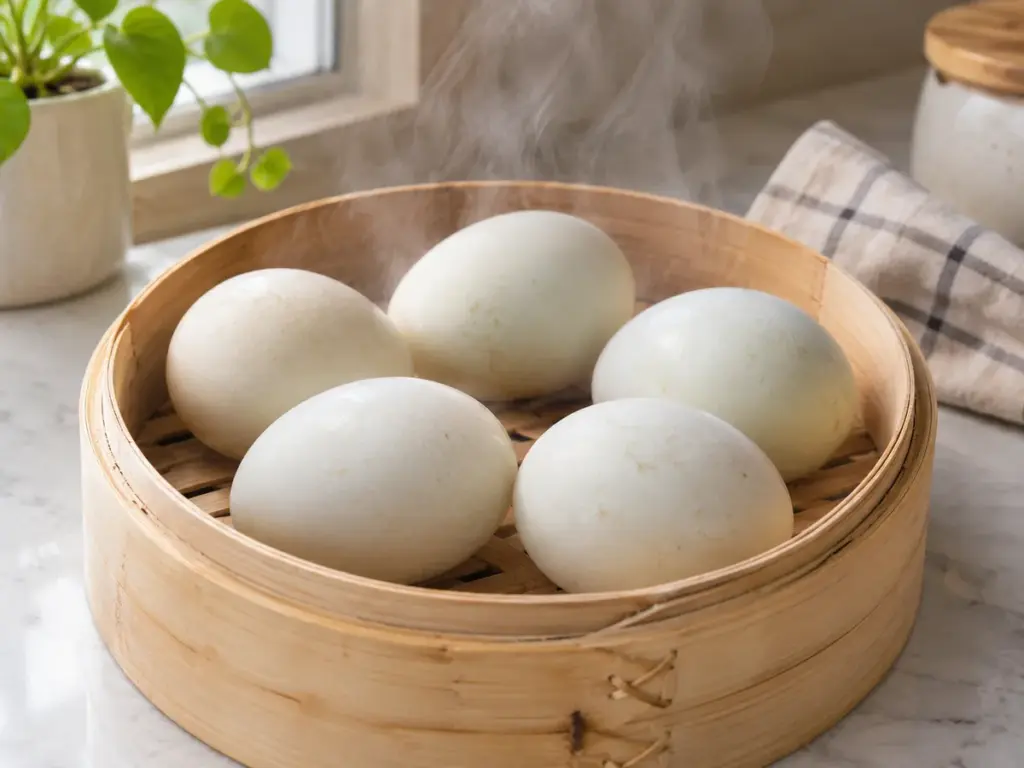
The age at which the egg is cooked changes with the country and the name, so this table shows what you may be handed:
- Penoy is the Philippine egg that did not develop properly, usually sorted out by day 9 to 12. It has no embryo, so it tastes like a regular hard-boiled egg.
- Balut sa puti ("wrapped in white") is an early-stage Philippine egg, with an embryo still mostly undeveloped and wrapped in a whitish layer.
| Name | Where | Incubation | What you find |
|---|---|---|---|
| Balut | Philippines | 14 to 18 days, most makers prefer 17 | Broth, yolk and a small, soft embryo |
| Pong tea khon | Cambodia | 18 to 20 days | A more developed embryo |
| Trứng vịt lộn | Vietnam | 19 to 21 days | Recognizable features and firm but tender bones |
So a Vietnamese egg at 21 days gives you more to chew than a Filipino one at 14 days. In the Philippines, expect the 14 to 18 day egg.
2. What Does Balut Taste Like?
Most of what you taste is strong chicken broth and a creamy, rich yolk. The liquid in the shell is often described as a very potent chicken soup, which is why many people sip it before they touch anything solid. The embryo has a mild, savory taste of its own and little else.
| Part | Taste | Texture |
|---|---|---|
| Broth | Savory and salty-rich, like a strong chicken soup | Thin, hot liquid you sip from the opening |
| Yolk | Creamy and rich, close to a very full-flavored boiled yolk | Soft and smooth |
| Embryo | Mild and savory | Tender and slightly chewy, with softer bones at 14 to 18 days and firmer ones in older eggs |
| White (bato) | Little flavor | Tough and rubbery, so many people leave it |
Balut can feel like several foods in one bite: you start with a drink, move to a custard-like yolk, and end on something firm. Some first-timers find the chew harder than the flavor, which stays mild next to the broth.
If the look of the egg puts you off, you can eat the broth and yolk first with your eyes on the cup. Salt and vinegar do most of the work from there, so a plain egg tastes flat without them.
3. How Do You Eat Balut?
Eat it warm, straight from the shell, in this order:
- Crack the rounded end. That end holds the air cell, so the shell comes away easily. Peel back a little shell and the thin membrane to make a small opening.
- Sip the broth. Add a pinch of salt first if you like.
- Peel the rest of the shell. Pick away the shell around the yolk and embryo.
- Eat the yolk and the embryo. A dip in vinegar helps balance the richness. Some people eat the yolk last with another pinch of salt.
- Leave the white if it is tough. The firm white, called bato, is often skipped.
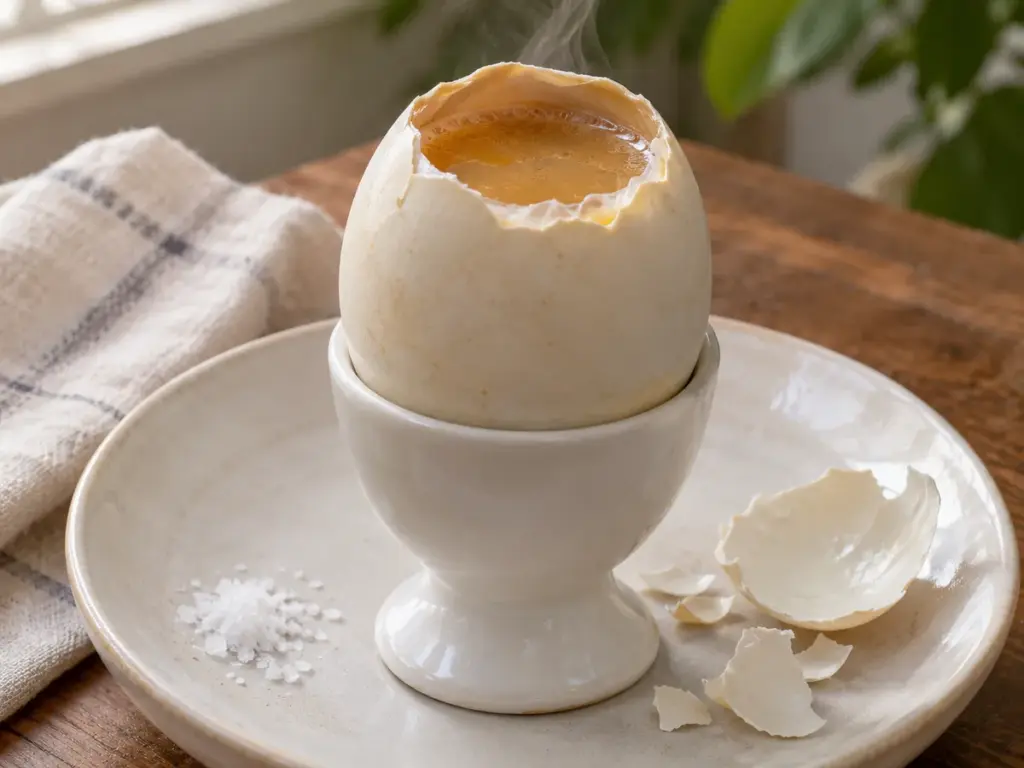
There is no single correct order, so take the part you like first. If you are unsure, the broth is the easiest start and the embryo is the last thing to try.
4. What Do You Dip Balut In?
The sauce changes with the country, and each one answers the same problem, which is a rich egg that needs salt and acid to cut through it:
- Philippines: plain salt, or a spiced vinegar with chili and garlic, made with white or coconut sap vinegar. The acid brightens the yolk and the broth.
- Vietnam: salt and pepper with lime, or ginger and rau ram, a peppery herb. The lime and herb lift the flavor of the egg.
- Cambodia: lime juice and ground pepper, served on the warm egg.
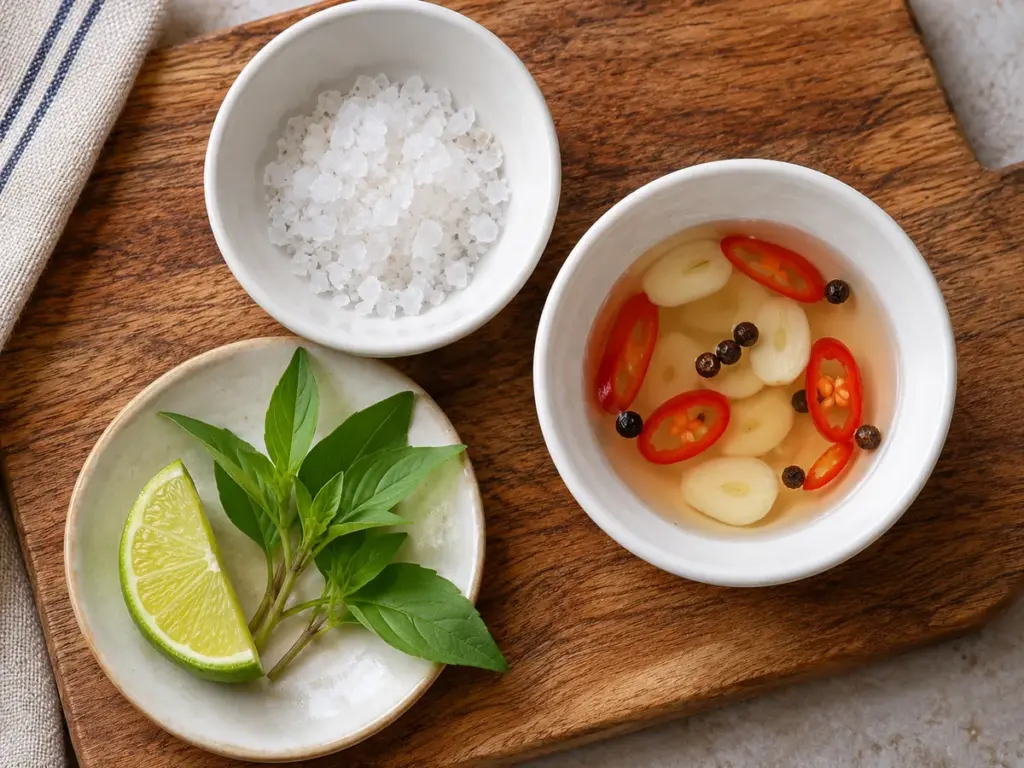
If you make the dip at home, slice a chili and a clove of garlic into a small bowl of vinegar, then let it sit a few minutes. Vendors often sell balut with small salt packets on the side, so a pinch of salt is the baseline and the vinegar is the upgrade.
5. Is Balut Safe to Eat?
Balut is safe when it is fully cooked and eaten soon after, because eggs can carry Salmonella and a warm incubator is a good place for it to grow. Filipino home recipes steam balut for about 25 minutes, so a lightly cooked or lukewarm egg is one to pass on.

For everyone else, buy it hot from a vendor who keeps it warm, and eat it within a couple of hours. The FDA also says cooked eggs should not sit out of the refrigerator for more than 2 hours (1 hour above 90°F), and leftovers belong in a fridge at 40°F or below.
6. Can You Cook With Balut?
Yes, and it is a gentler way in for anyone put off by the look of the egg. Cook the egg fully first, then shell it and use it in one of these:
- Sweet and sour tamarind sauce: coat the shelled egg in corn flour and fry it first so the embryo holds its shape, then add it to the sauce. Add tamarind concentrate a spoonful at a time, since it is stronger than paste.
- Soup: add the cooked, shelled egg to a rich soup with vegetables and aromatics, where the broth carries the flavor.
- Tempura: a batter hides the embryo completely, and hot sauce or mayonnaise suits the rich yolk.
7. Is Penoy a Milder Way to Start?
For many people it is. Penoy is the same duck egg with no embryo, and it looks, smells and tastes like a regular hard-boiled egg. Filipino cooks eat it with salt, or beat it and fry it like scrambled egg with a vinegar dip.
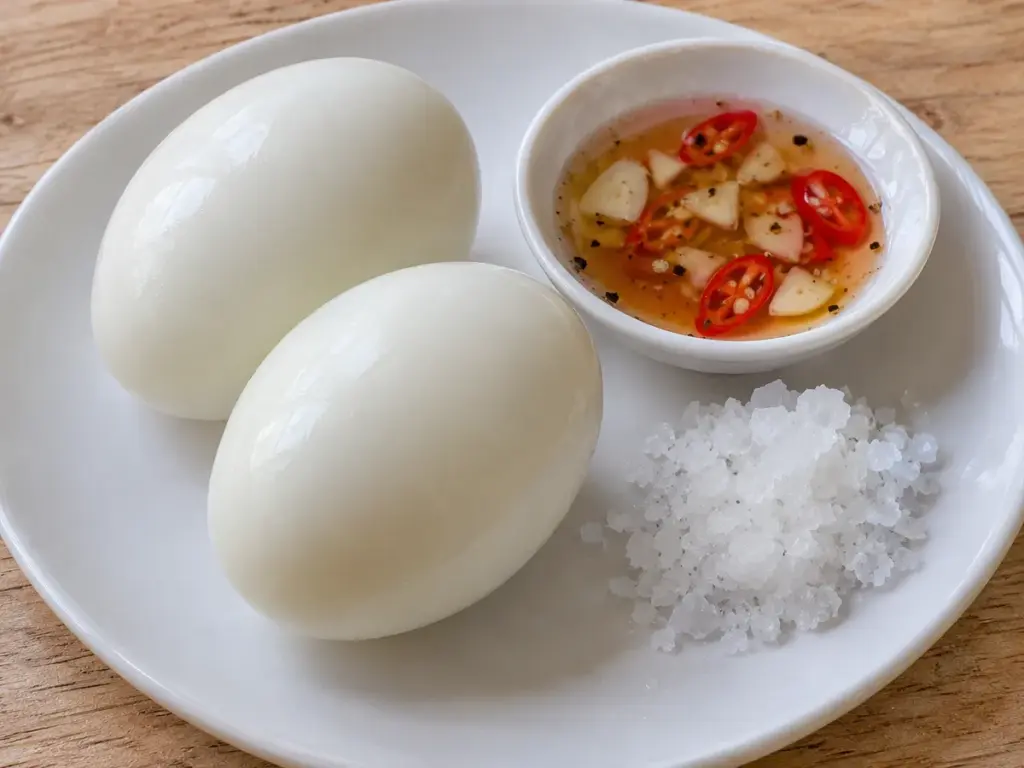
Other eggs sit at the mild or the strong end of the same range. A century egg is cured instead of incubated, so it has no embryo, but it has a dark, jelly-like white and a strong flavor. If it is the vinegar dip you like, pickled eggs give you a firm egg that is already soaked in a tangy brine.
If you want a small, creamy egg with no development at all, quail eggs give you the same silky yolk in a bite-sized shell. And if the dishes around balut interest you more than the egg, Filipino dinner recipes are an easy next step to cook at home.
Sources
- FDA, What You Need to Know About Egg Safety: cooking eggs until firm, higher-risk groups, 2-hour rule, 40°F storage.
- Alejandria et al., Journal of Ethnic Foods (2019), review of the Philippine duck industry and balut: typical incubation of about 17 to 18 days.
- Wikipedia, Balut (food): incubation ranges by country, penoy, balut sa puti, dips and the tough white.
- Ang Sarap, Balut at Penoy: steaming time and how Filipino cooks eat the egg.

Food writer at GustoMeadow. Writes ingredient substitutes, food comparisons, taste guides and storage guides for home cooks.
Storage and food-safety numbers follow USDA, FDA and university extension guidance.