Start with chicken adobo if you want the most forgiving dish, or pork sinigang if you want a sour tamarind soup.
- Chicken adobo is chicken simmered in vinegar, soy sauce, garlic, bay leaves and peppercorns.
- The range runs from stews, soups and ground meat dishes to sisig, noodles, bread and cake, across 14 recipes.
- You can serve nearly all of them with steamed white rice.
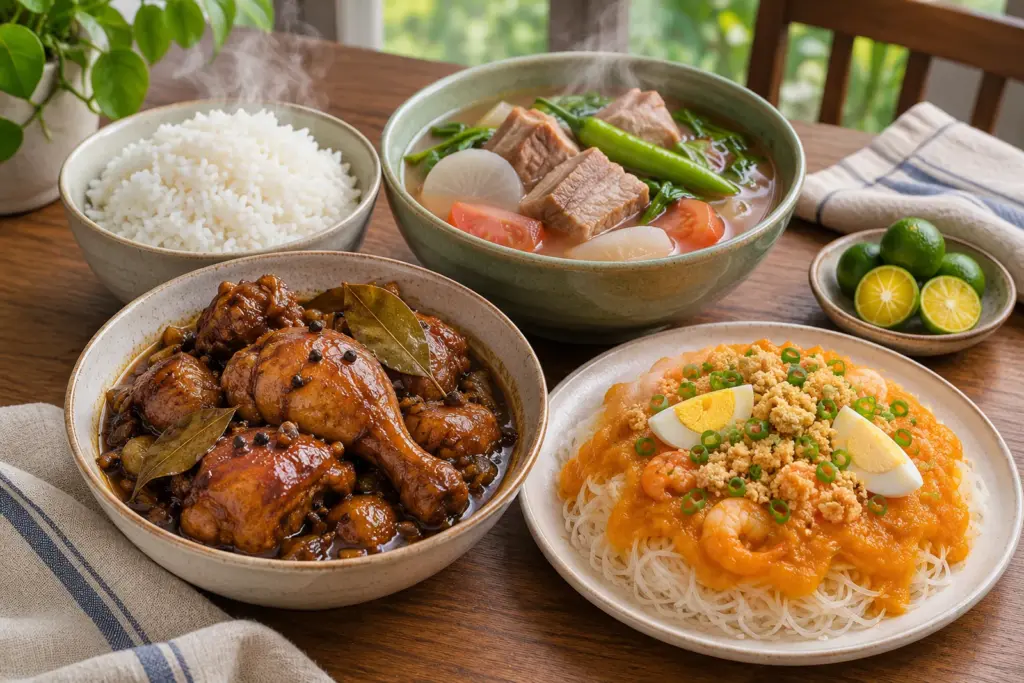
Filipino cooking leans on a few sour and salty building blocks (vinegar, tamarind, calamansi, fish sauce), so once you know them, you can place each dish below at a glance. Most of the recipes work as a weeknight dinner, and a few, like palabok and taisan, suit a party table better.
Which Filipino Recipe Should You Cook First?
Pick by the flavor you want and by how easy the ingredients are to find. Here are all 14 side by side:
| Dish | What it is | Main flavor | Pick it when |
|---|---|---|---|
| Chicken adobo | Chicken simmered in vinegar, soy sauce and garlic | Salty, sour, garlicky | You want the easiest, most forgiving dish |
| Pininyahang manok | Chicken stewed with pineapple and milk | Creamy, sweet and tart | You want a mild dish for kids |
- It is diced pork and liver in tomato sauce, savory and slightly sweet.
- Pick it when you like a tomato stew with potatoes and carrots.
- It is beef, saba bananas and chickpeas in tomato broth, savory with a sweet edge.
- Pick it when you are cooking a weekend pot.
Pork sinigang is a sour soup with pork and vegetables, so pick it when you want a soup that wakes up your appetite. Tinolang manok is chicken and green papaya in ginger broth, light and gingery, so pick it when you want a clear, gentle soup.
- It is an earthy, savory mung bean stew with greens.
- Pick it when you want a cheap pot of beans.
- It is ground meat with tomato, potatoes and carrots, savory and a little sweet.
- Pick it when you need a ground meat dinner for rice.
- Tortang giniling is a savory ground meat omelet, good when you have leftover giniling or want eggs for dinner.
- Sizzling sisig is chopped grilled pork with onion and chili, rich, sour and spicy, for when you are feeding friends.
- Adobong balut is duck egg with embryo, cooked adobo style, salty and sour, for an adventurous eater.
Pancit palabok is noodles with orange shrimp sauce, savory and citrusy, and it suits a crowd. Pandesal is a lightly sweet, soft bread roll for breakfast or a sandwich. Taisan is a sweet, buttery chiffon-style loaf for an afternoon snack cake.
Most of these dishes are savory and go with rice, so what you can buy nearby matters more than your skill when you choose. Here is how they split by where you shop:
- Chicken adobo: vinegar, soy sauce, garlic, bay leaves
- Pininyahang manok: canned pineapple, evaporated milk, carrots, potatoes
- Giniling and tortang giniling: ground meat, tomatoes, eggs
- Pork menudo: pork, liver, potatoes, tomato sauce
- Sinigang: sinigang mix or tamarind, kangkong, taro
- Tinola: green papaya and chili leaves
- Palabok: annatto and smoked fish
- Pochero: saba bananas
What Gives Filipino Cooking Its Sour and Salty Flavor?
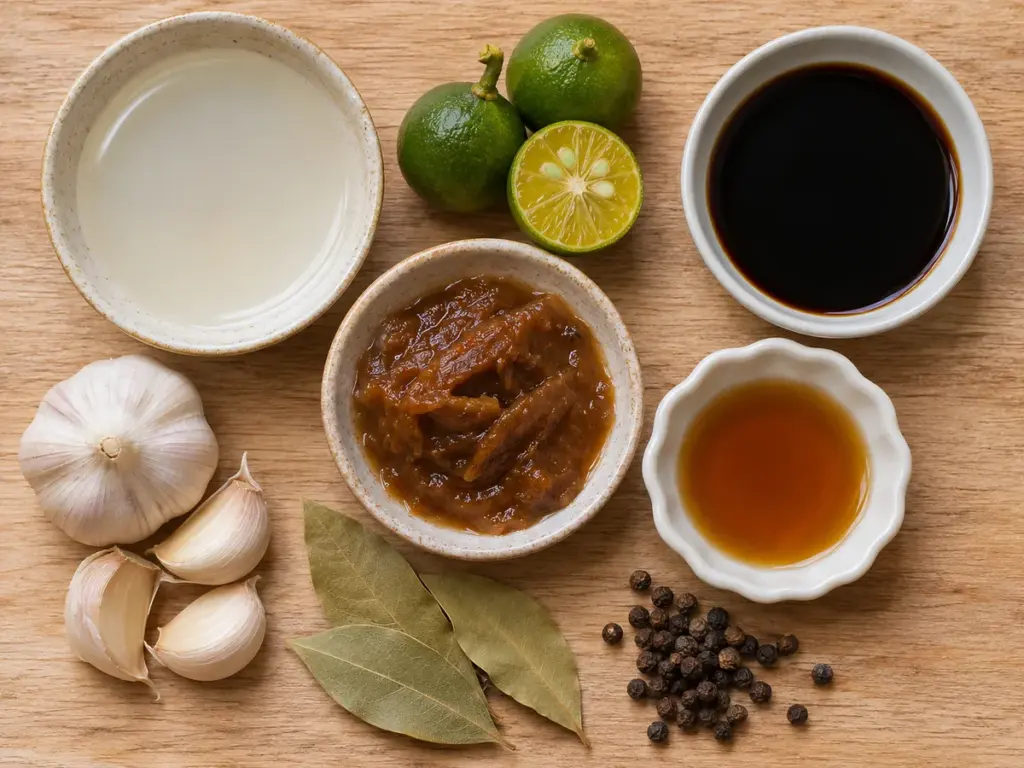
Four ingredients give most of these dishes their taste, and you will meet each one in more than one recipe:
- Vinegar is the base of adobo, and it also goes into some menudo and sisig recipes for a sharp edge against rich pork.
- Tamarind makes sinigang sour. Many US cooks use a powdered sinigang mix, and the pork sinigang recipe below calls for two 20 g packets in 8 cups of water, while tamarind concentrate is the jarred option.
- Calamansi is a small, sour Philippine citrus squeezed over sisig and palabok at the table, and calamansi and calamondin are close but not identical fruits.
- Fish sauce (patis) seasons tinola and sinigang, and the sinigang recipe below uses 3 tablespoons of fish sauce for the whole pot.
Stews to Serve Over Steamed Rice
1. Chicken Adobo
Adobo takes its name from the Spanish adobar, "to marinate," but the Filipino dish is meat stewed in vinegar and soy sauce with garlic, bay leaves and whole peppercorns. Spanish adobo is a different, spicier dish built on chilies, paprika and tomato paste.
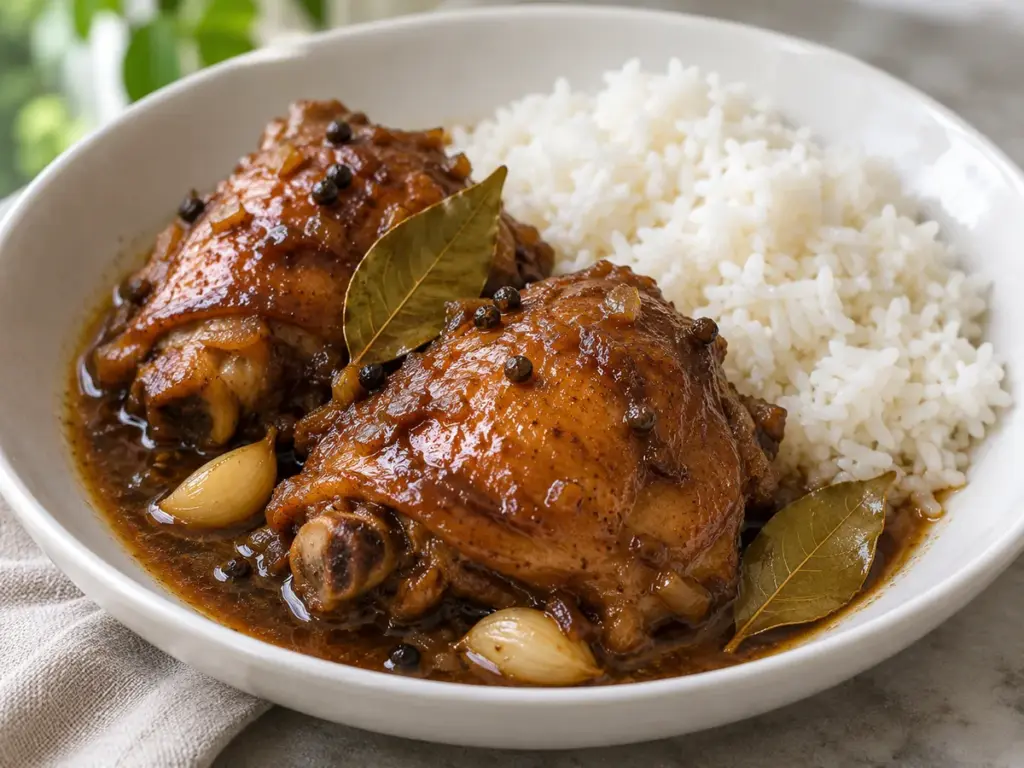
One widely shared home recipe for 6 chicken thighs runs like this:
Marinate the chicken in ½ cup white vinegar, ¼ cup soy sauce, 8 crushed garlic cloves, 3 bay leaves and 1 teaspoon whole peppercorns for at least 1 hour, or overnight.
- Sear the pieces in 3 tablespoons of oil, about 1 minute per side, then pour in the marinade and 1 ½ cups of water.
- Simmer covered for about 30 minutes and flip the chicken around the 15-minute mark. The recipe has you wait until the pot boils before you stir anything.
That works out to roughly 2 parts vinegar to 1 part soy sauce, and many cooks move toward equal parts from there, so taste the sauce near the end and add a splash of water if it is too sharp for you. Adobo without soy sauce is called adobong puti and uses coconut vinegar, which is the version to try if you want to taste the vinegar on its own.
2. Pininyahang Manok
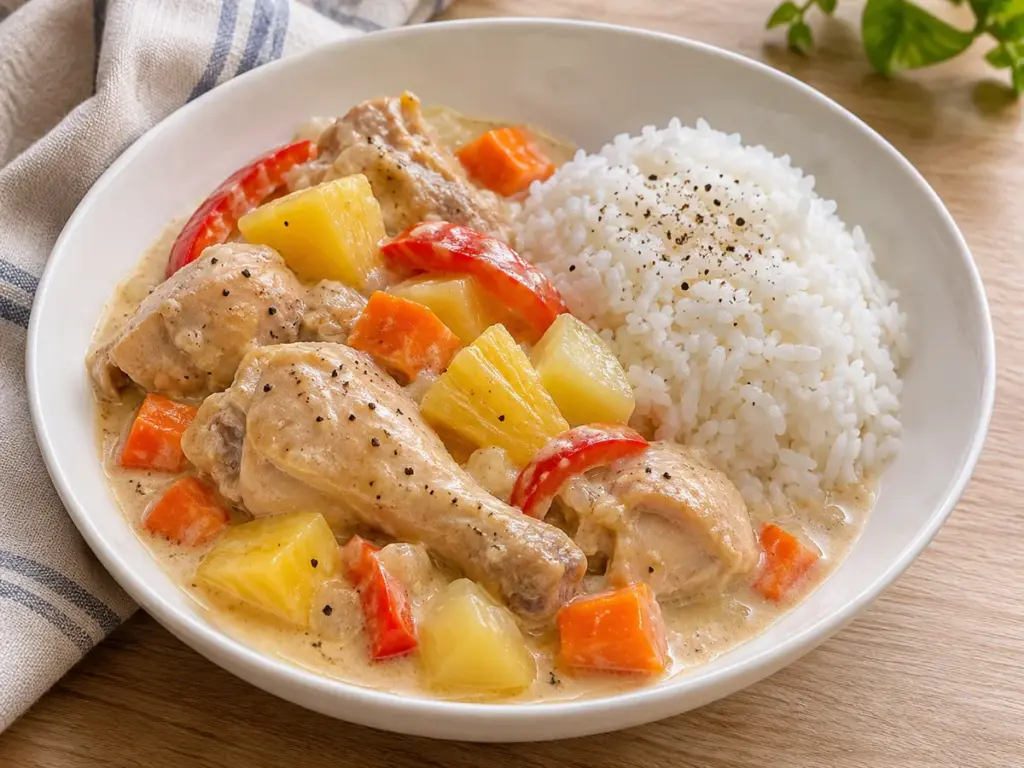
Pininyahang manok is chicken stewed in pineapple and milk with carrots, potatoes and bell pepper, and it comes from southern Luzon. The milk is usually evaporated or fresh, and the richer gata version swaps in coconut milk.
Some cooks marinate the chicken in pineapple juice first and others skip it, so the dish works either way. Keep the pot at a gentle simmer once the milk goes in, because pineapple adds acid and a milk sauce can split if it boils hard. Finish it with a little fish sauce and black pepper, then serve it over rice.
3. Pork Menudo
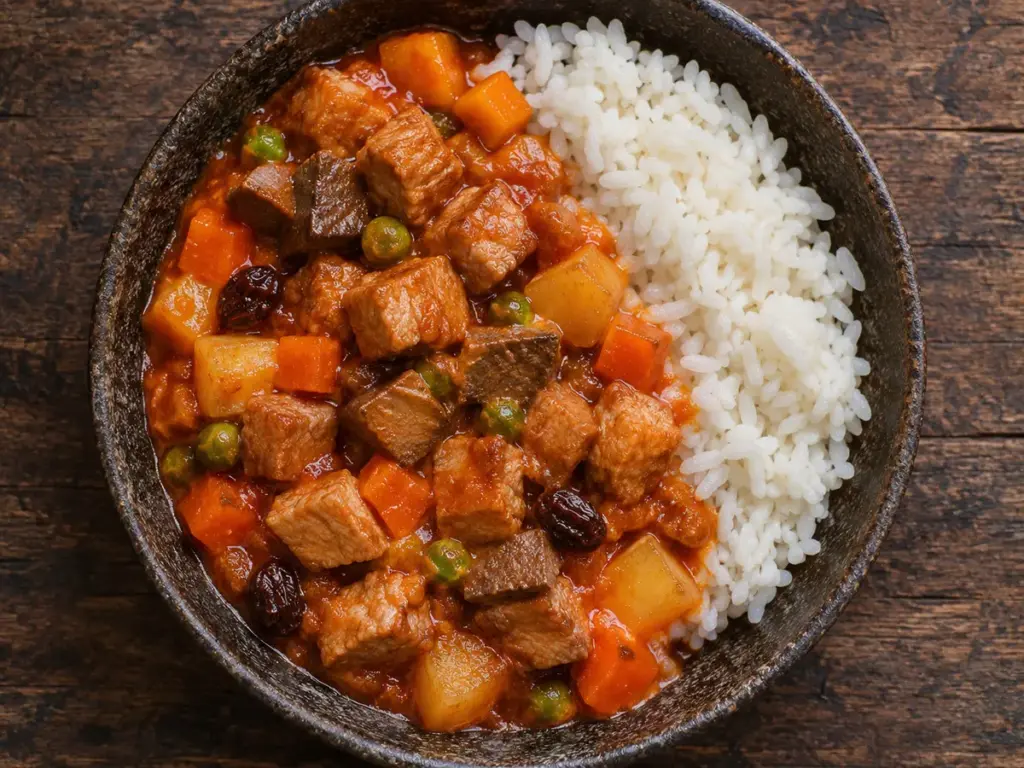
Filipino menudo is diced pork and liver stewed with potatoes, carrots and tomato sauce, and it has nothing in common with Mexican menudo, a soup of tripe and hominy in red chili broth. The name comes from the Spanish word for "small bits," which tells you to cut everything small and even so the pieces cook at the same pace.
- Common extras include green bell pepper, peas, raisins and sliced hot dogs, depending on the family.
- Seasoning comes from garlic, onion, soy sauce, and vinegar or calamansi for a little acid.
- Add the liver late, once the pork is nearly tender, because it dries out fast. If it is your first time, use less of it while you get used to the liver's flavor.
4. Beef Pochero
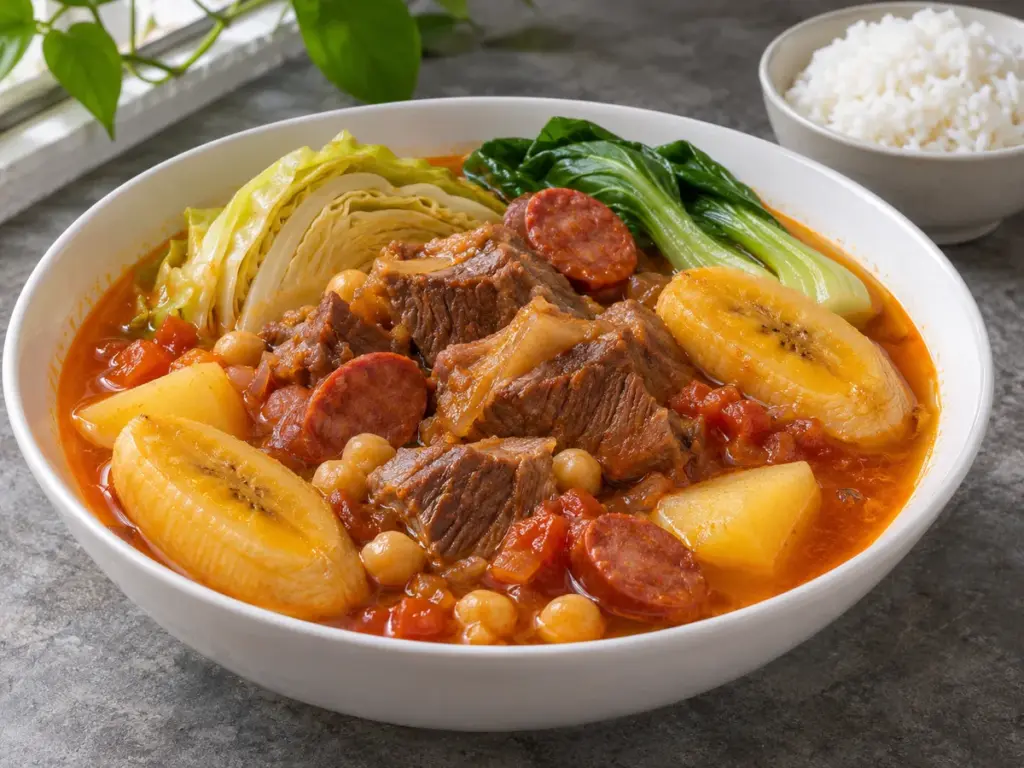
Pochero is the Philippine take on the Spanish puchero stew, and its signature is saba bananas (a starchy cooking banana) simmered with beef in a tomato-based broth. Potatoes, chickpeas, cabbage, pechay and chorizo de Bilbao round it out, and chicken or pork versions exist too.
Brown the beef in oil first, then simmer it with the aromatics until it is tender before you add anything else. Potatoes and bananas go in once the meat is nearly done and the cabbage and pechay go in last, so each one stays whole instead of turning to mush. Serve it over steamed rice with a little of the broth.
Sour and Savory Soups
5. Pork Sinigang
Sinigang is the classic Filipino sour soup, and in the pork version the sourness comes from tamarind, balanced by tomato, onion and fish sauce. A home recipe for 6 servings uses 2 pounds of cubed pork belly, 8 cups of water and a spread of vegetables.
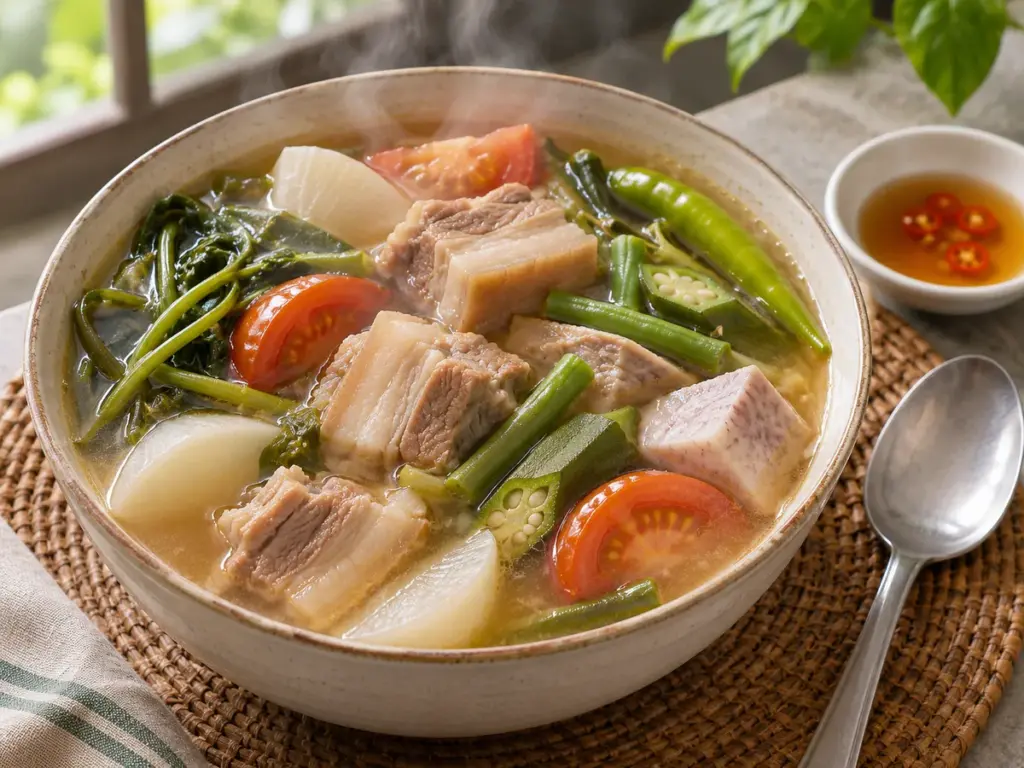
The order you add things matters because slow vegetables and leafy greens need different times:
- Build the broth. Boil the water with 1 quartered onion and 2 quartered tomatoes for 5 to 8 minutes.
- Cook the pork. Add 2 pounds of pork belly and boil for 25 minutes.
- Add the taro. Two peeled, halved taro (gabi) go in, covered, for 30 minutes. They break down a little and make the soup thicker.
- Sour and season. Stir in the sinigang mix (two 20 g packets), 3 tablespoons of fish sauce and ¼ teaspoon of black pepper.
- Add the vegetables. Sliced daikon cooks 3 to 5 minutes, then 3 long green chilies, 15 okra and 10 to 12 snake beans cook for 7 minutes.
- Wilt the greens. Add the kangkong, cover, turn off the heat and let it sit 5 minutes.
The daikon radish adds a mild peppery bite to the pork broth, and the taro thickens the sinigang broth, so without it the soup stays thinner.
6. Tinolang Manok
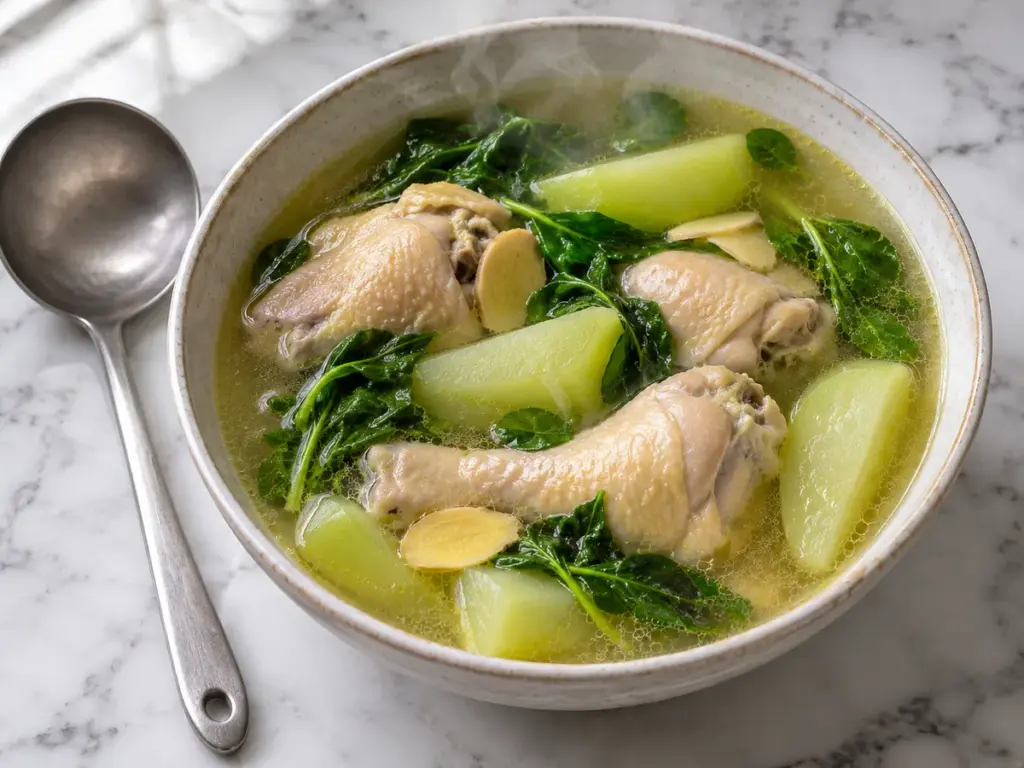
Tinola is chicken simmered in a broth of ginger, onion and fish sauce with wedges of green papaya or chayote and a leafy green. The traditional green is the leaf of the siling labuyo chili plant, and malunggay (moringa), spinach, pechay or mustard greens are common stand-ins. One of its earliest written mentions is in José Rizal's novel Noli Me Tangere, where Kapitan Tiago serves it to a guest.
Cut the chicken into serving pieces and simmer it with the ginger until it is cooked through, then add the fruit and greens. Green papaya is firm and mild and softens as it simmers, while chayote squash is the easier one to find at a US supermarket and works the same way. Season at the end with fish sauce and black pepper, and serve it hot with rice.
7. Monggo Guisado
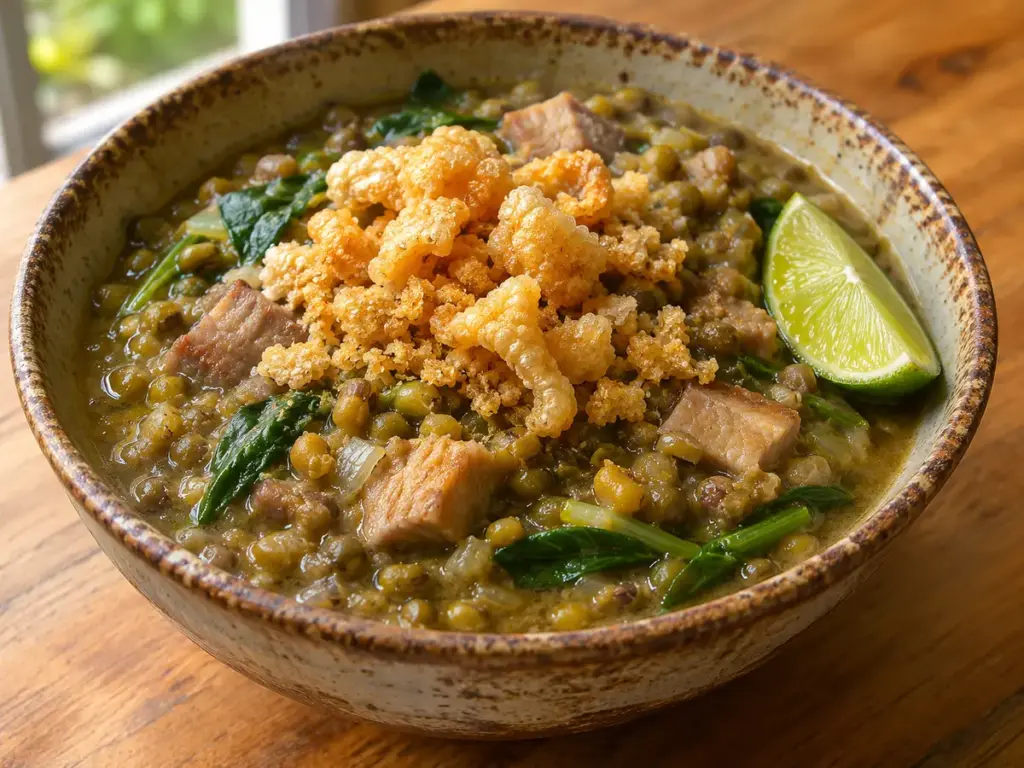
Monggo guisado, also called ginisang monggo, is a sauteed mung bean stew that Filipino families traditionally cook on Lenten Fridays. It is usually made with pork, shrimp or fish, and it is finished with greens such as malunggay leaves or ampalaya (bitter melon) leaves.
- Soak or not. If you skip soaking, the dry beans need about an hour of cooking, and a soaked batch (1 hour or more) softens faster.
- Add the greens last. The leaves only need to wilt in the hot stew.
- Top with crushed pork chicharon just before serving, so you get crunch against the soft beans.
Ground Meat Dishes for Fast Dinners
8. Giniling (Filipino Picadillo)
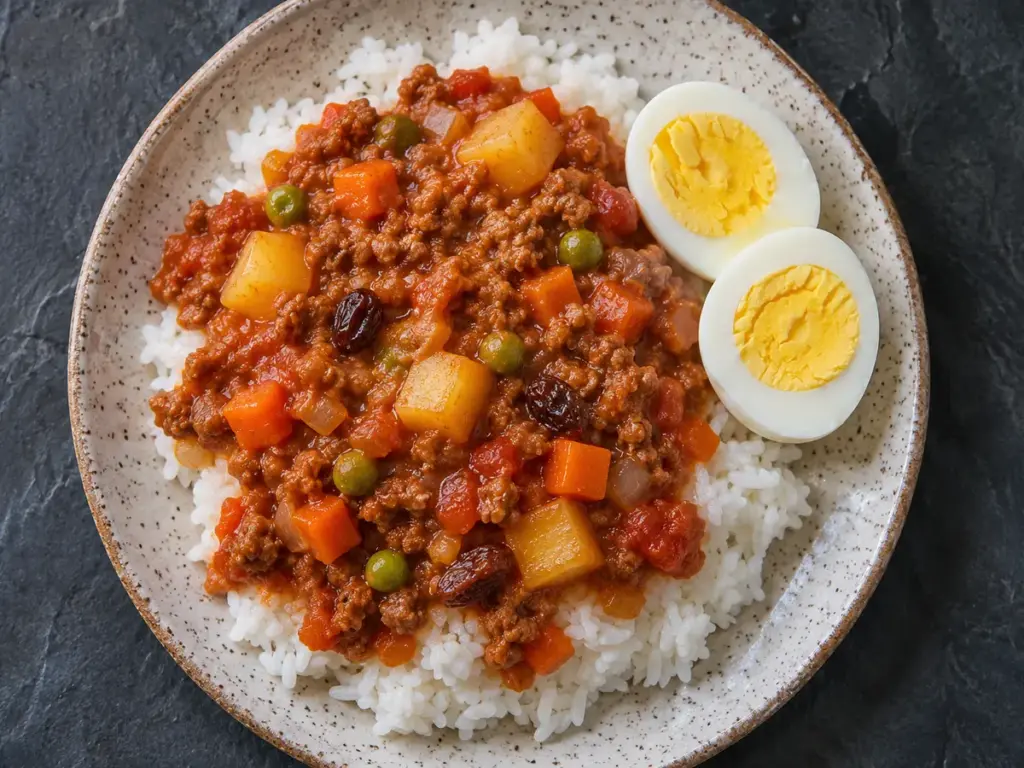
You make giniling with ground meat, usually beef but often pork, cooked with onion, garlic, tomato, potatoes, carrots and peas in a tomato-based sauce seasoned with fish sauce and soy sauce. Raisins, bell peppers and hard-boiled eggs are common additions. It has no olives or capers, which sets it apart from the Latin American picadillo it came from.
You spoon the soupy version over rice, and a drier version is also called giniling. If you serve it with a fried egg and fried saba bananas on white rice, it turns into the Filipino take on arroz a la cubana. Whichever order you add the vegetables, the meat has to reach 160°F before you serve it.
9. Tortang Giniling
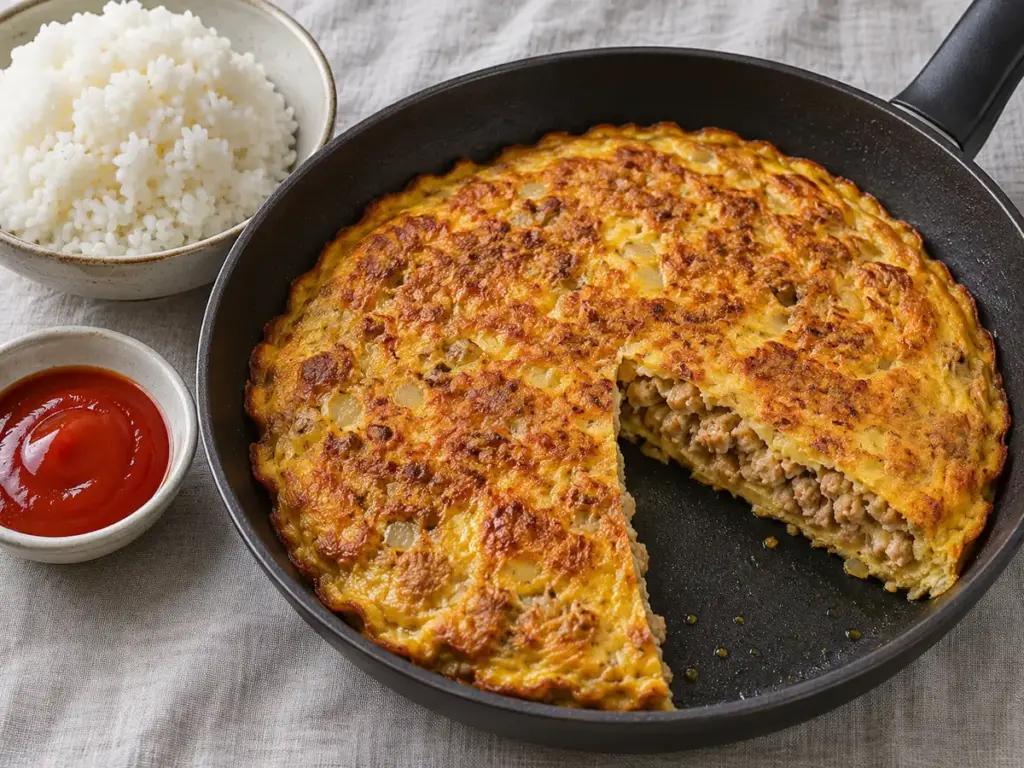
Tortang giniling is a ground meat omelet, made by mixing seasoned, cooked ground pork or beef into beaten eggs. Many cooks make it from leftover giniling, and it is eaten at breakfast or dinner with rice and banana ketchup.
Cook the meat completely and let it cool a little before it meets the eggs, so the heat does not start cooking the eggs early. Use a nonstick pan, and if flipping one big omelet worries you, cook it in small portions, one after another, which is easier to turn.
Sizzling Pork and Street Food
10. Sizzling Sisig
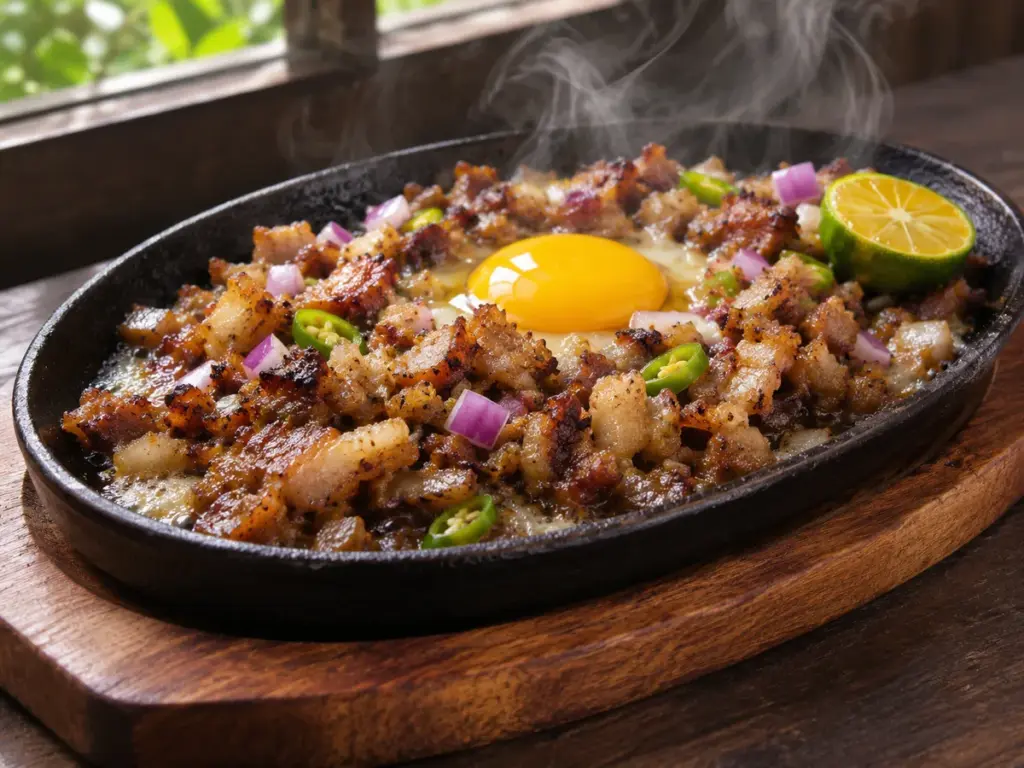
Sisig comes from Pampanga, where the traditional version uses pig jowl and ears, sometimes with liver. The head is boiled to tenderize it and remove hair, then chopped and grilled or broiled, and finished with chopped onion, calamansi and chili. The word shows up in a 1732 dictionary as a salad, and the sizzling-plate version is credited to Lucia Cunanan of Angeles in 1974.
- At home, pork belly is the usual stand-in for the traditional jowl and ears. Boil it until tender, then broil or grill it until the edges crisp, and chop it small.
- Egg and mayonnaise are both common today, although traditional Pampanga cooks frown on them.
- Other versions such as chicken, tuna, bangus (milkfish) and tofu sisig exist for guests who skip pork.
11. Adobong Balut
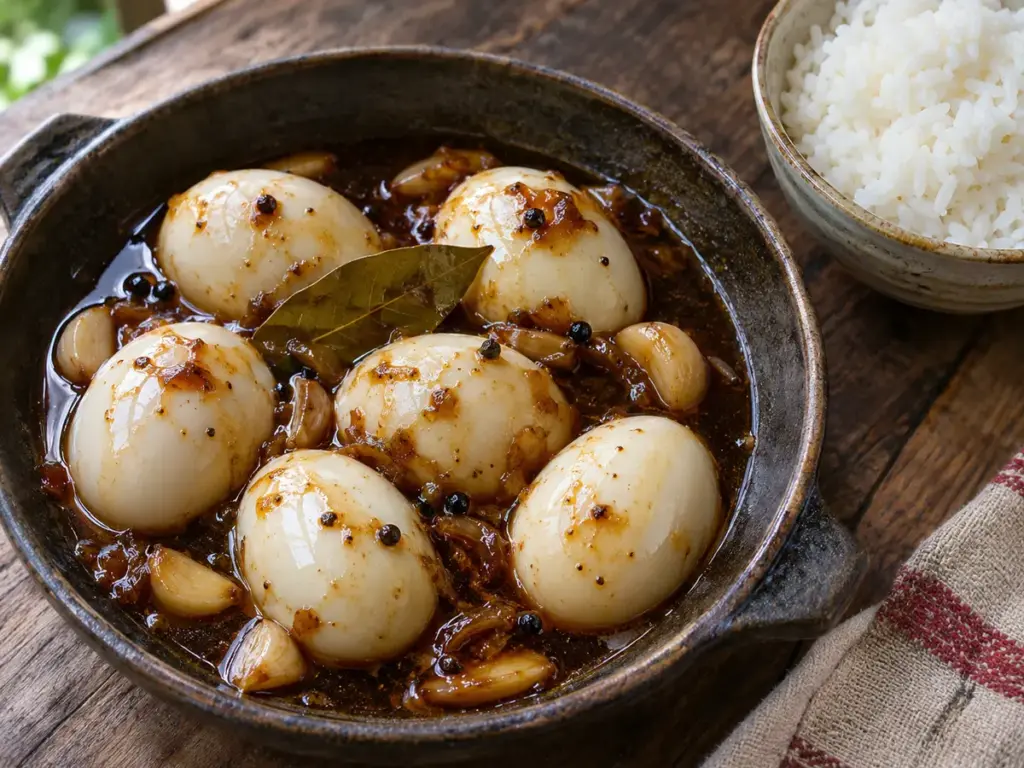
Balut is a fertilized duck egg with a partly developed embryo, usually incubated 14 to 18 days in the Philippines before it is boiled or steamed. Cooks also use it in omelets and adobo-style dishes, where the cooked egg is simmered in an adobo sauce of vinegar, soy sauce and garlic.
If you have never tried the egg itself, you will want to know what balut tastes like before you serve it, so the flavor and texture do not surprise you or your guests.
Noodles, Bread and Cake
12. Pancit Palabok
Palabok is thin noodles covered in a shrimp sauce dyed bright orange with annatto seeds. The noodles are boiled, not fried, and they are usually thin cornstarch noodles or rice vermicelli (bihon). The Kapampangan version, pancit luglug, is essentially the same dish with thicker noodles.
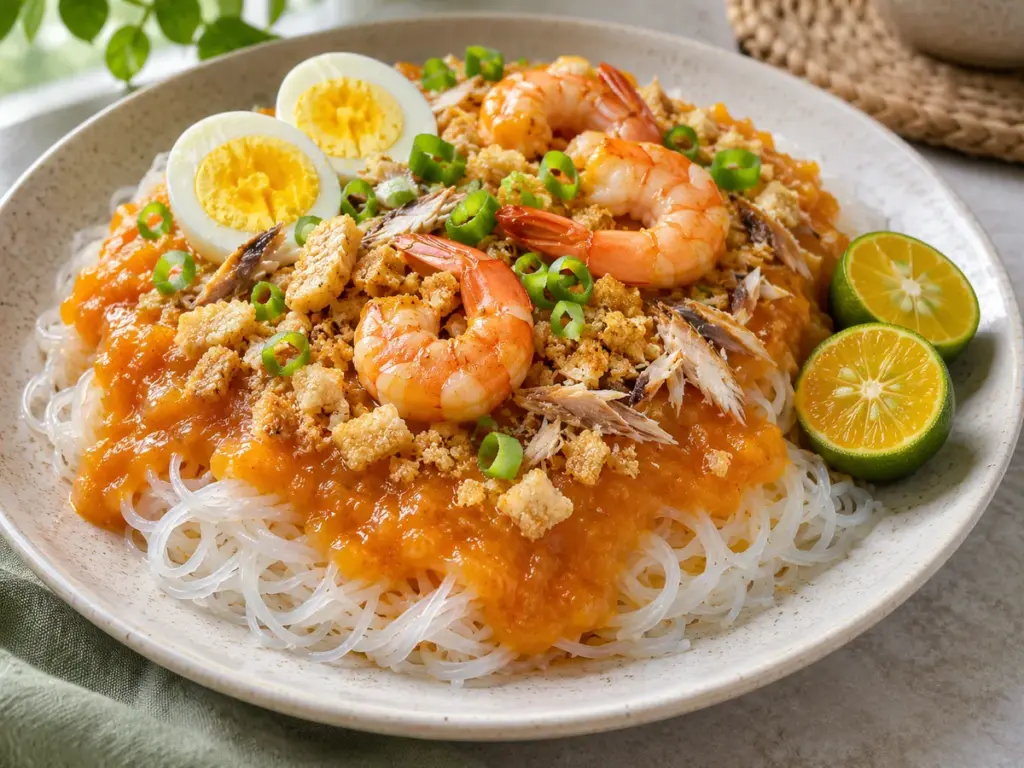
The toppings carry as much flavor as the sauce:
- Shrimp
- Crushed pork cracklings (chicharron)
- Flaked tinapa (smoked fish)
- Halved hard-boiled eggs
- Green onion
Squeeze calamansi over the plate before eating, and look for annatto seeds or achiote powder at a Latin or Asian market, since achiote is the same plant. Plain rice noodles have a neutral taste, which is why the sauce and toppings have to do the work.
13. Pandesal

Pandesal means "bread of salt" in Spanish, but it tastes slightly sweet. The dough of flour, yeast, sugar, oil and salt is rolled into logs, coated in fine breadcrumbs, cut into portions, left to rise and baked. It is best hot, and it comes from the same family as the Spanish-Filipino loaf pan de suelo.
Filipinos eat it for breakfast plain, dipped in coffee, hot chocolate or milk, or split and filled with butter, cheese, jam, peanut butter, egg, sardines or meat. If you serve it with the giniling or the tortang giniling above, the sweet bread balances the salty filling.
14. Taisan

Taisan is a loaf-style chiffon cake from Pampanga, a relative of the small mamon cakes. It is brushed with butter and sprinkled with sugar, and some cooks add cheese. The batter is lightened with whipped egg whites, so fold them in gently and bake until the top springs back.
How Do You Round Out a Filipino Dinner?
You eat almost every savory dish on this list with steamed white rice, which soaks up the adobo sauce, sinigang broth or menudo gravy. Many cooks also put a fried egg on top of giniling and sisig.
- Pair sour with rich. Serve sinigang or tinola next to a fried or grilled dish like sisig, because the sour broth cuts the fat.
- Grilled and fried dishes go well with simple sides for grilled Filipino meat next to the rice.
- For dessert, end with taisan, or try a Filipino flan if you want something creamier.
Sources
- Chicken adobo quantities and timing, I Am Aileen
- Philippine adobo, Wikipedia
- Pork sinigang quantities and timing, Panlasang Pinoy
- Sisig, Wikipedia
- Balut, Wikipedia
- Tinola, Wikipedia
- Filipino menudo, Wikipedia
- Puchero, Wikipedia
- Picadillo, Wikipedia
- Pancit, Wikipedia
- Pandesal, Wikipedia
- Mung bean, Wikipedia
- Pork monggo with chicharon and malunggay, Panlasang Pinoy
- Ground meat omelet, Philstar
- No-frills taisan cake, Philstar
- Safe minimum internal temperatures, FoodSafety.gov (USDA)

Food writer at GustoMeadow. Writes ingredient substitutes, food comparisons, taste guides and storage guides for home cooks.
Storage and food-safety numbers follow USDA, FDA and university extension guidance.