
A gizzard is a chewy, mild muscle that needs a long simmer, and a liver is soft, rich and cooks in minutes.
- Liver has far more iron: 11.6 mg per 100 g, against 3.2 mg.
- 3 ounces of liver hold about 3,400 mcg of vitamin A, above the 3,000 mcg daily limit for adults, so liver is an occasional food.
- Cook both to 165°F; color misleads.
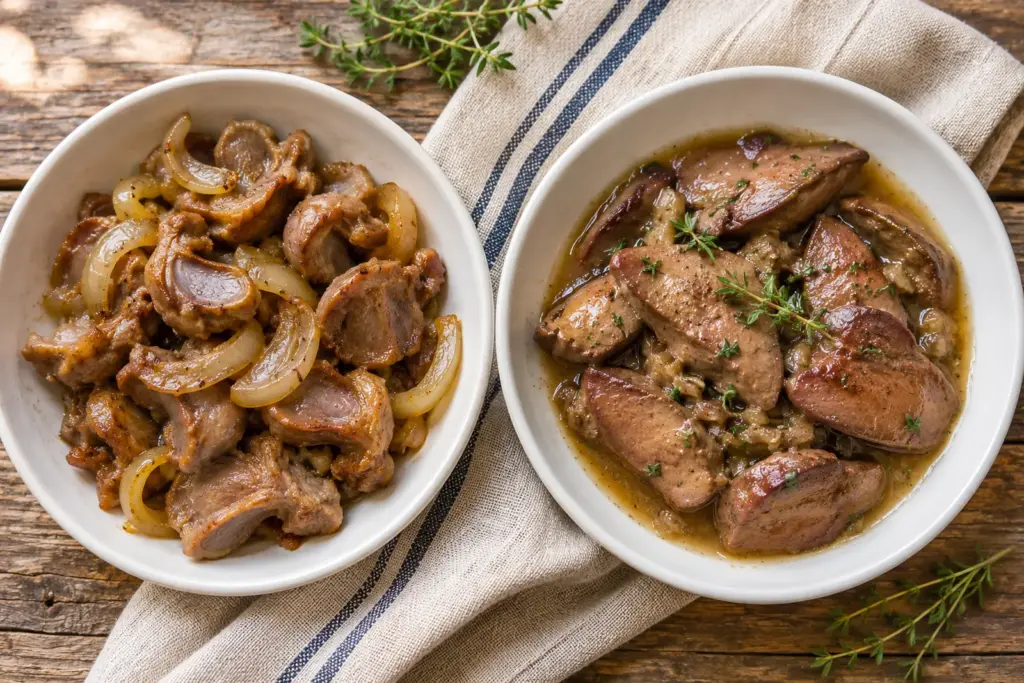
This is one of the most lopsided matchups between everyday foods. Pick gizzards for a meaty bite in stews and fried baskets, and pick liver for pâté, liver and onions and dirty rice.
1. What Is the Difference Between Chicken Gizzard and Liver?
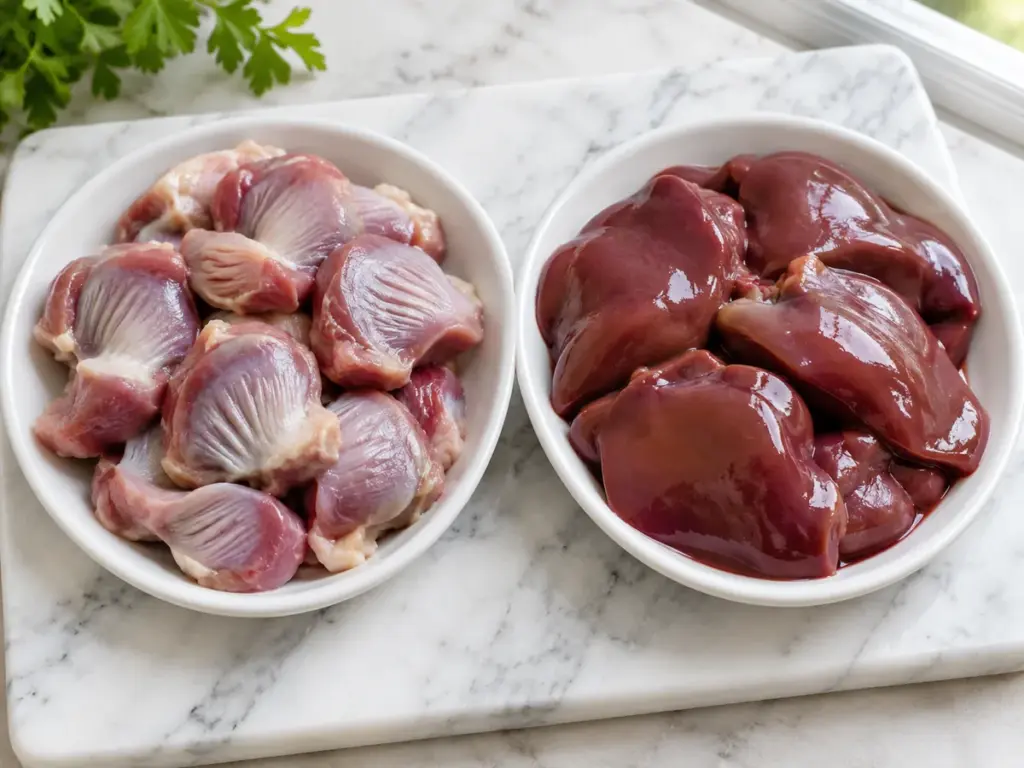
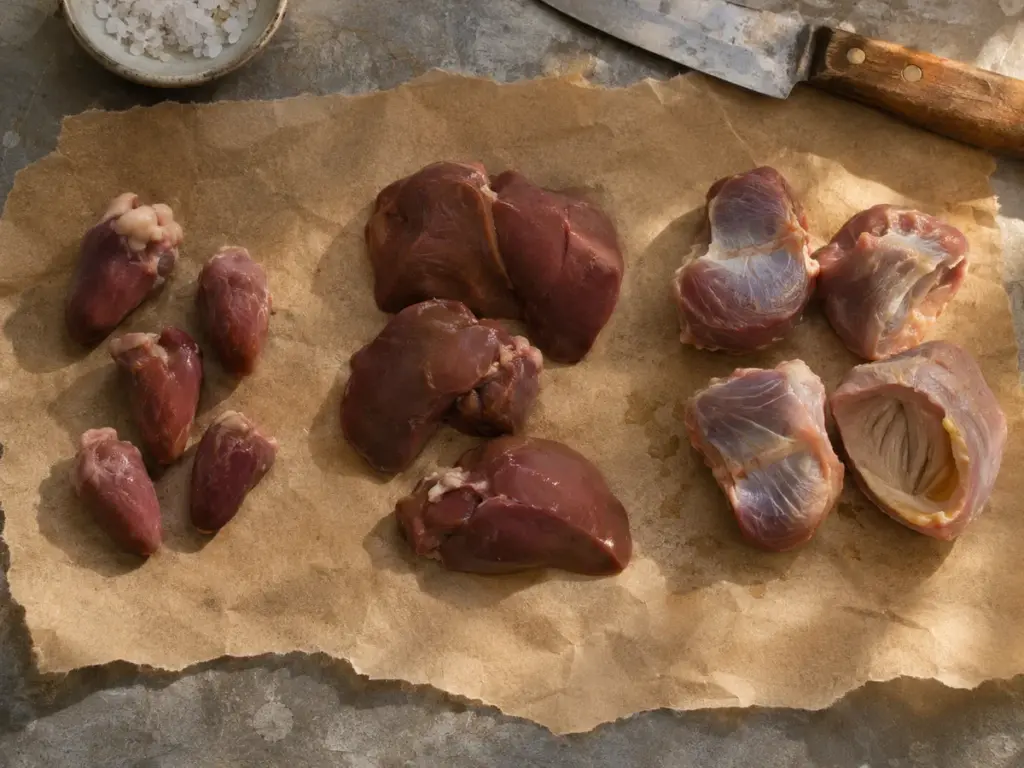
The gizzard is a chicken's muscular second stomach, where the bird grinds its food against small stones, so the meat you get is dense, lean and springy. The liver is a soft organ that filters blood and stores vitamins, which is why it is tender, rich and loaded with iron and vitamin A.
They are two different organs, so a gizzard is never a liver under another name. They do travel together in the same bag: the USDA defines giblets as the heart, liver and gizzard of a bird.
| Trait | Chicken gizzard | Chicken liver |
|---|---|---|
| What it is | Muscular stomach | Soft filtering organ |
| Texture | Dense, chewy, springy | Soft and fine-grained, grainy if overcooked |
| Flavor | Mild and meaty, close to dark chicken meat | Rich, mineral, a little bitter |
| Best cooking style | Long simmer or braise, then fry or grill | Quick pan-fry, sauté or blend into pâté |
- Time to tender: about 1 to 1½ hours of simmering for gizzards, a few minutes in a hot pan for livers.
- Classic dishes: fried gizzards and stews, against liver and onions, pâté and dirty rice.
- Safe temperature: 165°F for both.
You cook the two with opposite methods and get opposite textures, and the only rule they share is the 165°F finish.
2. How Do Gizzards and Livers Taste and Feel?
Gizzards have a mild, meaty flavor close to dark chicken meat, and Food Network calls it deeper than dark meat and a little gamey. Texture is what you are choosing: an undercooked gizzard is rubbery, and one you simmer until a knife slides in has a firm, tender chew.
Chicken liver has a rich, mineral flavor with a creamy bite when it is cooked just through. Overcooked liver turns grainy and dry, because the proteins tighten and squeeze out their moisture, and you get the chalky texture that makes many people say they dislike liver.
Liver is the stronger-tasting of the two, and its metallic, earthy edge is the part you tame with a milk soak or a pile of onions.
Both go wrong for opposite reasons: a gizzard is tough when it has not cooked long enough, and a liver is tough when it has cooked too long.
- Bite: firm and springy, never creamy
- Flavor: mild, meaty and clean
- If it is tough: it needs more simmering time, not more heat
- Bite: soft and creamy when just cooked
- Flavor: rich, mineral and a little bitter
- If it tastes harsh: trim green spots and cut the cooking time
3. How Do You Cook Each One?
How Do You Make Gizzards Tender?
Gizzards are a working muscle, so time at a gentle heat is what softens them, a method close to a slow braise or stew. Most grocery packs are cleaned already, but if yours is not, slit the gizzard, rinse out the grit and peel off the yellow lining.
- Trim. Cut away any tough silverskin and rinse off grit, then pat the gizzards dry.
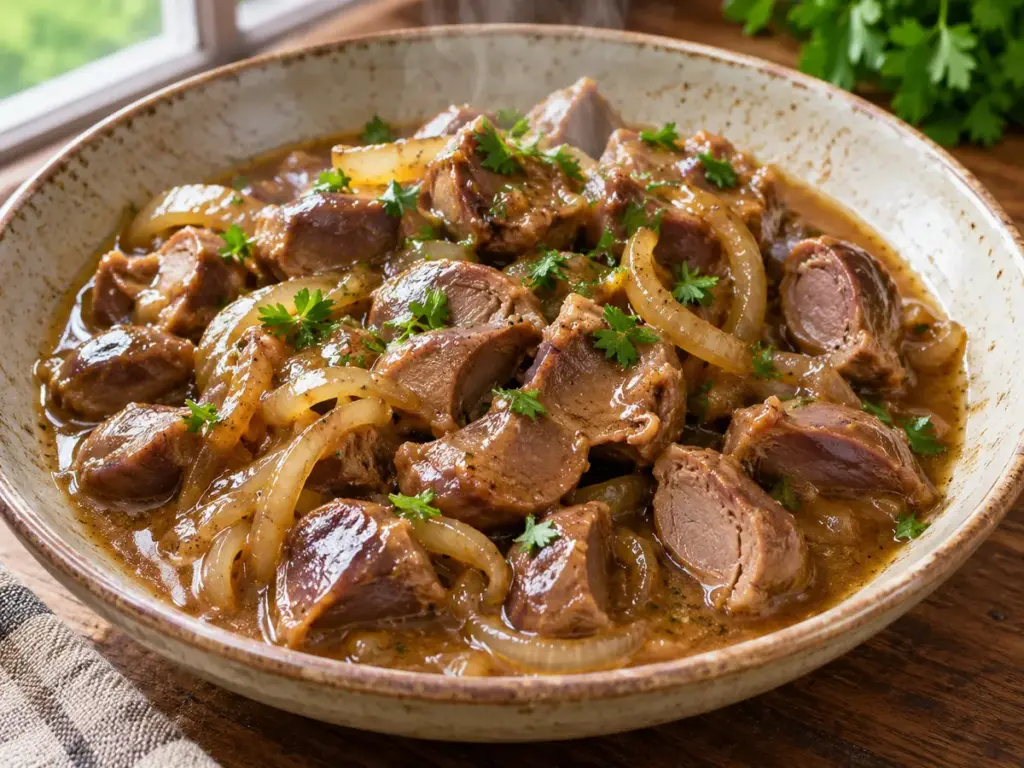
- Simmer. Cover them with water or broth, add onion, bay leaf and salt, and keep a bare simmer for 1 to 1½ hours.
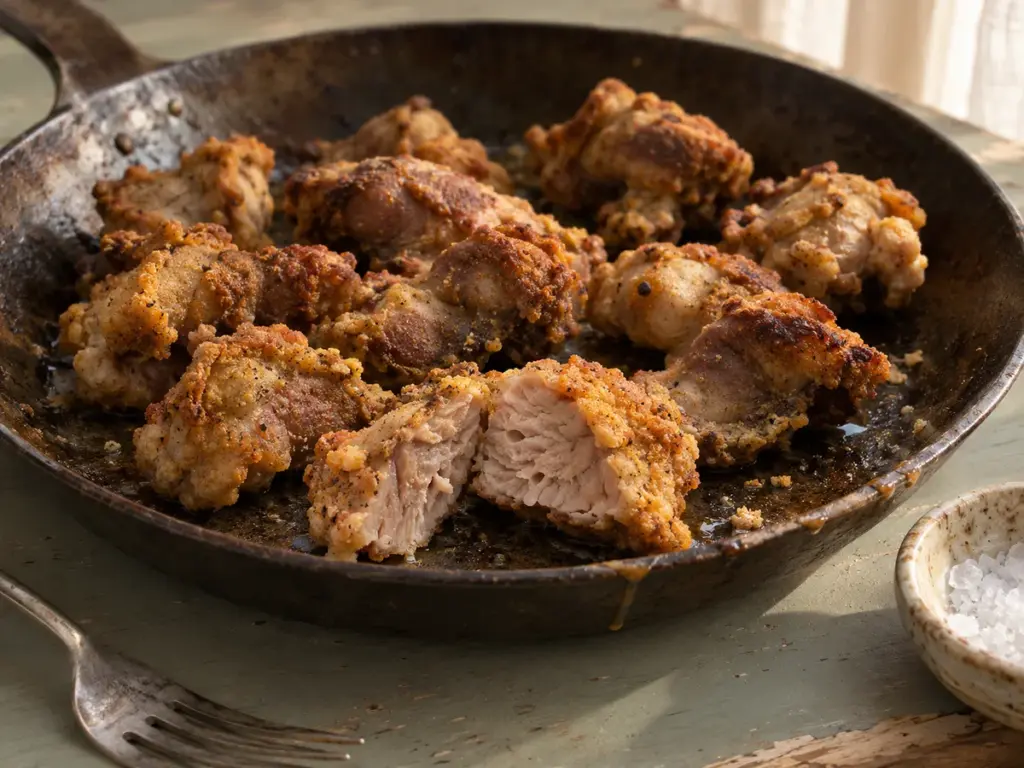
- Finish. Dredge in seasoned flour and fry, or return them to a stew or gumbo for the last 10 minutes.
Cut into one gizzard at the one-hour mark and add water if the pot runs low. After the pieces cool, pull off any gristle with your fingers or kitchen shears. Do not fry gizzards raw; they need the simmer first.
Once they are tender, gizzards go into more dishes than most cooks expect:
- Fried: coat them in seasoned flour or breading, the way you would fried chicken.
- Grilled: thread the simmered pieces onto skewers.
- Chopped: stir them into rice, hash, tacos, lasagna or a tomato sauce.
- Simmered further: keep them in a stew, soup, curry or gumbo.
How Do You Cook Chicken Livers Without Making Them Grainy?
Livers go the other direction: high heat and a short time. Pat them dry so they brown instead of steaming, and leave room between pieces so the pan does not crowd.
- Trim the connective tissue that joins the two lobes, which stays chewy if you leave it.
- Cut off green-tinged spots. They are bile, and they taste bitter.
- Soak in milk if you like. Many cooks leave them in milk for about 30 minutes to soften the metallic edge.
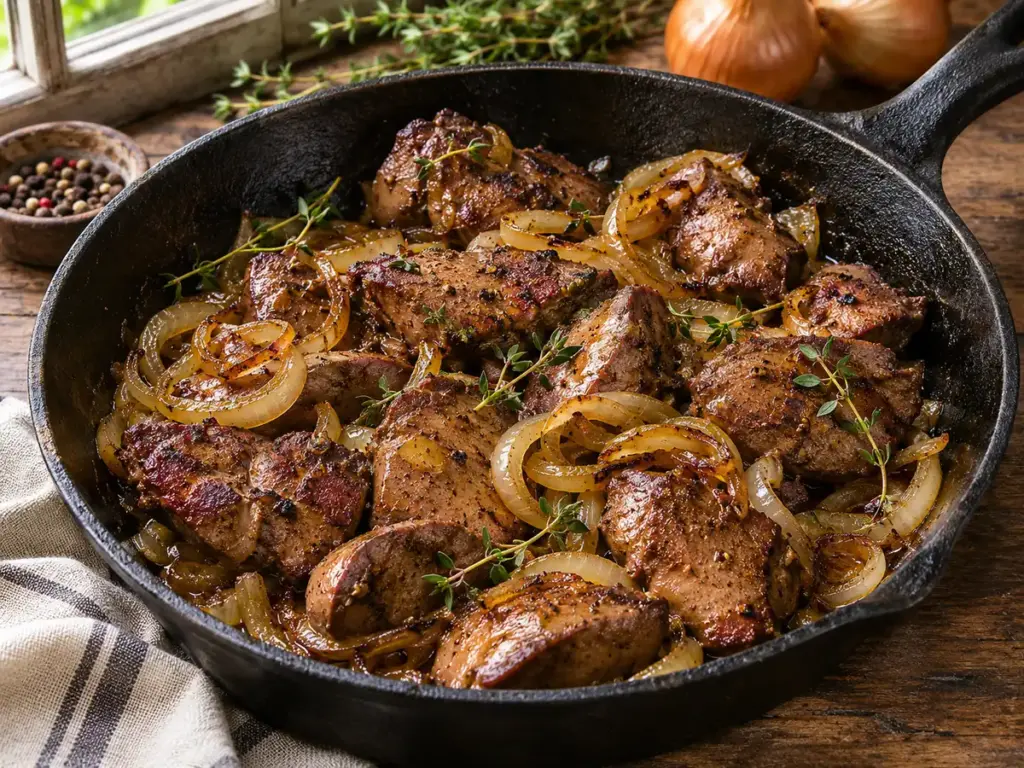
The basic method for cooking chicken livers is a hot skillet with butter or oil for about 5 to 7 minutes in total, turning once. The CDC says you cannot tell by looking, so check the thickest piece with a thermometer and pull the pan at 165°F, because the liver keeps drying the longer it cooks.
4. Which Is Healthier, Chicken Gizzard or Liver?
Both are cheap, protein-rich organ meats, but they pull you in different directions. This table compares 100 g of each, simmered, from the USDA's data for gizzard and liver:
| Per 100 g, cooked | Chicken gizzard | Chicken liver |
|---|---|---|
| Calories | 154 kcal | 167 kcal |
| Protein | 30.4 g | 24.5 g |
| Fat | 2.7 g | 6.5 g |
| Cholesterol | 370 mg | 563 mg |
| Iron | 3.2 mg | 11.6 mg |
| Vitamin A (RAE) | 0 mcg | 3,981 mcg |
| Vitamin B12 | 1.0 mcg | 16.9 mcg |
| Folate | 5 mcg | 578 mcg |
| Zinc | 4.4 mg | 4.0 mg |
The gizzard is the leaner pick, with more protein and less than half the fat of liver per 100 g. Liver is the nutrient-dense pick, with about 3.6 times the iron, nearly 17 times the vitamin B12 and over 100 times the folate. Both carry a lot of cholesterol, so if a doctor has told you to limit it, ask how often either one fits your plate.
Liver also leads on the minerals and B vitamins the table leaves out, and gizzard carries a solid share of each:
- Phosphorus: 189 mg
- Selenium: 41.1 mcg
- Niacin: 3.1 mg
- Riboflavin: 0.21 mg
- Phosphorus: 405 mg
- Selenium: 82.4 mcg
- Niacin: 11.0 mg
- Riboflavin: 2.0 mg
For iron, a 3-ounce (85 g) serving of cooked liver gives about 9.9 mg and the same serving of gizzard about 2.7 mg, so liver is the one to reach for when iron is the goal.
Protein runs the other way, and the same 3 ounces gives you about 25.8 g from gizzard and 20.8 g from liver. Neither organ is a calcium source, with 17 mg per 100 g in gizzard and 11 mg in liver.
That limit counts food and supplements together, so the risk grows when liver is a regular meal or sits on top of a vitamin A supplement. MedlinePlus says chronic vitamin A poisoning can cause liver damage, hair loss and skin changes, and that it rarely comes from food alone.
Are Fried Gizzards Healthier Than Fried Livers?
The meat itself has almost no carbohydrate: 0 g in gizzard and 0.9 g in liver per 100 g, simmered. A flour coating and the frying oil are what add carbs and fat, so a breaded basket of either one is a different food from the simmered numbers above.
If you manage diabetes or cholesterol, the portion and the breading matter more than the choice of organ. Ask your doctor or dietitian how often a fried plate fits.
5. How Do Gizzard and Liver Compare With Other Organ Meats?
A bag of chicken giblets holds the gizzard, the liver and the heart. If you cannot choose, heart sits closest to the middle on iron. These figures are per 100 g, simmered, from the USDA record for chicken heart:
- Iron: 9.0 mg, close to liver's 11.6 mg and almost three times the gizzard's 3.2 mg.
- Zinc: 7.3 mg, the highest of the three.
- Cholesterol and fat: 242 mg of cholesterol, the lowest of the three, and 7.9 g of fat, the most of the three.
- Vitamin A: 8 mcg, almost none, like the gizzard.
Chicken Liver vs Beef Liver and Duck Liver
If you are thinking of beef liver, expect more of the vitamins. Braised beef liver holds 9,442 mcg RAE of vitamin A and 70.6 mcg of B12 per 100 g, against 3,981 mcg and 16.9 mcg for chicken liver, though its iron is lower at 6.5 mg versus 11.6 mg (USDA beef liver record).
USDA lists duck liver only raw, so this table compares raw 100 g portions of the three:
| Raw, per 100 g | Gizzard | Chicken liver | Duck liver |
|---|---|---|---|
| Iron | 2.5 mg | 9.0 mg | 30.5 mg |
| Vitamin A (RAE) | 19 mcg | 3,296 mcg | 11,984 mcg |
| Vitamin B12 | 1.2 mcg | 16.6 mcg | 54.0 mcg |
The vitamin A caution grows with the liver: 100 g of beef liver holds over three times the 3,000 mcg daily limit, so it deserves a smaller portion than chicken liver.
6. Are Chicken Gizzards and Livers Safe to Eat?
Yes, when you cook both to 165°F. The FoodSafety.gov chart lists 165°F for poultry, giblets included, and the CDC repeats it for liver: cook the inside to 165°F, because you cannot judge safety by color. Neither one is safe raw, and undercooked livers have caused outbreaks.
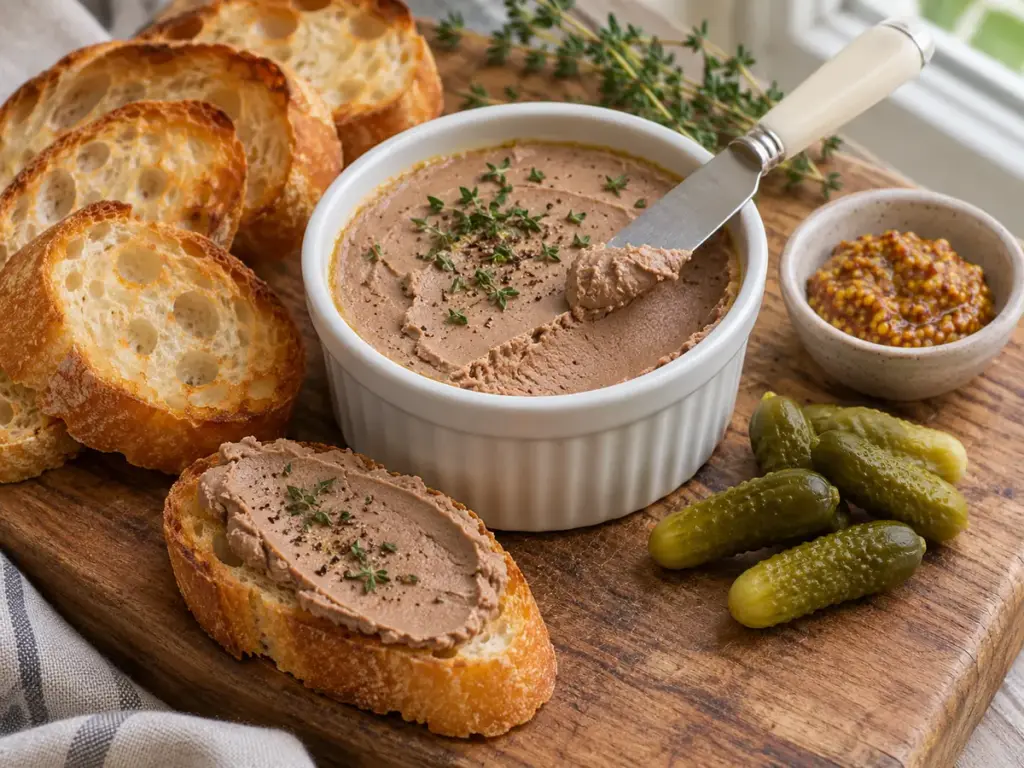
Livers are the bigger concern. In an outbreak the CDC reported, two restaurants served pâté made from undercooked chicken livers, and five of nine raw liver samples tested positive for Campylobacter jejuni. The CDC notes that pâté is often undercooked to keep its texture, and that rinsing livers does not make them safe.
That is why a chicken liver mousse or pâté has to be cooked through, even if the center would look creamier at a lower temperature. Storage times come from the USDA FoodKeeper:
- Raw giblets: 1 to 2 days in the fridge and 3 to 4 months in the freezer.
- Cooked leftovers with poultry: 3 to 4 days in the fridge and 2 to 3 months in the freezer.
7. Can You Substitute Gizzards for Livers, or the Other Way Around?
A swap by weight fails because the cooking times are so far apart, and you will notice it right away. A liver added to a long stew falls apart, and a gizzard added to pâté stays chewy.
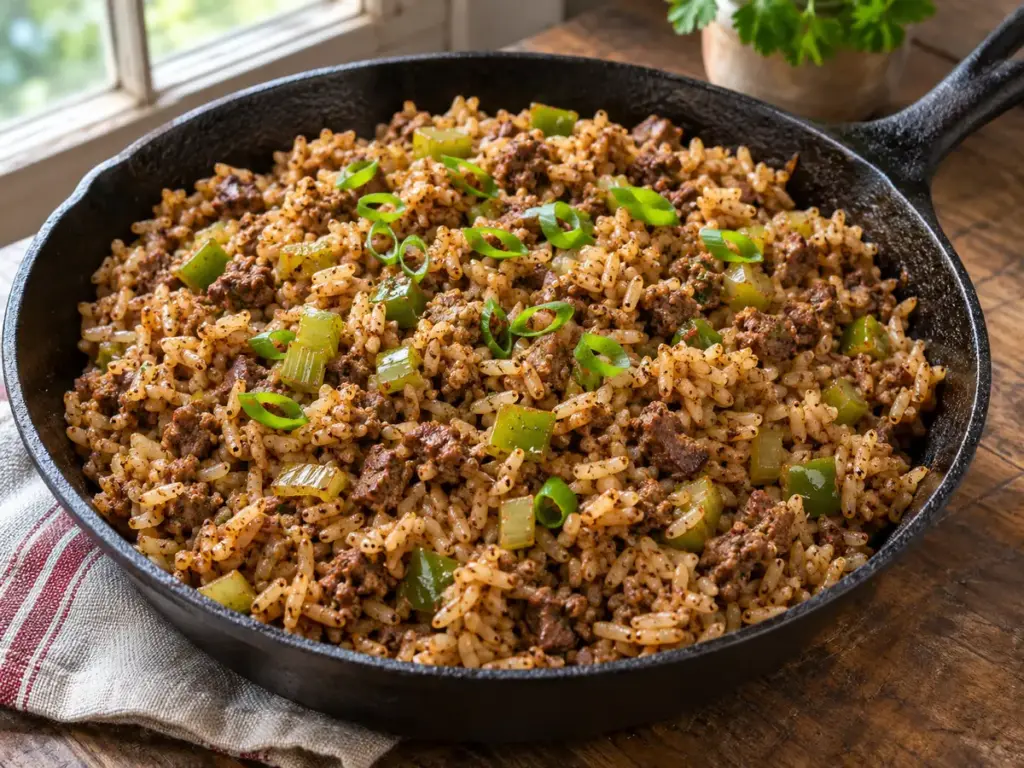
The one place both belong together is dirty rice, the Cajun dish that gets its color and savory depth from finely chopped organ meat. The two go in at different stages:
- Gizzards go in first. Simmer them until tender, then mince them fine before they hit the pan.
- Livers go in last. They only need a few minutes of cooking and break down into the rice on their own.
- Using only one works. Use extra livers for a softer, richer dish, or extra gizzards for a chewier, milder one.
For a mixed fried basket, simmer the gizzards first, then dredge both organs in seasoned flour and give the livers only a few minutes in the oil.
Giblet gravy uses the same order, and the USDA notes that giblets are traditionally simmered in water to flavor soups and gravies, so a cook can put the gizzard into that pot early and the liver in for the last few minutes. The stock then becomes the base for a brown gravy.
8. Which Should You Buy or Cook?
- You want a meaty, chewy bite for frying or a stew
- You have an hour or more for the simmer
- You want the leaner, lower-cholesterol organ meat
- You want a weeknight dinner in 10 minutes
- You are making pâté or mousse
- You want iron, B12 and folate and are not pregnant
A quick check at the meat counter saves a bad dinner:
- Livers: smooth, glossy and deep reddish-brown, with a clean smell.
- Skip any liver with a sour smell or a dull gray surface.
- Gizzards: firm and moist, and a pack labeled cleaned saves you the trimming.
Liver and onions is the classic way to serve livers, and you can plan side dishes for liver and onions around something starchy that soaks up the pan juices. Gizzards work best in the dish you already planned to simmer for an hour, such as a stew, gumbo or dirty rice.
Sources
- USDA FoodData Central, SR Legacy, FDC 171457, chicken gizzard, cooked, simmered; FDC 171456, chicken gizzard, raw
- USDA FoodData Central, SR Legacy, FDC 171061, chicken liver, cooked, simmered; FDC 171060, chicken liver, raw
- USDA FoodData Central, SR Legacy, FDC 171059, chicken heart, cooked, simmered
- USDA FoodData Central, SR Legacy, FDC 168626, beef liver, braised; FDC 174467, duck liver, raw
- NIH Office of Dietary Supplements, Vitamin A and Carotenoids, Consumer Fact Sheet
- MedlinePlus, Vitamin A
- USDA Food Safety and Inspection Service, Giblets and Food Safety (archived copy)
- FoodSafety.gov, Safe Minimum Cooking Temperatures
- CDC, Campylobacteriosis outbreak associated with chicken liver pâté, MMWR 2015
- CDC, Cooking Chicken Liver
- USDA FoodKeeper, Giblets and leftovers storage times
- Food Network, What Are Chicken Gizzards?

Food writer at GustoMeadow. Writes ingredient substitutes, food comparisons, taste guides and storage guides for home cooks.
Storage and food-safety numbers follow USDA, FDA and university extension guidance.



