
Summary of key points
The difference between a Frittata and an Omelet lies in their preparation and presentation. A frittata is an Italian egg-based dish similar to an omelet but enriched with additional ingredients such as meats, cheeses, and vegetables mixed with the eggs rather than folded inside.
It is started on the stove and then finished in the oven or under a broiler. An omelet, on the other hand, is typically cooked entirely on the stove, with the eggs folded around the filling, and served immediately.
Do you love eggs so much that you're constantly trying to find new ways of cooking the same old thing?
Then you've likely heard of a frittata and omelet - two distinct egg-based dishes with some similarities, but also quite a few differences.
If you're wondering what sets them apart, then this blog post is for you!
We'll take a look at each dish in detail exploring their composition, cooking techniques and origins before helping draw conclusions about which one is more preferable.
So buckle up readers; it's time for an egg-cellent cooking experience!

What is a Frittata?

A frittata is an Italian dish that resembles an omelet and is cooked on the stovetop.
It is typically filled with various ingredients such as vegetables, cheese, meat, and herbs.
While it shares some similarities with an omelet, there are distinct differences in the way it is prepared and served.
A frittata has a fluffy texture throughout due to being cooked without being folded over like an omelet.
It can also be sliced into wedges and served warm or cold.
When making a frittata, the ingredients are mixed directly into the egg mixture instead of being folded inside like an omelet.
The cooking process differs from that of an omelet because after setting the bottom layer of eggs on the stovetop, it is finished off under a broiler or in an oven to cook through completely.
In summary, a frittata is similar to an omelet in many ways but is unique due to its lack of folding and finishing by broiling or baking.
Frittatas often finish with a sprinkle of zest or herbs for brightness - what goes with lemon in desserts suggestions for bright pairings offers ideas for complementary flavors.
What is an Omelet?
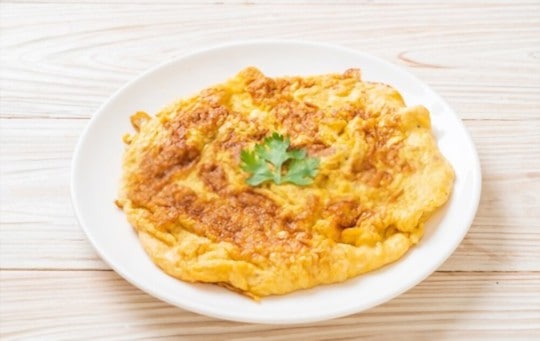
An omelet is a classic breakfast dish that is made by whisking eggs until light and fluffy, pouring them into a hot skillet, cooking until set, adding fillings of choice and folding over.
It's a simple dish that can be customized to suit any taste bud.
As you can see from the table above, an omelet is cooked eggs with fillings.
The process involves whisking eggs and cooking them in hot oil or butter until they set.
This method creates a firm base that holds the filling inside when folded.
When making an omelet, you can add fillings of your choice such as vegetables, cheese, ham or even smoked salmon to enhance its flavor.
The filling options are endless depending on personal preferences.
Overall, omelets are easy-to-make and highly customizable breakfast dishes that provide plenty of nutritional benefits.
They are packed with proteins and nutrients necessary for overall body health.
Folded omelets can be served alongside dips and chips for brunch spreads - what to eat with guacamole pairing ideas for brunch lists combos that work well.
Differences Between Frittata and Omelet

The main difference between a frittata and an omelet is that a frittata is usually thicker and cooked entirely in the pan, whereas an omelet is more thin and often folded with fillings.
With a frittata, you can use any vegetables or meats you like, mix them with beaten eggs, then bake in the oven until set.
The result is a thick, satisfying dish you can serve for breakfast, lunch or dinner - frittata side dish suggestions for any meal that pair well with wedges.
Frittatas also have less of an emphasis on presentation.
Omelets are typically thin layers of eggs that surround filling like cheeses, meats, or vegetables before getting folded over in half to create an oblong shape often associated with breakfast menu items.
Because they're thinner than frittatas and come together more quickly, omelets are often featured in recipes and brunch menus as a popular choice.
In general, the main difference between these two egg dishes is their thickness, cooking method (bake vs.
Fry), and filling style (mixed versus layered).
Your preference will likely depend on which flavors and textures you're feeling for the day.
Cooking Technique
There are some key differences.
While both dishes involve eggs as the main ingredient, the way in which they are cooked varies slightly.
As you can see from the table, one of the main differences between frittatas and omelets is the way in which they are cooked.
Frittatas are typically cooked on the stovetop before being finished in the oven, while omelets are cooked entirely on the stovetop.
This difference in cooking technique can result in different textures and flavors for each dish.
Because frittatas spend time in both the oven and on the stove, they can become crispy on top while remaining tender and fluffy inside.
On the other hand, omelets cook quickly on high heat which results in a flatter appearance with a slightly firmer texture.
Understanding these different cooking techniques can help you choose which dish to make based on your preferences and available time constraints.
Next up, we'll explore another key aspect of these egg-based dishes - their texture and thickness.
Finishing eggs under a broiler can pair differently with pan sauces - white cooking wine vs white wine vinegar comparison for finishing explains how each affects flavor.
Texture and Thickness
Texture and thickness play an important role in the difference between a frittata and an omelet.
While both dishes are made from eggs, they have distinct textures that set them apart.
A frittata is thicker and has a denser texture compared to an omelet, which is lighter and airier.
To better understand the difference in texture and thickness, let's compare some measurements.
A frittata typically has a thickness of around 1-2 inches, compared to an omelet which is usually less than half an inch thick.
This makes the frittata a heartier meal, as it is more filling due to its density.
The omelet is lighter and fluffier, making it suitable for those who prefer a lighter breakfast.
Another factor that contributes to the texture difference between a frittata and an omelet is the cooking technique.
A frittata is cooked on low heat for a longer period of time, allowing it to cook through evenly while retaining its thickness.
In contrast, an omelet is quickly cooked over high heat to create a light and fluffy texture.
The different textures of a frittata and an omelet can be easily distinguished by their appearance.
A frittata has visible layers due to its thickness while an omelet appears smoother with minimal layers.
For contrast in texture, serve a dense frittata with a creamy spread - vegan hummus recipes for creamy texture contrasts that complement hearty eggs.
Fillings and Ingredients

The possibilities for both frittatas and omelets are endless.
Both dishes are versatile and can be customized to suit your taste preferences.
Let's take a closer look at the different options available for each.
It's important to note that these are just a few examples of potential fillings and ingredients - you can get as creative as you'd like with either dish.
The main difference between the two is that frittatas tend to have heartier fillings, while omelets focus more on delicate ingredients.
When making a frittata, you can use whatever vegetables or meat you have on hand - it's a great way to use up leftovers in your fridge.
For omelets, some popular combinations include ham and cheese, spinach and feta cheese, or mushrooms and onions with herbs.
Regardless of which dish you choose to make, picking high-quality ingredients will always result in the best possible outcome.
Opt for fresh vegetables and meats from your local farmers' market if possible - not only will they taste better but they're also better for you.
In the end, choosing your fillings will all depend on personal preference - there isn't necessarily one option that's better than another.
Experiment with different combinations and find what works best for you.
Serving and Presentation
Frittatas and Omelets are quite different.
While both dishes are typically served warm, they have different plating traditions.
Also, the texture of these dishes plays a huge role in their presentation style.
Frittatas, being thicker and denser, are typically served as slices on a plate along with some garnish like herbs or spices.
You can slice the Frittata in small sizes for individual portions or larger ones depending on the occasion.
The slices might not hold their shape as well as Omelets since they are cooked in one go rather than being folded over during cooking.
Omelets, on the other hand, are traditionally folded over before serving which makes them look more appetizing in terms of presentation.
They're easier to cook in uniform shapes that don't break and their consistency works well for folding over fillings like vegetables or cheese.
Once cooked thoroughly they're usually lifted off the pan with a spatula flipped onto plates- then there's usually an array of toppings that people can choose from to finish it off - cheese, herbs, etc.
In summary, displaying Frittatas should lead to nicely sliced pieces served alongside garnishing elements while Omelets lend themselves well when nicely folded around fillings such as cheese or veggies.
Popular Frittata and Omelet Variations

Both frittatas and omelets are very adaptable dishes.
You can add almost any ingredient or flavor you like.
Here are some of the most popular variations of both frittatas and omelets.
For frittatas, spinach and mushroom is a classic combination that makes a great vegetarian option.
Other delicious add-ins include bacon, ham, sausage or chorizo, onions, tomatoes, goat cheese or feta cheese.
You can even make a dessert frittata with berries and whipped cream.
For omelets, the possibilities are endless.
A Western omelet with cooked ham, green peppers and onions is a filling breakfast favorite, while a more sophisticated choice could be an herb filled one with dill or parsley with smoked salmon or caviar as topping.
For something sweeter try adding Nutella and bananas for dessert.
Note: *These options might not be traditional but they are worth trying out.
Both frittatas and omelettes can be customized endlessly to suit your taste so feel free to experiment with different flavors.
Which One is Healthier?

Let's compare the nutritional values of frittatas and omelets.
There isn't much difference between the two in terms of calories, fat, and carbohydrates per serving size.
However, omelets contain slightly more protein and cholesterol than frittatas.
It ultimately depends on your dietary goals and requirements.
If you need to consume more protein, an omelet may be the better choice for you.
However, if you are trying to watch your cholesterol intake or prefer a lower-fat option, a frittata may suit your needs better.
Both dishes can be made with a variety of ingredients that affect their nutritional value, such as vegetables, meats, cheese, and oils used in cooking.
The decision of whether to choose a frittata or an omelet shouldn't solely rely on their nutritional values but should also consider personal preferences and dietary needs.
Both dishes offer versatility in their ingredients and cooking methods, making them excellent options for any meal of the day.
Both dishes can fit into balanced meals; pair with simple mains for a full plate - one-pot pasta dinners for easy balanced meals that work well alongside egg dishes.
Frittata vs Omelet: Cooking and Texture Differences
A comparison between frittatas and omelets has shown that both are healthy options for breakfast or brunch.
Both dishes contain high levels of proteins and nutrients, which can provide the required energy to sustain a person throughout the day.
As you can see, frittatas tend to be thicker and incorporate more vegetables and meats than omelets.
Frittatas are also cooked slowly in ovens or stovetops, whereas omelets are cooked quickly on a stovetop.
Also, frittatas can be served hot or cold while omelets are always served hot.
Frittatas pair well with simple sides for brunch or dinner. frittata side dish suggestions for any meal lists complementary options. one-pot pasta dinners for easy balanced meals provides mains that work alongside either egg dish.
Frequently Asked Questions
The difference between a Frittata and an Omelet lies in their preparation and presentation. They share some similarities but each has qualities that make it better suited for certain recipes.
It depends on the dish. Frittata and Omelet share some overlap, but each shines in different preparations.
Swapping works best in forgiving recipes like soups or stews.
Pricing varies by brand and region, but one is typically more accessible at everyday price points. The other may cost more due to specialization or limited supply.
Is there a best time to use each one?
One shines in applications requiring subtlety and background support.
The other is better when it is meant to be a center.
Matching the right one to its role makes a noticeable difference.