
Ghee and olive oil sit in our kitchens like the kings of healthy fats.
We're here to break down the differences.
Ever wonder why mom insists on using ghee for her famous pancakes? Or why your fitness-obsessed friend drizzles everything in olive oil?
It's not just a random choice. There's science and tradition behind it.
Our families swear by ghee for its rich, nutty flavor.
In our circle, olive oil is the go-to for dressings and dips.
The debate between the two is as old as time. Yet, here we are, trying to pick a side.
With their unique benefits, picking one feels like choosing a favorite child. Spoiler: we love both.
What is Ghee?
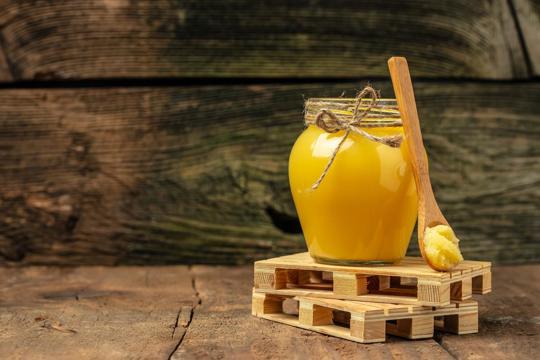
Ghee, a beloved ingredient of Indian cuisine, is a type of clarified butter.
Prepared by simmering butter until the water has evaporated and the milk solids have separated, it's a flavorful substance used in cooking, baking, and even as a bread spread.
Ghee has a high smoke point, meaning it won't break down or burn at high temperatures, making it ideal for frying and sautéing.
Plus, its nutty aroma and taste add an extra zing to any dish.
Unlike butter or oil, ghee contains no lactose or casein, making it suitable for those with dietary restrictions.
It also delivers vitamins A, D, E, and K2, as well as butyric acid, which has anti-inflammatory properties.
According to Ayurvedic medicine, ghee has medicinal properties too, such as improving digestion, boosting immunity, and promoting healthy skin and hair.
Ghee offers a unique combination of culinary and health benefits.
It's the perfect way to add flavor and nourishment to any dish.
What is Olive Oil?

Olive oil - a staple of Mediterranean cuisine - is derived from the fruit of the olive tree.
It's well-known for its health benefits and delicious taste.
It's rich in monounsaturated fats and antioxidants, making it an excellent choice for heart-healthy cooking.
And, it's versatile.
Perfect for sautéing veggies or drizzling over salads.
Its unique flavor and aroma improves dishes, making it a favorite among chefs worldwide.
When selecting olive oil, it's essential to look for Extra Virgin Olive Oil (EVOO) - and understanding regional differences helps too: Greek vs Italian olive oil breakdown.
This type has no chemical processing or excessive heat.
Plus, it's lower in acidity and keeps more nutrients than other variants.
To ensure quality, EVOO goes through rigorous testing before being bottled and sold.
Both does olive oil give a unique flavor but also offers many health benefits.
Studies show its monounsaturated fats help reduce inflammation and lower the risk of heart disease.
Also, its high content of antioxidants protects cells from free radical damage.
Olive oil also comes in many varieties.
Different regions produce distinct flavors due to variances in climate, soil composition, and olive tree cultivars.
For instance, Italian oils tend to be fruity and mild, while Greek oils are usually grassy and strong.
Differences Between Ghee and Olive Oil

Ghee and olive oil are two cooking fats, but they are distinct - compare types and uses like walnut oil vs olive oil comparison to see how flavors and nutrition differ.
Production Process
Ghee and olive oil production processes differ.
Ghee is made by simmering butter, whereas olive oil is obtained by pressing olives.
These two have distinct flavors and nutrient profiles.
Ghee offers a rich, nutty taste and high smoke point, while olive oil has different flavors and health benefits.
Ghee production is a careful process.
Butter is heated and the water content evaporates.
Milk solids settle at the bottom, resulting in clarified butter (ghee), with a nutty flavor.
Ghee's high smoke point allows it to withstand high cooking temperatures.
Olive oil takes center stage with its unique extraction method: pressing olives.
Extra virgin olive oil has the highest quality flavor derived solely from olives.
Its low smoke point makes it suitable for drizzling over salads or dipping bread.
Ghee has healthy fats, vitamin A, D, E, and K2 due to its dairy origins.
It aids digestion and provides nourishment to bone health.
Olive oil includes monounsaturated fats and antioxidants, which reduce inflammation.
It also promotes brain health and protects against chronic diseases.
Ghee and olive oil offer unique flavors and nutrition.
Ghee works best for high-temp cooking.
Olive oil complements salads and cold dishes, while nourishing the body.
The choice depends on personal preference and intended culinary applications.
Composition and Nutritional Profile
Ghee, also known as clarified butter, and olive oil differ in many ways.
Ghee is made from butter and contains saturated fats, vitamins A, E, and K.
On the contrary, olive oil is a vegetable oil with monounsaturated fats and antioxidants.
Calorie-wise, ghee has more due to its higher fat content.
But the types of fats are different: ghee has more saturated fat, which may increase LDL cholesterol if consumed too much.
Olive oil has monounsaturated fats that are good for heart health.
Ghee's flavor is nutty and can enhance dishes.
Olive oil is more neutral and works with many cuisines.
Ghee also has a higher smoke point, so it's suitable for high-heat cooking.
To sum up, the choice between ghee and olive oil depends on dietary needs and cooking requirements.
Consider them both to find the best fit for your lifestyle.
Flavor and Aroma
Ghee and olive oil each possess a unique flavor and aroma.
Ghee has a rich, buttery taste with a nutty nuance.
Olive oil has a smooth, fruity essence that is both refreshing and fragrant - for a breakdown of how aroma differs from added ingredients, see extract vs flavor differences explained.
These flavors add depth to dishes.
Ghee, derived from clarified butter, delivers a caramelized flavor.
Its aroma captivates the senses and lingers on the palate.
Olive oil gives a lightness to recipes.
Its fruity undertones improve the natural flavors of foods like salads and sautés.
Ghee works well with traditional Indian cuisine.
It adds an unmistakable essence to curries and daals.
Olive oil is a staple in Mediterranean cooking.
Its versatility enriches flavors across different dishes.
Both ghee and olive oil have remarkable flavors.
Knowing the differences helps chefs and home cooks choose the right oil for their dishes.
Ghee brings richness, while olive oil brings a light fruitiness.
Each choice promises an exciting journey through aroma and taste.
Smoke Point and Cooking Applications
Ghee and olive oil both have their own smoke points.
Ghee has a higher smoke point, making it perfect for high heat cooking - for how different smoke flavors behave at heat, see hickory vs mesquite smoke comparison.
It's ideal for Indian dishes like dal and biryani.
Olive oil is better for Mediterranean flavors, like salads and pasta.
But here's a cool fact: ghee can be used in baking instead of butter, since it has a high smoke point and unique flavor.
So, when cooking, knowing when to use ghee or olive oil is important.
This will help you create amazing dishes with Indian spices or Mediterranean flair.
Similarities Between Ghee and Olive Oil

Ghee and olive oil are quite different.
But, they have some things in common.
One is that they both are good for cooking.
They contain healthy fats.
They can be used instead of butter or other oils.
Also, they have high smoke points.
This makes them great for high-heat cooking, such as frying or sautéing.
Plus, they both contain antioxidants and important nutrients.
These help with heart health.
Lastly, they are versatile.
Ghee and olive oil can be used in many dishes, from savory to sweet.
Ghee is made from butter and has a nutty flavor.
Olive oil comes from olives and has a mild taste - regional styles can vary widely, as in Italian vs Spanish olive oil comparison.
Even so, ghee and olive oil are both great options for healthy cooking.
How to Use Ghee or Olive Oil in Cooking?
Ghee and olive oil are commonly used in cooking for their special flavors and health benefits.
Here's a guide on how to use them best.
First, decide on the cooking method:
- For high-heat dishes, like frying or sautéing, go for ghee. It has a higher smoke point than olive oil.
- Instead, opt for olive oil when preparing low-to-medium heat recipes like roasting or baking.
Next, think about flavor:
- Ghee adds a rich, buttery taste, which works great in Indian dishes or when you want a strong flavor.
- Olive oil has a milder, fruity flavor that complements Mediterranean cuisine and salads.
Ghee can also be used for its texture:
- It's solid at room temperature and melts quickly when heated, making it easy to spread or coat veg.
Meanwhile, olive oil is great for dressings and marinades:
- Drizzle it over salads or turn it into dressings to bring out the flavors of fresh greens.
- Marinade meats and vegetables with olive oil to tenderize and add subtle flavors.
Finally, experiment with combinations:
- You can enjoy both oils in certain recipes. For example, sauté onions in ghee, then add olive oil before adding other ingredients.
Remember, consider the smoke point, flavor, texture and ability to enhance dishes when using these oils.
Understanding their characteristics will help you make delicious dishes with ease.
Also, while ghee should be eaten in moderation due to its saturated fats, olive oil has heart-healthy monounsaturated fats.
Both have unique qualities - so embrace the diversity and explore new tastes.
Instead, opt for olive oil when preparing low-to-medium heat recipes like roasting or baking - for choosing intensity, see robust vs smooth olive oil guide.
Health Benefits of Ghee and Olive Oil
Ghee and Olive Oil have many health benefits.
- Ghee, a clarified butter from India, contains vitamins A, D, E, and K.
- Olive oil is full of monounsaturated fat, which can help reduce the risk of heart disease.
- Ghee has anti-inflammatory properties that may help gut health.
- Olive oil has antioxidants that can protect against oxidative stress.
- Ghee has MCTs, which provide energy and promote brain health.
- Olive oil can improve blood sugar control and insulin sensitivity.
Ghee and Olive Oil also have unique qualities.
Ghee has a higher smoke point, great for cooking at high temperatures.
Olive oil has a great flavor that adds richness to dishes.
Olive oil is full of monounsaturated fat, which can help reduce the risk of heart disease - canola vs sunflower oil comparison shows how other oils stack up.
Cooking with Ghee vs Olive Oil
Ghee vs olive oil - the differences are vast.
Ghee is clarified butter, olive oil is from olives.
Flavor-wise, ghee has a nutty taste, while olive oil is mild and fruity.
Nutritional content is different too - ghee is high in saturated fat, olive oil in monounsaturated fat.
Cooking-wise, ghee has a higher smoke point - perfect for frying and sautéing.
Olive oil has a lower smoke point - great for baking and stir-frying.
Ghee is common in Indian cuisine - it adds flavor and aroma.
Olive oil is a staple in Mediterranean cuisine - use it in dressings, marinades and dips.
Choice between ghee and olive oil depends on personal preference and dietary needs.
Some may prefer the rich flavor of ghee, others the milder taste of olive oil.
Health-conscious individuals may go with olive oil due to its higher monounsaturated fat content.
Frequently Asked Questions
We're here to break down the differences. They share some similarities but each has qualities that make it better suited for certain recipes.
They can stand in for each other in a pinch. Ghee and Olive Oil overlap in some uses, but the flavor or texture will shift.
Adjust quantities to taste.
Shelf life differs based on processing and packaging. One often keeps longer unopened, while the other may need refrigeration or faster use after opening.
Which one is more forgiving in recipes?
One tends to perform more consistently across a range of cooking methods, making it the safer choice when experimenting.
The other delivers stronger results in specific applications.
Different kitchen tools and finishing oils change how fats perform. oil mister vs cooking spray options explains practical differences for everyday use. white truffle vs black truffle differences outlines how finishing oils impact flavor profiles.