
Smoked turkey wings or legs are the closest swap for a ham hock, and smoked bacon or smoked sausage supplies the smoke.
- A pair of wings or one leg stands in for one hock.
- Bacon and smoked sausage add smoke, while salt pork and guanciale add fat but no smoke.
- Smoked paprika covers a vegetarian pot.

A ham hock gives a pot smoke, salt and body. If smoke and salt are all your pot needs, most everyday ingredient stand-ins on this list cover them, but only a few bring the body back, because it comes from the hock's skin, tendon and bone.
What Does a Ham Hock Do in a Pot?
Crowd Cow describes a ham hock as bone, thick skin, tendon and collagen wrapped around a modest amount of dark muscle, so an average one gives you only a few ounces of meat. Most hocks sold in US stores are also brined and smoked.
Fresh hocks are sold too, but a fresh pork hock has no salt or smoke, so when a recipe asks for a ham hock, you want the smoked kind.
A smoked hock gives a pot three things:
- Smoke and salt: the hock gives up a lot of its salt to the liquid as it simmers.
- Body: hours at a simmer turn the collagen in the skin and tendon into gelatin, according to Crowd Cow, and America's Test Kitchen says that collagen thickens the cooking liquid.
- A little meat: you pick the dark, smoky meat off the bone and stir it back in.
A swap without skin, tendon or bone leaves the broth thinner. Crowd Cow says bacon and salt pork give very little collagen, and bouillon cubes and liquid smoke only flavor the water without thickening it.
7 Best Substitutes for Ham Hock
Each amount below is a starting point for one hock in a pot of beans, greens or soup. The Smoke and Body columns are a judgment from the parts each swap has (skin, tendon, bone), since no source publishes those figures.
| Substitute | Smoke | Body | Start with |
|---|---|---|---|
| Smoked turkey wing or leg | Yes | Some | 1 leg or 2 wings |
| Smoked bacon | Yes | Little | 4 oz |
| Smoked sausage | Yes | Little | 4 to 8 oz |
| Cubed ham | Varies | Little | 4 oz |
| Salt pork | No | Little | 2 oz |
| Guanciale | No | Little | 2 oz |
| Smoked paprika | Yes | None | 2 tsp |
1. Smoked Turkey Wings or Legs
If you can find smoked turkey wings or legs, they are the first swap to reach for, because they bring smoke along with skin, fat and tendon. Tasting Table suggests a pair of wings or one leg for one hock, added where the hock would go so that they simmer with the pot.
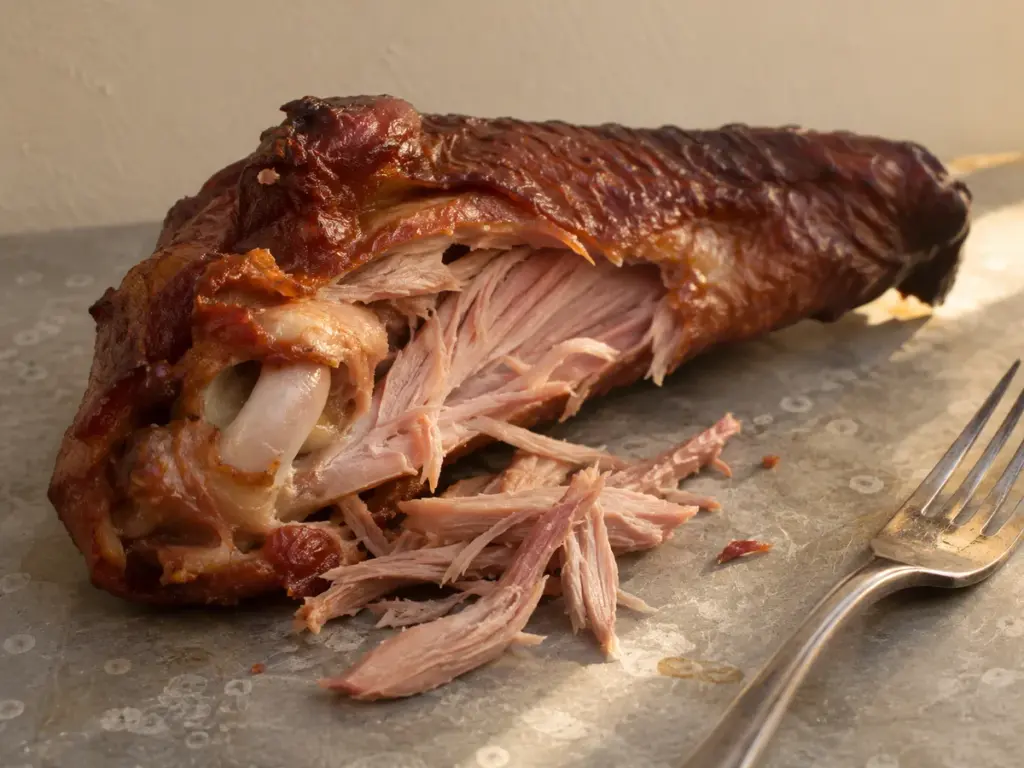
Mashed describes turkey legs as full of skin, fat and tendon, so turkey keeps some of the body a hock gives the broth. It has less fat than a hock, though, and Tasting Table stirs in a little olive oil or butter to make up the richness.
Once the meat is tender, you pull it off the bone and stir it back in. Food Network and Saveur both publish collards cooked with smoked turkey wings, and if you are short on the greens as well, there are good swaps for collard greens.
2. Smoked Bacon
Most kitchens already have smoked bacon, and Tasting Table points out that hocks and bacon taste alike because both are salt-cured and smoked. Mashed says to pick smoked bacon over merely salted bacon, since smoke is the main thing a hock adds.
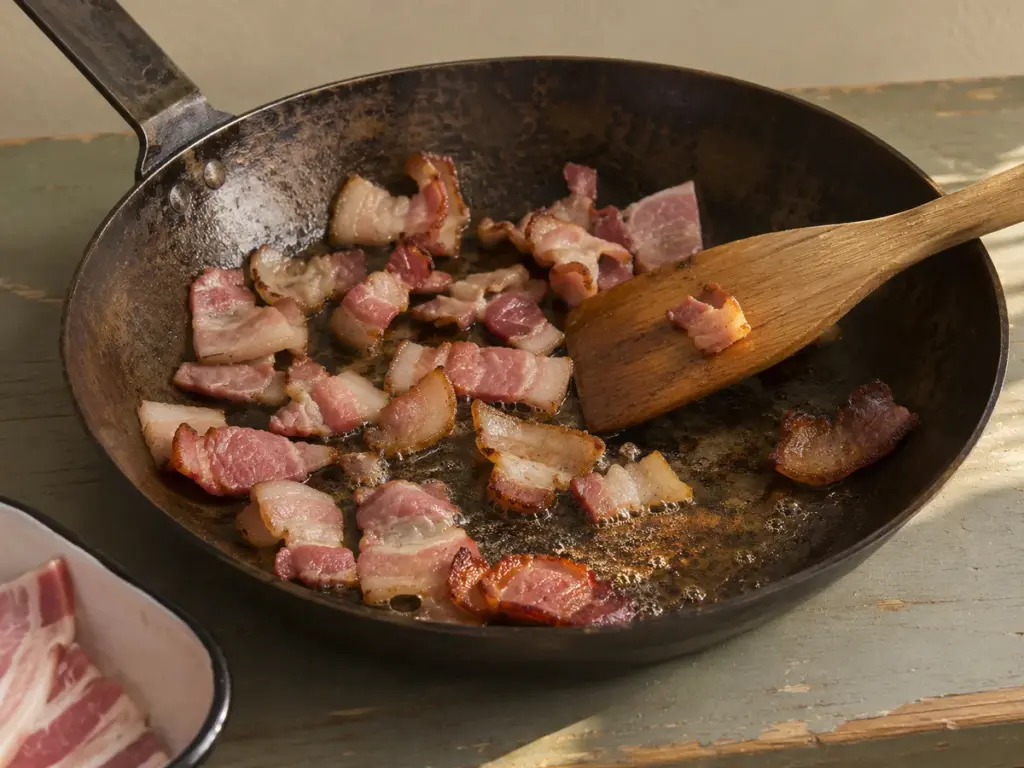
For one hock, about 4 ounces of bacon cut into thumb-wide pieces is a good start, and if it goes into the pot first, you can soften the onions in its rendered fat.
For a ham and bean soup in particular, Tasting Table names bacon or pancetta as the best stand-in when you cannot get a hock.
3. Smoked Sausage
In a pot of beans or peas, smoked sausage brings smoke, salt and fat in firm slices that stay whole through a long simmer. Food Network's smoked sausage and black-eyed peas recipe cooks 1 pound of sausage for about 5 minutes to render its fat, then adds onion, 1 pound of peas and 8 cups of stock and simmers for 1½ hours.
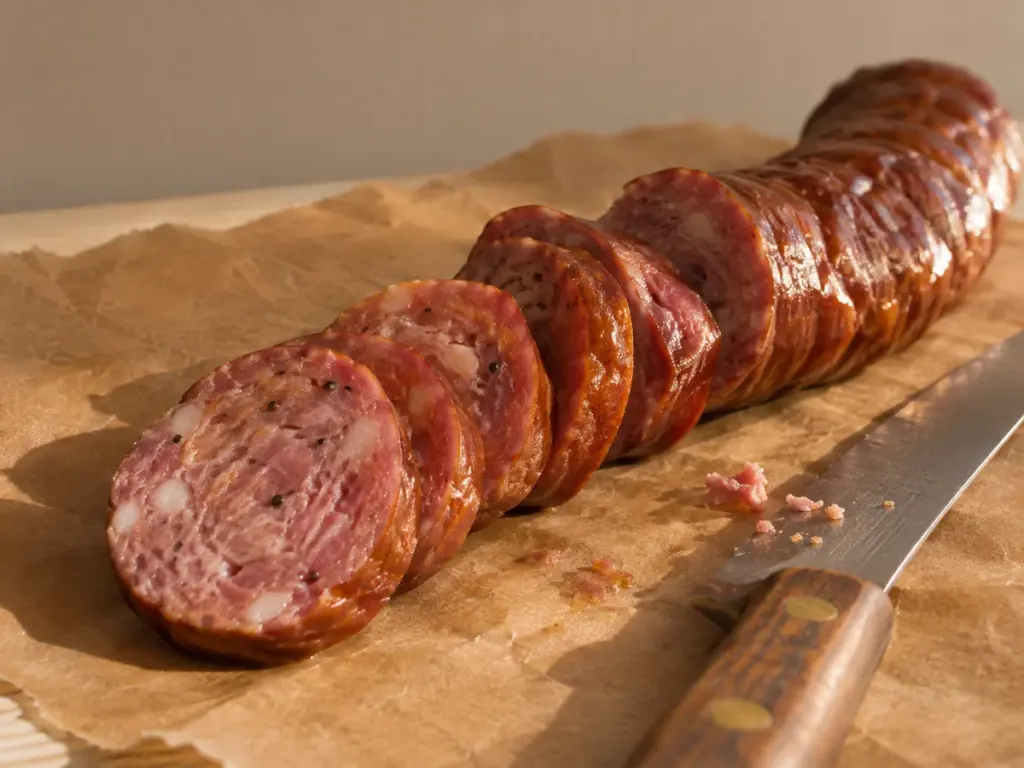
That recipe makes the sausage a main ingredient, so when it only stands in for one hock, 4 to 8 ounces is a reasonable start, and the package tells you whether it is already fully cooked.
Food Network serves its pot with cornbread muffins, and the same peas go with plenty of other sides that suit black-eyed peas.
4. Cubed Ham
Cubed ham gives you ham flavor and meat but almost no body, since it is boneless meat with no skin or tendon. Tasting Table says other ham may bring some of the flavor but not the comforting richness of a hock.
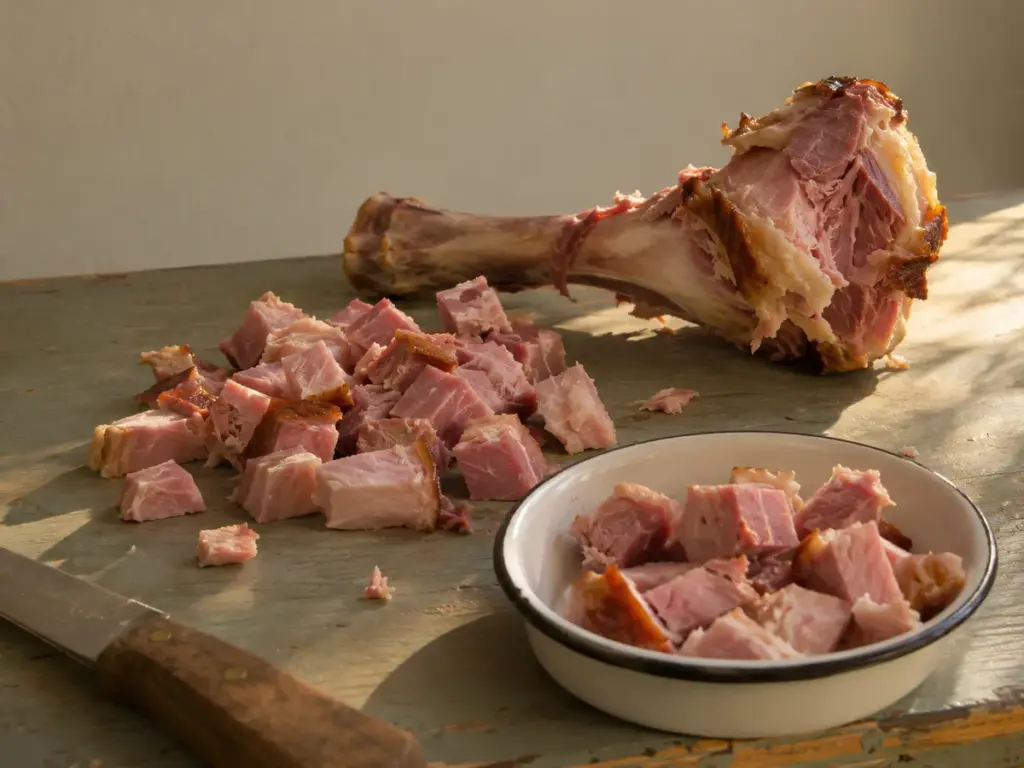
Cured ham is not always smoked, so you want to see "smoked" on the label, and about 4 ounces is a good start. In soup or beans where you mostly want salty, ham-like meat, cubed ham does the job, and a few strips of bacon beside it add the smoke it may lack.
5. Salt Pork
Salt pork is a salt-cured, fatty cut, and Tasting Table notes that it is not smoked like bacon. The same article recommends it for baked beans, split pea soup and Southern collard greens, which are the pots you would usually make with a hock.
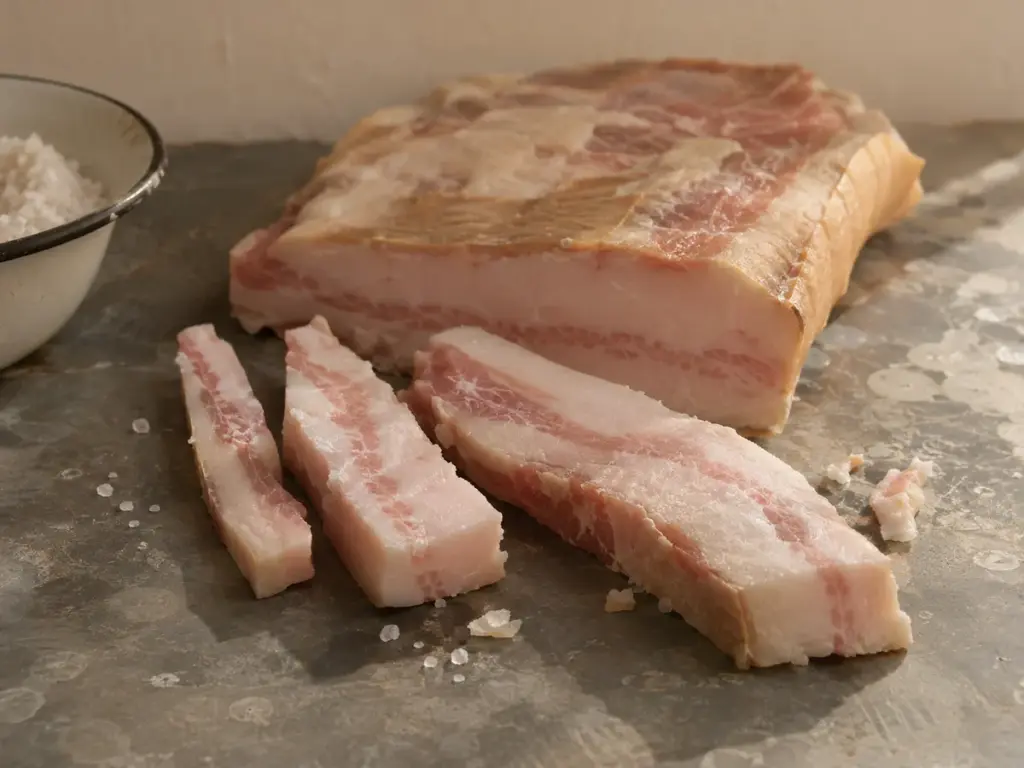
Because salt pork is so salty, about 2 ounces is enough to start, and some cooks parboil the pieces first to cut the salt. A few strips of smoked bacon or a pinch of smoked paprika then add the smoke it lacks, and when a recipe calls for salt pork itself, bacon and pancetta stand in for salt pork too.
6. Guanciale
Guanciale comes from cured pork jowl, aged about three months after a rub of salt and spices, and it is not smoked. Tasting Table calls it quite fatty and much saltier than bacon, so in a pot of beans it gives you rich, salty fat but no smoke.
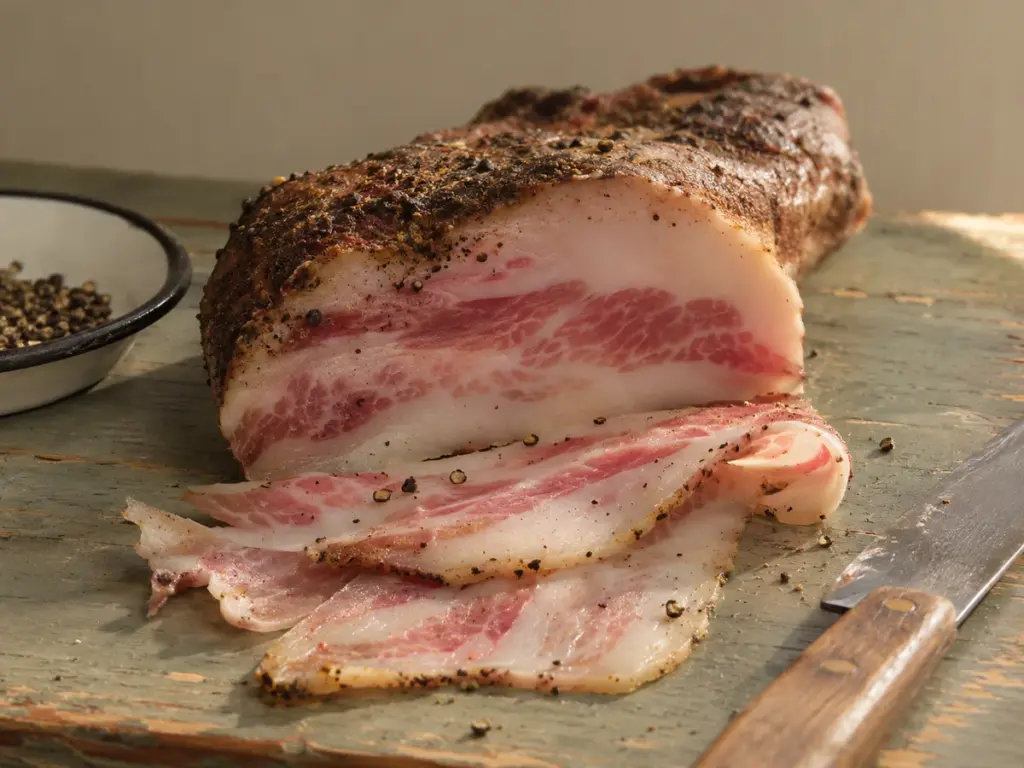
If you render about 2 ounces at the start, its fat takes the place of the oil, and the smoke has to come from something else in the pot. Guanciale and bacon differ in cut, cure and smoke, and the extra salt means you start with less guanciale than you would bacon.
7. Smoked Paprika and Liquid Smoke
For a vegetarian pot, smoked paprika replaces the smoke and nothing else, and Tasting Table suggests a plant-based fat to make up for the missing richness.
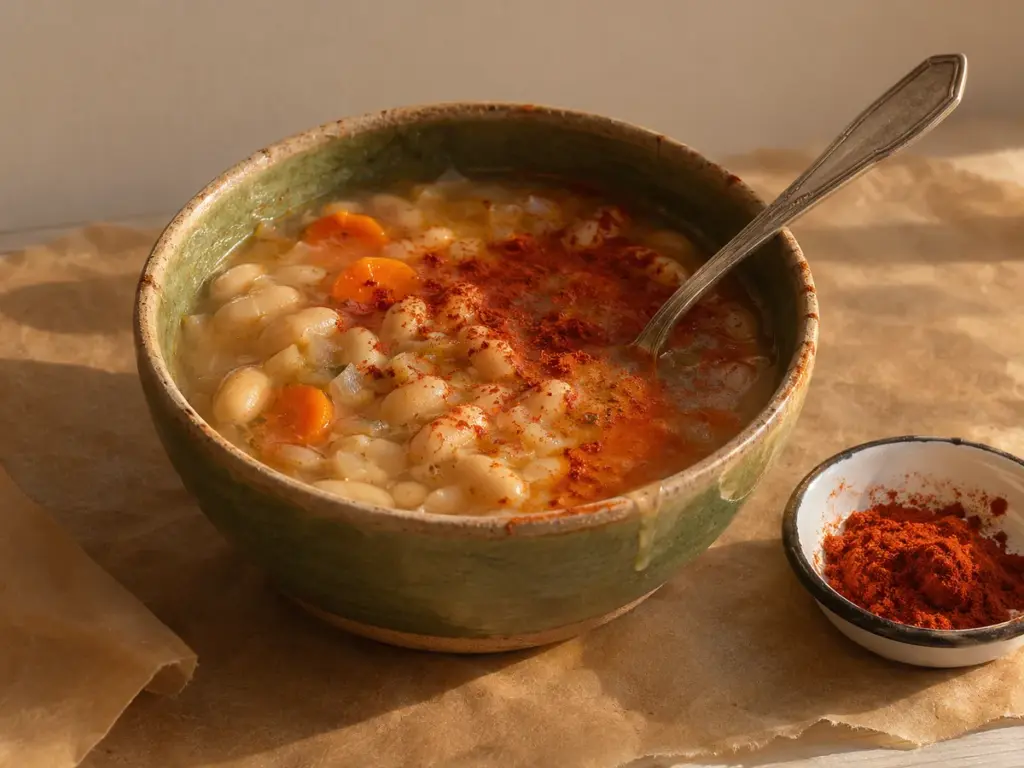
Veggie Society's vegan split pea soup cooks 2 teaspoons of it with the aromatics for about a minute before 1½ cups of peas and 5 cups of water go in. Sweet and hot paprika have no smoke, so you need the smoked kind.
The same recipe stirs in an optional teaspoon of liquid smoke at the end, but ¼ teaspoon is a safer first addition, and the other spices that suit split pea soup fill out the flavor.
Paprika adds nothing to chew on, so seitan or smoked tofu in vegan ham swaps can give a vegan pot some bite.
Which Swaps Make the Pot Saltier?
A smoked hock leaves salt in the broth, and the swaps differ a lot in how much they add. USDA lists these sodium amounts per 100 grams, each in the form it was measured:
- Raw salt pork has 2,684 mg.
- Whole cured ham, unheated, has 1,284 mg.
- Cooked smoked turkey wing meat has 996 mg.
- A smoked pork sausage link has 827 mg.
- Raw bacon has 751 mg.
Salt pork carries about 3.6 times the sodium of raw bacon (2,684 against 751 mg, calculated from those entries), so you need less of it and should taste before you add salt. USDA has no entry for a smoked hock, so these numbers compare the swaps with each other and cannot rank them against the hock itself.
What If Your Recipe Calls for a Ham Bone?
Crowd Cow calls a leftover ham bone the closest thing to a hock, with the same salt, smoke and gelatin, while Food Network says a hock gives more flavor because it is usually cured and smoked.
If you have no ham bone, a smoked hock is the easy swap, and if you have no hock either, a smoked turkey wing is the closest of the swaps above.
Sources
- Crowd Cow, Ham Hock: what a hock is made of, meat yield, collagen, ham bone, bacon and salt pork, liquid smoke
- America's Test Kitchen, What Is a Ham Hock?: collagen thickens the liquid
- Food Network, What Is Ham Hock?: ham bone compared with a hock
- Tasting Table, ham hock replacement for split pea soup: smoked turkey wings or legs, smoked paprika, added fat
- Tasting Table, substituting bacon with ham hocks: hocks and bacon are both salt-cured and smoked
- Tasting Table, ham and bean soup: bacon or pancetta as the best stand-in
- Tasting Table, salt pork vs bacon: salt pork is not smoked, parboiling, uses
- Tasting Table, guanciale vs bacon: cut, curing, fat, saltiness, not smoked
- Tasting Table, bacon alternatives for baked beans: jowls, collars and other hock-like cuts
- Mashed, what you can substitute for ham hocks: smoked bacon, turkey leg, smoked pork shank
- Food Network, Smoked Sausage and Black-Eyed Peas: amounts, rendering, simmer time
- Food Network and Saveur: collard recipes titled with smoked turkey wings
- Veggie Society, Vegan Split Pea Soup: smoked paprika and liquid smoke amounts
- News4Jax, split pea soup with hot dogs: searing sliced hot dogs in place of ham
- USDA FoodData Central, per 100 g: FDC 168287 salt pork, 167875 cured ham, 167709 smoked turkey wing, 174584 smoked pork sausage, 168277 bacon, 171633 frankfurter
Frequently Asked Questions
Can You Use Hot Dogs Instead of Ham Hock?
In soup, hot dogs work as a flavor stand-in, and News4Jax describes a split pea soup that sears sliced hot dogs with the onions in place of ham. They bring salt and fat but no bone, and with USDA listing boiled frankfurters at 914 mg of sodium per 100 g, the pot may need little extra salt.
What Cuts Are Similar to a Ham Hock?
Mashed names a smoked pork shank as the closest match, although it comes from the front leg and may differ in size and fat. Tasting Table says smoked ears, collars, jowls or snouts all work in a pot of beans.
Neck bones work too, but they are sold raw, so if you want smoke, you add a strip of bacon with them.

Food writer at GustoMeadow. Writes ingredient substitutes, food comparisons, taste guides and storage guides for home cooks.
Storage and food-safety numbers follow USDA, FDA and university extension guidance.



