
Pasteurized egg whites are the closest swap for meringue powder in royal icing, and aquafaba is the egg-free pick.
- You whip 3 carton egg whites per pound of powdered sugar with ½ teaspoon cream of tartar.
- Only pasteurized whites belong in the bowl, because the icing is never cooked.
- If you want no eggs at all, ¼ cup aquafaba to 1½ cups sugar takes their place.
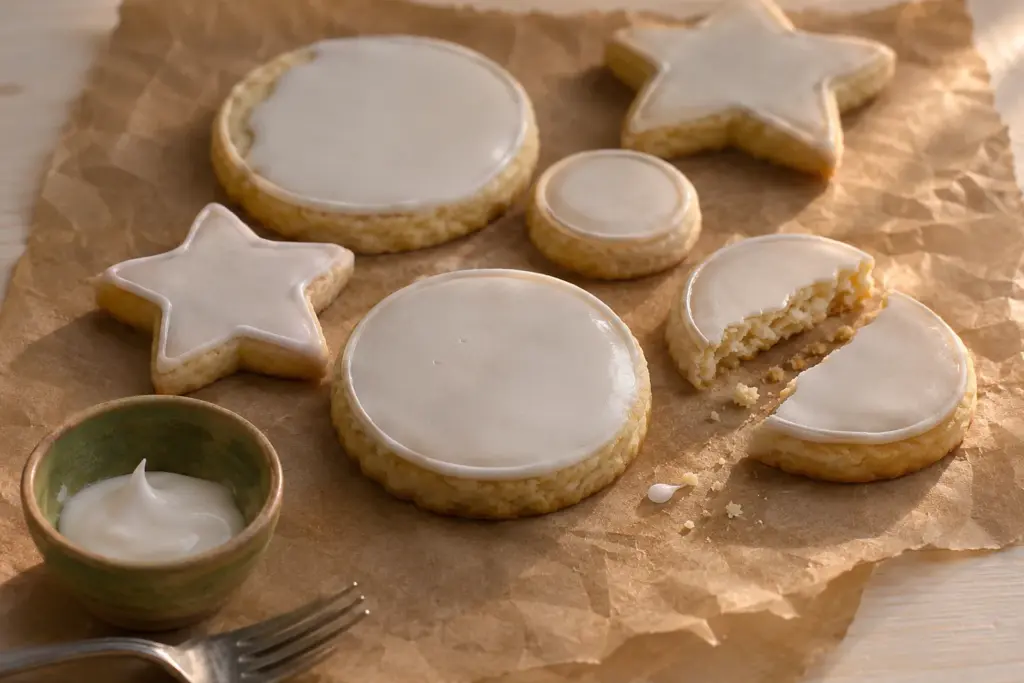
You can rebuild royal icing without meringue powder from pasteurized egg whites, egg white powder, aquafaba or a corn syrup glaze. Each of these baking ingredient swaps comes with the amounts from a named recipe, except vegan meringue powder, where you follow the package.
What Does Meringue Powder Do in Royal Icing?
Meringue powder is mostly pasteurized dried egg whites, blended with cornstarch, sugar, gum arabic and acids such as cream of tartar that steady the foam.
The whites whip into tiny air bubbles, and those bubbles give the icing its fluffy body and, once it dries, the strength to resist cracking. Because the whites are pasteurized, the powder also lets you make icing without raw eggs.
Jessica Gavin converts the powder to whites at 2 teaspoons of meringue powder plus 2 tablespoons of water for 1 egg white. A recipe that calls for 3 tablespoons of powder therefore matches about 4½ whites, and ¼ cup matches 6 (calculated from that 2-teaspoon rule: 9 teaspoons ÷ 2 and 12 teaspoons ÷ 2).
The match is only rough, because the powder also carries sugar and stabilizers. Her own royal icing uses 3 tablespoons of powder, 9 tablespoons of warm water and 4 cups of powdered sugar, so when you convert, you either keep that sugar amount or pick a whites recipe written for its own sugar amount.
6 Best Meringue Powder Substitutes for Royal Icing
| Swap | Amount in its recipe | Best for |
|---|---|---|
| In-shell pasteurized whites | 1 white, 1½ cups sugar | Small batches |
| Carton egg whites | 3 whites, 1 lb sugar | Big batches |
| Egg white powder | 15 g powder, 500 g sugar | Pantry storage |
| Aquafaba | ¼ cup, 1½ cups sugar | No eggs |
| Vegan meringue powder | Package ratio | No eggs |
| Corn syrup glaze | 3 cups sugar, 2 tablespoon milk | Flooding |
Each recipe was written for its own amount of powdered sugar, so when you resize a batch, you change every amount in the row together.
1. Pasteurized In-Shell Egg Whites
If you are icing a small batch, whites from pasteurized shell eggs are enough, and King Arthur beats 1 large pasteurized egg white with 1½ cups of confectioners' sugar, ⅛ teaspoon of salt and 1 teaspoon of lemon juice until the icing is stiff.
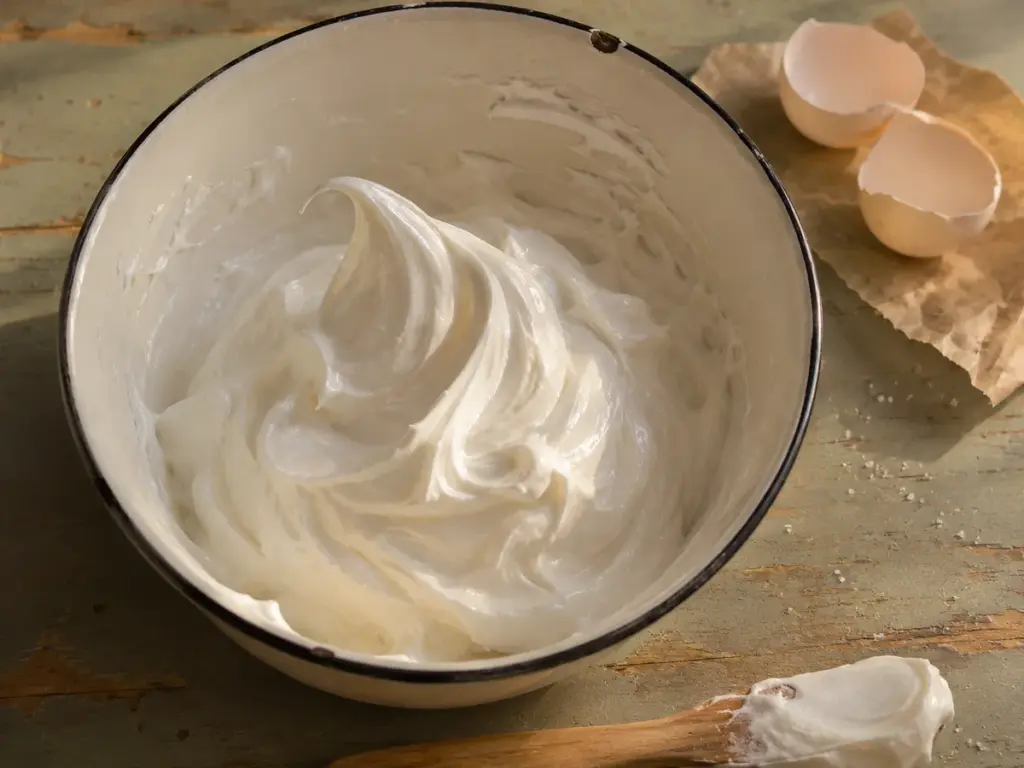
King Arthur's recipe uses lemon juice where other recipes use cream of tartar, and lemon juice is also one of the cream of tartar stand-ins.
On the carton you want to see "pasteurized", since FDA says the label usually states that the eggs were treated. A bowl with any grease in it is the other thing to watch, because a speck of grease stops whites from whipping.
2. Carton Egg Whites
You want a carton that says pasteurized, and 2 tablespoons of it stand in for 1 egg white. Frosting and Fettuccine whips 3 whites on low-medium for about 2 minutes until slightly foamy, then adds 1 pound of powdered sugar slowly on medium-high.
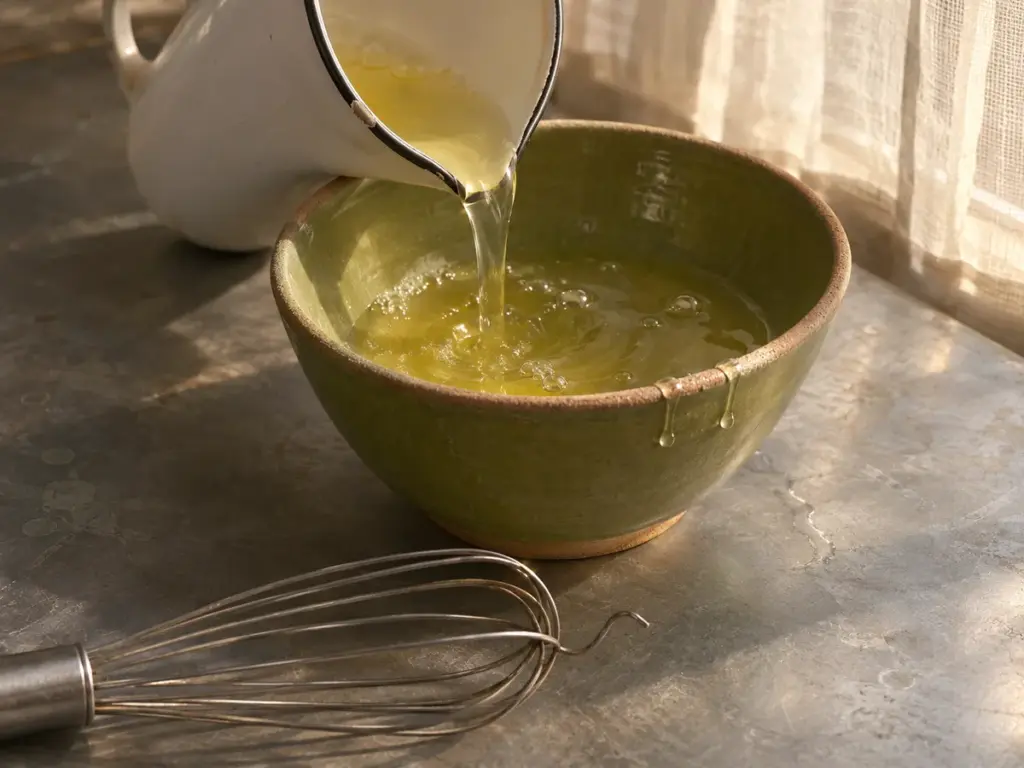
You add the sugar slowly, over up to 90 seconds, because adding it too fast can collapse the whites.
Next come 1 teaspoon of vanilla and ½ teaspoon of cream of tartar, and you whip on high for 1 to 2 minutes, until the icing is very glossy and holds peaks. If the icing separates in the bowl, that is normal, and about 2 minutes of re-whipping brings it back.
3. Egg White Powder
Because dried egg whites have no added sugar or stabilizer, you rehydrate them first. Rouxbe stirs 15 g of powder into 85 g of water, lets it dissolve for at least 20 minutes and strains out any lumps.
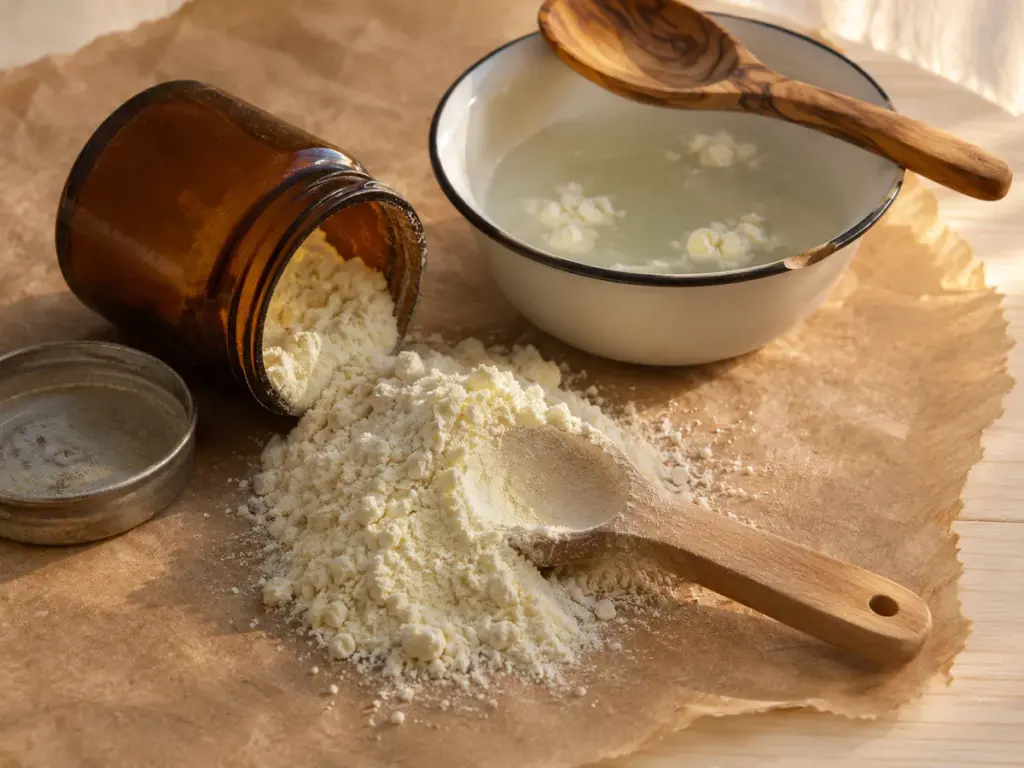
You then pour the strained liquid into the mixer with 500 g of confectioners' sugar and mix it 30 seconds on low and about 4 minutes on medium, until the icing has firm peaks.
Since the icing is never cooked, the jar you buy should say pasteurized, and if that jar is empty too, you still have swaps for dried egg whites.
4. Aquafaba
Aquafaba, the liquid from a can of chickpeas, whips like whites, which is why it also works as a stand-in for egg whites in other recipes. World of Vegan whips ¼ cup of aquafaba with ¼ teaspoon of cream of tartar on the highest speed for 5 to 7 minutes, until it is fluffy, bright white and very thick.
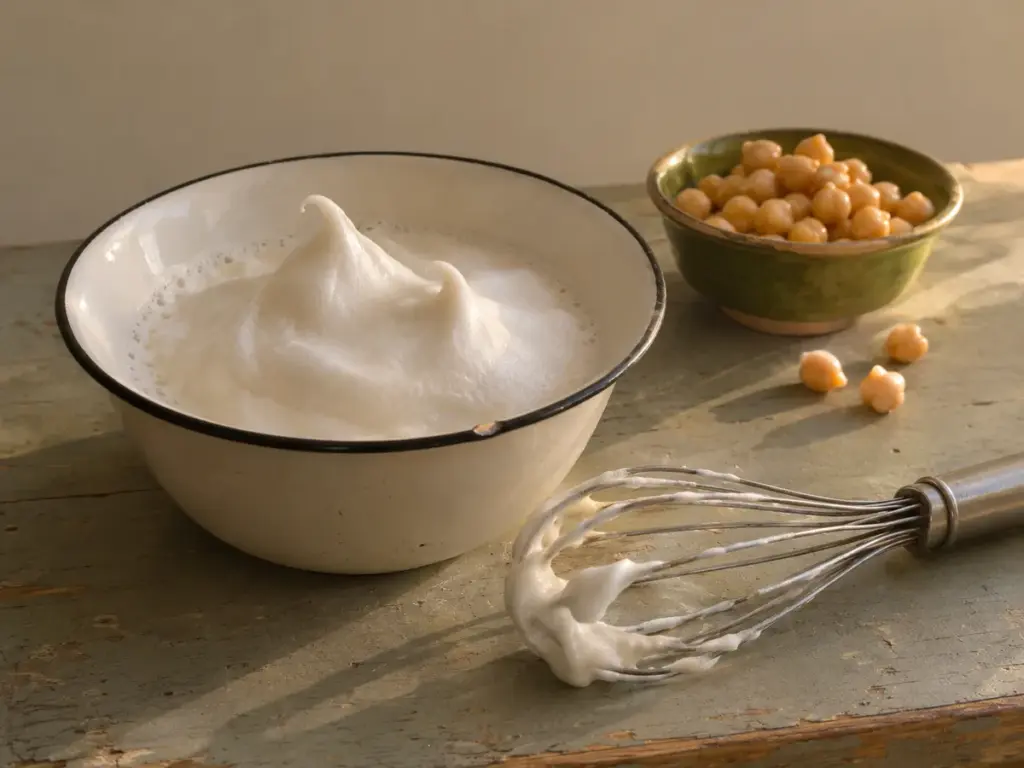
Once the foam is ready, you mix in 1½ cups of sifted powdered sugar in two halves, then 1 tablespoon of light corn syrup, 1 teaspoon of vanilla and ¼ teaspoon of almond extract.
Gavin notes that aquafaba may taste more savory, so we'd keep both extracts in the recipe. Nothing in the finished icing comes from an egg or from milk.
5. Vegan Meringue Powder
Ready-made vegan powders replace the egg whites with plant protein, while regular meringue powder is never vegan, because it is made from egg whites.
Brands differ in the protein they use and in the powder-to-water ratio, so you follow the package and read its label for soy and other allergens.
A first batch that comes out too thick loosens when you add water 1 teaspoon at a time, the way Frosting and Fettuccine thins its icing for flooding. A runny batch tightens once you whip in powdered sugar a little at a time.
6. Corn Syrup Glaze
If your cookies only need a smooth, glossy coat, Unsophisticook whisks 3 cups of confectioners' sugar with 2 tablespoons of milk, 2 tablespoons of light corn syrup and 1 teaspoon of vanilla, thinning with warm water. It makes about 2 cups, with no egg whites and no meringue powder.
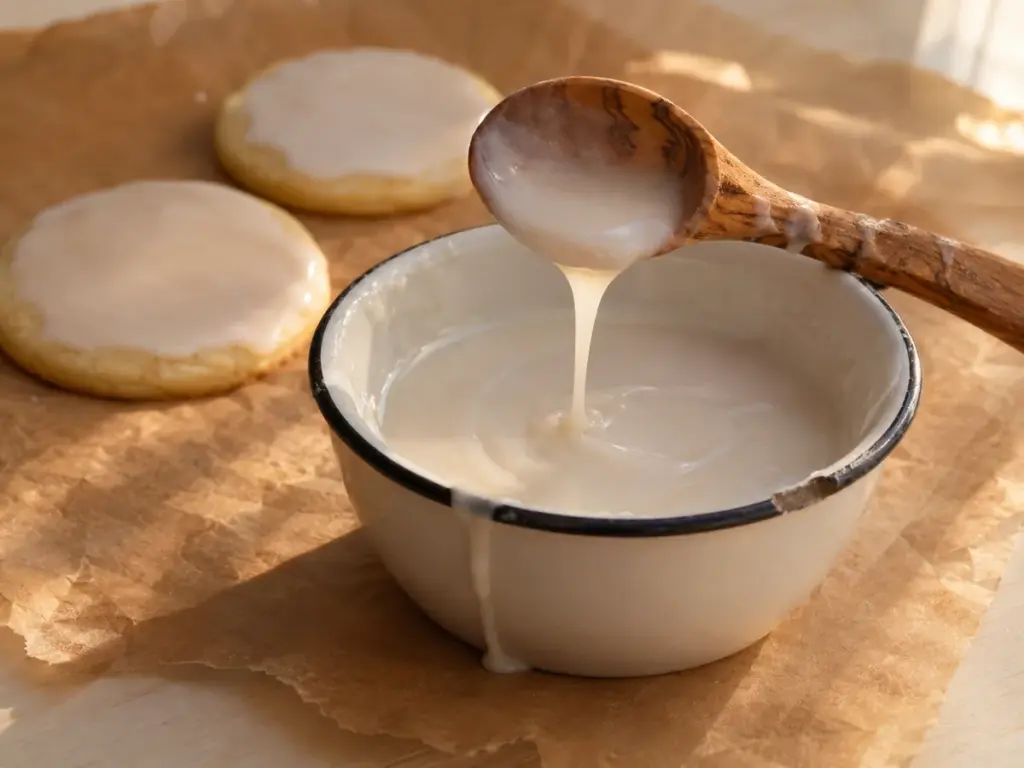
You can test the glaze by drizzling a spoonful back into the bowl, and if lines still show after 10 seconds, it is too thick.
Corn syrup gives the sheen, and honey or agave from the light corn syrup stand-ins may change the finish. The milk matters if you bake for a dairy allergy.
The glaze works as a pourable coating, while King Arthur beats its pasteurized-white icing to stiff peaks, so the whites icing is the one you want for piped lines and gingerbread house walls.
How Do You Fix Runny, Cracking or Slow-Drying Icing?
A knife dragged through the icing shows you its thickness before you blame the swap. If the line closes in 15 to 20 seconds, the icing suits outlining, and if it closes in 8 to 10 seconds, it suits flooding (Frosting and Fettuccine).
- Runny icing thickens again when you whip in ⅓ cup of powdered sugar at a time.
- Icing that cracks in an egg white powder batch needs a little more powder, since Food Crumbles ties strength to the air bubbles and the protein.
- Icing that stays soft points to too much liquid, high humidity or grease, and you can speed drying with a fan over the cookies.
- Flavorings made with oil block the icing from hardening, so extracts are what you want here.
- Extra food coloring lengthens drying in the aquafaba recipe, so you should plan extra drying time for a deep color.
How Long Does Royal Icing Take to Dry and Keep?
King Arthur says royal icing can take 2 to 4 hours, and sometimes up to 24 hours, to set fully, while the aquafaba recipe sets in 1 to 2 hours. You can add designs on top once the base layer has dried for about 30 minutes.
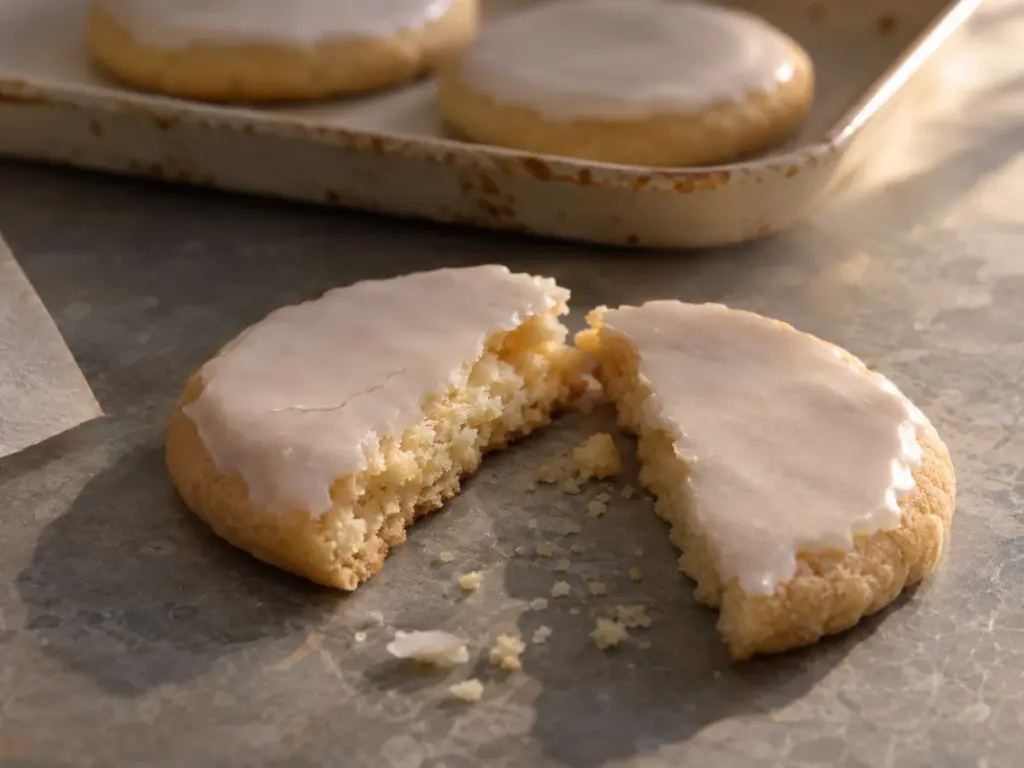
Icing made with egg whites or aquafaba belongs in the refrigerator in an airtight container, with plastic wrap pressed on the surface to stop a crust.
Bearfoot Baker gives one week for egg-white icing and World of Vegan gives one week for aquafaba icing, while Iowa State Extension says about 2 weeks for royal icing, so we'd plan on the shorter one week.
Cookies that are already decorated should stay out of the refrigerator, because Iowa State advises that the humidity can damage the icing. Aquafaba icing freezes for up to a month, and you thaw it in the refrigerator and remix it before piping.
Which Swaps Do Not Work for Royal Icing?
Some baking blogs suggest unflavored gelatin as an egg-white stand-in, but they dissolve it in hot water and let it set, and they give no amounts for royal icing, so you would be guessing at every step.
A set gel cannot whip into the foam that gives royal icing its body, so it stays off this list, and flavored gelatin dessert mix is a different product again (see how gelatin differs from jelly powder).
Sources
- FDA: What You Need to Know About Egg Safety (higher-risk groups, pasteurized eggs)
- Iowa State Extension: Royal Icing Made Safe (pasteurized whites, icing storage, decorated cookies)
- Jessica Gavin: What Is Meringue Powder? (ingredients, egg-white conversion, royal icing amounts)
- King Arthur: Royal Icing (pasteurized white recipe, setting time)
- Frosting and Fettuccine: Emergency Royal Icing (carton whites, consistency tests, troubleshooting)
- Rouxbe: Fundamentals of All Royal Icing (egg white powder amounts)
- World of Vegan: Vegan Royal Icing (aquafaba amounts, drying, storage)
- Unsophisticook: Simple Royal Icing (corn syrup glaze)
- Bearfoot Baker: Egg White Royal Icing and Egg Safety (fridge storage)
- Food Crumbles: Troubleshooting Royal Icing (cracking, air bubbles)

Food writer at GustoMeadow. Writes ingredient substitutes, food comparisons, taste guides and storage guides for home cooks.
Storage and food-safety numbers follow USDA, FDA and university extension guidance.



