
Pipa duck is a roast duck that is flattened and splayed open into a lute shape, while Cantonese roast duck stays whole and plump.
- The flat shape gives pipa duck extra crunchy skin, which Tatler Asia calls arguably crispier than Peking duck.
- Cantonese duck is filled with aromatics such as star anise.
- Pipa duck is mostly a restaurant dish, so order it at a restaurant.
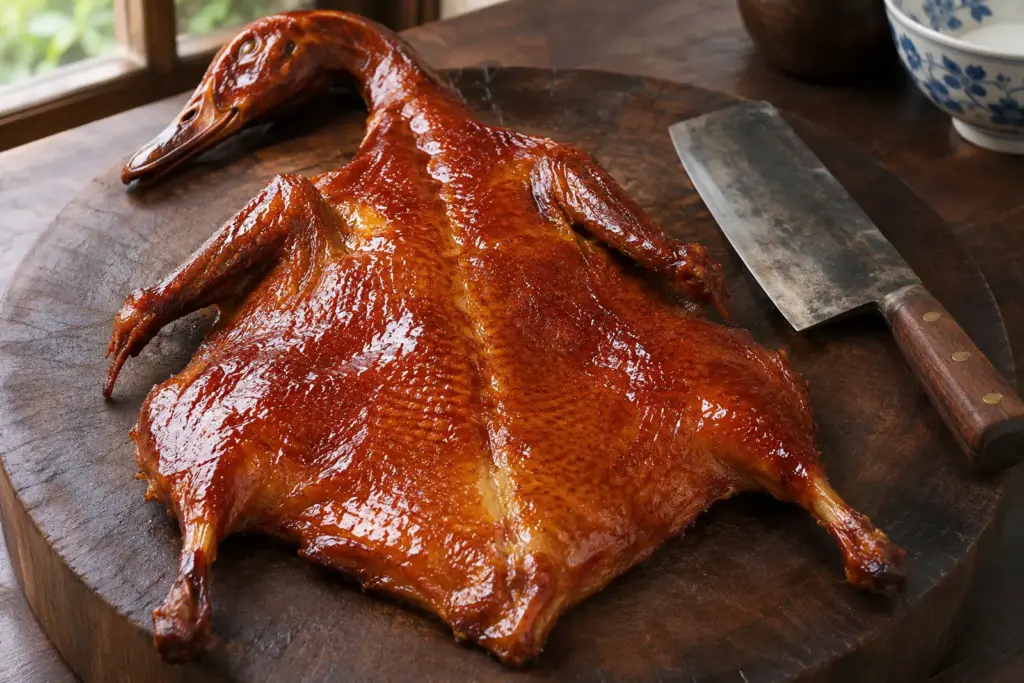
The names overlap more than in most food pairs, because "roast duck" can mean two different dishes. Here it means Cantonese roast duck (siu aap), the whole bird that hangs in barbecue shop windows. You may also see Peking duck on menus, and it gets its own section below.
1. What Is the Difference Between Pipa Duck and Roast Duck?
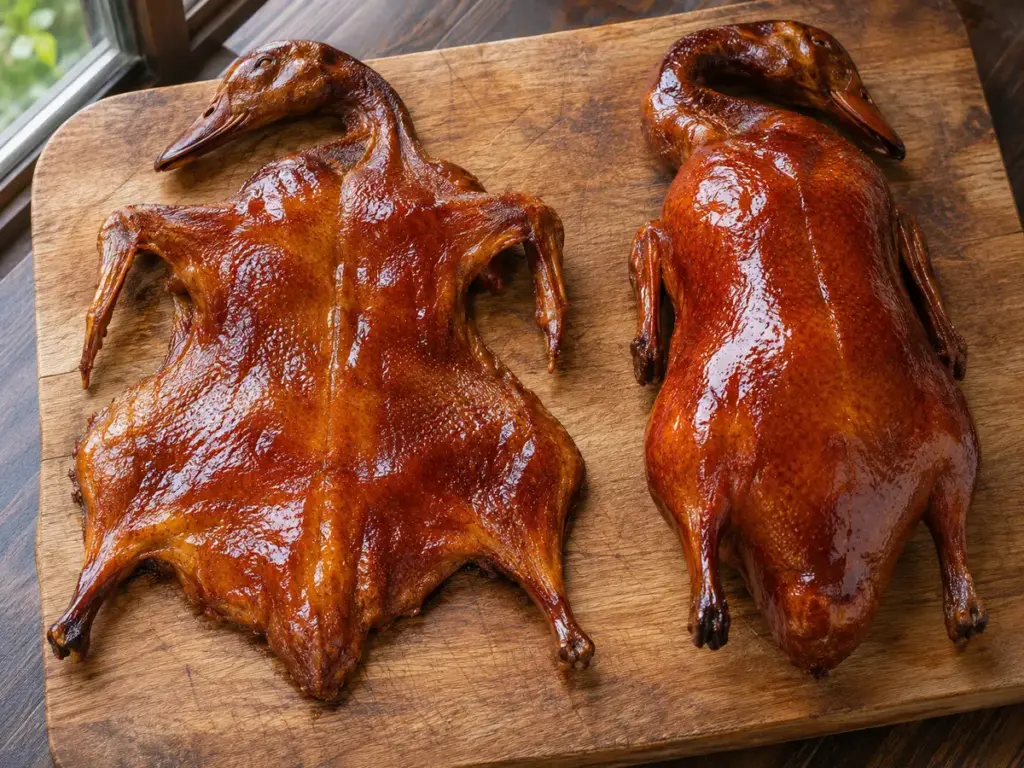
Both ducks are roasted until the skin turns glossy and mahogany, so the real difference is shape. A pipa duck is opened out flat, and a Cantonese roast duck keeps its round body and its cavity.
| Trait | Pipa Duck | Cantonese Roast Duck |
|---|---|---|
| Shape | Flat, splayed open with metal skewers | Whole, plump and round |
| Skin | Extra crunchy, arguably crispier than Peking duck | Crisp, roasted on a rounded bird |
| Inside | Opened out flat | Cavity filled with aromatics, then sewn shut |
Two more differences show up before you take a bite:
- Prep: pipa duck is splayed open, then roasted. Cantonese duck is boiled to tighten the skin, dried, then roasted in a hot oven.
- Where you find it: pipa duck is mostly a restaurant dish, sometimes by reservation. Cantonese duck comes from roast shops, usually by the half or whole bird.
The two ducks also share two things. GMA News says Kam's Roast hangs its pipa duck to air-dry, and Tasting Table says Cantonese duck is dried before it goes in the oven.
Under the skin, both are duck meat (how duck meat tastes), so a swap changes the skin more than anything else.
2. What Is Pipa Duck?
Pipa duck takes its name from the pear-shaped Chinese lute called the pipa, which the flattened bird resembles. Tatler Asia adds that the instrument is believed to date to the Han dynasty, and that "pipa" names both the instrument and a style of food preparation.
The name is romanized several ways, including pipa, pei pa and pi pa. Menus and searches spell it differently, but the duck is the same.
Sources agree on the shape step. The duck you order has been splayed open on metal skewers before roasting (Tatler Asia) or butterflied so it cooks evenly (GMA News). GMA News described one restaurant's full method, from Kam's Roast:
- Start fresh. The ducks are freshly slaughtered, not frozen.
- Butterfly and brine. The duck is butterflied and marinated in a brine with aged orange peel.
- Air-dry. After a few hours, it hangs to dry.
- Roast, then oil. It roasts at a low temperature and finishes in a hot-oil bath, about half a day in all.
Tatler Asia and GMA News both describe pipa duck as roasted, and the hot-oil bath is a finishing step at this one restaurant. Other kitchens may finish the skin differently.
The name describes the shape, so the marinade is each kitchen's own choice. Kam's Roast uses aged orange peel (chenpi), which Tatler Asia says gives an "intense, unforgettable aroma."
3. Why Does Flattening the Duck Change the Skin?
When a cook splays the bird on metal skewers, more skin faces the heat, and Tatler Asia credits that extra surface for the "extra crunchy exterior." That fits with a round duck tucking its legs and wings against the body, which probably shields part of the skin. A flat duck has nowhere to hide its skin, so more of it dries and crisps.
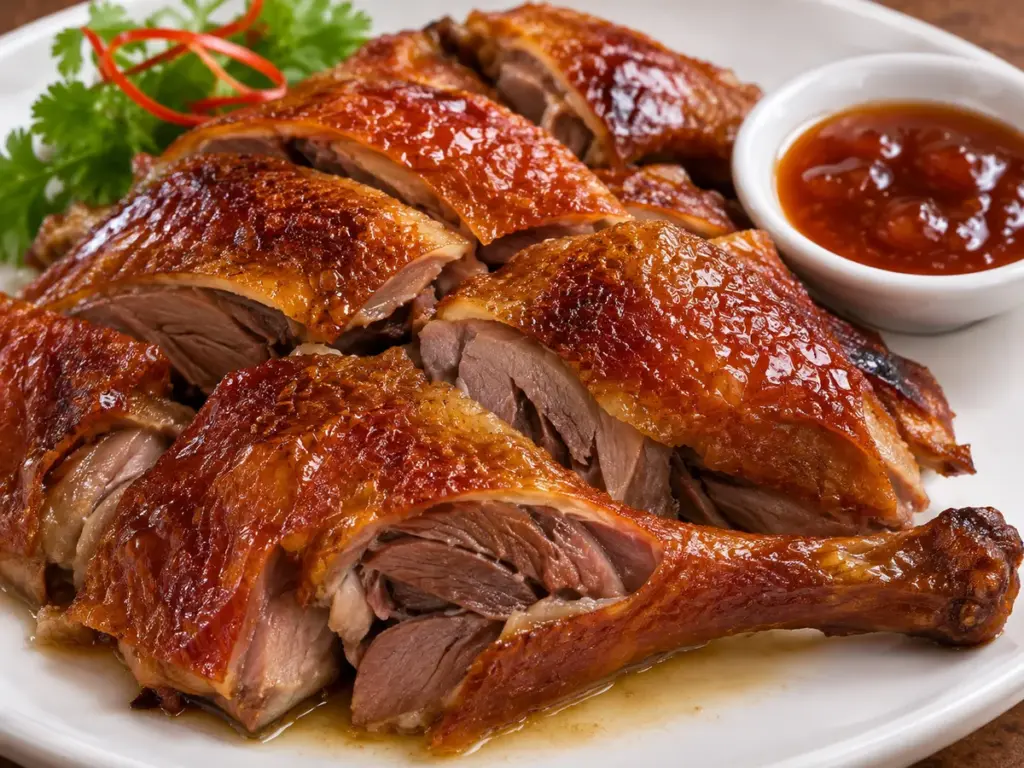
You can spot the difference at the shop window. Tatler Asia's advice is to check whether the bird is rotund or strangely flat: if it looks flat, you are looking at pipa duck, and if it looks round, you are looking at a Cantonese-style roast or Peking duck.
One Hong Kong restaurant picks meatier rice-fed ducks for roasting, so a flat bird can still carry plenty of meat under the skin. Dip pieces in plum sauce instead of pouring it over the top, because sauce softens crisp skin.
4. How Is Cantonese Roast Duck Made?
Cantonese roast duck gets its flavor from the inside out, and you can follow Tasting Table's four steps even if you only ever order it:
- Fill the cavity. The cook removes the innards and stuffs the duck with star anise, ginger and scallion.
- Sew it shut and boil it. A boil tightens the skin before the duck ever sees an oven.
- Dry the bird. Cantonese ducks are dried before they go into the oven.
- Roast it hot. After the drying, the duck is roasted in a hot oven.
Tasting Table says a seasoned chef needs about eight hours to take the duck from kitchen to table. A roast shop does those eight hours for you, and you buy the bird by the half or whole.
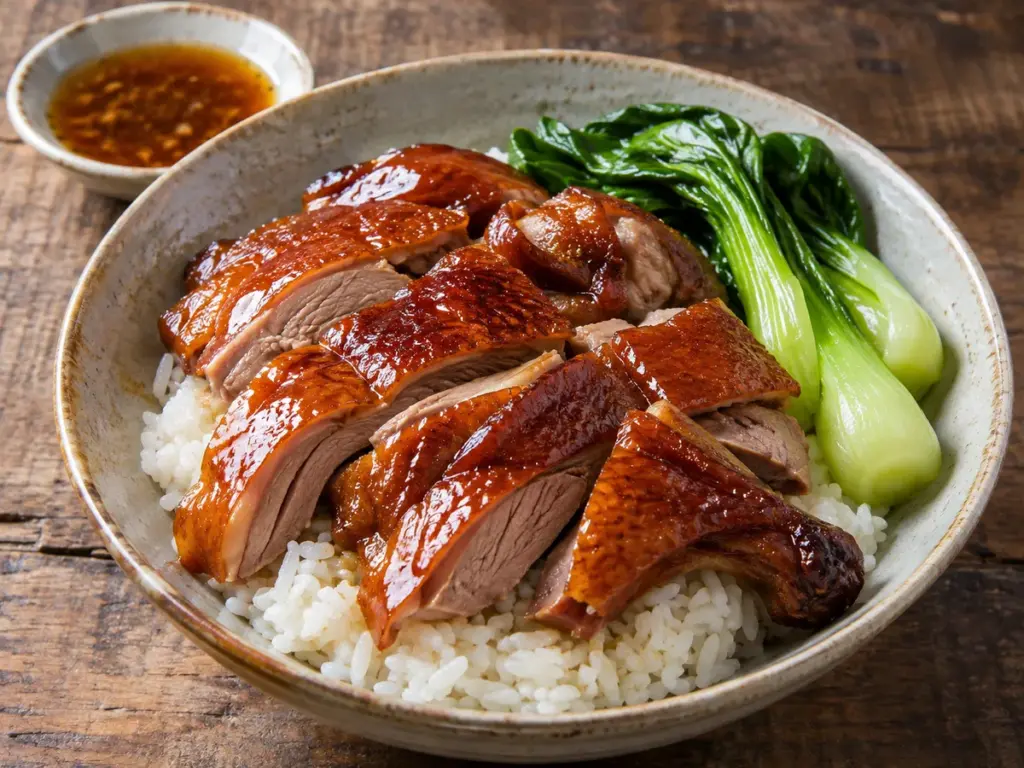
You eat it with "far less ceremony" than Peking duck, in Tasting Table's words: chopped over fluffy white rice with parboiled greens. Wikipedia describes the same plate for siu mei in general, meat atop plain white rice or noodles.
How Do You Glaze and Roast Cantonese Duck at Home?
At home, you copy the same steps on a smaller scale. Sift & Simmer's recipe has you scald the duck, then brush on a glaze of 1 tablespoon black vinegar, 1 teaspoon maltose and a quarter teaspoon red yeast rice powder.
- Season and close. Rub the cavity with the spice rub and marinade, then skewer it shut.
- Scald. Pour boiling water over each side for 15 to 20 seconds until the skin tightens, then pat dry.
- Glaze. Brush on the vinegar, maltose and red yeast rice powder mix.
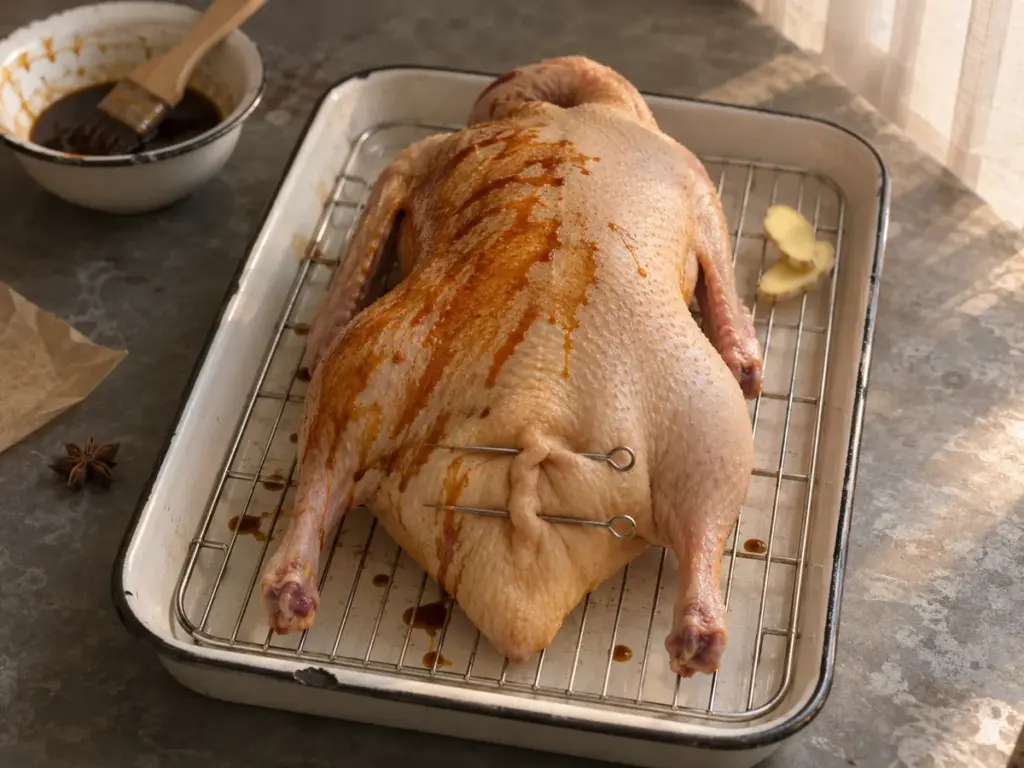
- Air-dry. Refrigerate the duck uncovered for at least 12 hours.
- Roast. Cover the wing tips with foil and roast at 450°F for 15 minutes, then 350°F for 20 minutes. Flip it breast up for 20 minutes, then take the foil off for 20 more.
The air-dry decides the skin. Omnivore's Cookbook says "air drying is essential to crispy skin," dries its duck for at least 24 hours, and notes that most Chinese restaurants dry theirs for a few days. At home, you start the day before.
Omnivore's Cookbook has you scald with a sweet-sour liquid instead: 8 cups water, ½ cup Shaoxing wine, ½ cup honey or maltose and ½ cup Chinese red vinegar, ladled over the duck for about 30 seconds.
Both recipes accept honey in place of maltose when the syrup is hard to find.
5. What Seasonings Go on Each Duck?
Cantonese roast duck has no single recipe, and three sources show how far the seasoning mix ranges:
- Tatler Asia: Chinese five-spice, sherry and hoisin sauce.
- Sift & Simmer: cinnamon, Sichuan peppercorns, cloves, star anise, aged orange peel, black bean sauce and oyster sauce.
- Omnivore's Cookbook: five-spice, star anise, red fermented tofu, Shaoxing wine and oyster sauce.
The common thread is a wet paste or marinade inside the cavity. You flavor the meat from the inside, and the skin gets its own scald, glaze and drying.
6. Is Peking Duck the Same as Roast Duck?
- Made only from white ducks
- Air pumped between skin and flesh, then wind-dried and painted with maltose syrup
- Not stuffed with herbs or spice mixes
- Takes about 3 days
- Carved tableside, eaten on pancakes
- Cavity filled with star anise, ginger and scallion
- Boiled to tighten the skin, dried, then roasted
- Takes about 8 hours for a seasoned chef
- Chopped and served over rice with greens
No, and a menu that says "roast duck" can mean either one. Tasting Table says Peking duck is not stuffed, so its flavor stays pure duck flavor and glossy skin.
When you compare pipa duck with Peking duck, the split is shape versus process. Pipa describes a flat bird, while Peking duck is a Beijing dish whose three days of prep Tasting Table spells out.
Wikipedia adds that the duck is blanched in boiling water for two to three minutes, hung to dry, and rested for 24 hours in a cool, dry place or the refrigerator before roasting. In the traditional hung oven, it roasts at 270°C (about 518°F) for 30 to 40 minutes.
A server carves the duck at the table, and Wikipedia describes three courses:
- Skin first. Slices of skin come with sugar and sweet bean sauce.
- Meat in pancakes. The meat is wrapped with cucumber and spring onion in steamed pancakes.
- The carcass. The bones go into broth or a stir-fry.
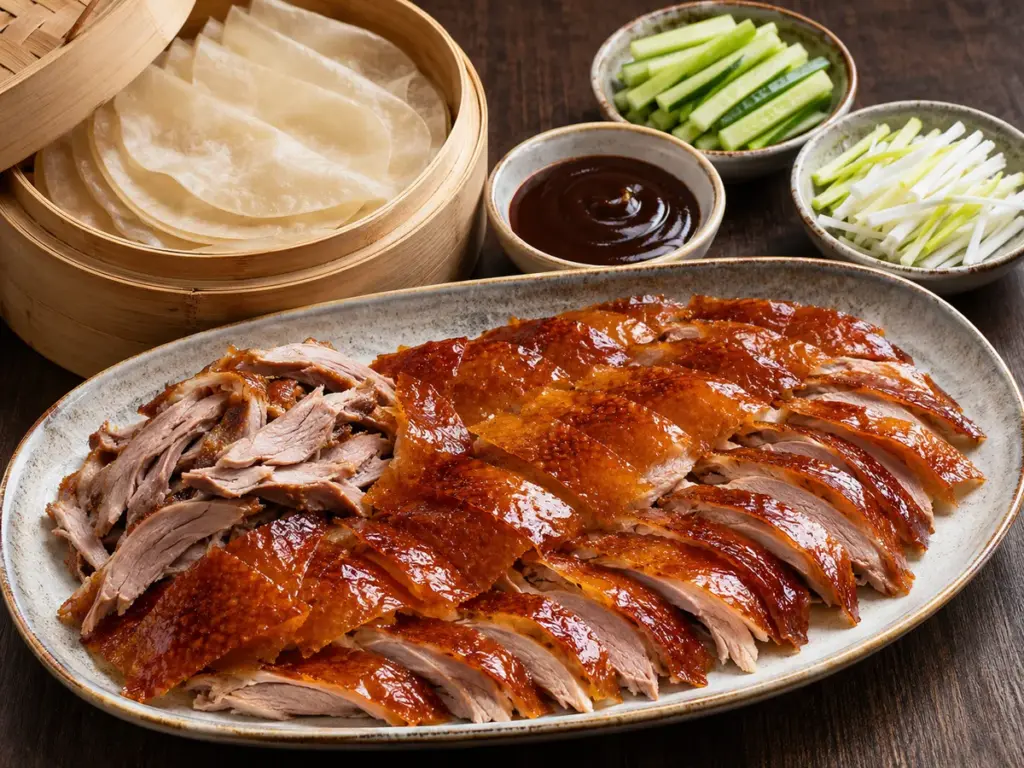
A plate of Peking duck tastes of crisp skin and juicy meat, and duck fat fries or pickled cabbage are sides that fit it.
7. Where Does Each Duck Come From?
- Peking duck: Wikipedia says China has roasted ducks since the Southern and Northern dynasties, and that the dish fully developed in the later Ming dynasty. Bianyifang opened in 1416.
- Cantonese roast duck: Hong Kong barbecue shops sell it as siu aap, one of the roast meats in a siu mei meal.
Tatler Asia names Hong Kong and Kuala Lumpur restaurants where you can order pipa duck, and says only a handful of Chinese restaurants in Malaysia offered it when the article ran.
In the UK and Ireland you may meet crispy aromatic duck, which Wikipedia says is marinated with spices, steamed, then deep-fried. Its meat is drier and crispier than Peking duck's. Wikipedia adds that some Asian fusion restaurants in Germany label it Peking duck.
8. Which Is Healthier, Pipa Duck or Roast Duck?
Neither is a light dish. The fat sits mostly in the skin, and the skin is the part both dishes are known for. USDA FoodData Central gives per-100-gram numbers for roasted domestic duck:
If you want less fat, take the skin off whichever duck you choose, because you remove most of the fat with it. None of the sources give fat figures for the hot-oil bath that finishes pipa duck at Kam's Roast.
9. Which Duck Should You Order or Make?
Neither duck wins on every point. Pipa duck gives you the crunchier skin, and Cantonese roast duck is the one you can find at a roast shop or cook at home.
- You want the crispest skin: order pipa duck at a restaurant, and call ahead because some places take reservations for it.
- You want a casual dinner over rice: buy Cantonese roast duck by the half or whole bird from a roast shop.
- You are cooking at home: a stuffed, whole roast duck is the realistic choice, since pipa duck is a half-day restaurant process (GMA News) and appears mostly on restaurant menus.
- You want pancakes and a show at the table: choose Peking duck, and plan for the 3-day process or book it at a restaurant.
10. How Do You Serve and Store Roast Duck?
For a Cantonese-style dinner, steamed rice and blanched greens are the usual plate, and more sides for Chinese roast duck include cucumber salad and egg fried rice. Omnivore's Cookbook serves the duck with plum sauce or ginger scallion sauce.
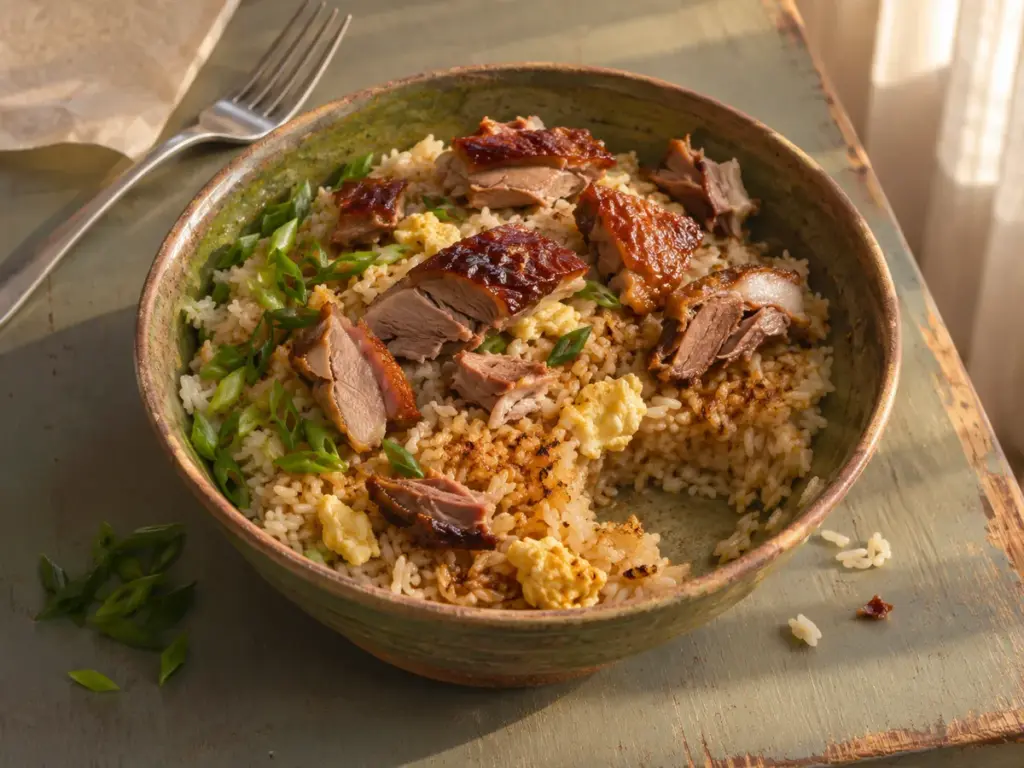
- Rice or noodles: Omnivore's Cookbook suggests shrimp fried rice and wonton noodle soup as sides, and chopped leftover duck fits either one.
- Soup: Tasting Table says Peking duck bones become soup with cabbage or winter melon.
Cooked duck keeps 3 to 4 days in the refrigerator, according to USDA FoodKeeper, so use leftovers within that window.
Sources
- Tatler Asia: Pipa Duck in Hong Kong (name, splayed shape, crisp skin, rice-fed ducks)
- Tatler Asia: Pipa Duck vs Peking Duck (flat shape, seasonings, aged orange peel, Han dynasty lute)
- GMA News: Pipa Duck at Kam's Roast (butterflied, brined, air-dried, roasted, hot-oil bath)
- Tasting Table: Cantonese Roast Duck vs Peking Duck (cavity aromatics, boiling, Peking prep, serving)
- Wikipedia: Siu Mei (roast shops, half or whole bird, meat over rice)
- Wikipedia: Peking Duck (blanching, resting, oven, courses, history, crispy aromatic duck)
- Sift & Simmer: Cantonese Roast Duck (glaze amounts, drying time, oven times, 165°F)
- Omnivore's Cookbook: Chinese Roast Duck (scalding liquid, air-drying, sauces, re-crisping)
- USDA FoodData Central, FDC 172409 (roasted duck, meat and skin)
- USDA FoodData Central, FDC 172411 (roasted duck, meat only)
- USDA FoodSafety.gov: Safe Minimum Cooking Temperatures (165°F for poultry)
- USDA FoodKeeper (cooked poultry dishes: 3 to 4 days in the refrigerator, 4 to 6 months in the freezer)
Frequently Asked Questions
How Do You Reheat Roast Duck Without Losing the Crisp Skin?
Omnivore's Cookbook re-crisps leftover duck at 450°F for 5 to 10 minutes on a wire rack, then slices the breast into half-inch pieces.
Can You Freeze Leftover Roast Duck?
Yes. USDA FoodKeeper lists 4 to 6 months in the freezer for cooked poultry dishes.

Food writer at GustoMeadow. Writes ingredient substitutes, food comparisons, taste guides and storage guides for home cooks.
Storage and food-safety numbers follow USDA, FDA and university extension guidance.



